
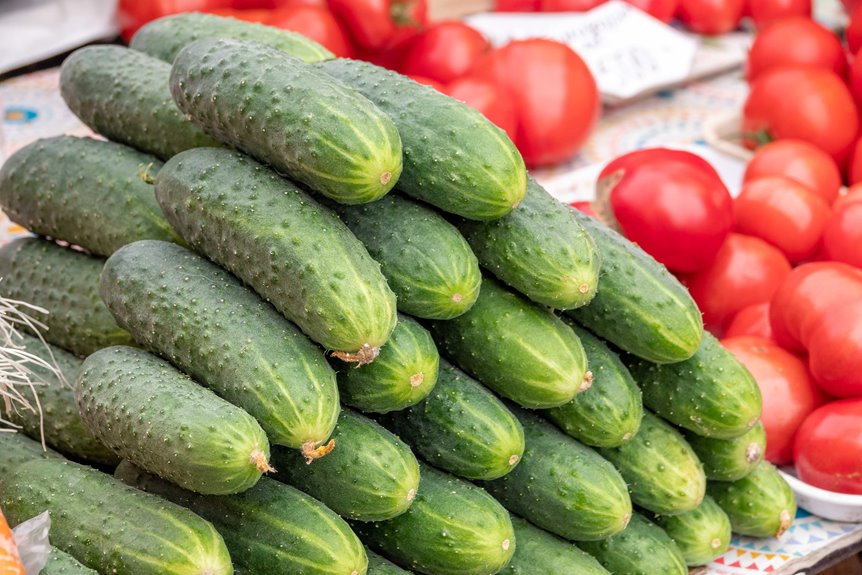
I have used tomato cages for cucumbers with mixed results. Standard 3- to 4-foot ones often leave my vines dangling awkwardly by mid-July. I prefer 5- to 6-foot trellises now, or I repurpose shorter cages for compact bush varieties like ‘Spacemaster.’ Position the cage right at planting, then weave vines through the wires every few days as they stretch upward. Regularly checking growth is important since cucumbers climb quickly and can become heavy. Deep watering at the base helps keep roots anchored and fruit sweet. There are several factors to consider for successful cucumber growth.
Can You Actually Use Tomato Cages for Cucumbers?
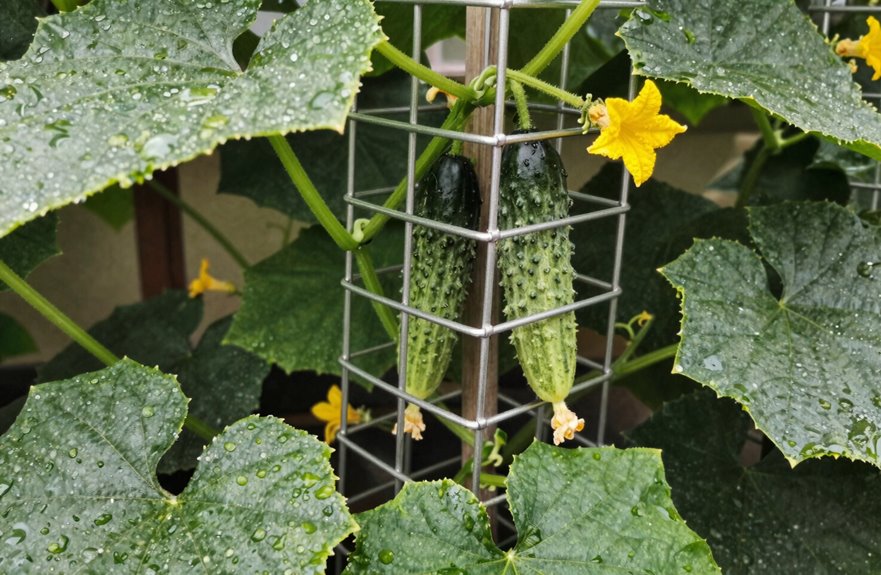
Why not try something a little unconventional? I have repurposed tomato cages as cucumber cages, and it works better than expected. Many gardeners want to save money and garden smarter.
Standard cages often fall short on trellis height. Most cucumbers need 5 to 6 feet of vertical space, and many tomato cages barely reach 4 feet. I learned this when my vines spilled everywhere.
For vertical training, I wind vines around both sides of the cage and secure them with jute twine. This requires ongoing attention, but it is manageable. Smaller or determinate varieties in pots work best. If your cucumbers outgrow the cage—and they will—consider upgrading to taller trellises or using the cage as a base component. Planning ahead can help you avoid messy situations.

High-quality support for your plants: iPower grow net is made of ultra-durable elastic ropes covered in stretchy fabric and comes with 6 rust-proof "S" hooks, ensuring long-lasting use

HEAVY DUTY 16MM METAL FRAME – BUILT STRONGER THAN STANDARD TRELLISES: Unlike common 11mm frames, this upgraded cucumber trellis uses reinforced 16mm plastic-coated steel tubing for greater stability and durability. Strong enough to support climbing vegetables while resisting bending, wobbling, and weather damage outdoors.
Which Cucumber Types Work Best in Cages
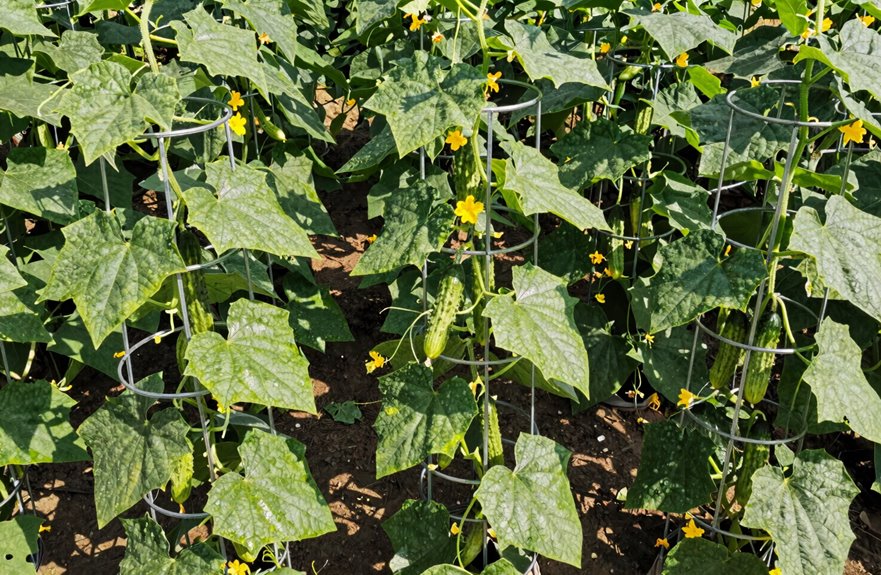
Not every cucumber wants to climb a tiny cage. I once stuffed a sprawling marketmore into a standard tomato cage, which didn’t work well. The suitability of tomato cages really depends on choosing the right cucumber varieties.
Here’s what I’ve figured out:
- Small determinate types designed for pots fit best.
- Miniature bush varieties work, though yields stay modest.
- Full-size indeterminate vines outgrow cages fast.
- Regular cucumbers need 5–6 foot trellises instead.
- Early plants fit temporarily, but prepare to switch.
For successful vertical training, I find that weaving vines through cage wires helps. I gently tuck new growth weekly. I now match my support to my plant’s ultimate size, which saves me from transplanting mid-season and keeps my garden organized.

【Waterproof and Durable】: Our obelisk trellis is made of metal tubes and PE plastic coating, which prevents the tower from rusting, waterproof and able to withstand all kinds of weather conditions, ensuring a long service life.

1️⃣ GIVE YOUR PLANTS ROOM TO CLIMB Tired of messy sprawling plants? This vertical A-frame trellis acts as a practical trellis for climbing plants outdoor, guiding vines to grow vertically and tidy up your whole garden layout.

【Effortless Assembly and Modification】:Enjoy a hassle-free setup with the straightforward assembly of the pea Trellis. The inclusion of 4 A-Fork connectors and 4 Straight Connectors simplifies the modification process, allowing you to adjust the trellis size effortlessly for a variety of climbing plants, such as beans, grapes, and squash. Spend more time enjoying your garden and less time on complex assembly with our versatile vegetable garden supplies.
How to Set Up a Tomato Cage for Cucumber Support
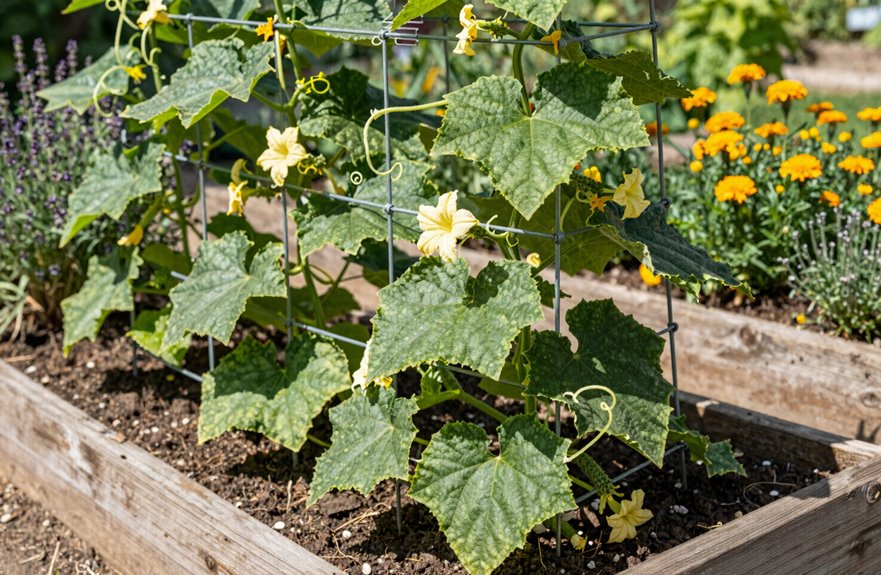
Setting up a tomato cage for cucumbers is straightforward, though I’ve made it more complicated at times. First, I position my tomato cage right next to the plant’s base. Standard cages often flop under heavy vines, so I use a 5- to 6-foot cucumber trellis for better support.
My vertical training routine involves guiding the vines upward and tying them loosely as they stretch. I check regularly because those plants grow quickly. Weight is important; once cucumbers start hanging, an unstable cage can collapse. I’ve seen this happen, and a sturdy support system is always more reliable.

[DURABLE AND STURDY] Crafted from robust hollow steel, this garden stakes features a fade-resistant green plastic coating, offering reliable protection against wind, rain, and rust. With anti-slip ridges, it's easy to tie on plant ties, aiding in plant climbing. the pointed bottom design of tomato stakes enables effortless soil insertion, ensuring a secure anchoring effect with minimal effort

Item Size: Length upto 73 inch,diameter 1/2 inch and total 6 sets, 20 large clips and 20 small clips, 50 plants ties include.

【DIY Kit】 This kit contains 15 pcs plant stakes with 13.7" in length and 0.3" in diameter, 8 pcs connectors, 8 pcs rotatable clips, 8pcs pointed rubber cap, 8pcs top caps,25 pcstwist tie, Great for your garden DIY
Weave Cucumber Vines Onto Your Cage as They Grow
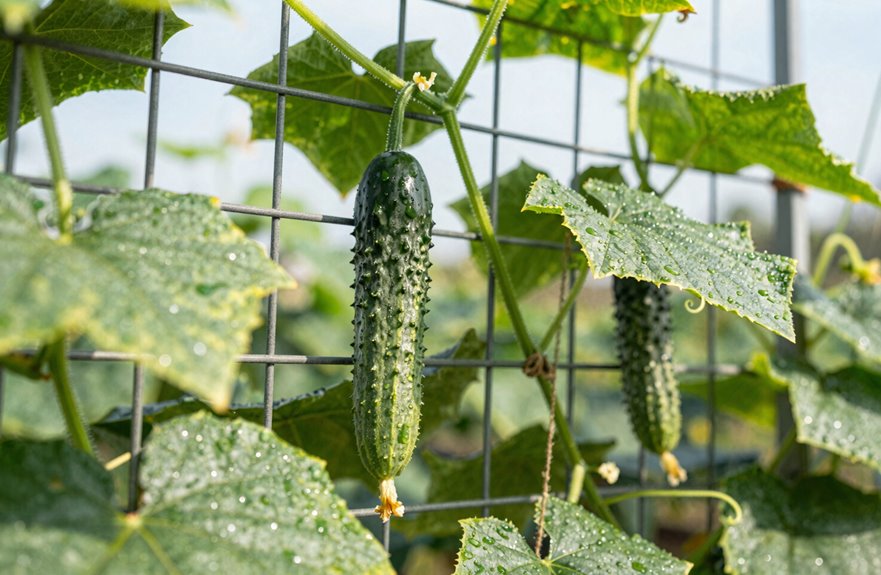
As the vines start reaching upward, I begin weaving them in and out of the cage wires like I’m lacing a green, leafy shoe. Training vertical growth requires patience, but it becomes easier with practice.
Here is what I’ve learned about guiding cucumber vines:
- Wrap tendrils around each side of tomato cages for stability.
- Check plants every 2-3 days for new growth to weave.
- Gently tuck wayward shoots back toward the center.
- Support heavy sections before they start sagging.
- Reposition any fruit pulling vines off-center.
I once missed a week and spent twenty minutes detangling a mess. Consistent weaving keeps your cucumber vines secure and optimizes your tomato cage space without complications.

Trellis Netting Polyester Nylon: Our trellis netting is made of durable polyester nylon materials,strong and durable, not easy to break, reusable,can support extremely heavy crop loads, protect plants from damage, able to grow vertically
Trellis Netting Polyester Nylon: Our trellis netting is made of durable polyester nylon materials,strong and durable, not easy to break, reusable,can support extremely heavy crop loads, protect plants from damage, able to grow vertically

Gardening Support: 1 Pack Trellis Netting (8.2' x 6.6'Ft). Sturdy trellis netting offers strong support all season long. Using this garden help, you can decorate your garden by supporting and organizing your plants and vines.
Why Vertical Cucumbers Hang Straighter and Cleaner
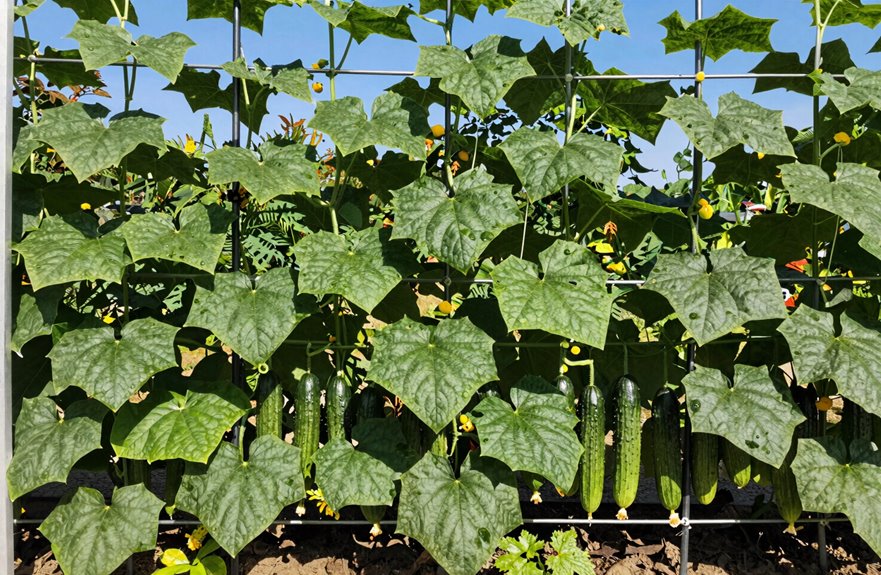
Once your vines start climbing the cage, you’ll notice something satisfying: your cucumbers actually look like cucumbers. No more curved, lumpy vegetables. The trellis guides vertical growth, allowing gravity to assist.
When cucumbers hang freely from a sturdy 5- to 6-foot structure, they grow straight down instead of sprawling across soil. My experience with ground-dwelling cucumbers taught me that they often rotted on one side. I won’t make that mistake again.
Vertical growth also results in cleaner harvests. There’s no mud splatter or pest hideouts underneath. Your cucumber yield improves because the plant isn’t wasting energy fighting gravity or repairing ground damage. The cage supports the weight, keeping the fruits uniform and market-ready. You’ll want to show these off.

【Package includes】You will receive 20 pieces of tomato hooks with string and 100 pieces of plant support clips;.Tomato hooks are made of robust rope and iron materials,whichare weather-resistant,aging-resistant,high-temperature-resistant,rot-resistant, and not easy to break.

[★Withstands Wind& Reusable]This green garden wire for plants is made of high-quality TPR rubber coating and strong iron wire (2.5mm outer diameter, 0.9mm inner wire). is flexible yet sturdy,much tougher than garden tape, garden wire, withstands heavy use and strong wind,will not break after repeated bending, and the coating does not crack or fade,easy to clean and maintain, this plant wire is fully reusable for long-term gardening use

Made from high quality jute fiber, this twine offers reliable performance for a range of gardening, crafting, and home organizing tasks
When Cucumbers Outgrow Standard Tomato Cages
What happens when your cucumber vines keep growing while your tomato cage falls short? I’ve experienced the frustration of cucumbers overflowing their confines. Standard tomato cages reach about 3-4 feet, which works until they don’t.
Here’s what I learned:
- Your cucumbers hit the trellis height limit and continue to grow.
- Vines spill over the top of the cage, creating a tangled mess.
- Fruit makes contact with the soil, leading to potential issues.
- Stems sag under weight without adequate support.
- Tomato cages are not designed for this level of growth.
When my cucumbers outgrew their cage last summer, I dedicated weeks to re-weaving the vines. Noticing the mismatch early can save you a lot of trouble later.

PRODUCT SIZE - Trellis netting 5Ft*15 Ft, 6 inch square mesh, easily cut to desired size to use. Important note: The trellis netting comes in a vacuum sealed bag.

Reusable and Versatile: Measuring 3mm in diameter, Vivosun uses ultra-durable elastic thread in the elastic fabric cover and 4 rustproof "S" hooks measuring 22mm in width; You can easily fold it up and store it away after use

One or Multiple Arches: wider arch(7.5 feet Wide * 6.4 Feet High ) or a higher arch (4.6 Feet Wide*7.9 Feet High) by Removable sections for desired Length.
Build a 6-Foot Trellis for Full-Size Cucumber Varieties
Why settle for a cage that fails halfway through summer? I’ve experienced the frustration of watching my cucumbers flop over like tired party guests. That’s why I build a 6-foot trellis instead.
I use sturdy bamboo poles or fence posts with 4–5 inch hardware cloth. This provides my full-size cucumber varieties with the vertical support they need. I plant in a straight row and weave the climbing vines in and out as they grow. It’s oddly satisfying, similar to teaching a toddler to walk.
I once skipped securing the vines properly, and the sagging taught me a lesson. Now I check weekly, guiding growth upward and ensuring my trellis can support the weight of the fruit. Your cucumbers deserve better than a cage that gives up.

【Package included】:Crafted from robust hollow steel, this garden stakes features a fade-resistant green plastic coating, offering reliable protection against wind, rain, and rust. This Trellis for Climbing Plants Outdoor comes complete with everything you need to get started: 17pcs metal stakes, 8pcs T shape connect pipe, 2 A-shaped connectors, and a 0.9x1.8meter bird net.

Simple Elegant Garden Obelisk Trellis: This 67 inch garden obelisk trelliscreates vertical growing space for climbing plants outdoor, flower vines, peas,beans, cucumbers, and tomatoes. The teepee trellis shape works as a tomatocage trellis and decorative plant support for raised beds, planters, pots,patios, and garden beds.

Vegetable Trellis that Assembles in Minutes, No Tools or Frustration – Say goodbye to complicated setups. Our U-shape trellis includes easy-connect joints and step-by-step instructions for fast, hassle-free assembly
Water Vertical Cucumbers Deeply to Prevent Bitter Fruit
I learned the hard way that shallow watering turns cucumbers bitter faster than my failed attempts at sourdough. When growing vertically in tomato cages, the roots spread out rather than down, so I soak the soil slowly at the base until water reaches about six inches deep—roughly the length of a dollar bill. Maintaining steady moisture prevents salad disappointment.

[VARIATY SHAPE & SIZE STRUCTURE]: You can build 6pcs triangular tomato cage up to 48inch high by the set. Snap-on arms design also makes it possible to create in different heights squares, hexagons or garden trellis depending on the size of plants, to fit garden beds, raised beds, or plant pot, perfect for maximizing growing space and help your plant grow vertically

【DIY Kit】 This kit contains 20 stakes, each 17" in length and 0.335" in diameter, along with 14 connectors, 14 rotatable clips, 14 plant clips. You can connect two or more stakes to achieve the desired length.

【DIY Kit】This kit contains 15 pcs plant stakes with 13.7" in length and 0.3" in diameter, 8 pcs connectors, 8 pcs rotatable clips, 8pcs pointed rubber cap, 8pcs top caps,25 pcstwist tie, Great for your garden DIY You can connect two or more stakes to achieve the desired length.
Deep Watering Benefits
Because I learned the hard way, shallow watering leads to bitter cucumbers. Deep watering changed everything for me. Here’s what I discovered:
- Deep watering keeps roots moist below the surface, stopping bitter compounds from forming.
- It sends roots downward, anchoring plants firmly to vertical support structures.
- Steady moisture prevents stress during fruit set, resulting in tastier harvests.
- Watering at the base, not overhead, keeps leaves dry and disease-free.
- A thorough soak every 2–3 days builds the root systems essential for cucumber vigor.
I used to sprinkle daily like a helicopter parent. That was a mistake. Now I soak deeply and walk away. My vertical vines reward me with sweet, crisp fruit. You’ll notice the difference too.
Preventing Bitter Cucumbers
How often do you bite into a cucumber and wince at that sharp, unpleasant tang? I’ve been there, and it’s usually my fault. Bitterness creeps in when I slack on watering.
Watering deeply and consistently keeps my vertical vines happy. I soak the root zone—about one inch weekly—rather than sprinkling leaves. This moisture management prevents the stress that concentrates bitter compounds.
Uneven moisture ruins cucumber flavor quickly. I check the soil daily, especially when fruits form. Mulching helps maintain steady dampness without drowning roots.
Skipping a day affects my cucumbers. They get cranky and bitter. I set reminders to ensure consistent care. Your taste buds will appreciate each bite when they remain crisp and sweet, not mouth-puckering.
Vertical Growth Hydration
Where does the water go when you’re growing cucumbers up instead of out? I’ve learned the hard way that trellis cucumbers need more attention than sprawlers. Vertical growth hydration is straightforward, but it is important.
Here’s what I do now:
- Water deeply every 2–3 days, more when it’s hot or windy.
- Soak the root zone, not the leaves; overhead watering is a common mistake.
- Mulch heavily around the base to lock in moisture.
- Skip the light sprinkles; they can mislead you while roots remain shallow.
- Target the soil, not the vine, for sweeter fruit.
Deep watering keeps my tomato cage climbers happy through temperature swings. Bitter cucumbers provide quick lessons. Your vertical setup benefits from the extra care.
Fertilize Regularly for Rapid Vine Growth
Why do my cucumber vines sometimes stall halfway up the cage? I’ve stared at those sad, stunted climbers and wondered what I did wrong. The answer usually hits me: I forgot to feed them.
Fertilization fuels rapid vine growth on tomato cages. Without steady nutrients, your plants run out of steam before reaching the top. I mix a balanced 10-10-10 water-soluble fertilizer every week or two during active growth. It’s not fancy, but it works.
I also keep soil consistently moist. Dry roots cannot absorb those nutrients, regardless of how much you apply. I’ve learned this after watching thirsty vines sulk.
Skip foliar feeding as your main strategy. Stick to scheduled root feeding instead. Just be cautious late in the season, or you’ll end up with leafy plants and no cucumbers before frost hits.

MELOHO Polyethylene netting is an affordable alternative to traditional wire mesh. UV stabilized Polyethylene is lightweight, practical, and encourages growth.This netting improves air circulation, exposure to the sun, and use of space. This trellis netting ensures that your plants stay healthy, which increases their yield.

Our Polyethylene netting is an affordable alternative to traditional wire mesh. UV stabilized Polyethylene is lightweight, practical, and encourages growth. Miuezuth engineered it to be strong enough to support melons, yet safe enough for the most delicate leaves and stems. This netting improves air circulation, exposure to the sun, and use of space. This trellis netting ensures that your plants stay healthy, which increases their yield.
Trellis Netting Polyester Nylon: Our trellis netting is made of durable polyester nylon materials,strong and durable, not easy to break, reusable,can support extremely heavy crop loads, protect plants from damage, able to grow vertically
Pick Cucumbers Daily From Trellised Vines
I check my vines every morning because missing even one day means finding cucumbers the size of baseball bats. I’ve learned that lesson twice. When you trellis upward instead of letting vines sprawl, the fruit hangs clean and straight; you’ll spot ready pickings much easier than hunting through thick leaves. Daily harvesting keeps the plant producing instead of pouring energy into seeds. Those quick morning rounds also allow me to catch pests or rot before they spread to the whole crop.

✅ Complete Kit, Ready in Minutes: Includes 20 J-hooks, 33 ft (10 m) weather-resistant polypropylene rope, and 50 thick plant clips. No tools needed – simply snap the hook onto your stake or cage, thread the rope, and clip the stem. Full setup takes under 5 minutes per plant.
Our Polyethylene netting is an affordable alternative to traditional wire mesh. UV stabilized Polyethylene is lightweight, practical, and encourages growth. Miuezuth engineered it to be strong enough to support melons, yet safe enough for the most delicate leaves and stems. This netting improves air circulation, exposure to the sun, and use of space. This trellis netting ensures that your plants stay healthy, which increases their yield.

Condition New: A brand-new, unused, unopened, undamaged item in its original packaging (where packaging is ... Brand Conscious Gardeners Item Thickness 3mil 3ply Type plant support trellis Color natural jute. no dye Material Jute - 100% all natural jute Country/Region of Manufacture India Construction Type Woven
Daily Harvest Benefits
How often do you check your garden? I learned the hard way that skipping days means missed cucumbers hiding behind leaves. When I switched to a trellis system, everything changed.
- Daily harvest keeps plants producing longer.
- Straight cucumbers hang at the perfect picking height.
- No more bending until my back complains.
- Uniform fruit develops consistently on trained vines.
- Overripe monsters stay off my conscience.
My 5-foot trellis concentrates growth upward, so I’m not playing hide-and-seek in sprawling vines. During peak season, I grab three or four cucumbers each morning—sometimes before coffee. That regular attention prevents the “oops, this one’s yellow” moments I’ve definitely had. We all know the feeling of letting one get away.
Trellis Growth Advantages
Where do cucumbers grow best? They thrive with vertical growth on a trellis, and you may find this method effective once you try it.
Trellising brings order to my garden. Those wiry vines climb straight up instead of sprawling everywhere, and I no longer spend hours searching for fruit in the dirt. A simple five- to six-foot trellis provides most varieties with enough room to grow without crowding their neighbors.
I was initially skeptical about whether the vines could support their own weight. With gentle weaving and daily guidance, they manage well, resulting in far fewer rotten cucumbers than when I grew them on the ground. This upward growth means I can pick daily, which keeps production steady. Once you start trellising, you’ll see the benefits for yourself.
What to Do With Cages That Fail for Cucumbers
Sometimes I grab a tomato cage without checking the label, then watch my cucumber vines outgrow it in three weeks. When your cage fails, don’t panic; you have options that keep you in the gardening game.
Tomato cages and cucumber vines: a mismatch I make every season, but one that keeps me learning.
- Repurpose undersized cages for compact cucumber varieties like ‘Spacemaster.’
- Transfer struggling vines to a 5- to 6-foot trellis before stems snap.
- Anchor wobbly cages with support posts when fruit weighs them down.
- Reuse failed cages for dahlias or as ground frames, minimizing waste.
- Switch to straight-row trellising with hardware cloth for better vertical guidance.
Your garden is a learning space. I misjudge supports yearly, but adapting helps maintain a strong harvest. Everyone can navigate these challenges in gardening.
Plant Fast-Maturing Cucumbers Before First Frost
Although I’m usually scrambling to beat the frost by late August, I’ve learned that a 55-day cucumber variety still gives me a fighting chance for one last harvest before mid-October. Planting sprawling types too late has proven unwise.
Fast-maturing cucumber varieties work best. I grab a tomato cage from my end-of-season shopping list; it’s cheap, available, and ready to go. I plant close to my deck where roots warm up faster. Training vines up that vertical trellis is essential now. Every sunny day counts.
I have rushed this before and ended up with only three pickles for my effort. However, with steady watering and that cage keeping fruit off the cold ground, late-season harvests can be successful. We can still enjoy the summer harvest.
Grow 55-Day Varieties in Late-Season Containers
An empty pot on my deck in late July doesn’t mean I’ve missed my chance; it’s actually the perfect setup for a quick cucumber run. I’ve learned that 55-day cucumbers fit well into late-season containers when I’m willing to work with what I’ve got.
Here’s what I’ve figured out:
- I grab end-of-season tomato cages at a discount for my trellis/cages setup.
- I choose compact bush varieties that won’t outgrow their pots.
- I plant by early August to beat that October frost.
- I position containers where they’ll catch every warm day left.
- I water consistently because pots dry out faster than my garden beds.
My late-season containers have surprised me. With proper support and a little attention, I’m harvesting crisp cucumbers while my neighbors have given up. You can still utilize that empty pot effectively.
Fix Top-Heavy Vines That Overwhelm Small Cages
I’ve learned that a standard tomato cage can’t always handle what cucumbers throw at it. Those vines get ambitious and climb past the top ring, flopping over and dragging the whole cage sideways.
What works for me is starting trellis training early by weaving vines through the wires. This helps distribute the weight evenly instead of concentrating it in one spot. When the plants get heavy, I run jute twine from the cage up to a sturdy frame or fence, providing the necessary support. Sometimes, I lash two cages together or switch to a six-foot trellis. I check weekly, tying new growth before it sags. Catching it early prevents damage to the cages.
Repurpose Old Cages to Support Your Flower Garden
I’ve learned the hard way that flopping dahlias can be disappointing, so I push my old tomato cages into the ground at planting time and let the stems grow straight up through the wires. Cages should be at least 24 inches tall for most varieties; I once tried a 15-inch one and watched it disappear under a bush by July. This small trick saves money on new stakes every spring, and your flowers will stand tall enough to impress the neighbors.
Repurpose for Dahlias
Don’t toss those old tomato cages in the shed just yet. They make excellent supports for dahlias, and you might find this trick useful.
When I first tried repurposed cages for flowers, I felt like I had discovered a great gardening hack. Here’s what works best:
- Clean cages thoroughly to remove any pesticide residue.
- Choose taller, sturdier cages for heavy dahlia blooms.
- Place cages at planting time so stems grow through naturally.
- Enjoy better air circulation around your plants.
- Prevent flopping without unsightly stakes.
I used to think vertical growing was just for vegetables. It turns out that the cucumber trellis approach is effective for flowers as well. My dahlias stand tall now, and I appreciate giving old gear new life.
Ground Placement Method
Why wrestle with flimsy stakes when you can lay a tomato cage flat on the ground and let your plants climb? I learned this ground placement trick after snapping too many bamboo poles. Now I position tomato cages at planting time, which prevents root disturbance and transplant shock. My cucumbers weave through the mesh naturally, and I’ve even repurposed extras for dahlias in my mixed beds.
Here’s what I’ve figured out about weight:
| Cage Size | Max Load | My Experience |
|---|---|---|
| 18-inch | Light vines | Perfect for bush cucumbers |
| 24-inch | Medium fruit | My go-to for most varieties |
| 33-inch | Heavy vines | Needed extra staking; I learned the hard way |
I always align cages in straight rows; this keeps my cucumber trellis tidy and my garden organized. Sturdy wire is essential, as flimsy cages can collapse unexpectedly.
Tall Plant Support
Where else can you put those wobbly old cages to work? They make surprisingly good trellis systems for my flower garden, even if they weren’t quite sturdy enough for my cucumbers last season.
Here’s how I repurpose them for tall perennials:
- Set cages at planting time so stems grow naturally through the rings.
- Anchor them well; I’ve learned wind doesn’t play nice with floppy dahlias.
- Add extra support as bushier plants get taller and heavier.
- Pair with stakes or fence posts for a rigid support system that actually holds.
- Check stability before those big blooms arrive; I’ve had to play rescue squad mid-storm.
My dahlias stay upright now. Air flows better, and I no longer cringe every time it breezes. Sometimes the best garden hacks come from admitting what didn’t work and trying again.