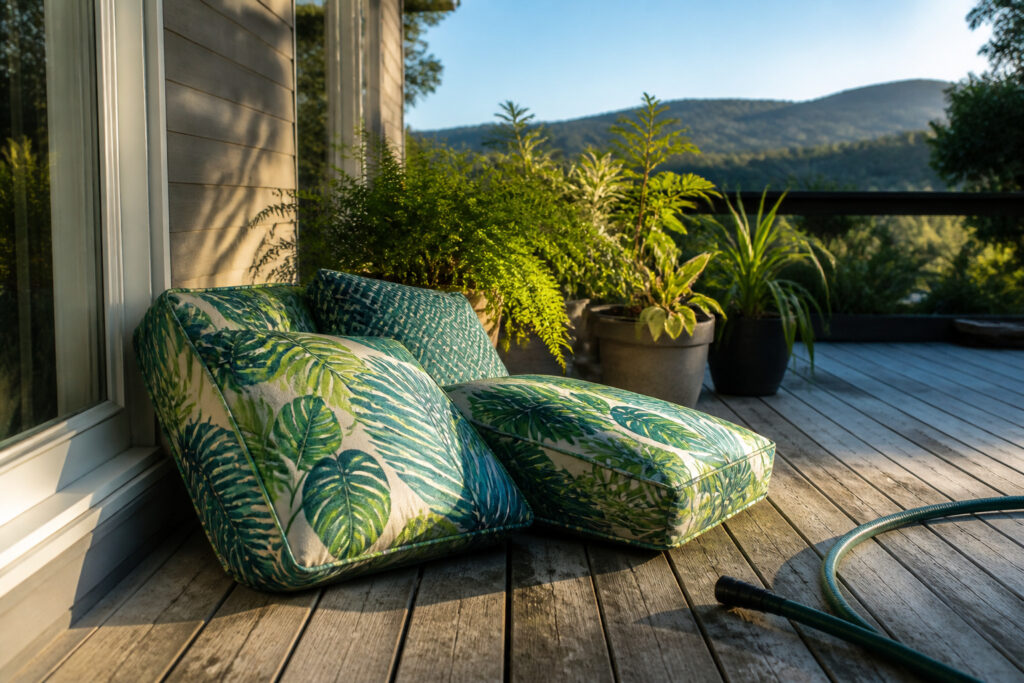
You can clean most patio cushions in an afternoon with dish soap, a brush, and a garden hose. The real cost is drying: the foam inside stays wet for two to five days even when the polyester cover feels dry, and packing them away early turns them musty and misshapen.
The stage people get wrong is rinsing. Leftover soap acts like a dirt magnet, so you need to keep going until bubbles stop lifting out of the fabric, not just the surface.
1. Remove Loose Dirt and Debris
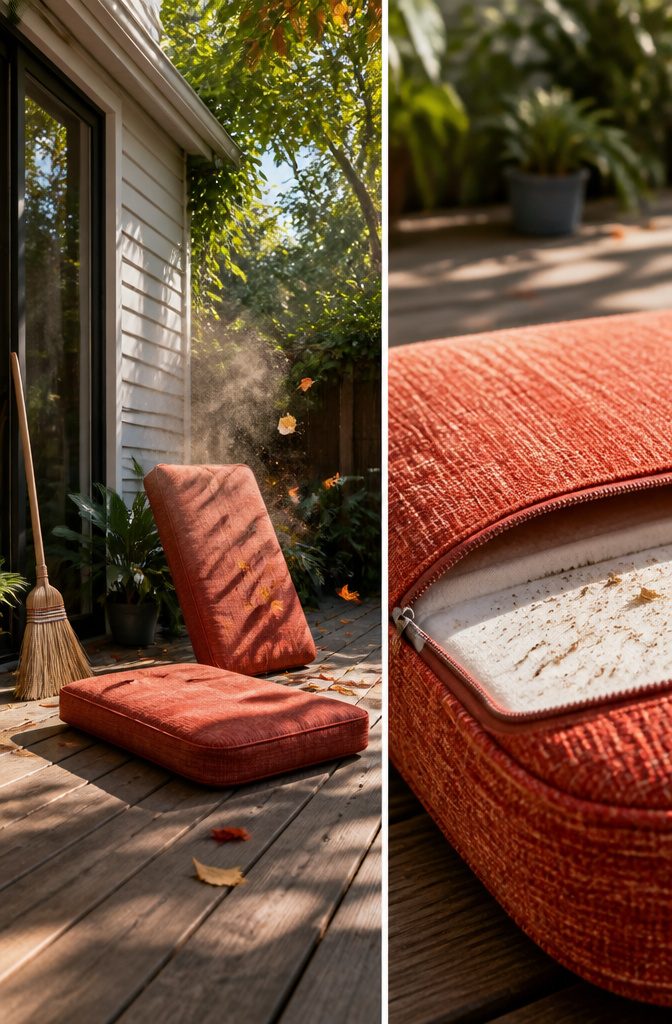
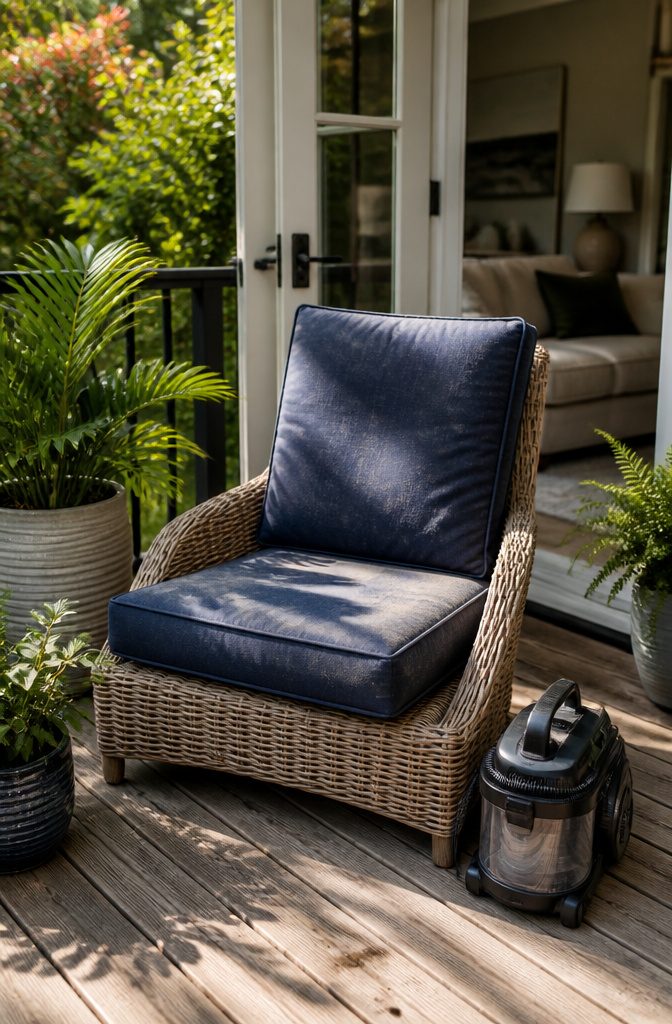
Dirt on patio cushions sits on top until water turns it into mud that soaks in deeper. Shake the cushions outside first, hard enough that leaves and pollen fall loose. A broom handle whacked across the surface works better than hands for the grit that sticks. Vacuum what remains, running the hose over seams and crevices where debris packs tight. If the cover unzips, pull the insert out and vacuum both sides; if not, work the surface as-is.
Check the care label now, while the fabric is still dry and readable. Labels fade fast once wet, and the instructions there decide whether you can machine-wash later or need to stay with hand methods. Some covers want cold water and a gentle cycle; others demand hand-washing only. Knowing that before you add water keeps a ten-minute job from becoming a ruined cover.
2. Spot Clean Stains
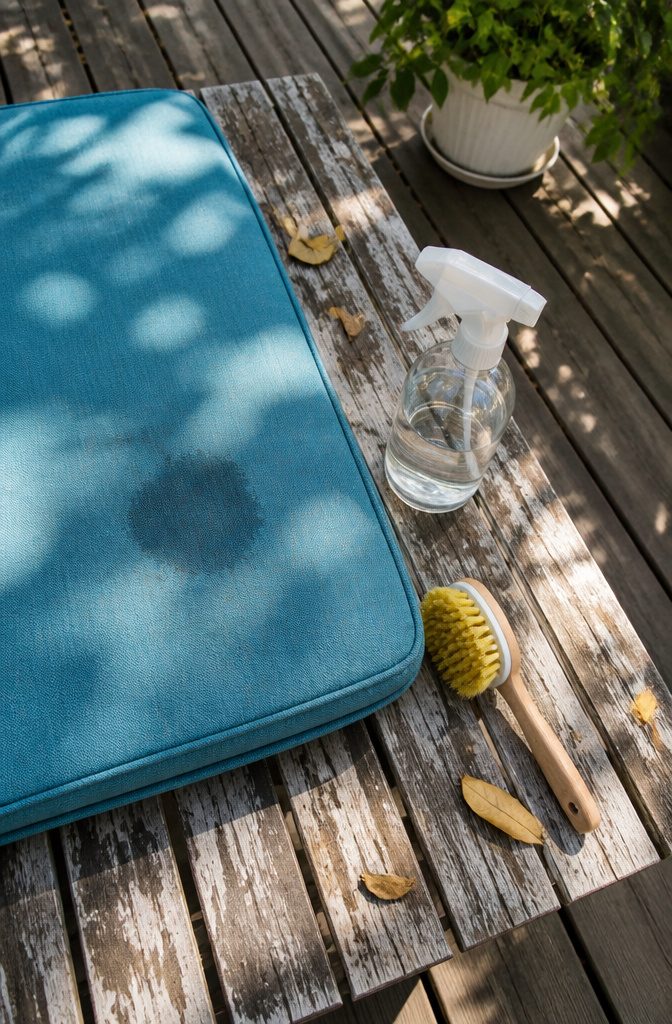
Most stains on patio cushions come up with nothing fancier than dish soap and warm water. A quarter cup of dish soap per gallon of water is the ratio that keeps showing up, and it is the one I would start with every time. Mix it, dab it onto the stain, and let it sit: a few minutes for ordinary grime, up to 15 minutes for anything that has set in, and as long as two hours for stains that have really baked into the fabric.
Mildew calls for something sharper. A one-part vinegar to three-parts water solution does the work here, and the vinegar kills the musty smell along with the stain. Let that one sit for an hour or more before you touch it with a brush.
The brush matters almost as much as the solution. Medium-stiff bristles hit the sweet spot: stiff enough to lift oil and ground-in dirt, not so stiff that they shred the weave. Delicate fabrics get a microfiber cloth instead. And before you commit either solution to the whole cushion, test it somewhere hidden. Colorfast is not a promise every outdoor fabric keeps.
3. Scrub the Cushions
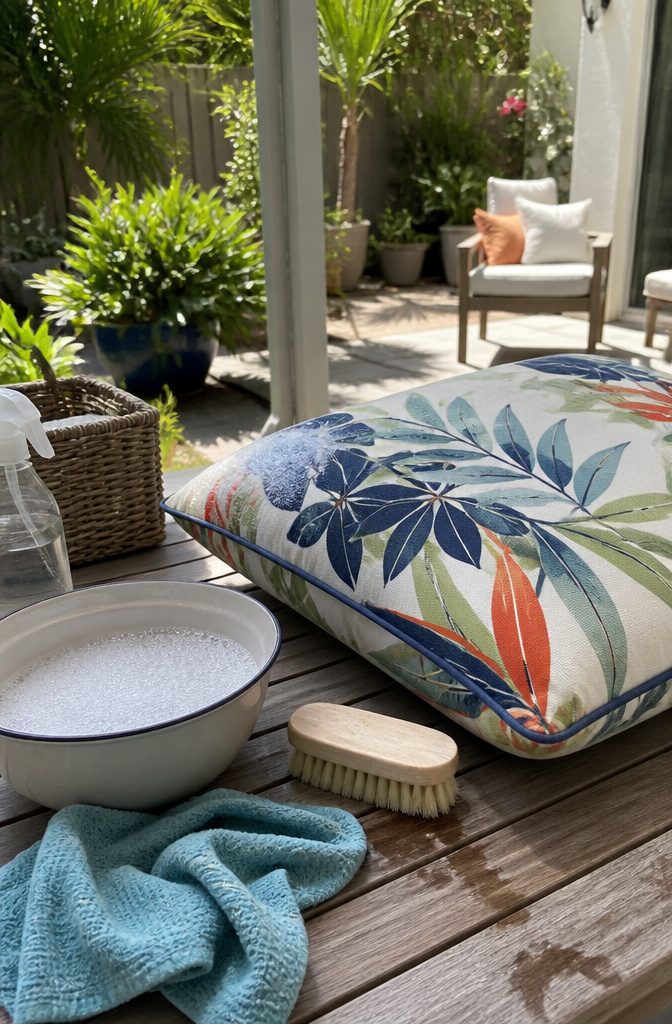
A soft-bristle brush or sponge is the right tool here, not the stiff deck brush you might grab first. The sources split on bristle stiffness: one side says soft to save the fabric from damage, another says medium-stiff to actually lift oil and ground-in grime. My read is that medium-stiff bristles work if your fabric is the standard outdoor weave, but soft is the safer call on anything printed, colored, or already thinning. When in doubt, sponge first and test a corner.
Work in sections, scrubbing the soapy water into the surface with enough pressure to agitate the dirt without forcing water through to the insert. The seams need extra attention; grime collects there and rinses out last. For stained areas, let the solution sit up to 15 minutes before you scrub, or as long as two hours for set-in marks. I skip bleach and harsh chemicals entirely here. Fading on a colored cushion shows up after the first rinse, and by then the damage is done.
4. Rinse Thoroughly
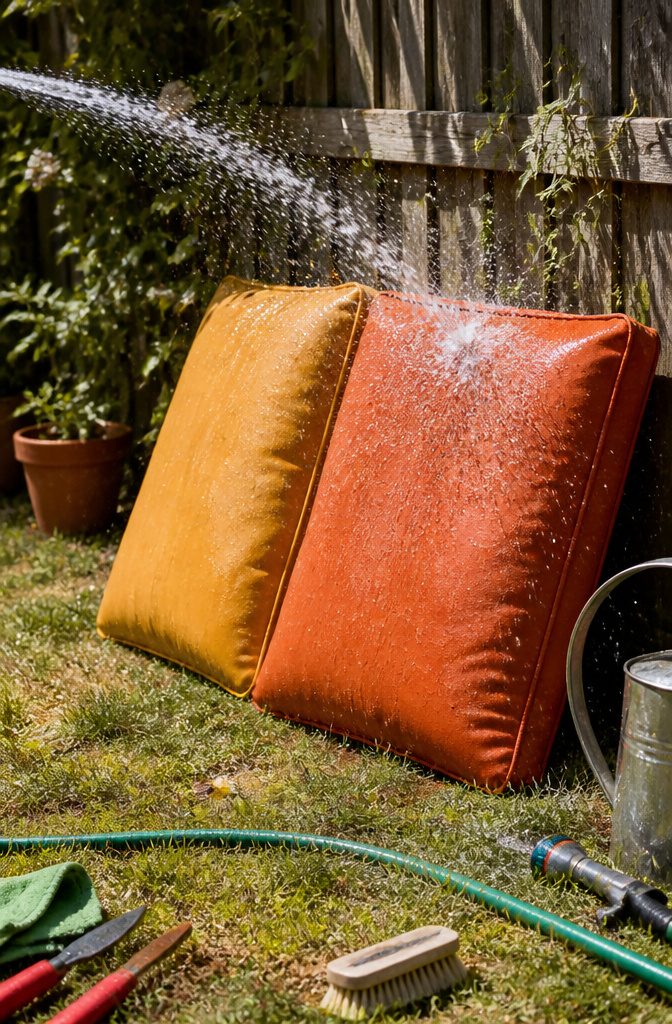
Leftover soap is a dirt magnet, so this stage matters more than the scrubbing itself. Rinse until you stop seeing bubbles lifting out of the fabric, not just the surface. A garden hose works fastest; a watering can or fresh bucket does the same job if water pressure is too fierce for your stitching. I skip the pressure washer entirely here, since the sources that mention it only warn against tearing seams or forcing water through the cover.
If you spot-treated a stain, rinse the whole cushion, not just the treated area. Spot-rinsing leaves a ring of soap residue that collects grime in exactly the shape of the spill you just removed. Polywood’s instructions and the spot-treat advice from Hi Neighbor both point to the same habit: one uniform rinse, then prop the cushions on their sides to dry. The water will run out faster, and you will not be back scrubbing the same cushion again next month.
5. Air-Dry Completely
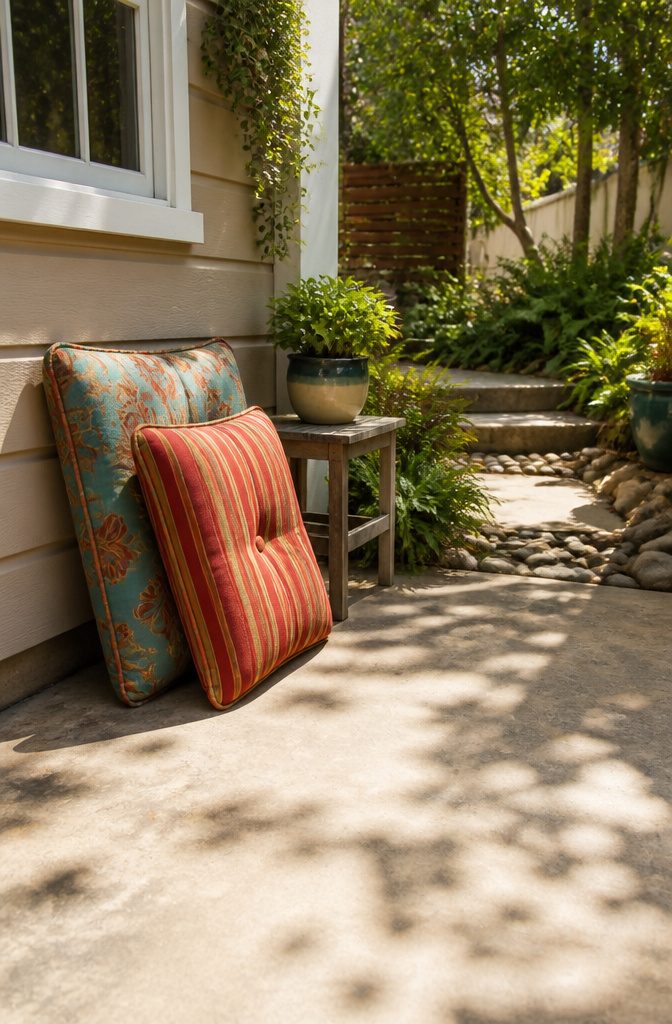
Standing cushions upright so they lean against each other lets water drain from both sides while the sun warms the fabric through. Polyester covers often feel dry to the touch within a few hours, but the foam inside is still holding moisture you cannot see. A full dry typically needs two to five days, not an afternoon. I have made the mistake of packing cushions away at 80 or 90 percent dry, thinking the garage air would finish the job, and opened the bags weeks later to musty, misshapen foam. The sun does the heavy lifting in the first day, but the last bit of interior drying happens slowly in shade or a garage with airflow. If you are washing on a weekend, plan to leave them out through at least the following Wednesday before stacking or storing.
6. Deep Clean for Tough Stains
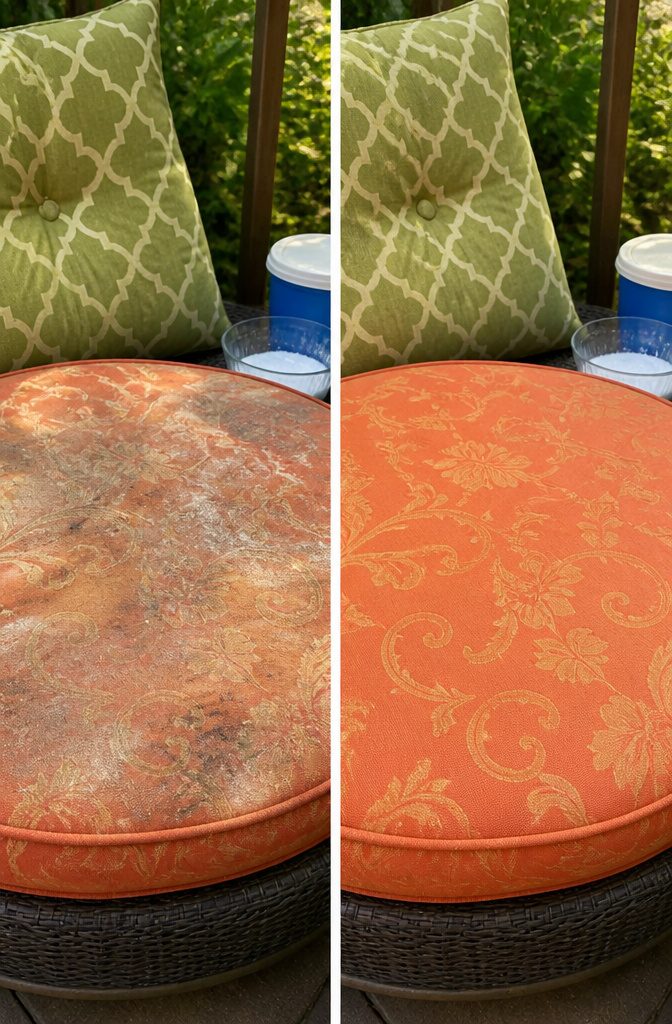
Some stains refuse to budge with mild soap alone, and after a season of cookouts the fabric can look tired even when the surface dirt is gone. That is when the stronger cleaners come out.
OxiClean at roughly 1/4 cup per gallon of warm water is the one most guides land on for colored cushions. The oxygen-based formula lifts set-in grime without the harshness of chlorine, and it is safe enough that splashes onto grass or deck boards are not a worry. Dissolve it fully before sponging it on, let it sit five to thirty minutes, and rinse with cool water.
Borax works at a lighter concentration, about 1 teaspoon per quart of warm water mixed with an equal measure of mild dish soap. Spray it onto the stain, give it ten to fifteen minutes, then scrub and rinse. I have seen this recommended for mold spots too, though for ordinary grime it is a slower lift than OxiClean.
Bleach has its place, but only on white fabric. The ratio is 1 cup per gallon of lukewarm water, mixed with 1/4 cup mild soap. Even then, test a hidden corner first; colorfast labels are not guarantees, and a faded corner ruins the whole cushion. On anything with a pattern or color, skip it entirely.
Cleaning Solutions Compared
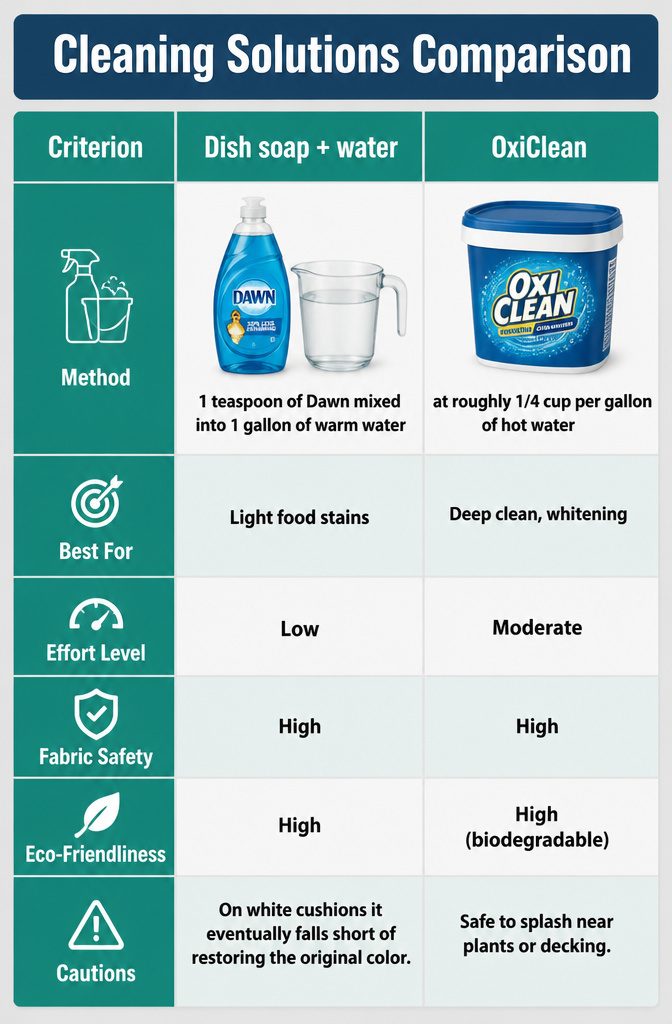
Dish soap and water is the gentlest place to start. 1 teaspoon of Dawn mixed into 1 gallon of warm water handles everyday food stains without much risk to the fabric, though on white cushions it eventually falls short of restoring the original color. OxiClean, at roughly 1/4 cup per gallon of hot water, adds hydrogen-peroxide-based bleaching power that several accounts now prefer for annual deep cleans; it is biodegradable and safe to splash near plants or decking. Vinegar and water in a 1:1 ratio works as a follow-up rinse for soap residue or as a standalone deodorizer, but it does not lift set-in grime on its own. Borax, mixed at 1 teaspoon with 1 teaspoon of mild dish soap per quart of warm water, tackles mold and mildew when left to soak 10–15 minutes, though one test with a steamer found the method tedious and still left visible dirt. Bleach demands the most caution: 1/4 cup mild soap plus 1 cup bleach per gallon of lukewarm water, never mixed with vinegar, and only after spot-testing the fabric, since not all cushion materials tolerate it.
| Method | Best For | Effort Level | Fabric Safety |
|---|---|---|---|
| Dish soap + water | Light food stains | Low | High |
| OxiClean | Deep clean, whitening | Moderate | High |
| Vinegar + water | Deodorizing, residue rinse | Low | High |
| Borax | Mold, mildew | Moderate | Moderate |
| Bleach | Heavy staining | Moderate | Low; test first |
Machine Washing and Pressure Washing
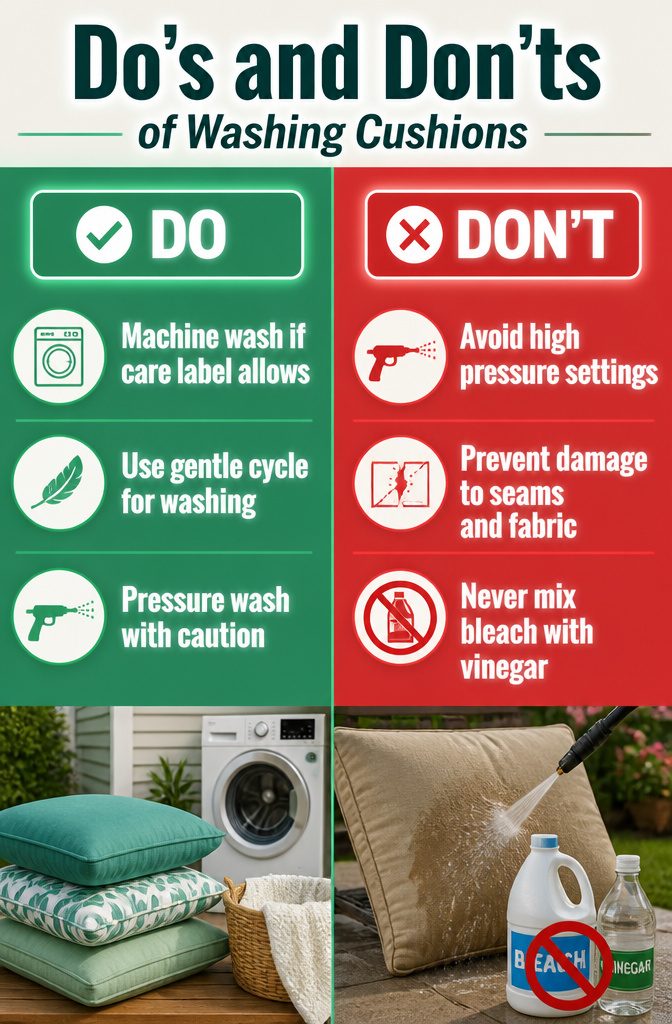
Machine washing a patio cushion cover only works if the care label says it will. The label is the stop-or-go signal here. When it allows, a gentle cycle is the setting to reach for. Otherwise, handwashing stays the safer path and the one I would default to on anything I was not sure about.
Pressure washing is the faster method that some upholstery can take and some absolutely cannot. The risk is real: torn seams, fabric pilling, even foam ejection from the force. The ones that hold up still need the lowest pressure setting, a wide spray tip, and distance kept between the nozzle and the fabric. Anything less careful, and the cushion takes damage that looks like it went through a hurricane.
Mildew Removal
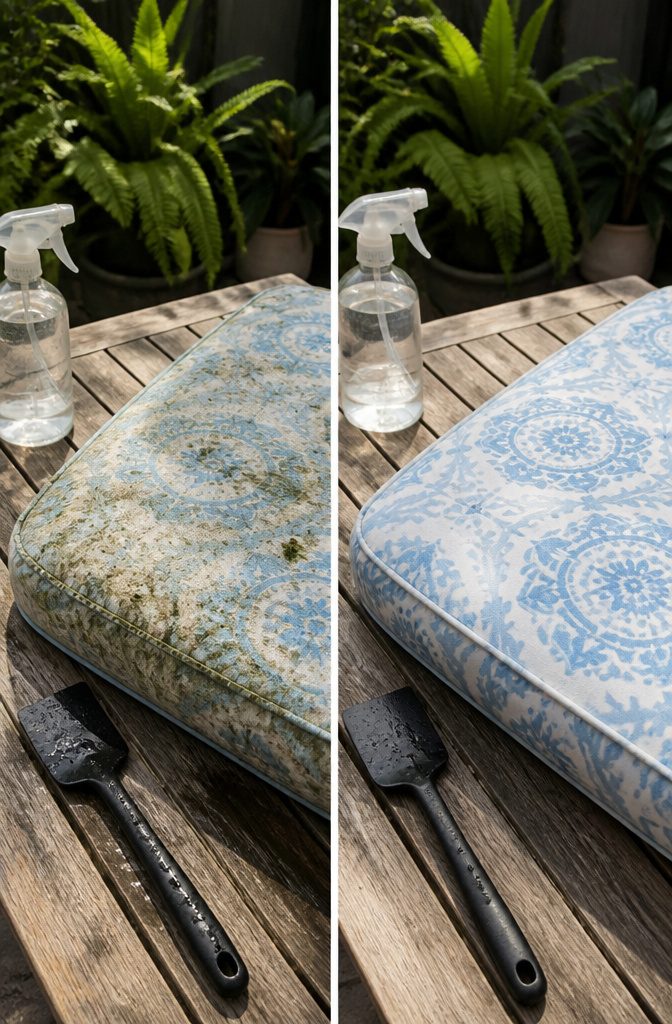
Mildew shows up as green, grey, or black patches across fabric that sat damp too long, usually after storage or a stretch of humid days. The first move is scraping off whatever sits on the surface with a blunt edge, a ruler or the back of a spoon, working outside where ventilation is good.
A 1:3 vinegar-to-water solution sprayed on and left for an hour or more will kill most mildew and cut the musty smell it leaves behind. For heavier growth, a Borax mixture of 1 teaspoon Borax, 1 teaspoon mild dish soap, and 1 quart warm water in a spray bottle works deeper: spray, let it soak a few minutes, scrub with a clean cloth, then let it sit another 10 to 15 minutes before rinsing. Another route is 1 part Borax to 4 parts warm water, sprayed generously and left 15 to 30 minutes before blotting and scrubbing.
Whichever solution you choose, test it hidden first. Some outdoor fabrics hold color fine; others bleed the moment moisture hits. Rinse thoroughly after, because residue attracts dirt and can discolor. Dry the cushions on their sides in sun and breeze, not flat in humidity, and give them about a full day before they go back on the furniture.
Keep Cushions Clean Longer
A couple of times a season is the bare minimum most guides suggest, but that framing always felt too vague to actually put on a calendar. The clearer split is a quick clean at the start and end of your outdoor season, with spot cleans between. In practice that means one full pass before you start living outside, one before you pack away, and dabs as spills happen.
What happens between those bookends depends on how hard you use the space. Dry brushing or vacuuming weekly keeps dirt from grinding into the weave, and flipping cushions upright after rain cuts drying time way down. If you store them, always wipe first, even if it is just a quick pass. Storing dirty cushions is how mildew gets a head start.
Covers are the part that saves the most labor. A fitted cover is easier than hauling pillows indoors when a storm rolls in, and it keeps the daily dust load down between deep cleans. Watertight bins or a dry shed for off-season storage add another layer, especially in climates where winter is wet rather than just cold.
The schedule shifts with where you live. In a four-season climate, late summer cleaning before the rains start makes sense. In warmer zones where cushions stay out year-round, you clean when they look like they need it, which usually means after heavy use stretches.
Frequently Asked Questions
Can I wash outdoor cushions in the washing machine?
Only if the care label says you can. When it allows, use a gentle cycle; otherwise stick to handwashing so you do not ruin the cover.
How do I remove mildew from outdoor cushions?
Spray a one-part vinegar to three-parts water solution on the patches and let it sit for an hour or more. For heavier growth, use a Borax mixture of one teaspoon Borax, one teaspoon mild dish soap, and one quart warm water; spray it, let it soak, scrub, then wait another 10 to 15 minutes before rinsing.
Can I use bleach on outdoor cushions?
Bleach works only on white fabric, at a ratio of one cup per gallon of lukewarm water mixed with one quarter cup mild soap. Always test a hidden corner first, and skip it entirely on colored or patterned cushions.