
The cheapest type of fence for backyard projects is chain link at $10–$20 per linear foot, but only if you do not need privacy. The same mesh that keeps costs low leaves every sightline wide open to neighbors and passersby. For homeowners who want to block the view instead, vinyl at $20–$40 per linear foot trades a higher upfront price for twenty years of weekends back.
1. Wood Fence
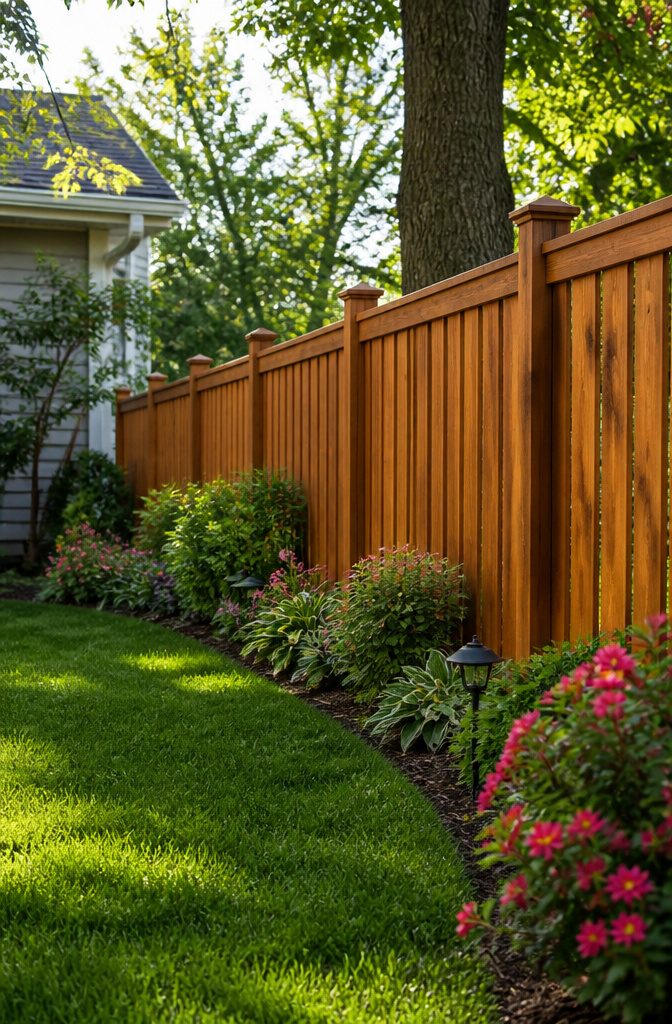
A cedar or redwood fence still reads as the classic backyard move for a reason: the grain hides a street view without looking like you tried to hide it, and the boards can run vertical, horizontal, or staggered depending on how much architecture your house already has. Pressure-treated pine drops the material cost closer to the bottom of the range, though tropical hardwoods sit at the top and fight rot harder.
$15–$35 per linear foot is the installed spread, and the 10–15 year lifespan only holds if you stain or seal on schedule. Skip a season and the boards gray, then crack, then invite the carpenter ants in. Post guards and rot-barrier sleeves help, but they do not replace the maintenance cycle. Renters should think twice: this is a project you hand back to a landlord still needing work, or one you leave behind unpaid.
2. Vinyl Fence
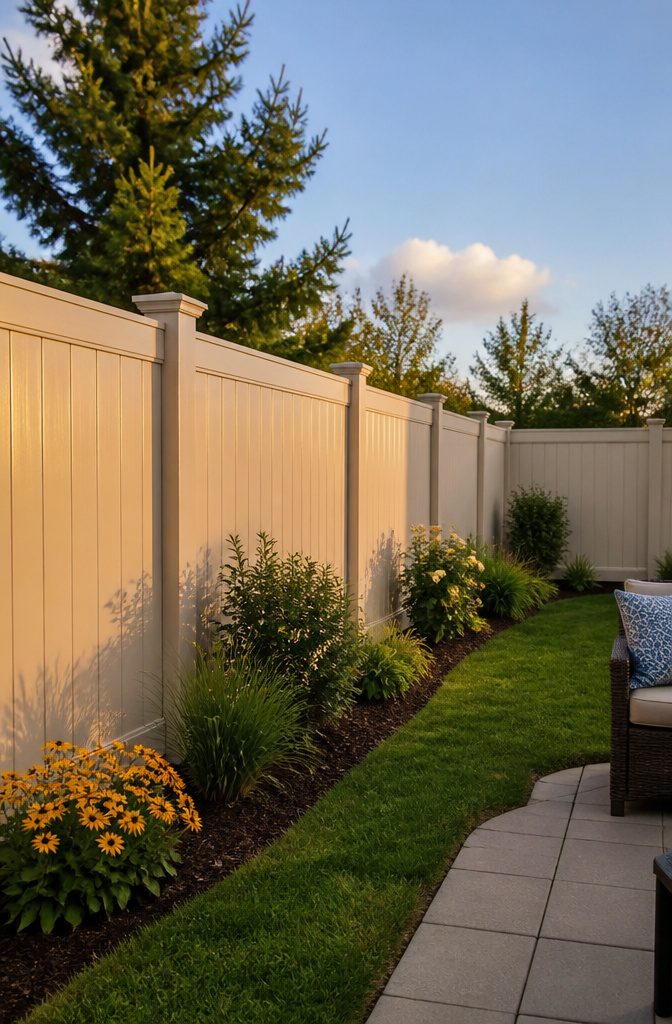
Vinyl runs about $20 to $40 per linear foot, which stings more than wood upfront until you count the weekends you get back. No sealing, no staining, no repainting after every hard winter. Soap and water handles the cleaning whenever dirt actually shows up, and that is the whole maintenance list.
The material itself is PVC plastic, formed into styles that range from clean picket lines to tongue-and-groove privacy panels with textured wood grain. Colors stay put for the life of the fence, which means the tan you picked in year one still reads as tan in year twenty. That lifespan sits at 20 to 30 years, and the main thing that shortens it is physical impact from lawn equipment or cracking from UV exposure, both of which post guards help against.
The real tradeoff is inflexibility. Scuff a board fence and you replace one board. Damage a vinyl panel and you are usually swapping the whole panel. And the color you choose is the color you keep; painting vinyl later is a known headache. For renters or first-home owners who want the fence done and forgotten, that locked-in color is usually worth the swap.
3. Chain Link Fence
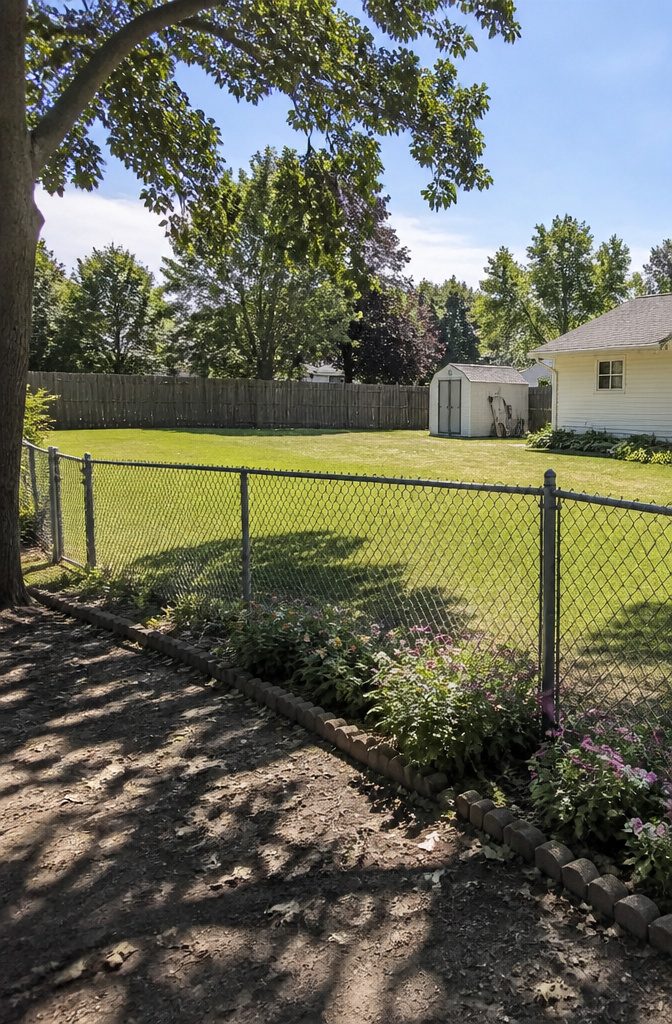
Chain link usually wins on price, and that is the whole reason to consider it. $10 to $20 per linear foot makes it the most affordable fence type for a backyard project, and the 15–20 year lifespan means you are not replacing it every few seasons. Galvanized or coated steel needs almost no upkeep, which matters if you would rather spend weekends on something else.
The trade is privacy. A chain link fence does not block sightlines at all; neighbors can see straight through, and so can anyone passing by. Coated options soften the industrial look slightly, but the mesh still reads as utilitarian. Privacy slats exist as an add-on, though that pushes cost up and starts to defeat the point of going cheap.
For a large yard where the goal is keeping pets in or defining a boundary without draining the project budget, chain link is hard to beat. For a space where you actually want to feel hidden, the savings will wear thin fast.
4. Aluminum Fence
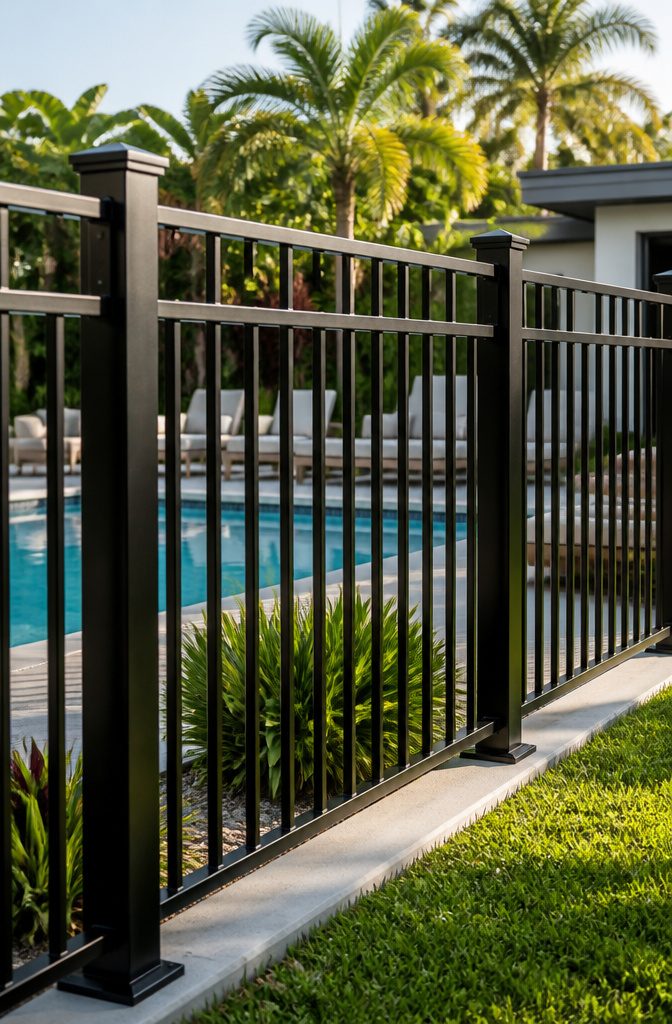
Aluminum fencing brings the look of wrought iron without the rust problem that kept my parents scraping and repainting their old steel railings every other summer. The material stays clean with little more than an occasional rinse, and the powder-coated finish holds up for 20 to 50 years depending on the gauge and the local climate. That longevity comes at a price: $25–$50 per linear foot installed, which puts it well above chain link but below custom wrought iron.
The tradeoff is visibility, not privacy. Picket spacing runs from standard gaps that let you see straight through to tight-spaced options that block some sightlines, though none will truly screen your yard. Styles like the Covington with its spear-topped pickets or the Wellington with flat tops let you lean traditional or contemporary without changing the material. For pool enclosures or front-yard boundaries where you want security without a wall effect, aluminum makes sense. For a backyard retreat where you actually want to disappear from the neighbors, this is the wrong choice no matter how nice the Brookshire arches look.
5. Composite Fence
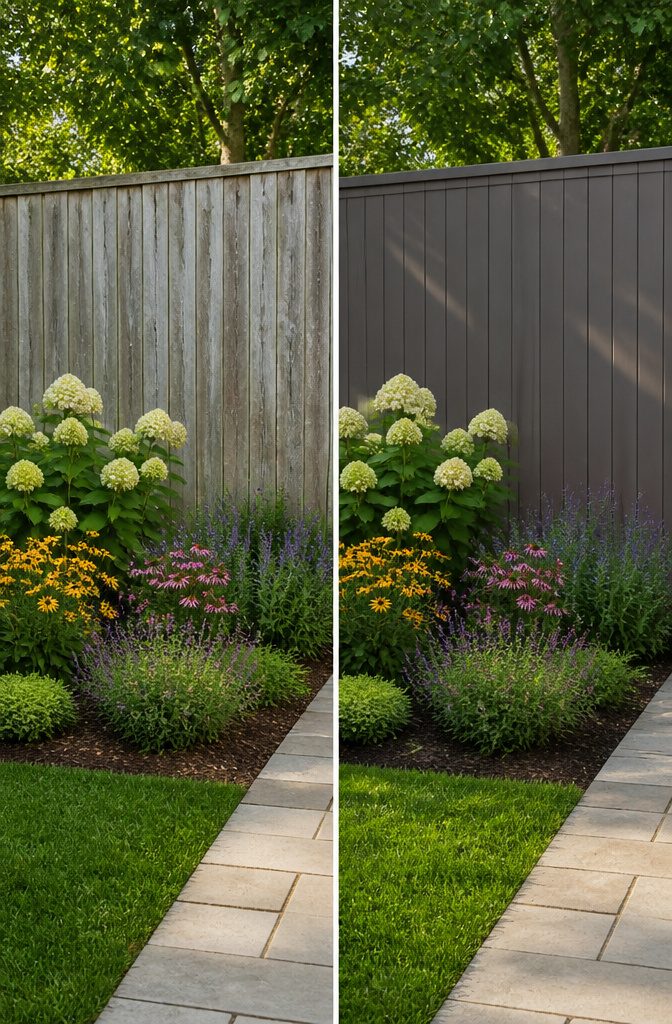
Composite fencing blends wood fibers with recycled plastic into boards that look enough like real wood to fool a neighbor walking past. The mix resists rot, insects, and weathering without the annual staining or sealing that keeps a cedar fence upright. For anyone weighing the environmental side, the material uses reclaimed plastic and wood that would otherwise hit a landfill.
$25–$45 per linear foot lands this in the upper middle of backyard options, though the 25–30 year lifespan narrows the gap against cheaper fences you replace twice. Most boards run in muted browns and grays; the color range is narrower than vinyl or painted wood, so matching an existing trim takes patience. Privacy styles dominate the composite market, with tight vertical boards and no gaps, which suits homeowners who want a solid backyard wall without the upkeep schedule of traditional lumber. Low maintenance does not mean zero: algae can still film the surface in damp shade, and power washing every couple of years keeps the finish presentable.
6. Wrought Iron Fence
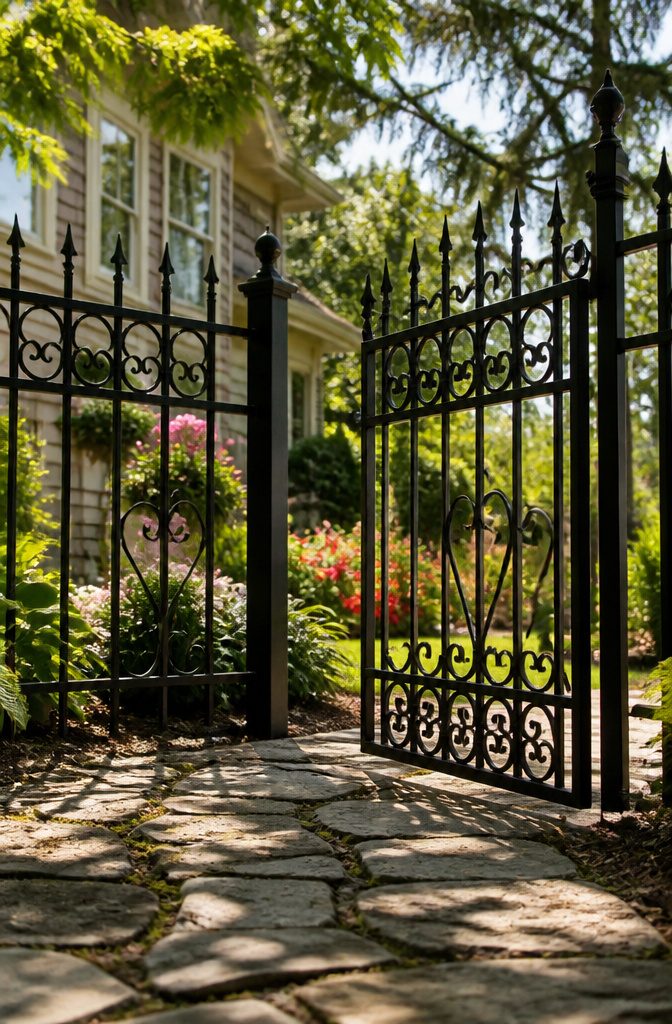
Wrought iron carries a heritage look that reads as estate fencing even on a modest lot. The pickets sit far enough apart to let light through, so privacy is not what you are buying here; you are buying visibility in both directions, which can be the point if your goal is showing off plantings or keeping sight lines open for security. The spacing also means small pets can slip through unless you add a secondary mesh or choose an extended picket design with cedar slats fitted between the rails.
Cost adds up quickly. The base material already runs toward the expensive end of backyard options, and ornamental details plus a matching gate push it higher still. Sources place wrought iron in the $25–$50 per linear foot range, though that band covers aluminum and steel as well and your actual quote for true wrought iron with custom scrollwork will likely land above it.
What you get for that outlay is decades of structural life. The metal itself does not fatigue the way wood rots or vinyl brittles. The catch is rust. Preventative coating or painting is not optional maintenance; it is the maintenance. Skip a season and the oxidation starts at welds and joints where water pools. Budget for touch-up work every few years, or the decades of life shrink fast.
7. Bamboo Fence
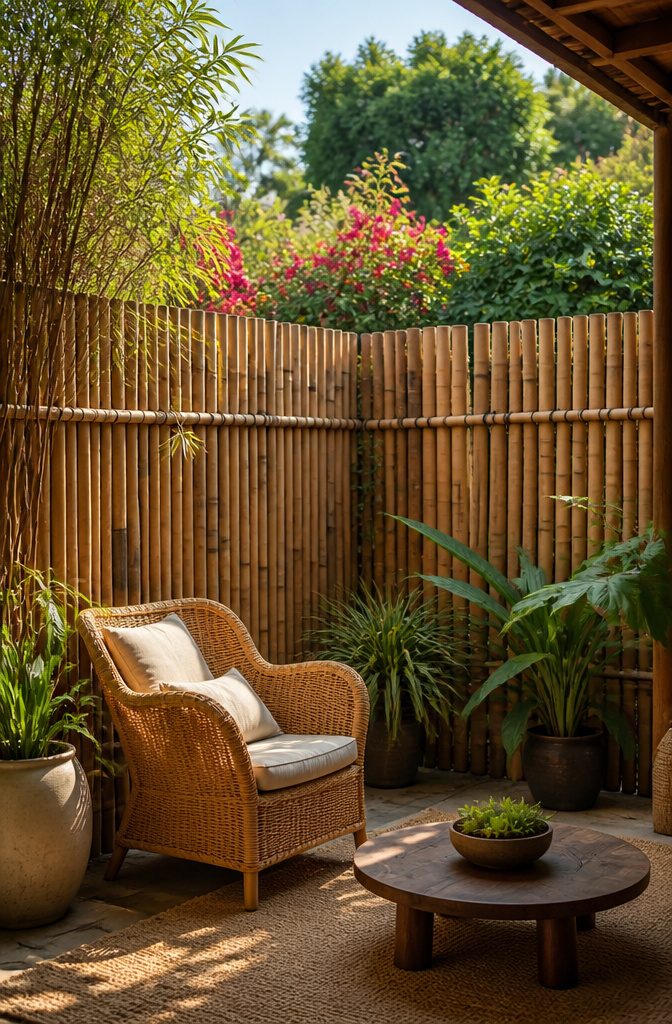
Bamboo gives a backyard the kind of instant calm that takes wood years to weather into. Rolled panels or natural poles run $8–$20 per linear foot, and the material itself regrows fast enough that the eco-friendly label actually holds up. I like the look for screening a small patio or softening a chain-link frame that the landlord won’t replace.
The catch is the lifespan. Treated bamboo tops out around 5–15 years, and that upper number assumes you are sealing it regularly. In a wet climate the lower half of that range is more honest. I have watched untreated bamboo gray and split within two seasons of heavy rain; the tropical aesthetic turns shabby fast once the fibers start checking. Sealing buys time, but it is maintenance that vinyl or aluminum simply does not ask for.
For a renter planning to stay two or three years, or for a homeowner who wants a quick visual fix before a bigger redesign, the shorter lifespan might not matter. For anyone hoping to install once and forget it, the cost per year ends up higher than it first looks.
8. Electric Fence
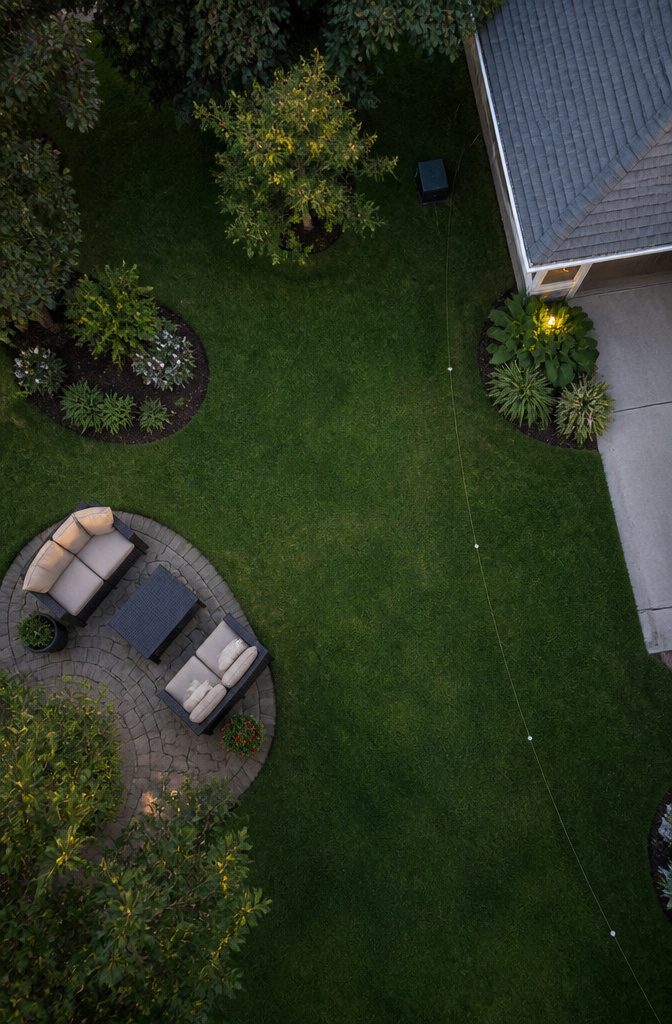
An invisible fence keeps pets inside the yard without changing how the space looks at all. A wire runs underground around the perimeter you choose, usually buried a few inches down, connected to a transmitter box. The pet wears a special collar that picks up the signal and delivers a warning tone, then a static correction if they keep moving toward the boundary.
Installation is straightforward enough for most homeowners to handle over a weekend. The wire gets buried along the property line, or sometimes just stapled under the turf if you are renting and need to pull it up later. The transmitter plugs into a garage or basement outlet, and you program the boundary width from there.
What makes or breaks the system is the training. The collar alone does nothing; the dog has to learn what the tone means and that turning back removes the unpleasant sensation. Most manufacturers recommend two weeks of daily, consistent sessions on a leash before the pet is left alone in the yard. Skip that step, or let the training slide, and a determined dog will blast right through the boundary, sometimes yelping but sometimes not even slowing down. The fence also does not keep other animals out, so if the neighbor’s cat or a stray dog wanders in, your pet has no protection. For renters who want containment without altering the property, the invisible system works, but only if the time for training is part of the weekend plan too.
9. Ranch Rail Fence
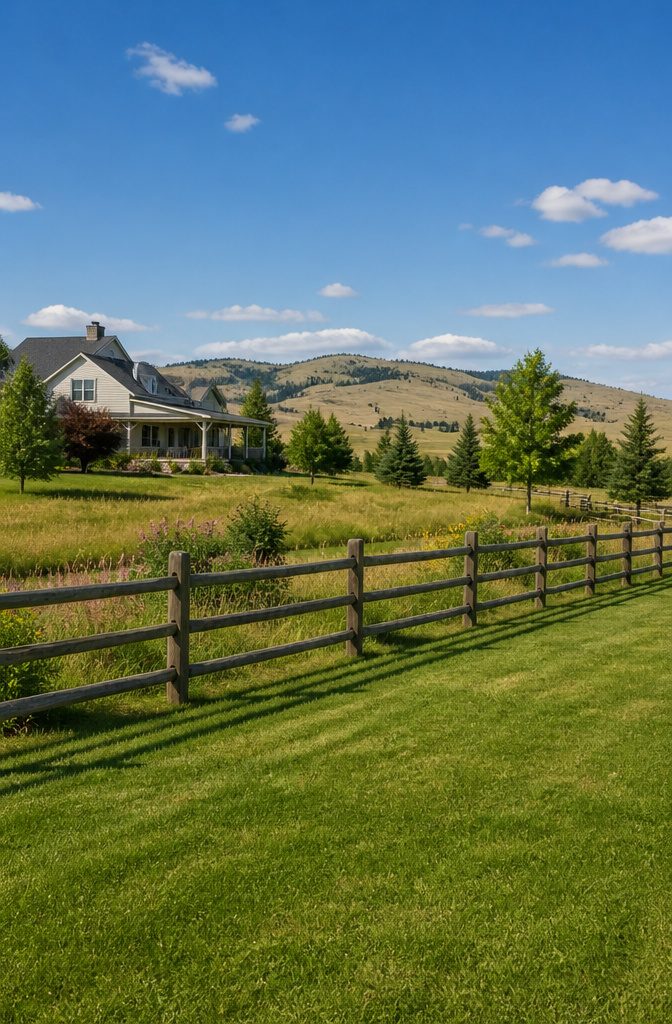
A ranch rail fence, sometimes called post-and-rail, gives you property lines without the boxed-in feeling of a solid panel. Two to four horizontal rails run between posts, leaving most of the view open. That openness makes it a natural fit for larger yards or anywhere you want the land itself to stay visible.
The style reads rural because it started there, containing livestock on working farms. In a suburban setting it does the same job it did on ranches: marking boundaries cheaply. Material costs sit lower than almost any closed fence type, with wood or vinyl rail systems both running in the $10–$25 per linear foot range. Vinyl and aluminum versions now outlast traditional wood and drop the maintenance to nearly zero, though wood still wins if you want that weathered, rough-cedar look some sources describe. Either way, you are looking at a 10–20 year lifespan, which is modest next to a vinyl privacy fence but fair for the price.
What you give up is real security. A ranch rail fence slows nothing and hides nothing. It also tops out around four feet in common setups, so it will not keep a determined dog in without wire mesh added between the rails. For pure boundary marking on a budget weekend, though, the math is hard to beat.
10. Decorative Fencing
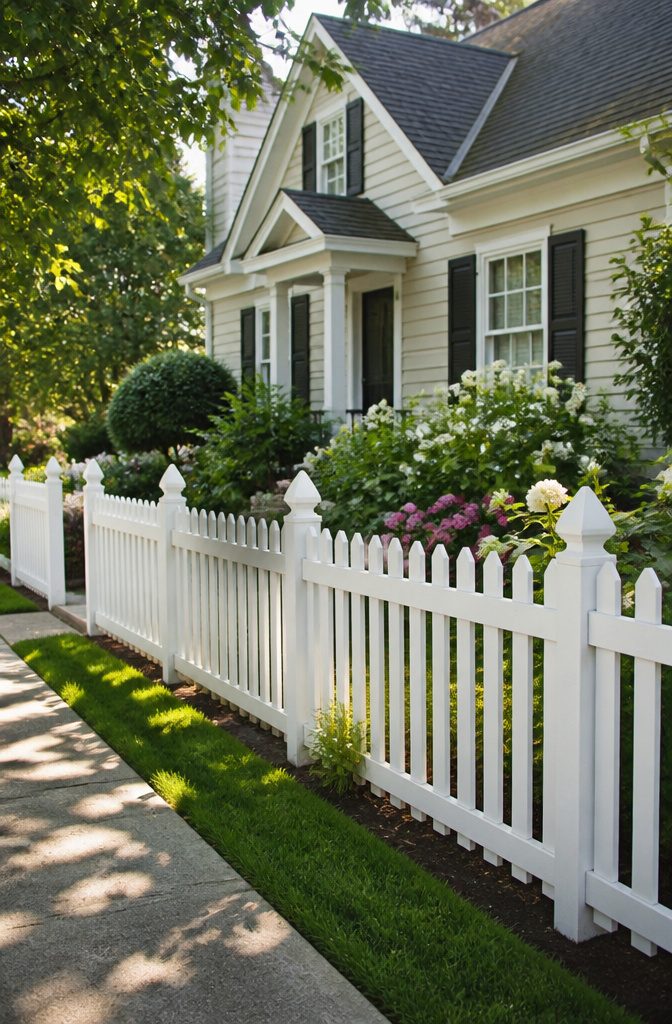
A picket fence still reads as the classic all-American boundary, and the visibility it leaves open is exactly the point. Wood remains the traditional choice, though vinyl now matches that warmth without the annual maintenance, and aluminum or steel pickets give the same outline in a leaner profile. At 3–6 feet, these keep small pets in and define the yard without turning it into a box.
Split rail lands at the other end of the same idea. The $10–$25 per linear foot cost makes it one of the cheaper ways to mark a border, and the rustic line it draws suits a garden or a wide lawn where privacy was never the goal. Wood or vinyl, 10–20 years of life, low to moderate upkeep: the numbers match the modest job it does.
Ornamental aluminum and powder-coated steel carry the same trade. Wrought-iron styling, fully welded panels, spear-topped or flat-topped pickets, even arched details: the designs have grown specific enough that you can match a colonial facade or clean modern siding without forcing either. Concrete footings keep it upright, rust resistance keeps it standing, and the visibility through the bars means pool codes and sightlines both stay satisfied. What you give up is seclusion. These fences announce the line, not the lifestyle behind it.
11. Privacy Slats for Chain Link
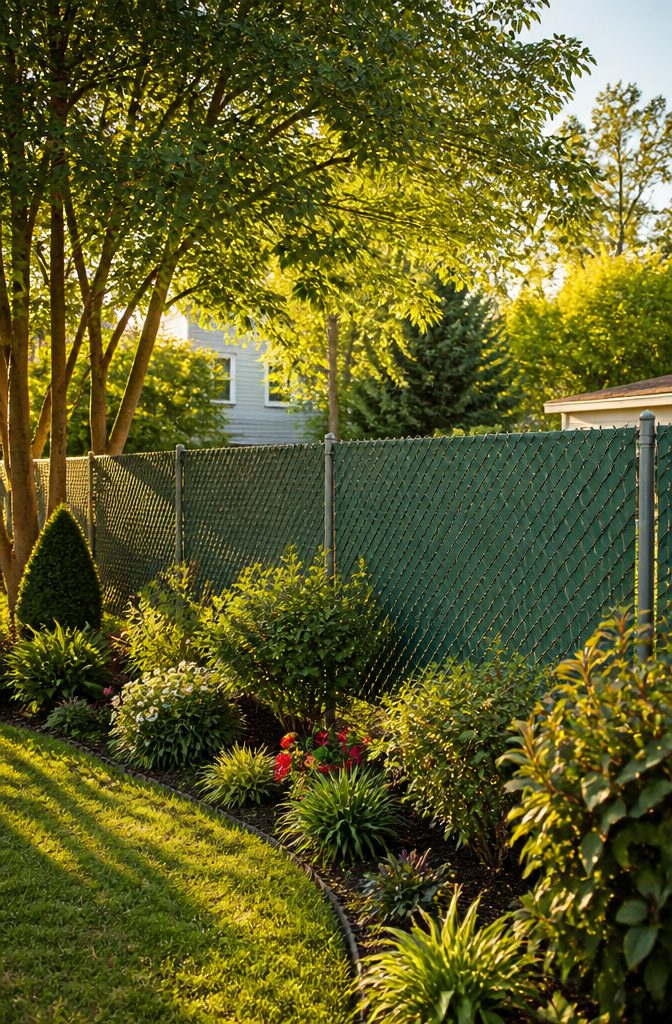
Chain link fencing runs about $10–$20 per linear foot for the fence itself, but it leaves the yard wide open to every neighbor’s glance. Privacy slats fix that without tearing out what’s already there. These thin vinyl or aluminum strips weave through the mesh diamonds, turning see-through boundary into something closer to a solid screen while keeping the original fence’s strength and its 15–20 year lifespan.
Installation is straightforward enough for a weekend. The slats thread vertically through the chain link weave, locking into the top rail with a small fin or cap that holds them upright. No posts come out, no concrete gets poured. The whole job stays between you and a ladder.
Material choice matters more than you’d think. Vinyl slats come in black, green, or brown to match a coated chain link frame, and they run cheaper than aluminum. Aluminum holds up longer but costs more upfront and reads more industrial. Either way, you’re looking at a fraction of full fence replacement, which starts around $25–$45 per linear foot installed for a new chain link system and climbs fast if you’re switching to wood or vinyl privacy panels entirely.
The catch? Slats cut airflow and can trap moisture against the mesh, so galvanized steel without a vinyl coat may show rust sooner in wet climates. Coated chain link handles this better. For renters or anyone who needs privacy fast and cheap, slats win. For a permanent home where you want real curb appeal, they’re a stopgap, not a destination.
12. Stockade Fence
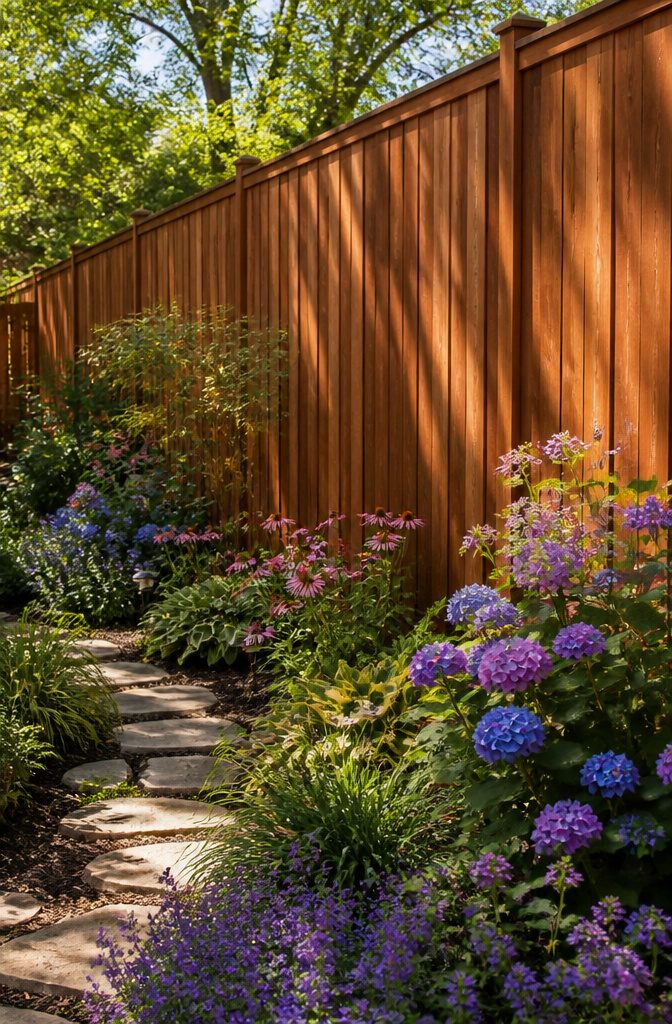
Vertical boards pressed shoulder-to-shoulder leave no crack for a passing glance, which is why a stockade fence still gets chosen when the goal is complete sight blocking from ground to rail. The traditional style runs pickets straight up from a bottom rail to a cap, usually in cedar or pressure-treated pine, and the construction is straightforward enough that a long weekend with a post-hole digger gets most backyards done.
Wood shrinks as it seasons, so the tight fit on day one loosens slightly by year two. Overlapping boards solve this, though that board-on-board approach pushes cost toward the upper end of the $25–$65 per linear foot range. A straight stockade without overlap sits at the lower half and still blocks direct sightlines, just with the risk of pencil-thin gaps opening later. Either way, the fence demands staining or sealing every few years; left alone, cedar weathers to a silver-gray that some homeowners prefer and others read as neglected.
Steel posts with concrete footings outlast pressure-treated 4x4s in wet soil, and heights from 3 to 7 feet cover everything from polite boundary marking to true privacy. The look reads rural or suburban depending on the neighborhood, and it never quite shakes the association with keeping dogs in and sightlines out. For a renter, this is rarely the right call; the posts are permanent, the labor is heavy, and the return on a year or two of tenancy does not math out.
What the Fence Is For
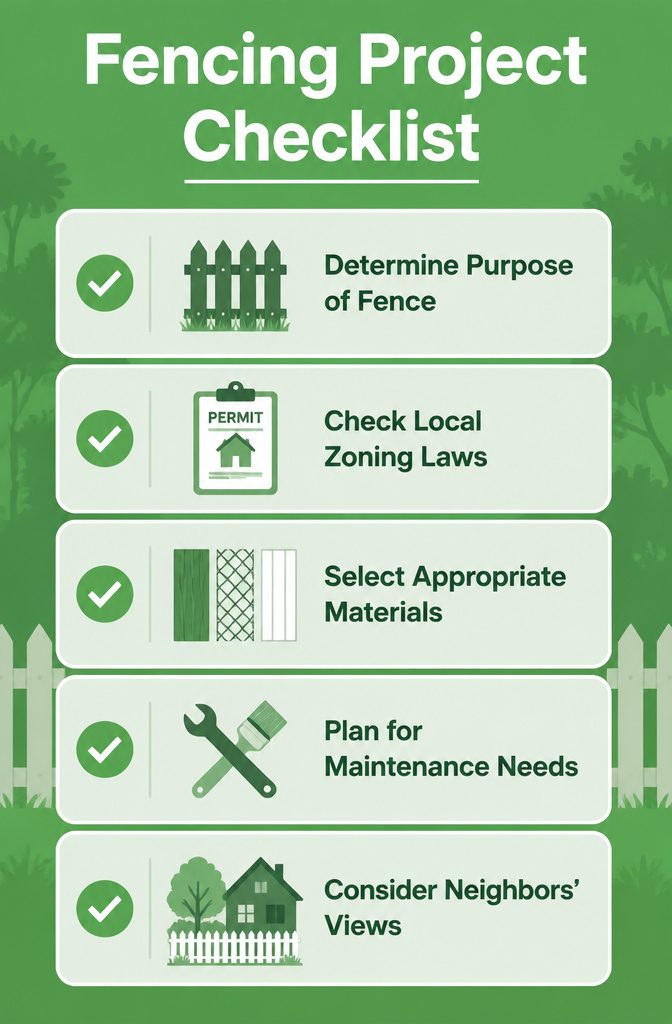
A fence that looks right but does the wrong job turns into a weekend you’ll want back. Last spring, my neighbor learned this after installing a waist-high picket fence to keep his new husky contained. The dog cleared it in one jump, and he spent the next month adding wire mesh and angled extensions he hadn’t budgeted for.
Start with the actual purpose, not the Pinterest board. Privacy means solid panels with no gaps, usually wood or vinyl at six feet or higher. Security favors wrought iron, steel, or wood that resists climbing and takes a lock well. Pet containment is where chain link earns its keep, though wood and vinyl work if you bury the bottom rail or add a skirt to block diggers. Pure property-line marking can stay low and open, saving material and preserving sight lines.
Local zoning laws and HOA regulations will cut your options before you ever pick up a post-hole digger. Some communities cap fence height at four feet in front yards and six in back. Others mandate specific materials to keep the street looking uniform. Checking these rules early keeps you from pouring concrete for a fence the city makes you tear out. The permit office and your HOA covenants take an afternoon to read and save you from fines or forced modifications later.
Maintenance Reality
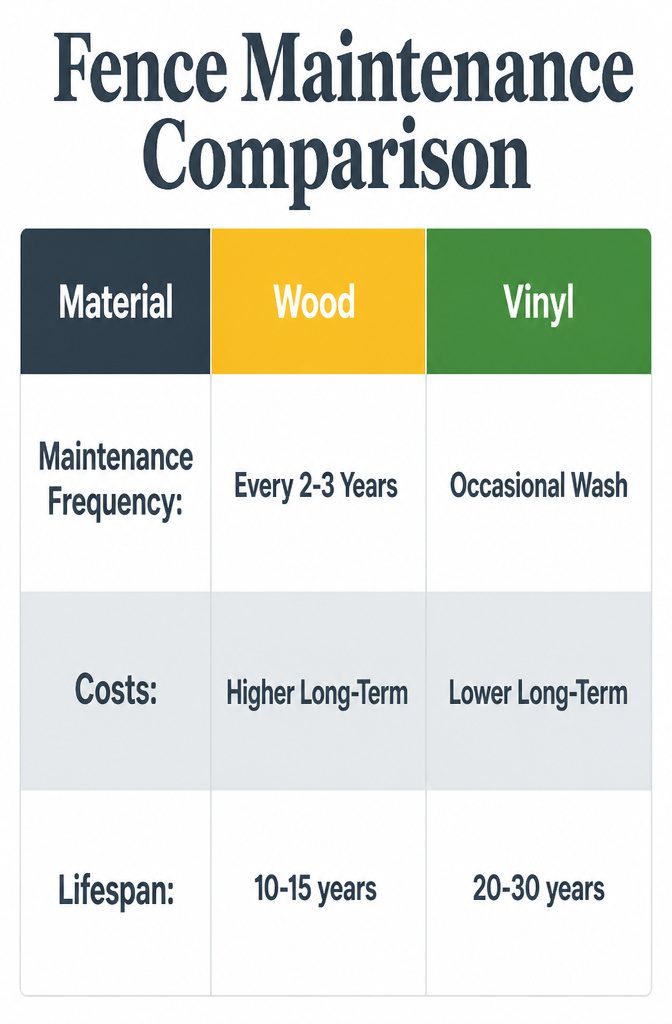
Staining a wood fence every two to three years is the chore that keeps on taking, and the cost adds up fast once you price brushes, cleaner, and a decent semi-transparent stain. Vinyl skips all of that: an occasional wash with a hose and mild soap keeps the surface looking crisp, and the color holds without painting or sealing. Aluminum and composite sit even lower on the effort scale. Aluminum never needs rust treatment, and composite resists rot, insects, and weather damage with almost no attention. The real math on any fence is the ten-year cost, not the install quote. A vinyl fence running $24 to $60 per linear foot installed starts looking cheaper once you subtract three or four staining cycles and the weekend hours each one eats. Composite costs more upfront too, but the same logic applies. For renters or first-home owners who know they will move inside five years, wood’s lower entry price can still win. For anyone staying put, the low-maintenance materials pay back in both dollars and Saturdays recovered.
Cost per Linear Foot
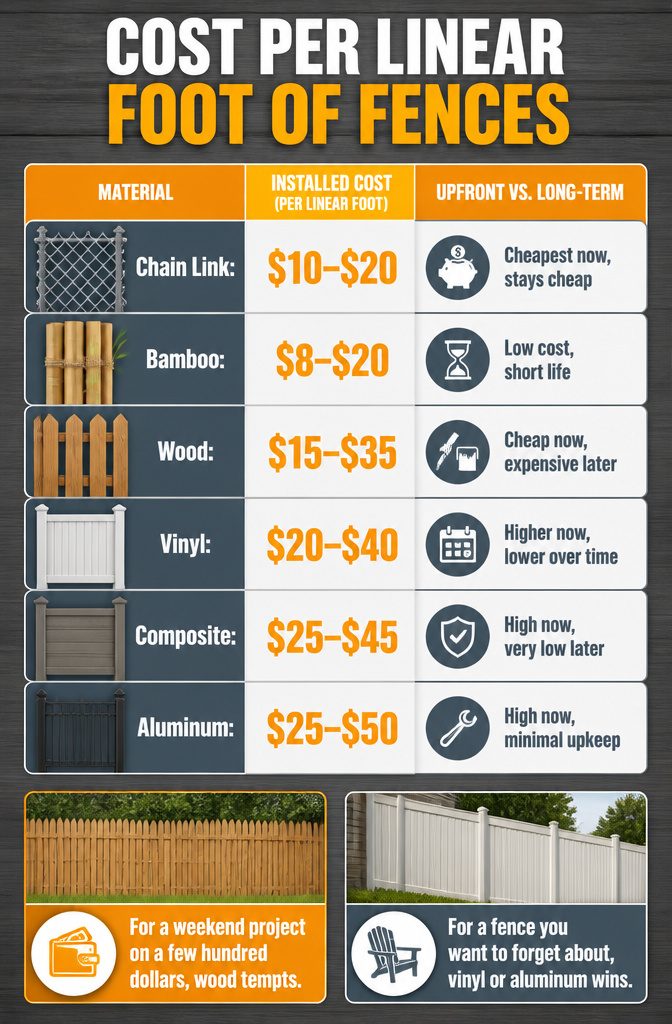
Chain link runs $10–$20 per linear foot installed, making it the cheapest way to mark a boundary if you do not need privacy. Wood starts around $15–$35, which looks like a bargain until you count the staining, sealing, and board replacements that follow. Vinyl lands at $20–$40 and aluminum at $25–$50, both trading higher upfront cost for years of not touching a paintbrush. Composite sits at $25–$45, and bamboo at $8–$20, though bamboo’s 5-to-15-year lifespan means you may pay twice.
| Material | Installed Cost (per linear foot) | Upfront vs. Long-Term |
|---|---|---|
| Chain link | $10–$20 | Cheapest now, stays cheap |
| Bamboo | $8–$20 | Low cost, short life |
| Wood | $15–$35 | Cheap now, expensive later |
| Vinyl | $20–$40 | Higher now, lower over time |
| Composite | $25–$45 | High now, very low later |
| Aluminum | $25–$50 | High now, minimal upkeep |
For a weekend project on a few hundred dollars, wood tempts. For a fence you want to forget about, vinyl or aluminum wins.
Fence Height for Privacy
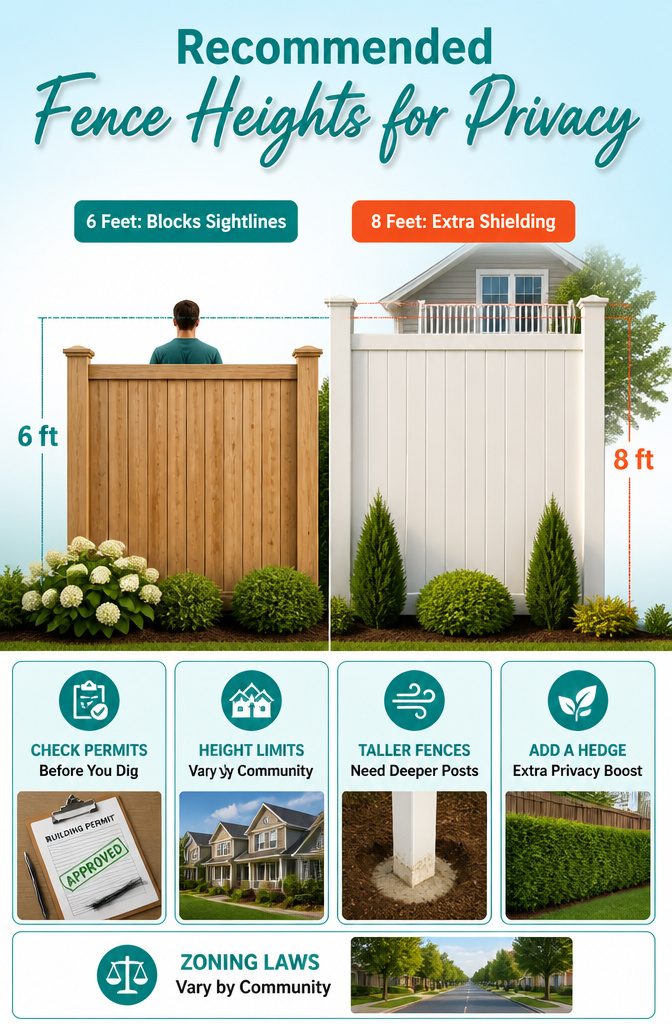
Privacy fences generally run 6 to 8 feet in height, and that two-foot spread matters more than it sounds. Six feet blocks sightlines from a standing adult on flat ground, which handles most casual neighbor encounters across a lawn. Eight feet adds the extra shielding you need if the neighbor has a raised deck, a second-story window, or just a habit of wandering out to their balcony with coffee.
Local zoning laws and HOA rules often cap height well below what you might want, so checking permits before you dig beats tearing down boards later. Some communities set the limit at six feet for side and back yards, others push it to eight, and a few drop lower near the street to preserve sightlines for drivers. The variance is wide enough that a fence built to one town’s standard could be illegal two blocks over.
Wood and vinyl both work at either height, though taller panels catch more wind and need deeper posts. If the limit lands at six feet and you still feel exposed, planting a hedge inside the line buys another foot or two of soft screening without violating code.
How Long Each Fence Lasts
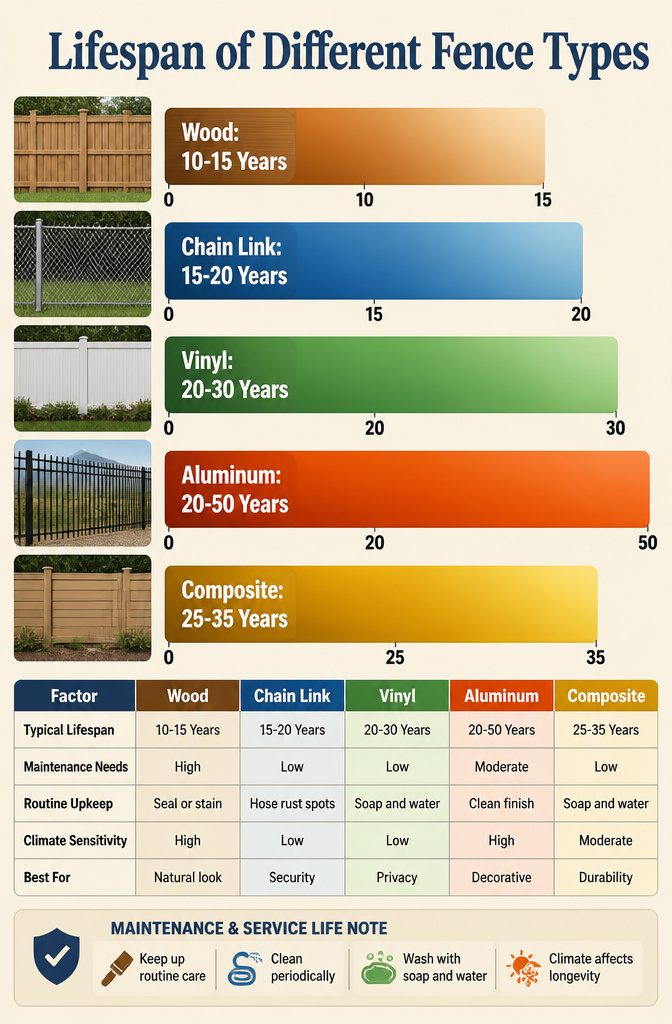
A fence that looks great on day one can still leave you rebuilding before the decade is out, so the lifespan numbers matter more than the sticker price. Wood holds up about 10 to 15 years with real care, meaning sealant or stain every two to three years and keeping an eye out for rot where the posts meet the soil. Skip that routine and you’re looking at replacement sooner, not later. Chain link stretches further, 15 to 20 years, with almost nothing required beyond hosing off the occasional rust spot. Vinyl pushes to 20 to 30 years and only asks for soap and water when the pollen cakes on. Aluminum spans the widest range, 20 to 50 years, because coastal salt or heavy freeze-thaw cycles chew at the finish while dry inland yards see the upper half of that window. The climate gap is real: my neighbor’s aluminum railings in Arizona still look factory-new at 25 years, while a cousin on the Gulf Coast had pitting show up in under a decade on the same grade of metal.
Frequently Asked Questions
What is the best fence material for privacy?
Vinyl, wood, and composite fences are the most popular options for privacy. Vinyl and composite give the most consistent coverage with the least upkeep, while wood offers the classic solid-panel look if you stay on top of staining or sealing.
How long do wood fences last?
A wood fence lasts about 10 to 15 years if you stain or seal it every two to three years. Skip that routine and the boards gray, crack, and invite rot, which pulls the lifespan down fast.
What is the cheapest type of fence to put up?
Chain link is the most affordable option, running $10 to $20 per linear foot installed. Bamboo comes close at $8 to $20, but its 5 to 15 year lifespan means you may replace it twice while a chain link fence is still standing.
What fence material requires the least maintenance?
Vinyl and aluminum ask the least of you over time. Vinyl needs only soap and water when dirt shows up, and aluminum stays clean with an occasional rinse; neither ever needs painting or staining.
How high should a backyard fence be for privacy?
Privacy fences generally run 6 to 8 feet. Six feet blocks sightlines from a standing adult on flat ground, while eight feet adds shielding against raised decks or second-story windows. Local zoning and HOA rules may cap you lower, so check permits before you dig.