Whether you can drill into your walls splits this list in two, with the countertop wooden organizer on one side and the wall-mounted pieces on the other.
Renters can stick with the countertop wooden organizer, which needs no drilling, while owners can mount the oak floating shelf or anchor custom barnwood floating shelves into studs.
Brick built-in shelves are the biggest commitment here, a masonry job that suits a remodel and not a rented kitchen.
1. Rustic Wooden Shelves
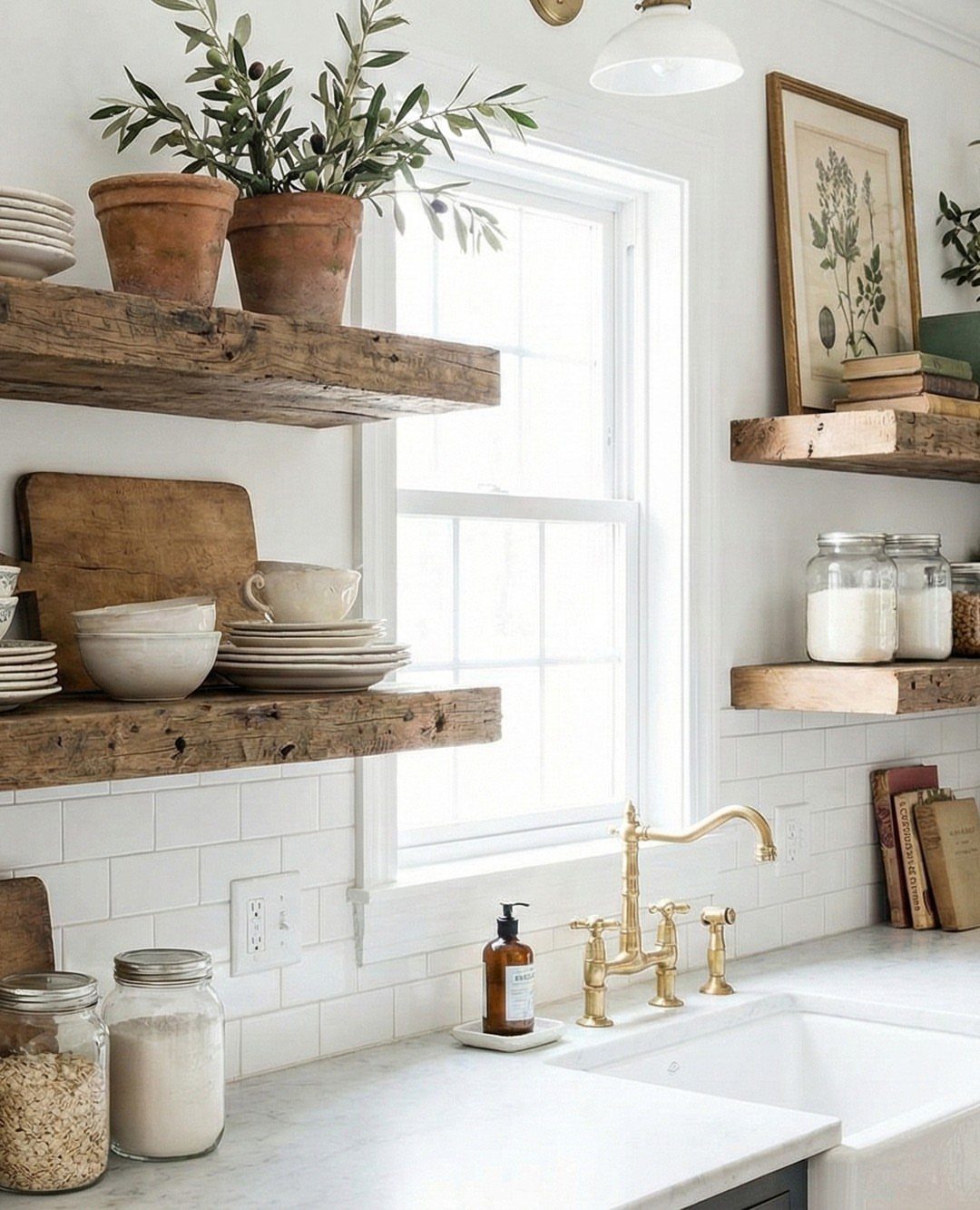
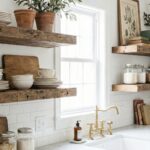
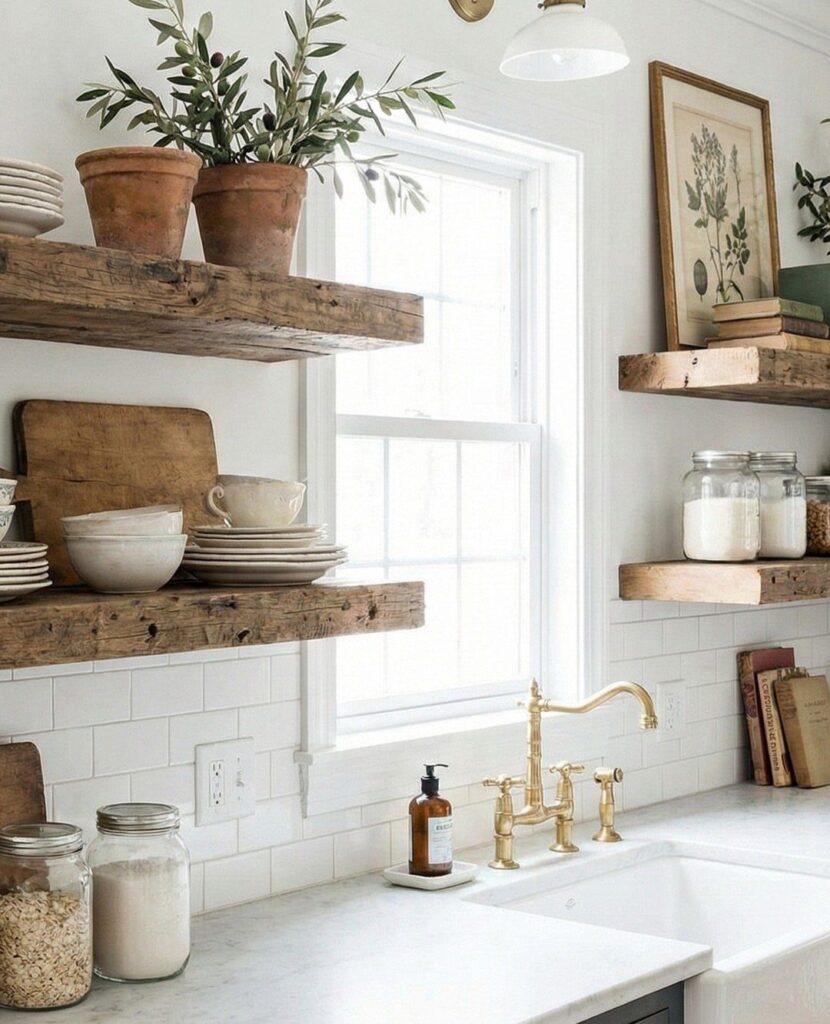
Thick wood against white tile does a lot with very little. The warm grain gives a white kitchen one clear rustic note, so nothing else needs to be rustic.
Loose styling works best on open wood shelves: terracotta pots, bowls and jars in earthy tones, plus one trailing plant to soften the straight edges.
If you’re choosing boards, go chunky. A heavier plank reads as rustic far more than a thin one.
2. Live-edge Wooden Shelves
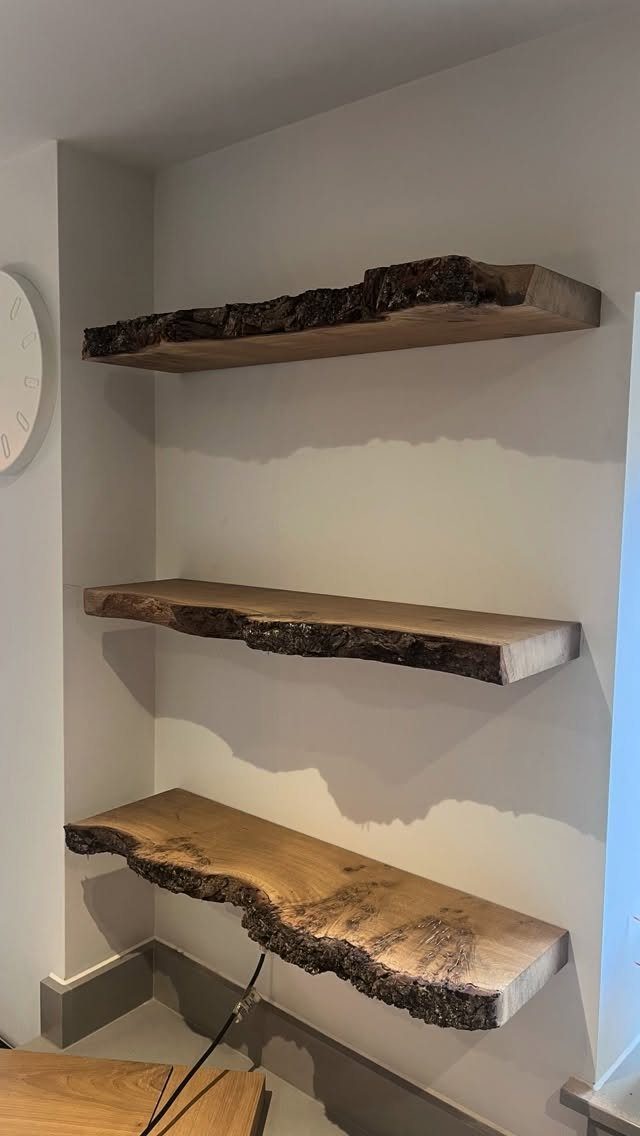
The uneven, natural edge is what makes a plain board look rustic, and a blank white wall lets it stand out. 3 shelves mounted in a stack keep the look casual.
I’d put only a few pieces on them.
The edge is the feature, and a crowded shelf hides it. Each live-edge board has its own shape, so pick yours by looking at the actual board rather than a catalog photo.
3. DIY Industrial-rustic Shelf
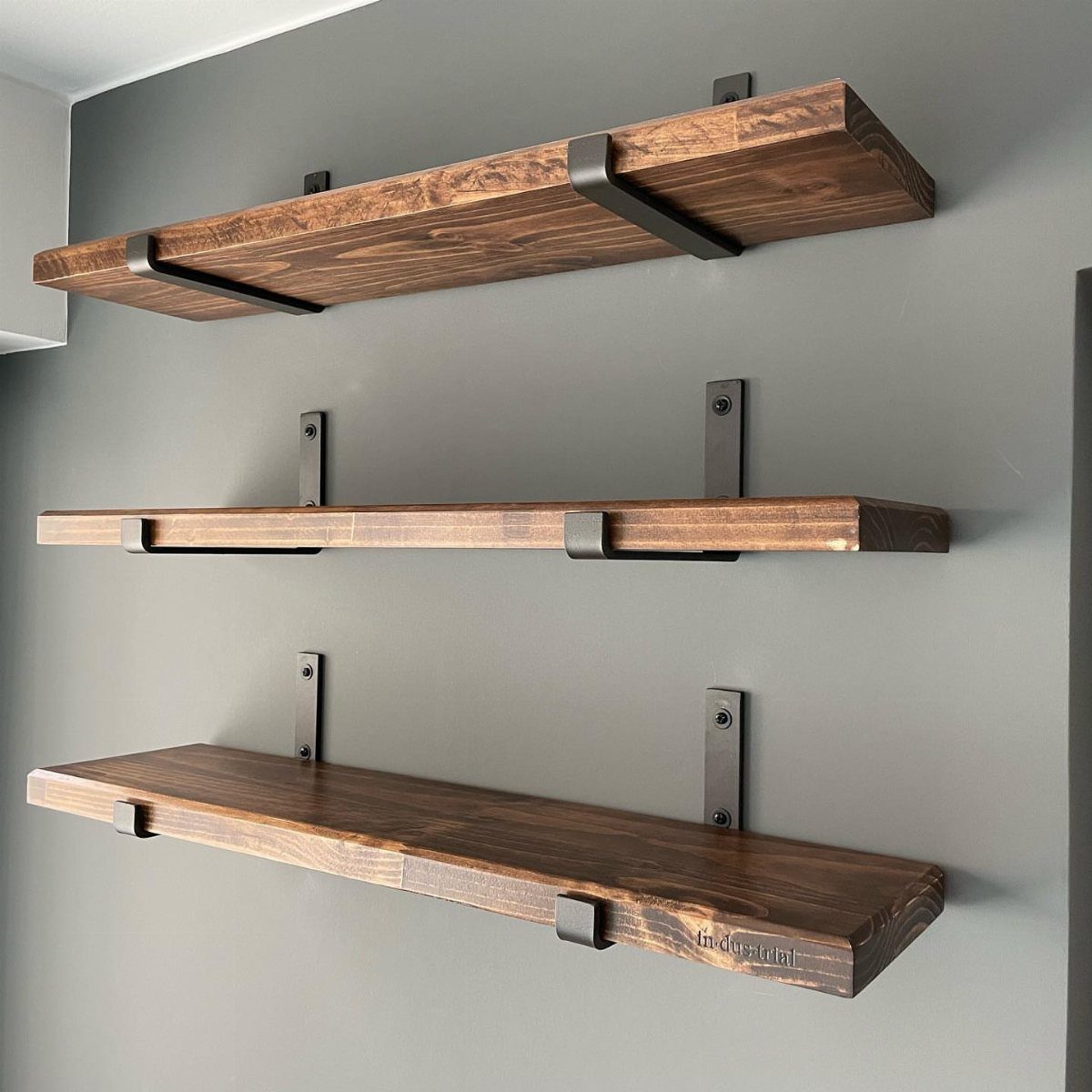
Black metal brackets under dark wood give this shelf its industrial-rustic mix.
Rough-looking timber carries the rustic half, and the hard-edged hardware carries the other. Against a gray wall, the whole thing reads moody and low-key.
The engraved word is a fun touch, though plain wood suits a quieter kitchen. I’d keep this look to one wall so it stays an accent.
4. DIY Shelves in a Kitchen Niche
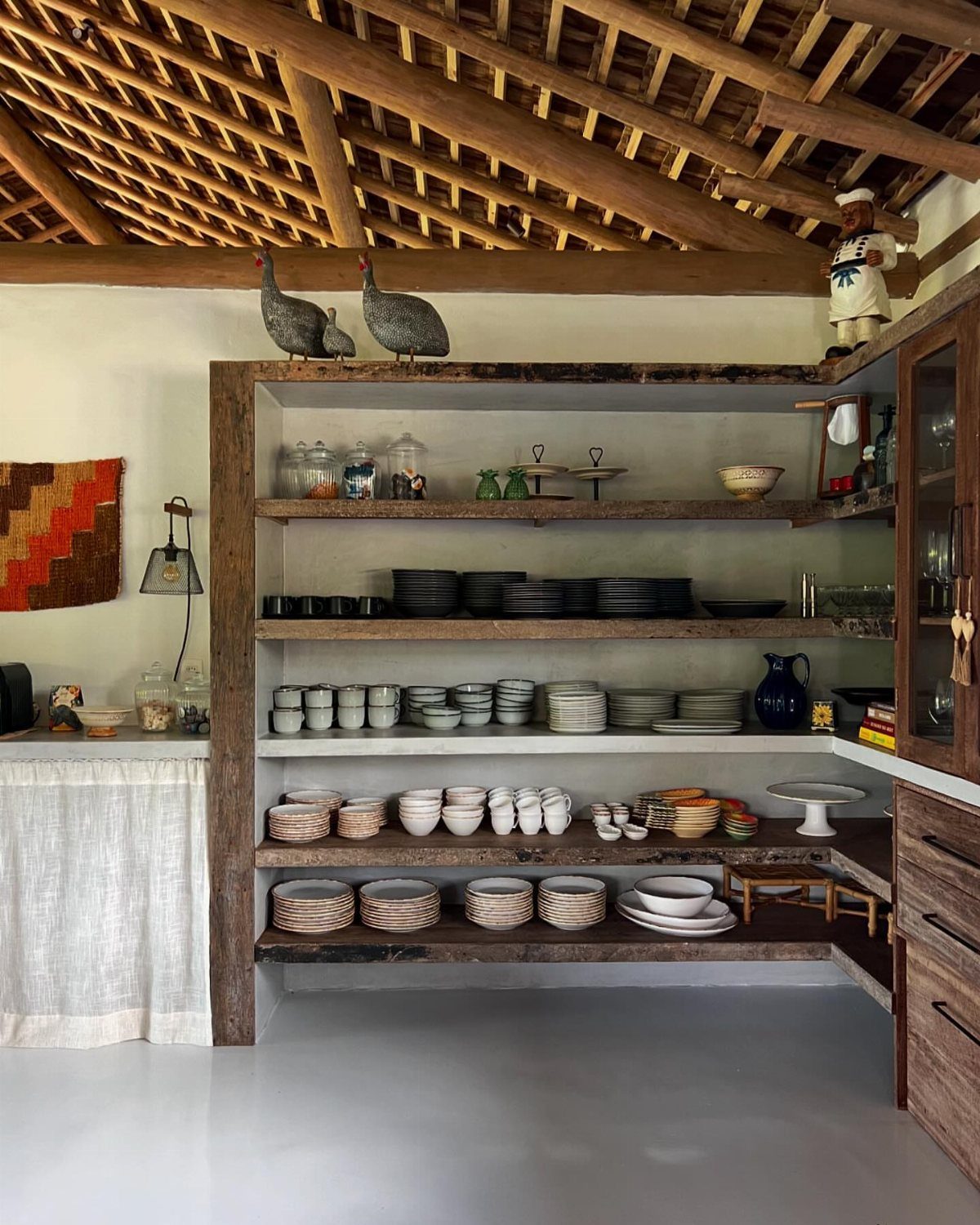
A niche already gives shelves a frame, so the display looks built in instead of hung on. That makes it a good DIY spot: cut the boards to fit the opening.
Measure the width and depth in a few places, since walls rarely run true. Keep everyday dishes and bowls on the lower shelves where a hand reaches without thinking, and save the top shelf for small decorative pieces like figurines.
5. Mediterranean Rustic Kitchen Shelves
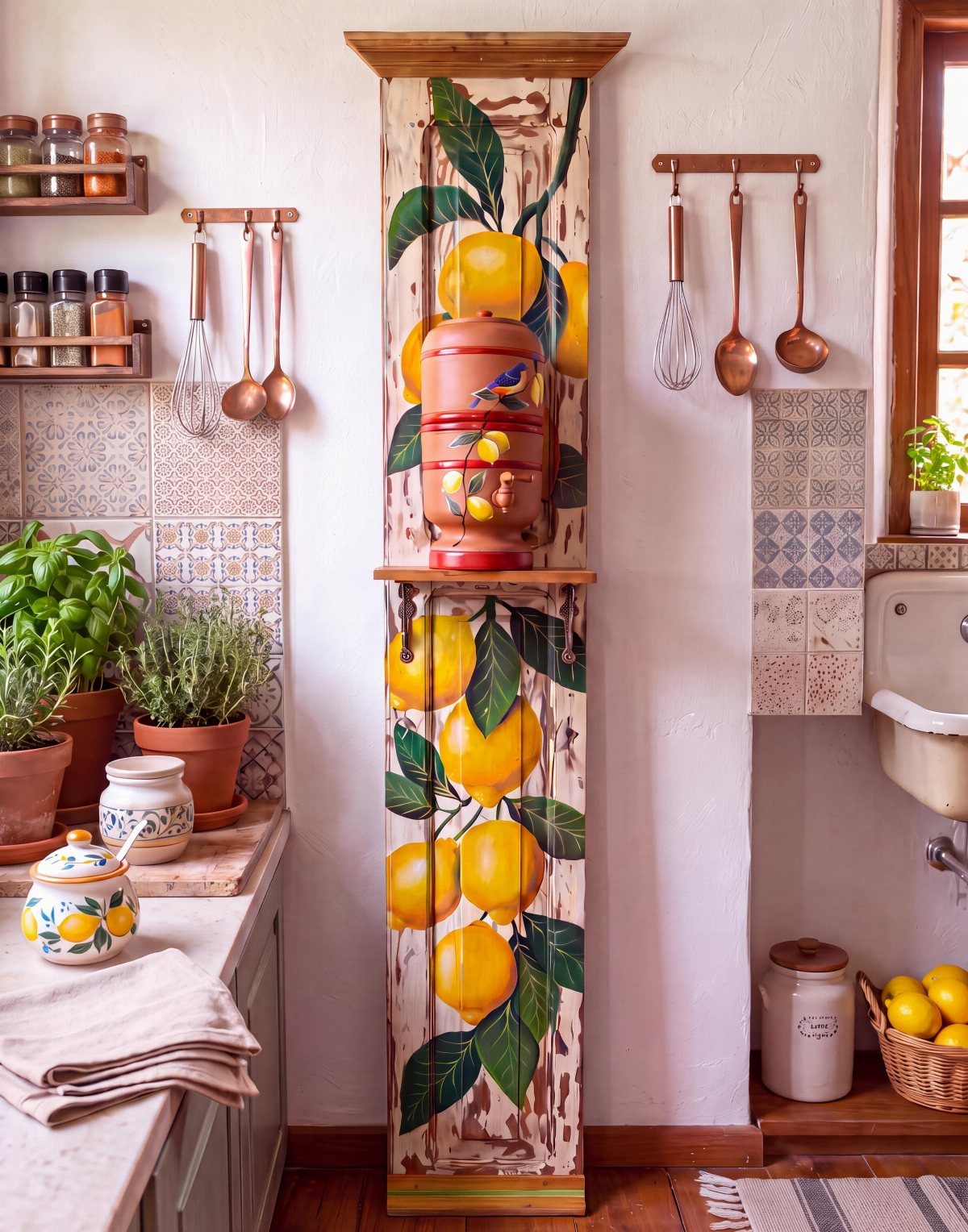
Copper utensils, potted herbs and lemon-patterned cabinetry make a warm, sunny corner, and plain wooden shelves hold it together. Leaving the wood unpainted lets the cabinet pattern be the only loud thing in the room.
I’d put spice jars and a few herb pots on the shelves, within reach of the sink. Hang the copper nearby so it stays visible and easy to grab.
6. Open Kitchen Shelving
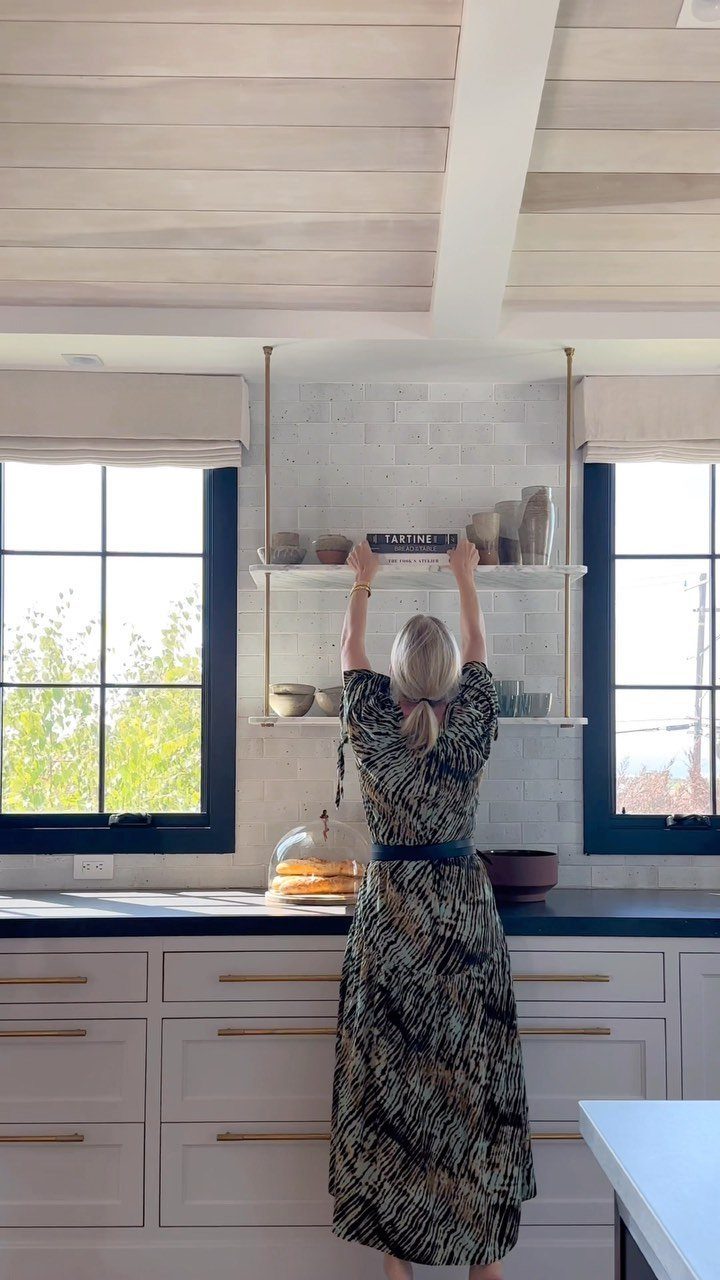
2 open shelves against white subway tile are enough to keep daily bowls within arm’s reach. Stack the bowls, then lean a cookbook beside them for some color and height.
Open shelves only look good when what’s on them gets used and put back, so I’d load them with the things you reach for every day. Anything you rarely use belongs in a closed cabinet.
7. Coffee Bar Shelves
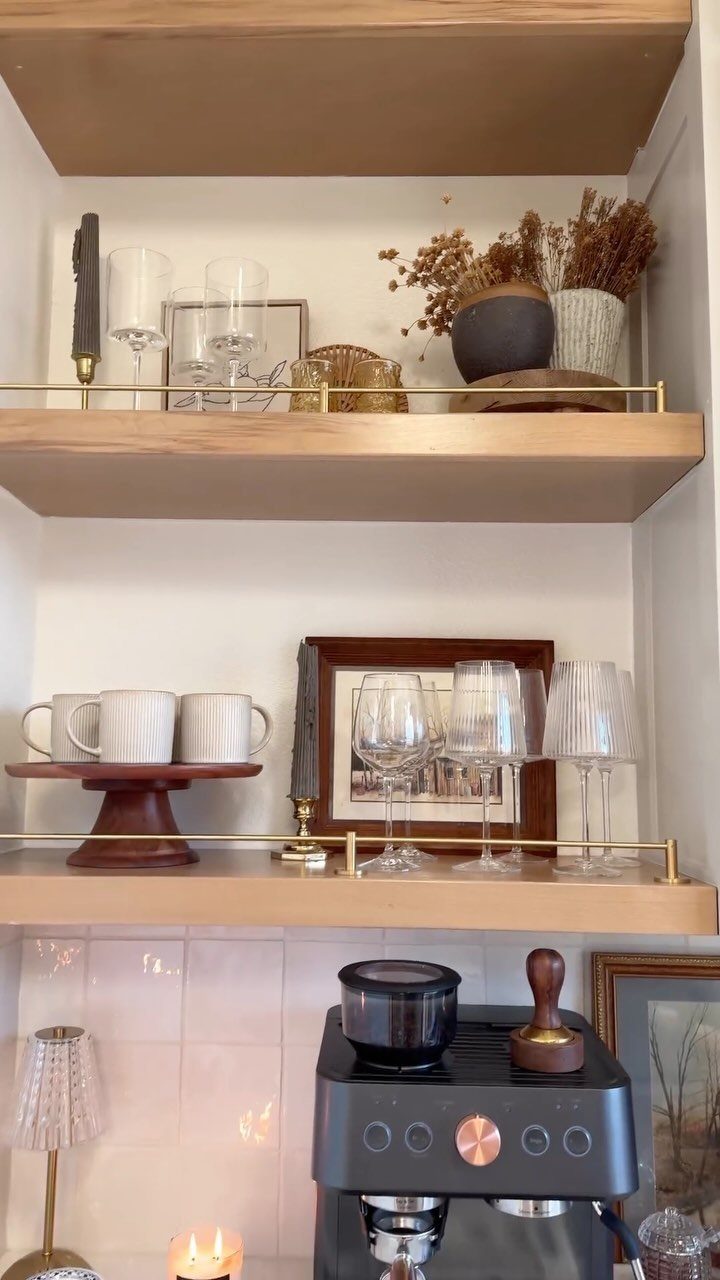
Right above the espresso machine is the best place for a coffee bar’s shelves, because cups and glasses sit one reach away from the brew.
The gold rails add a little shine against the white tile and keep small items from sliding off.
Measure the machine with its lid open before you mount anything, and leave that much clearance under the lower shelf. I’d keep the shelf nearest the machine for cups and let the top one hold the decor.
8. Knotty Alder Farmhouse Ledges
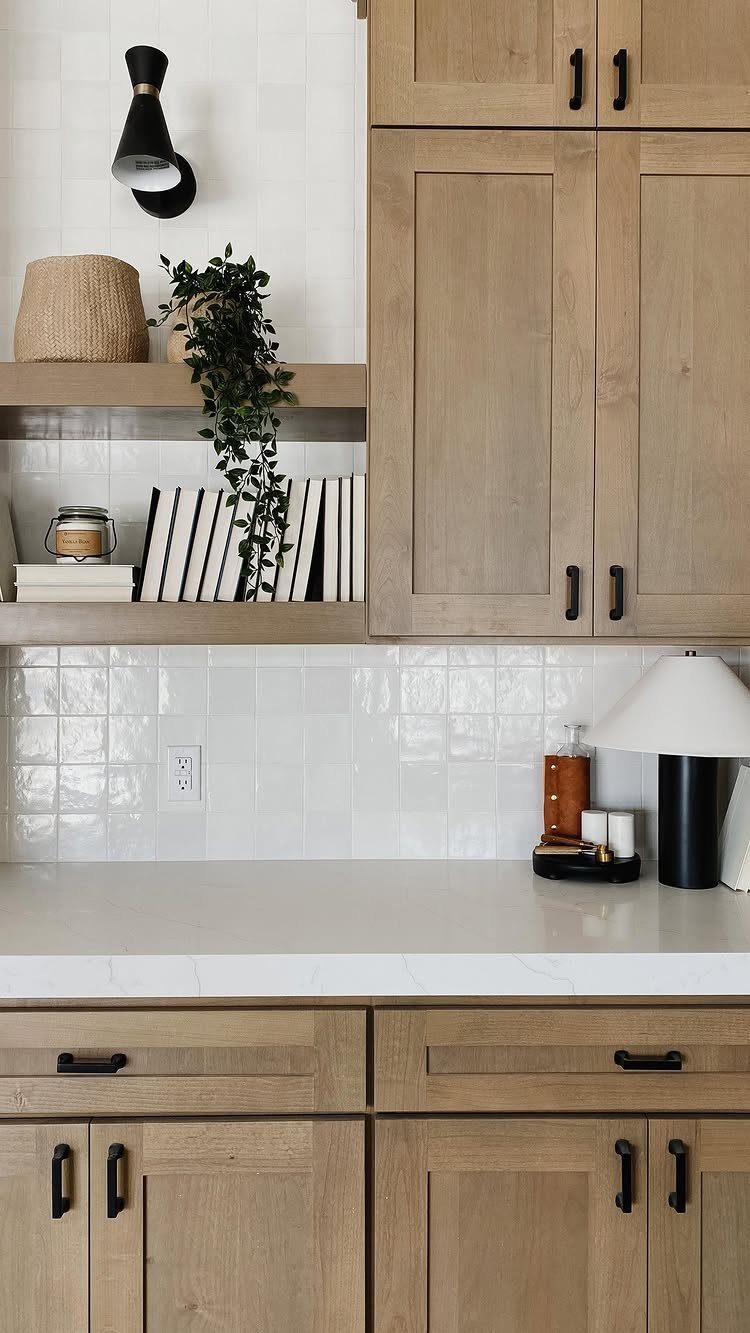
Solid knotty alder gives a plain ledge some character, since the knots do the decorating and nothing else has to. Because the shelves match the cabinet wood, they read as part of the kitchen instead of an add-on.
Ask for solid wood, not veneer, so the grain carries through the whole board.
9. Oak Floating Shelf
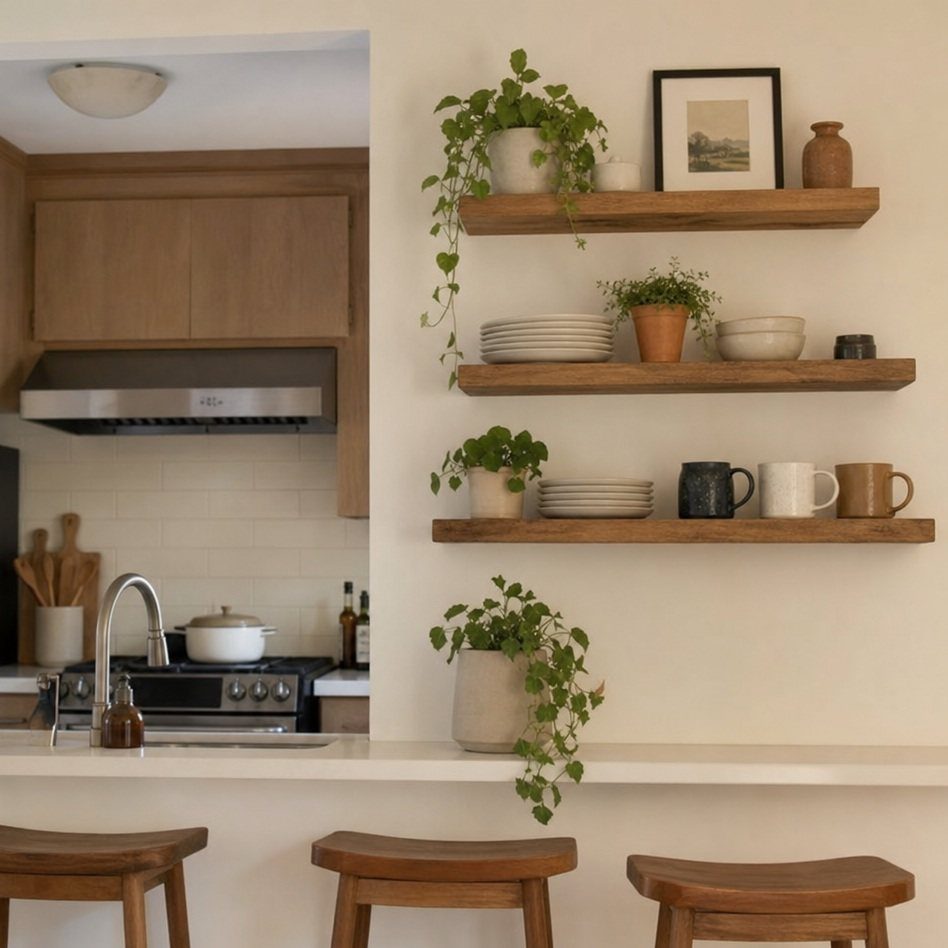
Without a bracket in sight, a floating shelf looks modern, and natural oak grain supplies the traditional half. Stacking 3 of them on one wall gives a small kitchen a display spot without a cabinet.
Pick a wood tone close to your cabinets and stools so the wall feels planned. I’d mix plants, a few dishes and one framed picture, and lean the picture back so it fills the gap between shelves.
10. Handwoven Water-hyacinth Wall Shelf
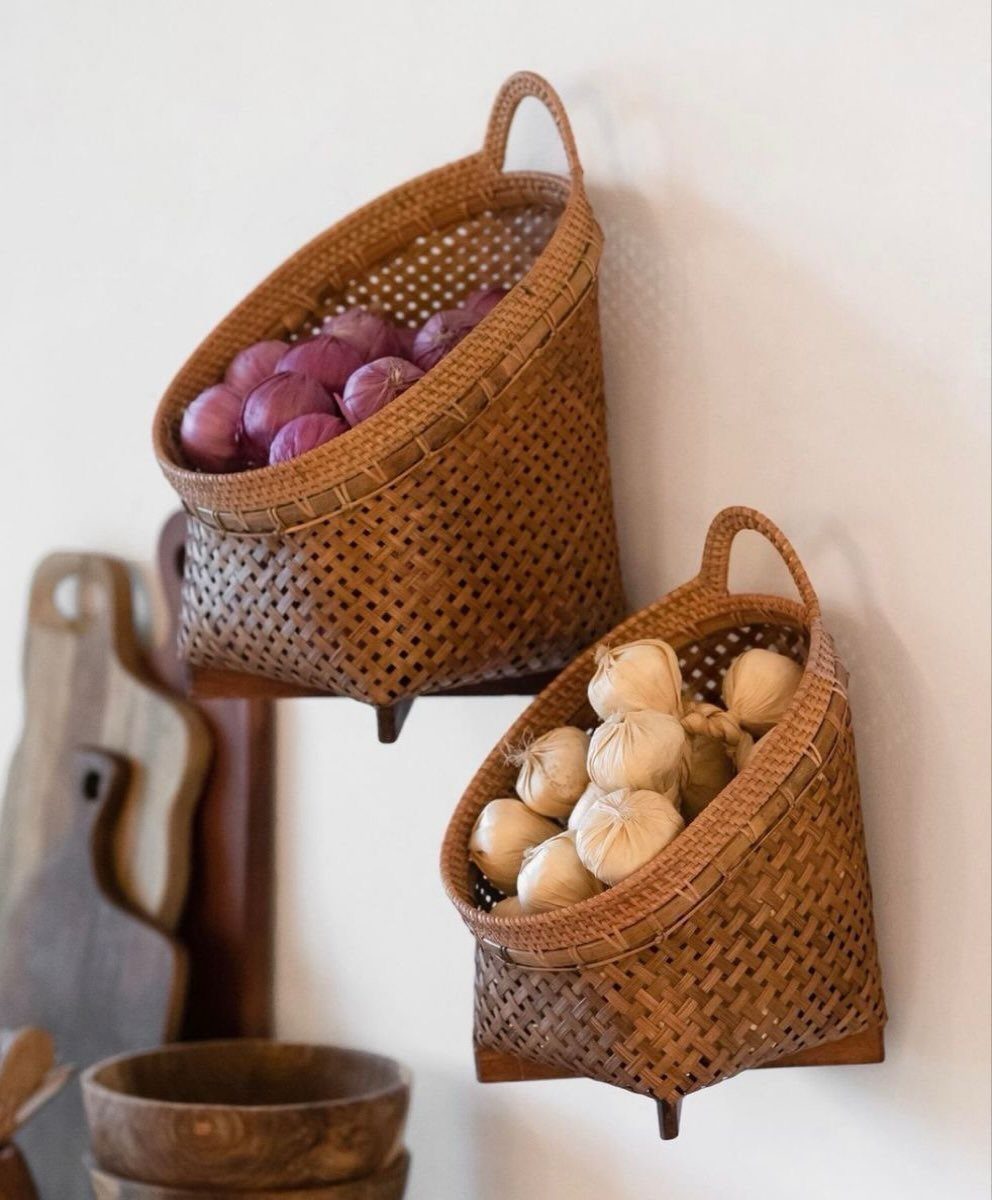
Onions and garlic belong in a basket you can see, and a handwoven water-hyacinth one holds them on the wall, off the counter. The brown weave warms a white wall without adding a single color.
I’d hang them near the prep area, where a hand reaches in without thinking. Baskets are open storage, so use them for produce you cook with every few days.
11. Custom Barnwood Floating Shelves
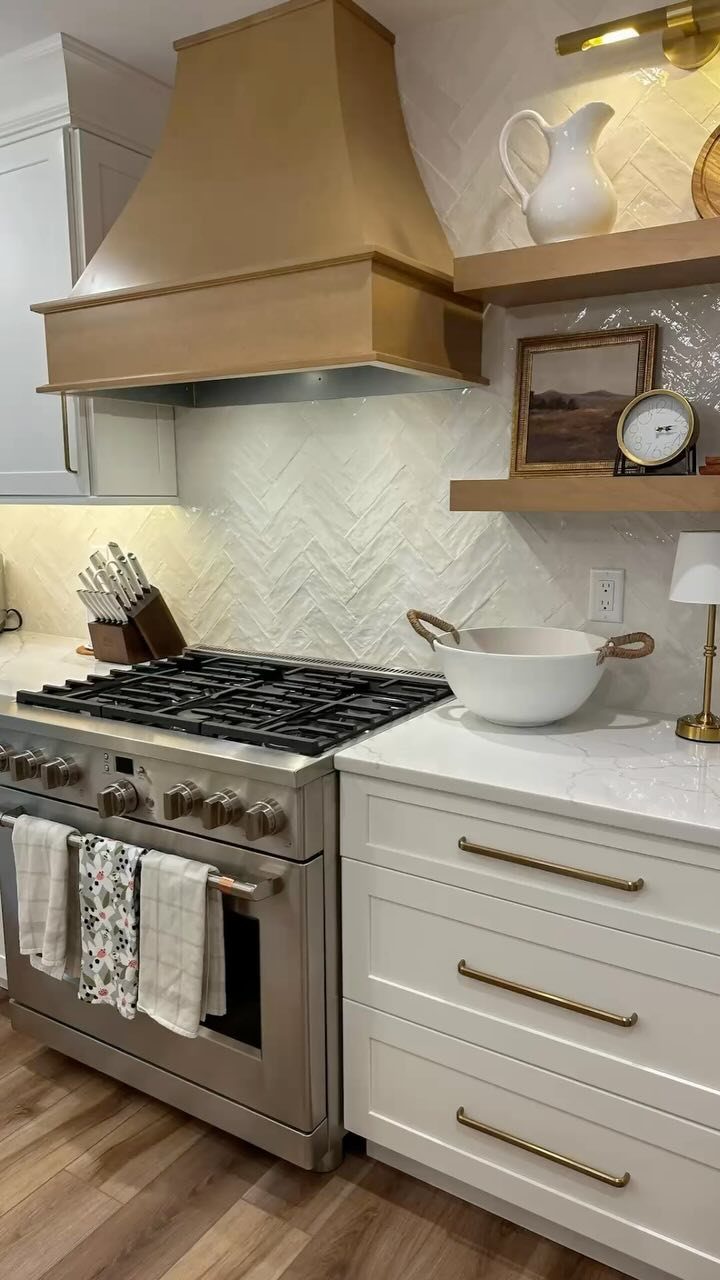
Made-to-order barnwood shelves are cut to your wall, so you set the length, depth and height and nothing has to be squeezed around a stock size.
I’d match the length to the gap beside the range hood so the shelves line up with the cabinets.
Expect to pay more than for store-bought boards. Anchor heavy timber into studs, and keep the load light and tidy: a pitcher and a frame are enough.
12. Brick Built-in Shelves
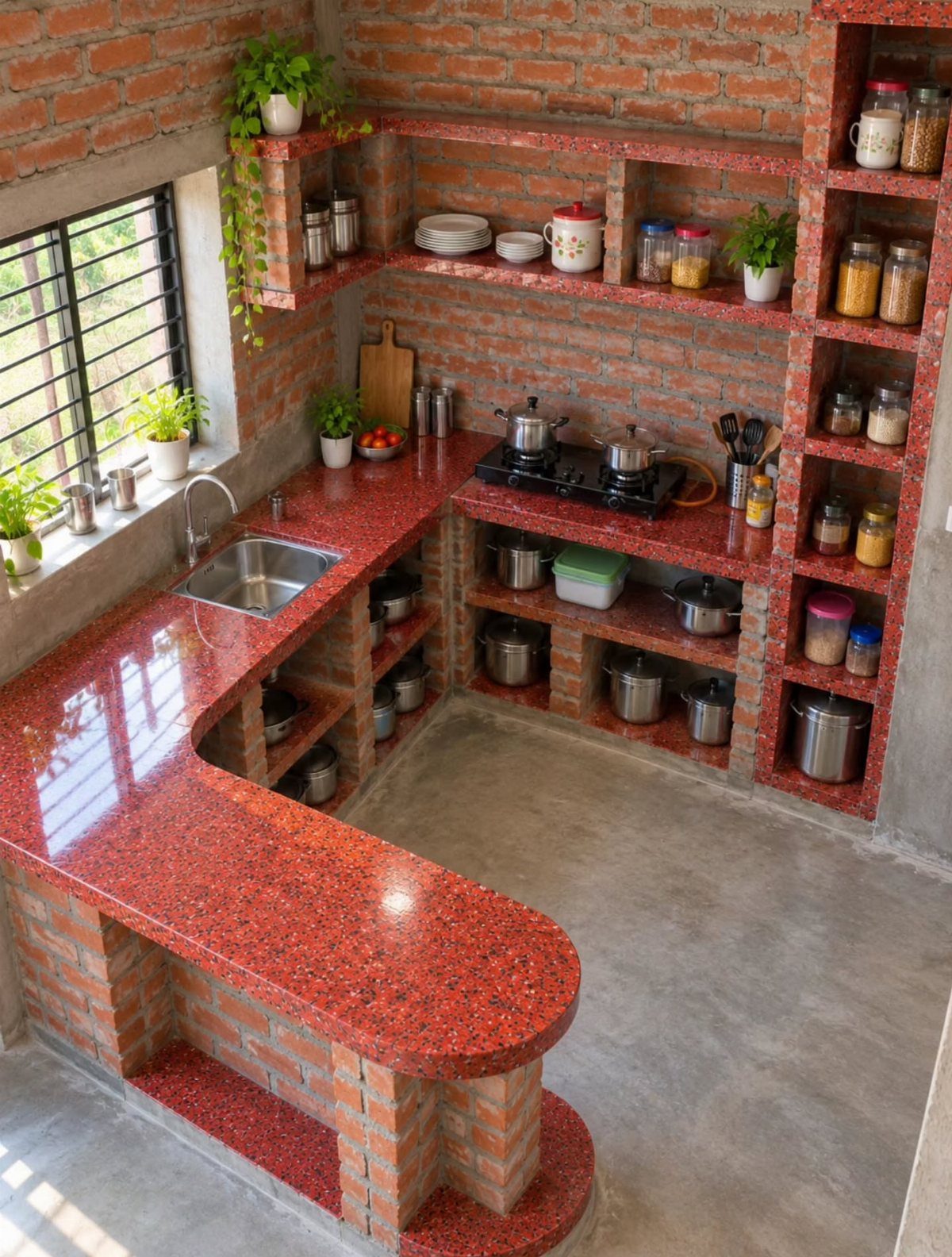
Brick does the work in this kitchen, with the shelves built right into the wall instead of hung on it. Pots, pans and jars sit in the open, so I’d store only the ones you use daily.
This is a masonry job, so it suits a remodel or a kitchen that already has brick walls. Brick is permanent, heavy work, which makes it a poor fit for renters and a big ask for a single weekend.
13. Wall-mounted Spice Racks
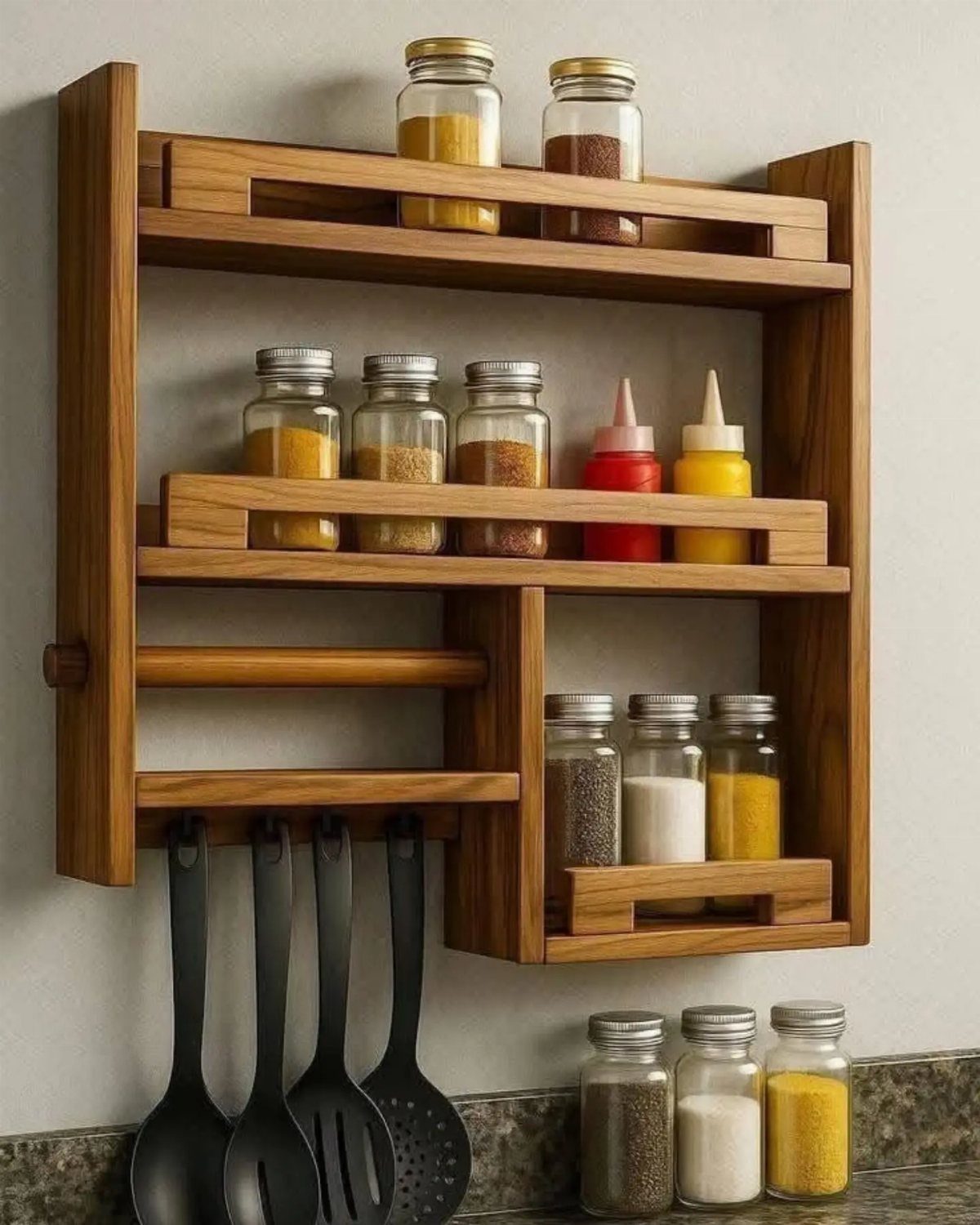
Tiers and hooks split the work on a wooden spice rack: jars and squeeze bottles go up top, and utensils hang from the hooks below. Everything sits between the stove and the counter instead of in a drawer.
I’d fill the tiers with the spices you grab weekly and hang only the tools you use daily. A rack that is half empty looks better than one jammed full.
14. Countertop Wooden Organizer
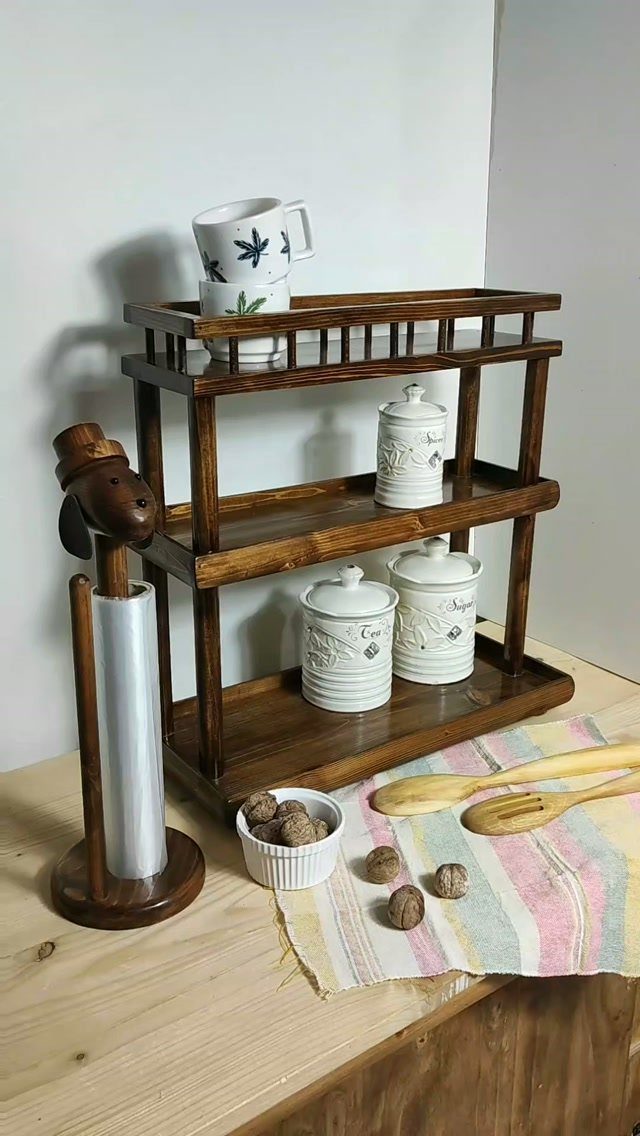
Dark wood on a light counter gives a tiered organizer plenty of contrast, and it needs no drilling. That makes it a safe pick for renters who can’t put holes in walls.
Mugs go on the lowest tier, where they’re easiest to reach, and ceramic jars fill the upper ones. Keep the counter fairly clear around it, since a three-tier piece already adds height and visual weight.
15. Wood-and-metal Counter Shelf
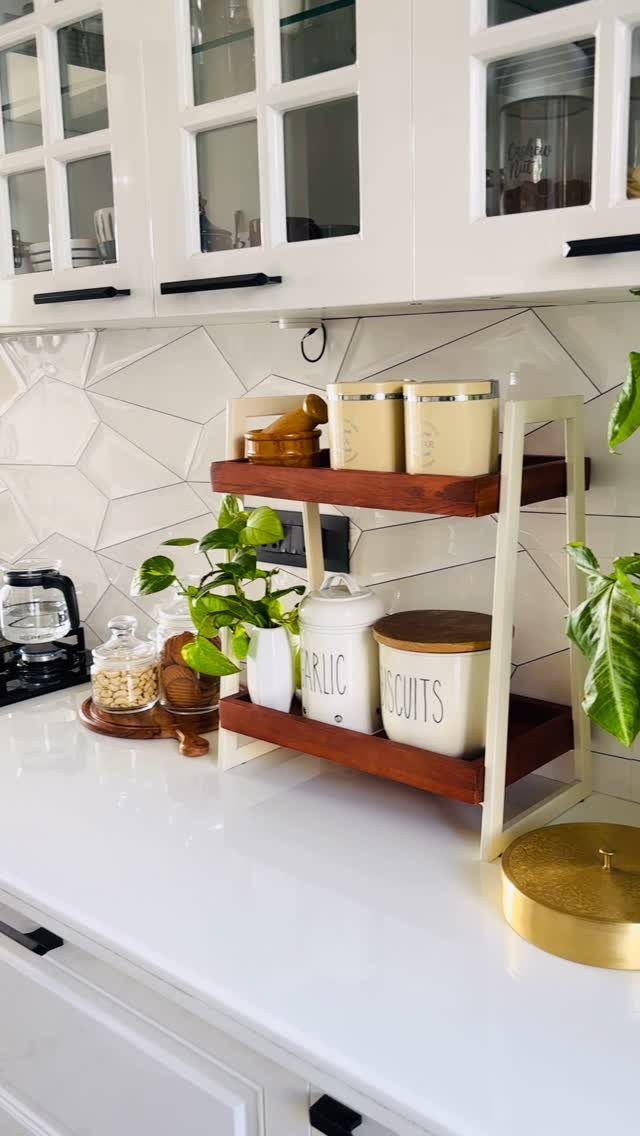
A white metal frame with wood planks suits a kitchen with white cabinets, because the frame fades into the background and only the wood stands out. 2 tiers also let you stack canisters and spice jars on a small footprint.
Labeled canisters are worth the few minutes. Marking garlic and onions on the front means no one has to open lids to find them.
16. Rustic Floating Kitchen Shelves
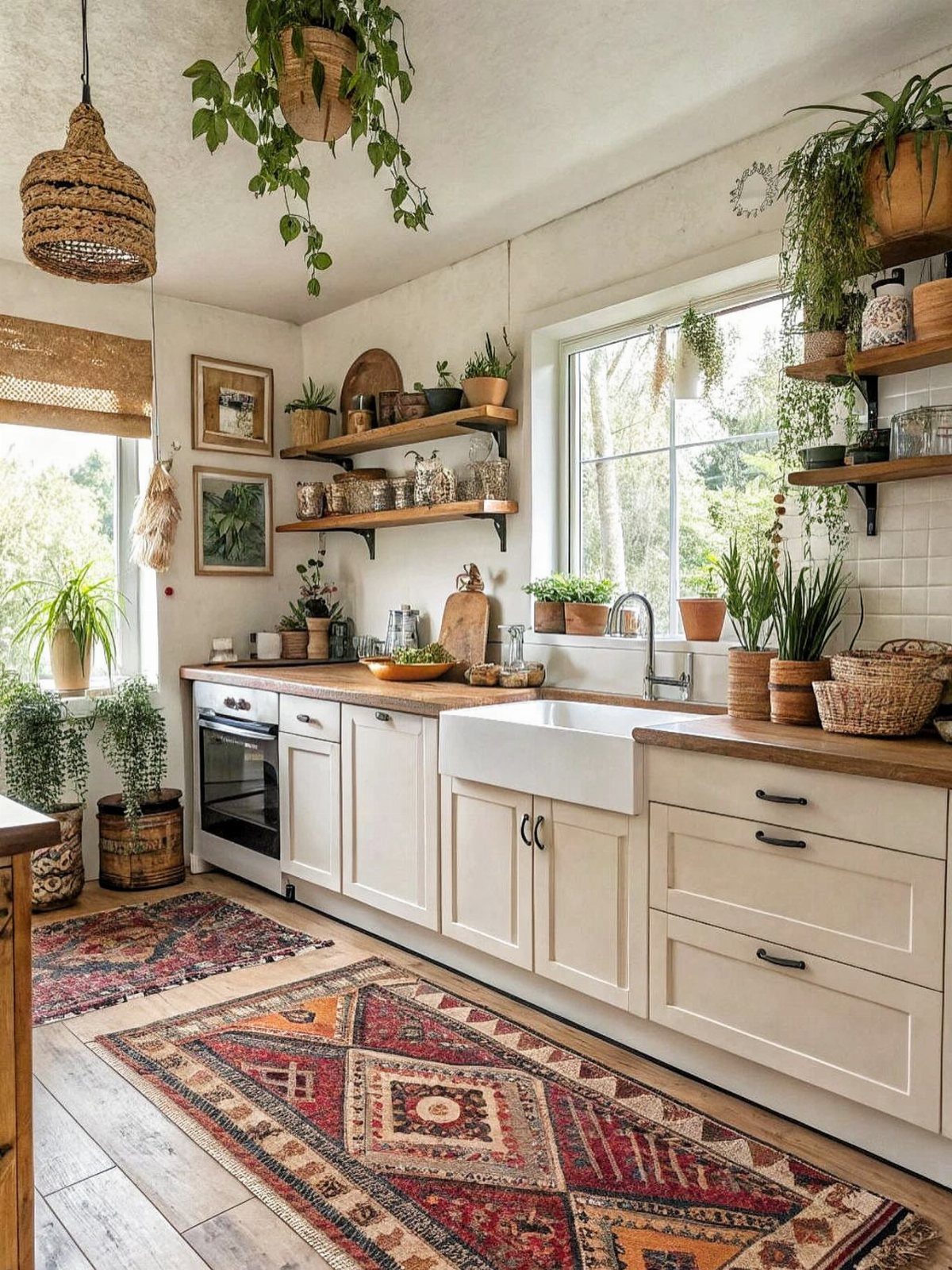
Floating wooden shelves mounted above a counter or sink hold jars, plants and a few kitchen pieces without any cabinet doors in the way. Wood tones that echo the countertop make the wall feel planned.
I’d space the shelves so a tall jar clears the one above it. Keep plants and jars at the ends and leave a gap in the middle so the shelf doesn’t look packed.
17. Wood Shelves with Metal Brackets
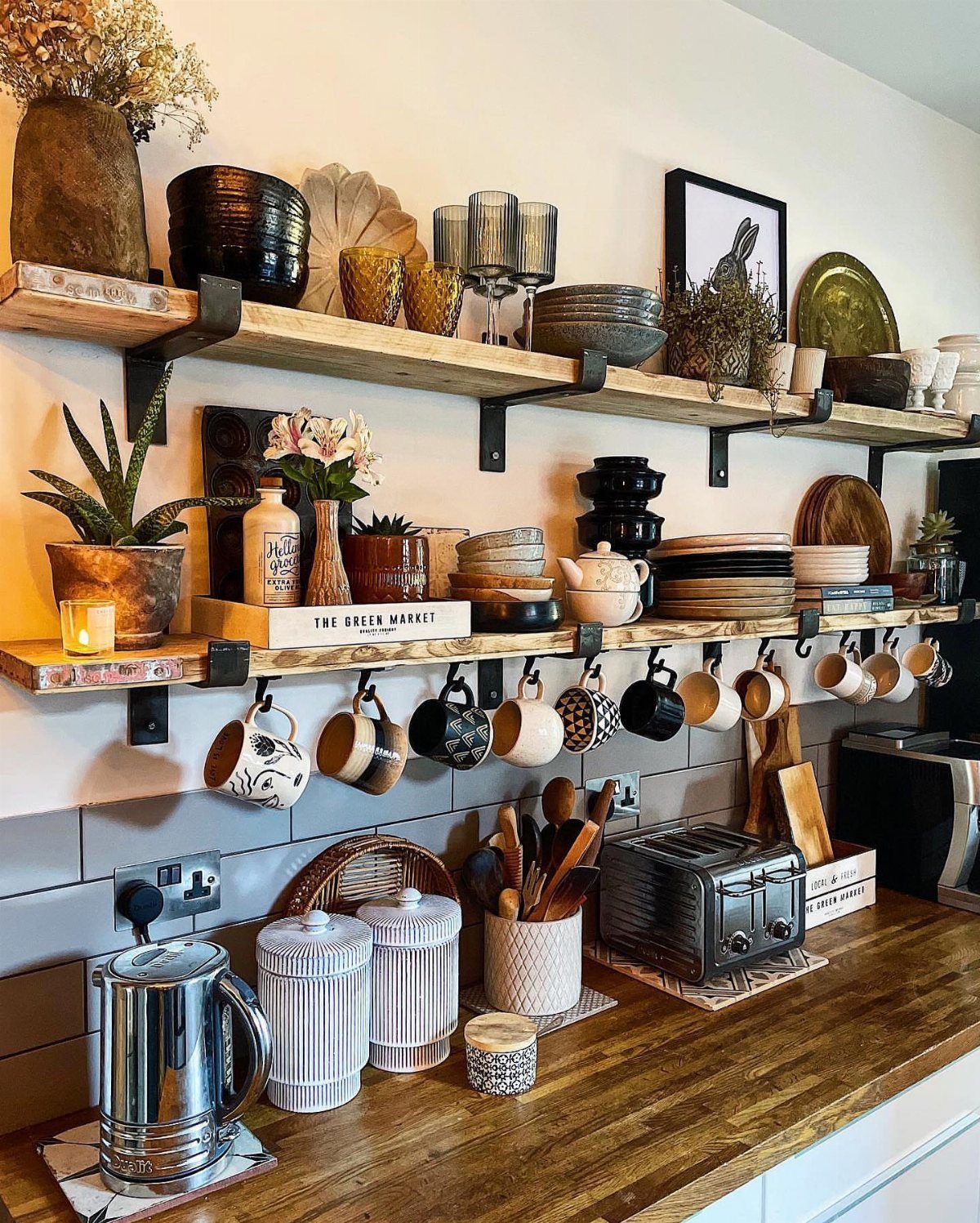
Dark metal brackets give plain wood shelves a sturdier look, and they show that the shelf is actually holding something up. Everyday glassware, small plants and dishes suit this setup because you can reach them from the counter.
I’d pick brackets in a finish that matches your faucet or cabinet hardware. 2 shelves stacked is enough; a third would crowd the wall.
18. Rustic Plate Display Shelves
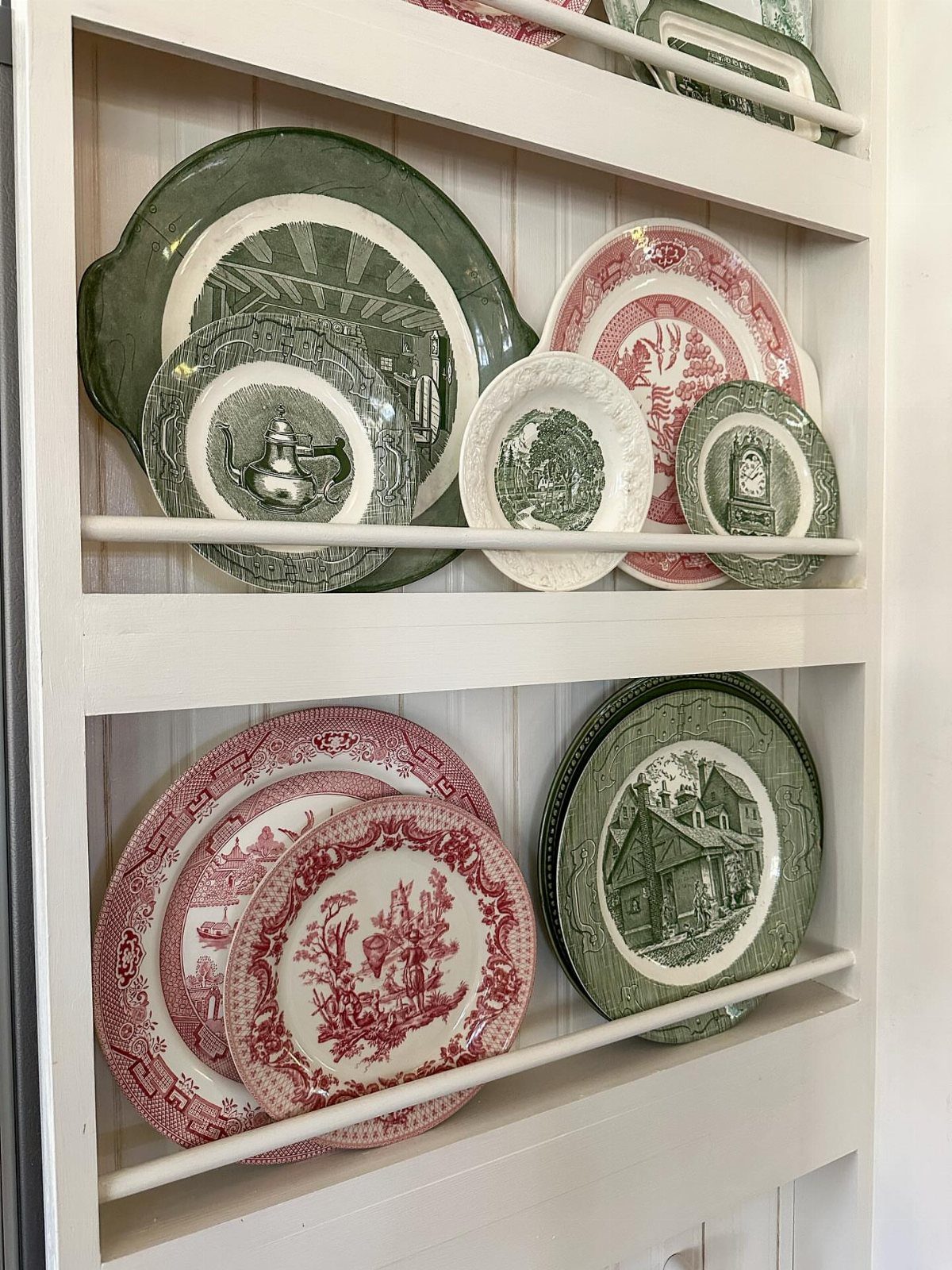
A narrow rail along the front edge is what lets a shelf hold plates upright, and painting both shelf and wall white keeps the plates as the only color. Red and green plates pop against that pale backdrop.
Pick plates you love looking at, since they stay out for good. Stand a few plates at the ends of the shelf on a routed groove or a small rail, and leave breathing room between them.
19. Wood Shelves with Vertical Slats
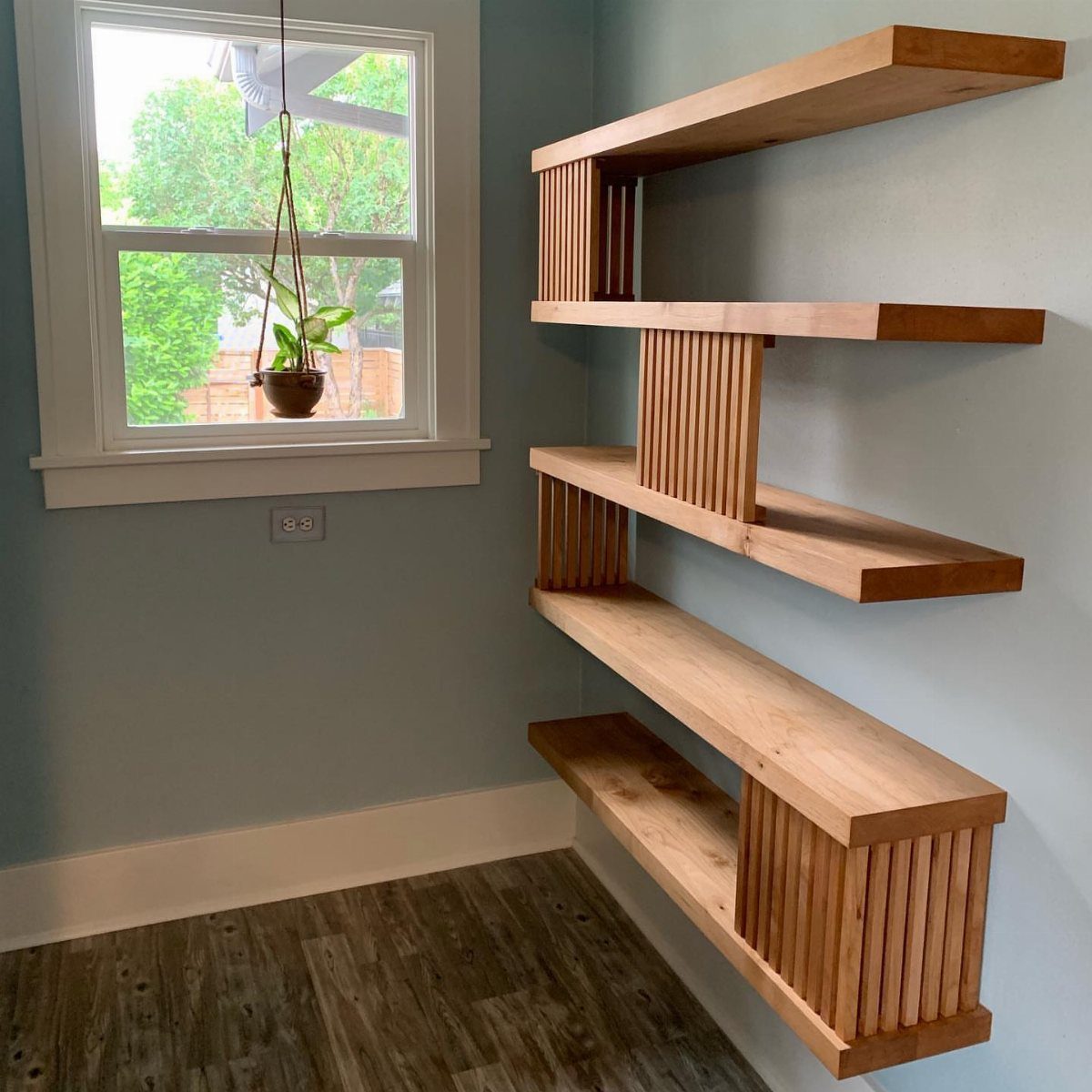
Vertical slats give plain light wood shelves a little structure, and they stand out against the pale blue wall without any extra color. 3 shelves in a row near a window keep the look easy and airy.
I’d leave the wood light and unpainted so the slats read as the detail. A hanging plant by the window fits the setup, but keep the shelves themselves lightly styled.
20. Stone and Wood Shelves
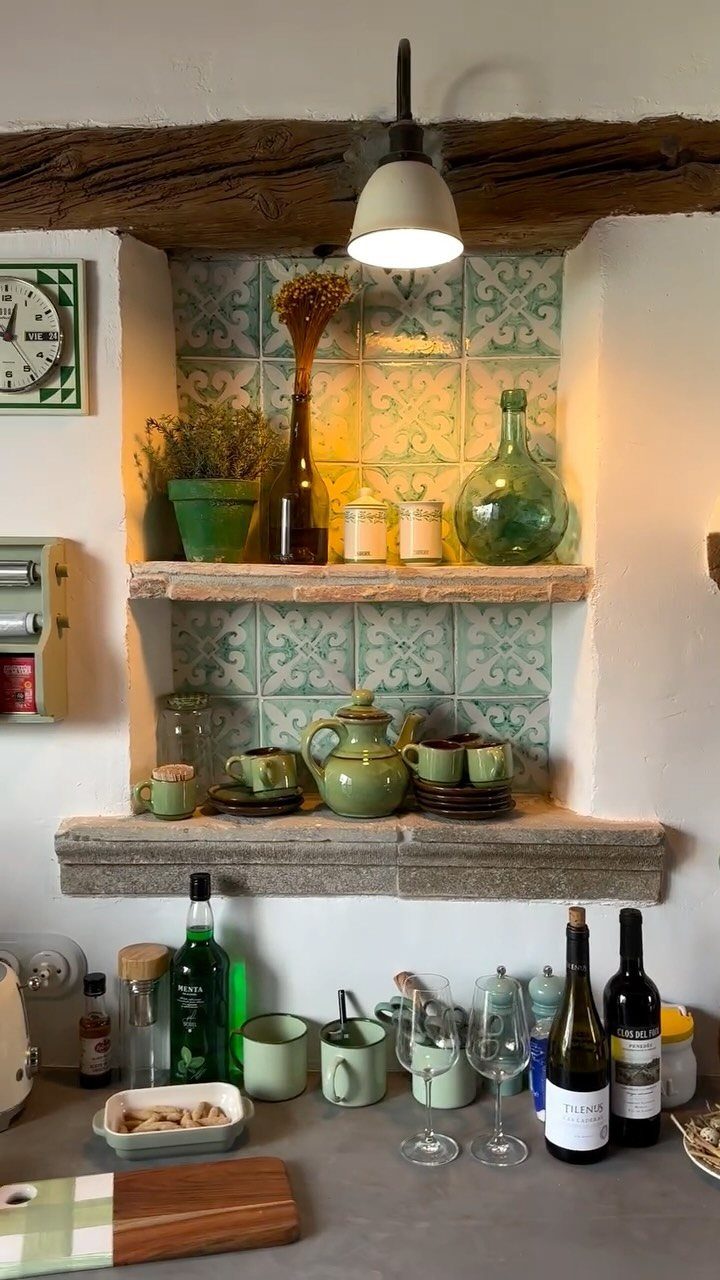
Stone shelves under a wooden beam bring 2 heavy textures together, and the green patterned tile behind them keeps the nook from feeling dull. Green ceramics and glass bottles pick up the tile color, so the shelves look planned.
I’d group bottles and jars by height and leave a gap or 2 between groups. Tile this busy needs a calm shelf, and a few repeated colors do that better than a mix of everything.
21. Rustic Shelves with Mug Hooks
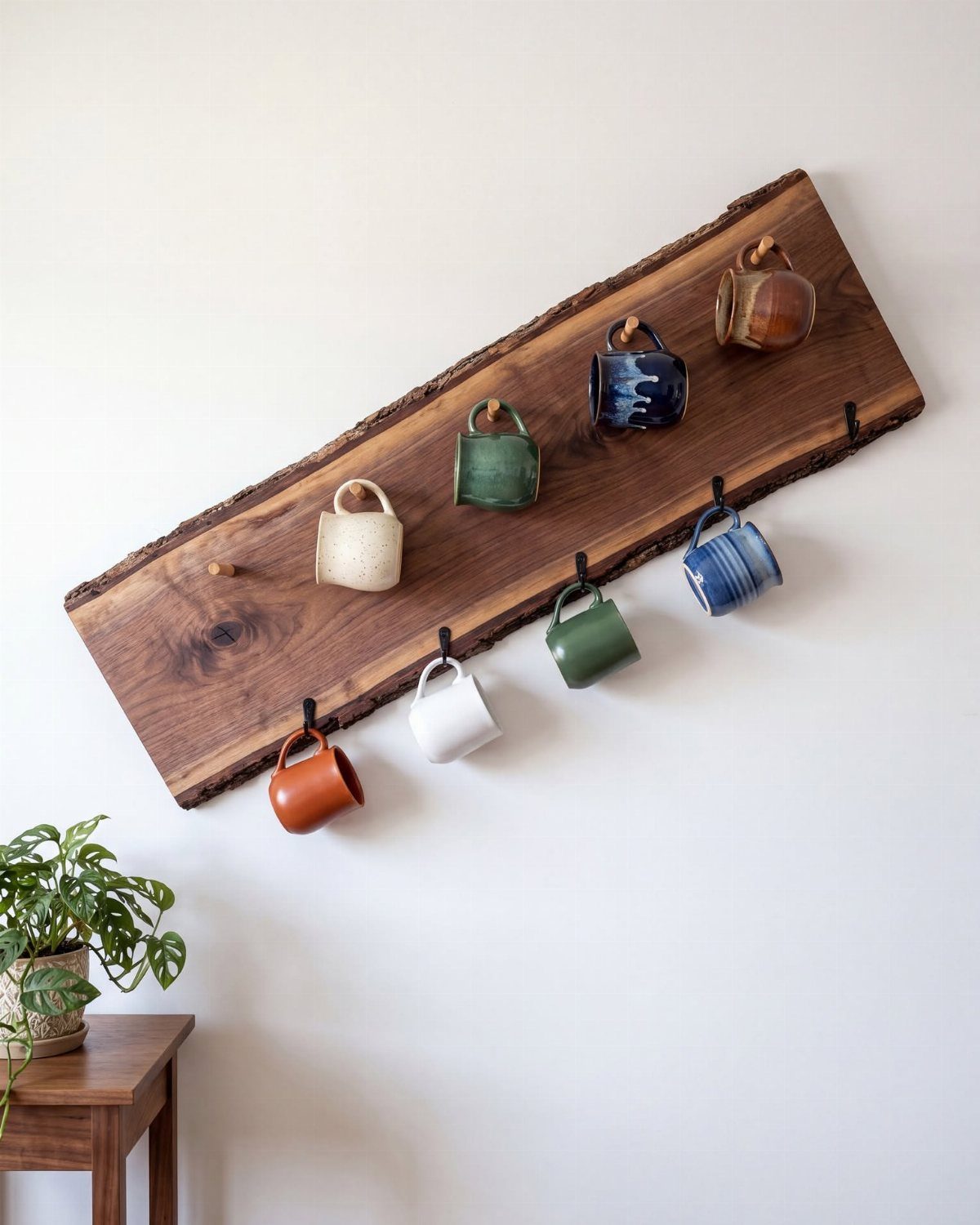
Hooks under a live-edge shelf put the mugs on the wall and free up the cabinet, while the top of the board stays open for display. In a small kitchen that is two jobs from one piece of wood.
I’d hang only the mugs you actually drink from, one per hook. Mugs that fill every peg make the shelf look busy, so leave a peg or two empty and let the white wall show.
22. Tiered Wooden Spice Rack
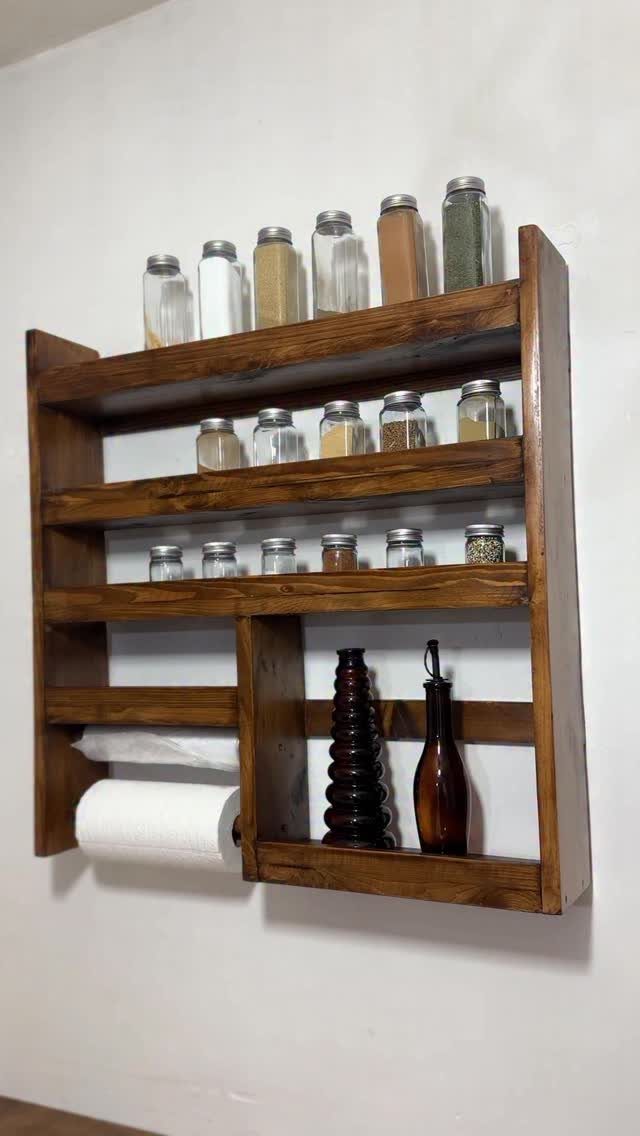
3 tiers of dark brown wood hold spice jars at eye level, and a paper towel holder on the same rack keeps the counter clear. Against a plain white wall, the dark finish gives the whole piece a strong outline.
I’d put the spices you reach for most on the middle tier and keep the bottles to one side so the rows stay even. Matching jars look tidier than a mix of store packaging.