
Clean outdoor seating takes two to five days of actual drying time, not the afternoon most people budget. The mistake that ruins cushions is stopping at "mostly dry," because foam that still holds water breeds mold you will not find until next season.
The fix starts before the soap: check whether your cover zips off at all. Some IKEA lines come apart for the machine; others lock the foam in permanently, which changes every method that follows.
1. Prepare the Area
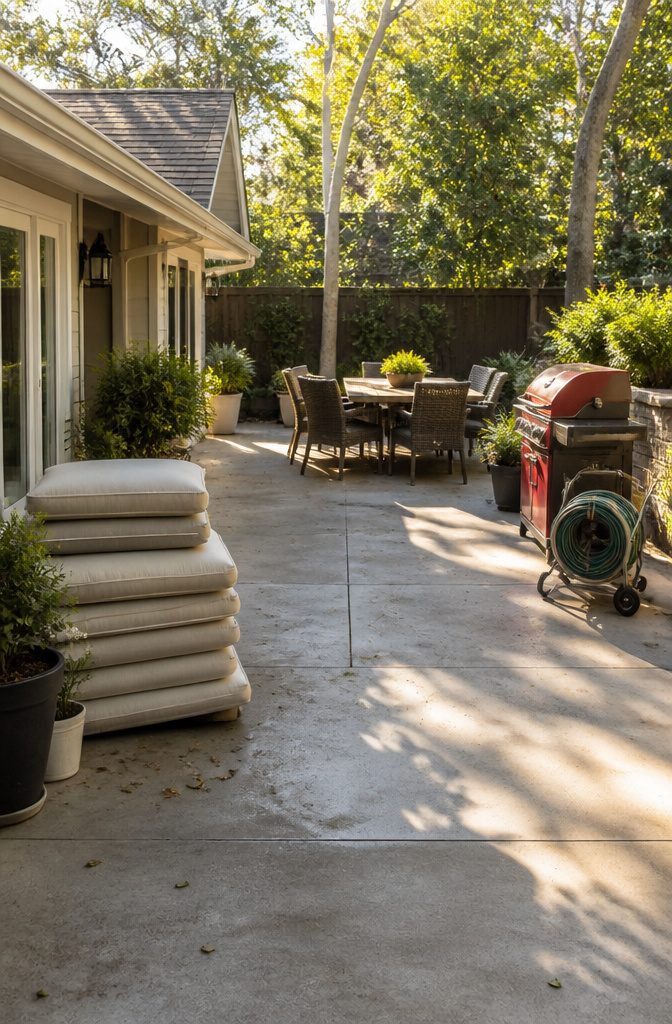
The patio or driveway you choose needs to handle water without turning into a mud pit, so grass is out unless you enjoy reseeding. Concrete, pavers, or a deck with gaps for runoff all work. Keep the pressure washer cord and any outdoor outlets well clear; water and electricity share a history I do not need to recount. Close nearby windows so overspray does not carry grit onto the glass, and shift the grill, the hose reel, or anything else that will force you to stop mid-scrub to maneuver around it. If your only flat spot is under a low branch or bird feeder, move the furniture first. A broom and a quick sweep beat discovering leaves ground into wet fabric later. Set up where the dirty water can run off, not pool around your ankles by the time you reach the rinse stage. I learned that one after a July afternoon spent working in a slowly deepening puddle, which added nothing to the project except wet socks and a later start on drying.
2. Check the Care Label
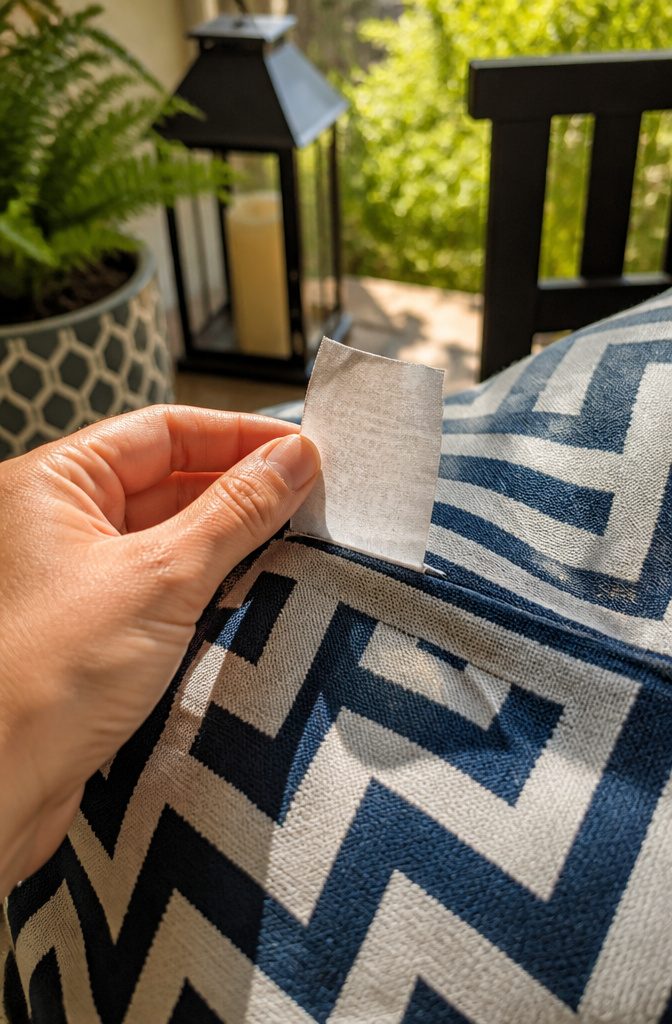
The care label on a patio cushion is usually a narrow tag sewn into a seam or zipper flap, and the faded ones still matter. Sun and repeated handling turn the printing pale, but tilting the tag toward light often reveals enough to separate a cold-water gentle cycle from a hand-wash-only cover.
What you want to know is whether the cover zips off at all. Some cushions, like IKEA’s Gullbergsö line, are built for removal and machine washing. Others keep the foam locked in permanently, which changes every method that follows. The label also states temperature limits and whether bleach is permitted; white covers can typically handle it, while colored ones risk discoloration.
Pressure warnings appear on some tags too. A label that forbids high-pressure washing saves you from shredding the fabric fibers or forcing water deep into foam that will never dry in a weekend. If the tag is completely illegible, default to the gentlest option: removable covers get a gentle cycle with cold water and air drying, since heat shrinks outdoor fabric more often than not.
3. Pick Your Method
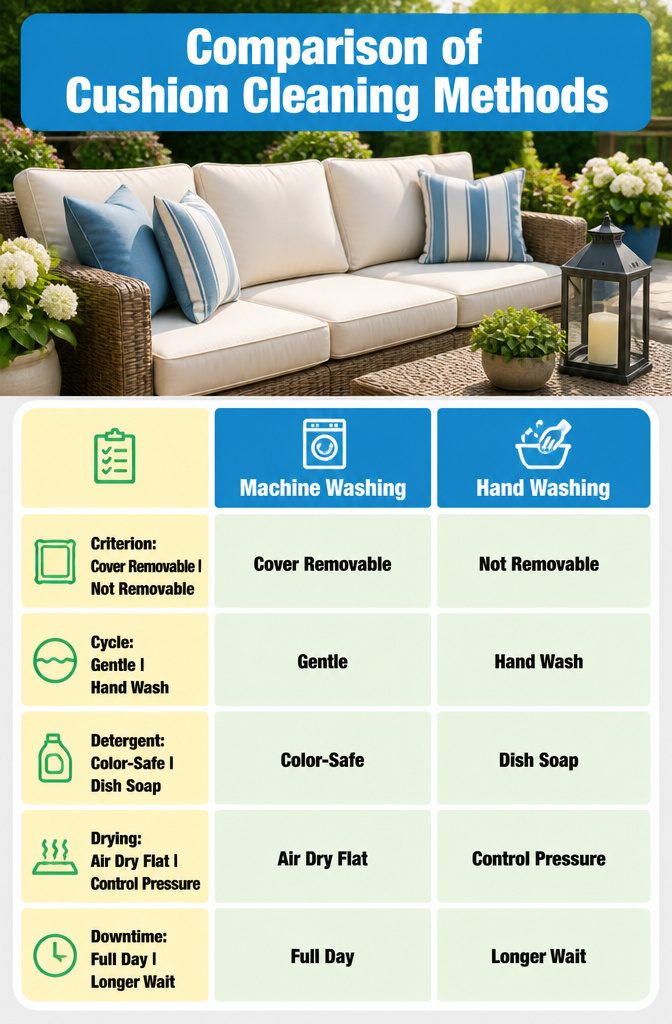
The method you choose depends on whether your covers come off and what the care tag allows. Machine washing works only when the cover is removable and the label permits it, zipped shut on a gentle cycle with mild, color-safe detergent, no fabric softener. That residue attracts dirt back to outdoor fabric faster than you’d think. The inserts stay out and dry separately, which means planning for a full day of downtime while everything airs out.
Hand washing covers most jobs where the tag says no, or where the cover is sewn on. A tablespoon of dish soap or mild detergent in warm water, worked in with a soft brush, handles the usual dirt and bird droppings without the risk of tearing anything. It takes longer, but you control the pressure.
Pressure washing is the third option for non-removable covers, and the sources split on whether it saves time or invites trouble. The safe approach is lowest PSI, a 65-degree tip, nozzle held at least two feet back, horizontal sweeps, and a plain-water rinse after two to three minutes of dwell time. Hot days mean misting the surface so the cleaner doesn’t dry into the weave. Skip this if your fabric is already fraying; the stream finds weak spots.
Drying space decides more than people admit. Machine-washed covers need flat air-drying, and pressure-washed cushions hold enough water to weigh down a standard rack. Plan the method around where you can leave them for a full day, because putting damp foam back in use just breeds mildew.
4. Mix the Cleaning Solution
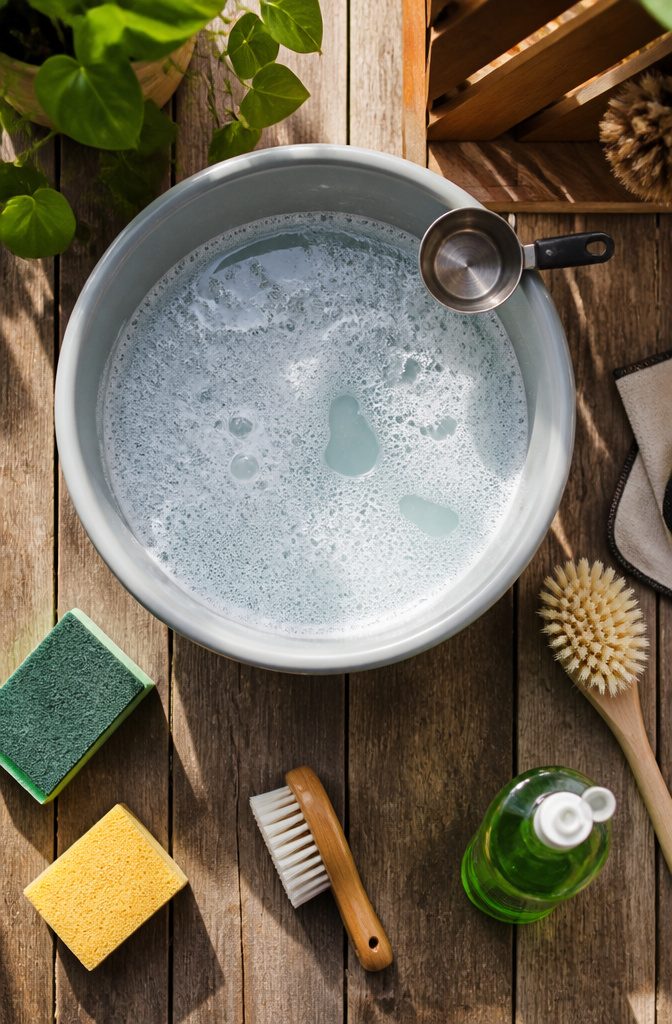
A bucket of warm water and about a quarter cup of OxiClean dissolved in it will handle most of the grime that builds up over a season of outdoor use. I have kept to that ratio for the last two years, and it is what brings white cushions back to white rather than just clean. For everyday spills, a teaspoon of Dawn dish soap in a gallon of warm water works fine, though over time I found myself reaching for the stronger stuff anyway.
For mildew or that musty smell cushions get after rain, a 1:3 mix of vinegar to water is the better choice. Vinegar neutralizes odor rather than masking it, and it sits on the fabric for an hour or more before you scrub. Some people use a one-to-one ratio; I have stuck with the weaker dilution and had no trouble.
Whatever you mix, test it on a hidden corner first and give it ten minutes. Colorfast fabrics hold up, but others bleed or fade with no warning. That wait is the only way to know which kind you own before the whole cushion is involved.
5. Scrub or Wash
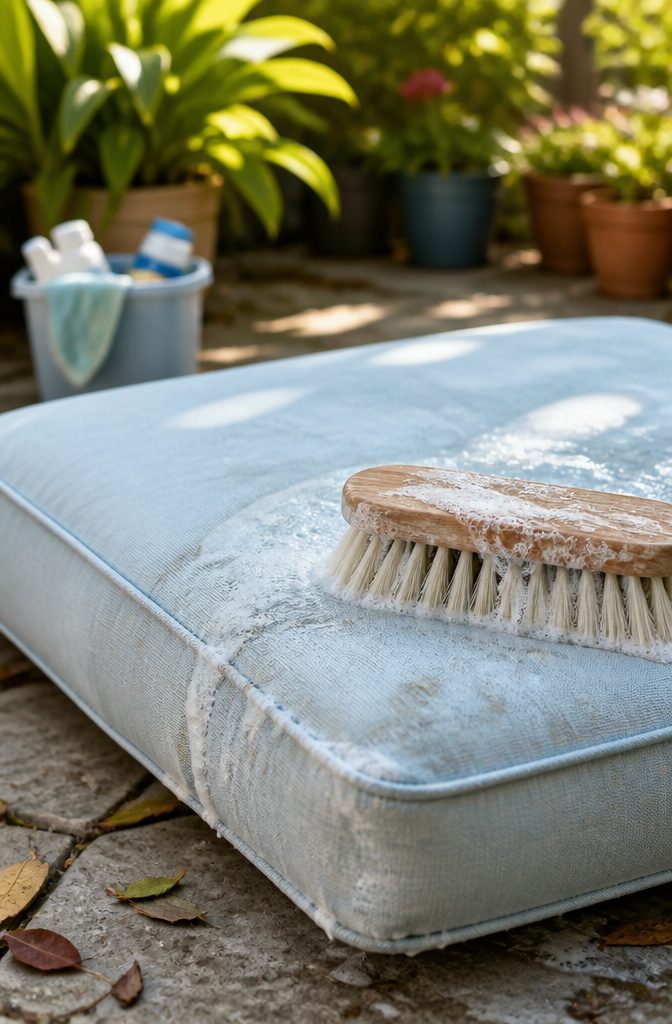
A soft scrub brush or a sponge is all the tool you need here. Dip it in your mixed solution and work across every surface that has taken sun or sitting, using circular motion to lift grime out of the weave rather than pushing it deeper. The entire surface needs to be saturated before you move on; half-cleaned fabric dries patchy.
For stains, an extra pass with a stiffer bristle brush makes the difference. Let the solution sit for five to ten minutes first so it can break down whatever baked in over the season. The sun will do some of the lifting too if you time this right.
Machine washing works only on removable covers, and only on a gentle cycle with cold water. Unzip them, skip the fabric softener entirely, and pull them out the moment the cycle ends. Air drying is the safer bet; the dryer on low heat is a gamble against shrinkage that I would not take with a cover I still needed to fit.
Hand washing the whole cushion, foam and all, is slower but more forgiving. The inserts stay in place, and as long as you dry them thoroughly before storing, the shape holds.
6. Rinse Thoroughly
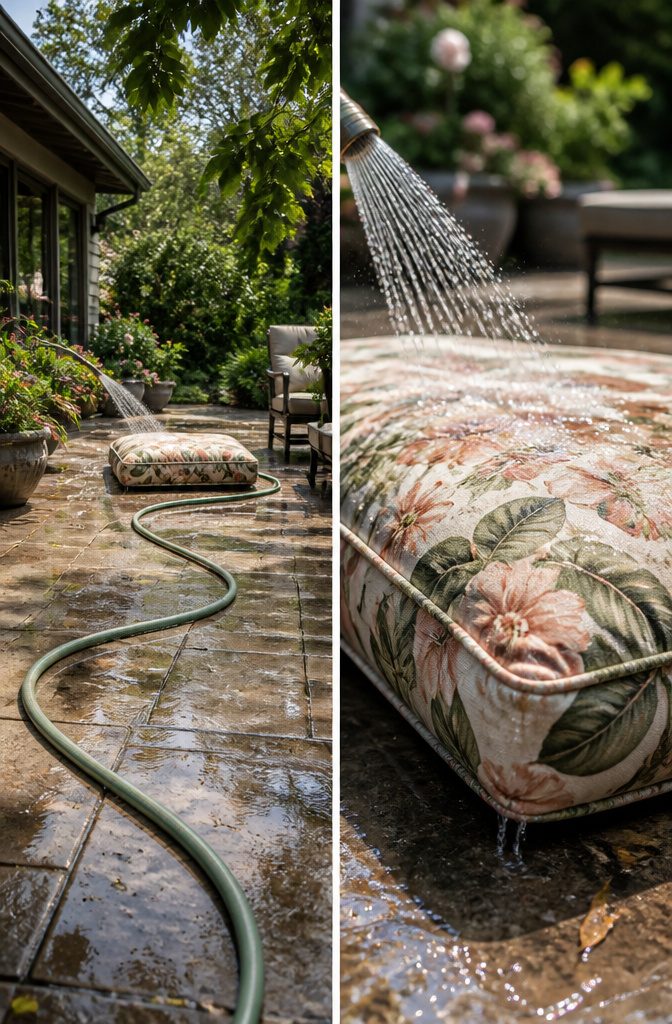
A garden hose with a spray nozzle does the job for most cushions. The water needs to run clear, not soapy, before the rinse is done. Any cleaner left in the foam will grab dirt the next time someone sits down, so the extra minute of hosing is worth it.
A pressure washer saves time on large sets, but the tradeoff is real. The lowest PSI setting and a wide spray tip are the only safe starting points, and even then the nozzle has to keep moving. Torn seams, fabric pilling, or foam ejection can happen fast if the stream lingers in one spot. For renters especially, a torn cushion cover is not a cheap fix.
The water running clear is the only signal that matters. Bubbles still pushing out of the fabric mean soap remains inside. Those cushions will dry, then attract grime faster than the ones that got a proper rinse.
7. Air Dry Completely

A sunny morning start gets cushions 80 to 90 percent dry by evening, which feels done enough to move but is not done enough to store. Standing them on edge, leaned against each other so they stay mostly vertical, lets air push through the foam from both sides instead of trapping moisture against the ground. Water that stays inside does not announce itself right away. Give it a week in a storage bag and the smell hits first; by then the mold has rooted deep enough that washing starts over from scratch. Two to five days of open air after that evening milestone is the margin that actually protects the work.
Six Ways to Clean
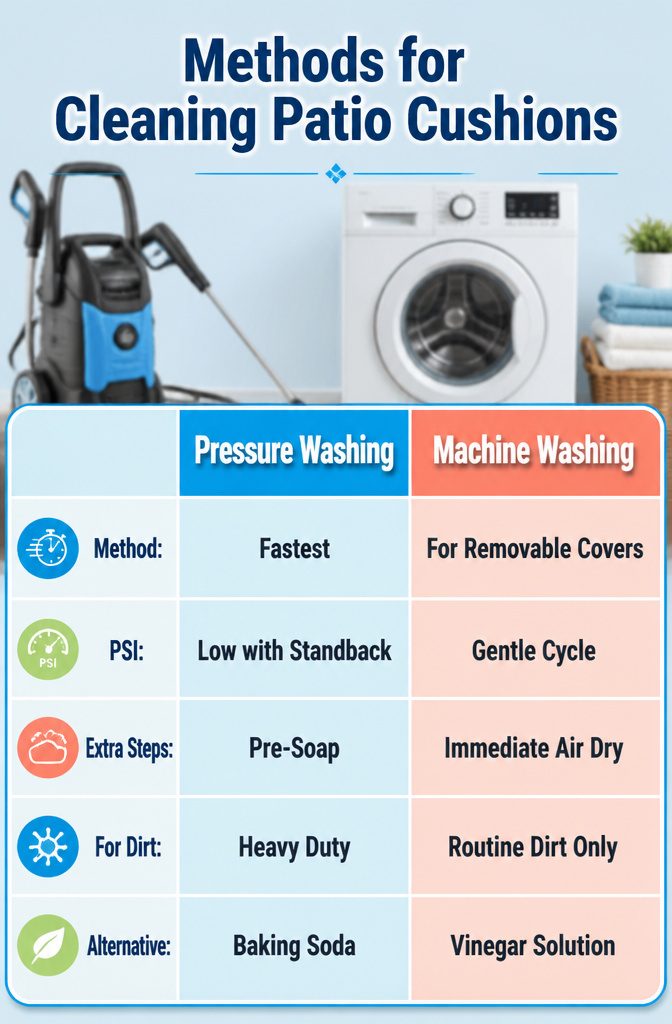
Six methods cover most cushion situations, and the right one depends on whether the cover comes off and what kind of mess you’re facing.
- Pressure washing works fastest on fixed covers, but keep the PSI low and stand back. A 15-degree nozzle gives you concentrated power without shredding fabric, and pre-soaping with the machine’s attachment cuts the job in half. Write the startup steps on the unit with tape if you only haul it out once a year; saves the ten minutes of guessing why water is spraying everywhere.
- Machine washing is for removable covers only: gentle cycle, cold water, color-safe detergent, no fabric softener. Pull them out promptly when the cycle ends and air dry.
- Hand washing with a teaspoon of Dawn dish soap in a gallon of warm water handles routine dirt without the machine hassle. A soft brush and a rinse until the water runs clear is all it takes.
- Baking soda paste, mixed thick with water, lifts stains if you let it sit 15–20 minutes before scrubbing. For mildew on performance fabric, a thinner mix of a quarter cup baking soda to one cup water works better.
- Vinegar solution handles mildew smell and growth, but test a hidden corner first. Some outdoor fabrics tolerate it fine; others don’t.
- OxiClean at a quarter cup per gallon of warm water is what brings white cushions back after the other methods plateau. Two years of annual use convinced the people who’ve tried it.
What the Stain Needs
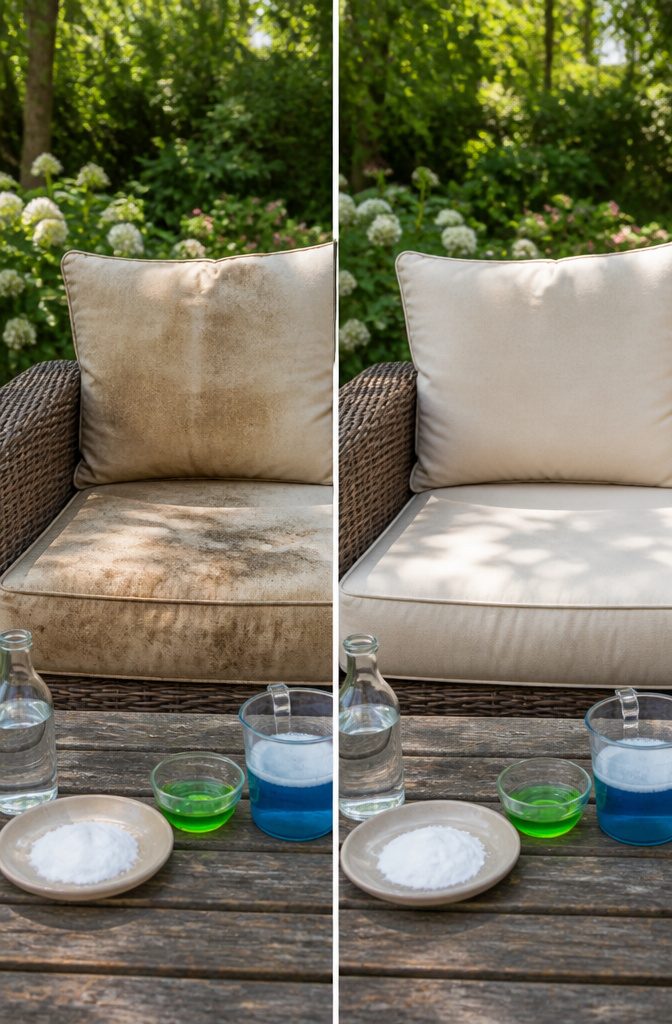
Oil breaks down when dish soap gets to work on it, and that match is the difference between one wash and two. Bird droppings carry acids that start chewing into fabric the longer they sit, so speed matters more than scrubbing power there. For mildew, vinegar or a baking soda paste does the actual killing of spores; without that step, the stain keeps coming back. Food and wine respond to OxiClean, which is what finally got my white cushions white again after regular soap stopped cutting it. The wrong cleaner just moves the stain around or sets it deeper, and by the time you figure that out, the weekend you set aside for this is half gone.
How Often to Wash
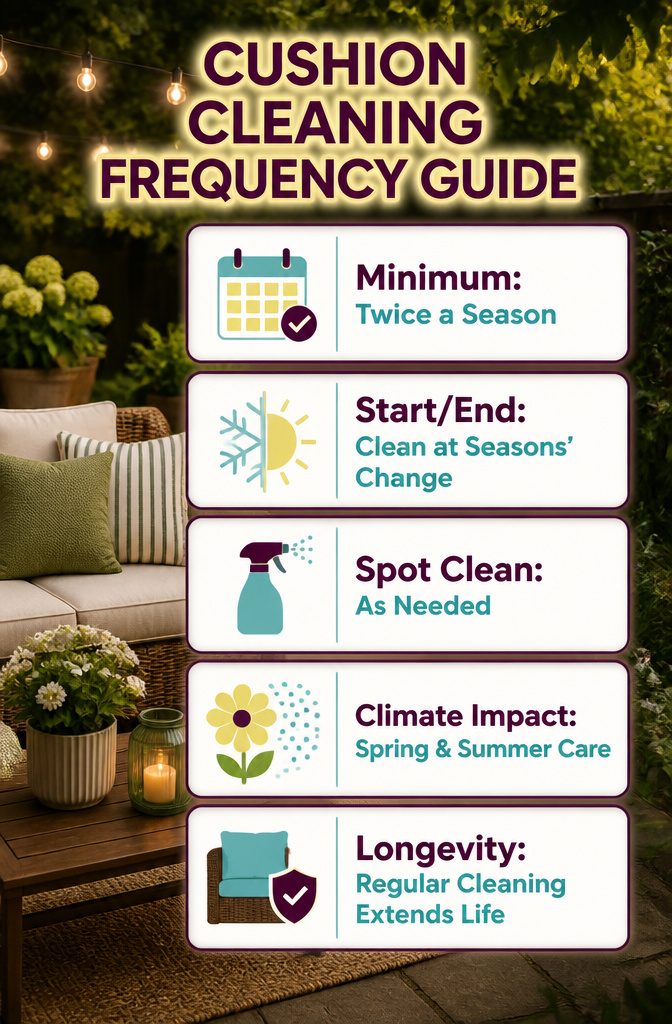
A couple of times a season is the minimum that keeps outdoor cushions from turning into something you would not want a guest to sit on. I treat the start and end of the outdoor season as the two fixed dates, with spot cleaning in between when something drips or a bird finds its mark. Heavy pollen springs or dusty summers push that schedule up; the film that settles in April can embed itself before June if you wait.
At a bare minimum, a couple of times a season. Ideally, do a quick clean at the start and end of the outdoor season, plus spot cleans in between.
That rhythm matters more than the method. Covers left out through winter without cleaning will need replacement sooner than the frame does; the fabric breaks down from the grime you let freeze into it, not from the cold itself. In a four-season climate, September cleaning before storage is what stretches a set from two years to five.
Frequently Asked Questions
Can you wash patio cushions?
Yes, but how you wash them depends on whether the cover comes off. Removable covers can go in the washing machine on a gentle cycle with cold water if the care label allows it. Covers that are sewn on need hand washing or a careful pressure wash with the lowest PSI setting and a wide spray tip.
Can I wash outdoor cushions in the washing machine?
Only if the cover zips off and the care label says it is permitted. Run it zipped shut on a gentle cycle with cold water and a mild, color-safe detergent, and skip the fabric softener entirely. Air dry the cover; heat from a dryer shrinks outdoor fabric more often than not.
How often should I clean outdoor cushions?
At least twice a season, with spot cleaning between those deeper washes. The start and end of your outdoor season are the two fixed dates to plan around, though heavy pollen or dusty summers may push you to clean more often. September cleaning before storage is what stretches a set from two years to five in a four-season climate.
Can I pressure-wash outdoor cushions?
Yes, but only with caution. Use the lowest PSI setting, a wide spray tip, and keep the nozzle at least two feet back with horizontal sweeps. Pre-soak the fabric and mist it so cleaner does not dry into the weave. Skip pressure washing entirely if the fabric is already fraying or if the care label forbids it.