A corner bench runs from modest upholstered seating with sliding stools to a paneled built-in with drawers at the base, and the storage method decides which one fits your kitchen.
Lift-top seats work when you need space for things used a few times a year, while pull-out drawers make sense if you reach in weekly for placemats or serving bowls.
White paint on a base with a bare wood top costs the least to build and wipes clean without any fabric to protect, but striped cushions over drawer fronts let you change the look without touching the bench itself.
1. Lift-Top Storage Banquette
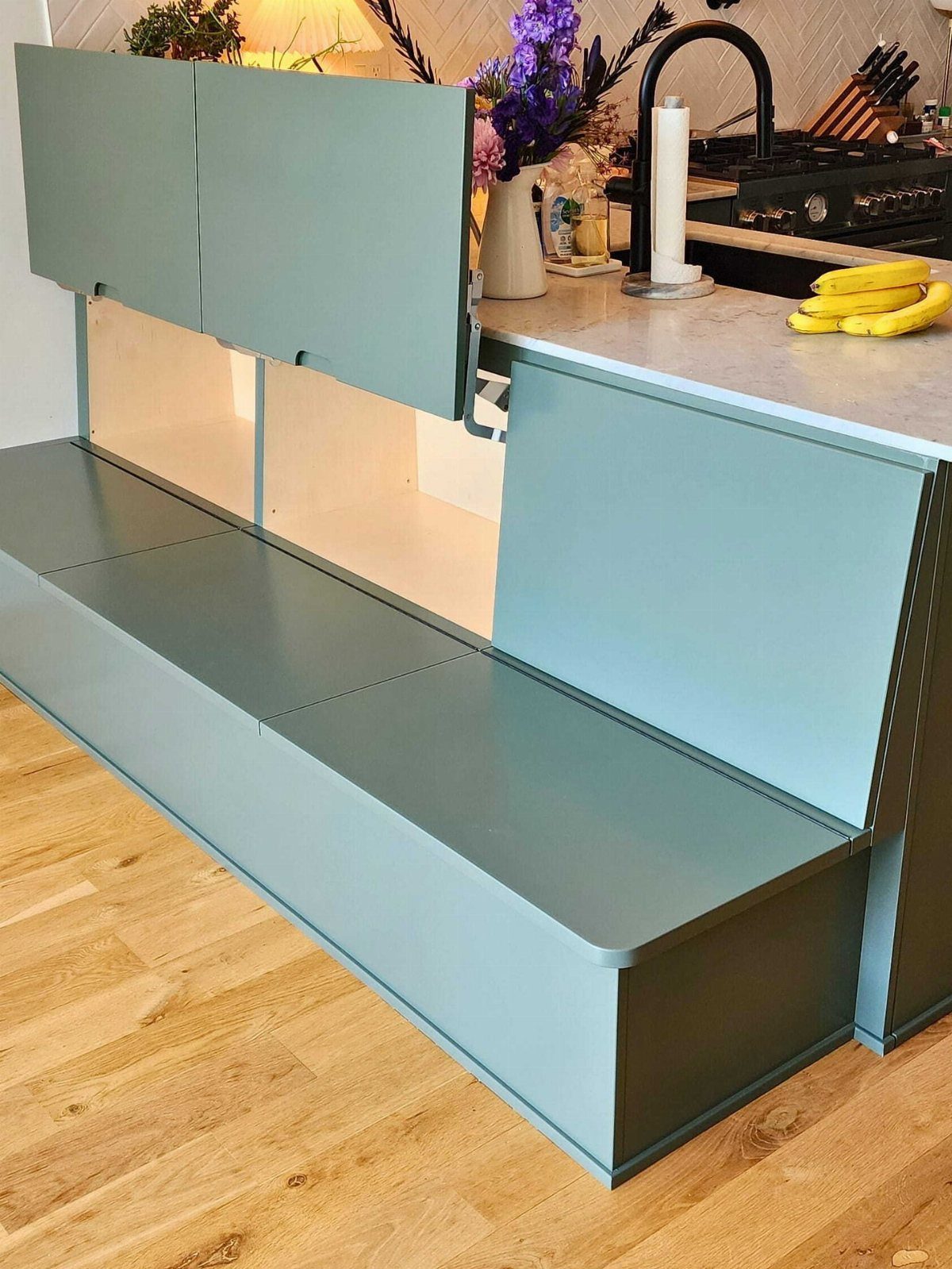
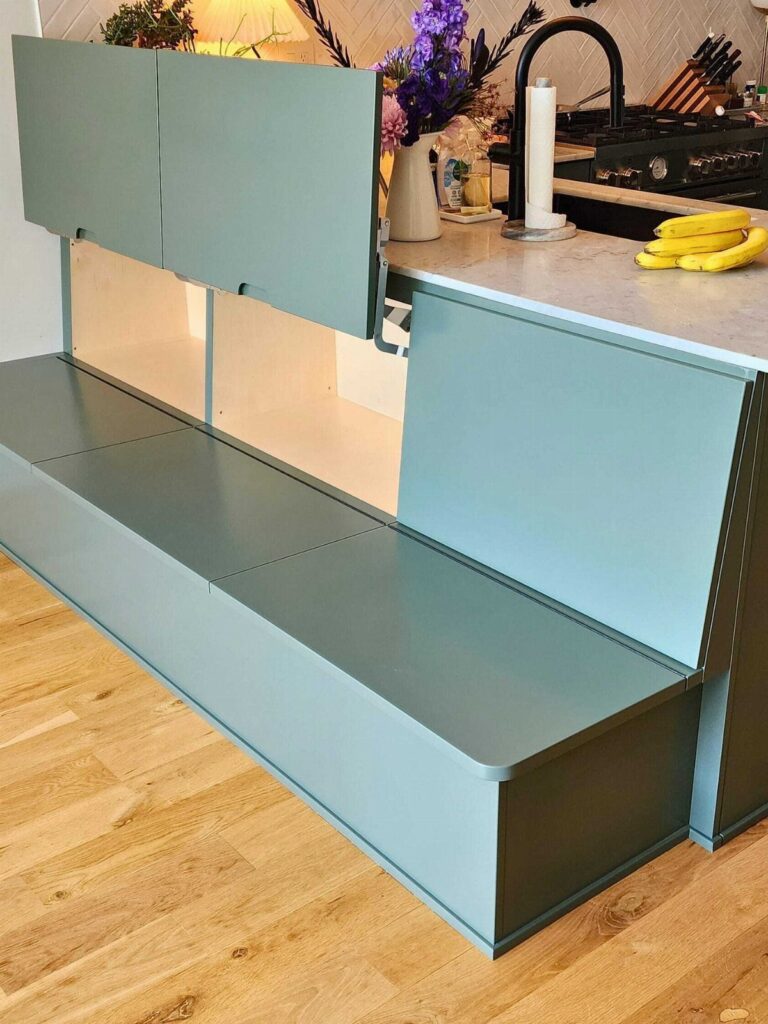
Seats that lift on hinges turn every inch of an L-shaped banquette into a bin, and that makes this the layout I’d pick for a kitchen short on cabinet space.
Think table linens, seasonal platters, the slow cooker you use twice a year.
A lid you can open is easier to live with than a deep box you have to dig into.
Put the things you grab weekly near the front of the seat, and keep the rarely used stuff in the corner where the 2 benches meet.
Set a loaded cushion on top and try the lift a few times; if it opens easily under that weight, the hinge is up to the job.
Finding the right kitchen banquette with storage for your home starts with measuring your space — especially if it’s going to live in a corner (you don’t want the bench sticking out farther than the wall).
2. Kitchen Nook Set with Stools
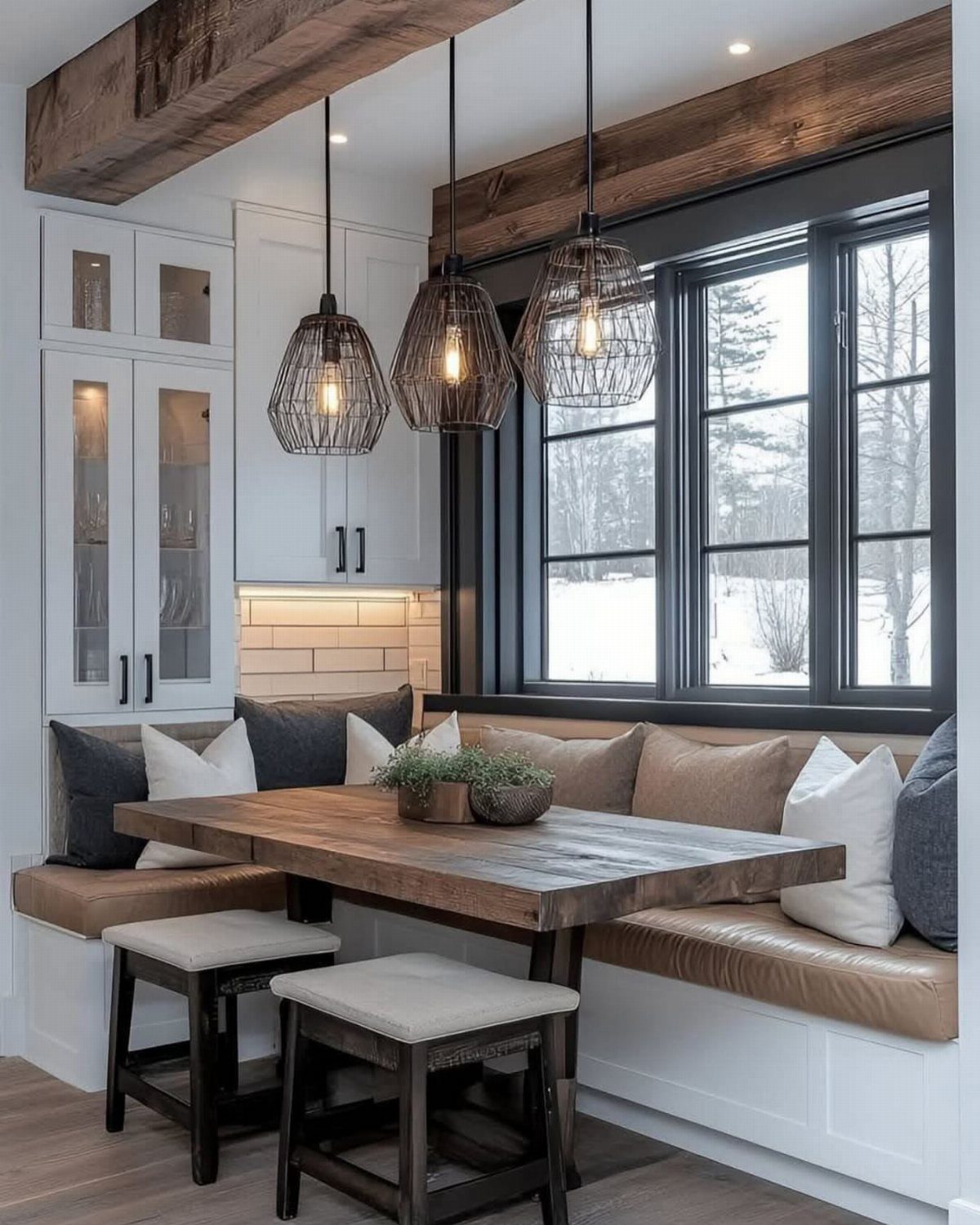
2 small stools that slide under the table are what make this nook work for a household that changes size. A leather L-shaped bench takes the corner, and the stools come out when guests arrive, then disappear again.
Leather wipes clean, which counts for a lot at a table where breakfast happens. Choose stools with a seat narrow enough to clear the tabletop edge, or they will stick out and block the walkway.
If you already own a table, this is the cheapest version: buy the stools, skip the custom seating.
3. Banquette with Shelves
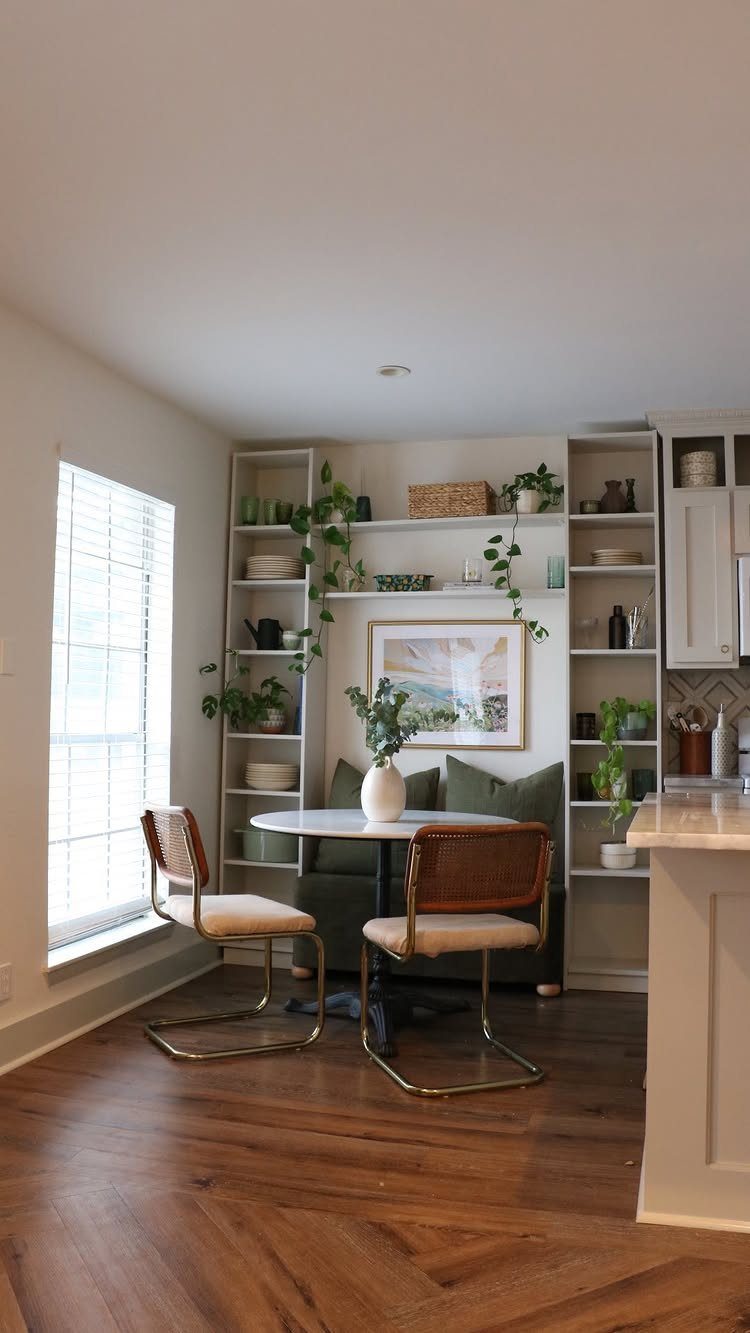
Built-in shelves along a corner nook can hold plants and dishes, though they call for more carpentry than a drill: measuring, cutting and fastening into the wall studs.
Plain lumber from a big-box store like Home Depot keeps a nook like this affordable, even in a compact apartment.
For renters, that bracket method is the part I like. Shelves joining above both benches also frame the corner and keep the table area from feeling empty.
Paint or stain the boards before hanging them, since cutting in around brackets afterward is slow.
Keep the heaviest items on the lowest shelf.
4. Modular Storage Banquette
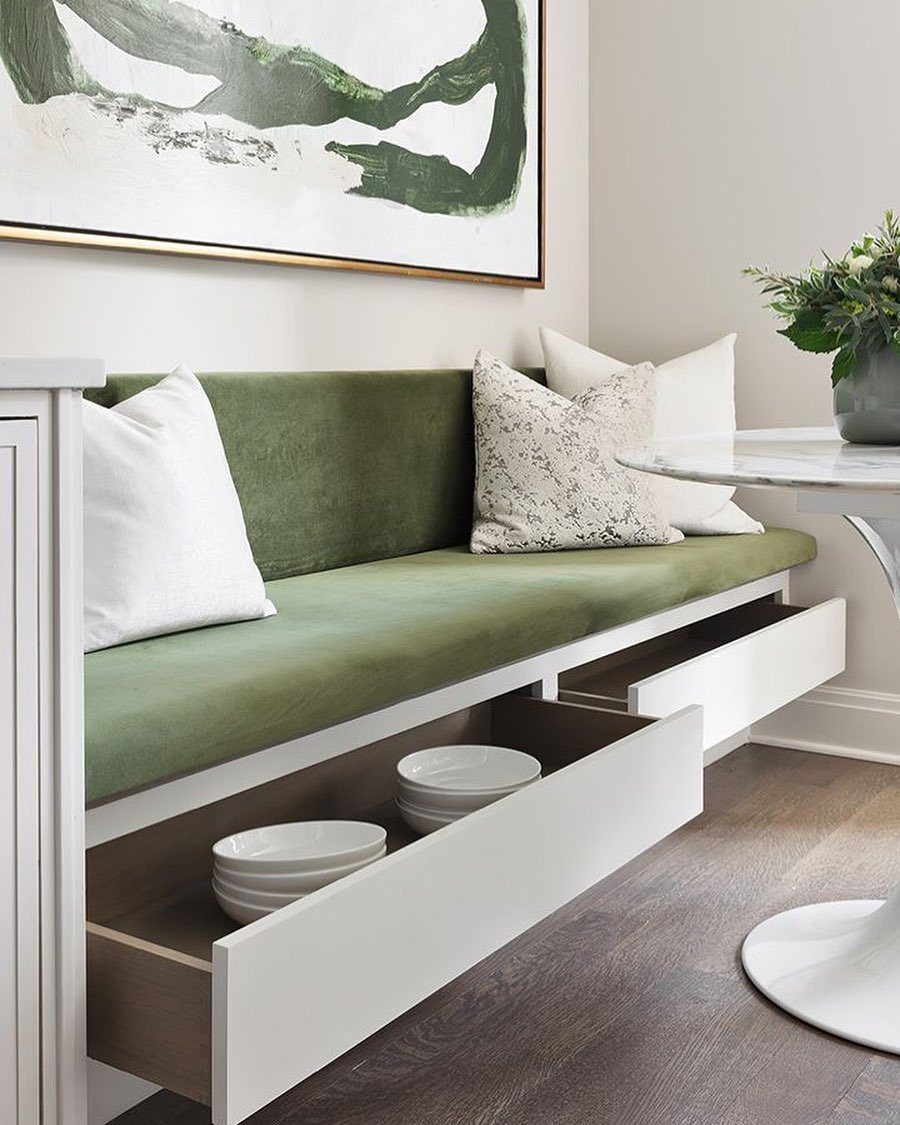
Pull-out drawers in place of flip-up seats mean you never have to unload cushions and sitters just to reach a bowl.
This green velvet banquette uses white drawers that slide out from beneath the seat, and each one holds its own category of stuff.
A modular setup lets you size the drawers to what you own: shallow for placemats, deeper for serving bowls. Velvet is soft, but I’d go for a performance fabric if kids eat at this table.
I prefer drawers over lids for anything used weekly.
5. L-Shaped Storage Bench
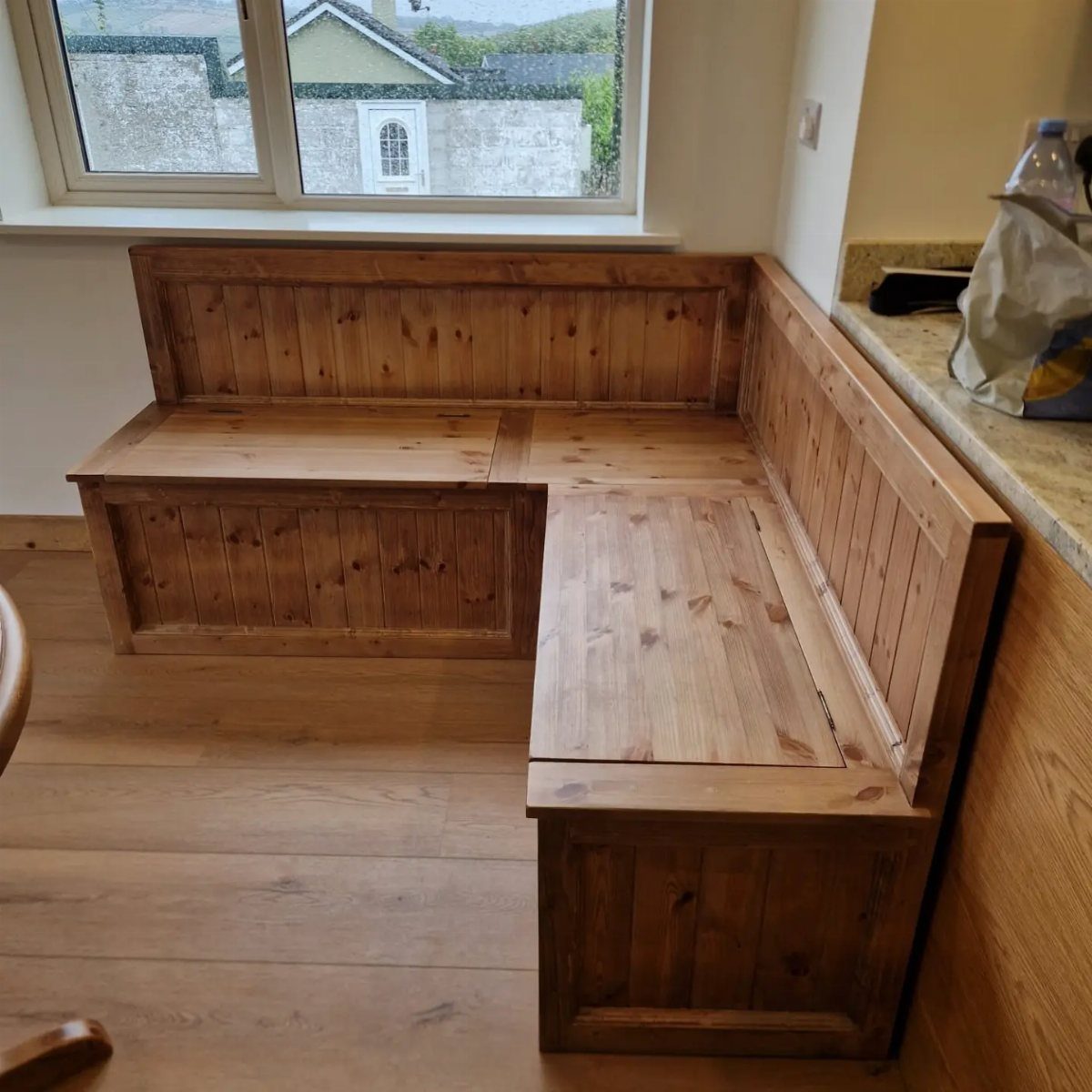
A wooden L-shaped corner bench under a window makes use of the one spot in a kitchen that usually goes to waste. The storage sits below the seats, so the walls stay clear and the daylight keeps coming in.
Since the bench runs along the window and counter, measure the clearance to the counter edge before cutting anything. You want room to walk past with a hot pan.
Natural wood suits a bright kitchen, and a couple of seat cushions add comfort without hiding the grain.
6. Storage Drawers Under Seat
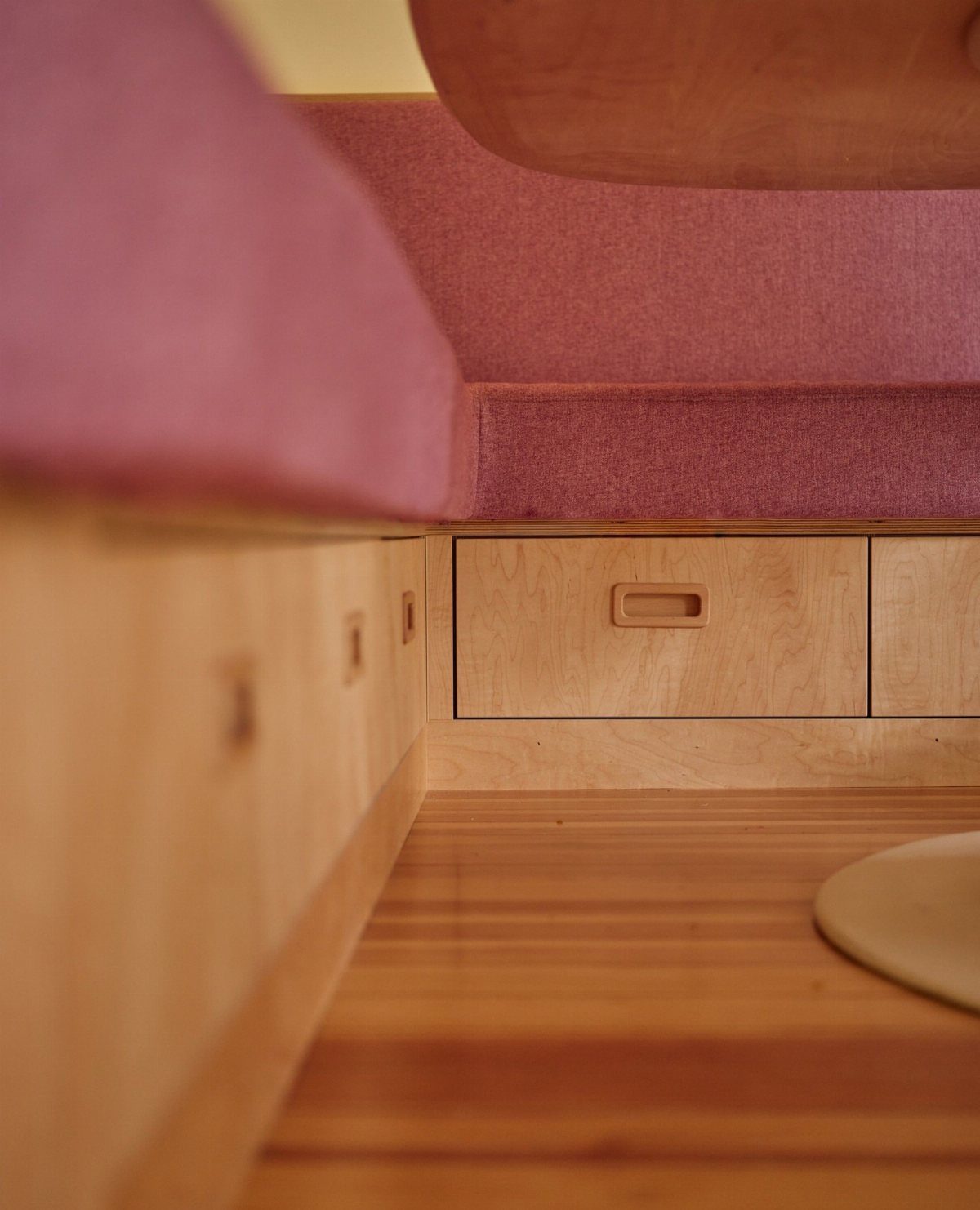
Drawers built into the base of a nook bench keep everything at hand, with no lid to lift and no cushion to move.
The pink upholstered seat here sits on a row of light wooden drawers, and the wood tone matches the floor, which keeps the whole nook calm.
If you build this, pull-out fronts need a bit of clearance at the floor so they open over a rug. A thin rug like the beige one works; a thick pile would catch.
Use the drawers for things you reach for often.
7. Upholstered Storage Banquette
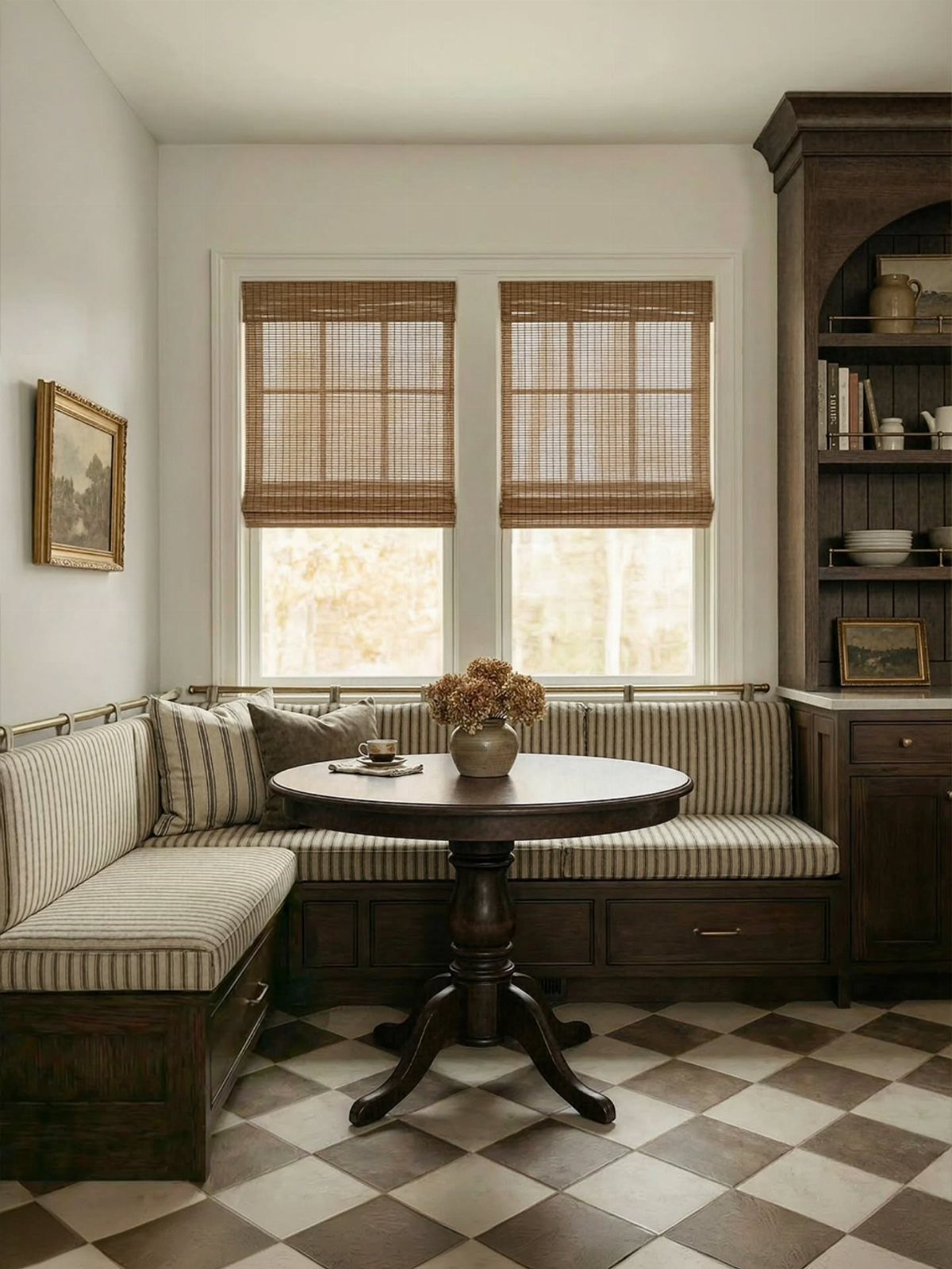
Stripes do a lot of work on an L-shaped bench, because the lines run around the corner and make two arms read as one piece.
Here the striped upholstery sits over dark wood drawers, so the storage stays in the base and the seat stays soft.
Dark drawer fronts against a lighter cushion give the bench a firm edge, and a round table keeps the corner from feeling boxy.
I’d pick a stripe with some width to it; thin pinstripes get busy fast next to a checkered floor.
8. Grey Panelled Nook Bench
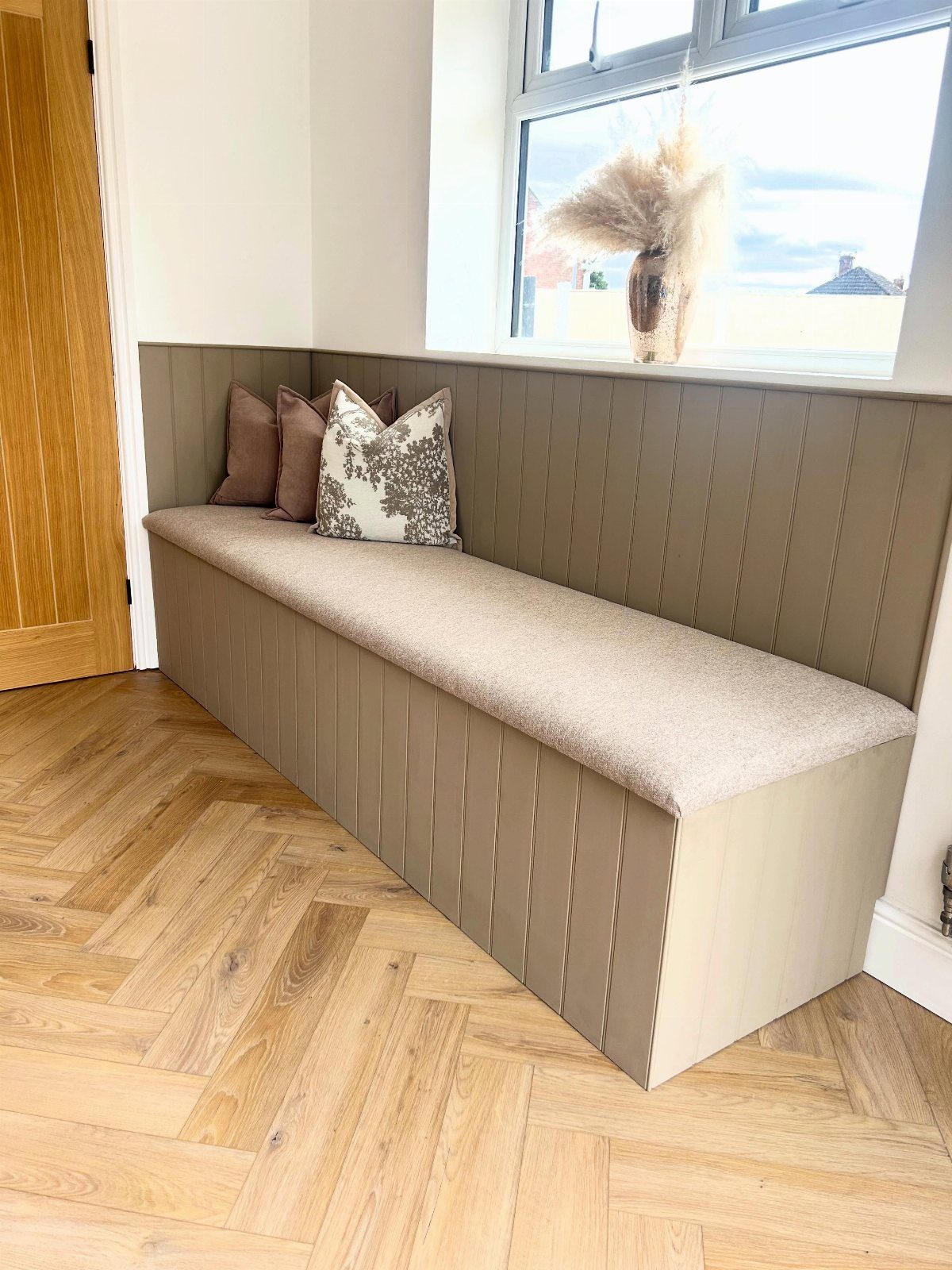
Grey vertical paneling on both the base and the backrest ties a nook bench together, and a beige seat cushion keeps it from looking heavy.
3 pillows are plenty on a bench like this; more would crowd the window beside it.
If you build it, paint the panels before the seat goes in, since brushing around fabric is slow.
I like that the colors stay quiet and let the wood floor lead.
9. White Built-In Corner Bench
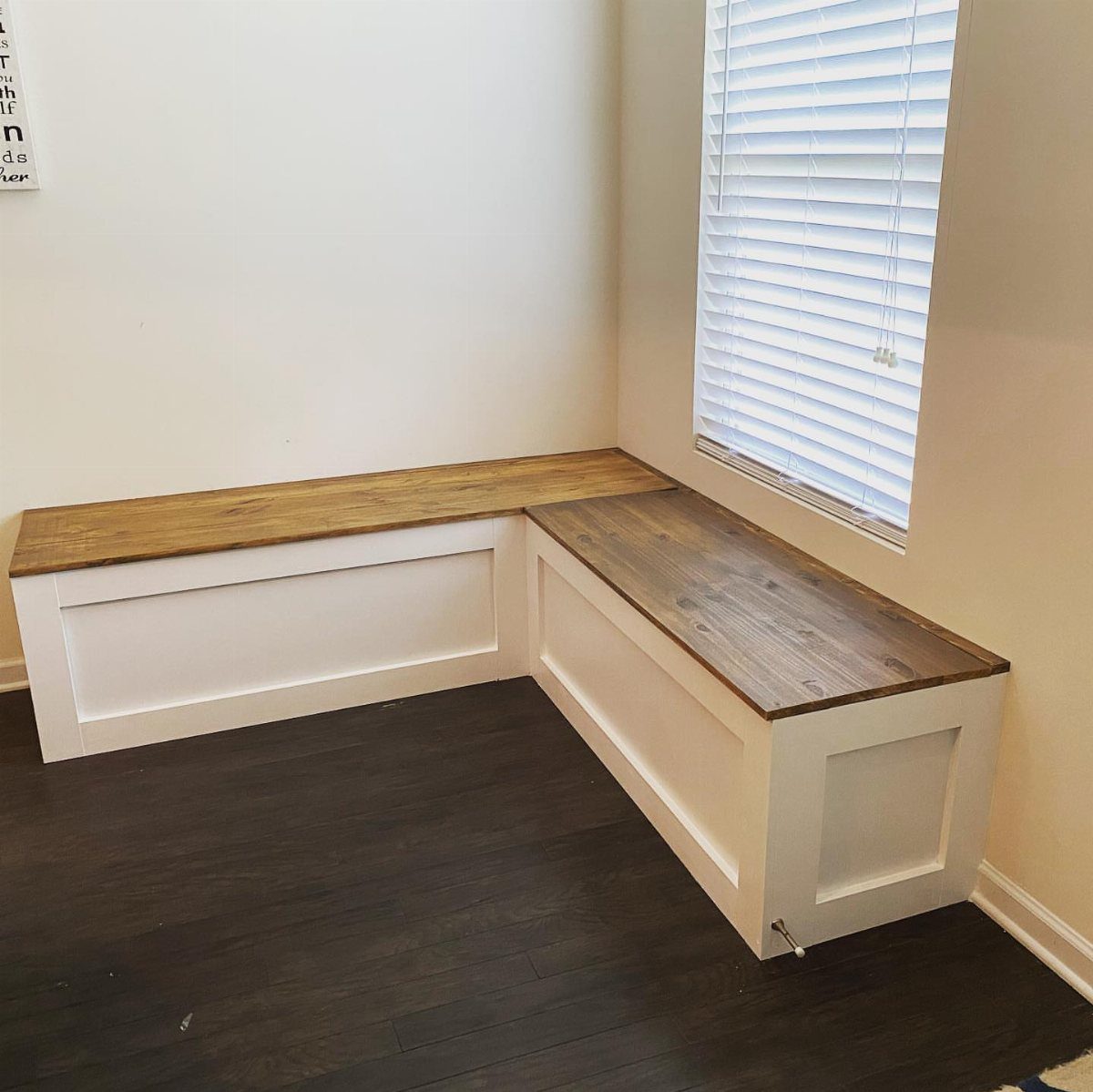
White paint on the frame and a natural wood top on the seat: that pairing is the easiest L-shaped bench to build and to live with.
The wood top takes daily wear and wipes clean, and the white base disappears against the walls.
Against dark floors, the white keeps a window corner bright where light counts most. Blinds in white blend right in.
If you want a softer seat, add a cushion later and leave the wood bare until then.
10. Striped Cushion Bench
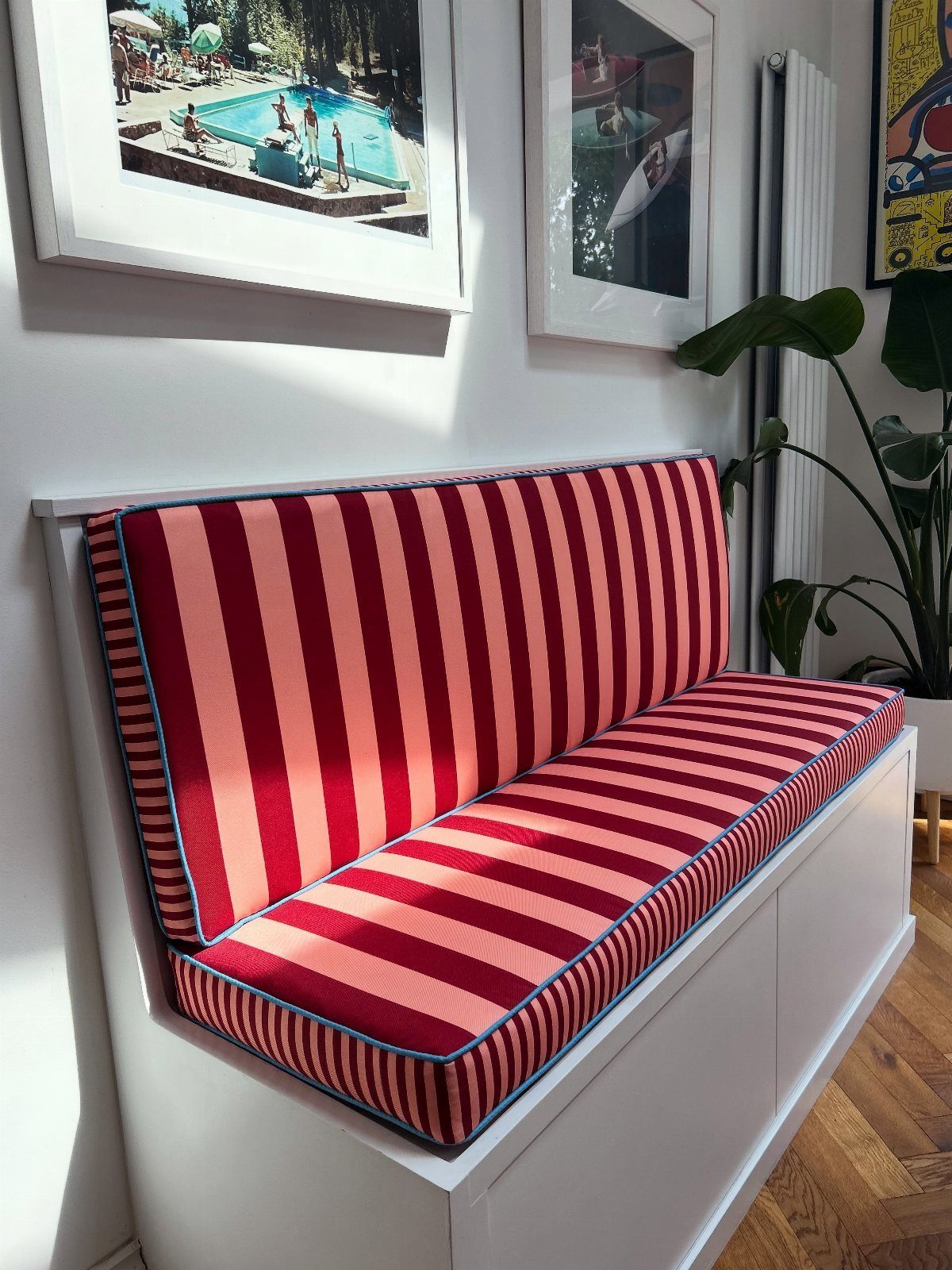
Cushions cost less to swap than anything else on a built-in bench, and red-and-pink stripes show it well. The white storage bench stays neutral, so the seat and back cushions carry all the color.
Swap the covers when you tire of the stripes, and the bench underneath stays untouched.
Pick 2 cushion colors that already appear in your kitchen, then add a third only if the room feels flat.