
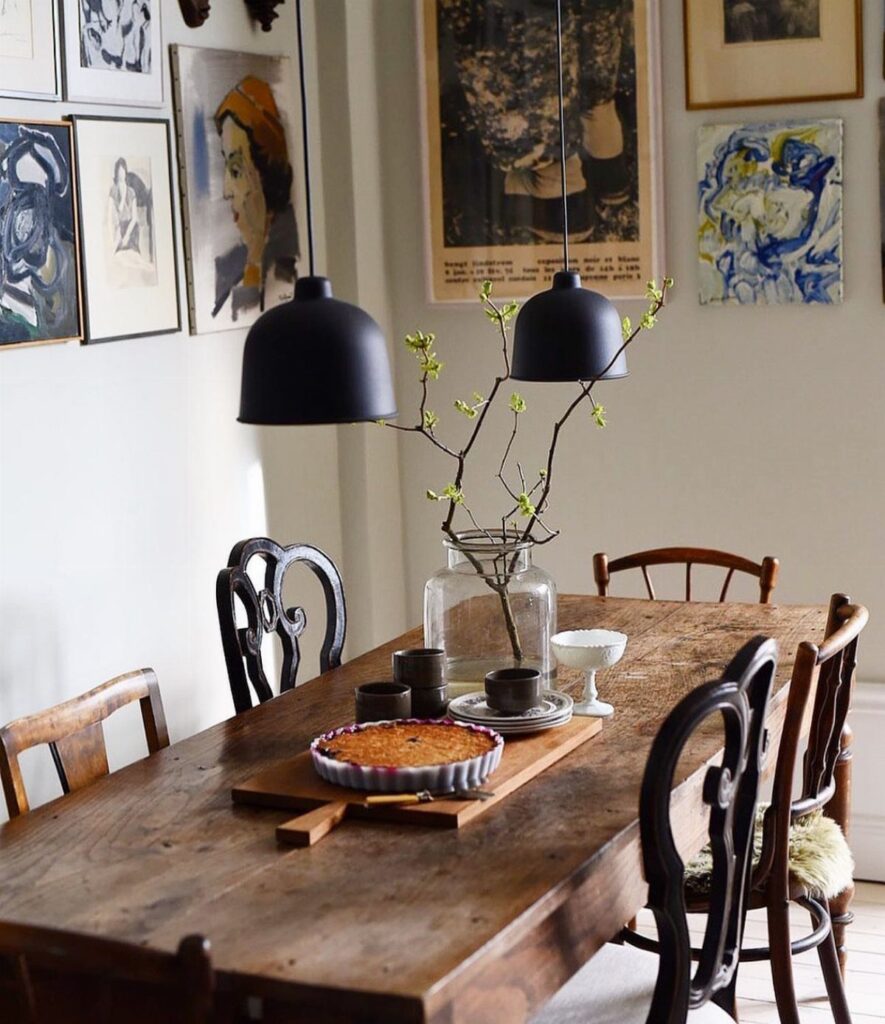
What your chairs already share decides which idea fits: a color family, one wood tone, a similar seat height, or velvet seats in different colors.
Hold to that one shared trait and let back shape and pattern vary, which is where I’d start with any odd set.
The ideas range from reusing chairs you already own and changing them gradually to colorful velvet seats, with notes on comfort, spacing and table shape along the way.
1. Table and Style
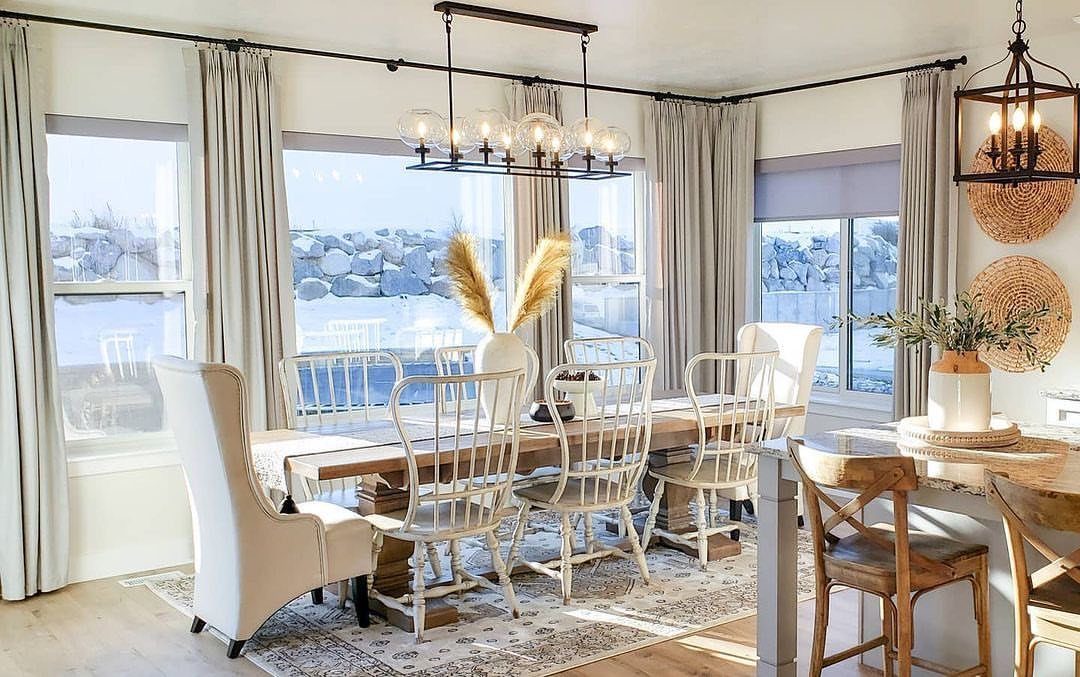
White does the work of a matching set here. The chairs differ in shape and style, but one shared color reads as a single plan around the wooden table.
Hold to one color and let everything else vary. If your chairs are secondhand or inherited, a common color is the quickest way to make them look chosen together.
2. Square-Backed and Round-Backed Chairs
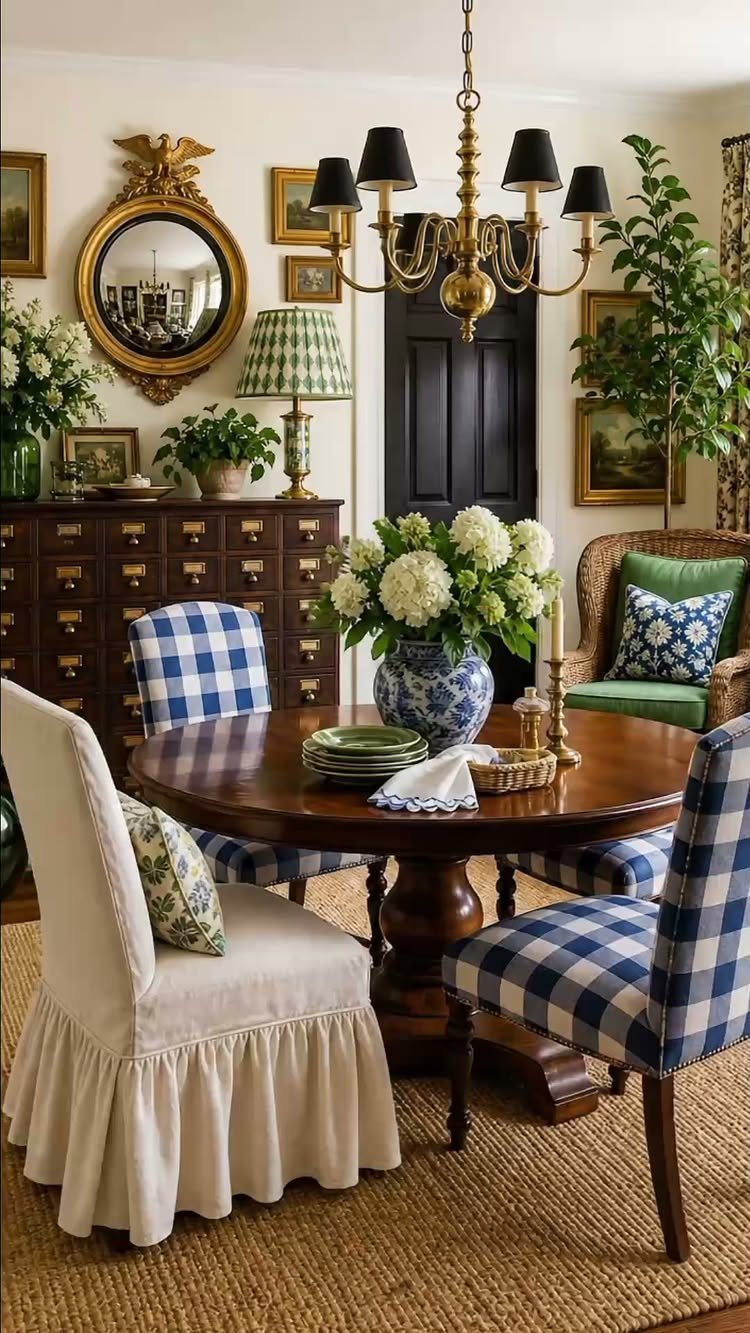
A round back beside a square one gives the eye two different lines to follow, and that variety is what stops the table from looking like a catalog page.
Keep the fabrics in a tight palette so the shapes get the attention.
Blue and white are all that repeat here, with a slipcover on one chair. I’d start with 2 shapes only; a third makes the table look crowded.
3. Graphic-Patterned and Cane-Backed Chairs
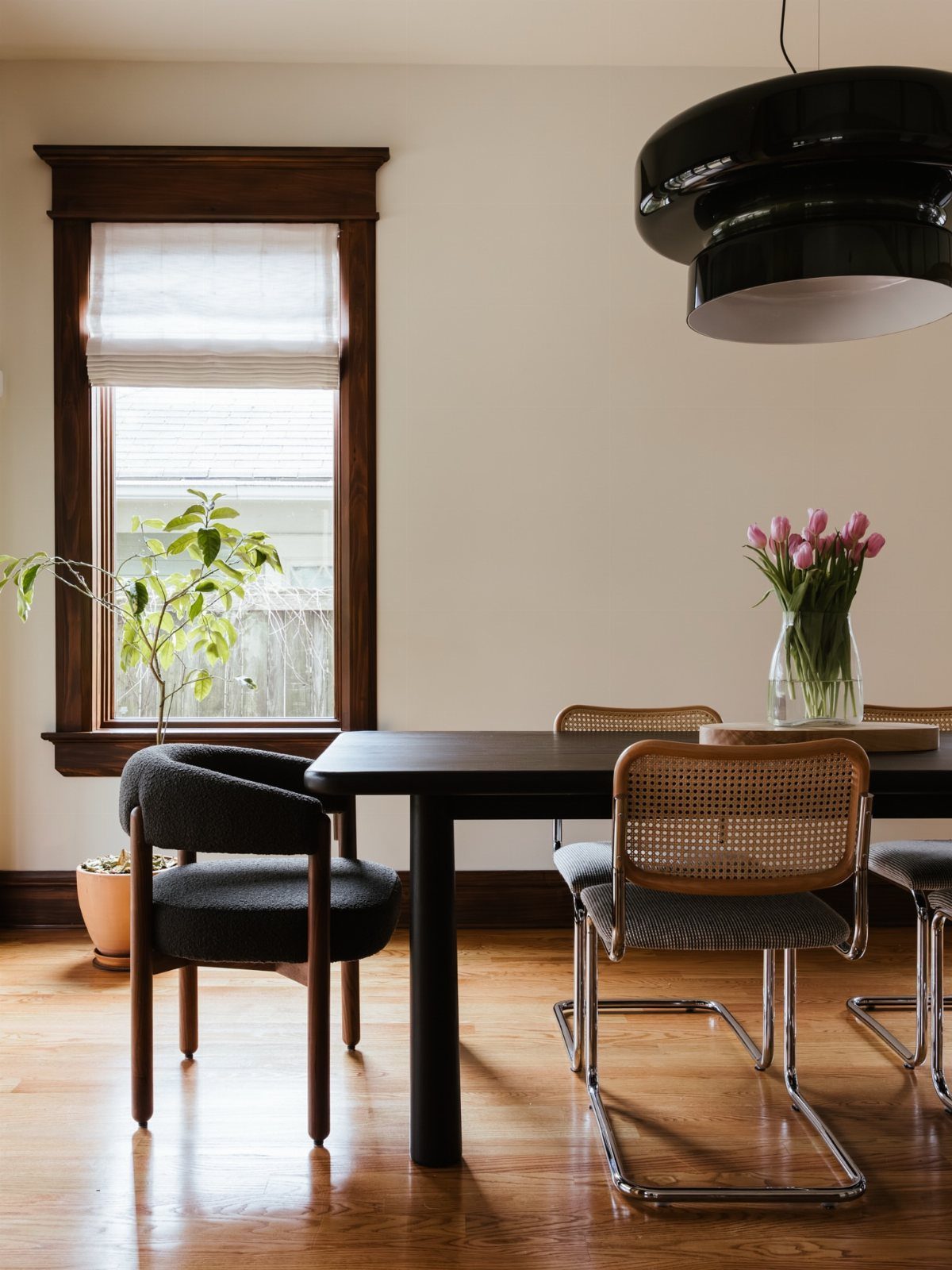
Cane backs bring texture, patterned seats bring graphic punch, and a plain charcoal chair keeps the two from competing.
Pick one color to run through all the chairs.
Here, the dark tones in the seats echo the dark wood table, so the mix stays connected. Using one plain upholstered chair is a good way to rest the eye, and I’d always include one when patterns are busy.
4. Contrasting End Chairs
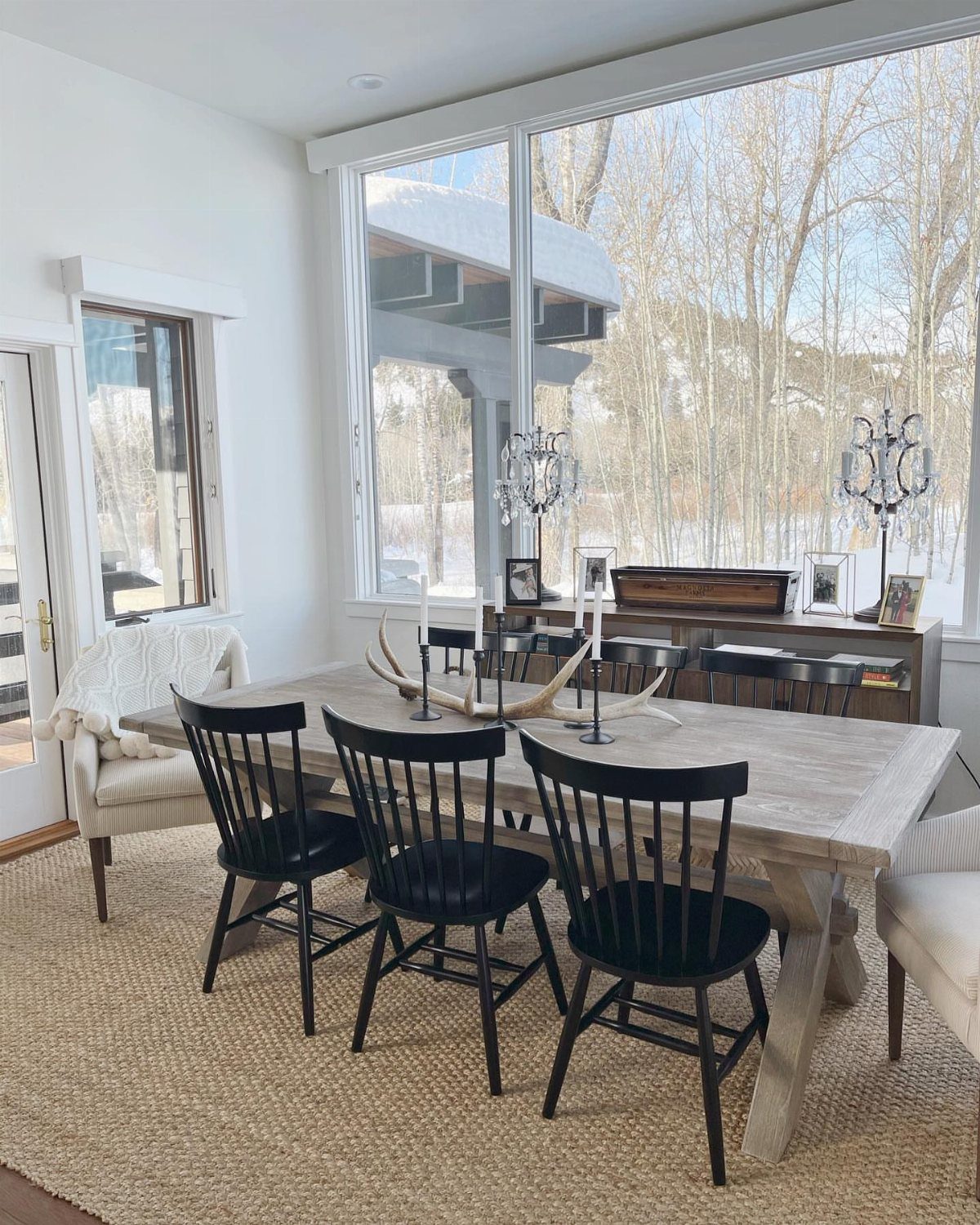
Two matching chairs at the head and foot of the table turn a mixed set into a deliberate one. The side chairs can stay black and spindle-backed while the ends take a different look.
White upholstered ends against black sides give a clear contrast, and the softer seats suit the places where people tend to linger. Choose a pair, not 2 different chairs, so the ends read as a plan.
5. Similar-Height Dining Chairs
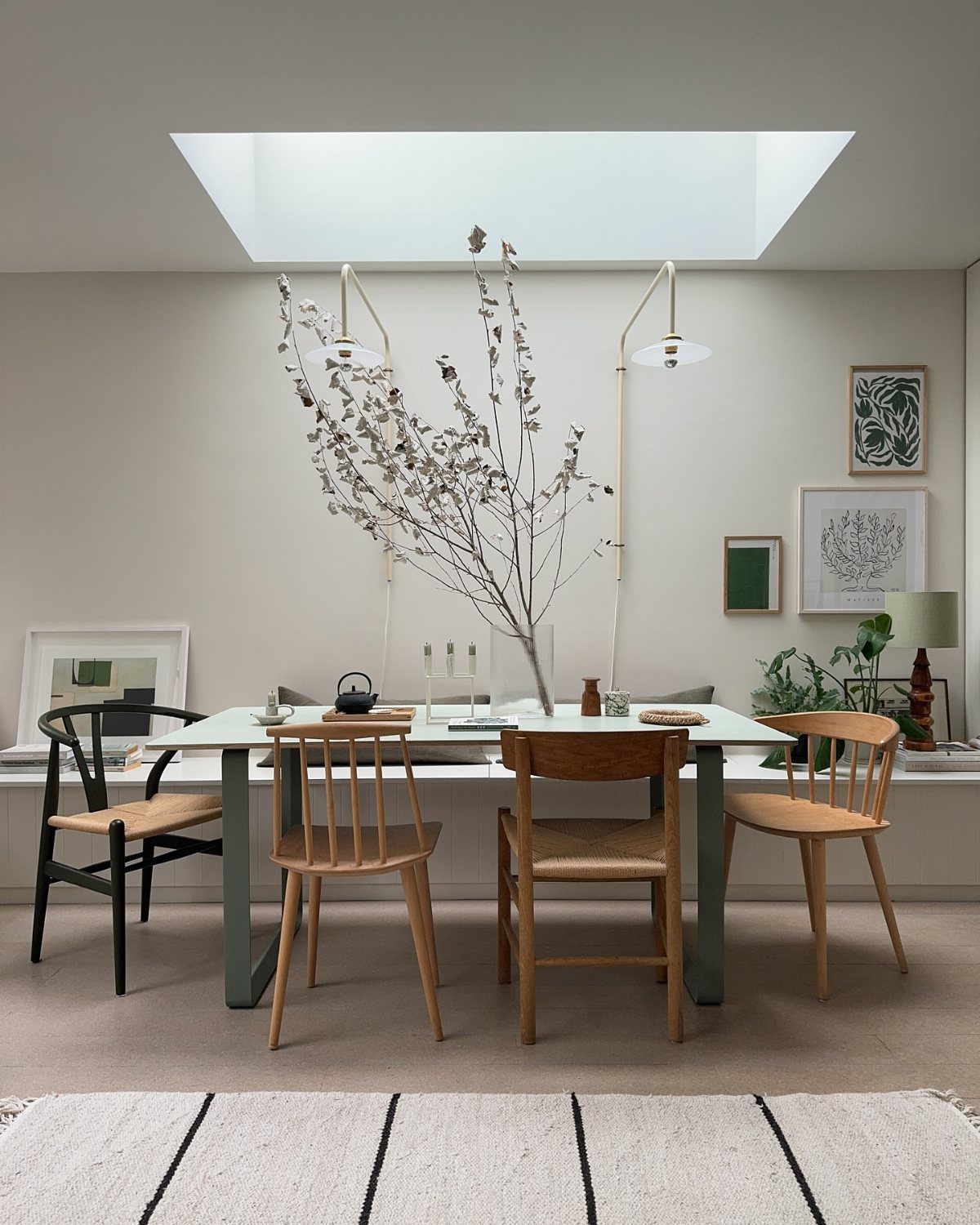
Seat height is the first thing to check on any extra chair, whether it’s bought new or borrowed from the porch.
Backs, legs and finishes can differ widely, as they do here, as long as the seats sit at roughly the same level.
Measure from the floor to the top of each seat, then set the chairs side by side to compare. Guests sit level with one another, and the table looks tidy even when no two chairs match.
6. Wood Chairs in One Tone
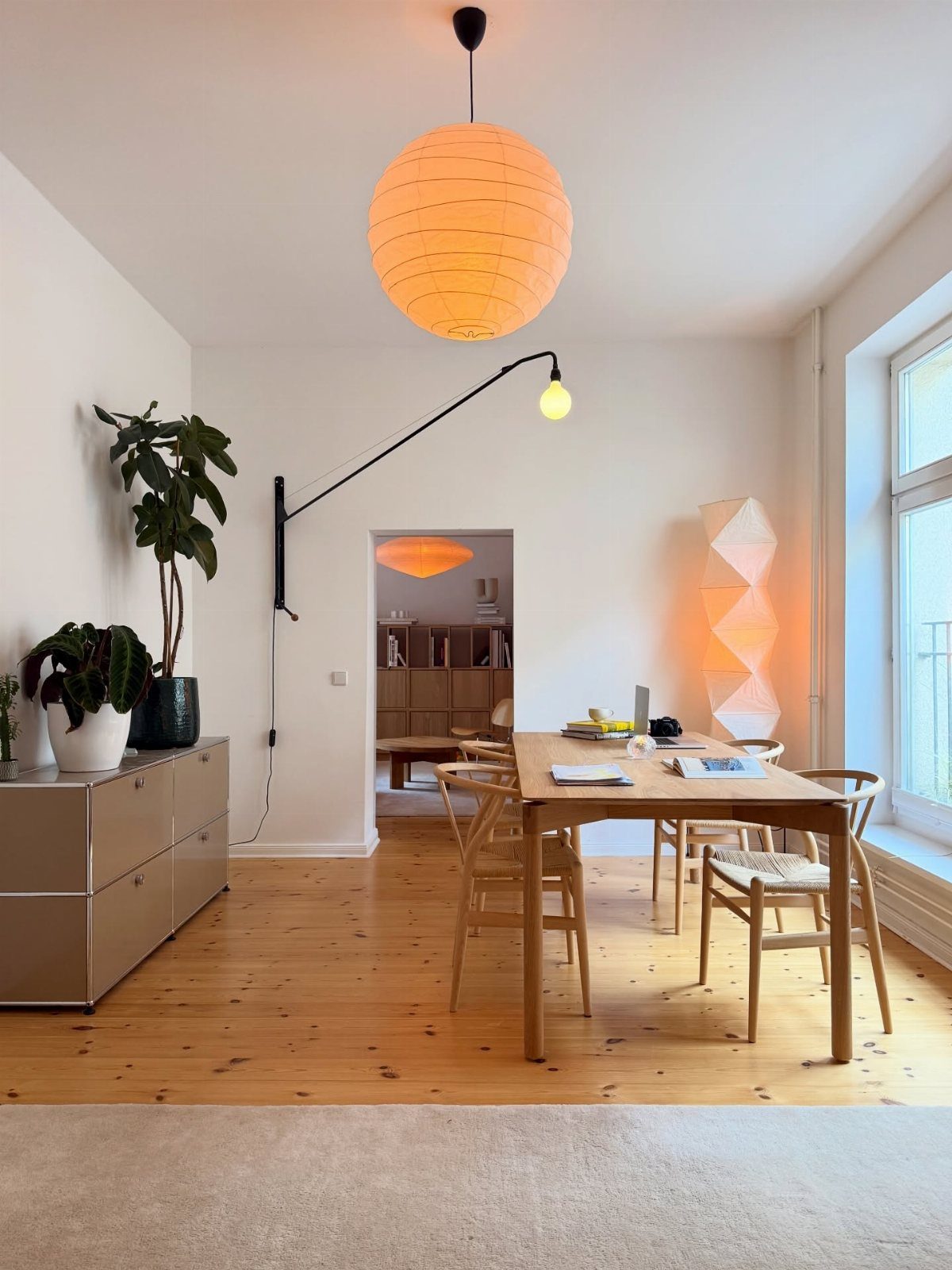
Related wood tones tie together chairs that share nothing else. Light-wood chairs read as a family because the color stays close, even where the shapes change.
Match the chairs to the tone of the table, or keep them within the same light range, and let the styles vary.
Wood on wood is forgiving, which is why I’d pick it first for a budget mix of thrifted chairs.
7. Use a Simple Table
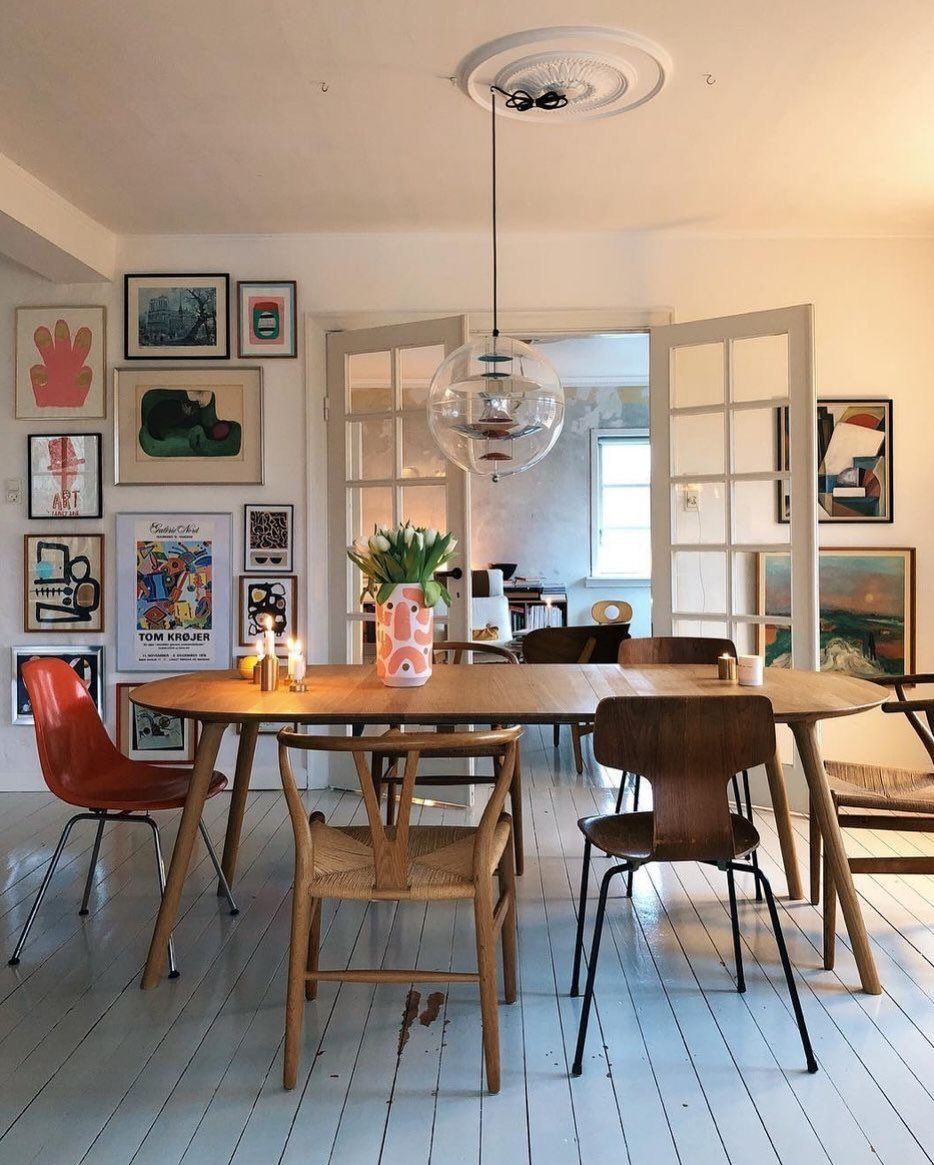
A plain wooden table is the calmest backdrop for chairs that disagree. With no carving or heavy detail on the top or legs, the red, cane and dark wood chairs get all the attention and nothing fights them.
If you’re buying one piece new, I’d make it the table and keep it simple. Then every hand-me-down chair you collect later has somewhere to land.
8. Colorful Velvet Chairs
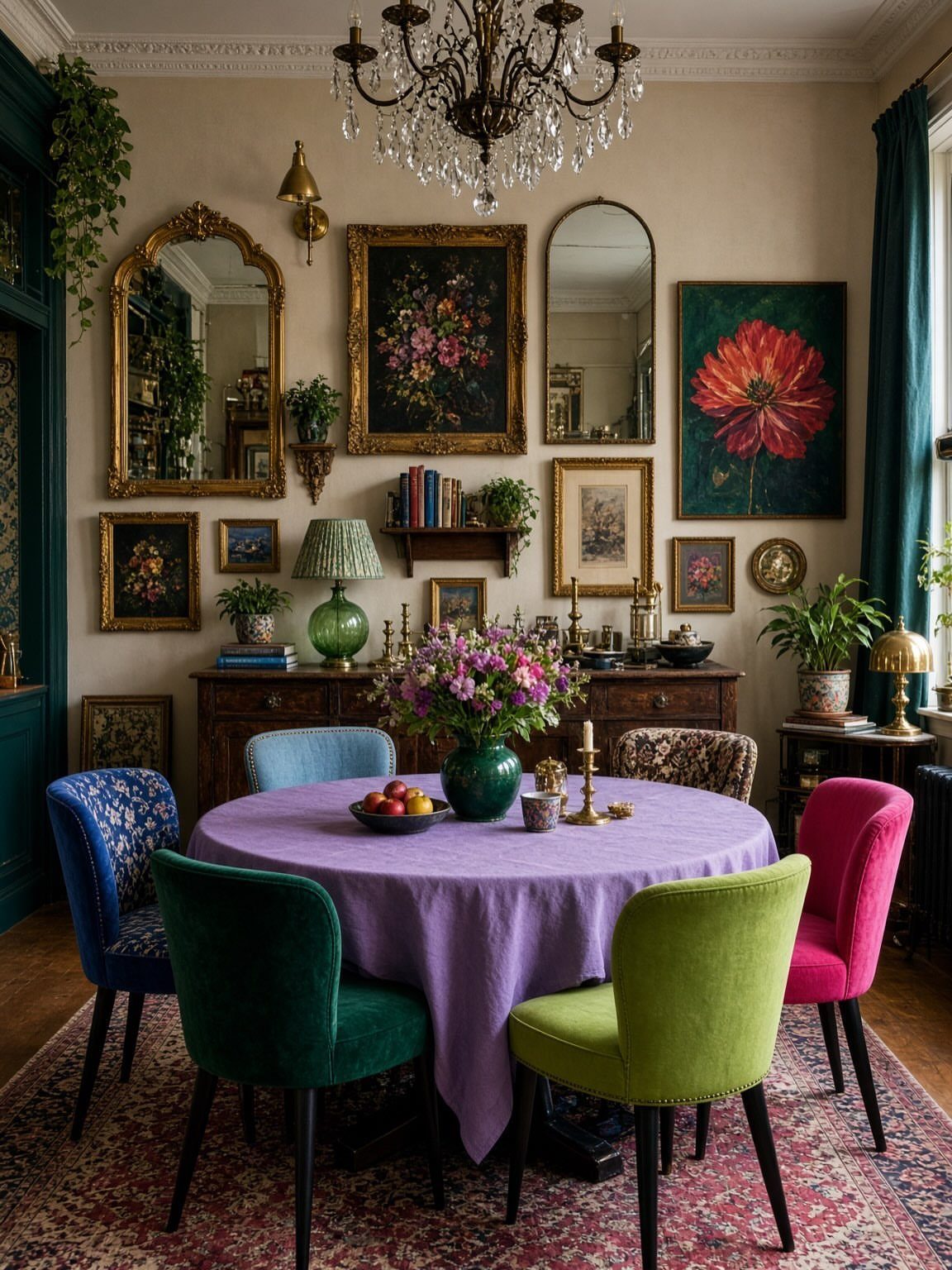
Velvet is the one thing every chair shares here, so blue, green, lime and pink can all sit at the same table without looking random.
A round table helps too. No head or foot means no chair outranks another, and each color gets equal weight.
Keep the fabric the same and let the colors run, and use a solid cloth, like the purple one, so the chairs stay the loudest thing in the room.
9. Mix Chairs by Color
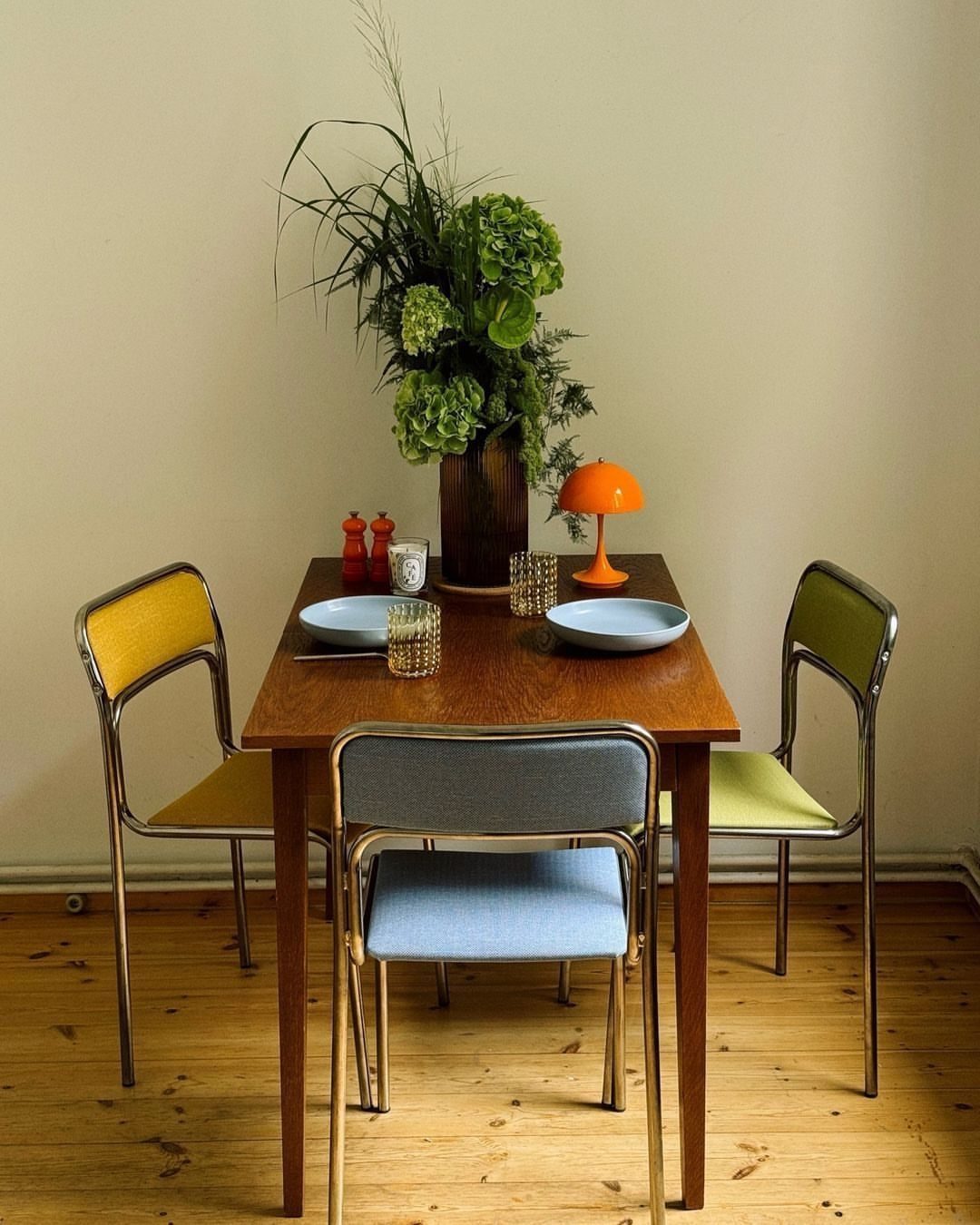
Three chairs, three colors, one wooden table: yellow, blue and green are enough to look intentional. Keep the table bare of pattern and let the chairs carry the color.
Green flowers on the table tie back to the green chair, so the mix reads as planned instead of scattered.
Staying within the same level of saturation is what I’d do, since one neon seat among dusty ones pulls every eye to it.
10. Wood Chairs with an Accent
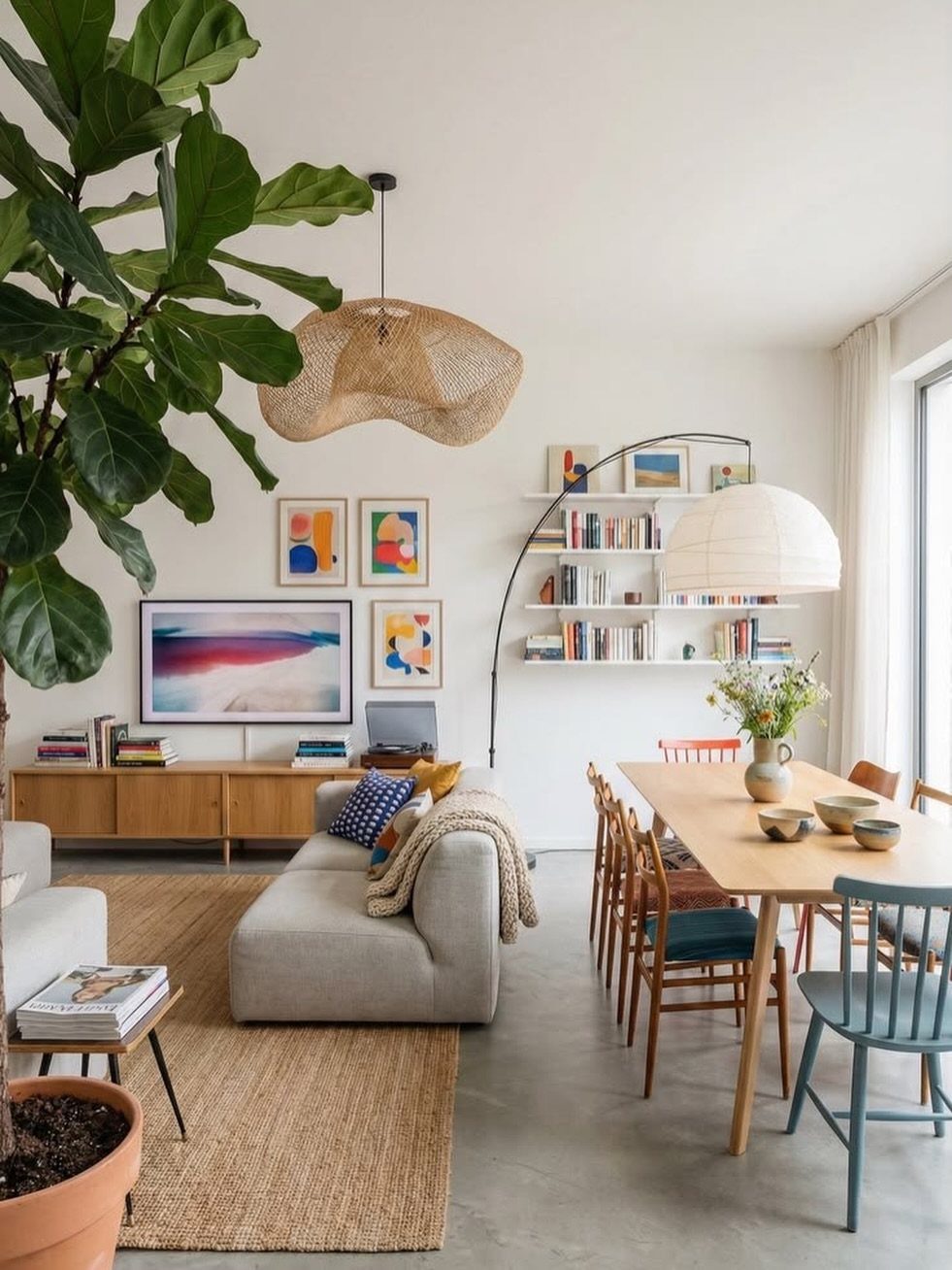
One blue seat among wooden chairs is a small move with a clear result. The light wood table and the other chairs stay in the same family, and the single chair with color gives the eye a place to land.
Stop at one. A second blue seat starts to look like a pair, and the quiet of the wood is what makes the accent work.
11. Mix Wood and Upholstery
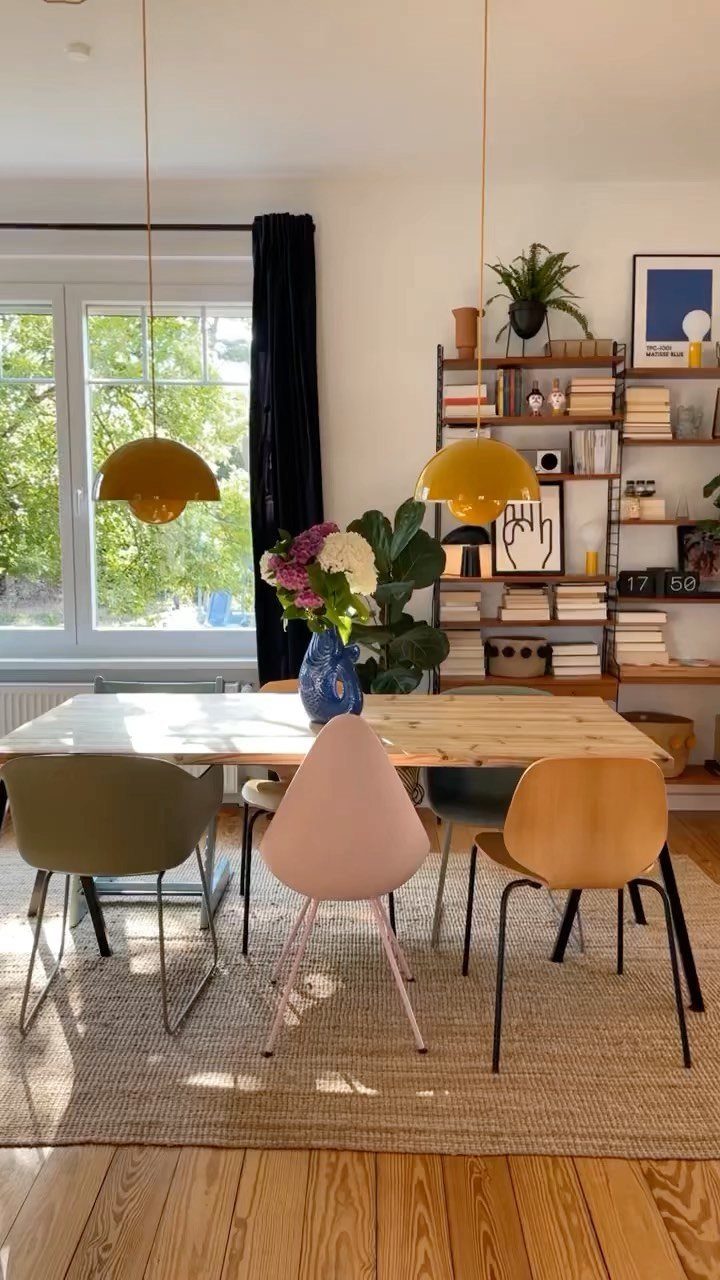
Olive green and pale pink sit well together when both are soft, and a natural wood chair between them keeps the table from tipping into all color.
Treat wood as the neutral.
Choose upholstered chairs in muted tones, then slot in wood ones to bridge the light table and the colored seats. 3 tones is plenty for a mix like this.
12. Patterned and Upholstered Mix
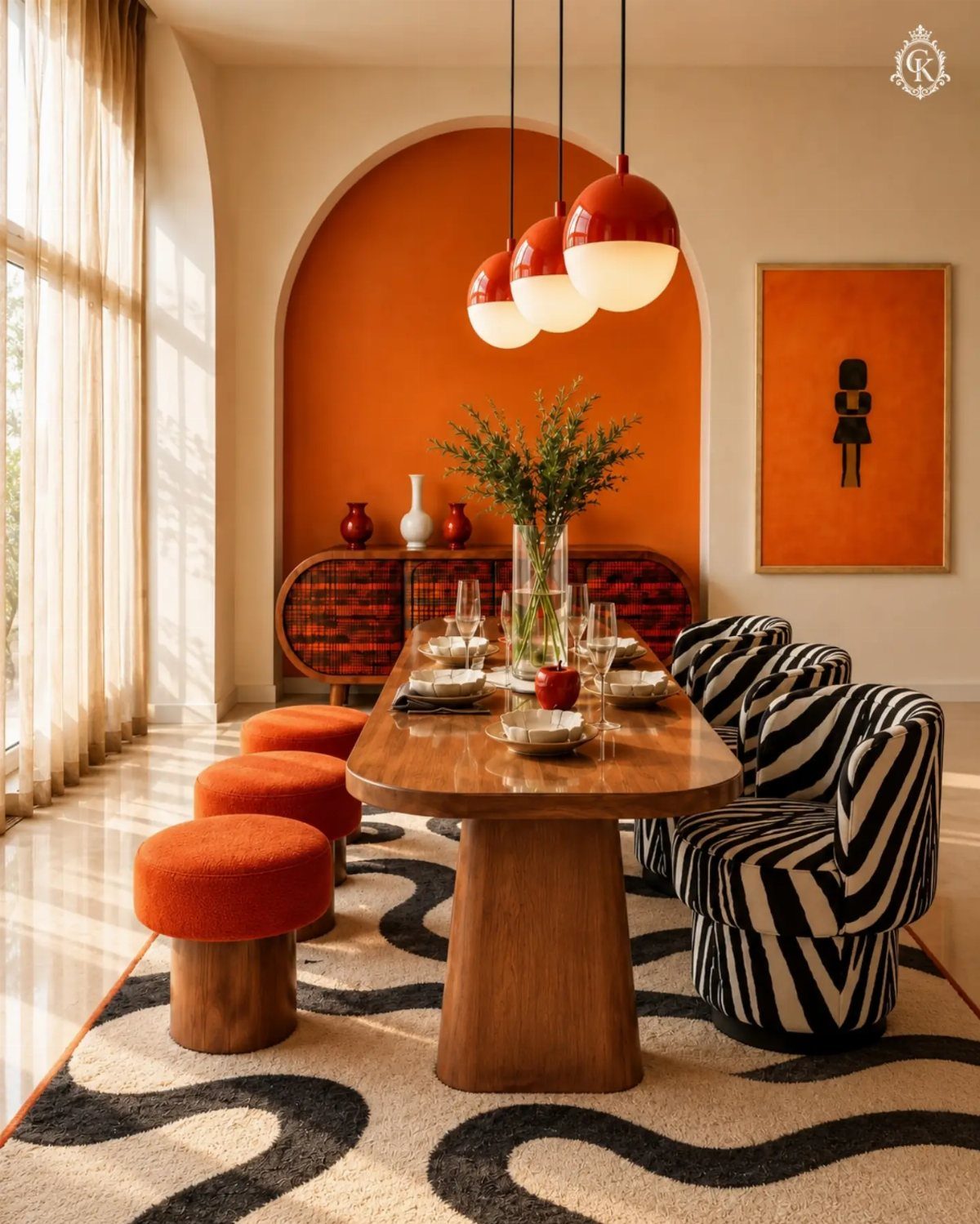
Splitting the table by side makes a bold mix read as a plan: orange velvet stools along one edge, zebra-print chairs along the other.
Zebra works like a neutral pattern, so it pairs easily with a strong color.
I like that the orange repeats in the decor and the wall, which keeps the velvet from looking like a one-off. Backless stools also tuck under the table and leave the floor looking open.
Comfort and Usable Spacing
Sit in any chair for as long as a full meal lasts, then decide whether it stays.
A back that pushes you forward looks fine in a photo and empties the table before dessert, so check that it supports your spine.
Cushions fix more than comfort. They add texture and color, and they tie unlike chairs together.
Leave room between seats. Wide or heavy-looking chairs take up more of the table edge than slim ones, so seat fewer of them per side.
Lopsided weight makes the table feel crowded even when the count is right.
Table Shape and Room Scale
Rectangular tables handle a mixed set best, because the ends and sides give the chairs natural places to sit. On a round table, a set that flows all the way around looks best, so go easy on the variety there.
Match the scale and vary the style: pick chairs that sit at about the same size but differ in shape, color or material. Too much variation in scale makes the table look like a mistake instead of a choice.
Plan for a table that seats at least 6, unless you’re setting up a small bistro corner. Then check the room, because chairs have to pull out and people have to walk past behind them.
“Having chairs that have only slight variations makes it seem as though you were actually trying to match the chairs, but weren’t able to completely,” says Watkins of this common mistake.
— Domino
Reuse and Gradual Changes
Start with the chairs you already own before buying anything. Secondhand pieces and hand-me-downs can fill out a set, and paint can pull the odd ones into line.
Swap only 2 chairs first. Live with the table for a week, then decide whether to keep going.
If your wood chairs come in different finishes, a coat of paint costs little and changes the whole table. Sand glossy surfaces lightly and prime first so the paint holds up to daily use.
Going in stages also spreads out the cost, which suits a weekend budget.