

Teak and eucalyptus are both tropical hardwoods used for outdoor furniture, but they ask for different things from whoever buys them. The gap in price runs 30–40% in eucalyptus’s favor, yet that upfront savings comes with yearly sealing and sanding if you want the set to last. Teak’s natural oils let it sit outside for decades with little more than soapy water and patience for the silver-gray patina it becomes.
Durability
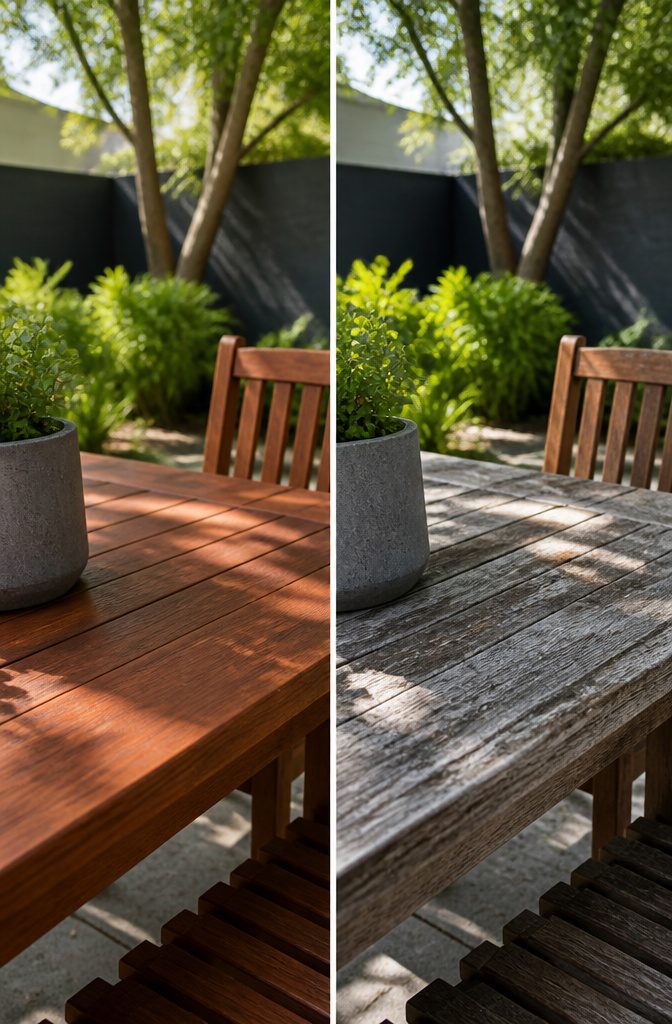
Teak carries natural oils that push back rot, dampness, and insects, which is why it lasts decades without much fuss and why old boats built from it still turn up sound after a century underwater. Eucalyptus resists decay and bugs too, but it needs a yearly sanding and a fresh coat of sealant to keep that protection tight, or the surface opens up to trouble faster than teak ever would.
The hardness numbers tell a different story than the longevity one. Eucalyptus scores 3,730 lbf on the Janka scale against teak’s 1,070 lbf, and it dries to 70.6 lbs per cubic foot where teak sits at 40.9. That density means eucalyptus takes dents and scratches far better; drag a heavy planter across it and the surface holds. Teak yields more easily, yet its softness pairs with those oils to let it shrug off the moisture that would eventually crack a harder, denser wood left bare. For a table you plan to cover and store, eucalyptus hardness wins. For chairs that sit out year-round, teak’s chemistry matters more than its Janka score.
Maintenance
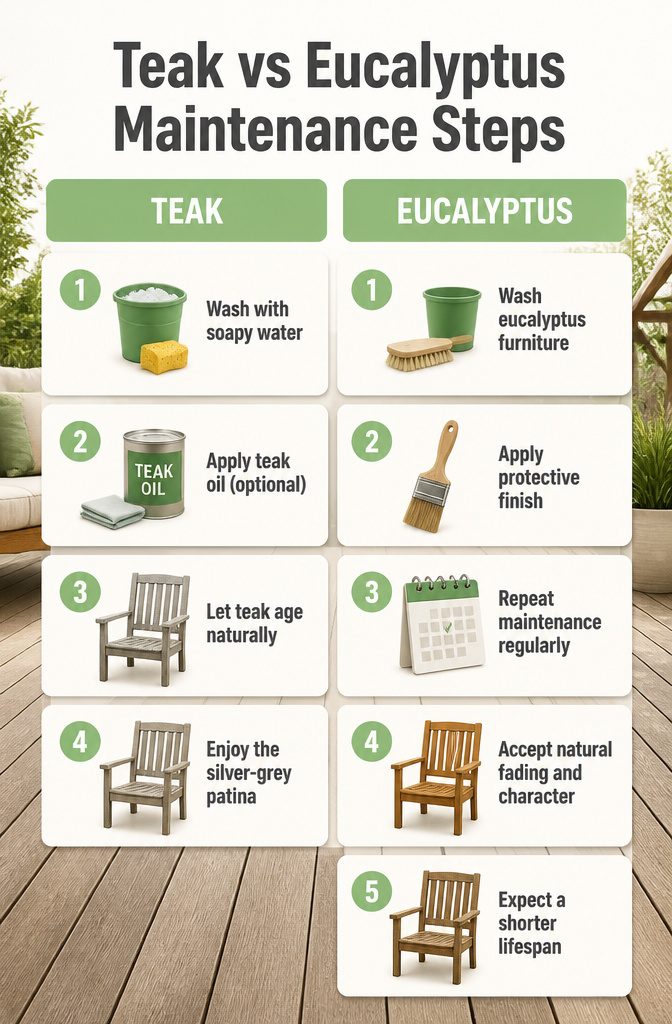
Teak mostly minds its own business. A scrub with soapy water every few months keeps the surface clean, and that’s about it if you’re happy with the silver-grey patina it settles into. The golden-brown color can be held onto with teak oil, though that part is optional and needs reapplying whenever the tone starts drifting. I have skipped the oil on pieces and never regretted it; the grey is the look plenty of people buy teak for in the first place.
Eucalyptus asks more of you. Without a sealer reapplied regularly, the wood fades and cracks in sun and rain. The routine means washing it down, then brushing on a protective finish, and doing that on a schedule rather than when you remember. One owner I came across managed six years on two coats of linseed oil total, but that was with a forgiving eye toward aged character and the understanding that the set wasn’t a forever piece. For most of us, eucalyptus is the choice you make knowing the maintenance is the trade for the lower upfront cost.
Cost
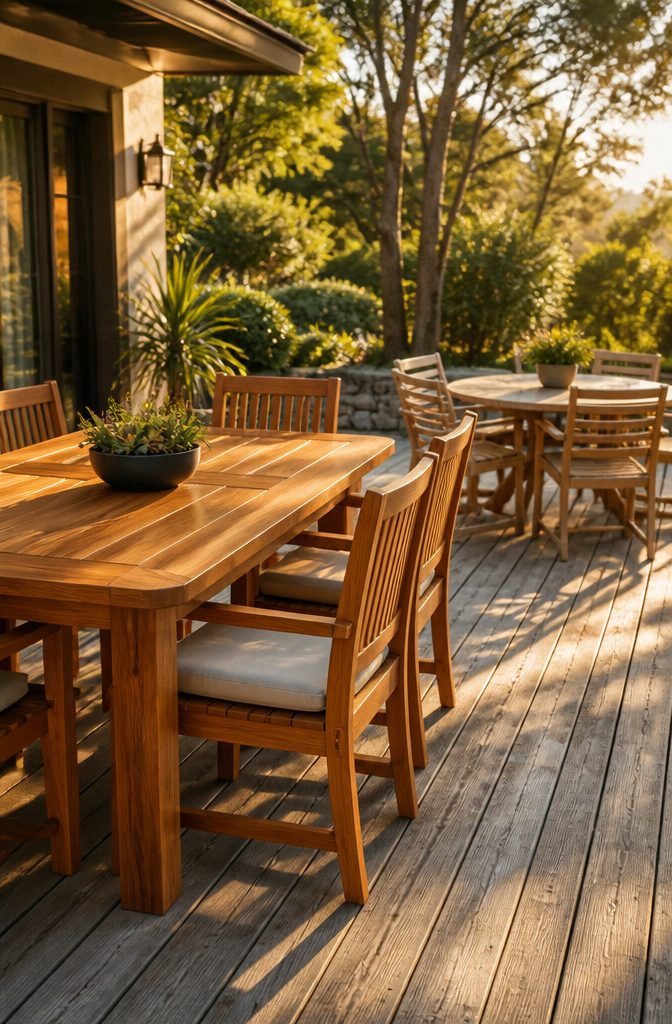
Teak runs about 30–40% more than eucalyptus for the same set, and that gap held when I was shopping last spring. A thinner teak dining set lands in the low two thousands; the equivalent eucalyptus build sits comfortably below that. The heavier, thicker teak frames climb toward three or four thousand, which is where the math gets personal.
Teak costs more because the wood is slow-growing and harder to source. Eucalyptus trees grow fast, so the raw material moves through the supply chain quicker and the price drops. Both are tropical hardwoods with natural resistance to moisture and insects, so the performance floor is closer than the price tag suggests.
For a renter or someone planning to move in three years, the premium on teak is hard to justify. The eucalyptus set leaves budget room for cushions, a cover, or the next project entirely. If the plan is to keep one dining set for a decade and let it gray out in the weather, the teak investment starts to earn back against replacement or repair. The lighter teak sets in that low-two-K range split the difference on price without promising the same lifespan as the heavy frames, so the savings over eucalyptus shrink while the risk stays real. That middle tier is where I hesitated longest, and where most buyers probably should.
Appearance
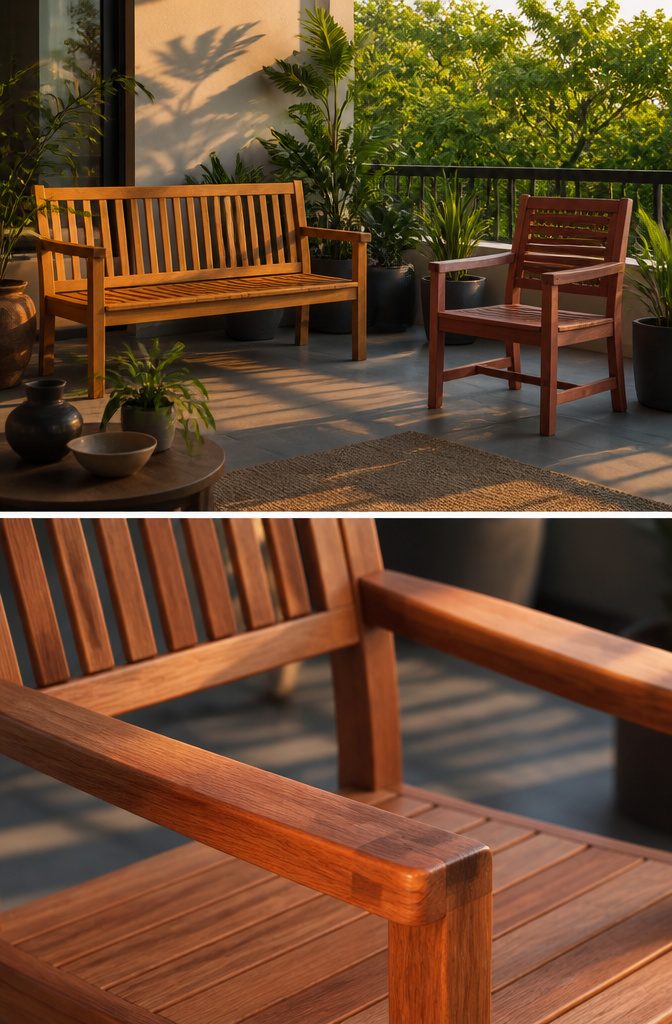
Fresh teak carries a warm golden-brown tone with fine, even grain that reads as understated luxury. Left to the weather, that color shifts to a silver-gray patina that some people love and others fight with oil to prevent. Eucalyptus starts lighter, a reddish-brown with more pronounced interlocking grain that looks relaxed and slightly rustic even when new.
The two woods suit different patio moods. Teak’s classic elegance fits traditional or upscale settings; eucalyptus leans modern and casual, its visible grain patterns giving it a natural, unfussy appeal. The silver patina on teak is permanent and develops whether you want it or not unless you commit to regular oiling. Eucalyptus will keep its reddish-brown color longer with basic annual sealing, though it fades faster without care. My own preference leans toward letting teak age; the gray feels honest to outdoor life, while eucalyptus looks best when its warmer tone is maintained.
Sustainability
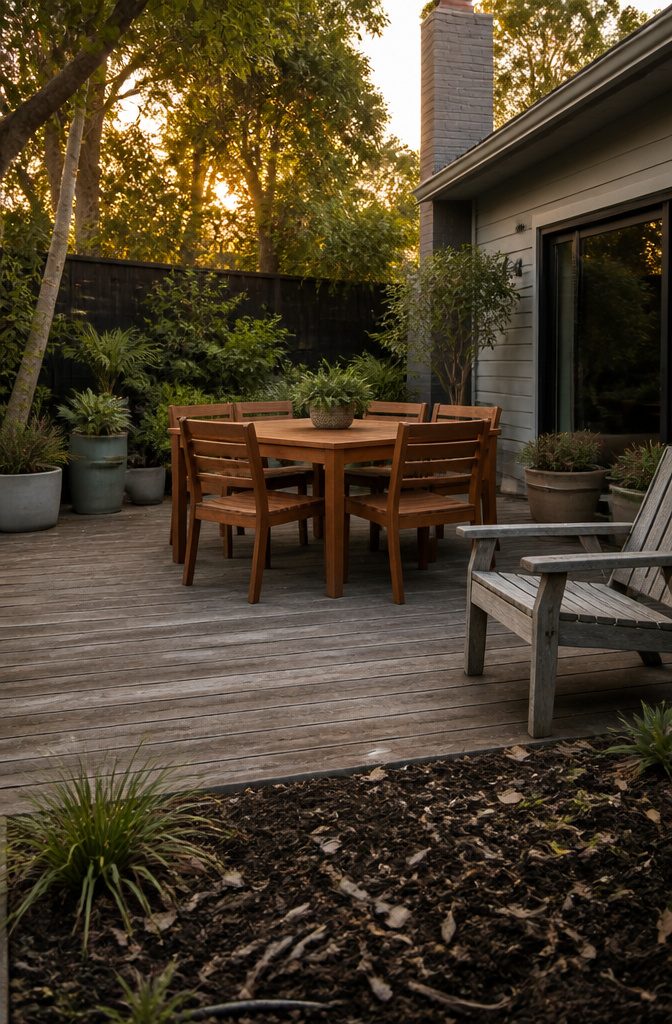
Eucalyptus grows fast enough to cycle through plantations in a fraction of the time teak needs, which made the sustainability angle feel like an easy win when I was weighing the two. Most of what is sold as eucalyptus carries FSC certification, and the label actually means something: the Forest Stewardship Council sets standards for environmentally responsible forestry that covers the social and economic side too, not just replanting. Teak, on the other hand, has been overharvested enough that stricter regulations now govern what can be legally exported, and illegally harvested teak still circulates more than buyers like to admit. FSC certification matters more for teak than for eucalyptus because the risk of bad sourcing is higher.
What surprised me after a few seasons of ownership is how little the origin story mattered day to day. The wood either holds up or it does not. Eucalyptus being renewable felt good at purchase, but the feeling faded faster than the finish. For a renter or first-time owner doing one outdoor project a year on a tight budget, the plantation story is worth checking, yet it should not override whether the piece actually survives your climate.
Workability and Weight
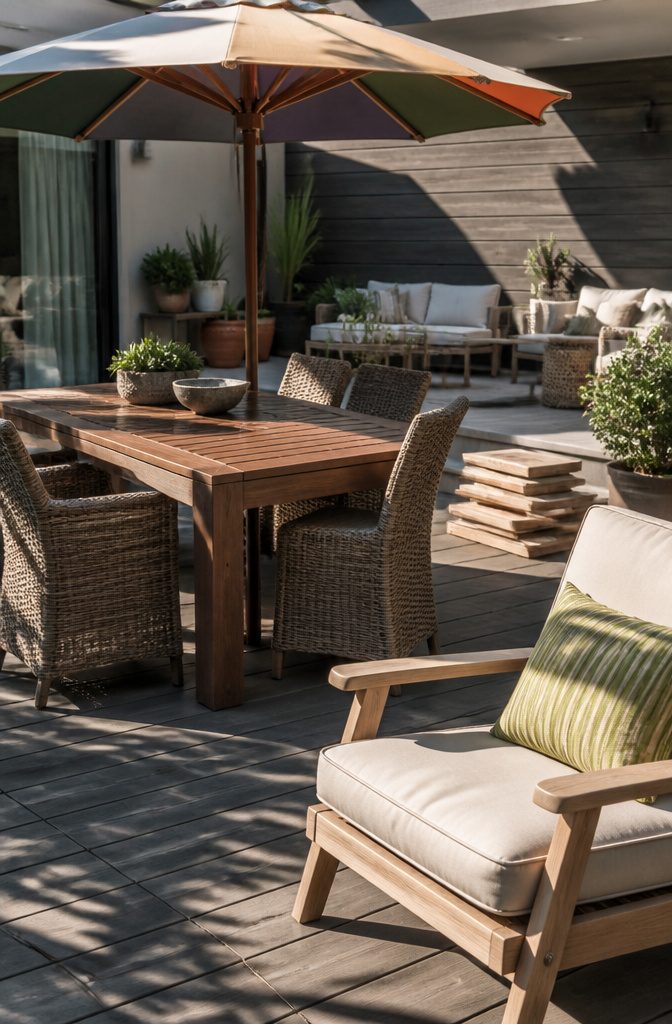
Teak’s high oil content will dull blades faster than most hardwoods, so sharpening a plane iron or router bit mid-project is almost guaranteed. Eucalyptus cuts cleaner and keeps edges longer, though the same density that makes it wear well can lead to warping if boards are not stored flat before you start. Eucalyptus at 70.6 lbs/ft³ is substantially heavier than teak at 40.9 lbs/ft³, and that gap matters the first time you try to drag a six-person dining table across the patio for a party. Two people can manage most teak pieces without drama; eucalyptus often needs a third set of hands or a willingness to scoot it an inch at a time. If you plan to rearrange furniture seasonally, the lighter wood saves your back and your weekend.
Lifespan
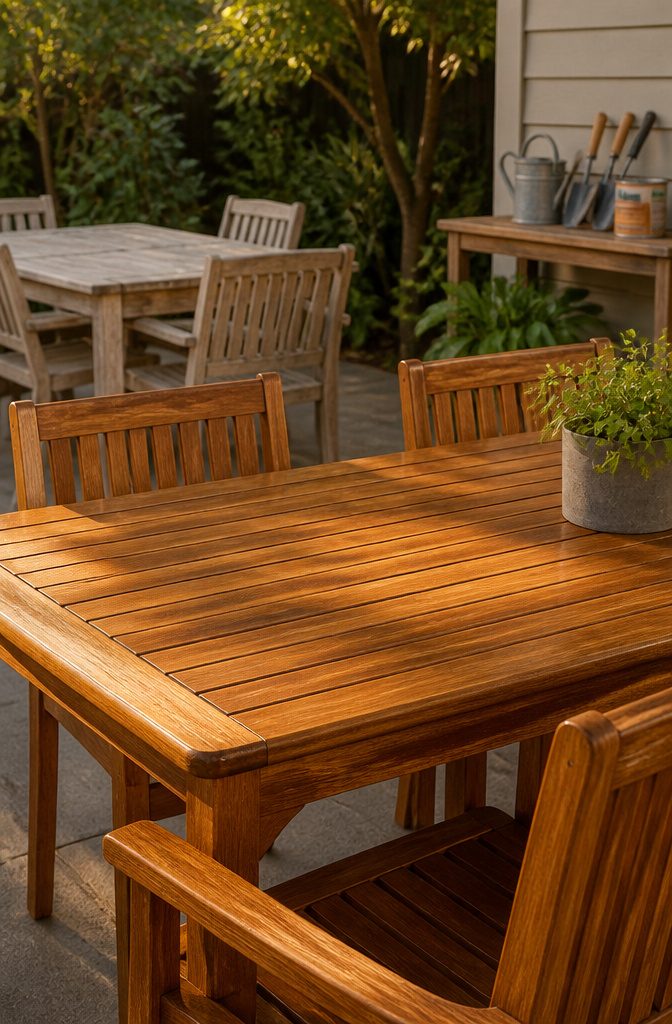
Teak furniture outlasts the people who buy it. Pass it down three generations and it still holds up, because the wood’s natural oils repel rot and insects without any help. Eucalyptus is a different timeline entirely. Keep it sealed, sand it and reapply finish annually, and you might get several years of solid service, even stretch toward a decade. Skip that routine and cracking and fading arrive fast.
The math tempts people. A heavy teak dining set runs $3,000–$4,000. Eucalyptus lands closer to 30–40% less for equivalent sizing. Buy the cheaper set, replace it once, maybe twice, and you’ve spent roughly the premium teak price anyway, without the heirloom left behind. My own take: eucalyptus suits renters who know their next address in five years, or anyone who wants wood furniture this season and can’t swallow the upfront cost. For a first patio you plan to keep, the buy-once logic of teak wins.
Quick Comparison
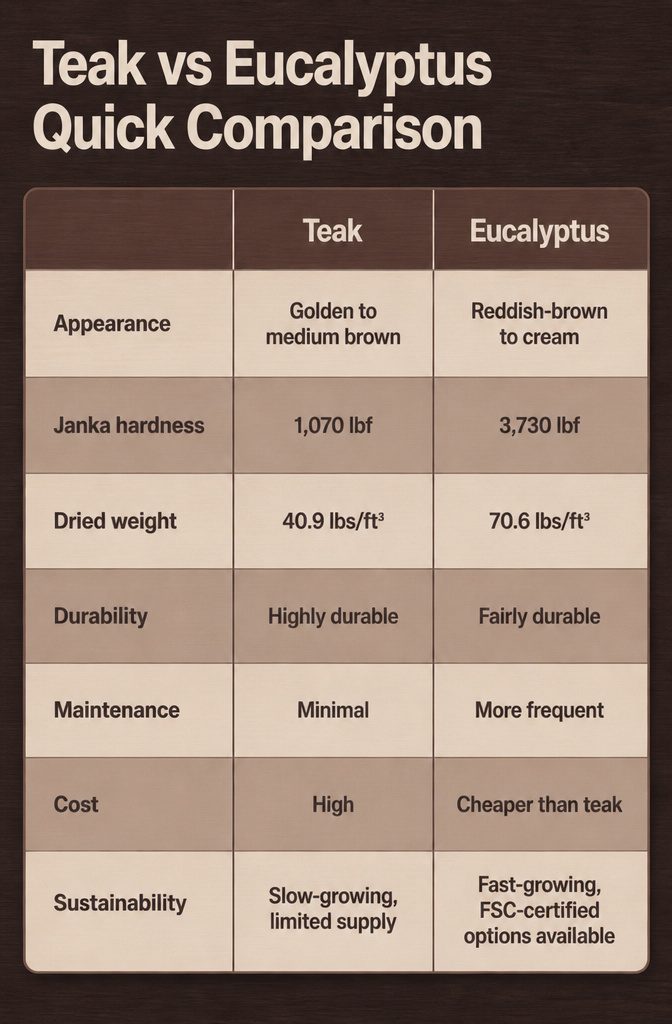
Teak and eucalyptus patio furniture sit at two different price points and lifespans, and the gap is wide enough that most buyers want the numbers before anything else. Teak runs 1,070 lbf on the Janka hardness scale with a dried weight of 40.9 lbs/ft³, while eucalyptus clocks in far harder at 3,730 lbf but heavier at 70.6 lbs/ft³. The softer wood costs more because its natural oils fight rot without help; the harder, denser wood needs that maintenance to last.
| Attribute | Teak | Eucalyptus |
|---|---|---|
| Appearance | Golden to medium brown | Reddish-brown to cream |
| Janka hardness | 1,070 lbf | 3,730 lbf |
| Dried weight | 40.9 lbs/ft³ | 70.6 lbs/ft³ |
| Durability | Highly durable | Fairly durable |
| Maintenance | Minimal | More frequent |
| Cost | High | Cheaper than teak |
| Sustainability | Slow-growing, limited supply | Fast-growing, FSC-certified options available |
Both woods work fairly easily with standard tools. The choice really comes down to whether you want to pay upfront or over time, teak asks more at purchase and less each spring; eucalyptus flips that arrangement.
Frequently Asked Questions
What is the difference between teak and eucalyptus wood?
Teak lasts decades with little maintenance because its natural oils repel rot, dampness, and insects. Eucalyptus resists decay too, but needs yearly sanding and a fresh coat of sealant to keep that protection intact. Teak runs 30–40% more in price and stays workable at 1,070 lbf Janka hardness versus eucalyptus at 3,730 lbf, yet that extra density means eucalyptus dents less while teak shrugs off moisture better left bare.
How long does teak furniture last?
Teak furniture outlasts the people who buy it; pieces pass down three generations and still hold up, and old boats built from it have turned up sound after a century underwater. The natural oils do the work without any help from sealers or finishes.
Is eucalyptus wood good for outdoor furniture?
Eucalyptus works for outdoor furniture and costs 30–40% less than teak, but it needs more attention to survive outside. Without regular sealing, the surface fades and cracks in sun and rain; kept up with washing and protective finish on a schedule, it can stretch toward several years or even a decade of solid service.
How do I maintain eucalyptus furniture?
Wash eucalyptus furniture down, then brush on a protective sealer or oil on a schedule rather than when you remember. Skip that routine and the wood fades and cracks fast in sun and rain. One owner managed six years on two coats of linseed oil total, but that took a forgiving eye toward aged character and the understanding that the set was not a forever piece.