The ideas here run from new bedding and cabinet paint, which cost little and change a room fast, to lift-up platforms on struts and built-in bunks that take real time and money.
Your pick depends on whether you can build something like a custom bunk or a raised bed with storage, or you’re limited to peel-and-stick wallpaper, bedding and LED lighting.
If the walls and cabinets aren’t yours to cut or paint, peel-and-stick wallpaper and fresh linens bring in color that comes off again; if they are, paint and carpentry change the room far more.
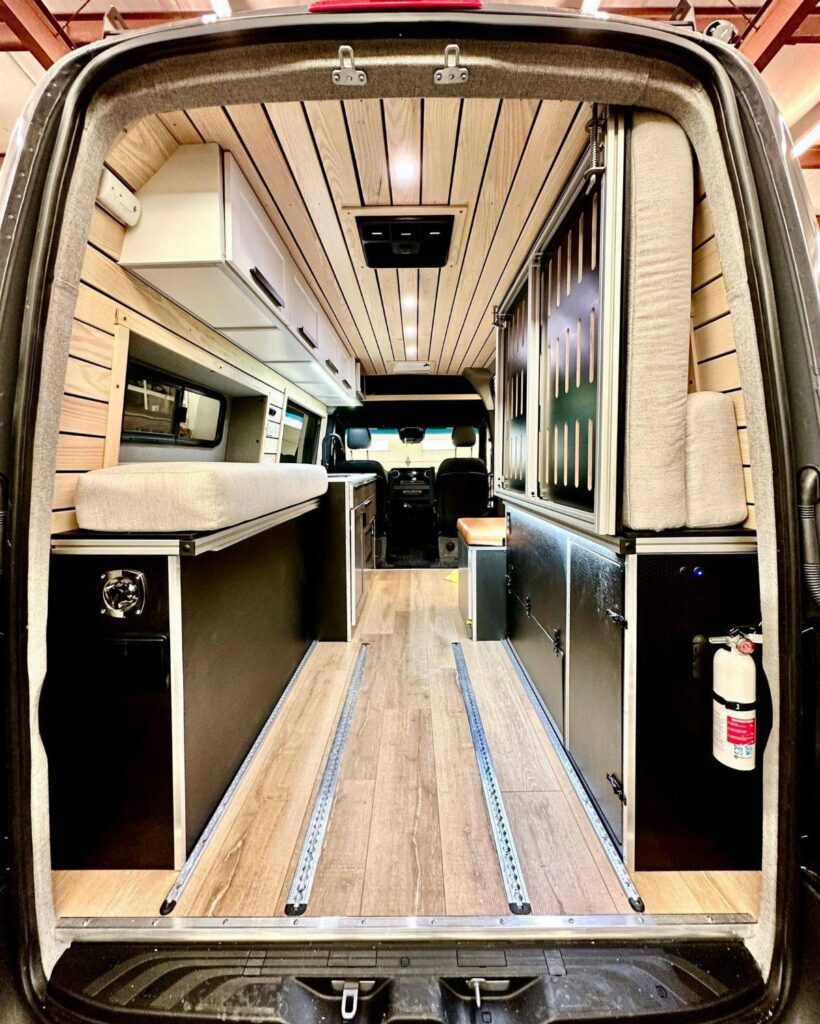
1. Raised Bed with Storage
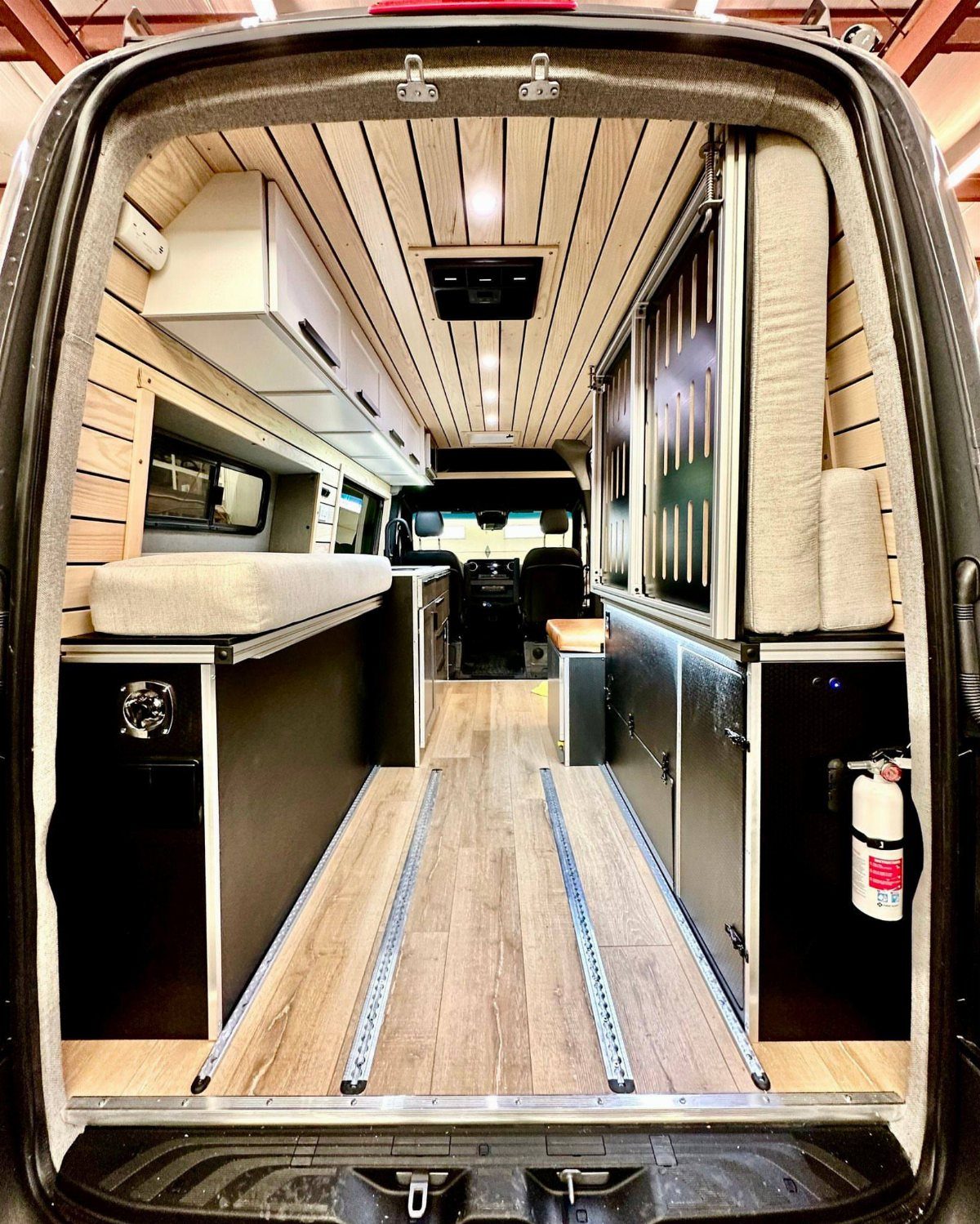
Floor space is the scarcest thing in a van or small RV, and a raised bed gives you back the part that usually goes to waste.
The space under a raised bed platform turns into cabinet room, and dark cabinet fronts set against wood paneling blend into the wall, which keeps gear out of sight.
Measure the sitting-up headroom above the mattress before you pick a height. Lifting the bed too far makes the sleeping spot feel like a shelf.
2. Creamy White RV Bedding
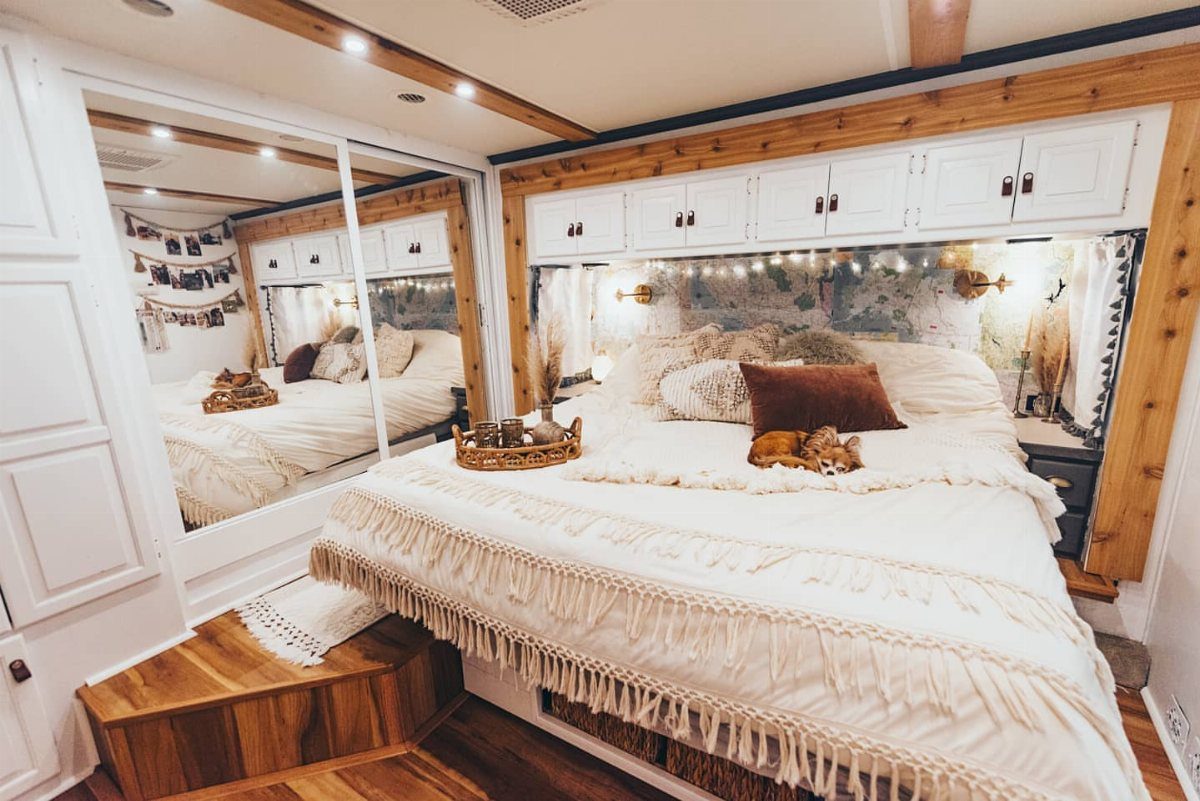
Cream bedding with a fringed edge softens a room full of hard surfaces like white cabinets, wood trim and mirrored doors. I would choose a textured weave over flat cotton, since texture does the work a pattern would otherwise do.
Brown pillows ground the pale bed, and they tie in with the wood accents. Keep the palette to 2 or 3 tones and the small room stays calm.
3. Wood Accent Wall
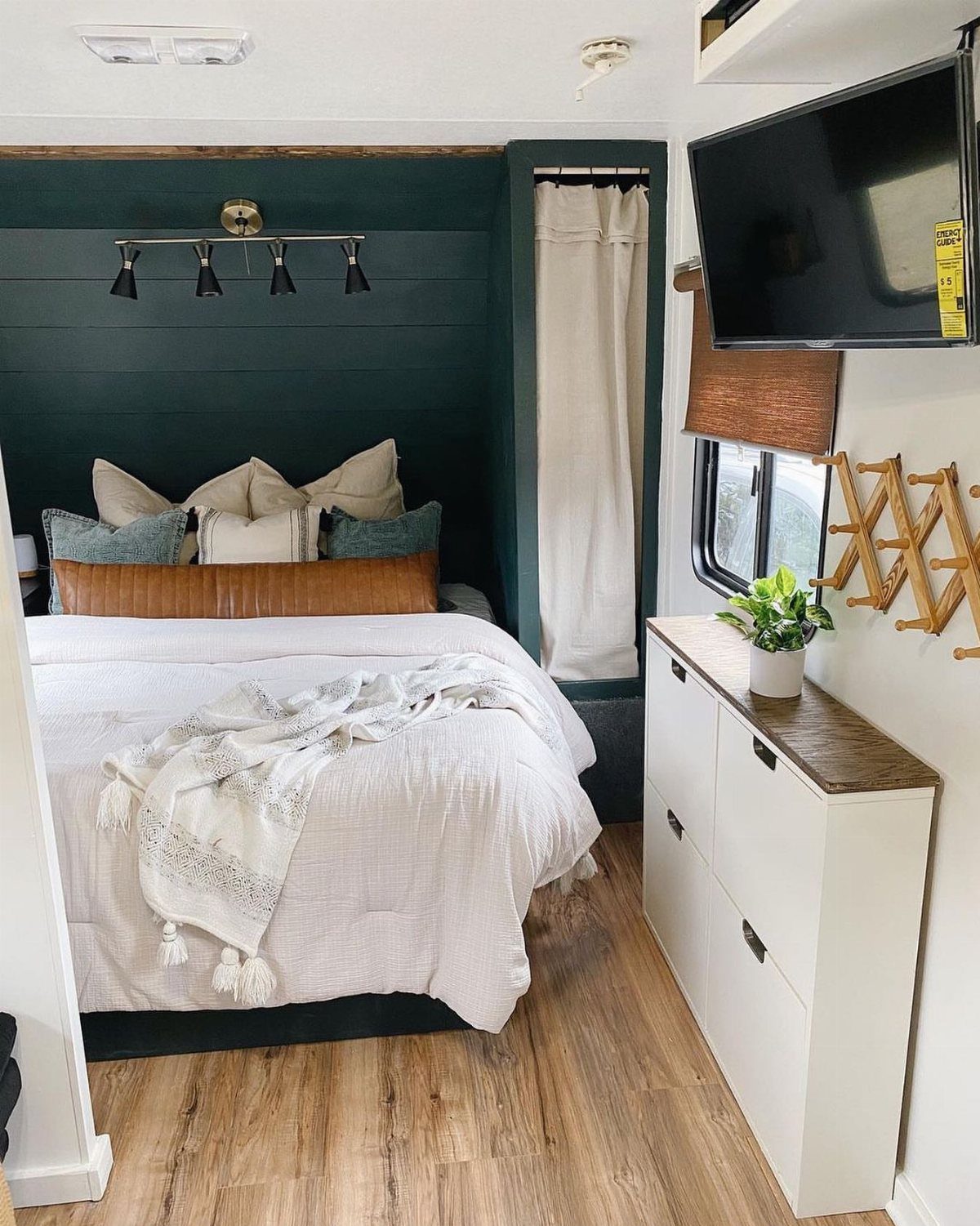
Putting a dark green wood wall behind the bed gives the room a focal point, and the white linens and white dresser keep it from feeling closed in.
Choose the wall you face when you walk in, and leave the others light.
Wood is the stronger choice here over paint alone. It adds grain and depth that flat color can’t.
4. Custom Bunk Beds
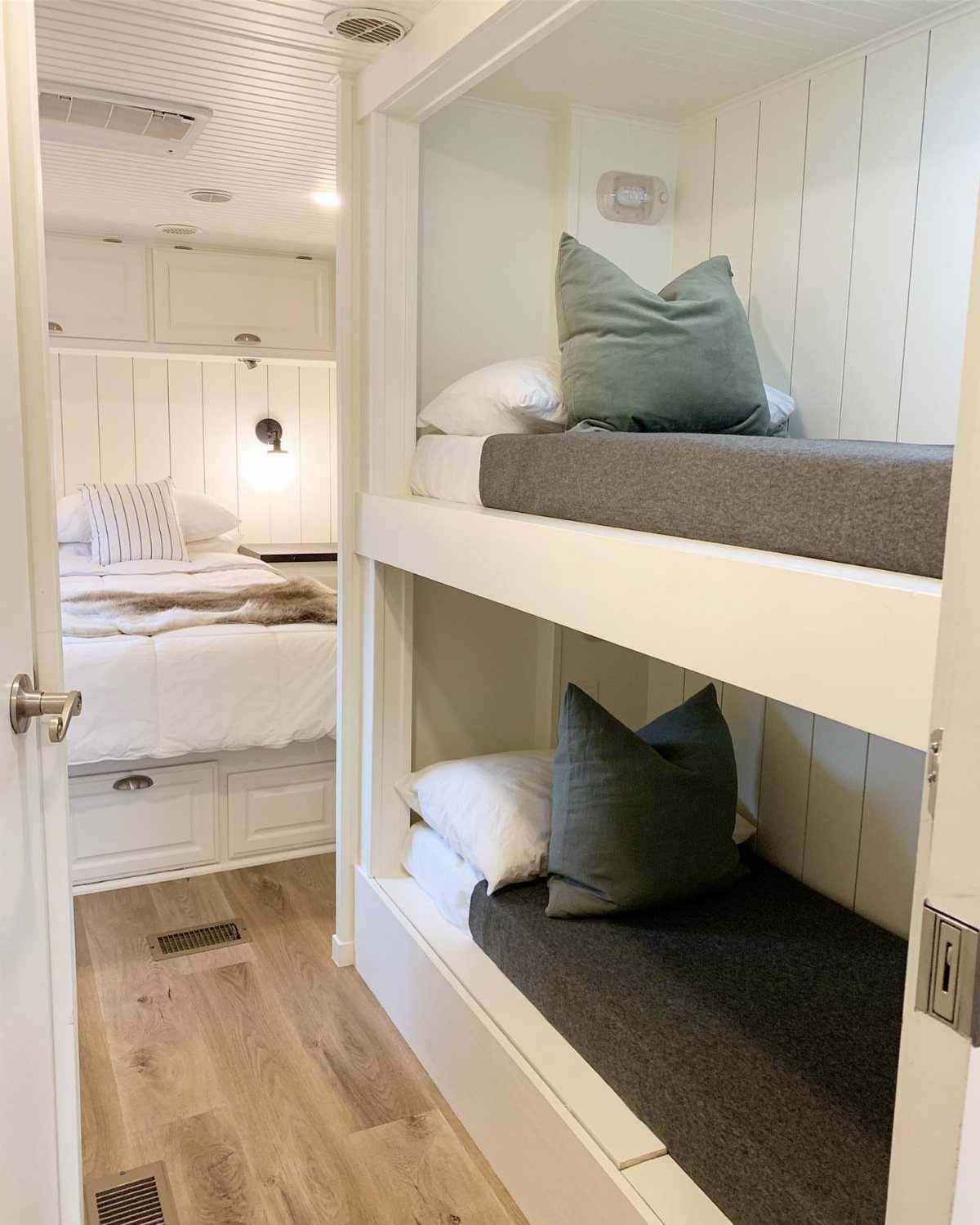
Built-in bunks suit an RV because they follow the walls instead of fighting them. White paint keeps the structure from dominating the room, and light wood floors stretch the space visually.
Gray mattresses with teal pillows add color through cheap, swappable textiles. If you build your own, plan the pillow and bedding colors last, so you can change them without touching the frame.
5. Peel-and-Stick Wallpaper
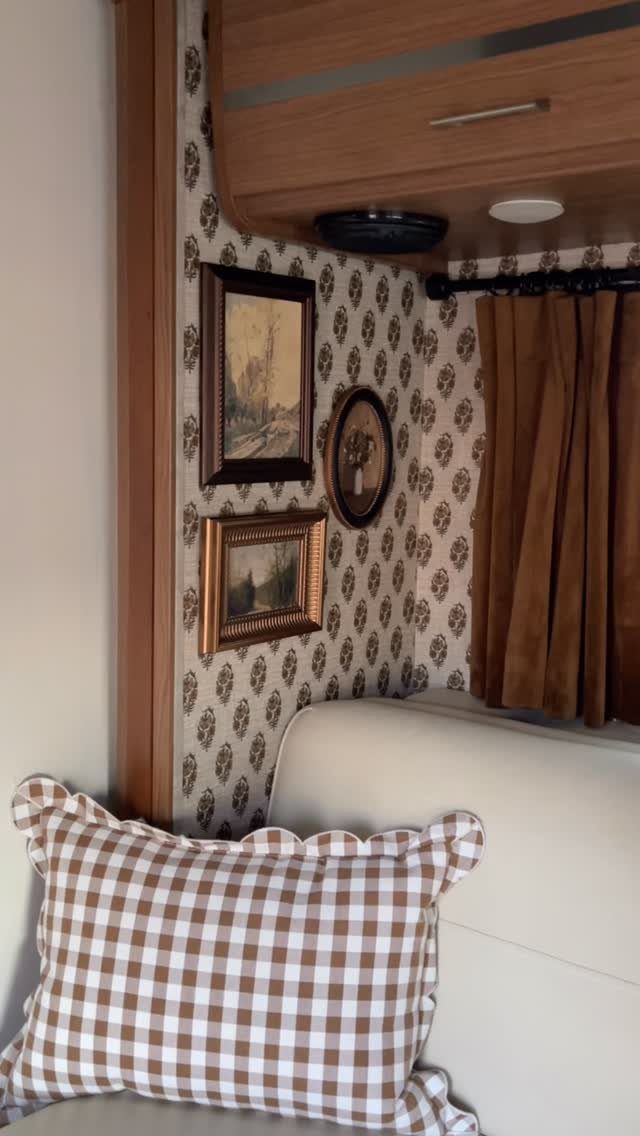
Peel-and-stick wallpaper is the renter-friendly route to pattern, because it goes up without paste and comes off again.
Even a 25 ft. RV has room for wallpaper, framed art, a round mirror and curtains, so a short rig is no reason to skip the decor.
Stick to one wall so the pattern reads as a feature. Test a small strip in a hidden spot first to see how it sticks and releases.
6. LED Bedroom Lighting
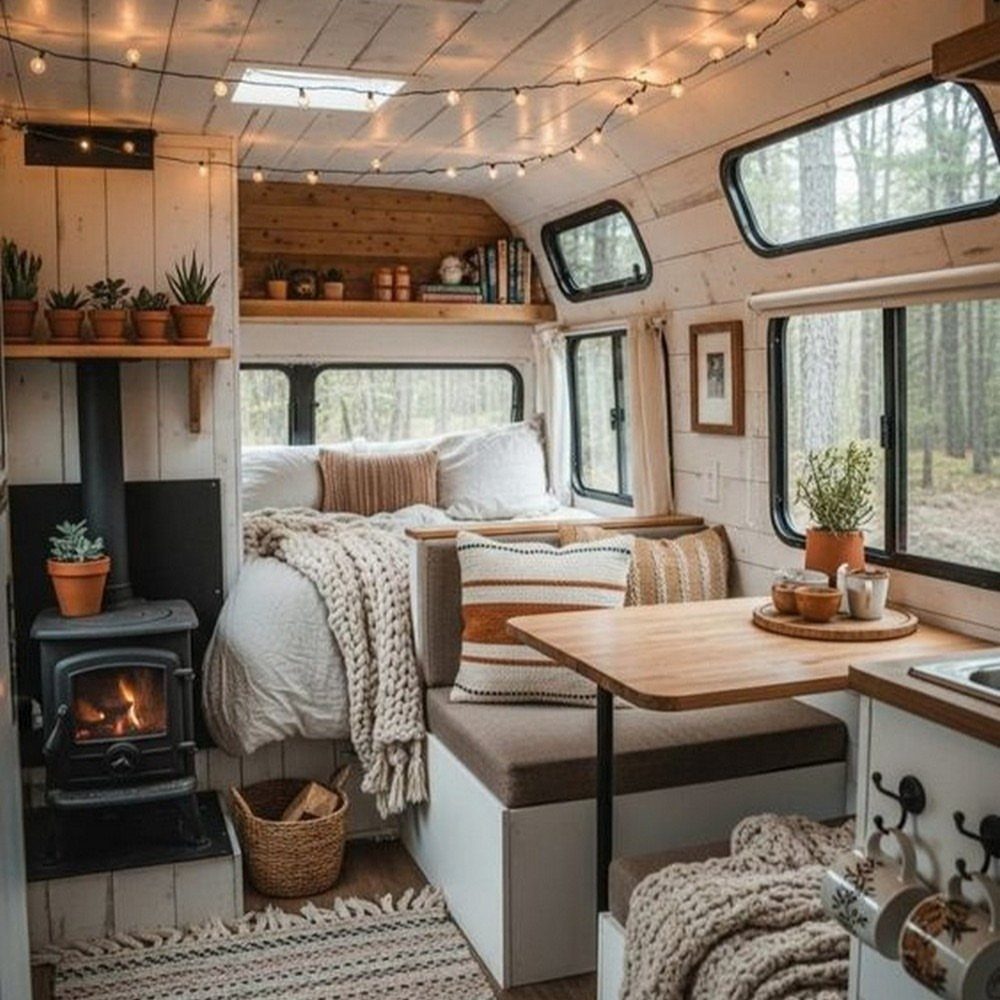
String lights across a white-walled ceiling do a lot for very little money, and they leave wall and floor space untouched.
I would pick warm white over cool white, since it flatters wood and a stove and makes a bed nook feel like a bedroom.
Run the strand in loose swags rather than a straight line. The curves keep the ceiling from looking like a runway.
7. Wire Storage Baskets
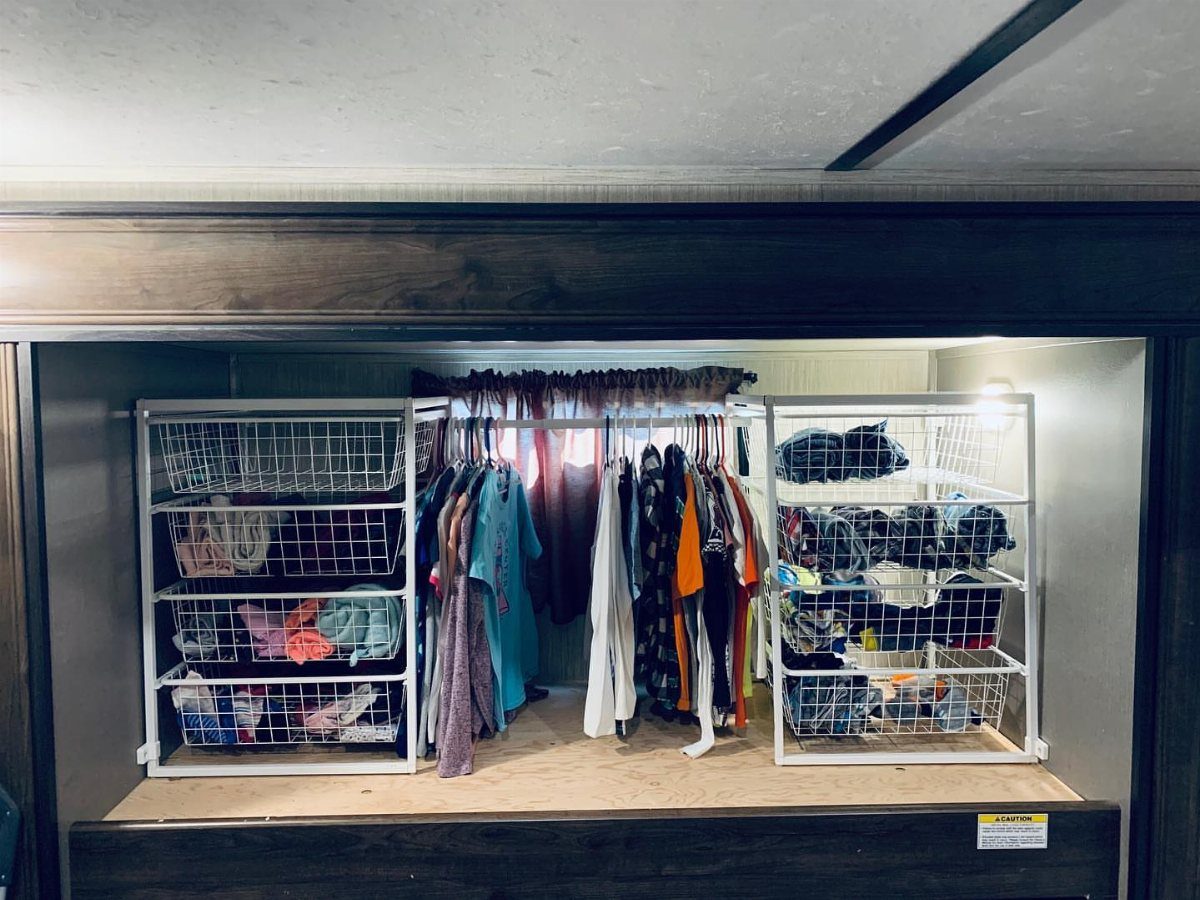
Wire baskets on a freestanding shelf let you drop the bulky overhead cabinets and still keep small belongings sorted. White wire reads light against dark wood trim, so the nook doesn’t feel boxed in.
A clothing rack beside the shelves handles anything that hangs. Sort by type, one basket for socks and underwear, another for tees, and you can find things without pulling everything out.
8. Green Cabinetry Bedroom
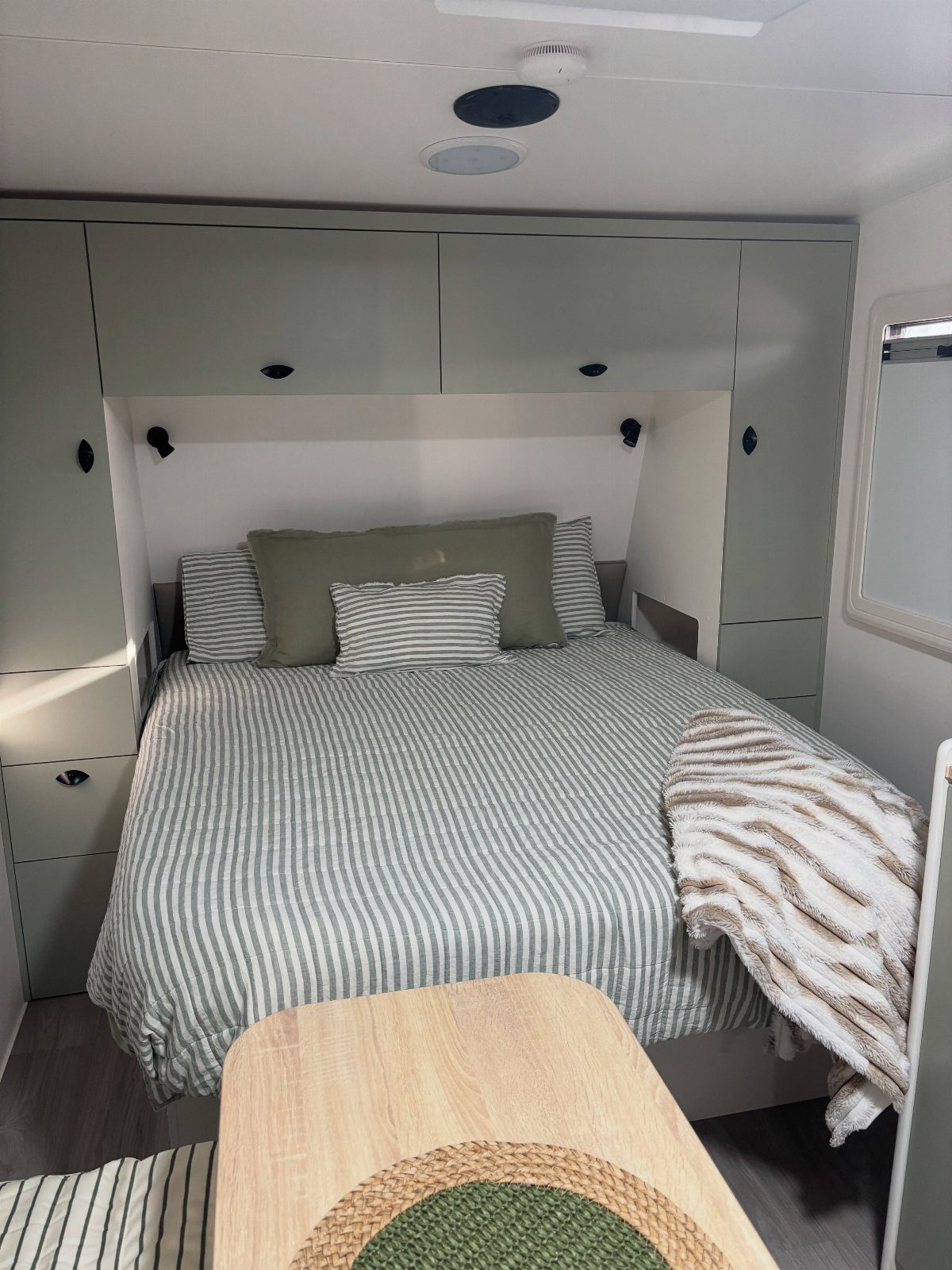
Painting the built-in cabinets and wardrobes light green gives a compact bed a calm frame, and the color does more than white would without darkening the room. Striped bedding keeps the green from going flat.
Repeat the shade in the pillows so the cabinets and bed look planned together. Cabinet paint is the cheaper way to get this look, and swapping pillows later costs next to nothing.
9. Floral Accent Wall
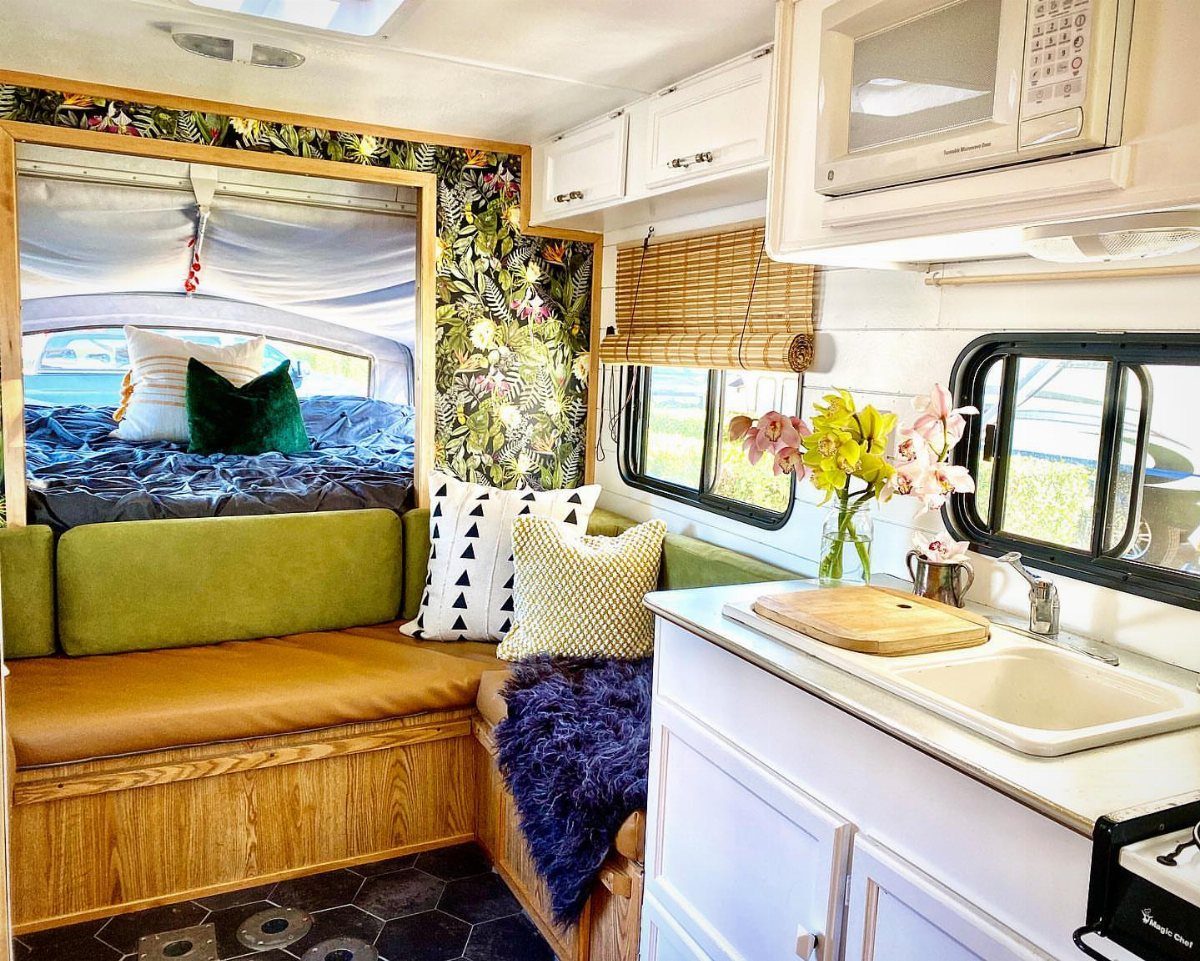
A floral accent wall behind the bed gives a small RV bedroom its personality in one move. Blue bedding pulls a color out of the pattern, so the wall and the bed look like a pair.
I would keep the rest of the space plain, as the tan and green seating nook does here. One busy wall is enough in a room this size; a second pattern starts to compete.
10. White and Wood Remodel
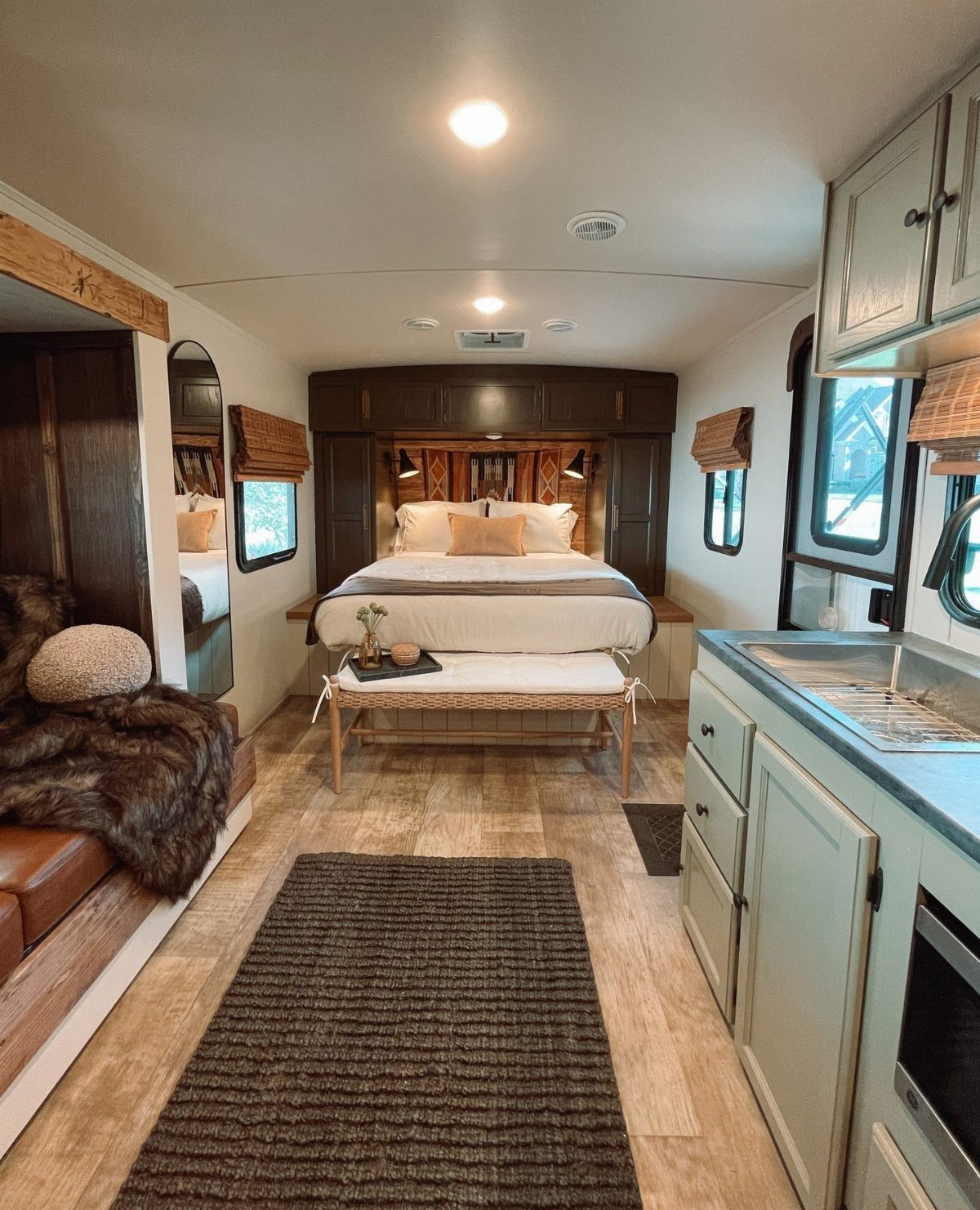
Light wood floors, white bedding and grey-green cabinetry make a quiet palette that lets a small bedroom look bigger. The wooden bench adds a spot to sit and dress, and it brings in warmth that white alone lacks.
Woven shades are my pick over plain blinds. They filter light softly and add texture without adding a pattern.
If a full remodel is out of budget, paint the cabinets first, since they change the room the most.
11. Plant-Filled RV Bedroom
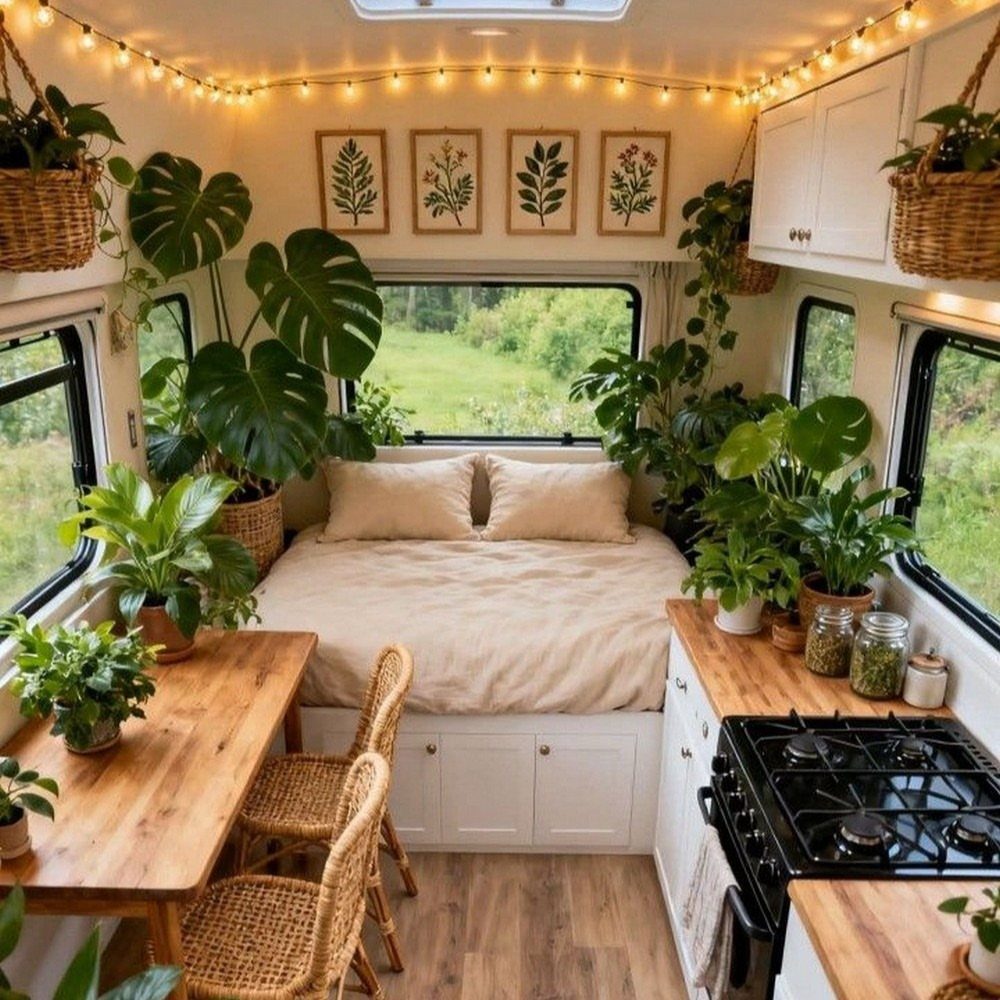
Potted plants, botanical prints and string lights add up to a bedroom that feels like a garden nook. Pairing real plants with framed botanical art means the room still reads green wherever a plant won’t fit.
Put the pots on the table and shelves, and keep the floor and bed area clear. With windows that look out on greenery, the inside and outside colors run together, which makes a small space feel larger.
12. Lift-Up Storage Bed
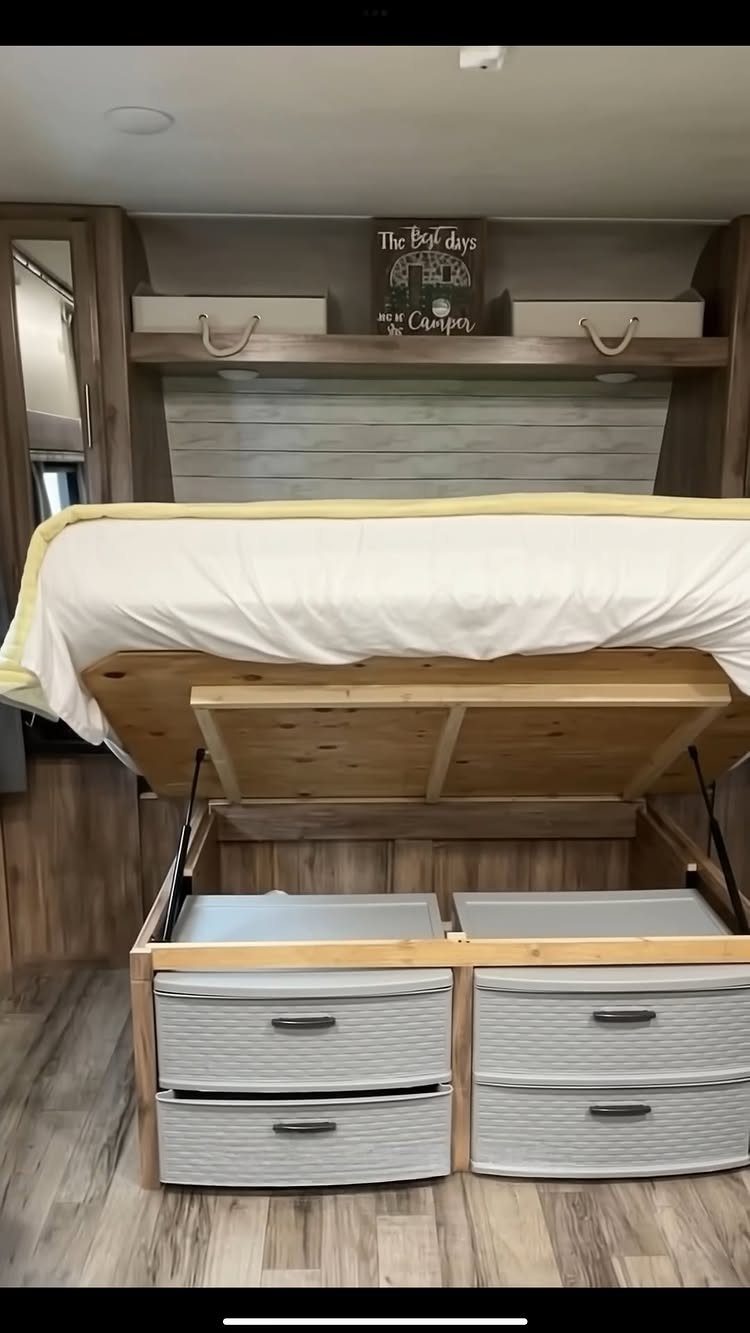
A bed platform that lifts on struts turns the whole space below the mattress into one big storage bin. Raising the bed shows the bins in full, which beats crawling into a cabinet to reach the back.
Wood paneling suits this build because the platform edge blends into the wall. Use bins that fit the opening and label them, so you grab the right one on the first lift.
13. RV Bedroom Bunk Beds
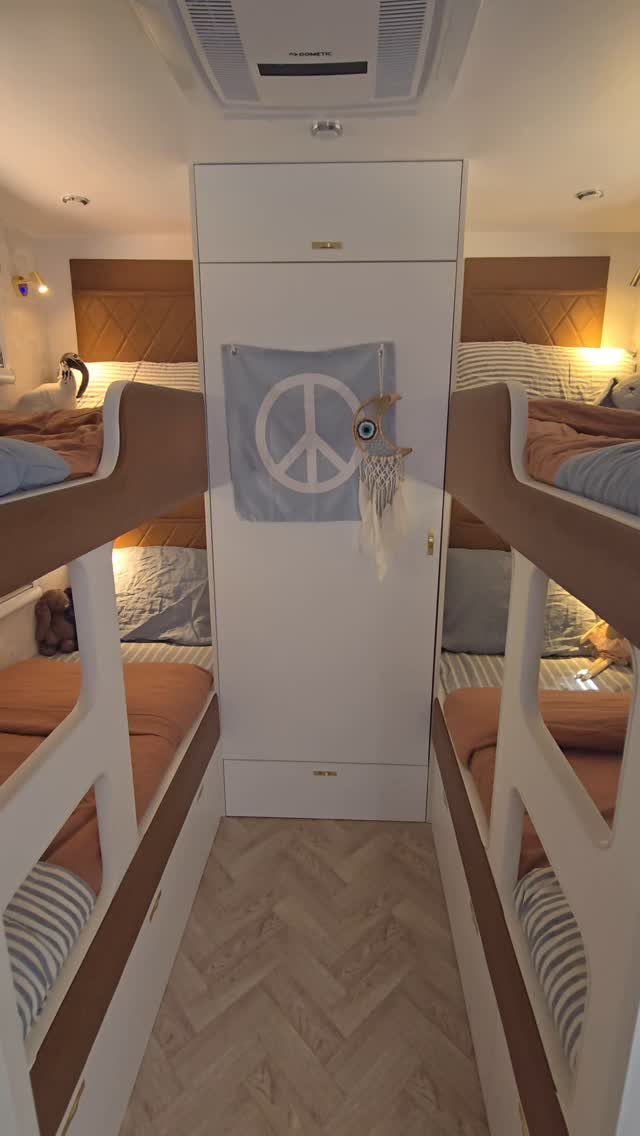
Two sets of bunks on either side of one white wardrobe give the room a symmetrical plan, with the wardrobe as the anchor.
I would settle the wardrobe width first and size the bunks around it, since it is the one piece that stays fixed.
A flag and a dreamcatcher on the wardrobe doors put personality on a flat surface and keep the floor and bunk edges clear. A light herringbone floor adds pattern underfoot without taking up any room.
14. Folding Bed System
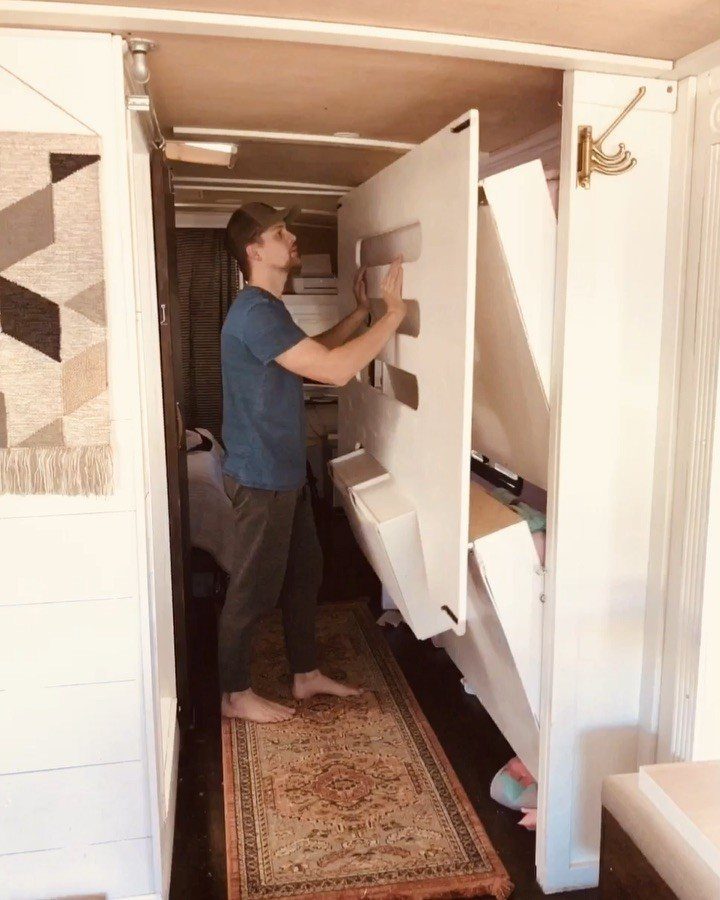
A white folding bed panel lets one patch of floor do two jobs: a bed when it’s open and open floor when it’s folded away.
Before you build or buy, measure the space you want free with the bed up and the space it needs when it’s down. Both have to work.
A patterned rug gives the cleared floor something to look at in daytime mode. I would keep the panel white so it reads as part of the room.
15. Navy Cabinet Makeover
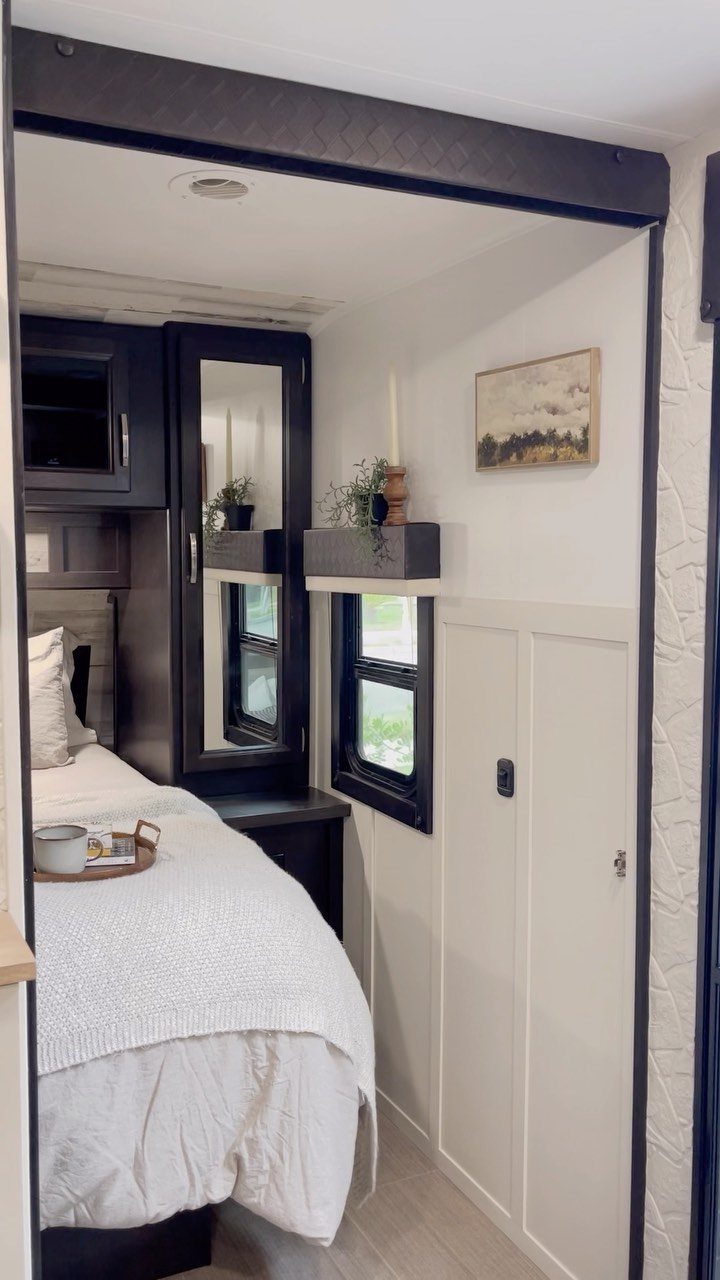
Navy on the cabinets and trim, with white on the walls, bedding and wardrobe, gives a small bedroom a crisp outline. I prefer dark trim to a solid dark wall because it frames the room without closing it in.
Keep the shelf decor to a few pieces, as this one does, so the navy stays the main feature. A wall mirror across from a window or door is an easy way to add depth in a narrow room.
16. Patterned Wallpaper Accent
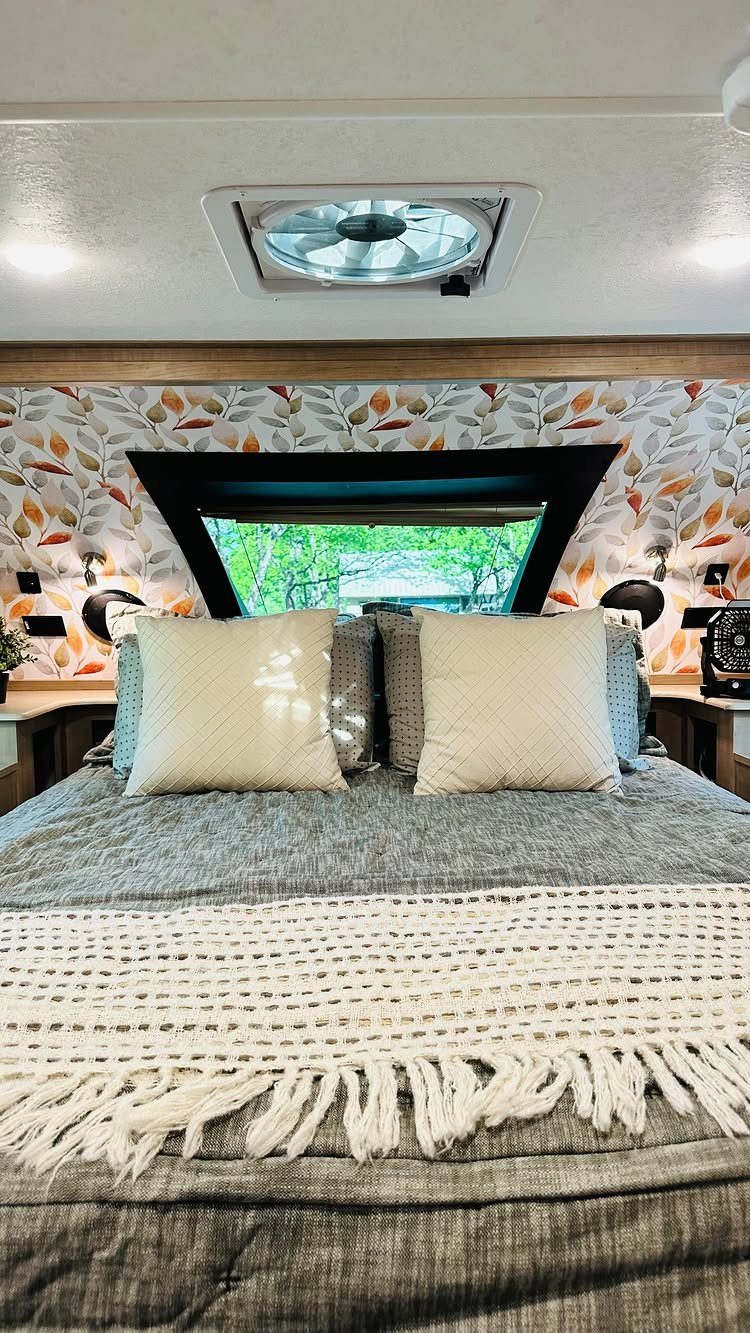
Gray linens are a quiet partner for a leafy wallpaper, because the bed stays calm and the wall does the talking. The cream pillows soften the gray and link the bed to the paper.
Hold a sample next to your bedding in the room’s own light, then decide. Pick a pattern whose colors repeat something already on the bed, and the wall will look planned instead of added on.
17. Pink Cabinet and Chandelier
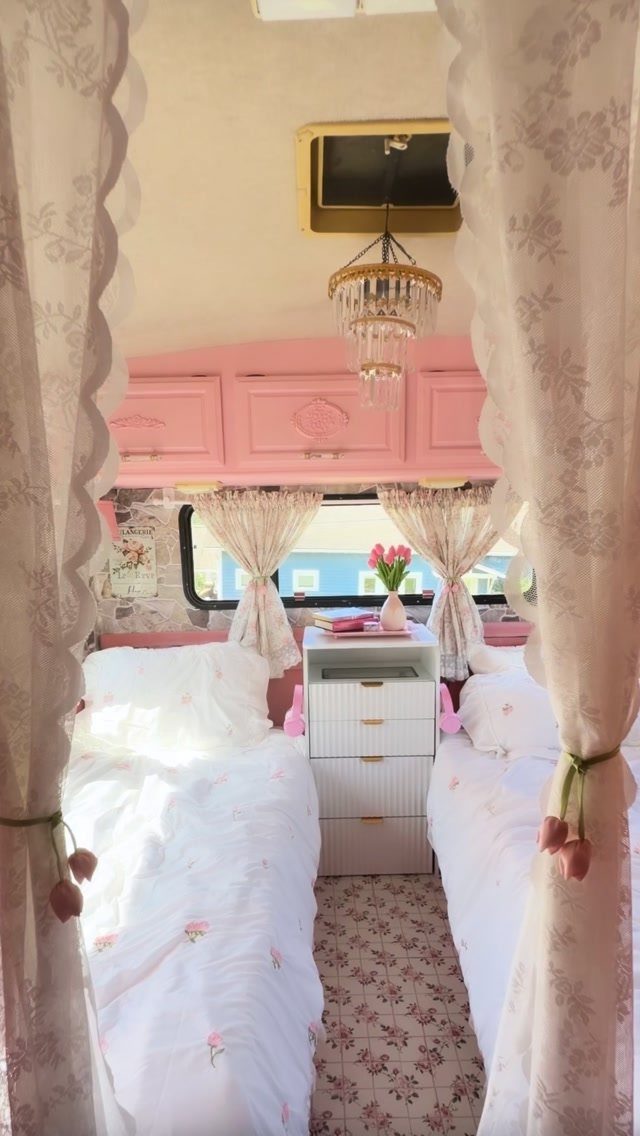
Pink overhead cabinets over twin beds make a shared room feel playful, and a white dresser below keeps the lower half neutral.
I would paint the cabinets pink and leave the rest alone, so the color sits up high where it’s easy to enjoy.
A crystal chandelier and floral curtains add the fancy touches. Hang the chandelier where nobody sits up into it, and keep the curtain pattern to one print.
18. Blue and Pink Color Scheme
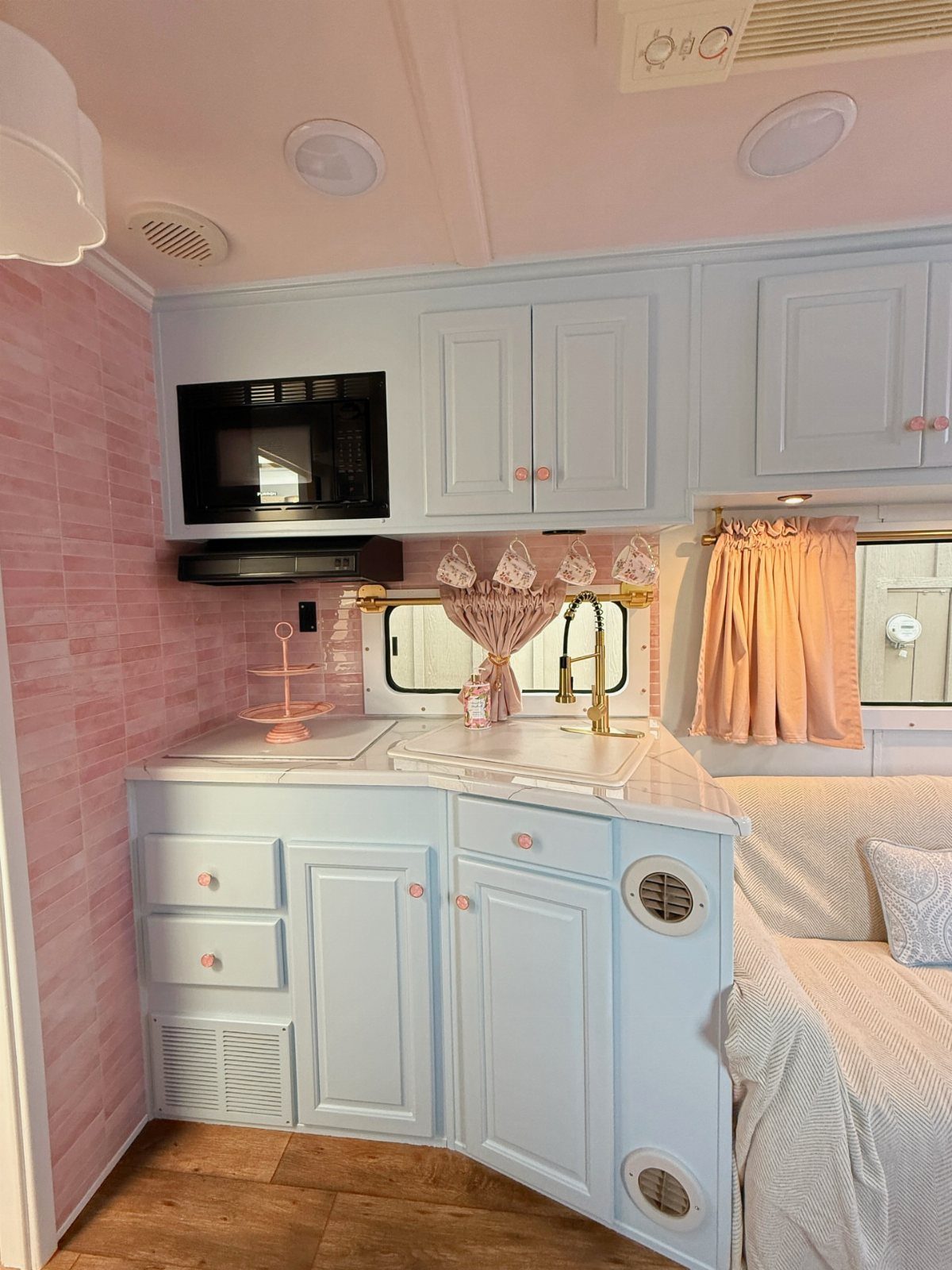
Pink on the ceiling as well as the walls wraps the whole room in color, and light blue cabinets give it a cool counterpoint.
Soft shades of similar strength get along; a loud pink next to a pale blue would fight.
White linens on the bed give the eye a place to rest.
19. Dark Teal Bunkroom
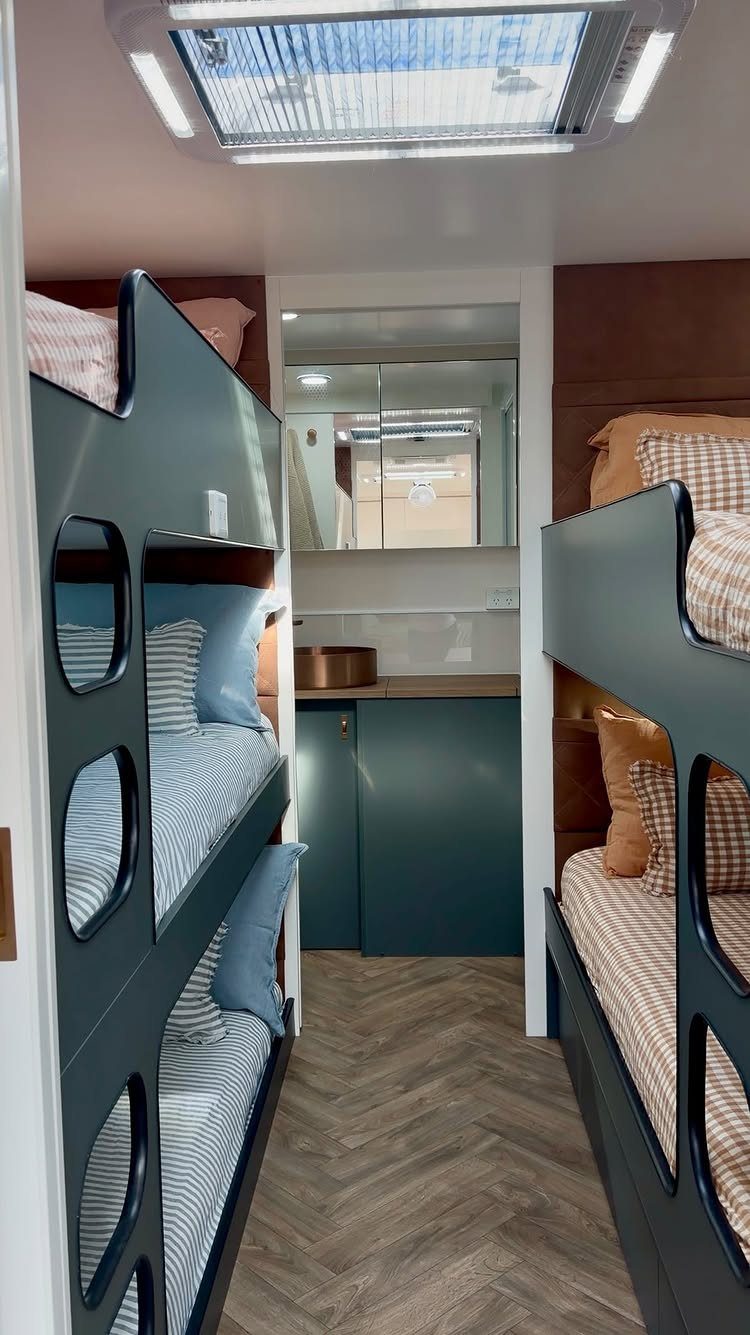
Dark teal on bunk frames is a bold move in a narrow room, and the herringbone wood floor adds warmth that balances the color.
The wood adds warmth, and the pattern underfoot gives the eye something to follow down the length of the room.
Stripes and checks on the bedding work because they stay in the same few colors. I would stop at those 2 patterns and keep the pillows solid.
If you paint your own bunks, the dark color hides scuffs better than white, though it does make the room feel smaller.
20. Blue and Gray Bunk Beds
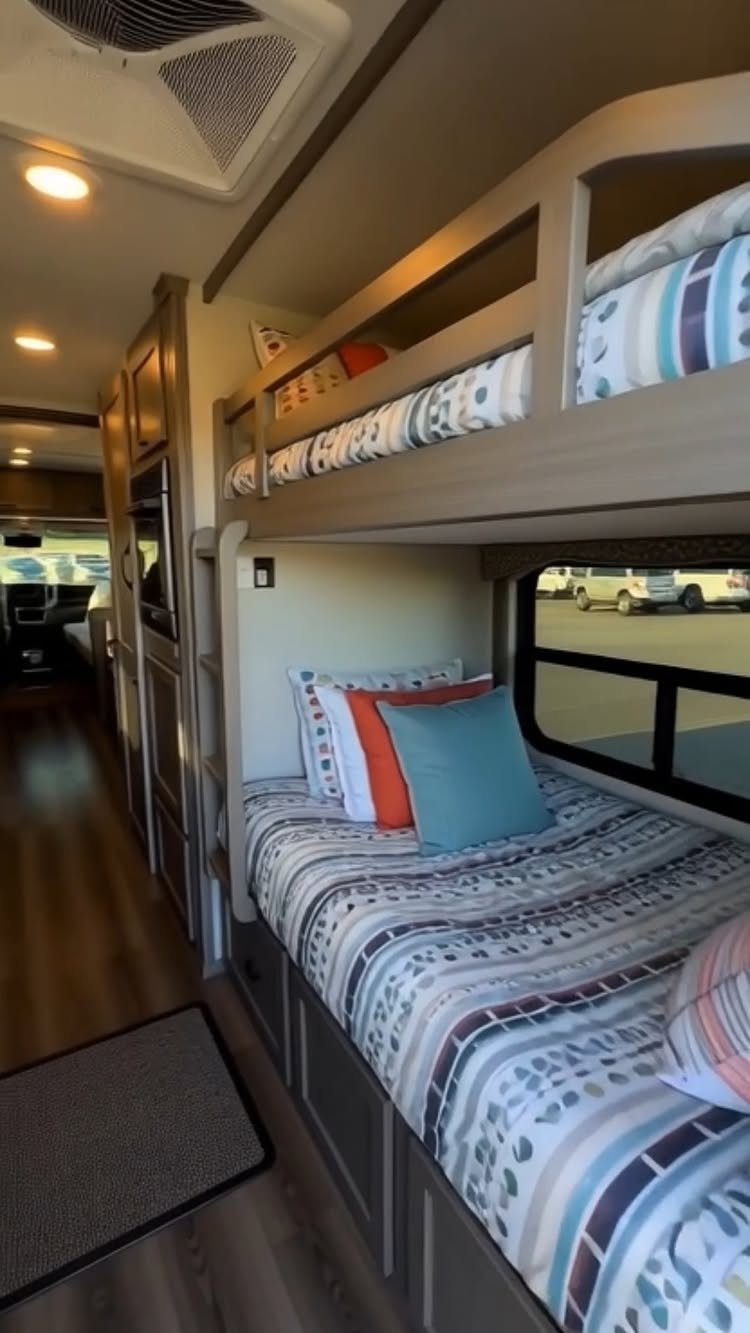
Blue and white patterned bedding sits comfortably next to gray cabinets, since gray lets the blues stand out without competing. Wood-look flooring adds warmth underneath, so the cool palette doesn’t go cold.
Colorful pillows cost the least of any swap here and change the mood of the bunks in about 5 minutes. I would buy the sheets and comforter first, then pick pillows that pull one color from the pattern.
Bedding is the easy part to swap, so start there before touching the cabinets.
Check RV Mattress Dimensions
RV mattresses run shorter and narrower than home beds even when the label says the same size, and corners are often rounded to fit the bed platform.
Measure your current mattress length, width and corner radius before you order, and measure the platform opening too, since they sometimes differ.
Mattress height matters if overhead clearance is tight. A thinner mattress leaves more sitting-up room, and quality depends on the foam or spring inside rather than total thickness.
If you plan to build or modify a bed platform, weigh the mattress and bedding together. A platform on struts or a folding frame has to carry the load without sagging.
Some bed platforms have open space below that could fit a pet crate.
Carve out a rectangular recess in the plywood base, set the pet bed inside, and finish the lip with trim. The crate stays out of the walkway, and the dog gets a spot that feels enclosed.
Prepare Walls Before Painting
Fill screw holes and dents with lightweight spackling, then sand the patch smooth once it dries.
Wipe down all surfaces with a damp cloth to remove dust and any greasy film, since RV walls sometimes carry a waterproof coating that blocks adhesion.
Lightly sand glossy surfaces with 150-grit paper so primer can grip.
Two coats of bonding primer followed by two coats of paint give the most durable finish, and a foam roller or small handheld sprayer keeps the texture even on cabinet doors.
For peel-and-stick wallpaper, the same cleaning and light sanding step matters.
If it lifts, you need more prep. A plastic scraper works the vinyl flat and chases trapped air toward the edge.
Plan the Remodel and Budget
Write out what you want the room to do and what bothers you about it now, then rank those items by how much each one matters.
That list becomes your spending priority, so the money goes to the changes that improve the room the most.
Price the materials, paint, hardware and decor separately, and note which tools you need. Borrow or rent anything you will use only once, like a paint sprayer or orbital sander, instead of buying it.
Decide where to spend and where to save.
Bedding and cabinet paint cost little and change the look fast, so those are good budget moves. A custom platform or built-in bunks take more time and money, so plan the dimensions carefully before you cut.
Frequently Asked Questions
How can I modernize my RV interior?
Paint the cabinets first, since they change a small room more than any other single swap.
Then add textured cream or white bedding, warm white string lights in loose swags across the ceiling, and woven shades in place of plain blinds.
Sticking to 2 or 3 tones across the walls, bedding and cabinets gives an RV bedroom a current, quiet look.
What are some budget-friendly ideas for renovating an RV?
Cabinet paint and new bedding cost the least and change the look the fastest. Peel-and-stick wallpaper on a single wall adds pattern with no paste and comes off again, which suits renters.
Is it worth renovating an RV?
Yes, when the refresh stays focused, since cabinet paint and new bedding are cheap and the room looks different right away. Rank what bothers you most about the room and spend on those items first.