The ideas run from limewash on a wall and an old dresser turned vanity to a stacked stone wall and an exposed wood ceiling, so there is a version for a light refresh and for a full remodel.
Reclaimed timber and natural stone cost more than wood-look tile, so the share of the room you can afford to build in genuine material usually settles which ideas below suit you.
Choose one showpiece, like a stone wall or a beamed ceiling, and let the paint, tile and fixtures around it stay calm.
1. Reclaimed Timber and Stone Wall
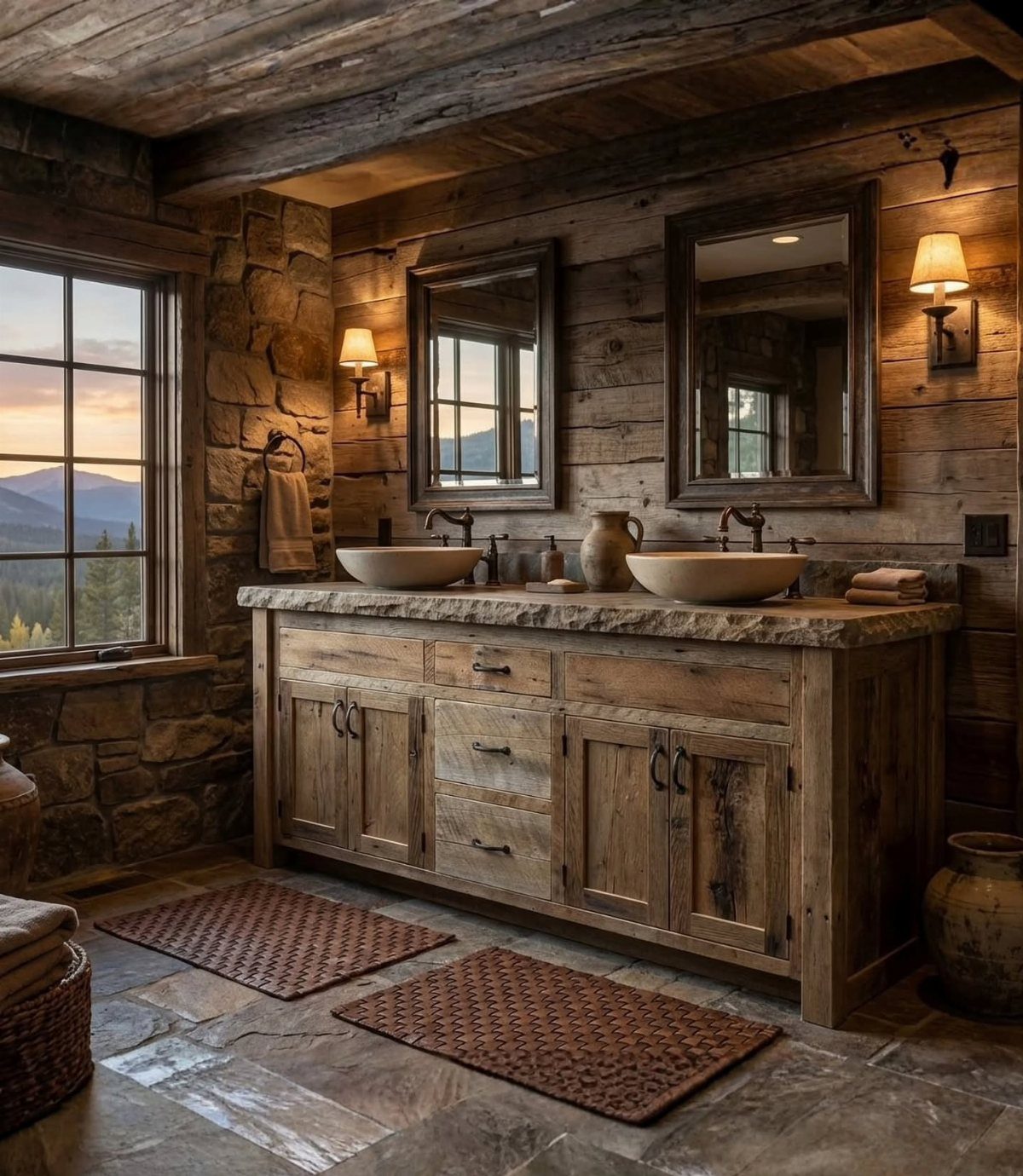
Wood grain and rough stone do the heavy lifting here, so the rest of the room can stay simple.
Reclaimed boards on one wall and stone on the next give two textures that never match exactly, which is what makes the space read as rustic instead of themed.
I would keep the vanity wood too, as the photo does, and let the stone show up again in the countertop. Repeating each material at least twice makes the mix look planned.
Wall sconces beside the mirrors add warm light that brings out the grain.
2. Natural Stone Surfaces
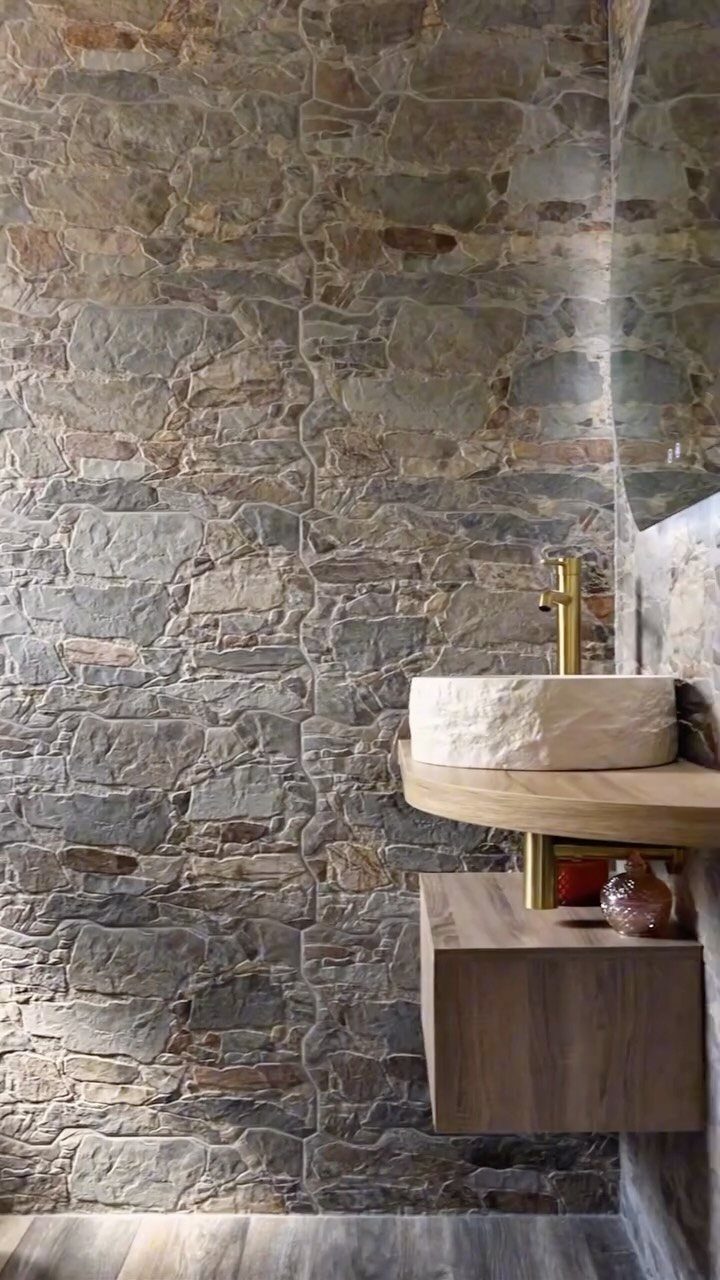
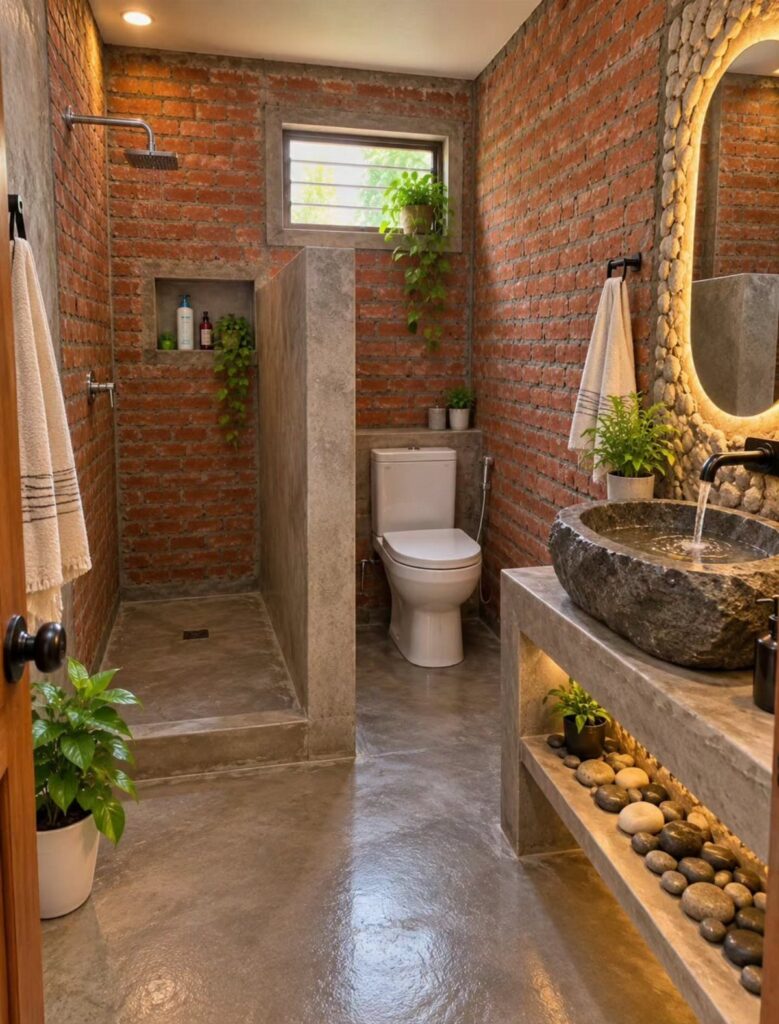
A stone wall is the easiest way to give a bathroom a focal point without covering every surface. Keep it to one wall, and the texture reads as a feature instead of a cave.
A carved stone vessel sink on a wood counter pairs well with it: the sink repeats the wall’s material at eye level, and the wood keeps the stone from feeling cold.
Natural stone varies from piece to piece, so expect some difference between what you see in a sample and what goes up on the wall.
3. Wood-look Tile
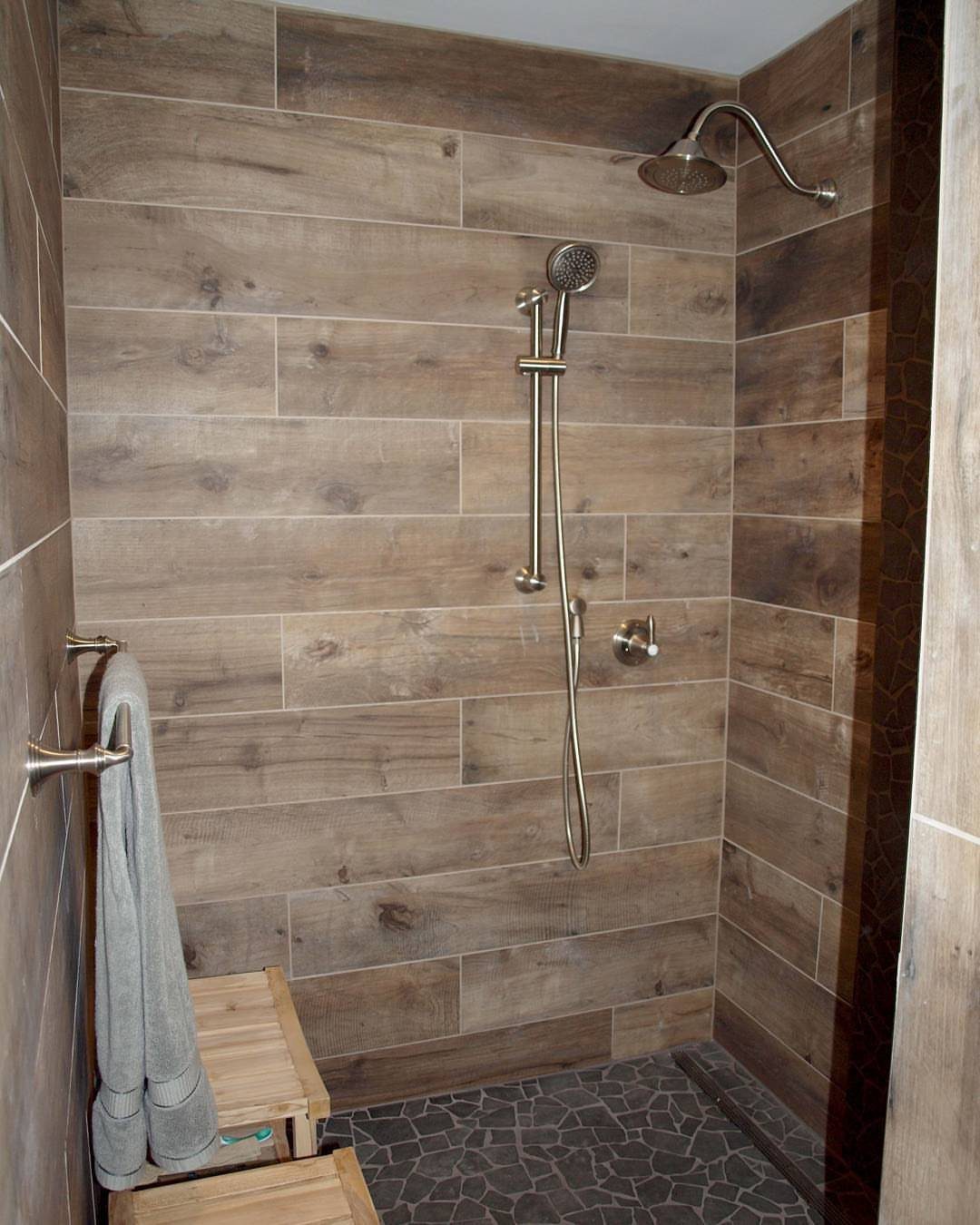
Wood-look tile gives you the plank look without putting real wood next to a shower. Brown wall tiles in a walk-in shower, like these, carry the warmth of timber and still count as tile.
I like pairing it with a dark pebble floor, since the 2 textures stay distinct and the wood tone stands out. Brushed metal fixtures keep the palette quiet.
A small wooden bench adds one piece of real wood for contrast. Run the tile planks in a single direction so the grain looks believable.
4. Rustic Shower Details
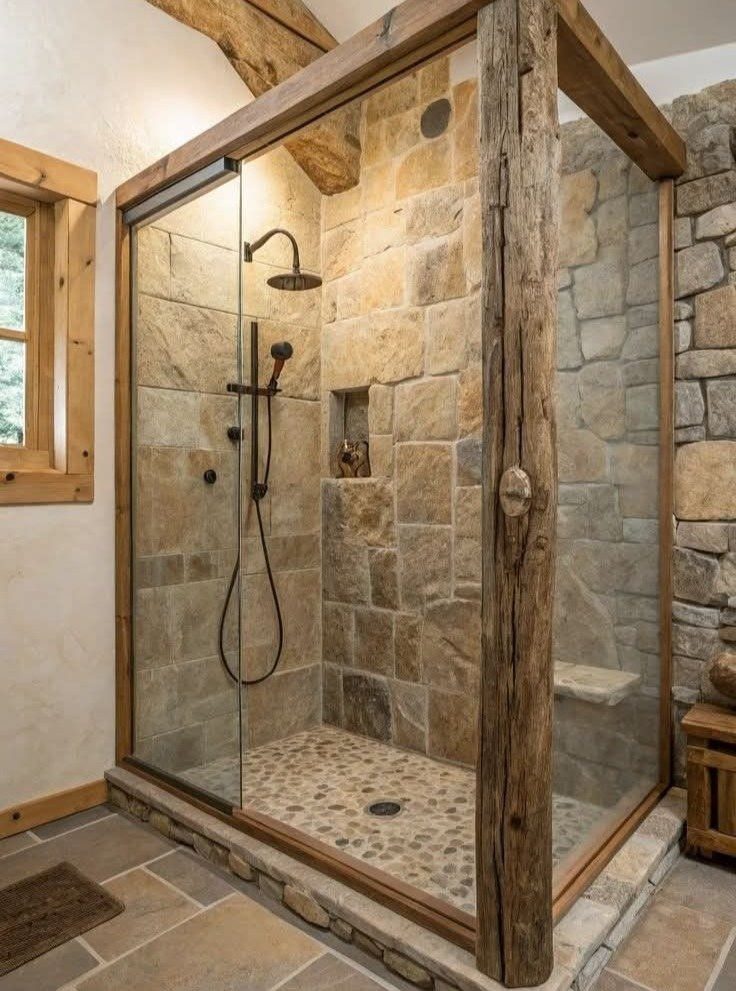
Stone walls, a pebble floor and a weathered wood frame turn a shower into the rustic centerpiece of the room instead of an afterthought.
The wood frame around the opening is the detail I would copy first, because it makes the shower feel built into the house.
A rain showerhead paired with a handheld sprayer gives you the spa look and still lets you rinse the tub, the walls and the dog. The handheld also makes rinsing the stone walls simple.
Pebbles feel good underfoot, but the gaps between them are worth thinking about when you plan cleaning.
5. Terracotta Floor Tile
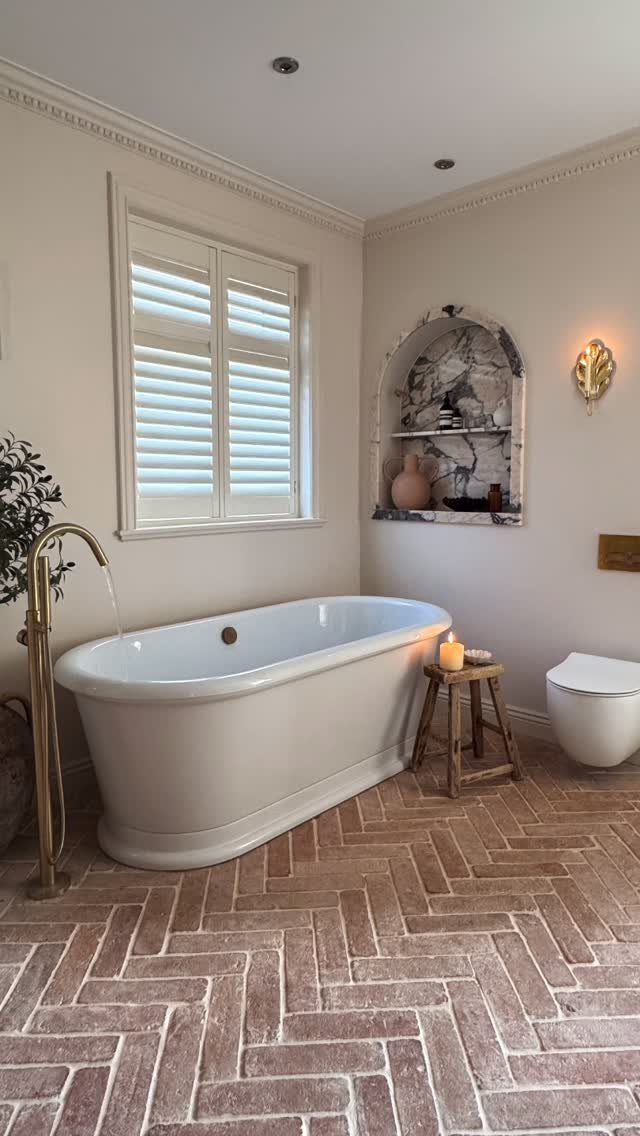
Terracotta is unglazed clay, so it brings a baked orange-brown warmth that glazed tile can’t quite copy. Laid in a herringbone pattern, as here, it adds movement to a floor beside a white tub and a marble niche.
Seal it.
The homeowner who laid this style of floor says terracotta is very porous and stains easily without good sealing, but once sealed it is easy to keep clean. They also say it isn’t rough to walk on.
White and marble around it keep the clay color from overwhelming a small bathroom.
6. Reclaimed Wood Vanity
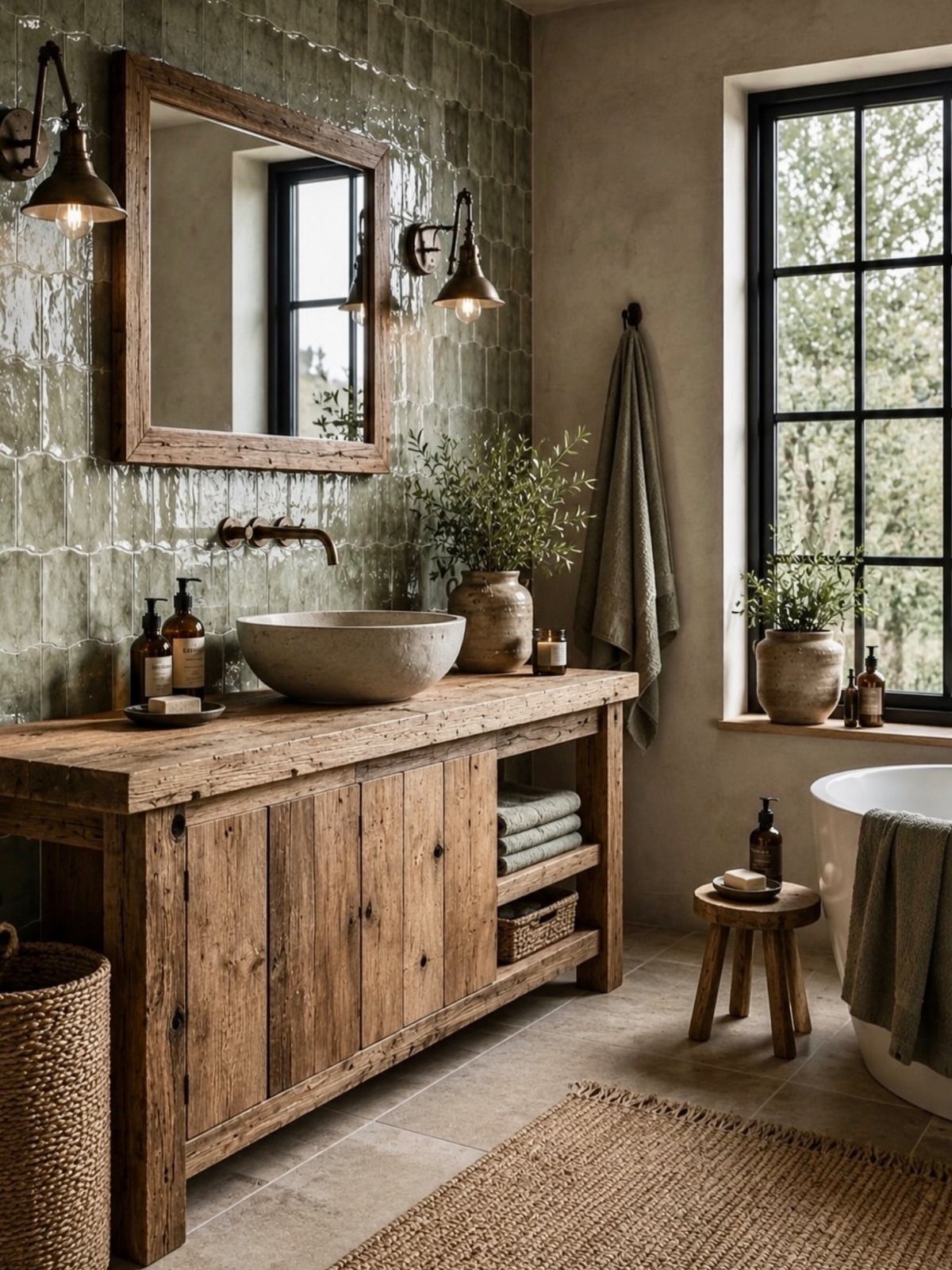
A vanity built from reclaimed wood is the piece I would splurge on, because it carries the whole rustic mood in one object.
Here it holds a stone vessel sink, so wood and stone share the same few feet of counter.
The green tile behind adds a cool contrast that keeps the wood from looking heavy.
Pick boards with visible age and grain, because weathered character is what reclaimed wood has over new lumber.
7. Old Dresser Vanity
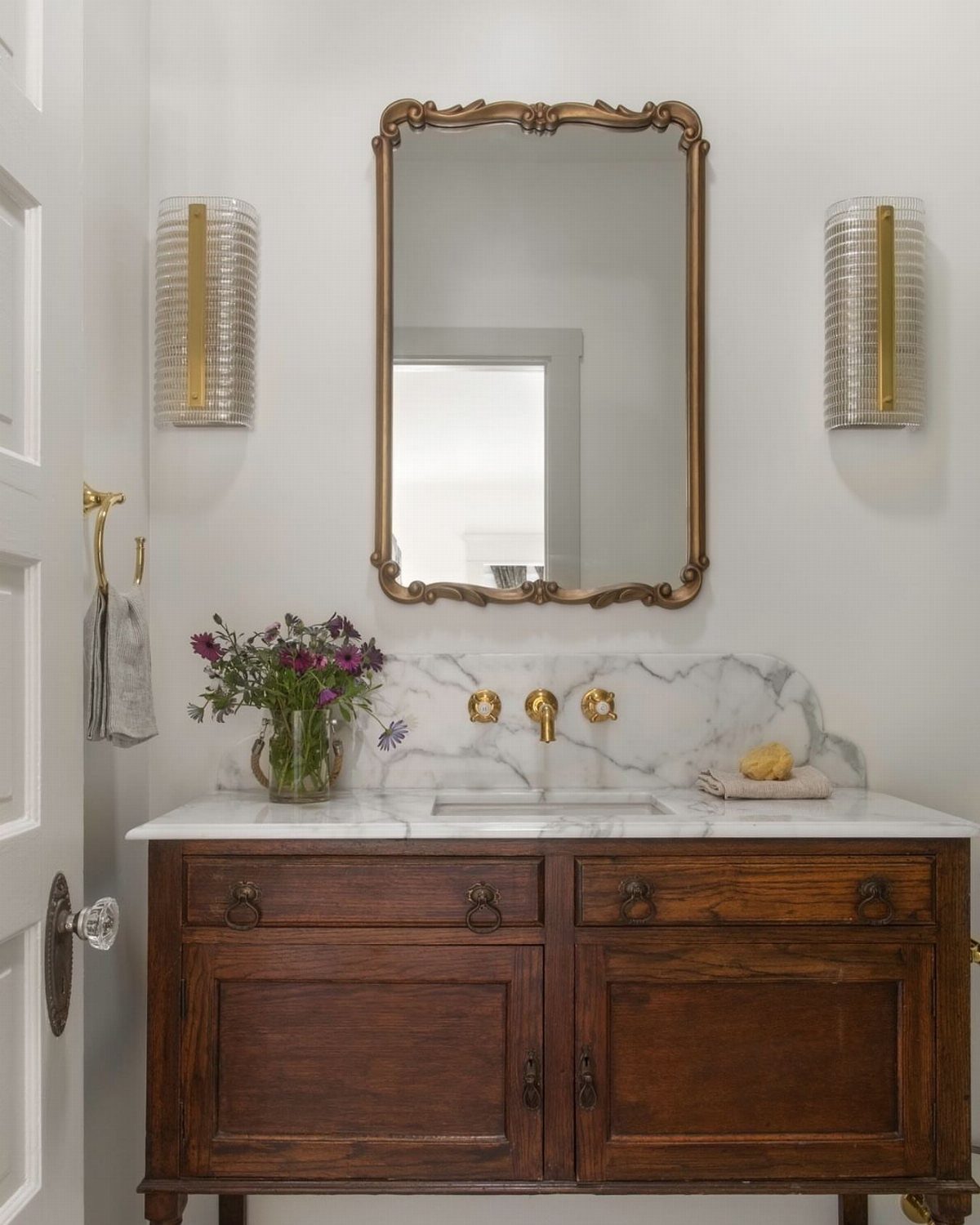
A dark wood dresser with a white marble top makes a bathroom vanity that looks collected over time instead of ordered from a catalog.
A dark-stained dresser under a pale stone top gives strong contrast, and a gold-framed mirror above it picks up the warmth of the finish.
Dressers are the easy way to get a one-of-a-kind piece on a modest budget. Hunt for one with solid drawer fronts and good proportions, since the look depends on the furniture itself.
I would pick a dresser with a top the right size for the marble slab you plan to set on it.
8. Antique Mirror
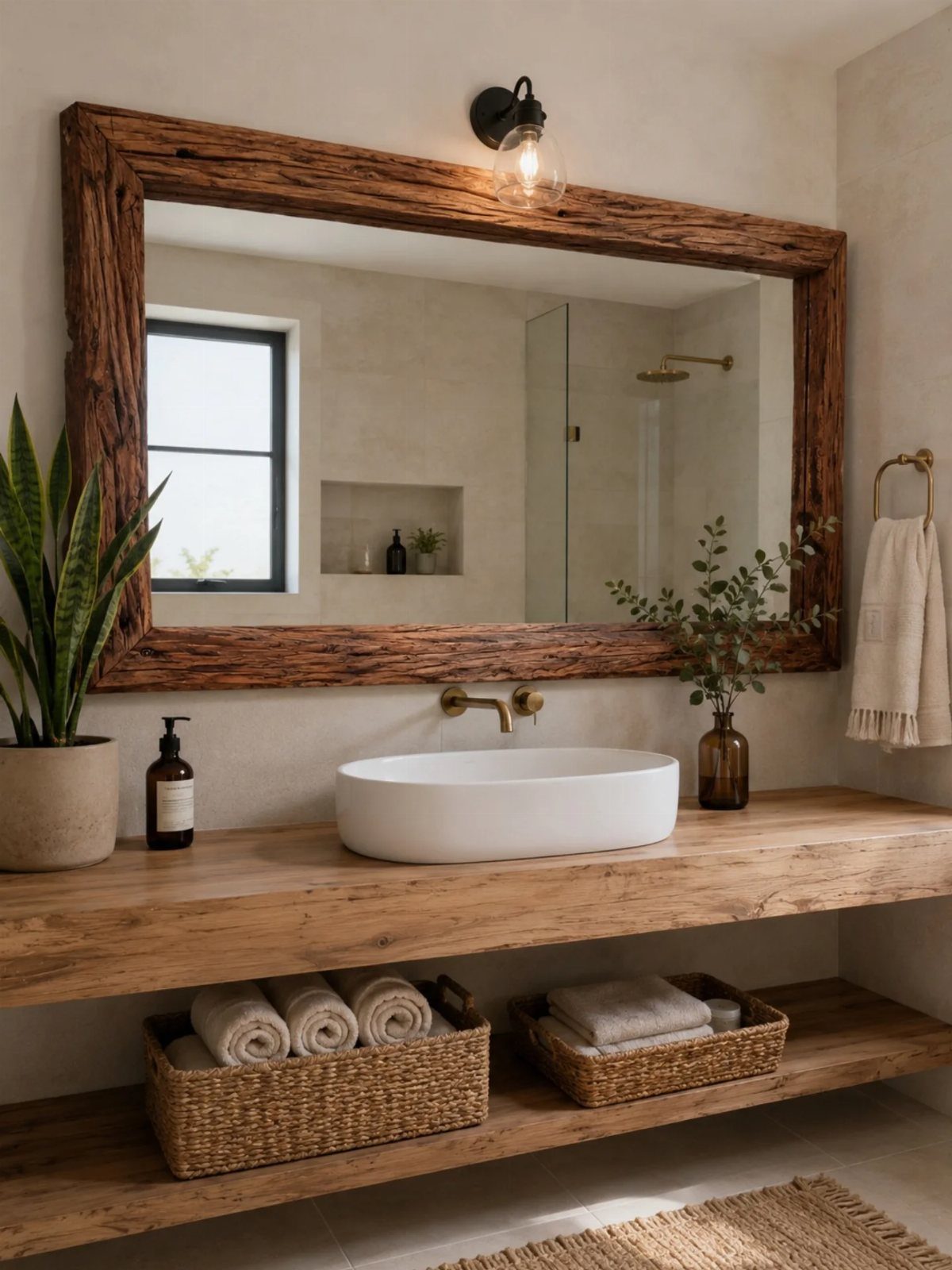
One mirror with a thick, rough-hewn wood frame can carry a whole bathroom.
Settle on the frame before anything else, then pick the sink, counter and paint to suit it. I would go for a heavy, chunky profile over a thin one, since the weight of it is what reads as rustic.
Keep the surrounding accessories few and in natural materials so nothing competes.
9. Live-edge Vanity Top
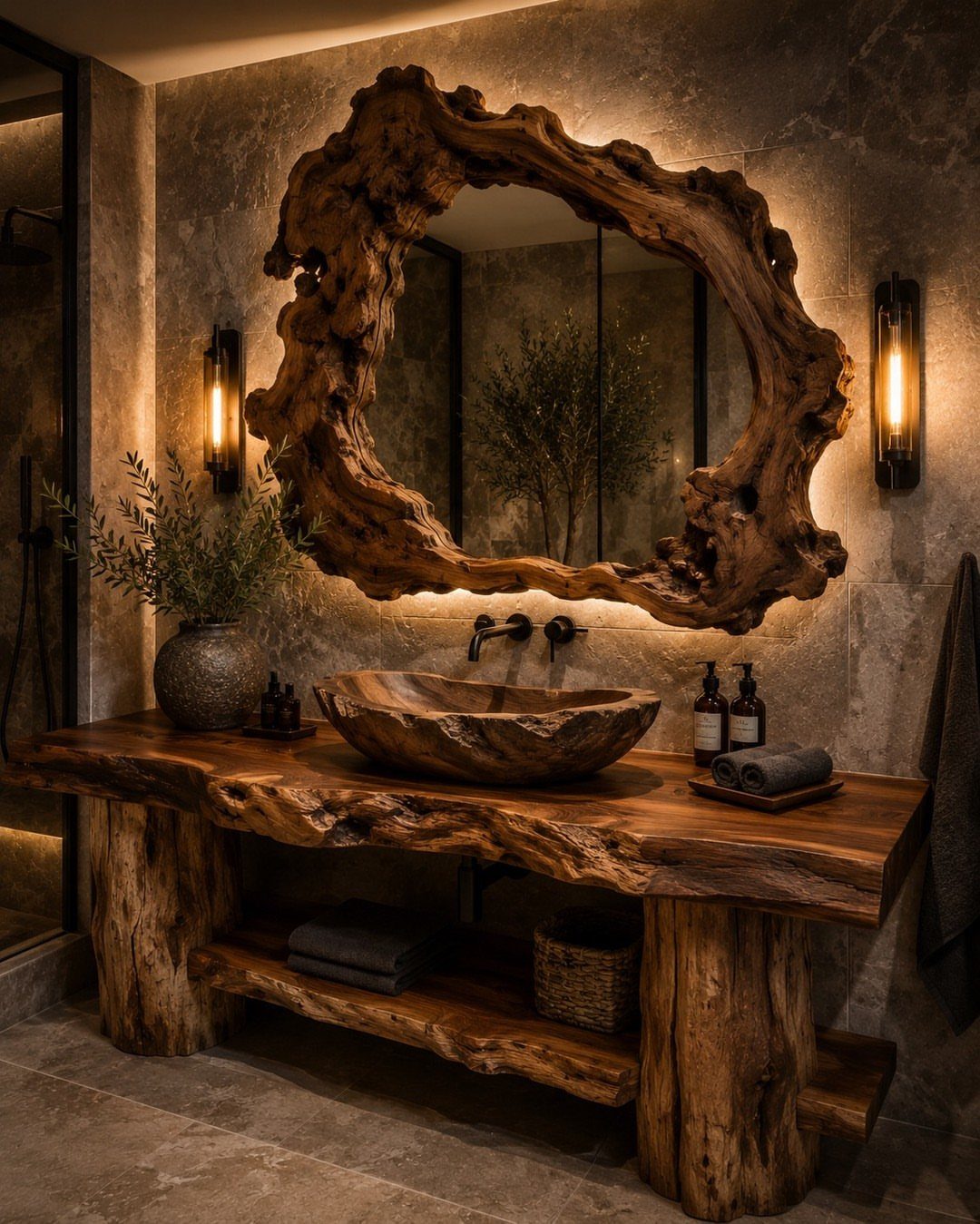
A live-edge slab keeps the wavy outline the tree gave it, so no 2 vanities match. Here the wood sink and the organic wood-framed mirror repeat that shape against grey stone, which ties 3 pieces together.
Let the slab be the statement and keep everything else quiet. Grey stone walls make a good backdrop because the wood grain stands out against them.
If a full slab vanity feels like too much, I would use the live edge on the mirror frame alone and keep the counter simple.
10. Two-tone Wall Treatment
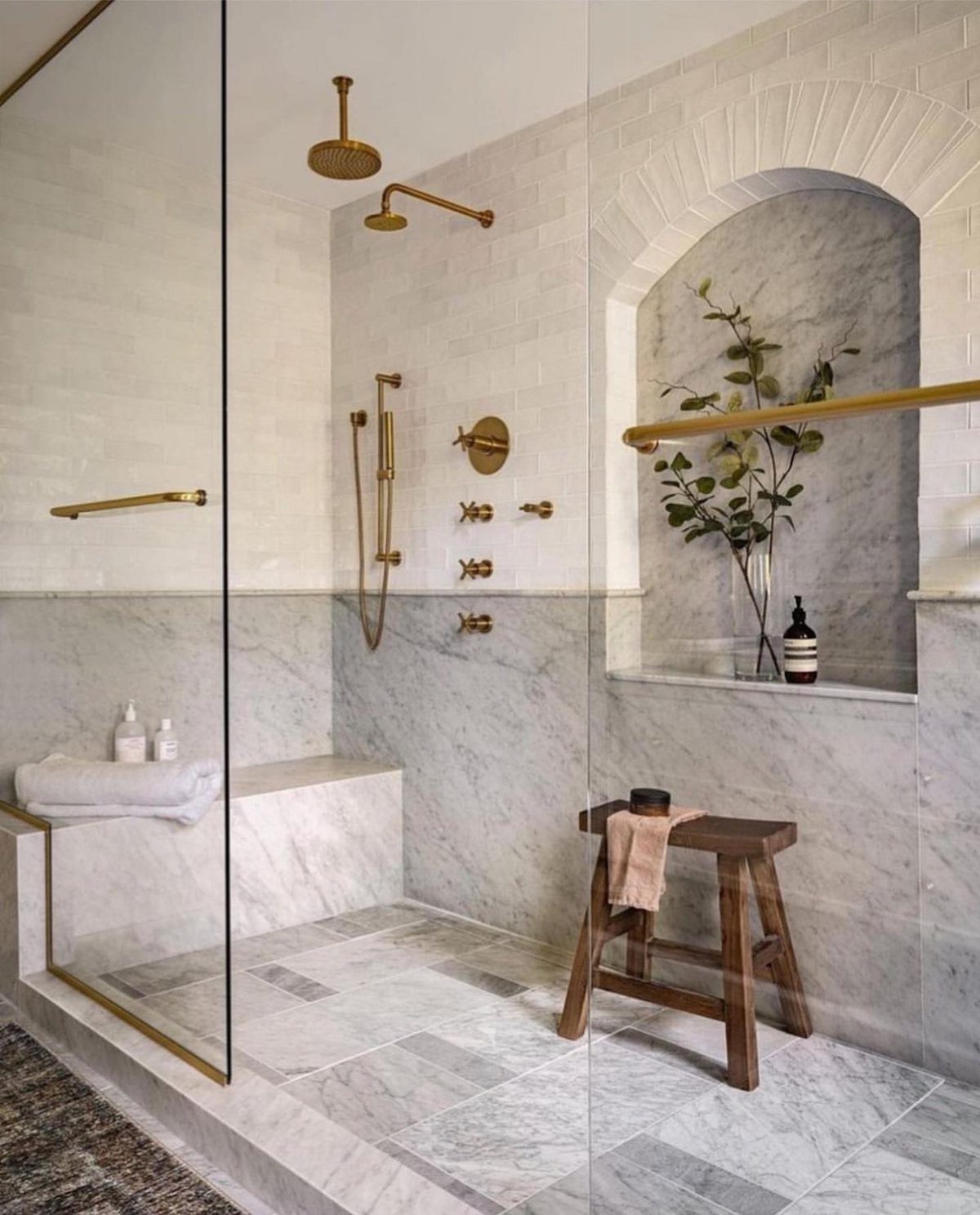
Splitting a shower wall into 2 zones gives it structure. Run gray marble wainscoting on the lower wall, where splashes and knocks land, and keep white tile above it to hold the light.
A line where the materials meet is the detail to plan. I would set the break at a consistent height all the way around, so the division looks deliberate.
Gold fixtures and a wooden stool then warm up the cool palette without adding anything busy.
11. Ceramic Wall Tile
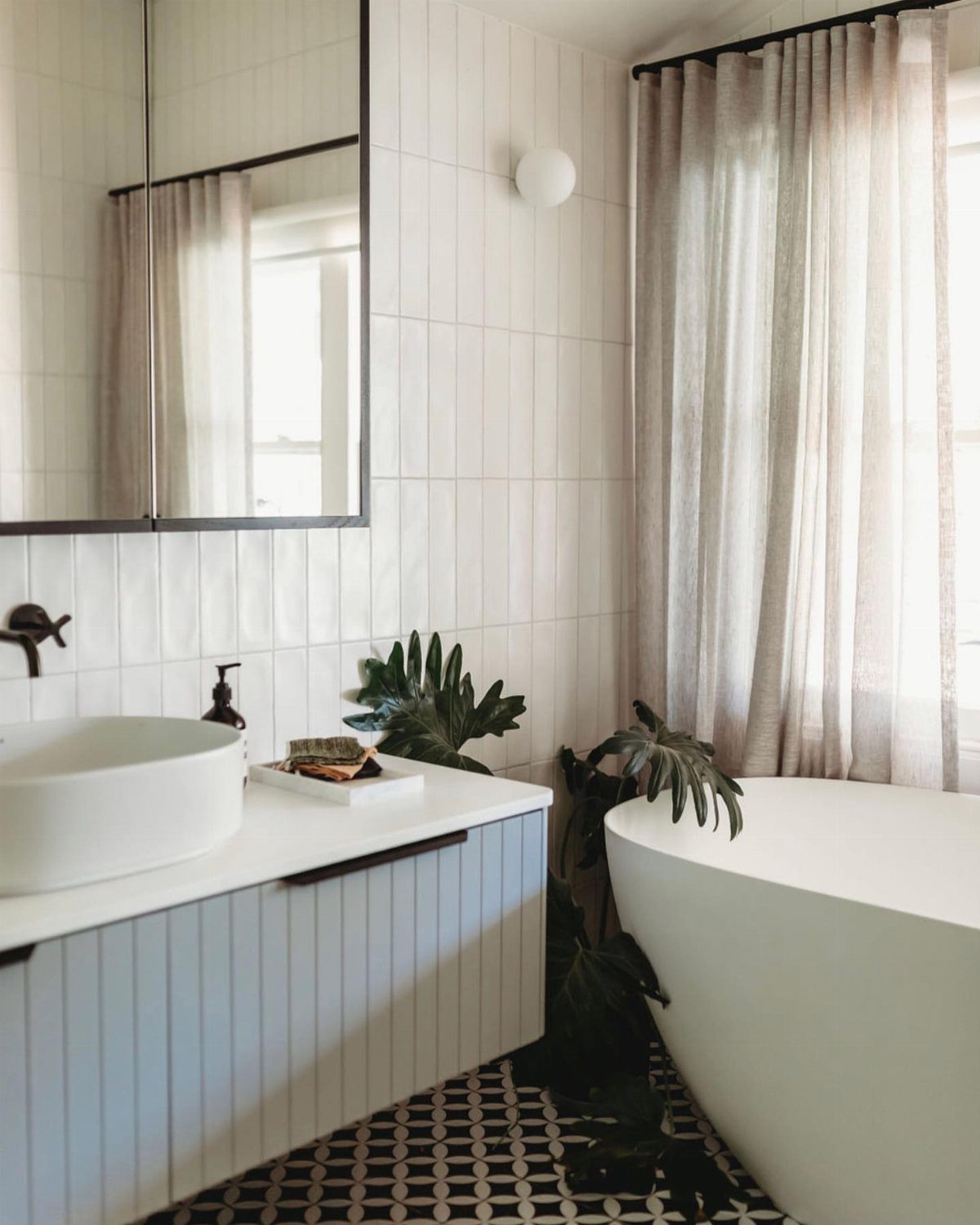
White ceramic tile is the budget-friendly way to get farmhouse walls, and laying it vertically, as here, gives the room a different look from the usual horizontal rows. The same tile works for a backsplash behind the vanity.
Ceramic costs less than stone or handmade tile, so it suits a remodel where most of the money is going elsewhere. A light blue vanity and patterned floor tile supply the color, so the walls can stay plain white.
Choose a simple white and let the floor do the talking.
12. Limewash and Mineral Paint
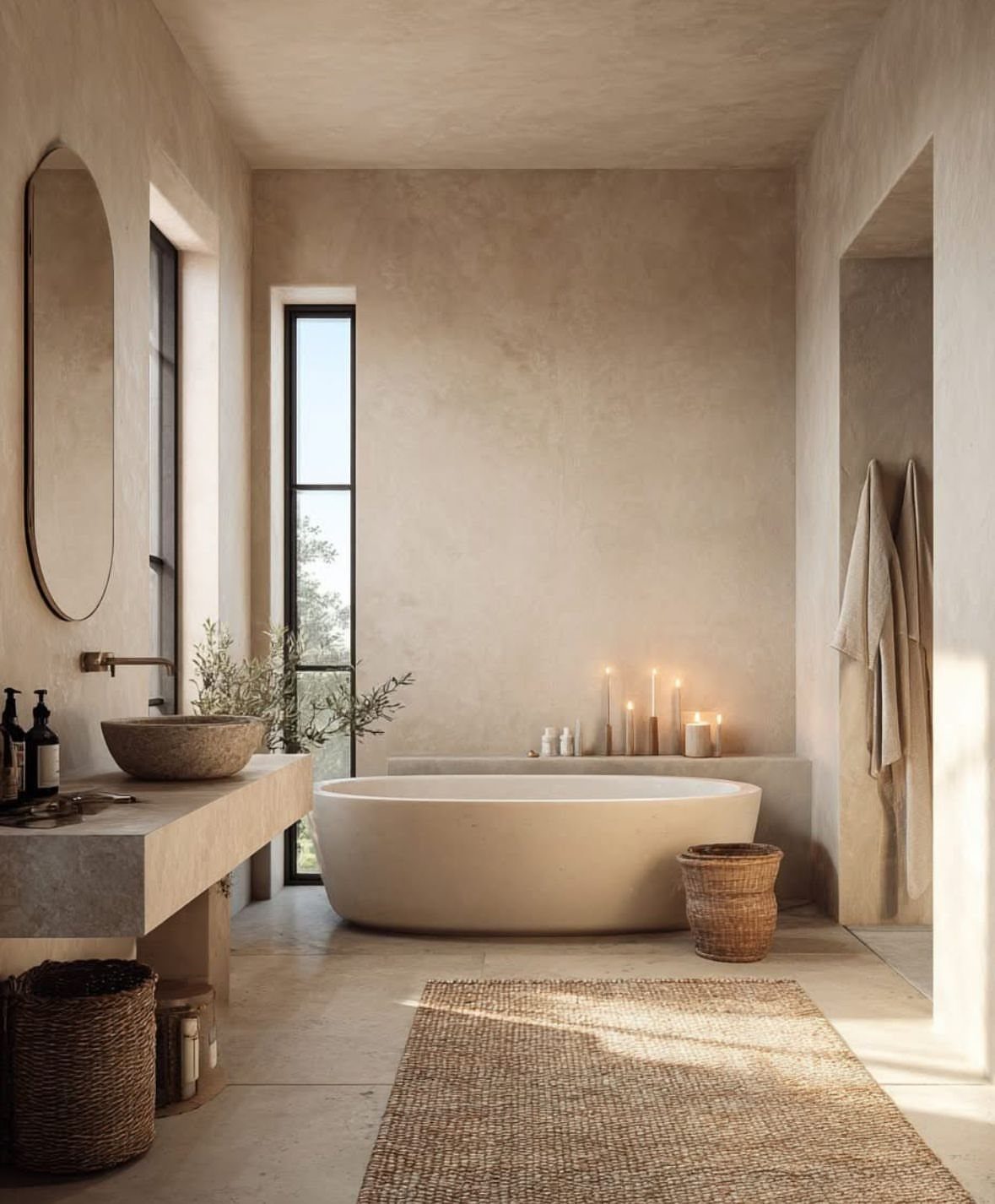
Limewash gives walls a soft, cloudy finish that looks aged from day one. In beige, as here, it makes a minimalist room feel warm without a single added object.
I would use it on the walls outside the shower, where the texture can show. Pair it with natural pieces like a stone sink, a woven rug and candles, and let the wall do the work of decoration.
Mineral paint is the related option if you want a similar matte, chalky look.
13. Rustic Bathroom Lighting
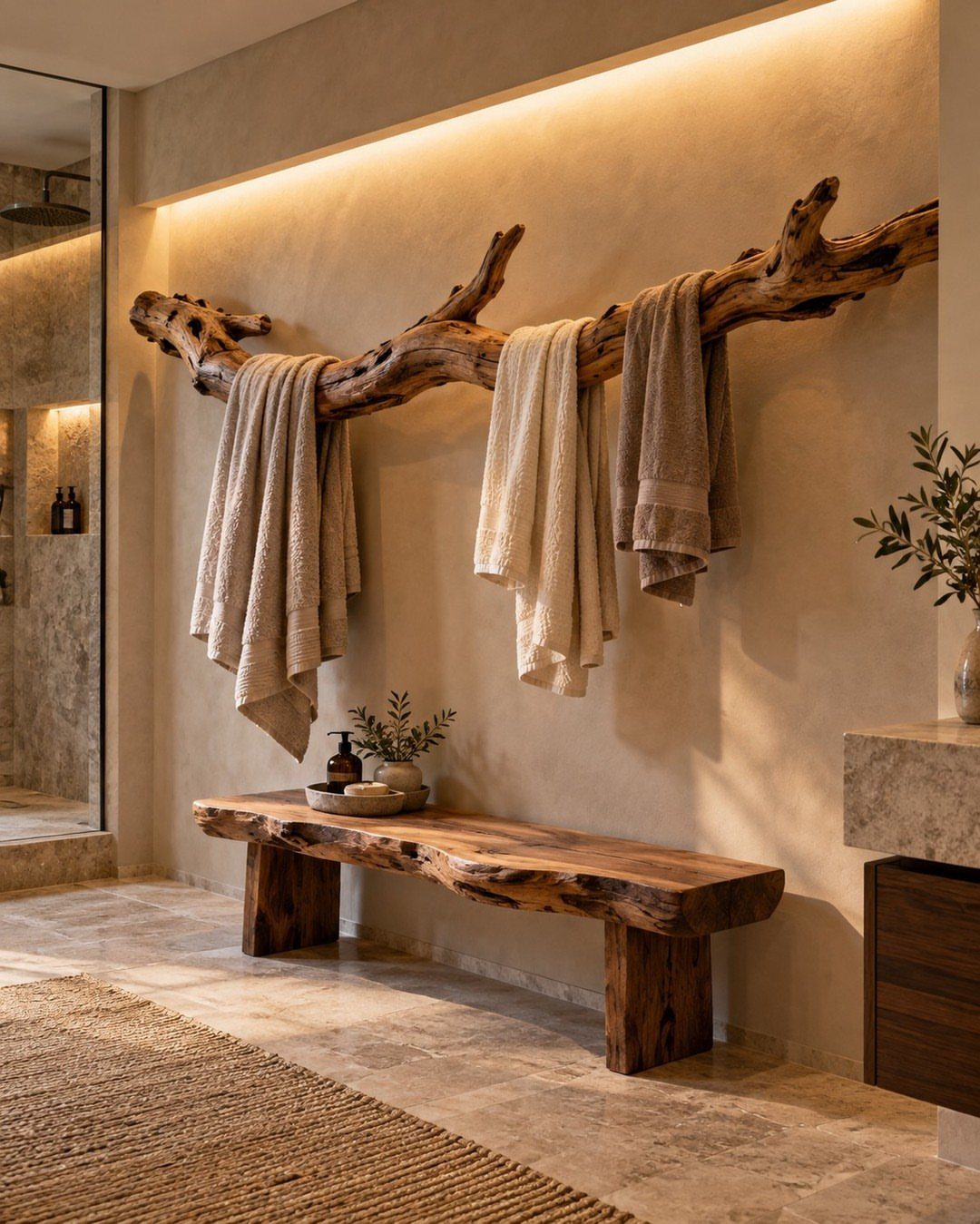
Warm cove lighting grazes a textured beige wall and gives the wood in the room a glow that a single overhead fixture can’t.
Pick fixtures with some character, like aged metal or a hand-finished look, so they sit comfortably beside the natural materials. Keep the bulbs warm in tone.
Hiding the light source in a cove also leaves the wall’s texture as the main thing you see.
14. White or Neutral Color Scheme
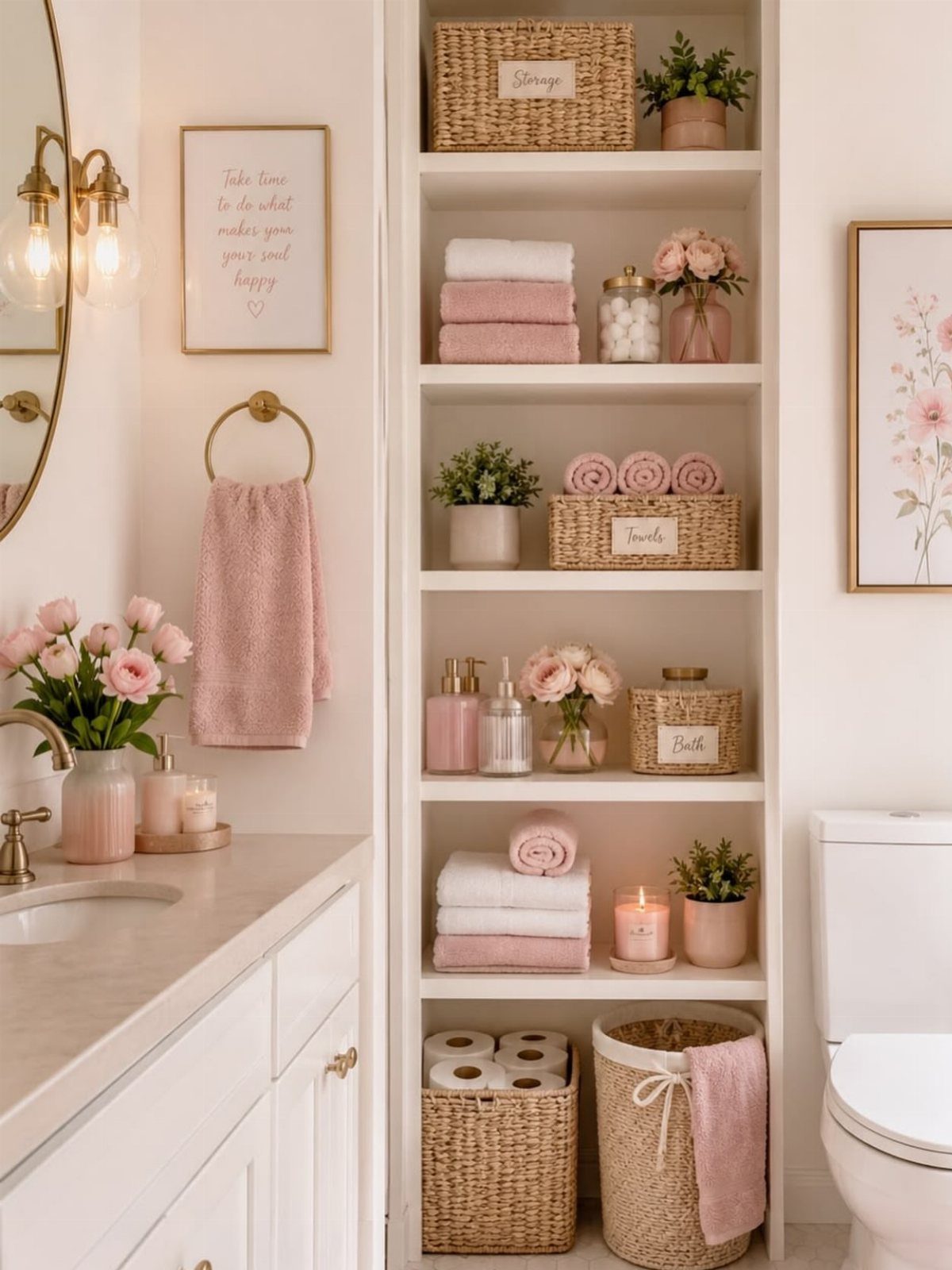
White walls and a white vanity give earth-driven pieces room to stand out. Woven baskets and green plants bring the natural texture, and pink towels add one soft color.
I would keep the color to a single accent like the towels and let the baskets do the rest. A built-in shelf lets you store towels in plain sight, and labeled baskets keep small items sorted.
Wicker is a good swap for plastic bins, since the weave keeps the look rustic.
15. Exposed Wood Ceiling
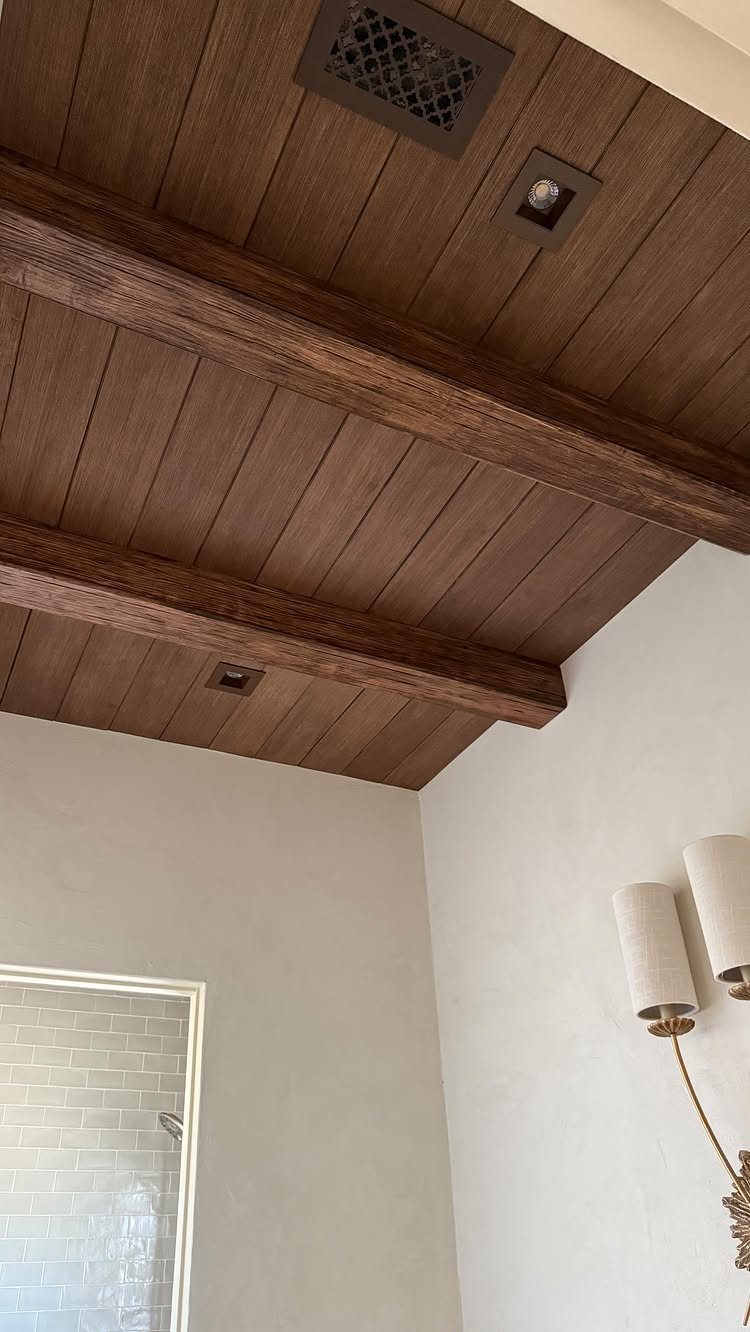
Dark plank boards with heavy beams turn the ceiling into the boldest surface in the bathroom. Against white walls and white shower tile, the wood reads as a deliberate feature instead of a heavy lid.
I would keep everything below it light, as here, so the room doesn’t close in. Recessed lights fit neatly between the beams and a wall sconce adds a second layer of warmth.
A dark ceiling suits a room with some height. In a low space, I would try a lighter stain.
Protect Materials from Bathroom Humidity
Wood and bathrooms get along when you control the water. Choose solid hardwood such as oak, walnut or teak, and skip engineered laminate.
For a vanity, marine-grade hardwax oil or true Danish oil works well. Both repel splashes and still let the grain breathe.
Keep wood at least 3 inches back from the tub rim, and well away from anywhere the shower spray lands. Untreated wood should stay clear of frequent splashes altogether.
A high-CFM exhaust fan running for 20 minutes after every shower protects every wood surface in the room.
Porous stone needs sealing and periodic resealing. Clean it gently.
Plan Costs and Lower-cost Alternatives
A full rustic remodel runs $7,000–$22,000, because authentic materials cost more than imitations. Knowing where the money goes shows you where to hold back.
- Reclaimed barn-wood cladding runs $8–$20 per square foot, while new lumber distressed by hand costs roughly half that
- Stacked-stone feature wall: $40–$80 per square foot installed
- A solid wood vanity runs $1,200–$3,500, and a local woodworker will often build one for you
- Stone or copper vessel sink: $300–$1,000
Sealing is the cost people forget, since raw wood and porous stone need ongoing maintenance.
To save, I would use stone-look porcelain at $8–$18 per square foot and put the real money into one reclaimed accent wall instead of cladding the whole room.
Keep Rustic Details Restrained
Rustic goes wrong when every surface gets the treatment. Pick one or two signature moves and let the rest of the room stay quiet.
Matte plaster on the other walls keeps the room from closing in, and wood-look porcelain plank tile at $4–$10 per square foot covers the floor.
Choose a direction early. Rustic farmhouse can lean coastal, Southwestern, French country or industrial, and the tile, fixtures, lighting and accessories should all point the same way.
Edit accessories hard: one plant, one soap dish and one folded towel beat a full collection. Shiplap and weathered wood follow the same rule, because too much of either feels contrived.
Frequently Asked Questions
What is rustic bathroom design?
Rustic bathroom design builds the room from raw, natural materials like wood and stone, with aged metal, earthy colors and tactile finishes.
Typical pieces are reclaimed beams, a timber vanity, a stone feature wall, dark iron fixtures and warm vintage lanterns. Nothing looks glossy or mass-produced, which is what gives the room its lived-in warmth.
What are some good ideas for designing a small bathroom?
A single oversized mirror in an aged-brass or oxidized-iron frame beats a small medicine cabinet in a tight bathroom: it bounces light around so the room feels bigger, and the metal keeps the look rustic.
A wall-mounted vanity leaves floor visible underneath, which adds depth, and carrying the same warm cream from the walls onto the ceiling hides the corners so the room reads taller.
Stick to 2 colors in towels and rugs, and leave some open shelf space empty instead of lining it with jars.
How to decorate an old fashioned bathroom?
Secondhand and repurposed furniture does the best work here: an old dresser turned vanity, a vintage mirror above the sink, a ladder leaning as a towel rail, or a claw-foot tub.
When shopping for a dresser, check that the drawer fronts are solid wood and the proportions look right, then measure so the stone slab you want actually fits the top.
Seal or refinish anything that will sit near water, and keep wood tones and metal finishes in the same family so the room looks gathered over time instead of mismatched.
How do I protect wood in a bathroom?
Choose solid hardwood such as oak, walnut or teak, not engineered laminate, and finish a vanity with marine-grade hardwax oil or true Danish oil.
Either finish sheds splashes while the grain can still breathe. Leave at least 3 inches between wood and the tub rim, keep it out of the shower spray, and run a high-CFM exhaust fan for 20 minutes after each shower.
Is natural stone difficult to maintain in a bathroom?
Stone asks for some care: porous types need sealing at the start, resealing every so often, and mild cleaners.
A pebble shower floor adds a chore of its own, because the gaps between the stones are worth planning for when you clean. For the look with less maintenance, stone-look porcelain runs $8–$18 per square foot.
How much does a rustic bathroom remodel cost?
Expect $7,000–$22,000 for a full rustic remodel, since real materials cost more than the imitations. Sealing raw wood and porous stone adds ongoing upkeep that people tend to forget.
What’s the cheapest bathroom remodel?
For a rustic look, the cheapest route is stone-look porcelain at $8–$18 per square foot plus one real reclaimed accent wall, instead of cladding the whole room.
New lumber that you distress yourself runs about half the $8–$20 per square foot that reclaimed barn wood costs. An old dresser turned into a vanity is another low-budget way to get a one-of-a-kind piece.