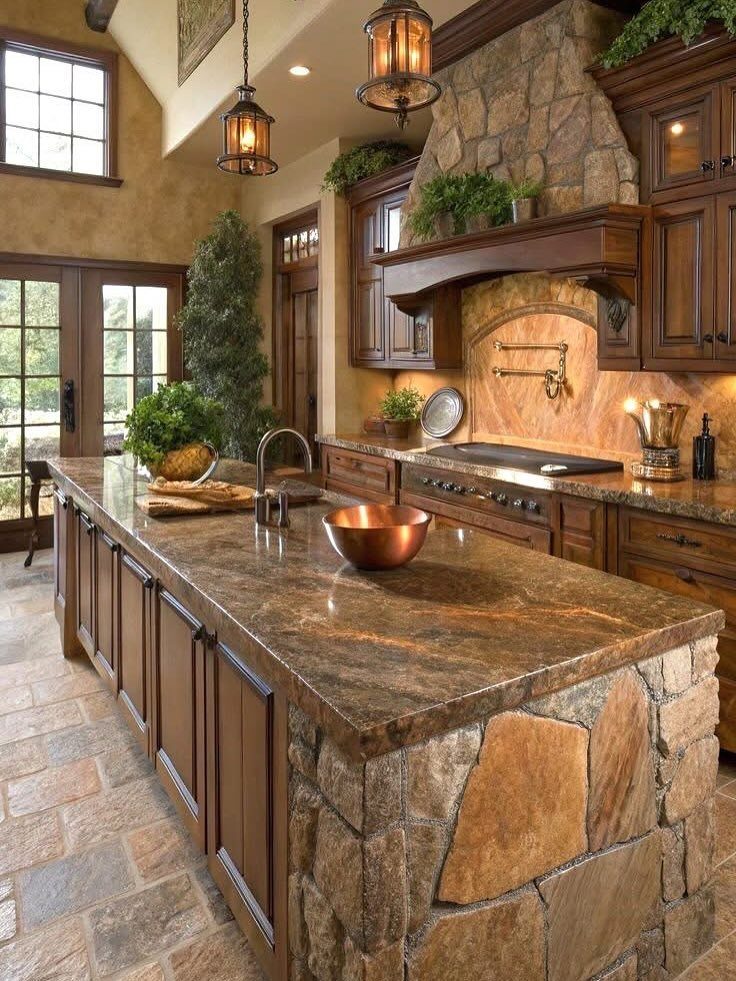
These ideas run from a fabric skirt hung where a cabinet door would be to reclaimed-wood cabinet fronts and a wall opened onto the dining room.
The cabinets you already have decide which ideas here are yours: Green Cabinetry starts from the boxes you own, Two-Tone Cabinets work best when your lowers are already wood, and Wooden Cabinets and Shaker Cabinets can mean new doors.
If they stay, paint, open shelving, lighting and natural fabrics can carry the rustic look. If they go, wood cabinetry, stone and an apron-front sink with its cut-to-fit base cabinet come into play.
1. Open Shelving
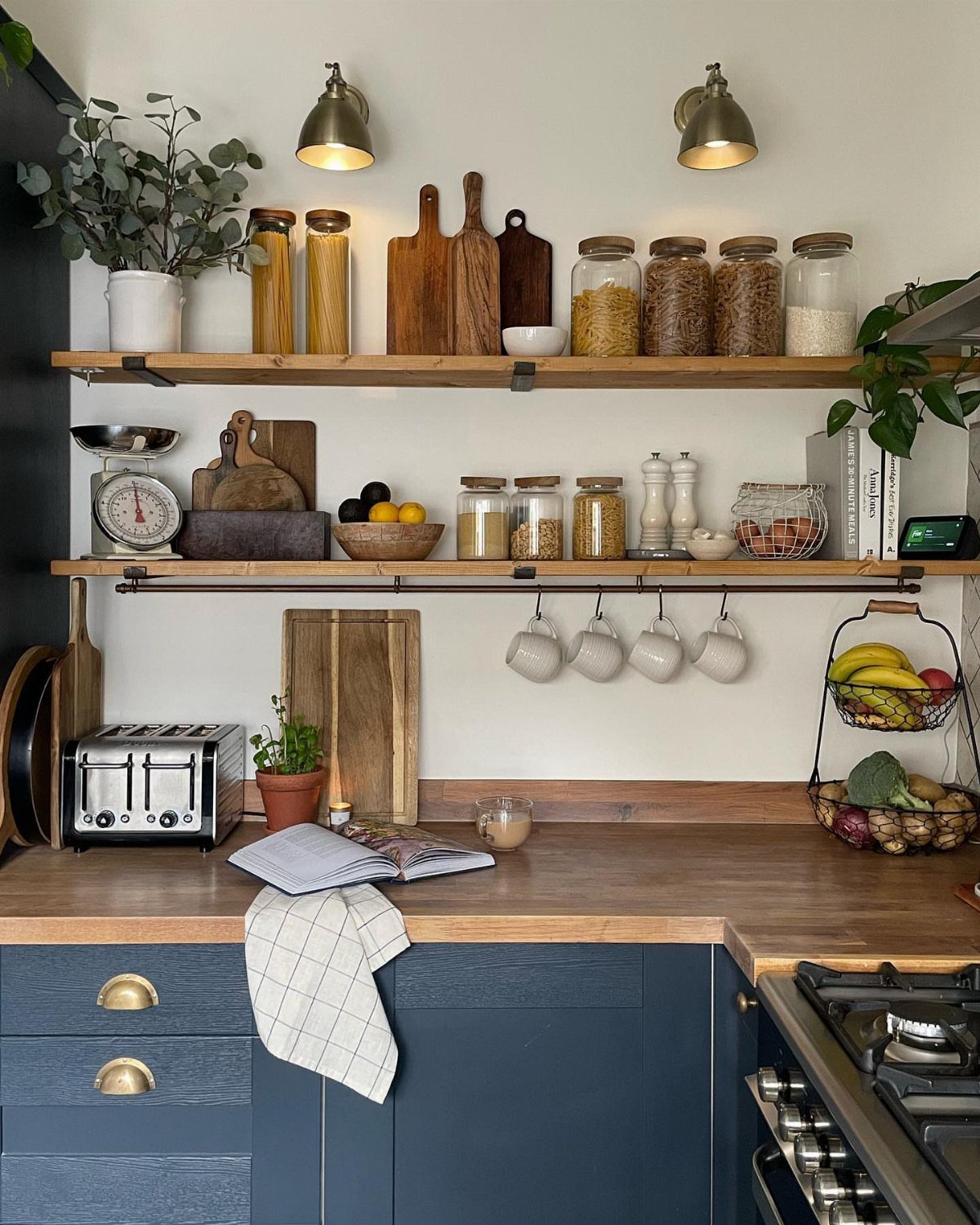
Swapping a stretch of upper cabinets for 2 wood shelves puts mugs, jars and cutting boards to work as decoration, so there is little extra to buy.
I like this best over a wood countertop, where the shelves and counter echo each other.
Whatever sits on the shelves is on view, so keep it to things you reach for daily and enjoy looking at. Leave a gap or two; a few spaces read calmer than a packed row.
2. Natural Wood
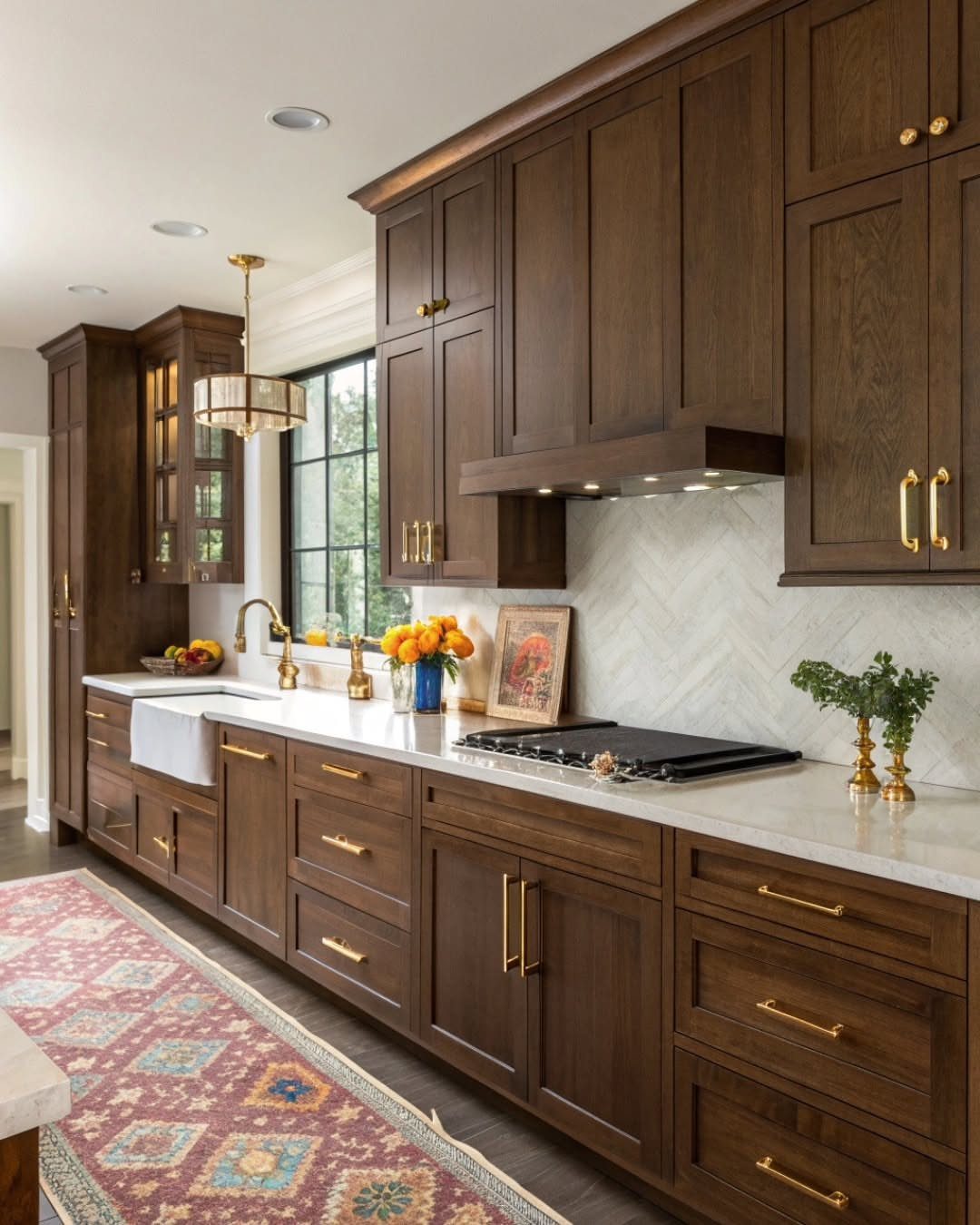
Dark brown wood cabinetry gives a kitchen weight, and good grain still reads through the finish. I would pair it with white marble counters, as here, so the room has contrast instead of heaviness.
If you are not ready to commit to a full wall of dark cabinets, use the wood on the lower run only and keep everything else pale.
3. Wooden Cabinets
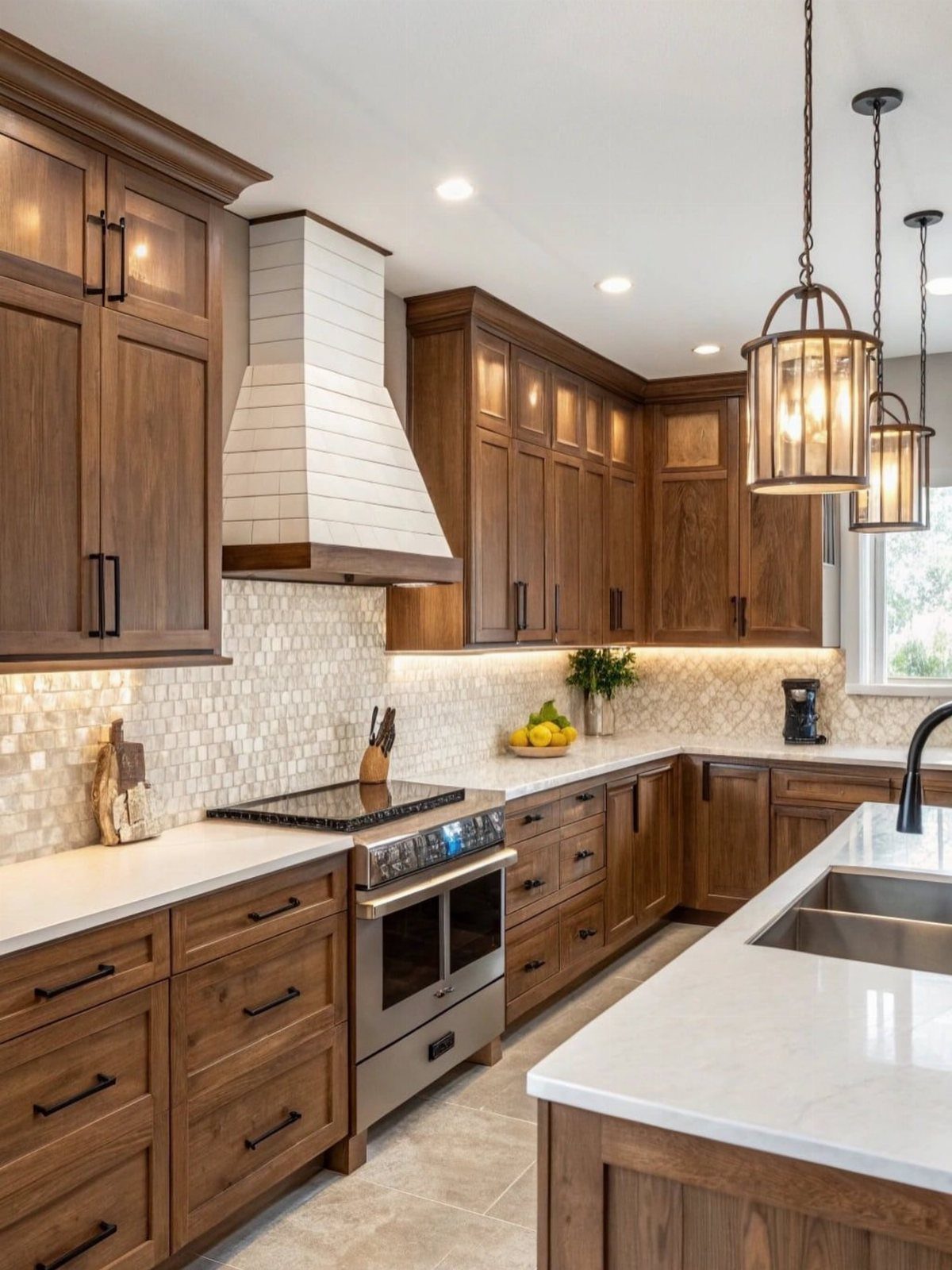
For a rustic kitchen that still feels bright, I would choose medium-toned wood over dark. It shows off the grain and leaves room for white counters, white tile and a white range hood without the room turning stark.
Lantern-style pendants suit it well. Before ordering, get a sample door and hold it against your countertop material in the room’s own light, since wood tone shifts a lot between a showroom and your kitchen.
4. Rustic Backsplash
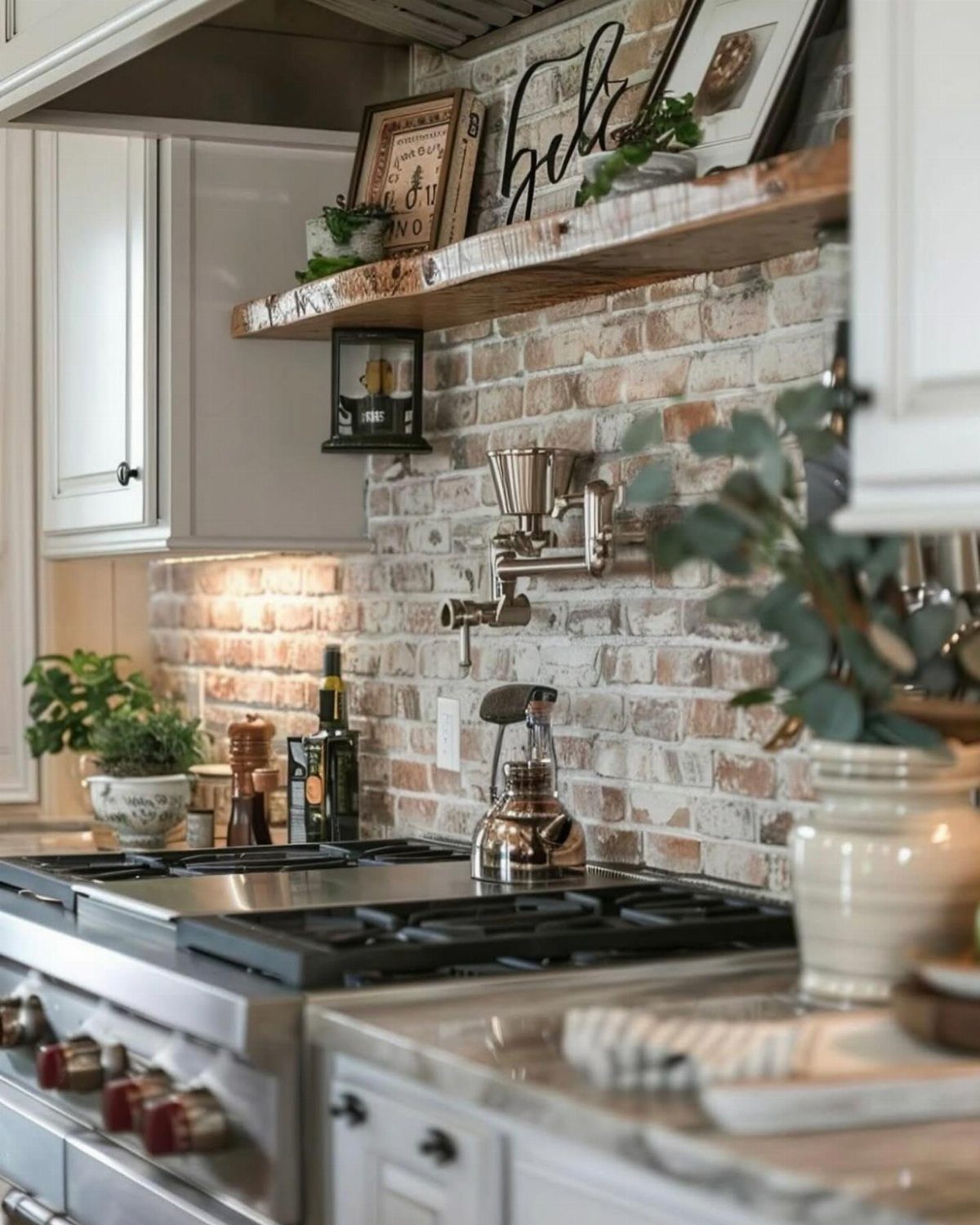
A backsplash covers only a small stretch of wall, which makes it a low-stakes place to try a rough, tactile material.
Tile, stone or other textured surfaces work the same way. Add a wood floating shelf above, and the wall already has the rustic character without needing much else on it.
5. Brick Surfaces
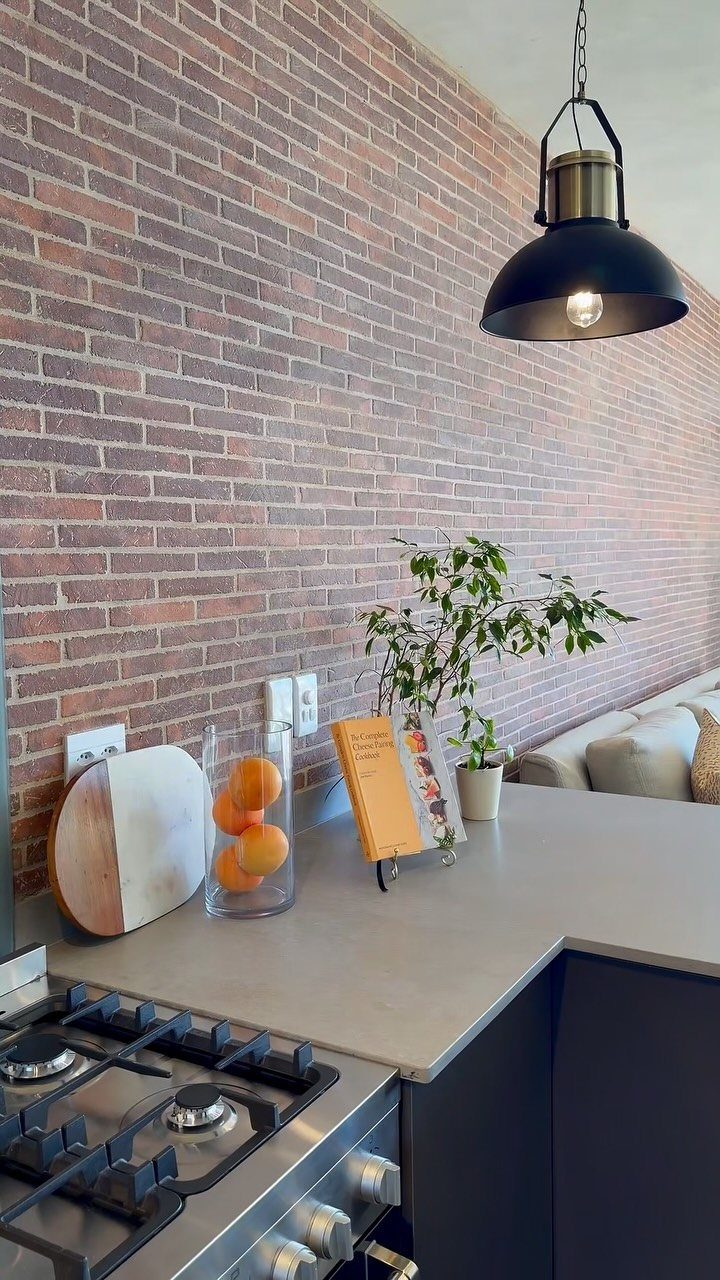
Red brick can carry a kitchen’s whole rustic look by itself, so let it be the loudest thing in the room. Gray countertops and black fixtures keep red brick from taking over the room.
Brick works on a wall, a floor or a backsplash.
If you only want it in one place, I would pick the wall you see first when you walk in. Then keep the styling simple: a plant, a cookbook and a jar of fruit are plenty.
6. Shaker Cabinets
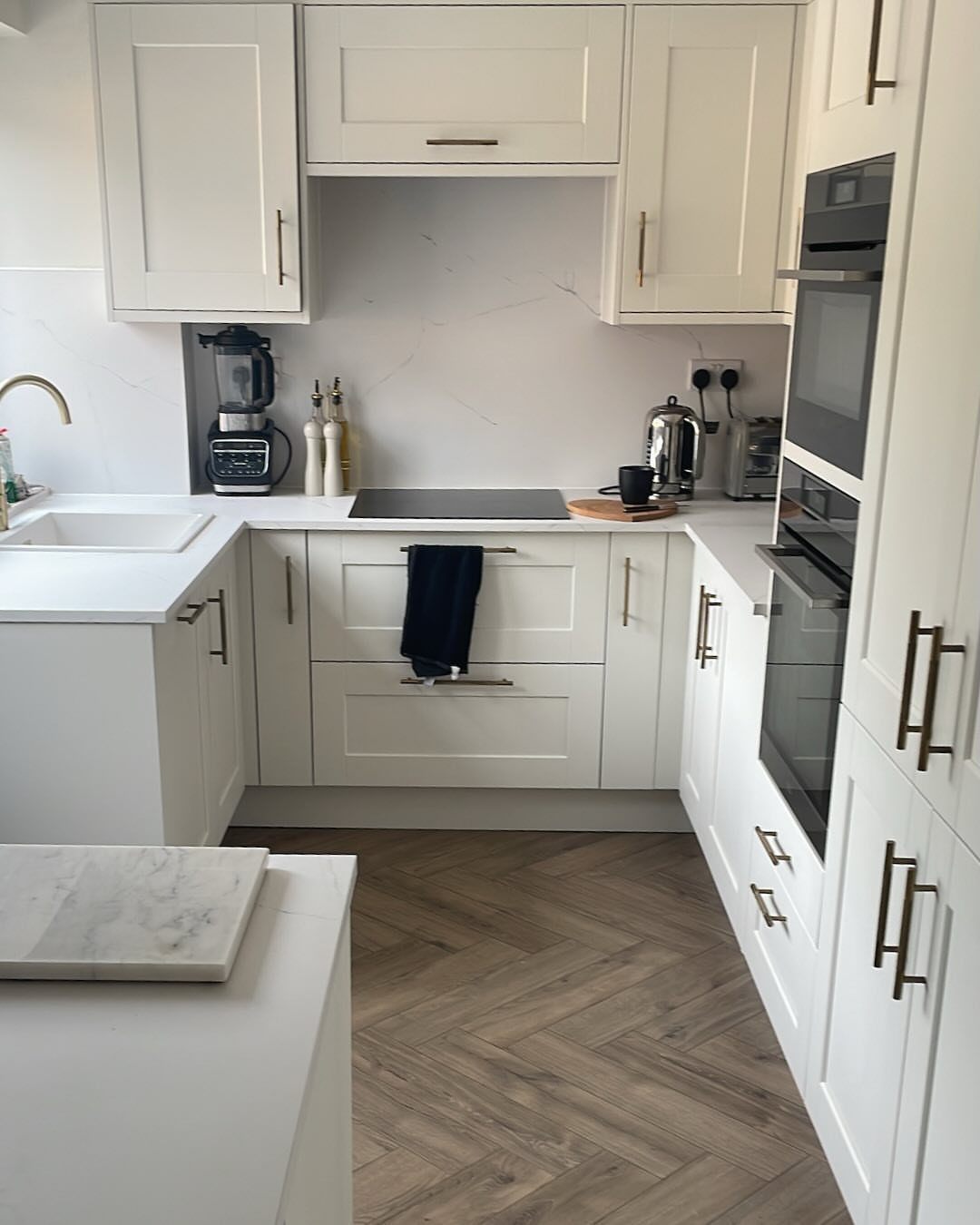
Shaker doors are a flat center panel inside a square frame, and that plainness is why they suit farmhouse and modern-rustic kitchens alike. Painted white, they stay quiet, so the details around them do the talking.
Dark handles add definition against the white, and a light herringbone wood floor brings in warmth. If a kitchen feels too plain, I would change the hardware or the floor before changing the cabinet doors.
But according to Amy Sklar of Amy Sklar Design in Los Angeles, the aesthetic is really more about history than any particular region or landscape. “Rustic kitchens incorporate time-worn elements that give them an overall feeling of warmth,” she says.
7. Kitchen Baskets
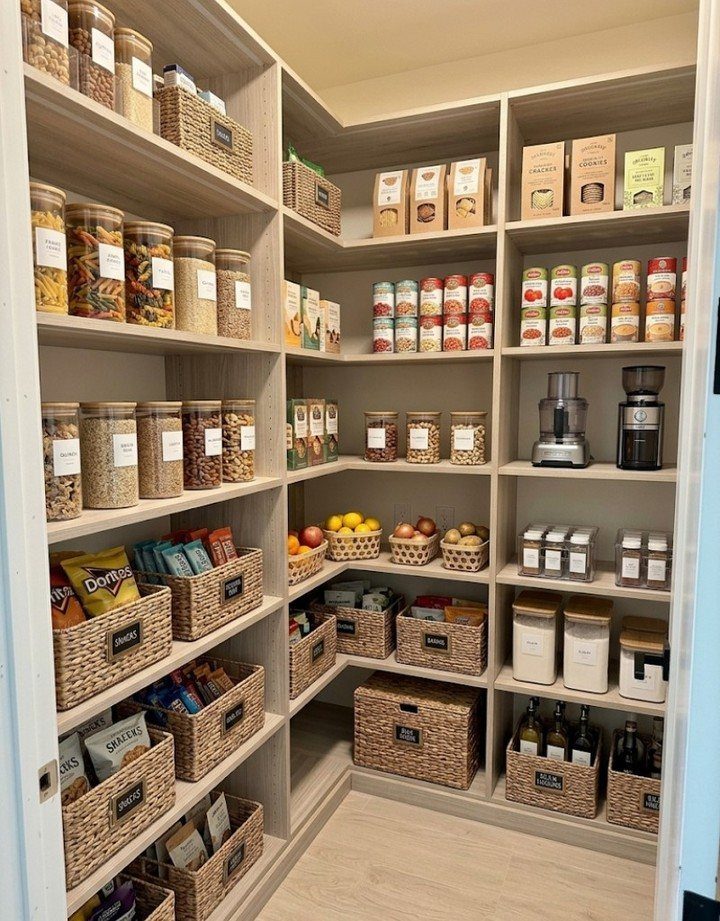
Labels on woven baskets turn a pantry shelf into storage you can read at a glance. Wicker adds a soft, homey texture next to glass jars and light wood shelves.
Sort by use, with one basket for snacks and another for baking supplies. I would label every one, since a basket you can’t identify becomes a catch-all.
8. Kitchen Pot Rack
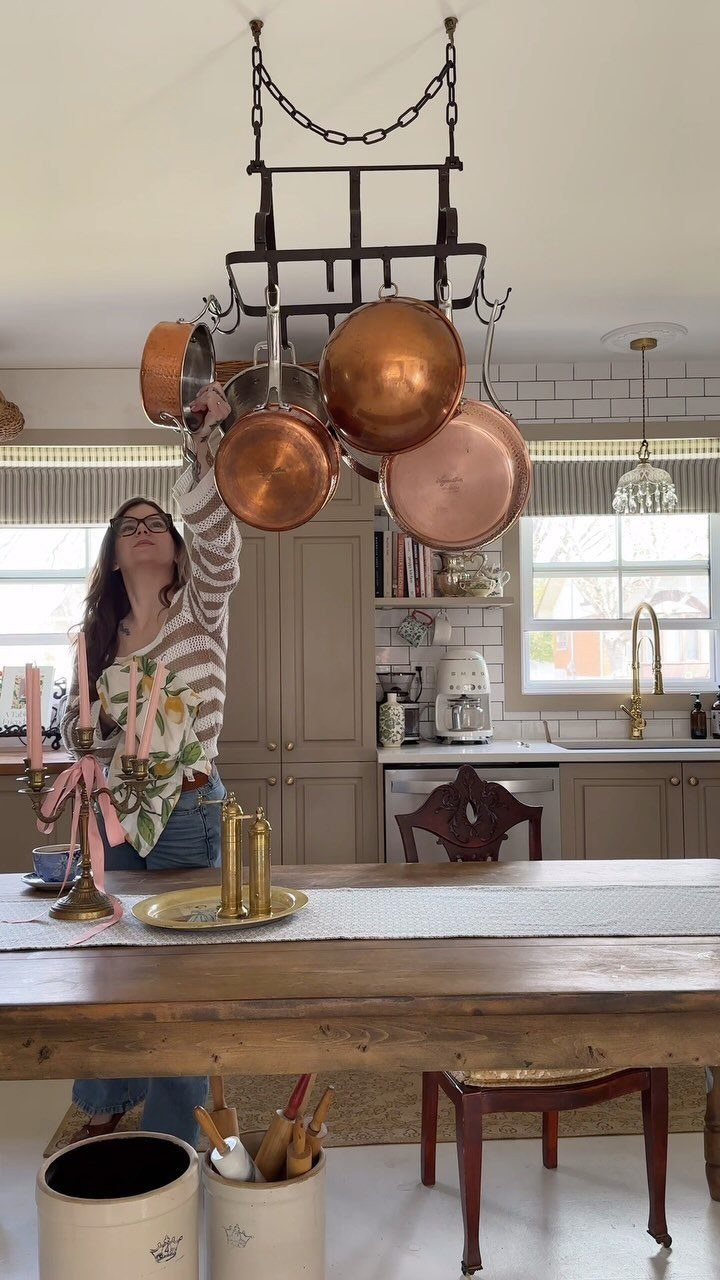
Copper pots hung within arm’s reach stay in daily use and act as decoration at the same time.
Black metal stands out against neutral cabinets and warm wood, so a dark rack works best in a kitchen that is otherwise soft in color.
Hang only the pots you cook with every week. The rarely used roasting pan can stay in a cabinet, so the rack looks collected instead of crowded.
9. Cabinet Skirts
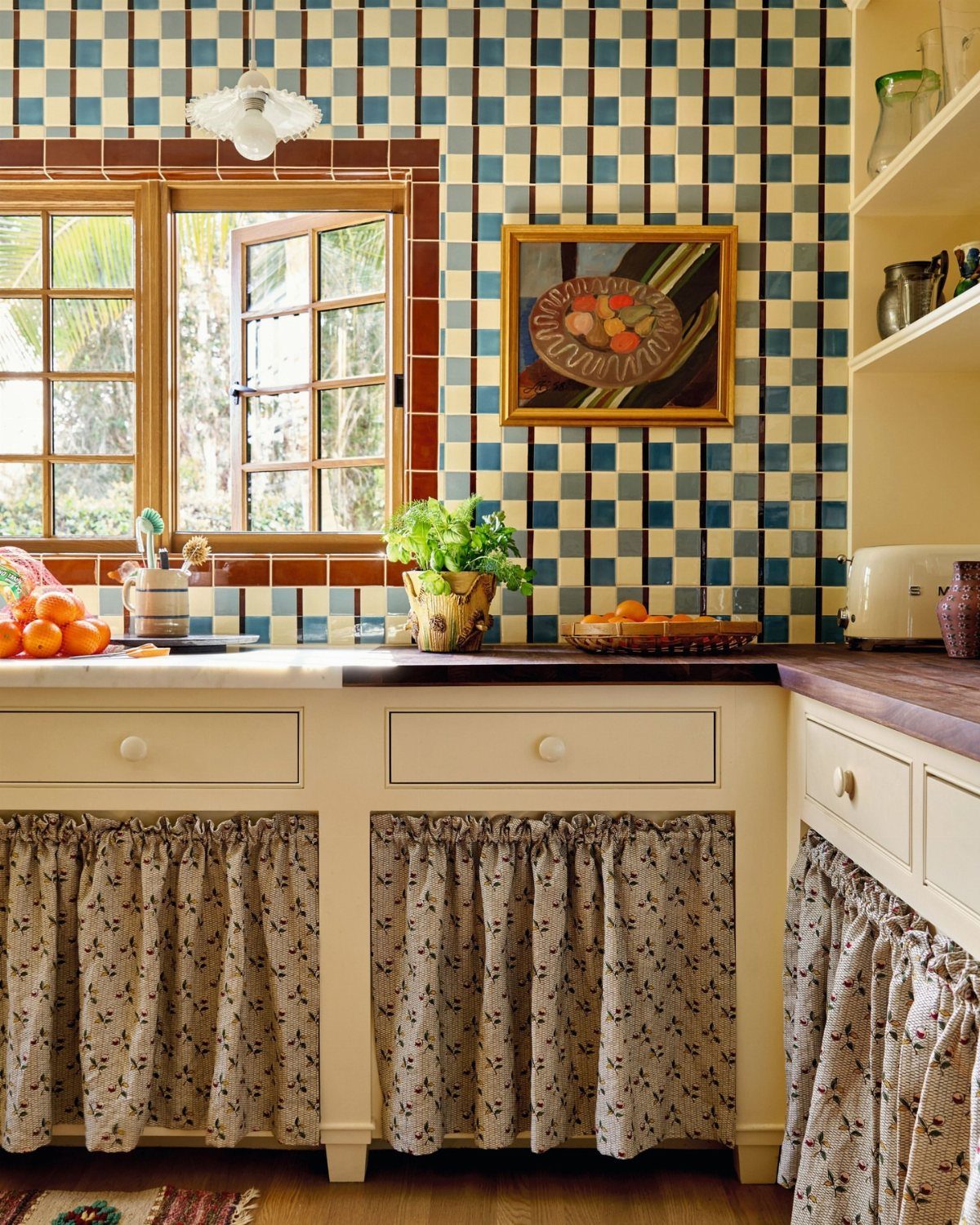
Fabric hung where a lower cabinet door would be gives a kitchen an instant cottage feel. Cream cabinets, a wood counter and checkered tile are a good backdrop for a floral print.
Choose a fabric that shares a color with the tile or the walls. Whatever sits behind a skirt is hidden, so I would keep pots and baskets there and leave the daily dishes behind real doors.
10. Farmhouse Sink
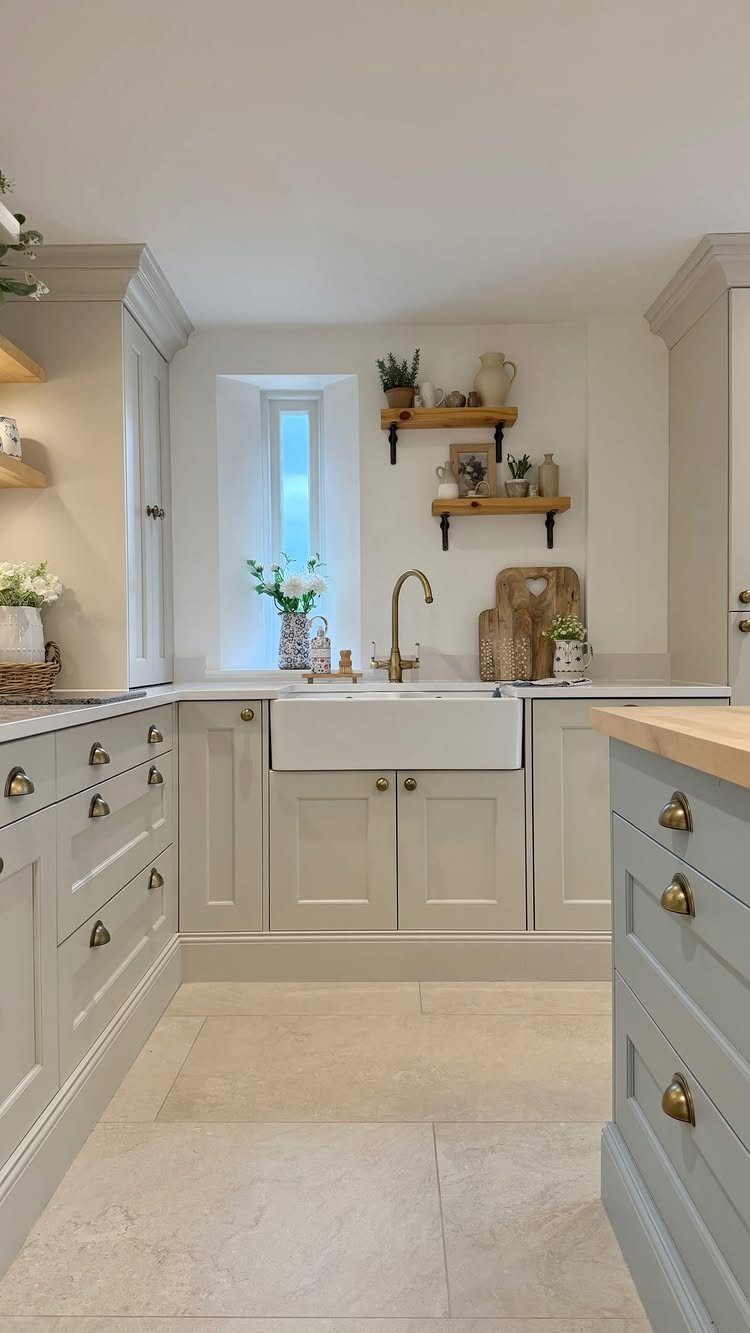
Measure the cabinet before you fall for a sink. An apron-front sink’s exposed front replaces part of the cabinet face, so the base cabinet has to be built or cut to fit it.
A deep white basin under a window is the main attraction in a kitchen like this one. Light gray cabinets and dark hardware let it stand out without extra decoration.
11. Open Kitchen Layout
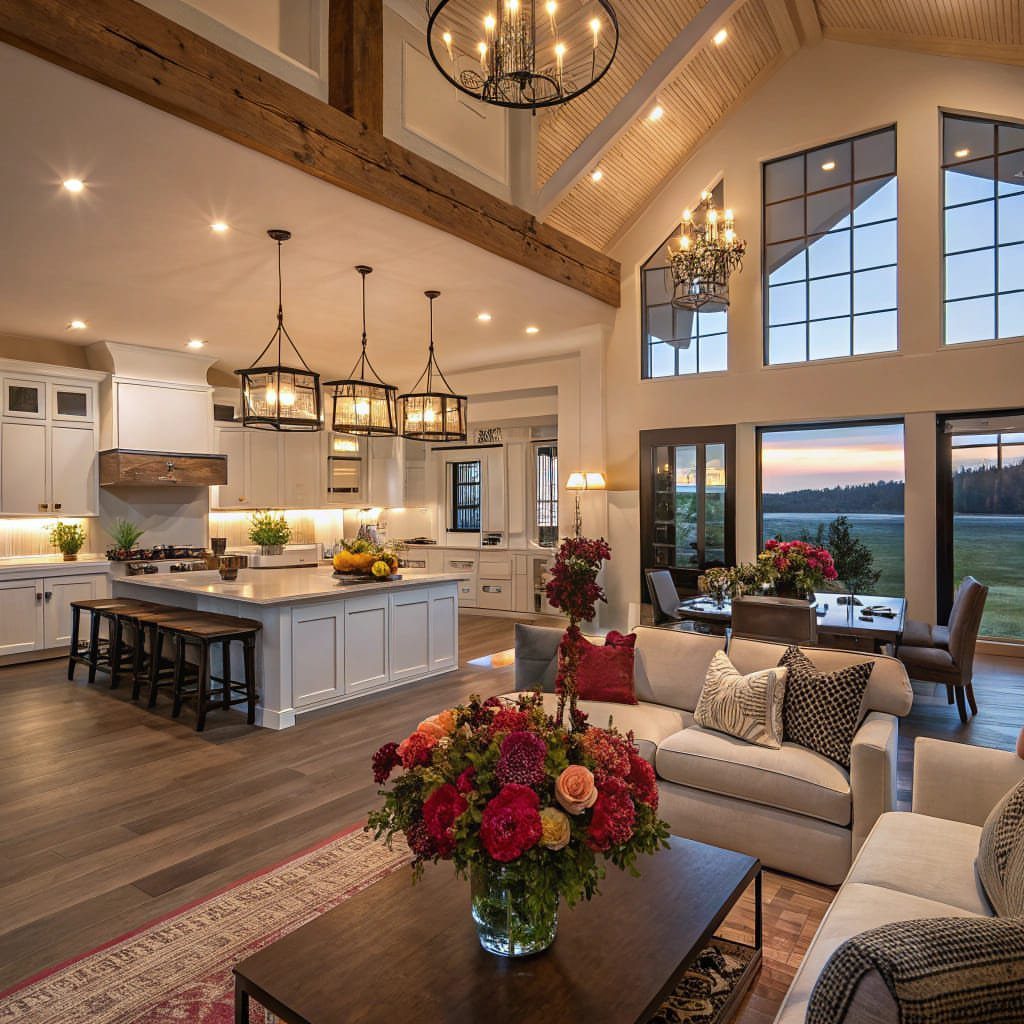
A kitchen that opens onto the sofas and the dining table makes cooking part of the conversation. High ceilings and wood beams help the three zones read as one room.
Keep the finishes consistent across the whole space, as the white kitchen and beige seating do here.
If taking out a wall is more than you want to tackle, a wide opening gets you most of the effect. Have a professional confirm whether any wall is load-bearing before you cut.
12. Wood Countertops
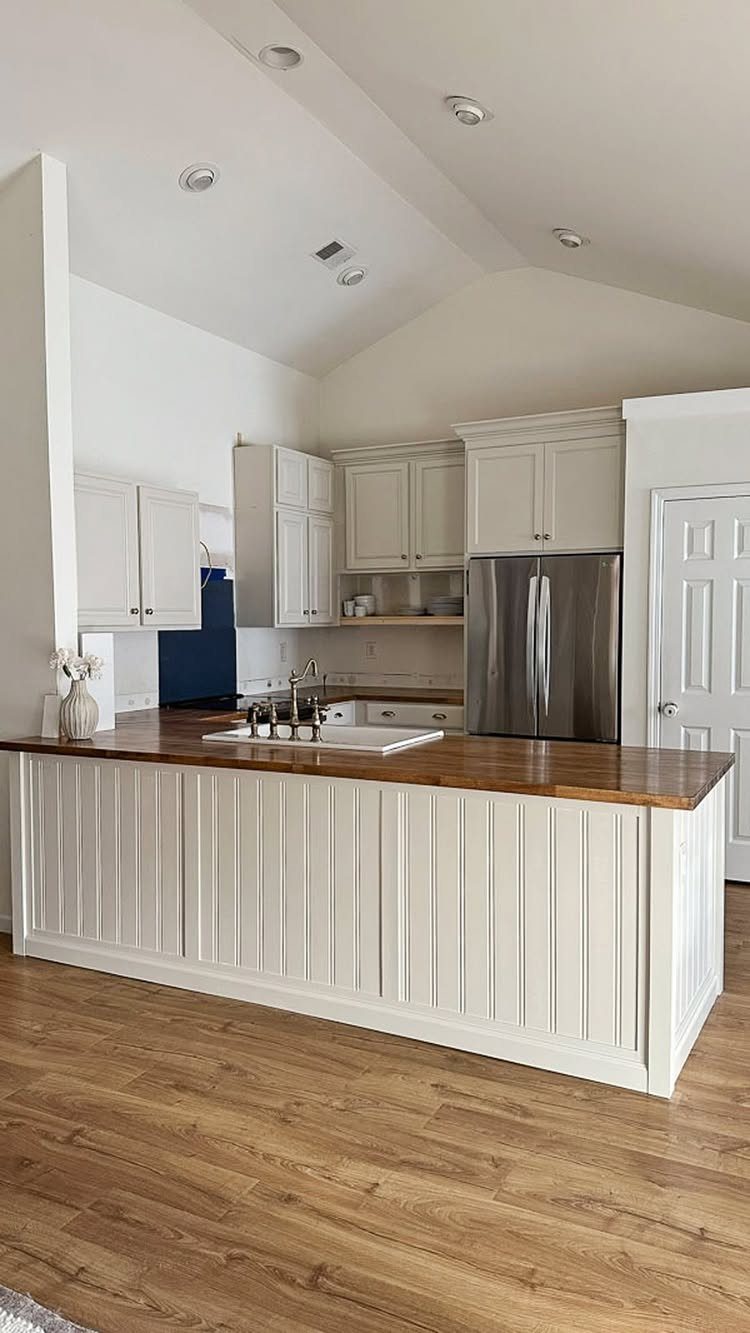
Butcher block gives a white island a warm top that picks up the light wood floor. Beadboard on the island’s side keeps the look rustic without extra decoration.
I would put wood on the island and use a different material on the perimeter counters.
Reclaimed wood is a good alternative if you want more variation in the grain. Expect knife marks and rings over time, and let them become part of the look.
13. Concrete Countertops
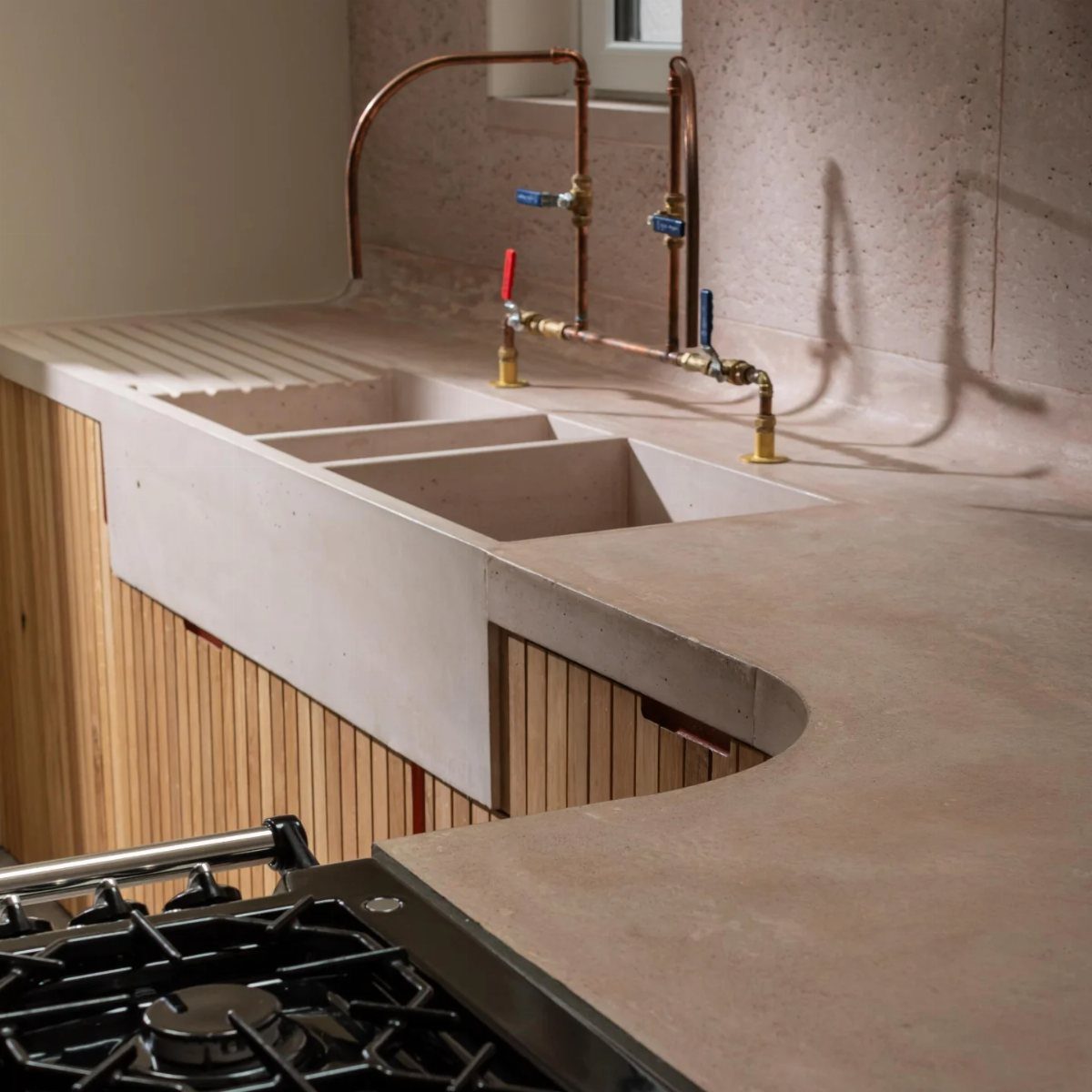
Concrete is an affordable counter with a handmade look, and the slight mottling in the color is part of the appeal.
Light gray works well with light wood cabinets and copper fixtures, as here, because the surface reads as soft instead of industrial.
Ask whoever pours it about sealing.
Concrete is porous, so an unsealed top picks up stains, and hairline cracks can appear over time. If that bothers you, choose another material.
14. Green Cabinetry
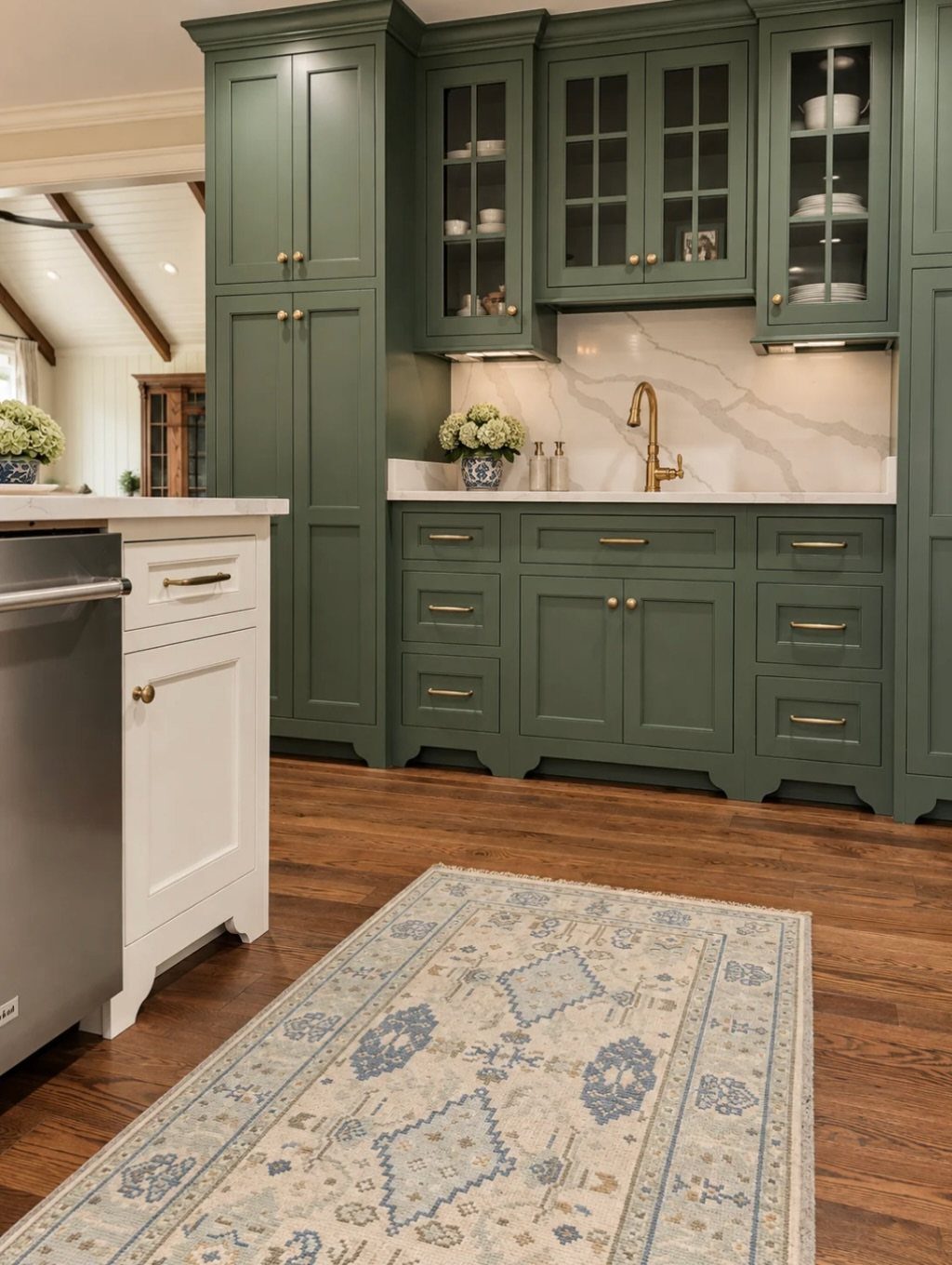
Sage green behaves like a neutral, which makes it an easy first color for cabinets. Gold hardware and white marble keep it fresh, and a hardwood floor grounds it.
If a full run of green feels like a lot, paint only the island or the lower cabinets. Tape a swatch to the wall and check it in morning and evening light before you buy paint.
15. Earthy Colors
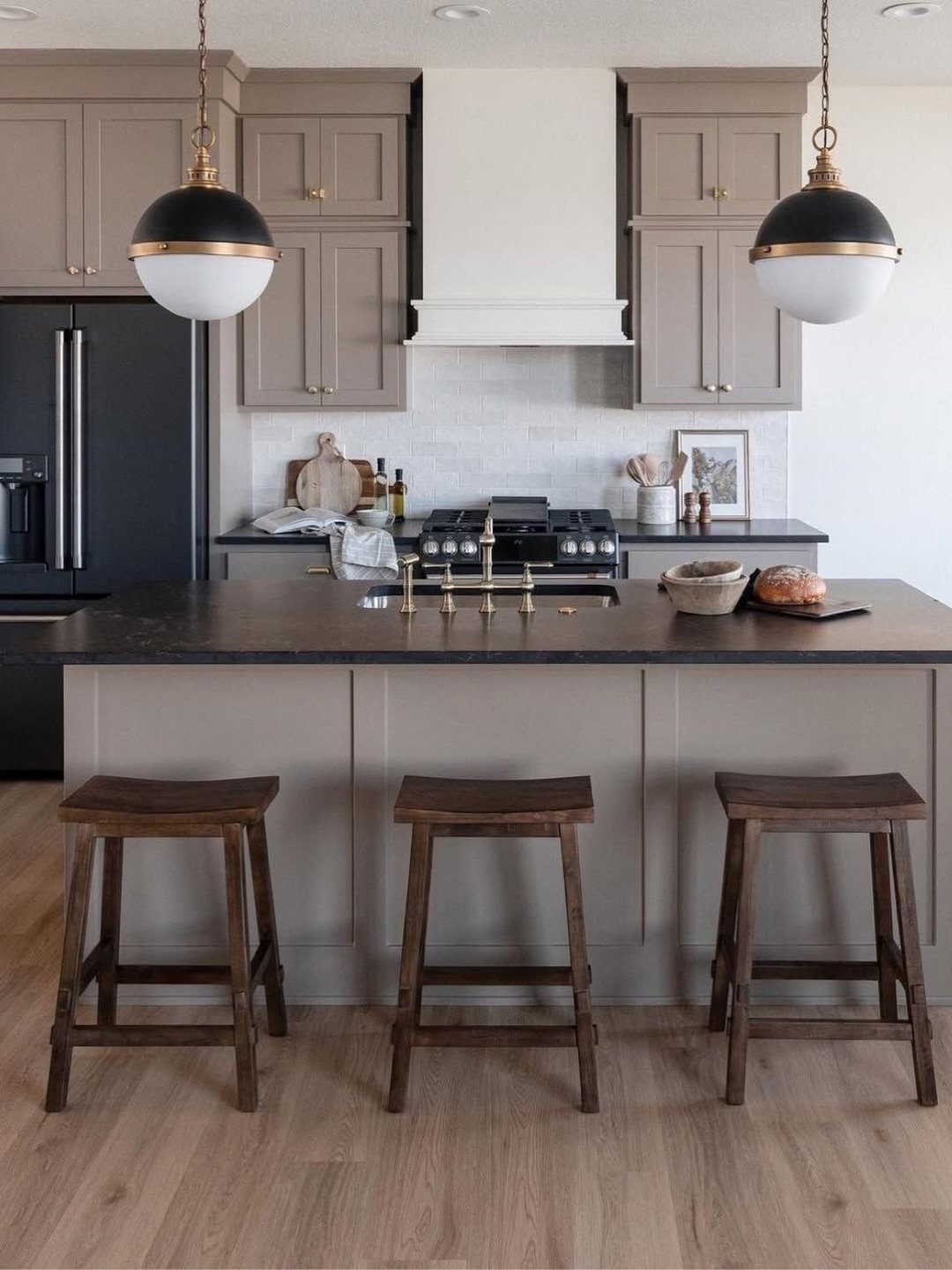
Vary the depth of each tone in the palette, so the room has contrast without a loud color.
Taupe shifts with the light, so look at a sample after dark under your own bulbs. I would let wood supply the warmth and keep the metal and lighting simple.
16. Farmhouse Table
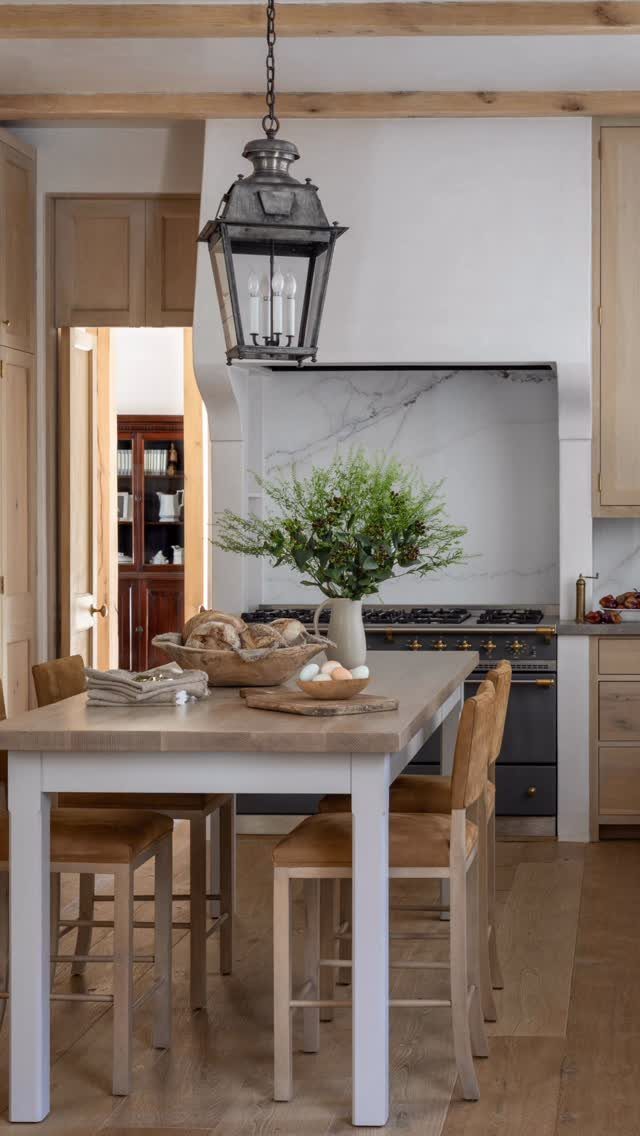
A farmhouse table can stand in for an island when the room is too tight for one. It also seats people at a normal height, which makes it better for lingering over a meal than a counter is.
Chairs pull out, so check that someone can still walk behind a seated guest before you settle on a table size.
Antique tables vary in height, so sit at one before buying and check that your chairs slide under the apron.
17. Farmhouse Lighting
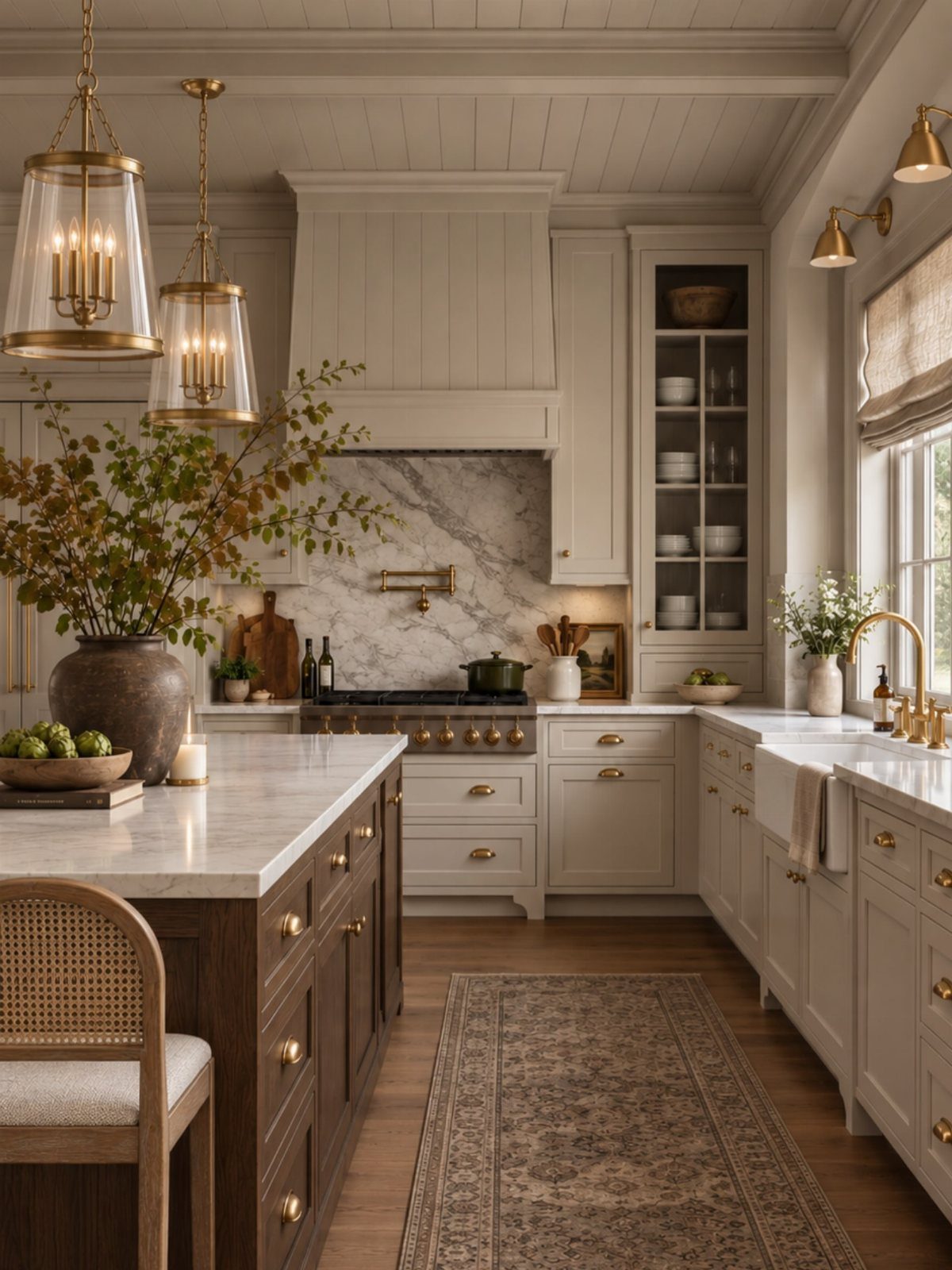
Hang pendants lower than feels natural, so they light the island instead of the ceiling. Large lanterns, like these gold ones, give a beamed kitchen a focal point.
Match the metal to your cabinet hardware so the fixtures look chosen, not added later. Big fixtures over an island look better to me than a row of small ones.
18. Kitchen Island
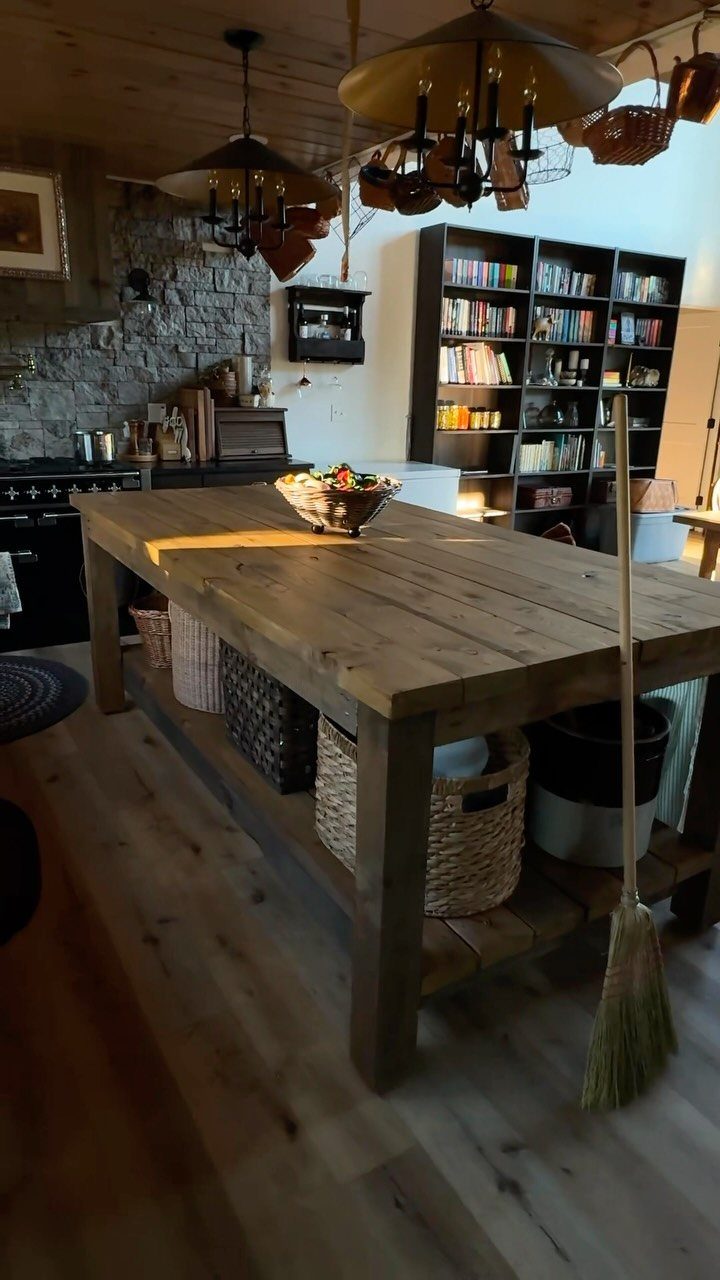
An island earns its floor space when it does 2 jobs. A lower shelf with baskets holds towels, produce or serving pieces, and the top stays clear for prep.
Stools along one side turn it into a casual bar.
I like a wood island against stone walls because the rough and smooth textures balance each other. Pick baskets in one material so the shelf stays calm.
19. Warm Wood Floors
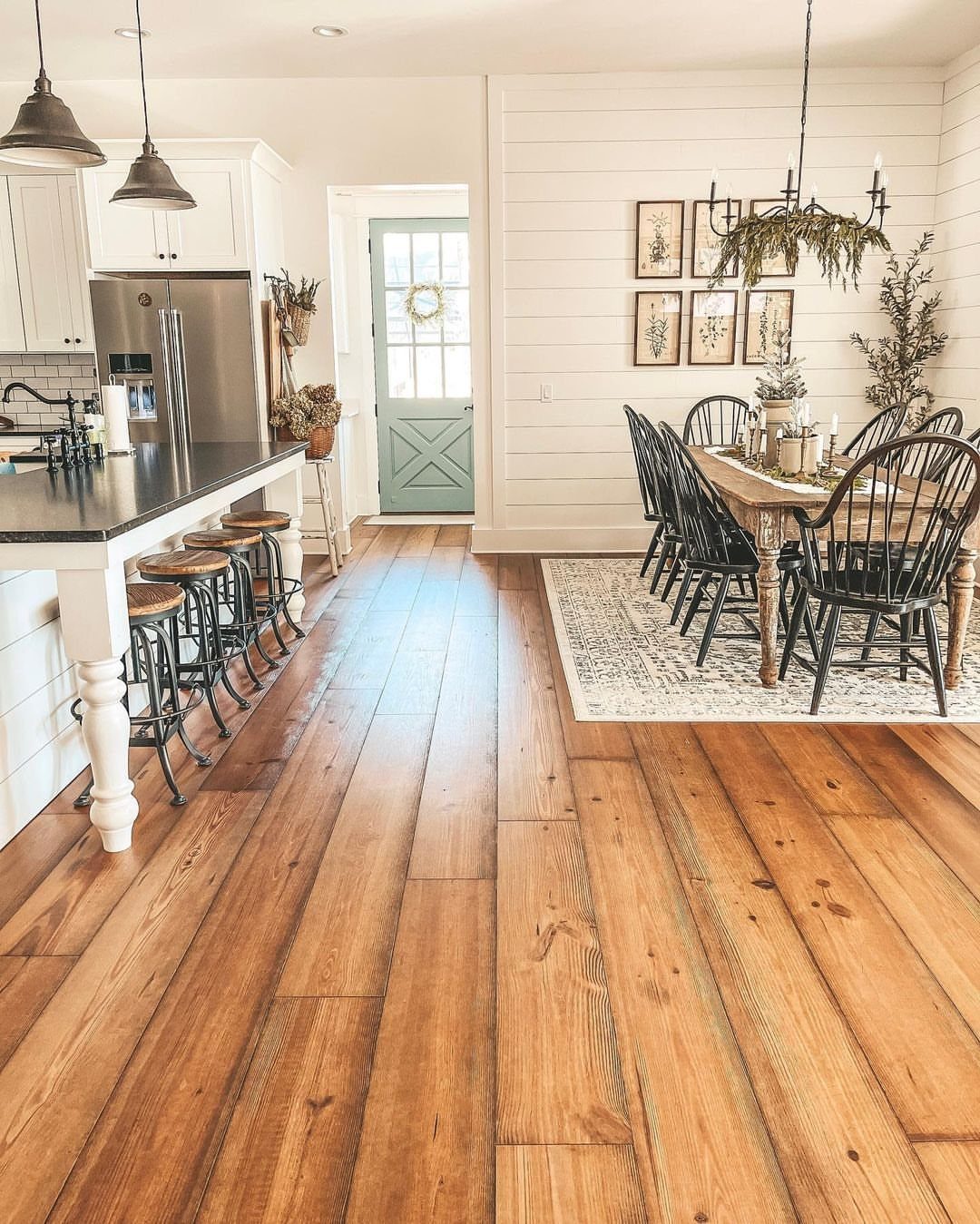
Wide planks in a warm tone give a white kitchen something solid to stand on.
Wood floors do most of the warming in a rustic kitchen, which lets a black island and black stools read as accents instead of weight, even next to shiplap walls.
I would pick wide boards over narrow ones for an open kitchen and dining area, since fewer seams look calmer. Carry the same wood tone through both zones so the floor ties them together.
20. Natural Fabrics
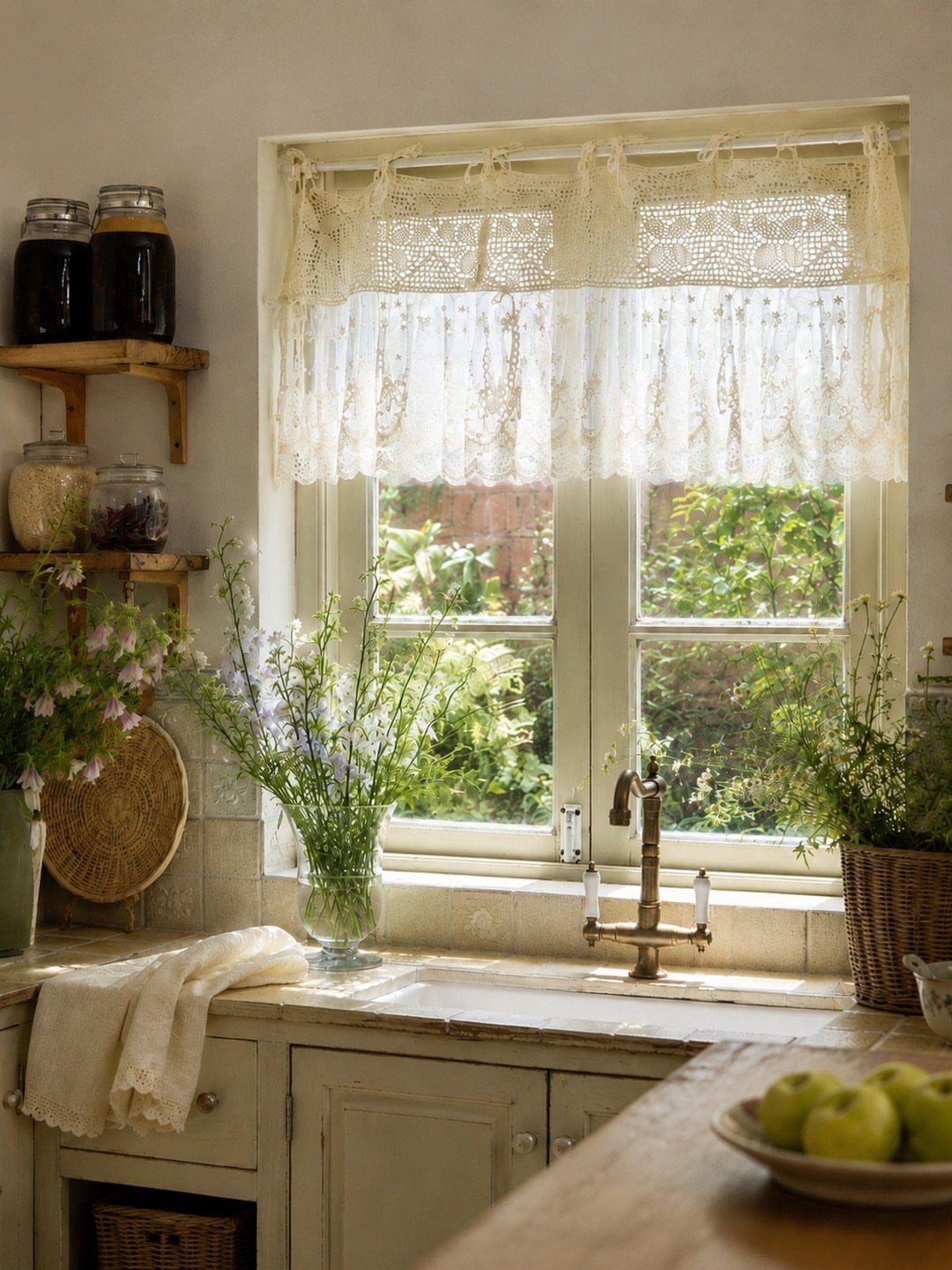
Cafe curtains cover only the lower half of a window, which keeps the daylight and the view above them. Lace gives a sink window a cottage feel, and a cream cloth on the counter repeats the softness.
Stay with cream or white so the fabric sits easily beside wood and glass jars. Fresh flowers on the sill finish it, and I would stop there.
21. Farmhouse Island
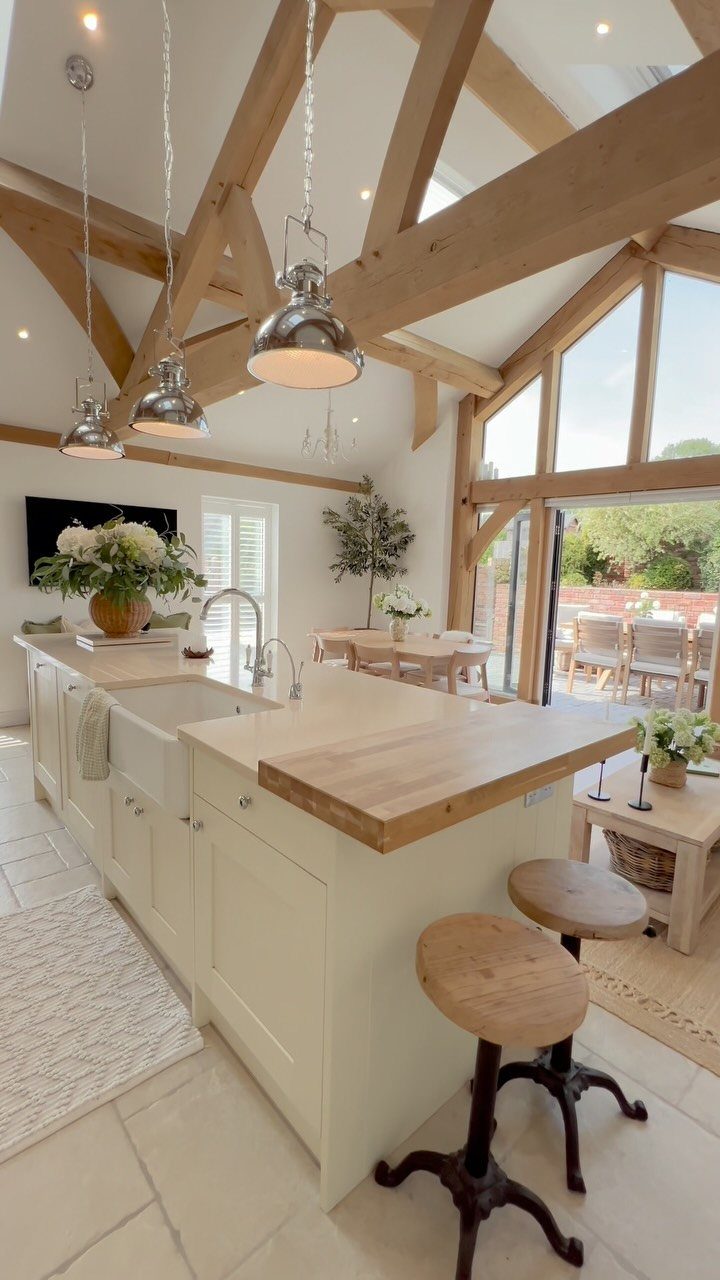
A thick wood top on a painted base makes an island read as a piece of furniture instead of a block of cabinets.
Cream paint keeps the base quiet, so the top and the wooden stools carry the rustic look, and exposed beams overhead match them.
A sink in the island adds plumbing work, so price that out before you commit. On a tight budget, I would keep the sink on the wall and spend on the top.
22. Natural Stone Flooring
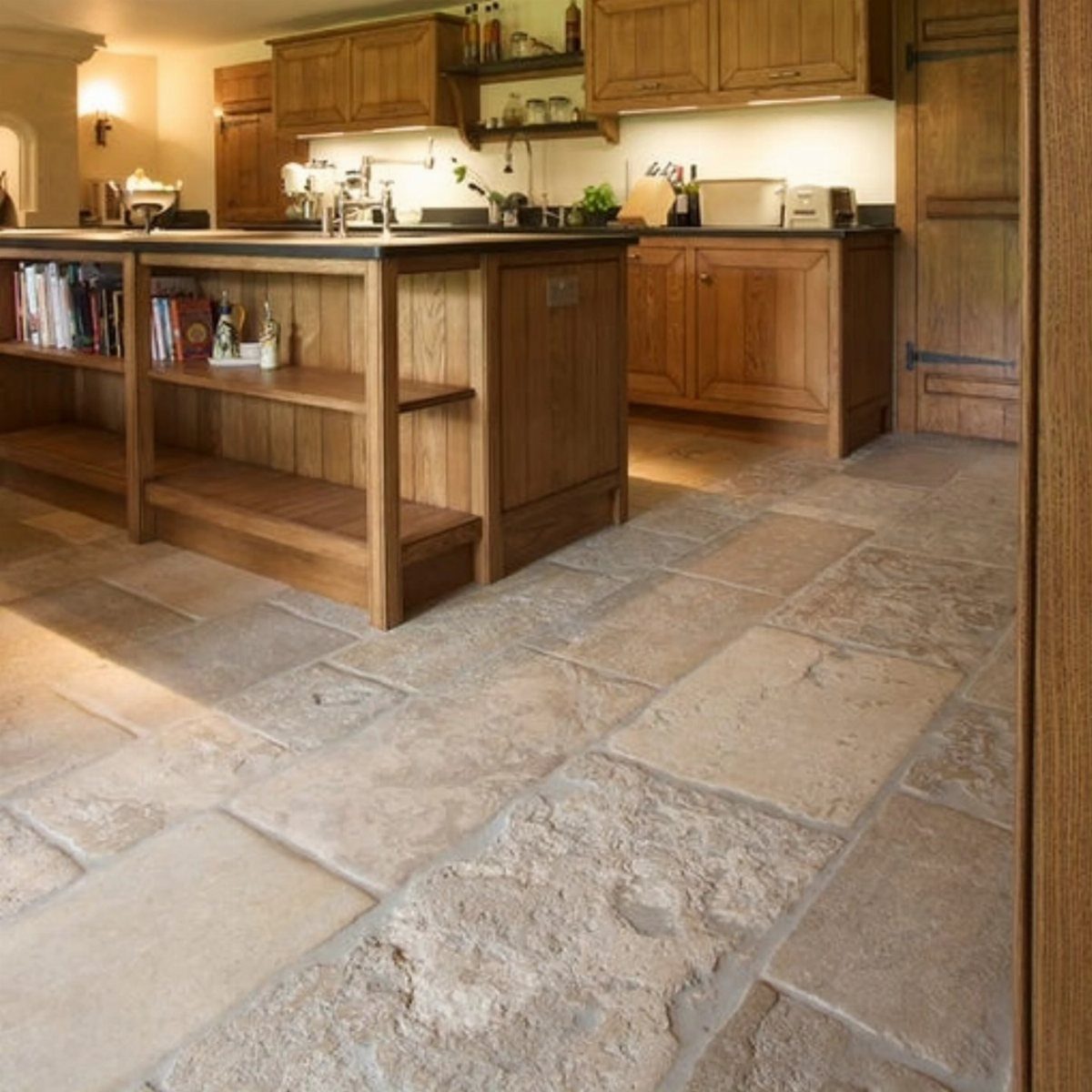
Large stone tiles with a rough surface give a wooden kitchen a floor with real presence. Beige stone sits quietly under wood cabinets, and the variation from tile to tile does the job a pattern would.
I like big tiles here because fewer grout lines make the floor look like one piece of ground. Check a tile sample beside your cabinet wood by a window and again at night before buying.
23. Warm Neutrals
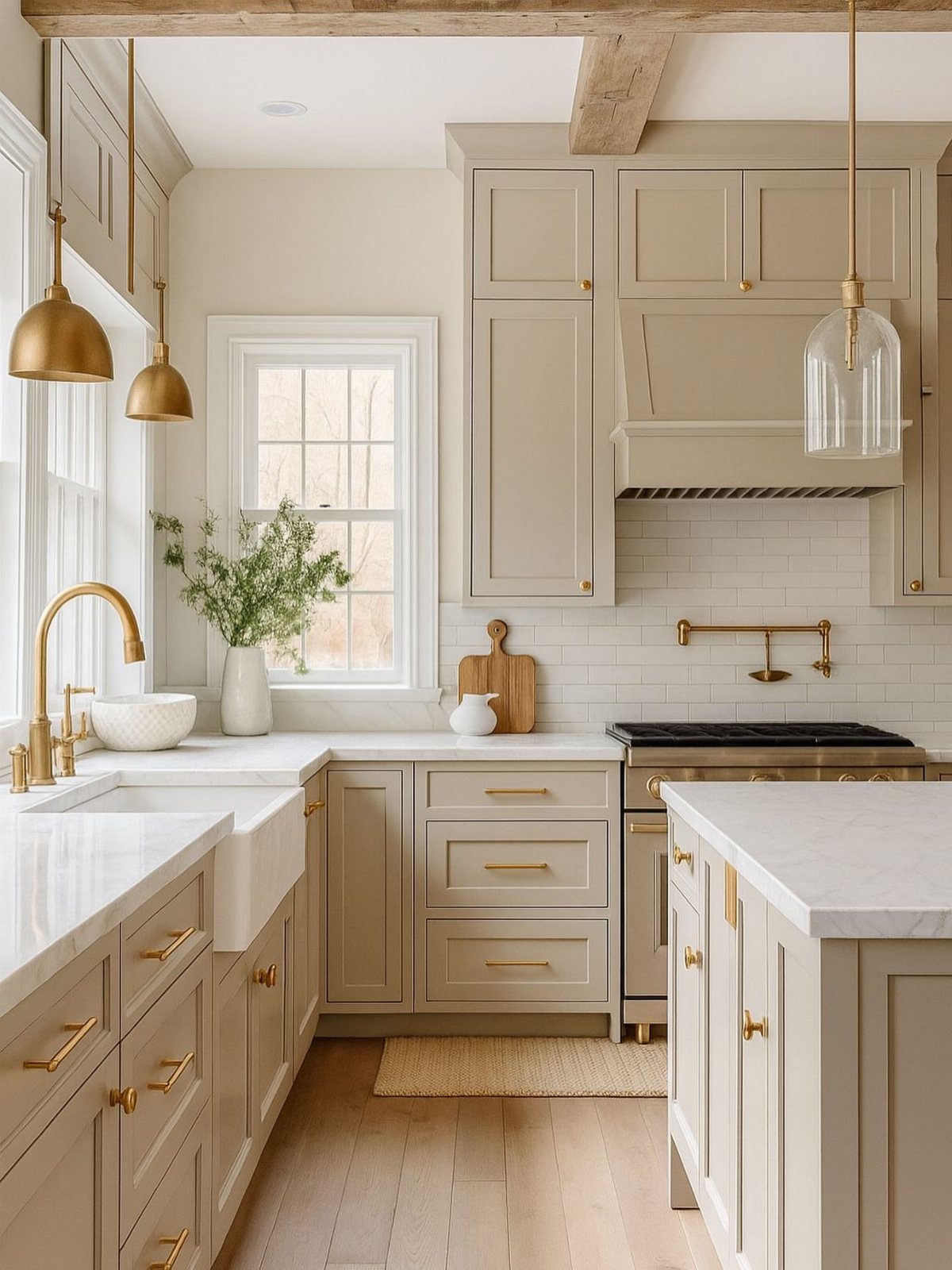
Beige cabinets, white marble and light wood floors stay in one warm family, so nothing fights for attention. Gold hardware and a wooden beam add just enough contrast.
Natural shades suit rustic and craftsman kitchens best.
I would choose one cabinet beige, then let the counters, floor and hardware sit a step lighter, darker or warmer than it. A farmhouse sink adds a softer shape without adding another color.
24. Vintage Details
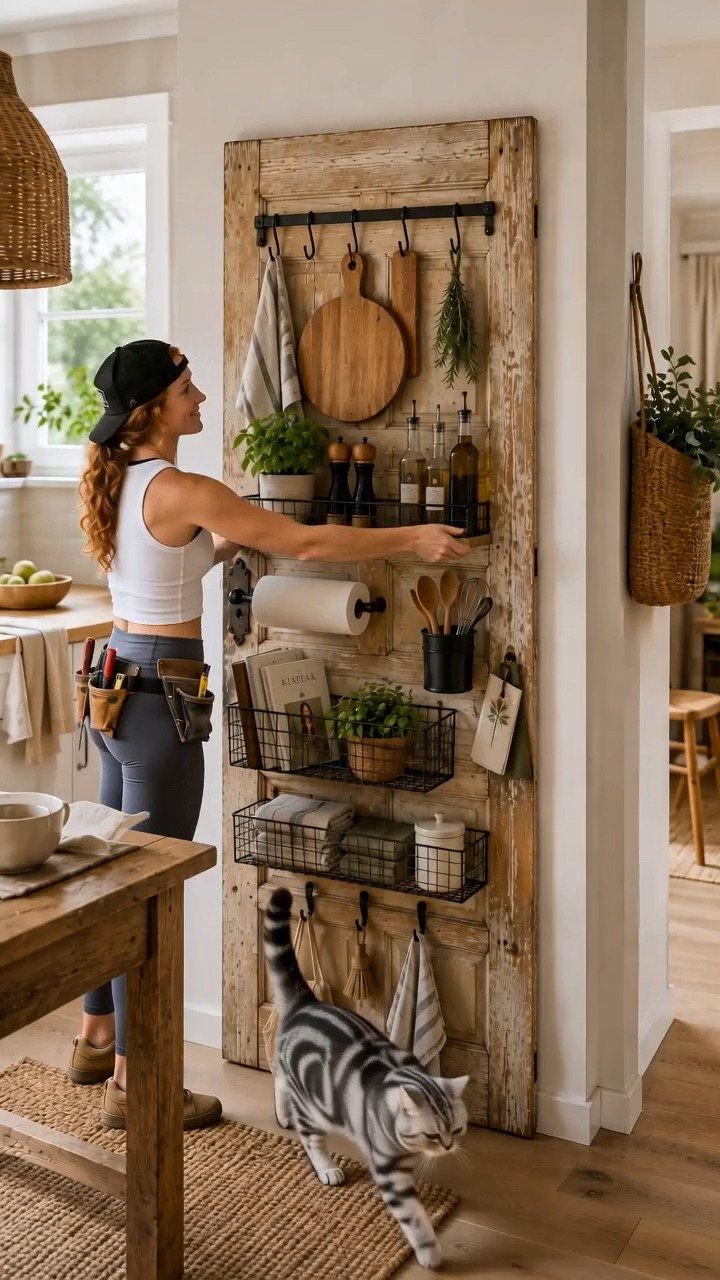
A wall organizer in weathered wood moves everyday tools, a plant and a book off the counter and onto the wall. Antiques, found objects and aged finishes give a kitchen a sense of history that new pieces can’t fake.
Pick objects you will actually use. I would hang a few and leave the wall around them bare, so each piece reads as found instead of bought as a set.
25. Exposed Beams
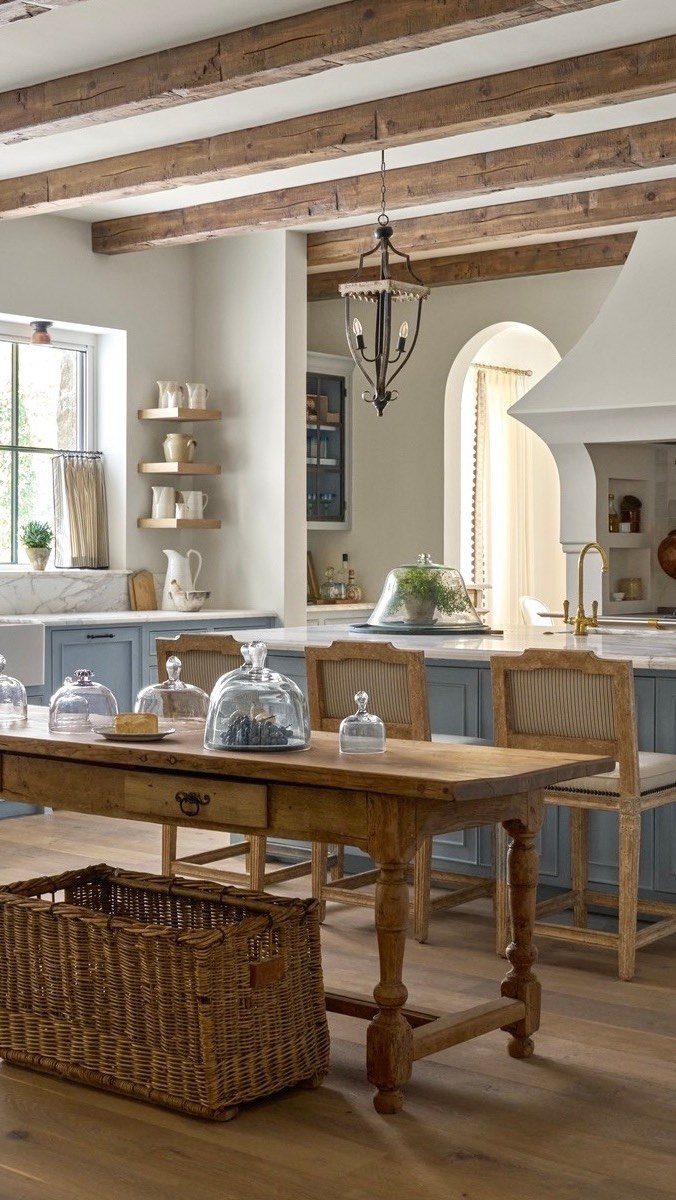
Heavy timber beams make the ceiling a feature instead of blank space, and they pair well with painted cabinets. Blue lower cabinets, a wooden table and a wicker basket all sit comfortably under dark wood overhead.
A hanging lantern fixture suits a beamed room, since it fills the open height without crowding it.
I would keep the beams the dominant wood and let the table and basket stay lighter in tone, so the ceiling doesn’t feel heavy.
26. Copper Accents
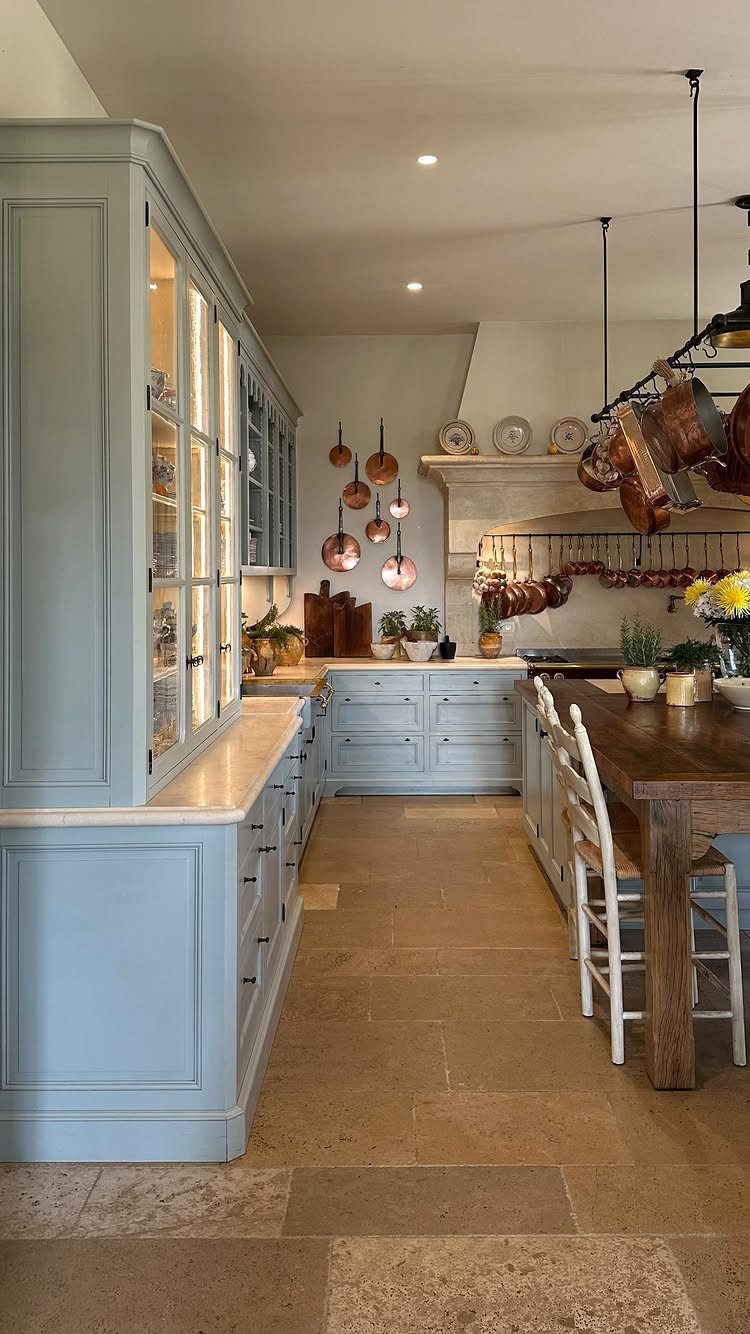
Copper gets its warmth from cookware you actually use, so hang pots where you can reach them. Against light blue cabinets and a stone floor, the orange-brown metal reads as the warm note in a cool room.
A wall rail plus a few ceiling hooks gives you 2 heights to fill. I would stay with one metal for the hanging pieces and keep the wooden table bare, so the copper is the only shine in the room.
27. Vintage Appliances
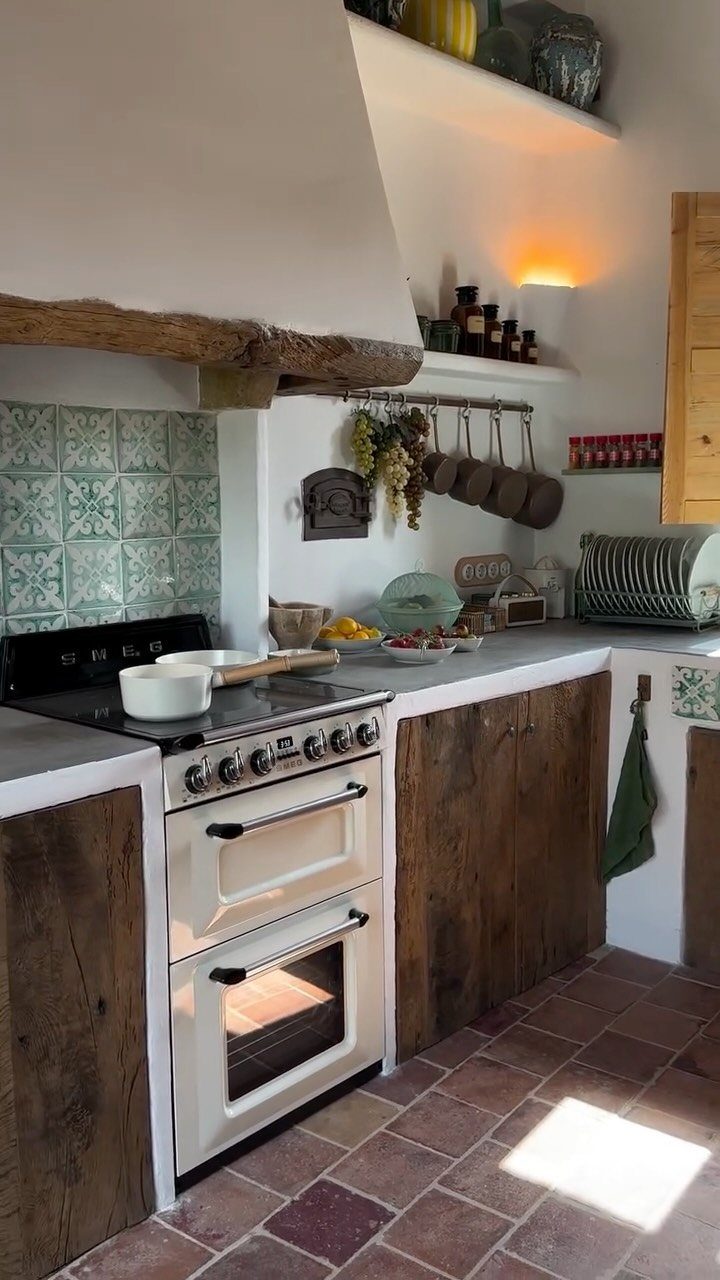
A cream double-oven range in the vintage style gives a kitchen an anchor with a past.
A vintage appliance looks like it belongs when the room shares its warm tones, so wood cabinets, terracotta floor tile and a patterned backsplash all work in its favor.
Retro looks cost more than a basic range, so I would spend on the stove and keep the refrigerator and dishwasher plain. Cream sits more softly against wood than bright white does, which suits a rustic room.
28. Range Hood Feature
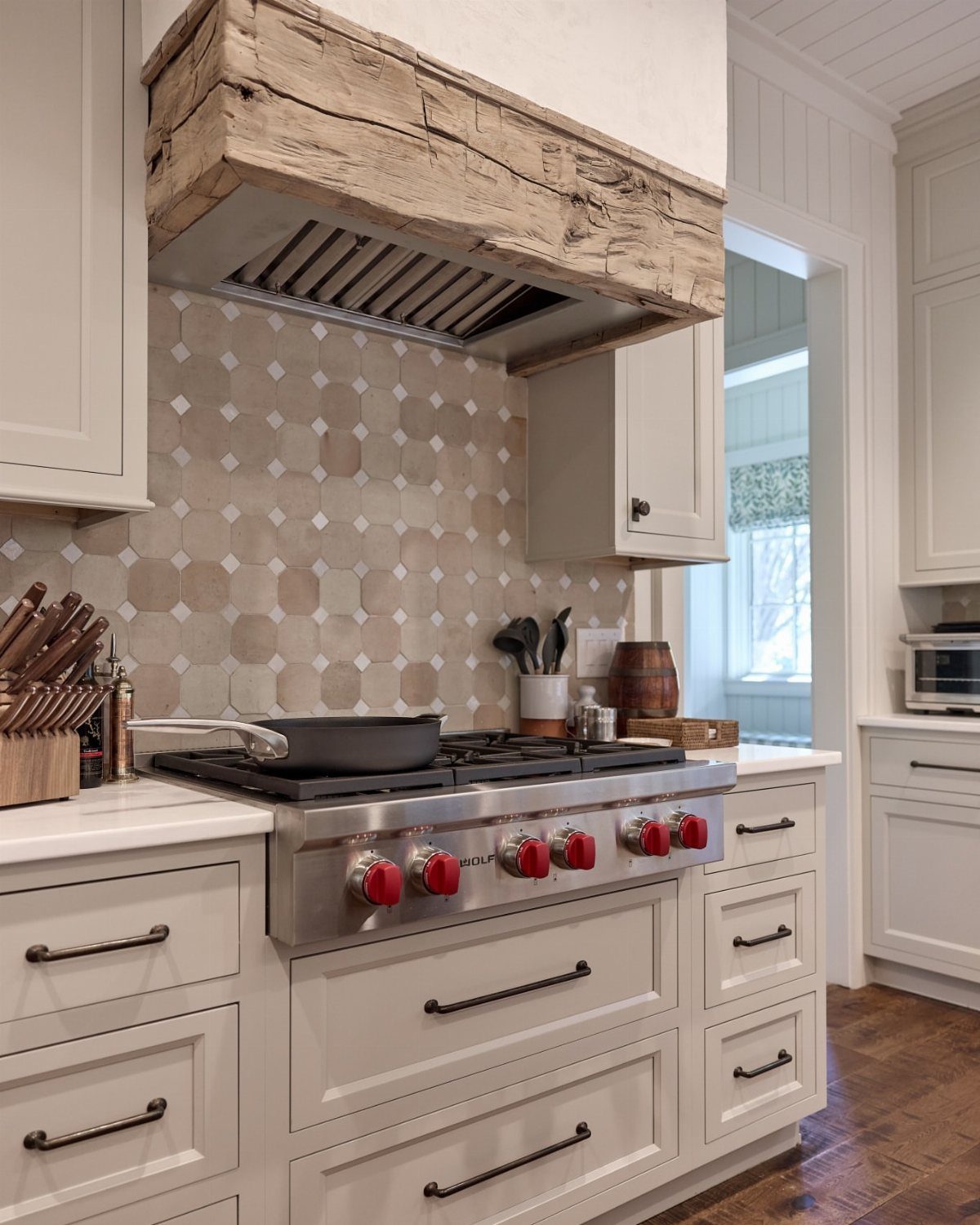
Wrapping the hood in reclaimed wood turns a utility item into the kitchen’s centerpiece. Off-white cabinets and beige hexagonal tile stay quiet around it, so the grain and weathering get all the attention.
If you want this look, I would keep the backsplash a single soft color and let the hood carry the texture. A professional-style stainless range under a rough wood hood gives the room a clean contrast to all that texture.
29. Kitchen Seating
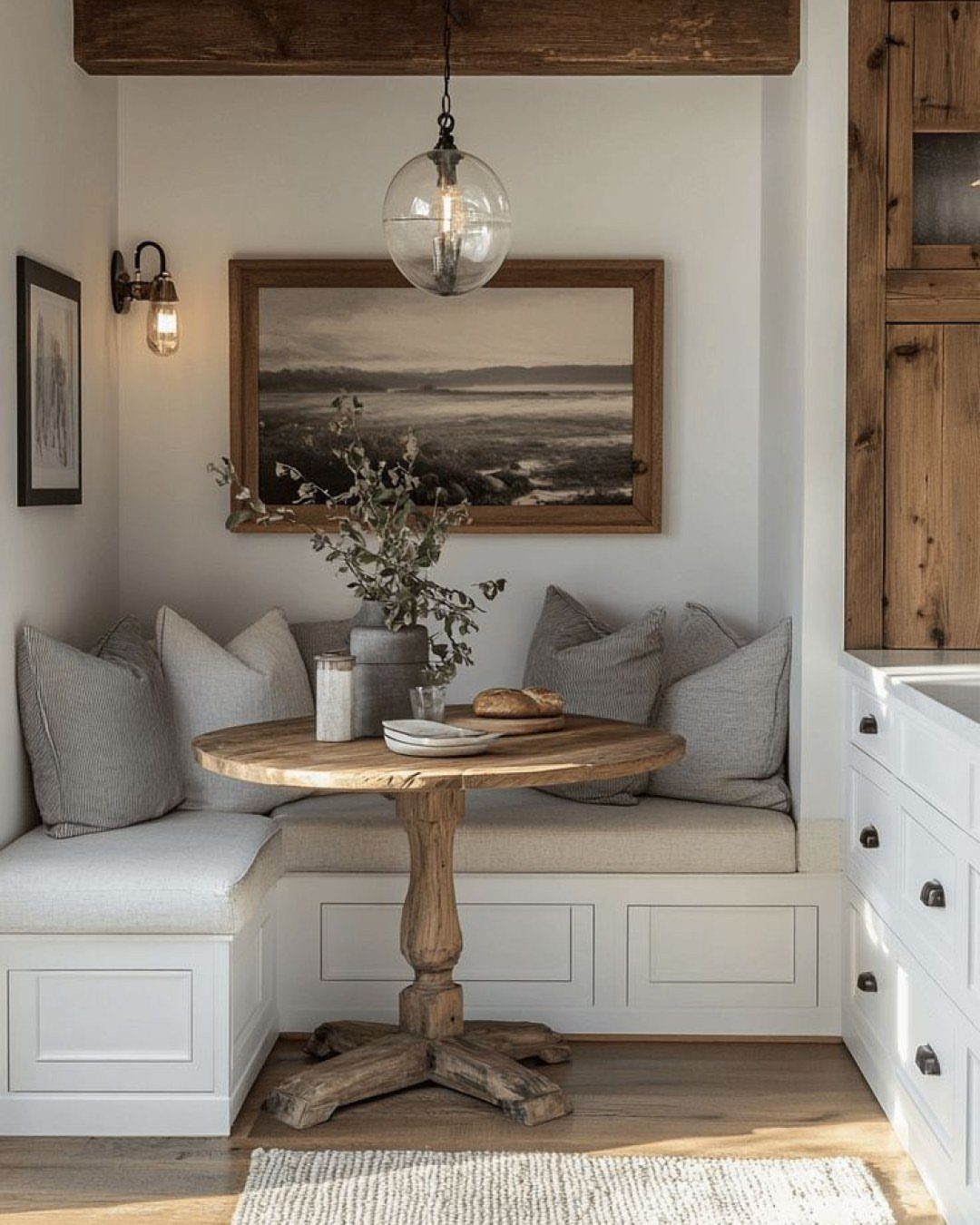
A built-in bench along 2 walls fits more people into a corner than separate chairs would. Paired with a round pedestal table, there are no table legs to bump, so sliding in and out is easy.
Grey cushions make the bench comfortable and easy to swap when you want a new look.
30. Two-Tone Cabinets
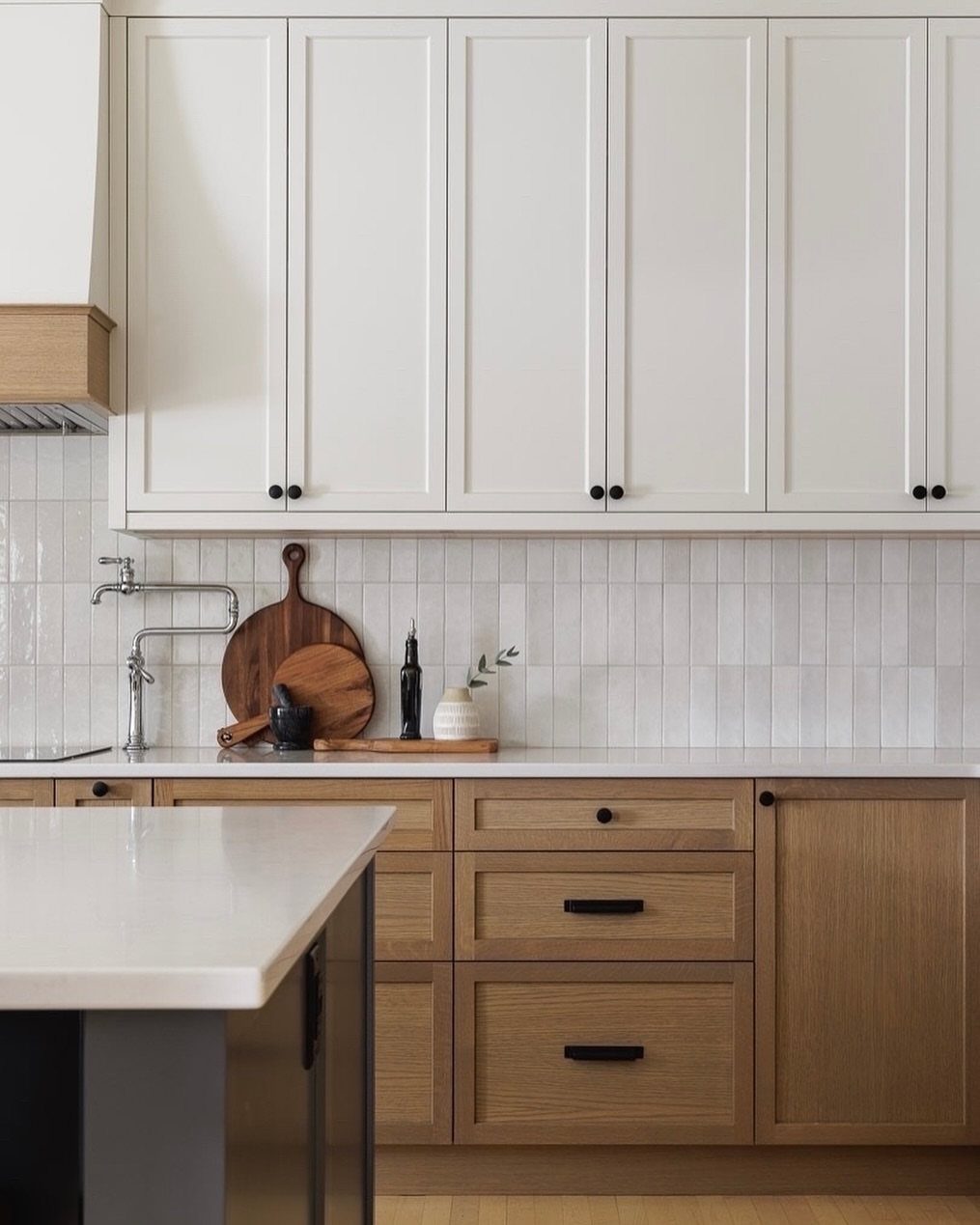
White uppers over light wood lowers keep the top of the kitchen airy while the base gets warmth and grain. White counters and white tile tie the 2 finishes together, so the split feels intentional.
Put the wood on the lower run, where it’s closest to the eye and floor. Wood below with paint above also lets you repaint the uppers later without touching the lowers, and I would keep to those 2 finishes only.
31. Kitchen Curtains
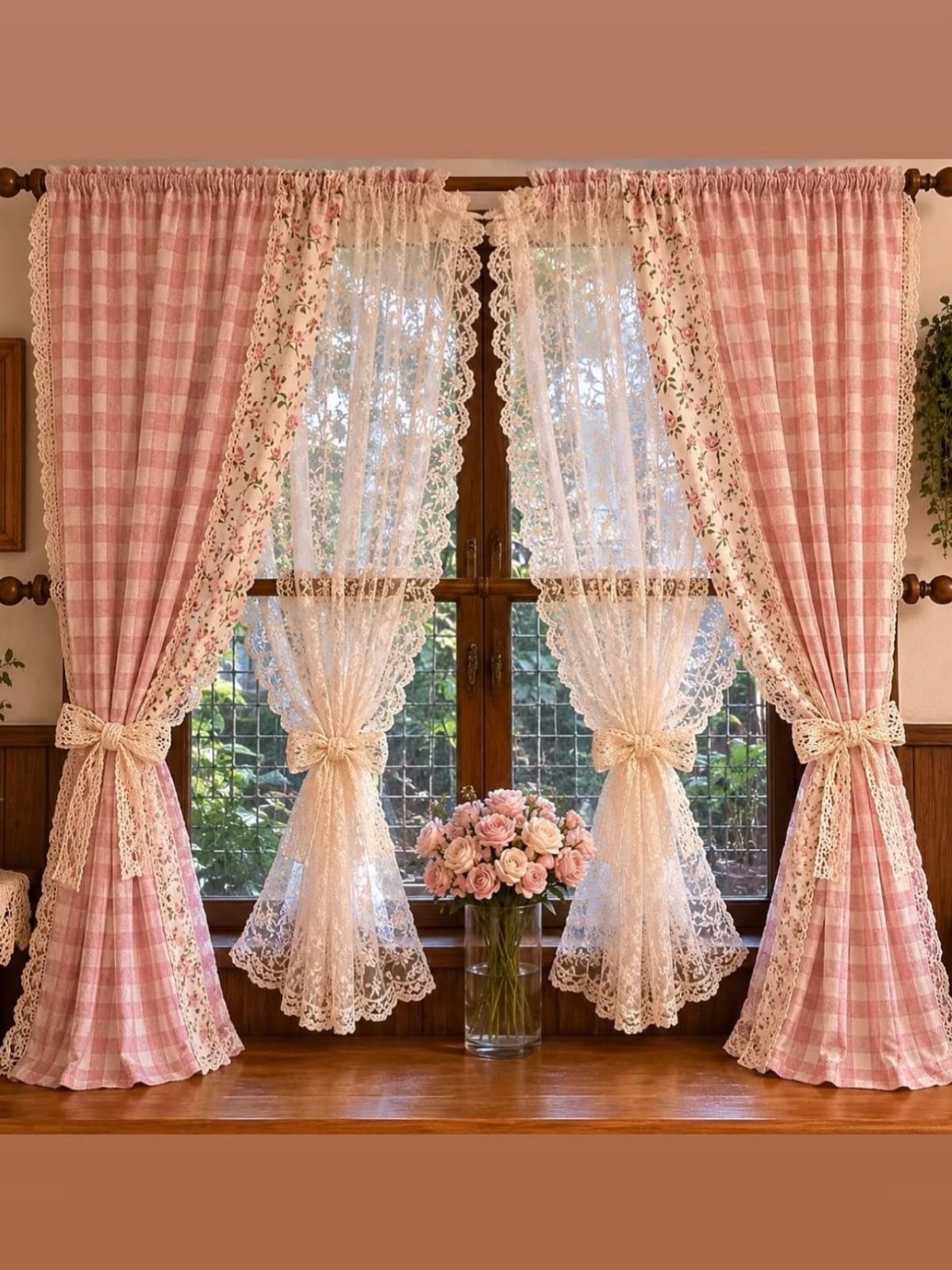
Cafe-length curtains in a small gingham check, trimmed with lace and tied back with bows, add color at the window without blocking the view.
Pink is a bold choice, so I would keep everything else in the kitchen plain and let the fabric be the one soft note. Tie-backs let you open the whole window on a bright morning.
32. Minimalistic Rustic Kitchen
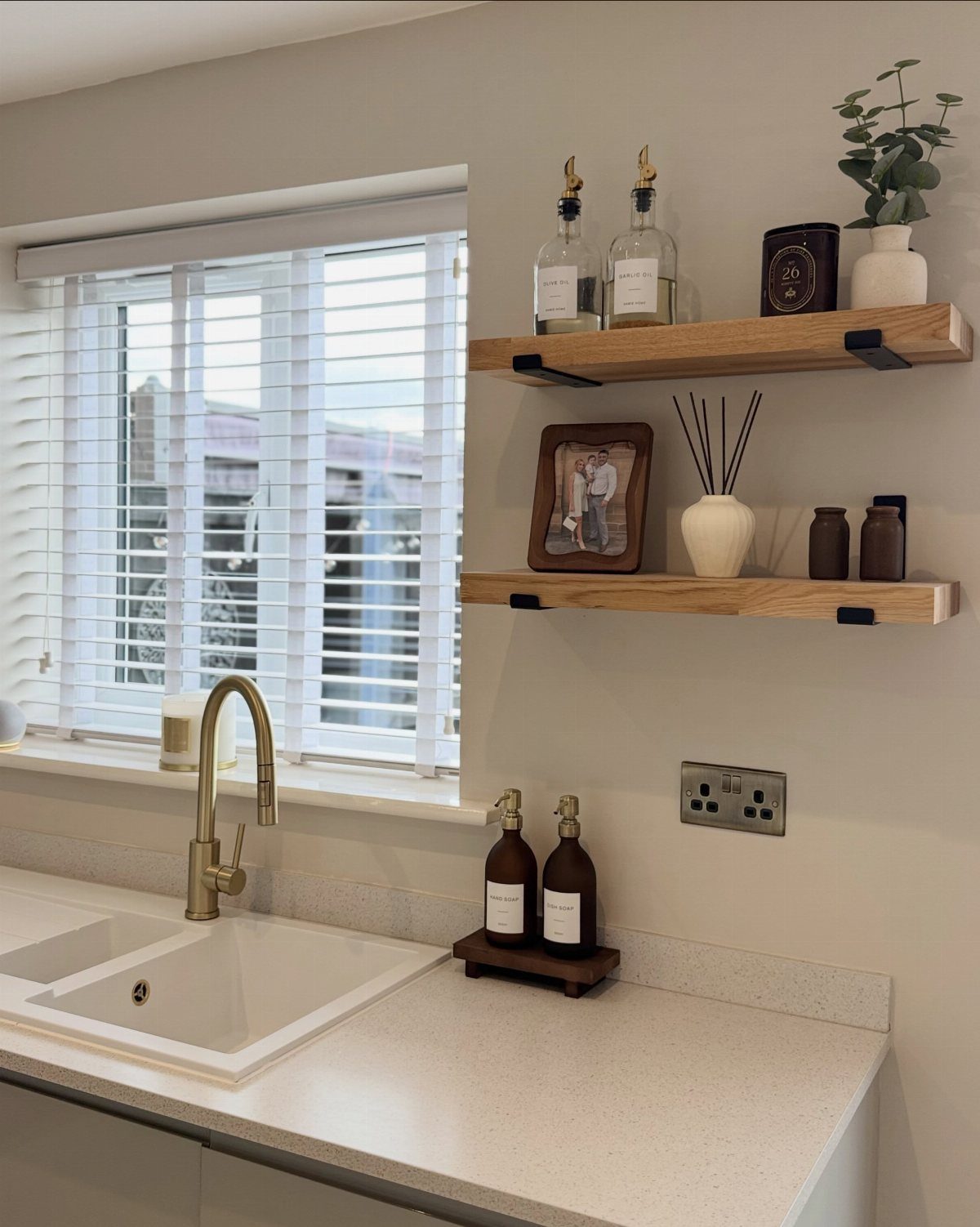
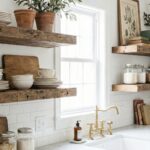
Two floating wood shelves over a white sink and gold faucet are enough to make a kitchen feel rustic. Bottles, a candle, a plant and a framed photo give the wall some life, and the white keeps it quiet.
I would stop at 2 shelves. Leave gaps between the objects so each one reads clearly, and let the faucet be the only metal.
33. Bathed in White
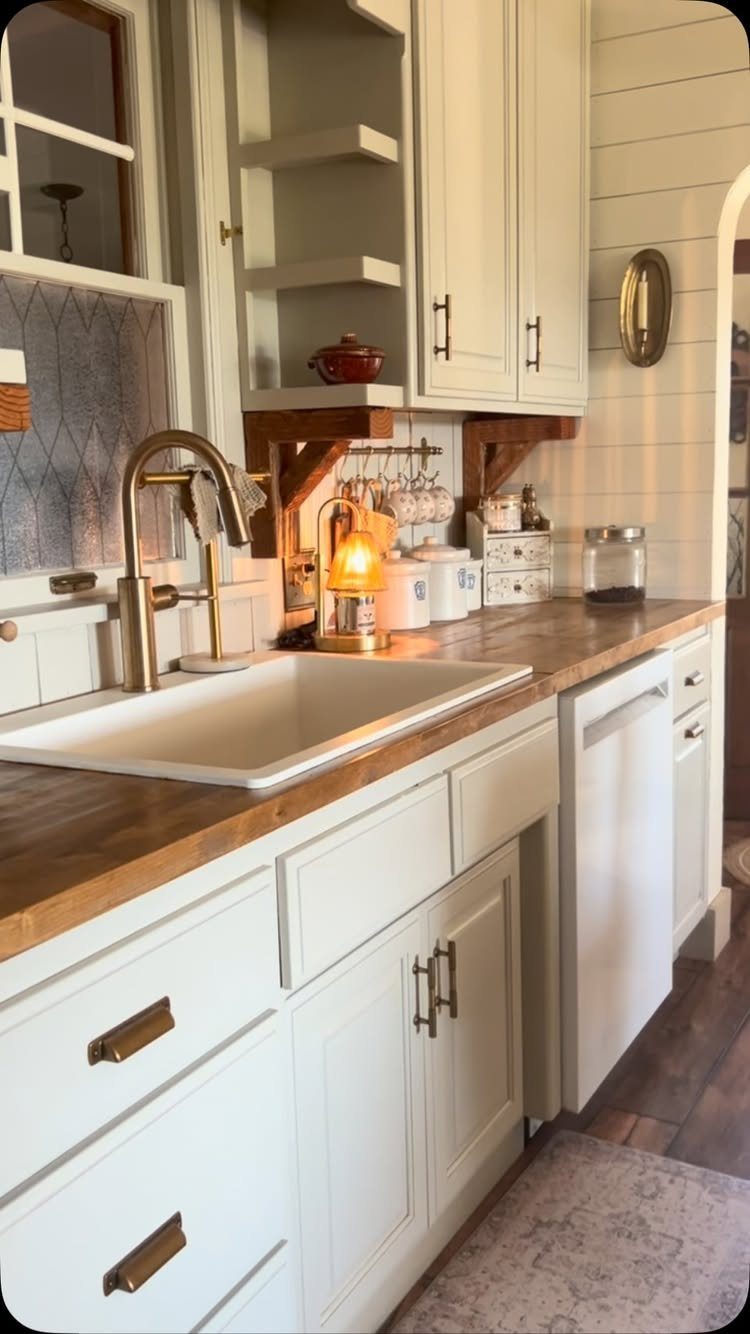
White does not have to look flat. Shaker cabinets, a farmhouse sink and shiplap all add shadow lines and shape, and a wood countertop warms the whole room.
Brass hardware and open shelving break up the white without adding a second color. Stay with one white across cabinets and walls so the texture, not the shade, does the work.
34. Reclaimed Wood
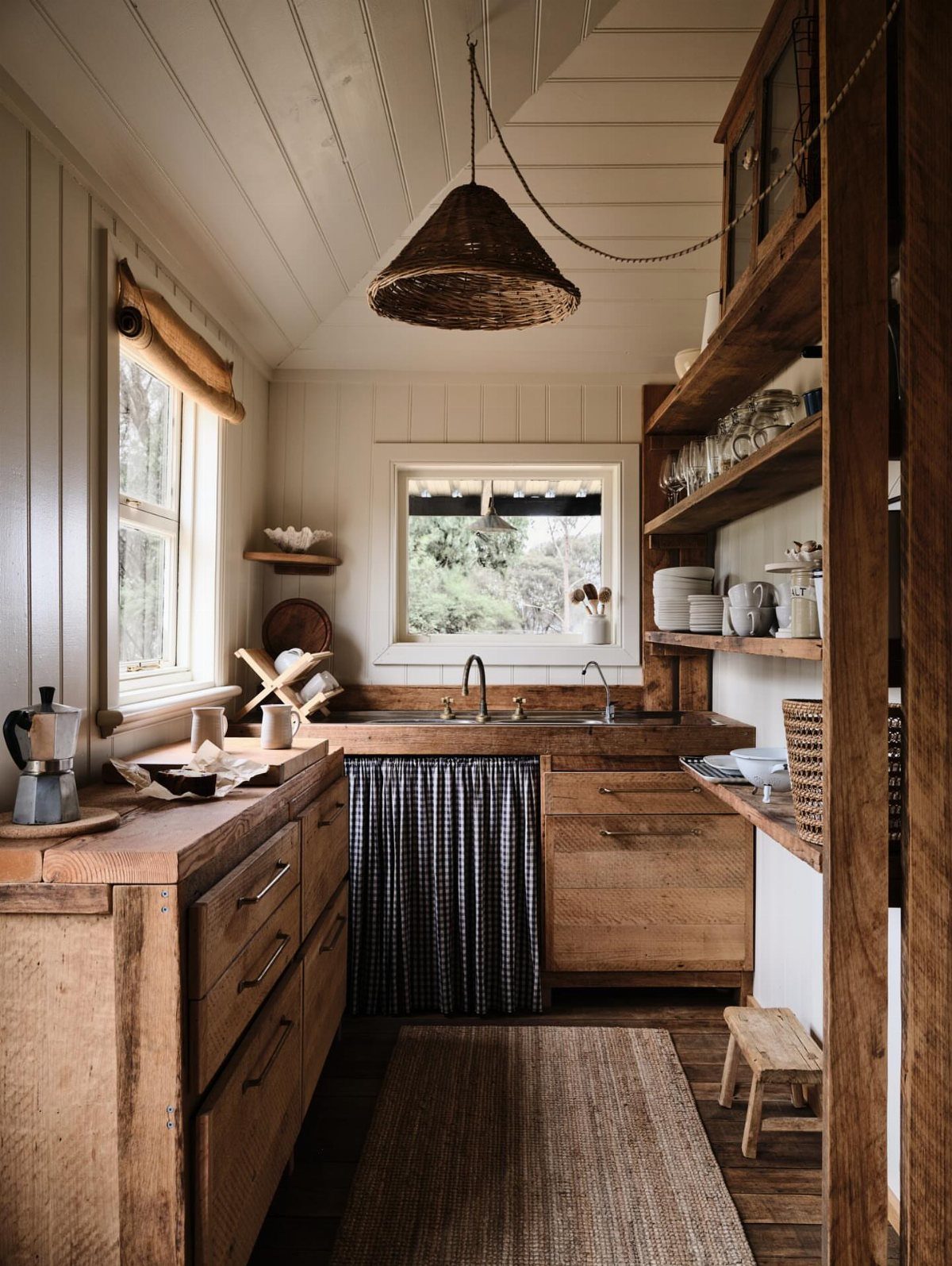
Cabinets built from reclaimed wood show their history in every knot and board edge, so no extra decoration is needed.
Reclaimed wood can feel heavy fast, so I’d break it up with a woven pendant over the sink and open shelving.
I would use reclaimed boards for the cabinet fronts and keep the shelves simple. Ask a salvage yard to see boards in daylight, since the color you see there is the color you will live with.
35. Industrial Accents
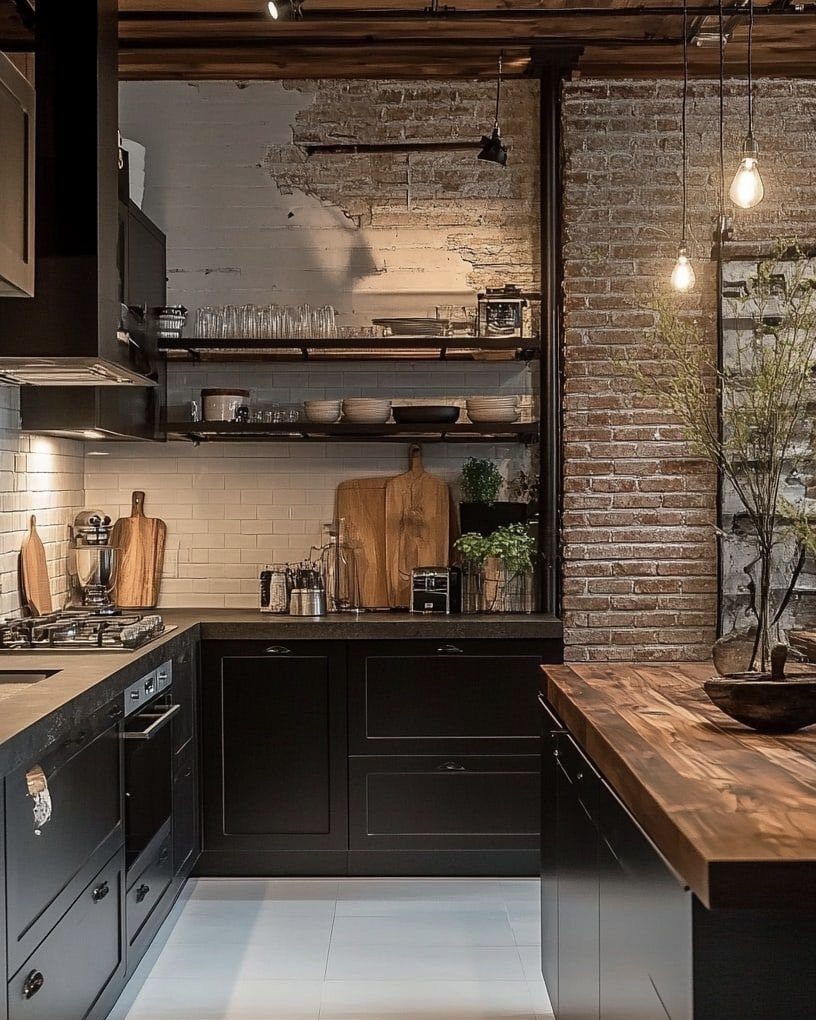
Black cabinets, exposed brick and metal shelving give a rustic kitchen an industrial edge, and the wood countertop keeps it from feeling cold. Industrial pendants overhead tie the metal together.
Wood is what makes this mix work, so I would never skip it. Choose one metal finish for the shelves and lights, and let the brick stay bare.
36. Vintage Cookware Display
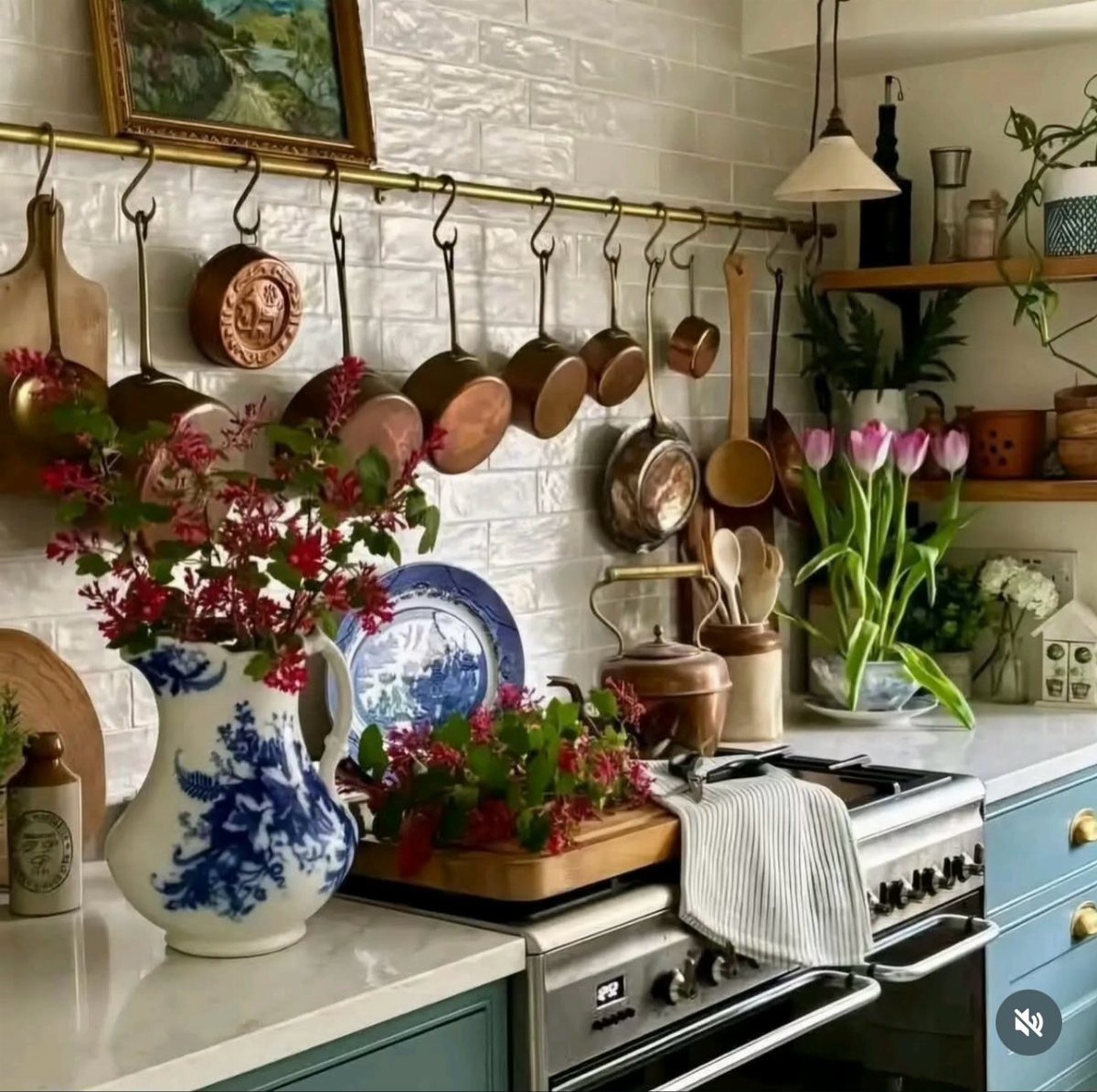
A brass rail with copper pots hanging from it turns daily cookware into the decoration. White subway tile behind it makes the metal stand out, and a blue and white pitcher with flowers adds a cool contrast.
Hang only the pots you reach for most, within an arm’s length of the stove. Anything you never use is just clutter on a rail.
37. Textured Tile
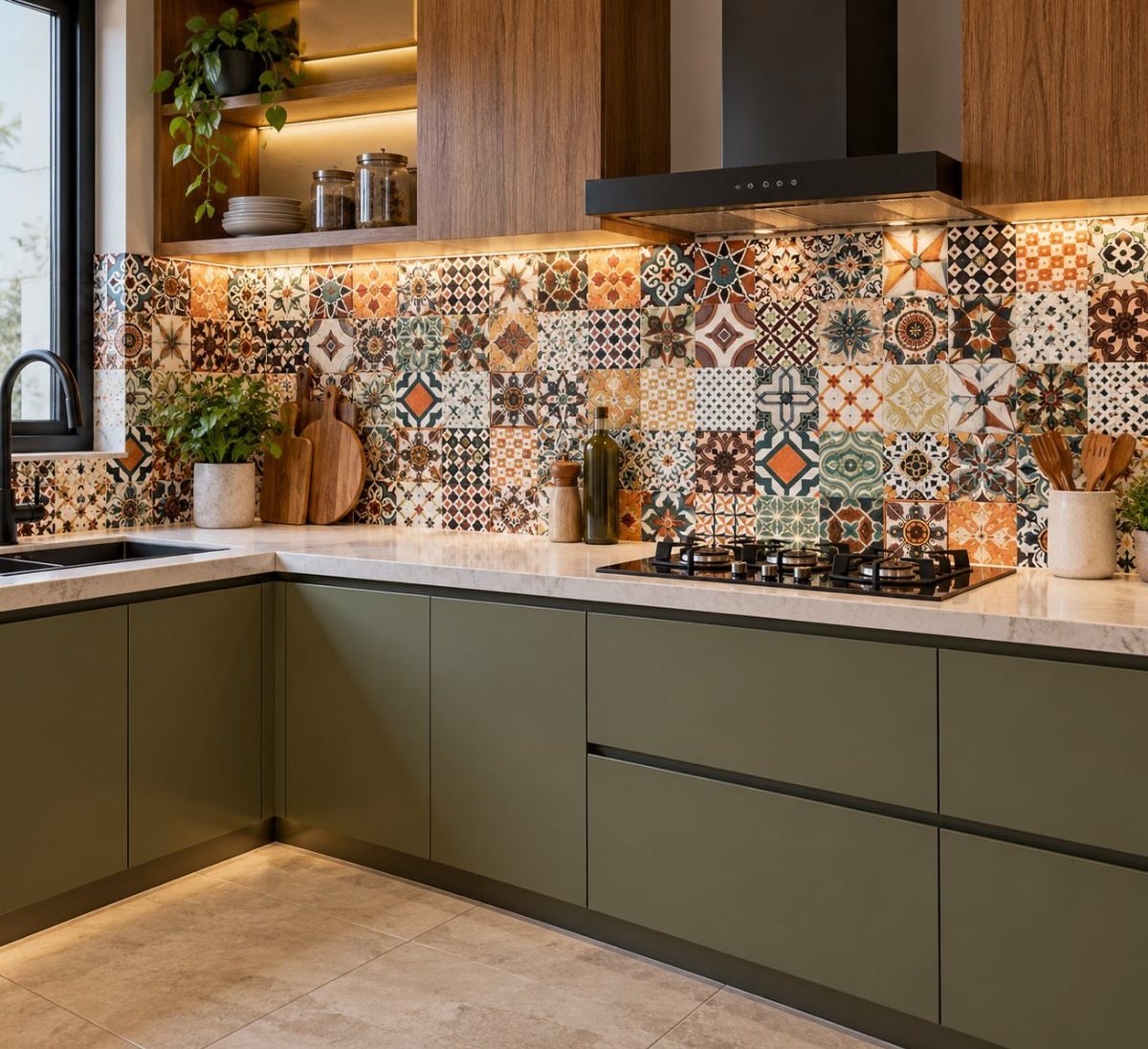
Handmade-looking tile with a visible pattern makes a backsplash the first thing you notice.
Bold, textured tile works best beside quiet, earthy neighbors like olive green lower cabinets and wood uppers, so the wall adds life without competing with the wood.
Pick one patterned surface and keep the cabinets and stovetop solid.
Order a sample sheet and hold it next to your cabinet paint before buying. Tile with uneven glaze and slight variation costs more to look at than plain white, so I would limit it to the stretch behind the range.
38. Wood Ceiling
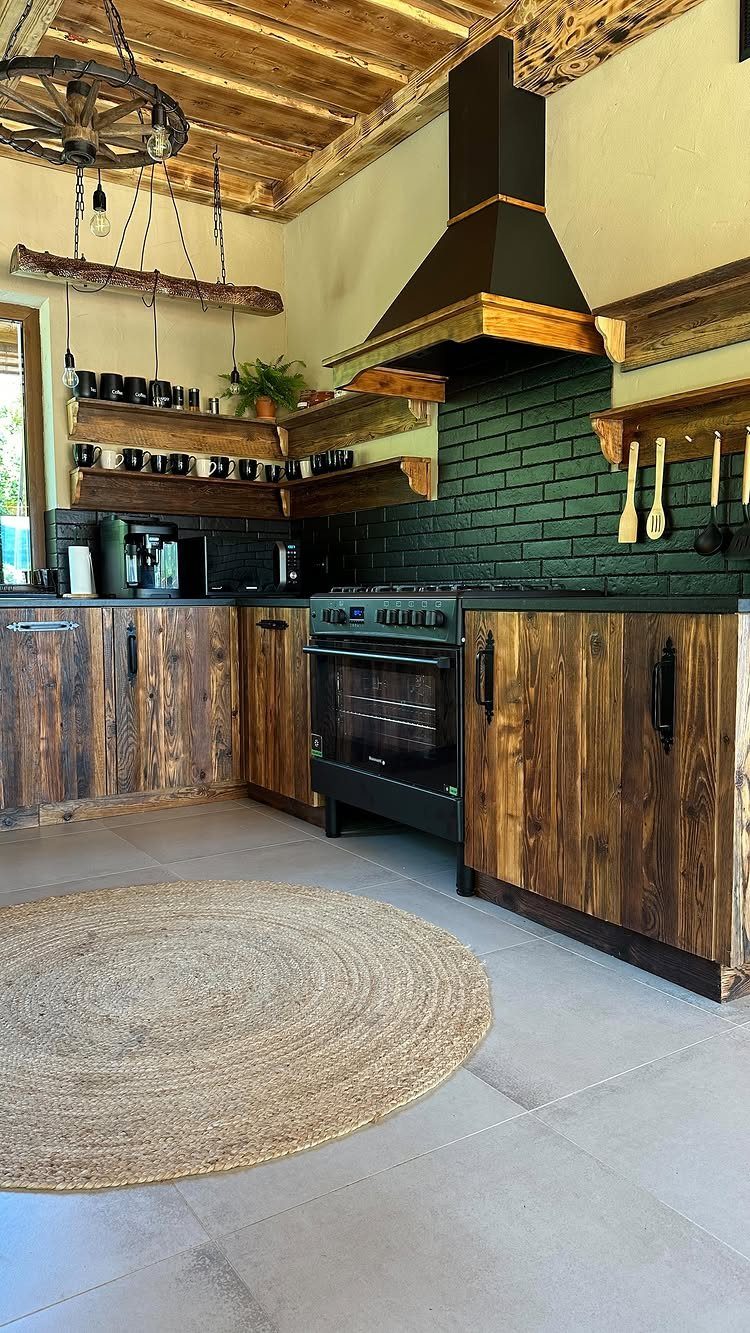
Planks overhead turn the ceiling into the warmest surface in the room. Against dark wood cabinets, a black stove and hood, and a black brick backsplash, the wood keeps all that black from feeling heavy.
I would run the planks in a single direction and keep the ceiling tone close to the cabinets, so the room reads as one cabin-like space instead of two competing woods.
Balance Rustic and Modern
Modern rustic runs on simple forms and clean lines, with the rustic part coming from natural texture instead of ornament.
Flat or shaker doors in a wood tone, plain hardware and one rough material per zone get you most of the way.
Faux distressing and themed décor read as costume, so leave them out. Bold colors and oversized furniture crowd a room fast; keep the palette quiet and size the table and stools to the floor space.
Layer the lighting: overhead light, task light under the cabinets and one decorative fixture. A branch-style pendant over wood-toned cabinets adds an organic shape against straight lines, and a geometric tile floor brings pattern without clutter.
Pair any open shelves with enough closed storage, so everyday mess has somewhere to hide.
Plan Around Practical Use
Start with how the kitchen gets used, because layout and materials both follow from it.
Think about who cooks, how many people are in the room at once and where the groceries land when you walk in. Keep the path between sink, range and refrigerator short and clear.
Moisture and cleaning decide the surfaces.
Anything beside the sink or dishwasher takes splashes daily, so ask how a material handles water and how it gets cleaned before you fall for the look. If you know you won’t reseal or oil something, don’t pick it.
A remodel can touch counters, backsplash, sinks, lighting, appliances, flooring, windows, walls and cabinet layout.
Settle the layout and any wall or window changes first, then choose finishes, since surfaces go in last. A little polished metal in the faucet or hardware gives matte wood and stone a clean contrast.
Rustic Style Trade-offs
Rustic wins on forgiveness. Weathered textures and distressed finishes hide scuffs, scratches and daily wear better than glossy surfaces, so the kitchen looks lived in instead of damaged.
If you want the least upkeep, put a smooth, easy-clean surface where you work most and save wood, stone and metal for spots that take less abuse. Natural materials ask for more care, and that care comes with the look.
The other risk is dating the room. Distressed finishes, vintage-inspired fixtures and weathered textures all at once can look old-fashioned, so I would pick two and keep the rest plain.
Both styles last when designed well, which makes the real choice how much care you are willing to give.
Frequently Asked Questions
What colors are good for a rustic kitchen?
Warm neutrals and earthy tones work best: beige, cream, taupe, off-white, deep brown and soft sage green. Sage reads as a neutral, so it makes an easy first cabinet color.
What is a rustic kitchen?
A rustic kitchen is built from natural, time-worn materials like wood, stone and brick, in earthy colors with simple, functional details.
The result feels warm and lived-in instead of polished. One rough material can carry the whole look, such as red brick on a wall or a thick wood top on an island.
What are the key elements of a rustic kitchen?
Natural materials, earthy colors, open shelves, a farmhouse sink, vintage details and plain cabinet doors cover most of it. Shaker doors suit the style because their flat center panel stays quiet and lets the materials around them show.
An apron-front sink sits proud of the cabinet and takes the place of part of its face, so measure your base cabinet before buying; most of the time it needs to be built or cut down to match the sink.