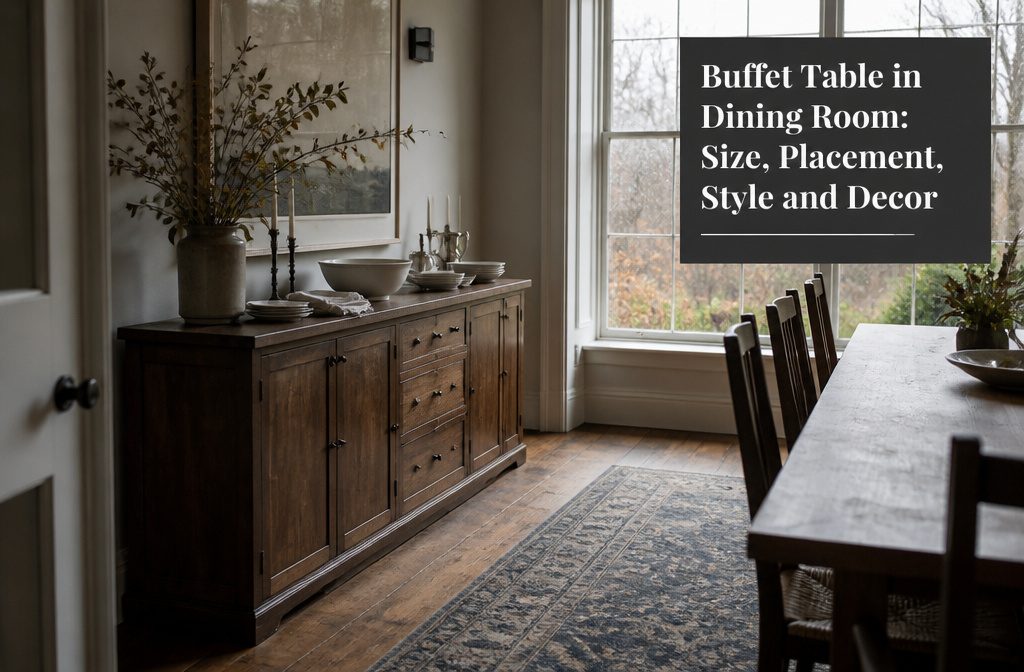
A buffet in a dining room is a low storage cabinet that holds serving dishes during a meal and keeps plates, linens and silver within reach of the table.
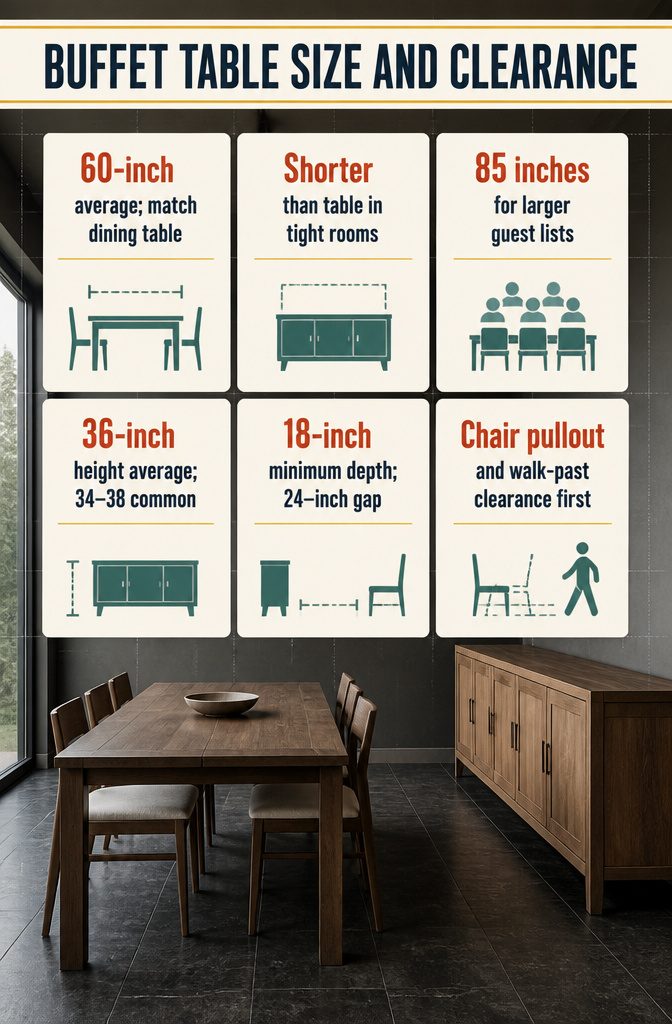
Chairs must pull out fully with room left to walk past, and that clearance beats the 24-inch rule. Average length is 60 inches; height runs about 36.
What a Buffet Is For
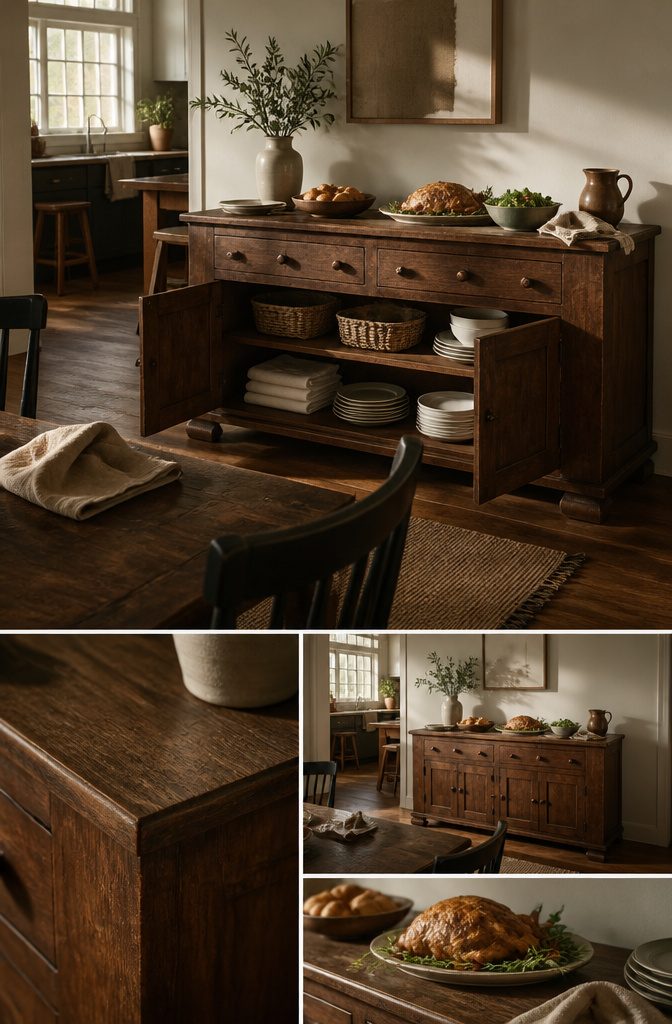
A buffet saves you the walk to the kitchen. Set the roast, rolls and salad on top and let people serve themselves, rather than plating food in another room or passing bowls around the table family style.
Serving was the piece’s original job, holding food and serving dishes during a meal, and it still earns the floor space.
Behind the doors and drawers, plates, dinnerware, linens and silver stay within arm’s reach of the table. I’d rather clear a shelf elsewhere than lose that, because setting the table goes quickly when nothing lives in another room.
The third job is display.
A buffet has to serve, store and show off your things, and that last part is why it becomes the focal point of the room. A few well-chosen objects on top give a plain wall something to hold onto.
Size and Placement
Length is where the numbers split. One baseline:
The average buffet table has a length of 60 inches, which is suitable for a dining room table of the same measurements.
A second rule says stay slightly shorter than the table so it remains the focal point, and I’d follow that one in a tight room. Go toward 85 inches only for bigger guest lists.
Height averages 36 inches (most run 34–38; 30 is the floor), and depth starts at 18 inches.
Allow 24 inches between table and buffet, but chairs must pull out fully with room left to walk past; that clearance decides, not either rule. Under 40 inches long, try the Rambert, Cressida or Delmar; under 70, the Saxton, Brandt or Douglas.
Style and Color
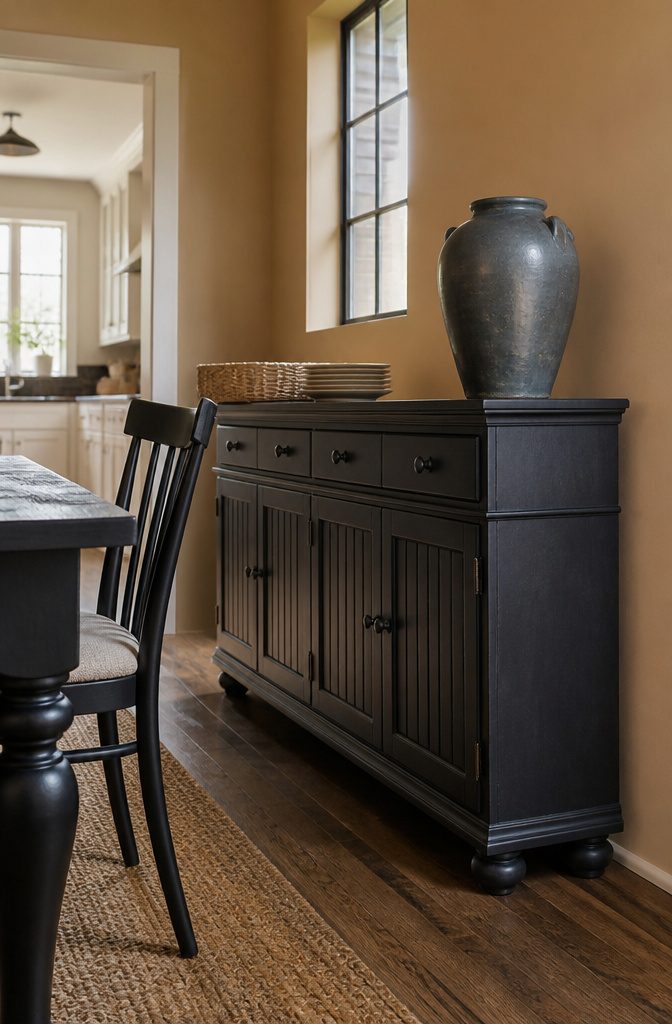
Start with the colors already in your kitchen and dining room, and treat the buffet as one more note in that palette.
Don’t play it safe by default: colors across from each other on the color wheel often make the best pairs, so a bold finish can work harder than a matching one.
Four details carry the style: wood finish, door fronts, feet and trim.
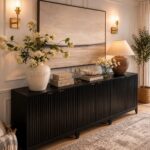
Beadboard doors, urn-shaped feet and a charcoal finish read farmhouse. Solid doors on a steel base read modern, and curved glass door frames lean classic.
Decor scale has to suit both the buffet and the room. One big urn holds up against a tall wall, but it overwhelms a small room.
If nothing off the shelf fits, a custom buffet can be built in your finish and door style, with or without drawers. Some makers also offer an app to preview a piece in your room before you buy.
Decorating the Top and Wall
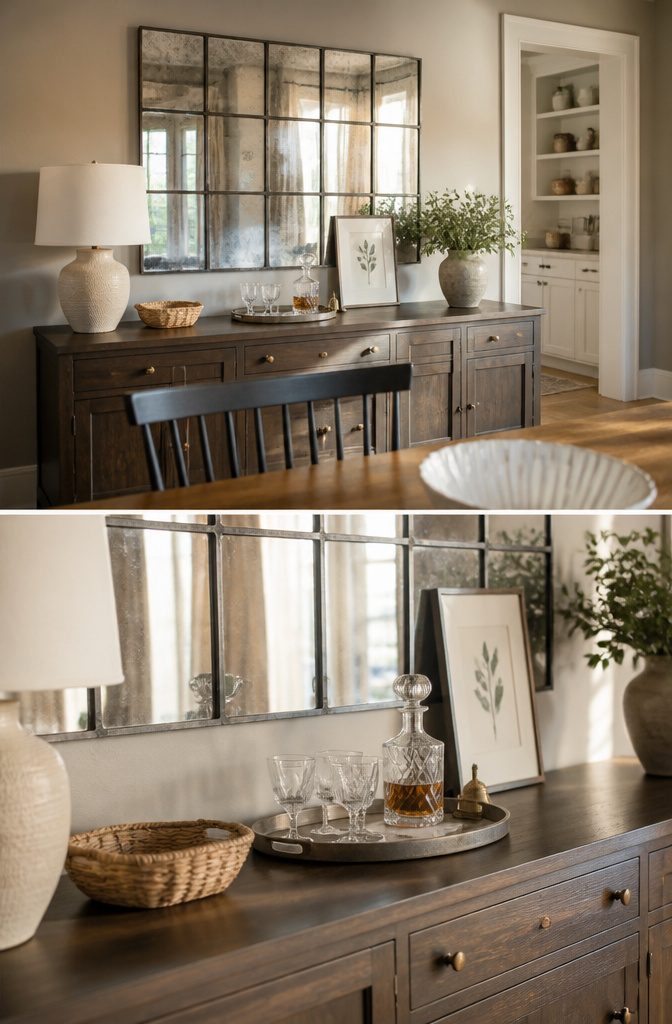
Style the top first, then the wall, and use your phone camera as the judge at each step.
- Clear the surface, then rebuild it while taking photos. A photo shows lopsided balance faster than your eye does.
- Pull a tight color palette from the dining room itself.
- Vary heights: a lamp at one end, greenery at the other, a tray of glasses and a decanter in the middle.
- Group objects in 3s. A few medium or large pieces beat many small ones, and the two ends should carry equal visual weight even if they don’t match.
- Leave about one-third of the surface bare.
- Add one soft or organic texture, like a basket or greenery, plus an anchor piece and something personal.
- Swap seasonally: forsythia in spring, dried wheat in fall.
- Frame the wall with a mirror, artwork, shelves, or architectural elements. A lightly antiqued 16-panel mirror in place of a clock brightens the room and reflects the decor. Lean a small print against it in a slightly contrasting frame so the layers don’t blend.
Wood, Metal, or Stone
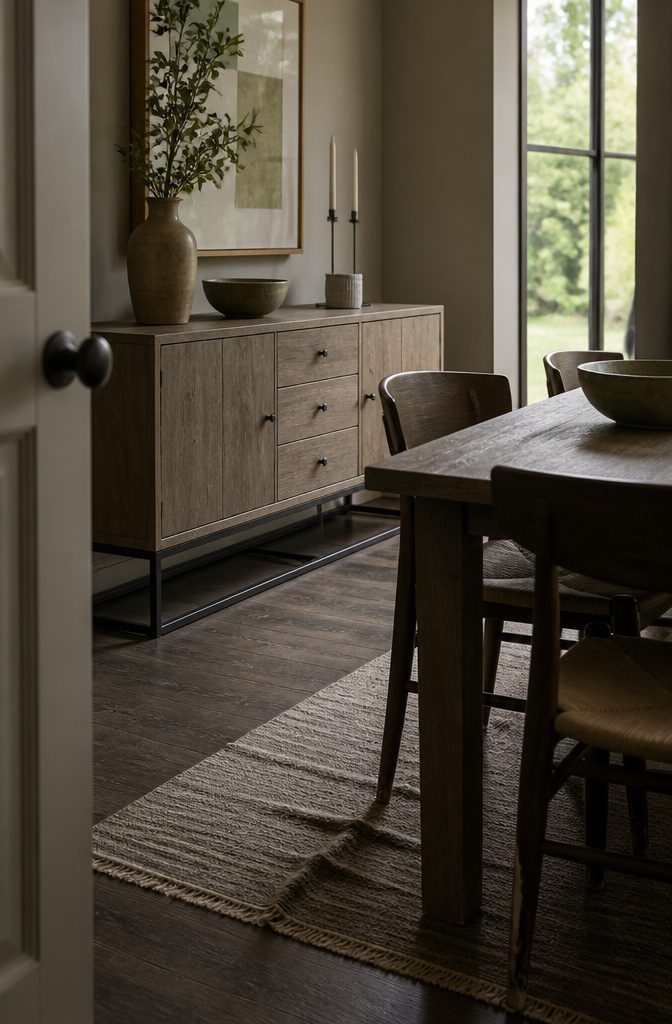
Wood is what most buffets are made of, and I’d start there: it reads warm, as stone does.
Metal pulls the other way, cooler and more modern, which is why the hand-forged steel base on the Altan suits its midcentury profile.
Wood itself covers a wide range. The Fairlee is maple in a gray-brown finish, while the Burton is Indonesian mahogany finished in walnut.
Match the finish to your floor, walls and chairs, and choose a tone a step lighter or darker than the dining table so the two don’t fight.
In a room that’s already hard-edged, I’d keep metal to the base or trim.
Retailer prices run from $2,565 for the Hawkins Huntboard to $2,945 for the Davos, $3,247 for the Newbury and $5,995 for the Zayne.
Buffet or Sideboard
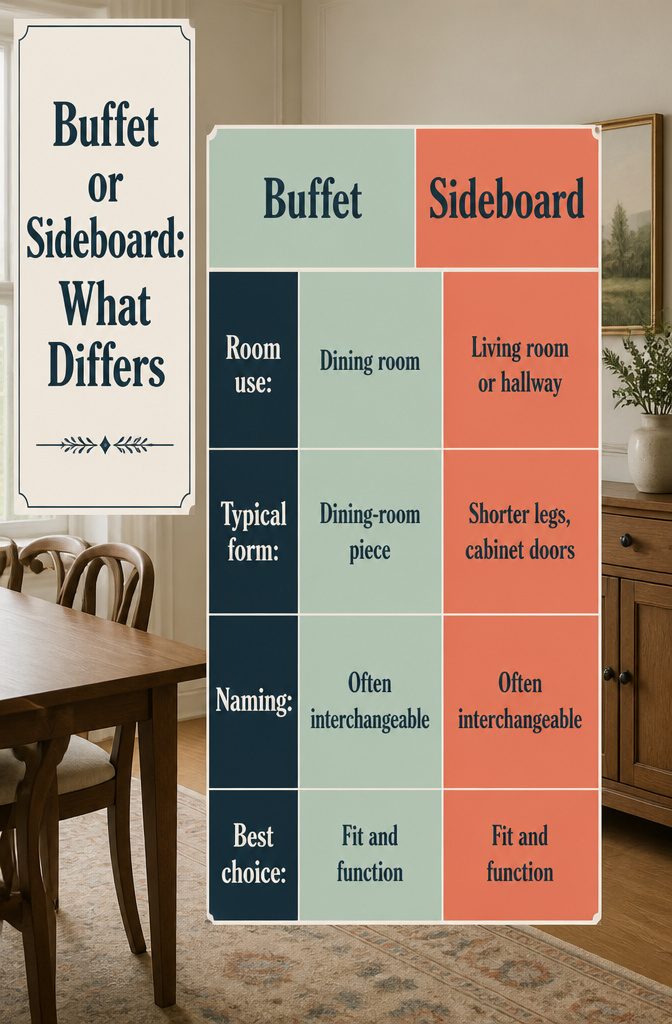
Stores split the two names a few ways. Some call the piece with shorter legs and cabinet doors a sideboard, and say it also works in a living room or hallway, while "buffet" stays in the dining room.
Others sort them by style. Plenty of makers now use the words interchangeably, and either name suits a dining room.
I’d ignore the label and shop by dimensions and function. Measure height, depth and width against your table and the walkway around it, because a server-style piece often stands taller than the table.
Then decide what has to live inside: doors hide platters and linens, open storage shows them off. A "sideboard" that fits the wall and holds your dishes beats a "buffet" that doesn’t.
A Buffet in Another Room
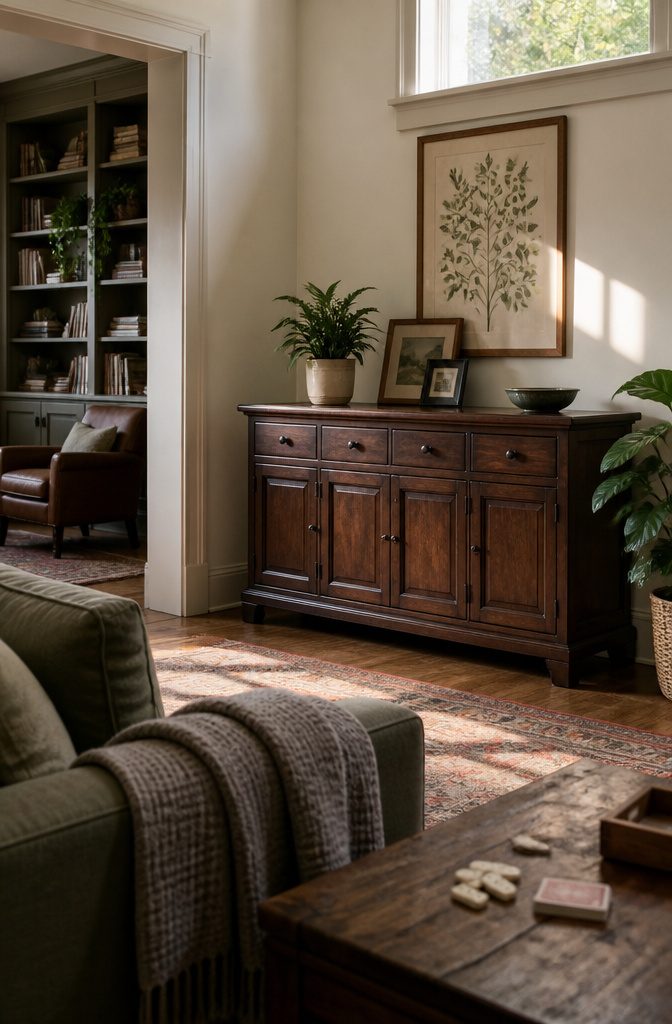
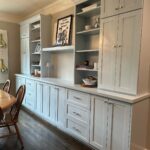
A buffet earns its keep in a living room or den, holding board games, stacked linens, or memorabilia you’d rather show than box up. The top works as a ledge for framed photos, and the doors hide the clutter.
As a TV cabinet, though, it only works if the product details list back-panel cutouts for ventilation and cords.
Without them, a console or streaming box gets no airflow and the cables have nowhere to go. I’d pass on any buffet that skips this detail for the TV wall and keep it for storage.
The reverse works too: a media cabinet can serve as a buffet if it stands at least 30 inches tall and 18 inches deep.
Frequently Asked Questions
What is a buffet table in a dining room used for?
It does three jobs: serving, storage and display. The top holds the roast, rolls and salad so guests can serve themselves, while the doors and drawers keep plates, dinnerware, linens and silver close to the table.
A few well-chosen objects on top also turn it into the room’s focal point.
What is the difference between a buffet table and a sideboard?
Very little in practice, and either name works in a dining room.
Some stores call a piece with shorter legs and cabinet doors a sideboard and say it also suits a living room or hallway, while others sort the two by style.
Shop by height, depth, width and what you need stored inside.
What size should a buffet table in a dining room be?
Plan on about 60 inches long, 36 inches tall (most run 34–38) and at least 18 inches deep. Stay slightly shorter than the dining table so the buffet remains the focal point, and go toward 85 inches only for larger guest lists.
Leave about 24 inches between table and buffet, but let chairs pull out fully with room to walk past.
Are there buffet options for a small dining room?
Yes. For a room that needs a piece under 40 inches long, look at the Rambert, Cressida or Delmar, and under 70 inches, the Saxton, Brandt or Douglas.
A custom buffet is another route, built in your finish and door style with or without drawers.
Where should I place a buffet table, and can it go in the living room?
Put it against a dining room wall near the table, with enough room that seated guests can still push their chairs back and people can walk behind them.
It also works in a living room or den, where it can hold board games, stacked linens or memorabilia, and the doors hide the clutter.
What style of buffet should I choose for my dining room?
Start with the colors already in your kitchen and dining room, then match the finish to your floor, walls and chairs, going a step lighter or darker than the dining table.
Four details set the style: wood finish, door fronts, feet and trim. Beadboard doors, urn-shaped feet and a charcoal finish read farmhouse, while solid doors on a steel base read modern.
How do I style a buffet table in my dining room?
Clear the surface and rebuild it while taking photos, since a photo shows lopsided balance faster than your eye. Pull a tight palette from the room, vary heights, group objects in 3s and leave about one-third of the top bare.
Add one soft or organic texture, an anchor piece and something personal, then frame the wall above with a mirror or artwork.
Can I use a buffet as a TV cabinet?
Often yes, but only if the product details list back-panel cutouts for ventilation and cords.
Without them, a console or streaming box gets no airflow and the cables have nowhere to go. A media cabinet can also work as a buffet if it stands at least 30 inches tall and 18 inches deep.