Sturdy cabinets with a tired finish can take fresh paint, new hardware or glass fronts, but boxes that sag or swell from water damage point you toward the replacement styles further down.
If they are, paint, new pulls or labeled containers change the kitchen while every door stays where it is.
If the layout is what bugs you, spend on a kitchen island, a banquette connected to it, or a baker’s table with a marble slab.
The ideas run from clear bins of lentils and cashews on a shelf to a bubblegum-pink range that is hard to undo.
1. Add Open Shelving
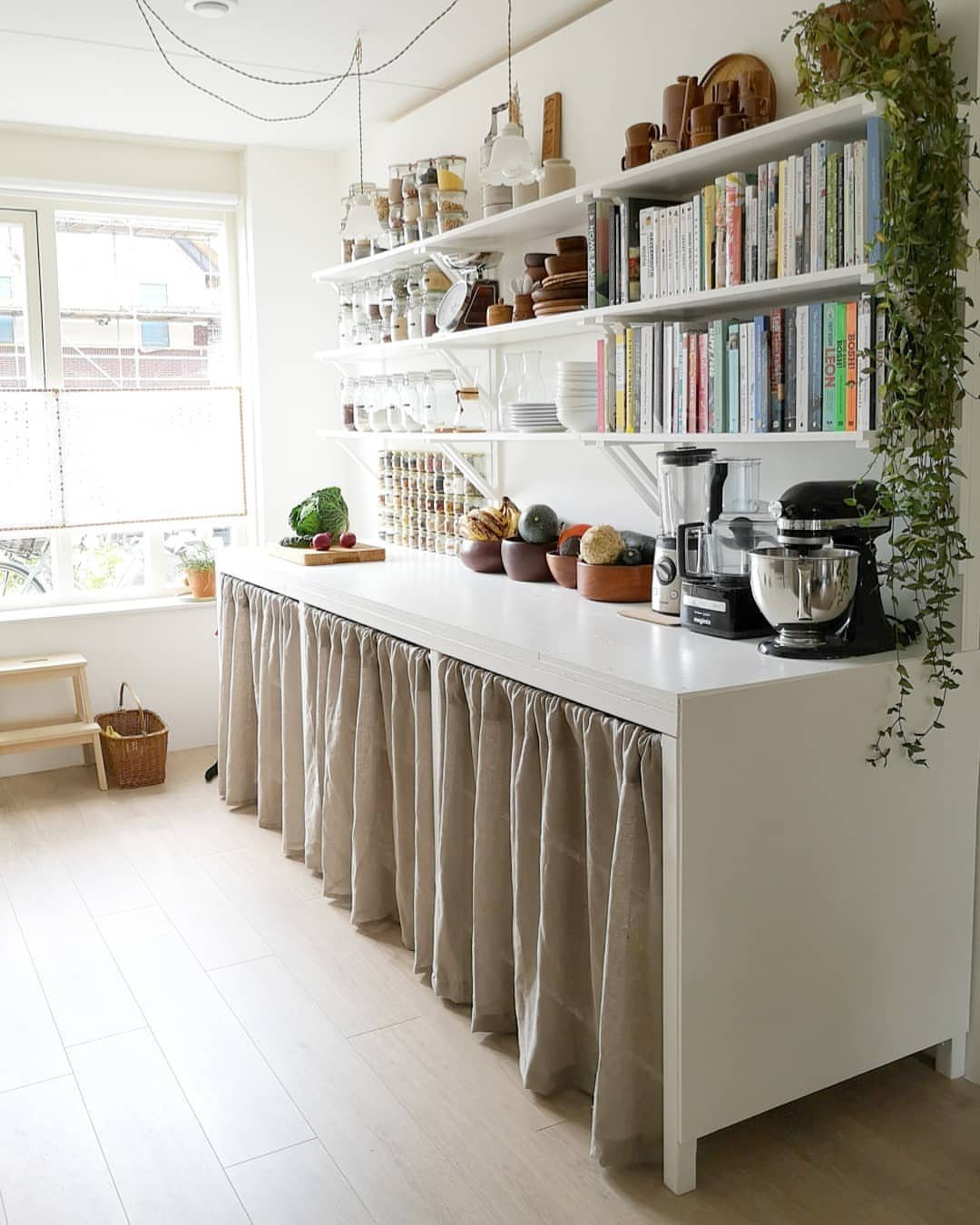
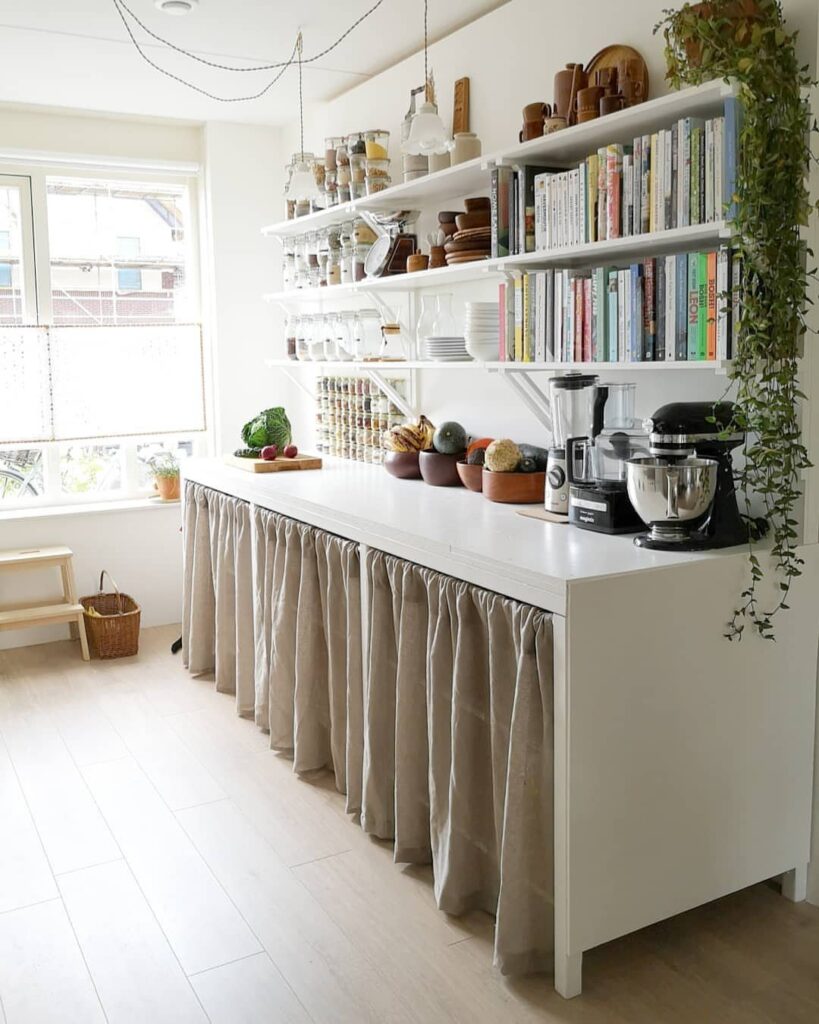
Taking a few upper doors off and putting shelves in their place makes a kitchen feel lighter right away.
Books, jars, dishes and glassware all sit comfortably on shelves like these, and a window nearby keeps the wall from feeling heavy.
I would leave some closed cabinets in the mix for the clutter you don’t want on display. Shelves reward the things you actually like to look at.
2. Add Under-cabinet Lighting
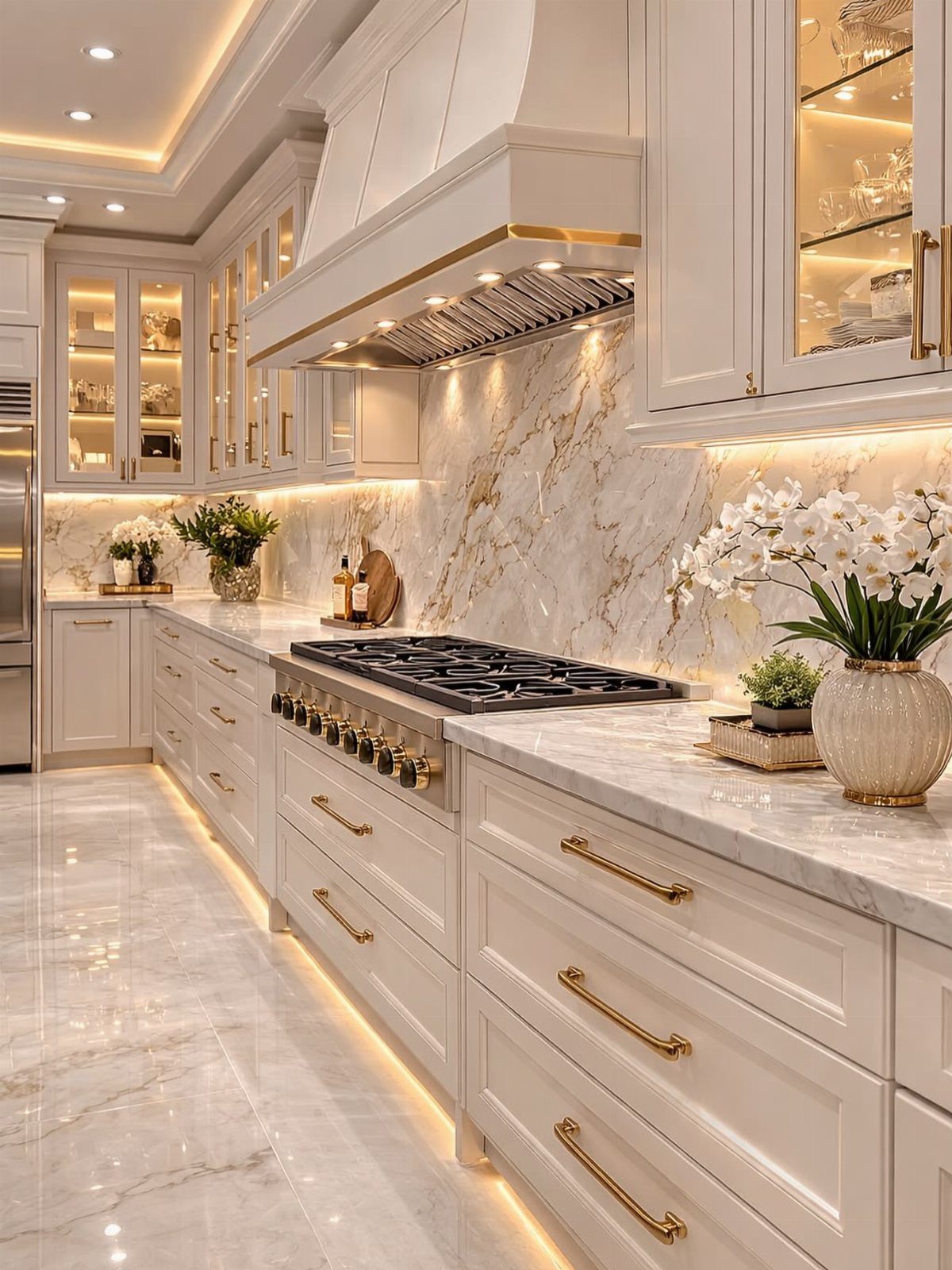
Warm light under the upper cabinets does 2 jobs: it puts brightness right where you chop and plate, and it gives the underside of the cabinets a finished edge. Marble counters and gold hardware both pick up that glow nicely.
I like the extra touch of toe-kick lighting, which makes a nice option once the counter lights are in. Choose a warm tone over a cool one, since it flatters white cabinets far better.
3. Update Cabinet Hardware
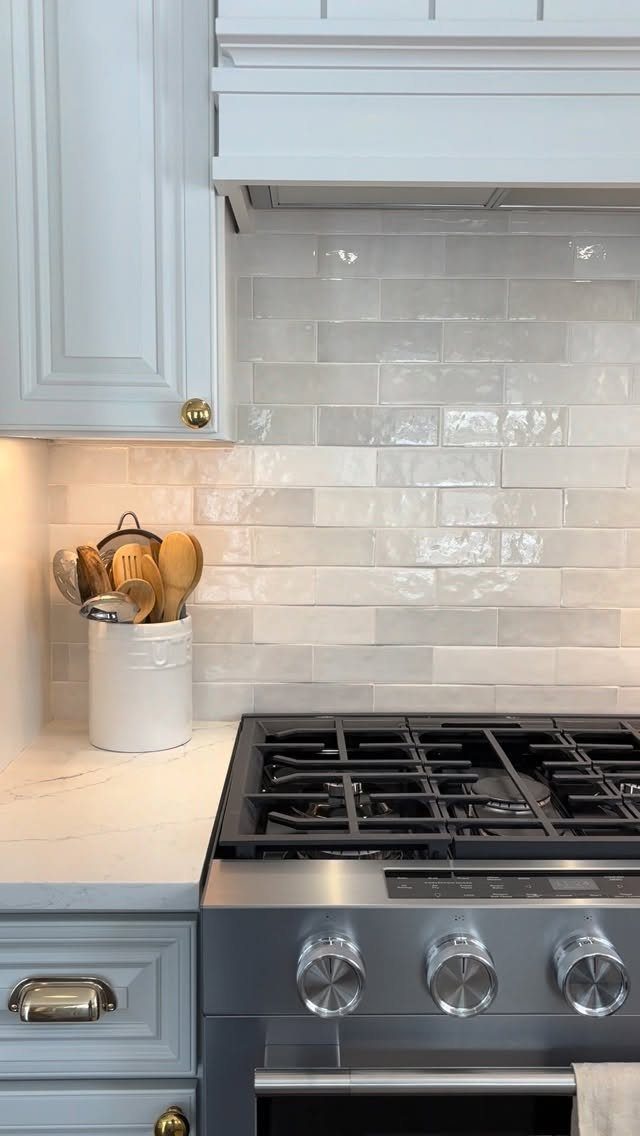
Swapping knobs and pulls is the smallest change that still reads as a remodel. Gold hardware against painted cabinets, as here, gives the whole run a jewelry-like finish without touching a single door.
Pick a metal that suits your faucet and light fixtures, and mixing finishes in moderation can look intentional. Keep the old screw spacing in mind when you buy pulls so the new ones fit the existing holes.
4. Shaker-style Cabinets
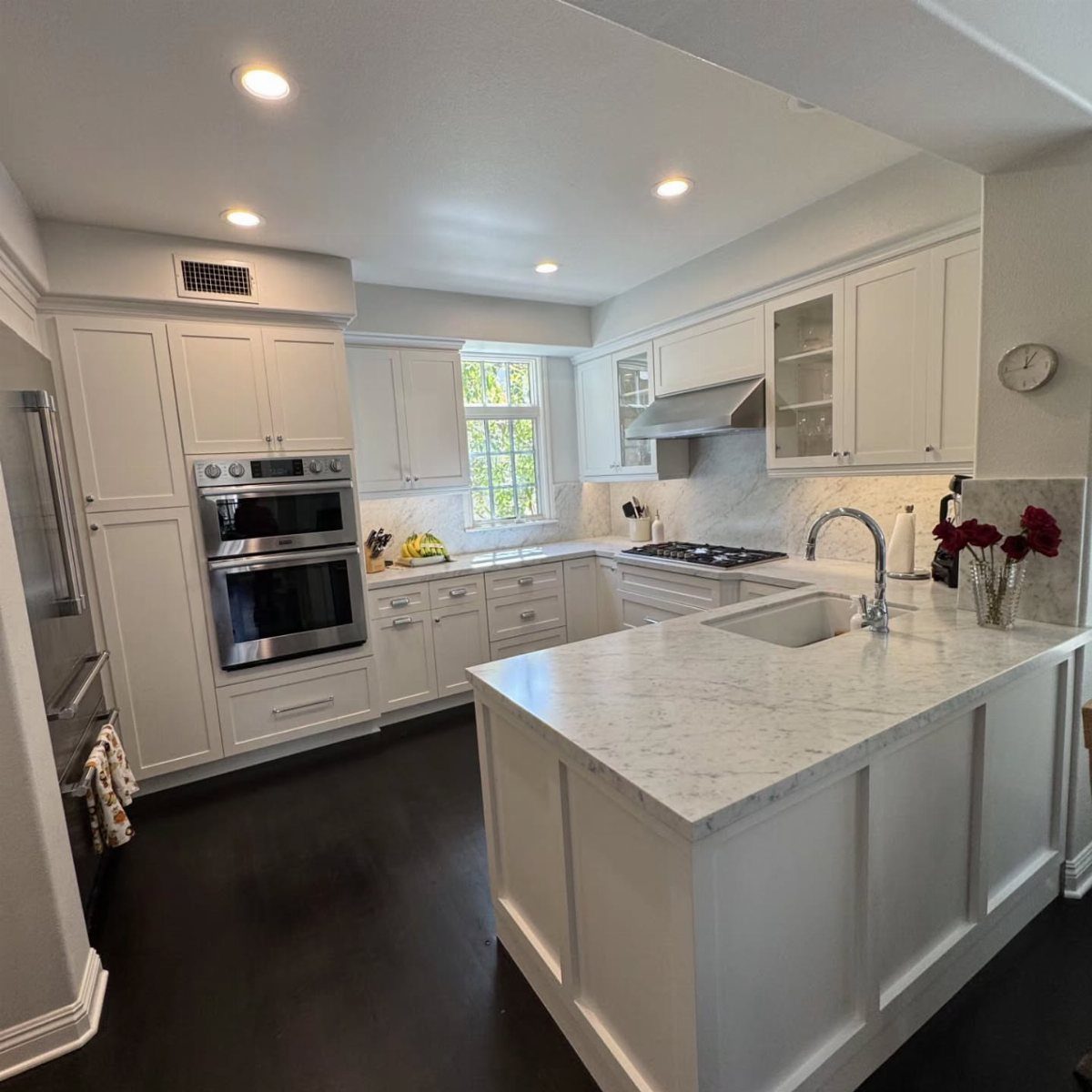
A Shaker door is a flat center panel inside a simple square frame, and that plain shape is why it works in almost any kitchen. In white, paired with marble counters and a big island, it feels clean and classic.
Because the profile is so neutral, you can change the look later with paint or hardware rather than new doors. I would pick Shaker if you are unsure of your style and want a safe base.
5. Install Cabinet Organizers
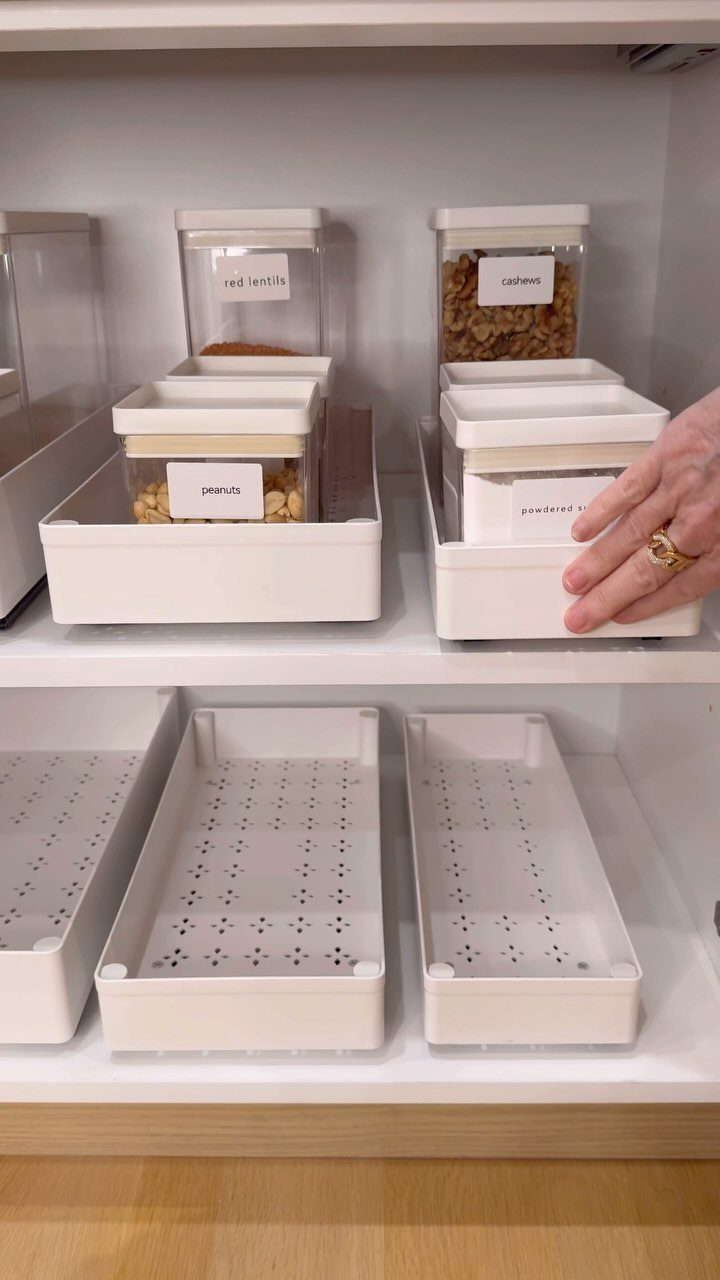
Clear containers with labels on the front let you read a cabinet at a glance, so decant loose bags of rice, pasta and snacks into them and group each kind in its own bin.
Lentils, cashews and peanuts each get their own spot, and the white plastic bins on the lower shelf catch the smaller items.
Label everything on the front so you never have to pull a container out to check. Organizers cost more than a knob swap, but they change how the kitchen works every day.
6. Repaint Cabinets
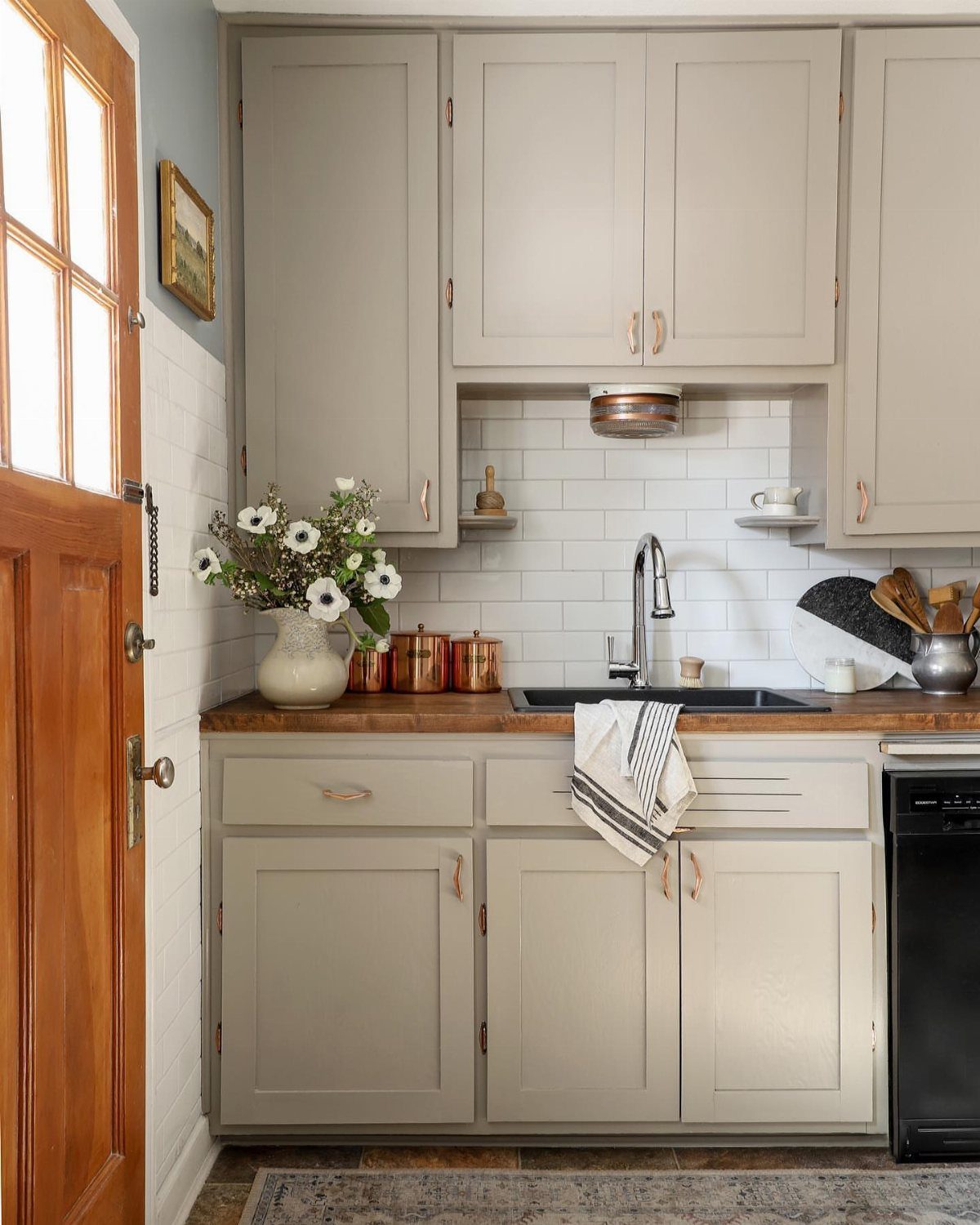
A fresh coat of paint changes the cabinet color while the boxes and doors stay exactly where they are. Light grey with gold hardware and a wooden countertop is a calm pairing that feels warm rather than cold.
Paint is the budget-friendly route here, because you keep everything you already own. I would match the sheen and hardware to the countertop before picking a shade, since wood tones shift how grey reads.
7. Add a Kitchen Island
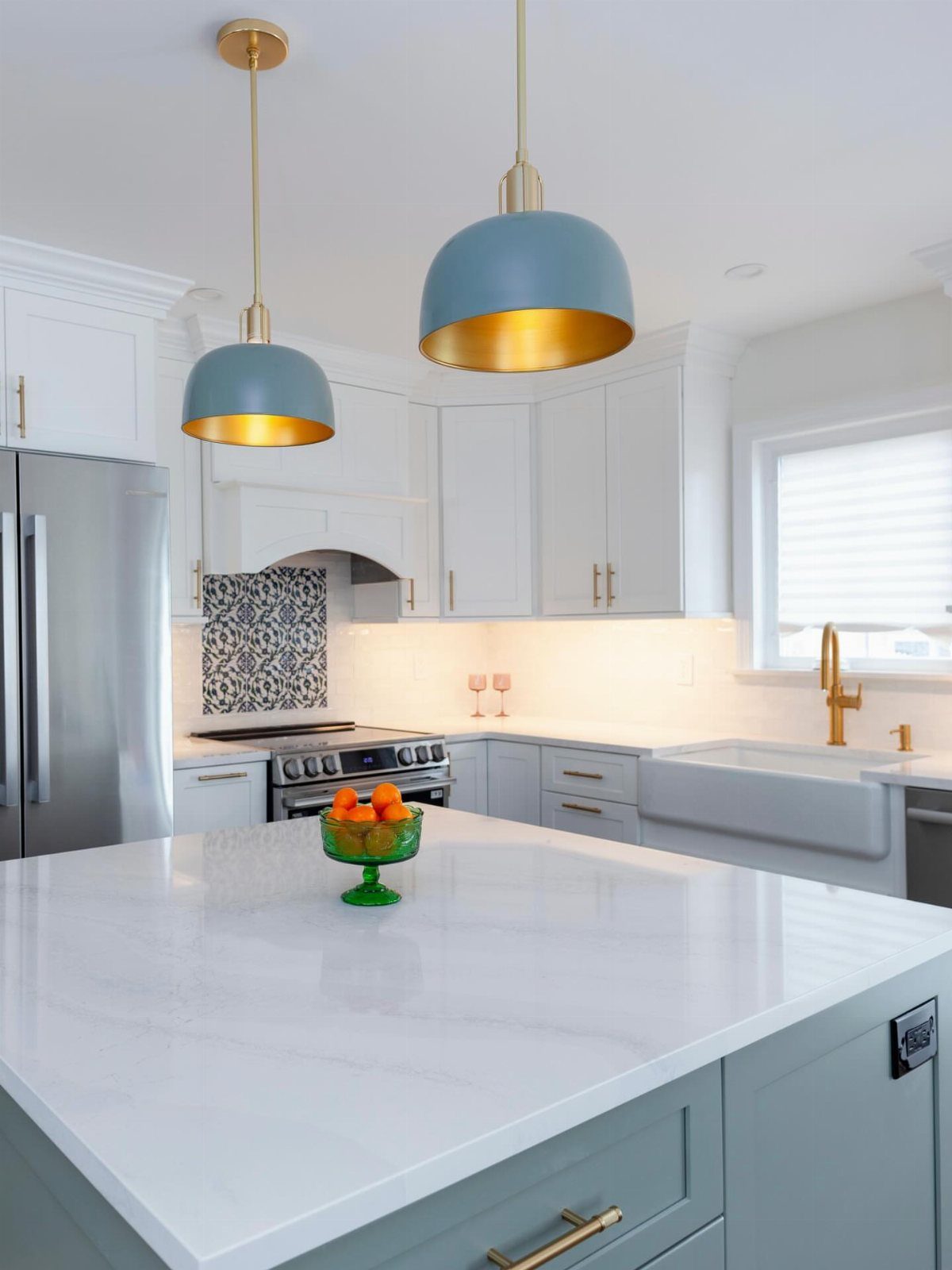
An island gives a kitchen one spot to prep, eat, store and gather, so it earns its floor space fastest in a room that currently has none of those.
A surface this size, in white quartz against white cabinets, stays calm and lets a bowl of fruit or a row of pendants do the decorating.
Leave enough room around it to open the dishwasher and oven without bumping the stools. If the room can’t spare that, a slimmer island beats a bigger one you squeeze past.
8. Add Glass Cabinet Fronts
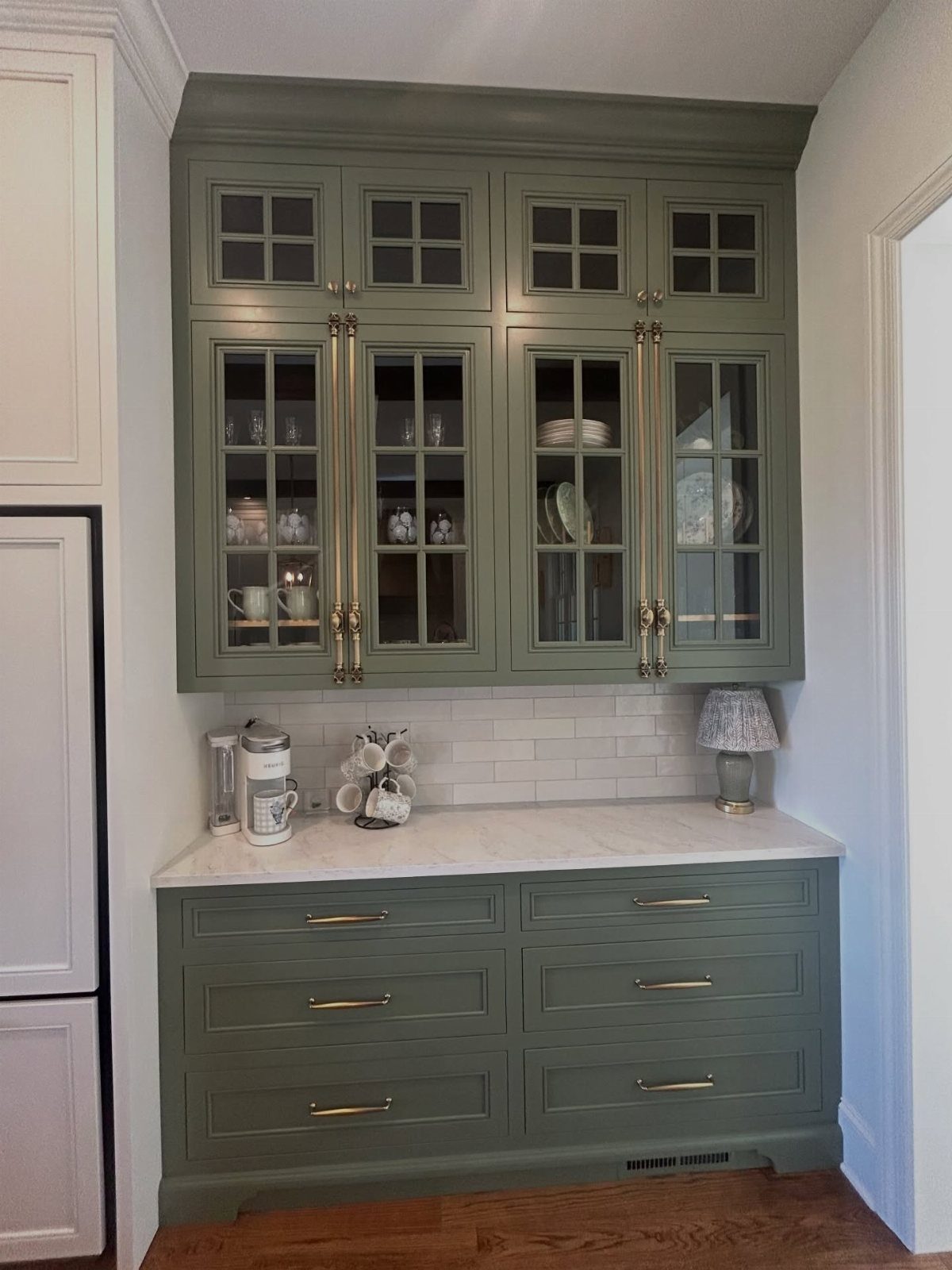
Glass in the upper doors breaks up a long wall of solid fronts and turns the dishes inside into part of the decor.
Sage green paint with gold pulls suits that treatment, since everything behind the glass stays easy on the eye.
Stack matching plates and bowls in the glass cabinets, and keep mismatched mugs and plastic containers behind solid doors below.
I would convert only a few uppers, near the coffee area or by a window, so the tidy-up burden stays small.
9. Choose Flat-panel Cabinets
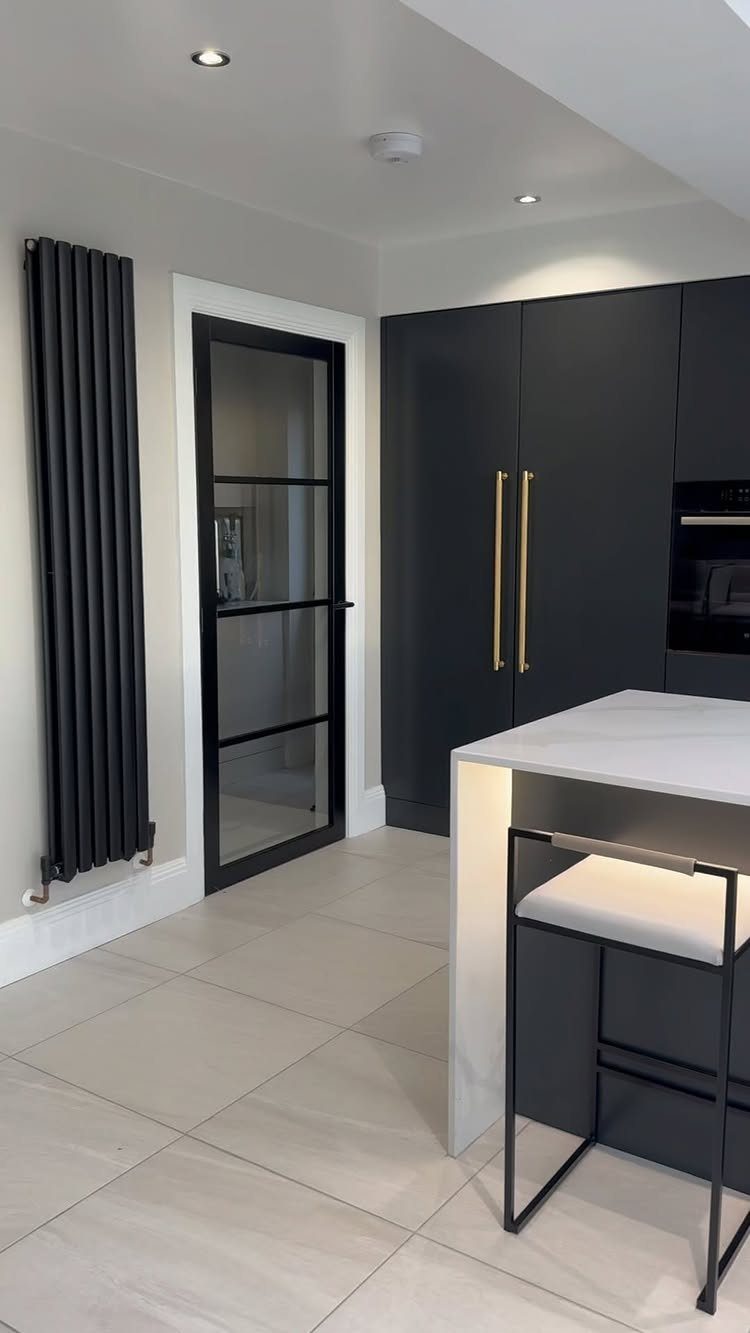
Slab doors have no frame and no panel edge, which leaves a smooth face that reads sharp and modern. In dark grey with gold handles, the plain surface lets the hardware become the one decorative detail.
Flat fronts show fingerprints and dust less in a deeper shade than they would in a glossy white, though I would still wipe them down often.
Pair them with a light island, as here, so the dark run does not close the room in.
10. Use Two-tone Cabinets
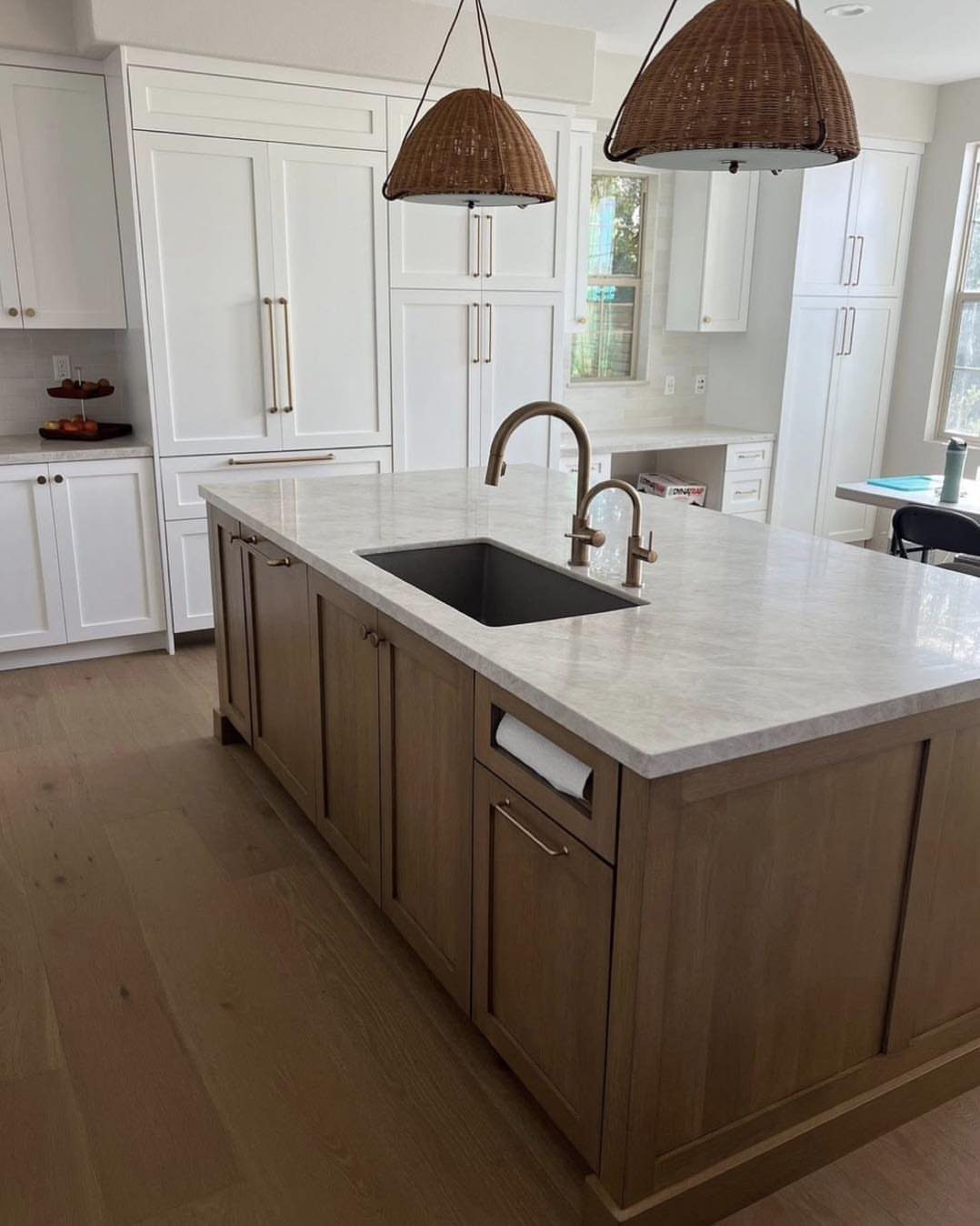
Splitting the colors, with white on the walls of cabinets and natural wood on the island, gives you contrast without repainting the whole room. The island becomes the warm center, and woven pendants overhead pick up its tone.
For a weekend job, paint or refinish just the island and leave the perimeter alone.
Keep one color dominant, because two tones split evenly can look undecided. Match the wood’s warmth to your flooring so the island reads as chosen, not left over.
11. Use Wood-grain Cabinets
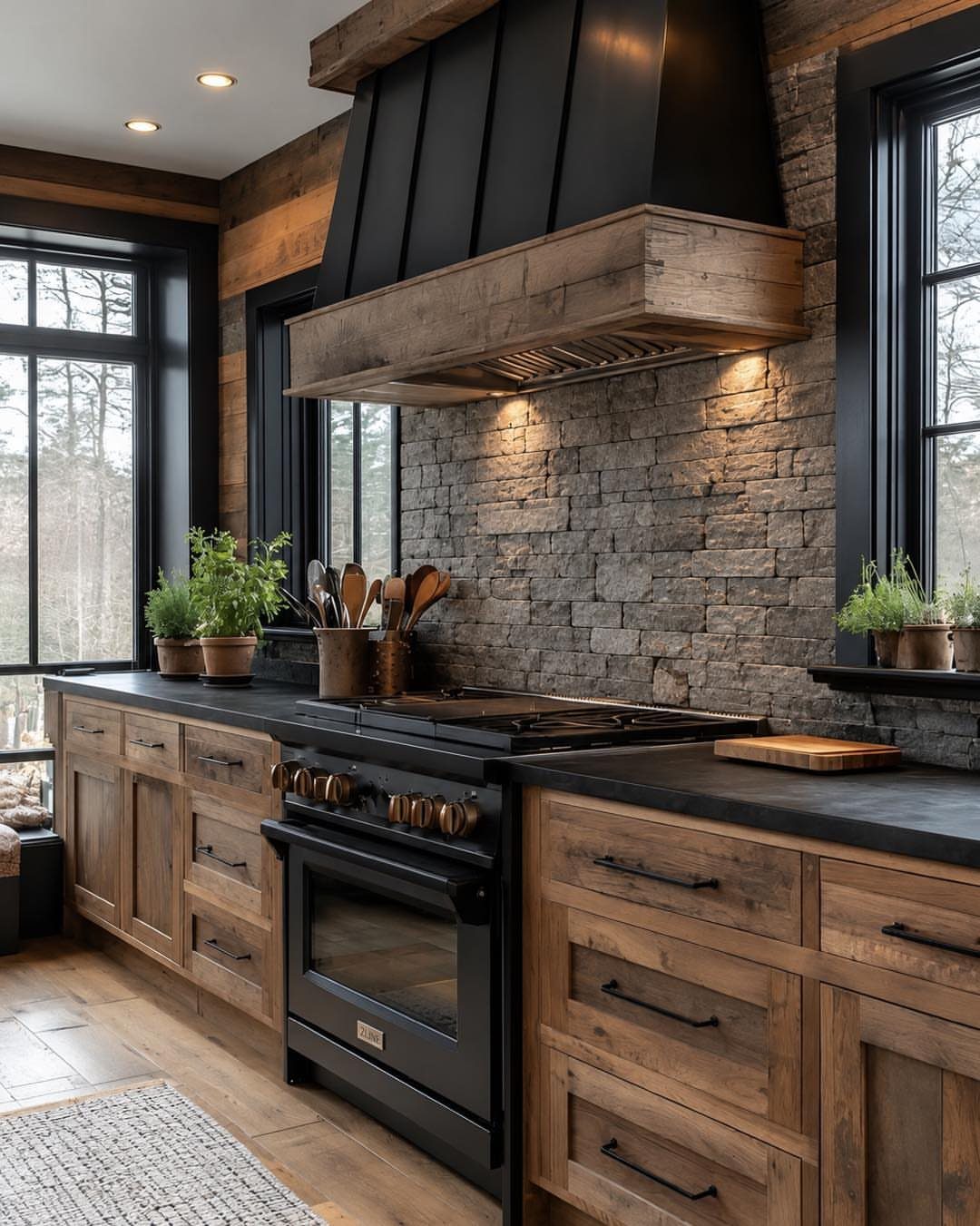
Wood with the grain showing brings warmth that paint can’t copy, and it holds its own beside black appliances and a grey stone backsplash.
A rustic kitchen like this one looks best when the grain does the talking, so keep the walls and counters quiet.
Stain or clear finish keeps the grain visible; paint hides it.
If your cabinets are sound but dated, sanding and restaining costs far less than new doors. I would test a stain on the inside of one door first.
12. Use Green Cabinets
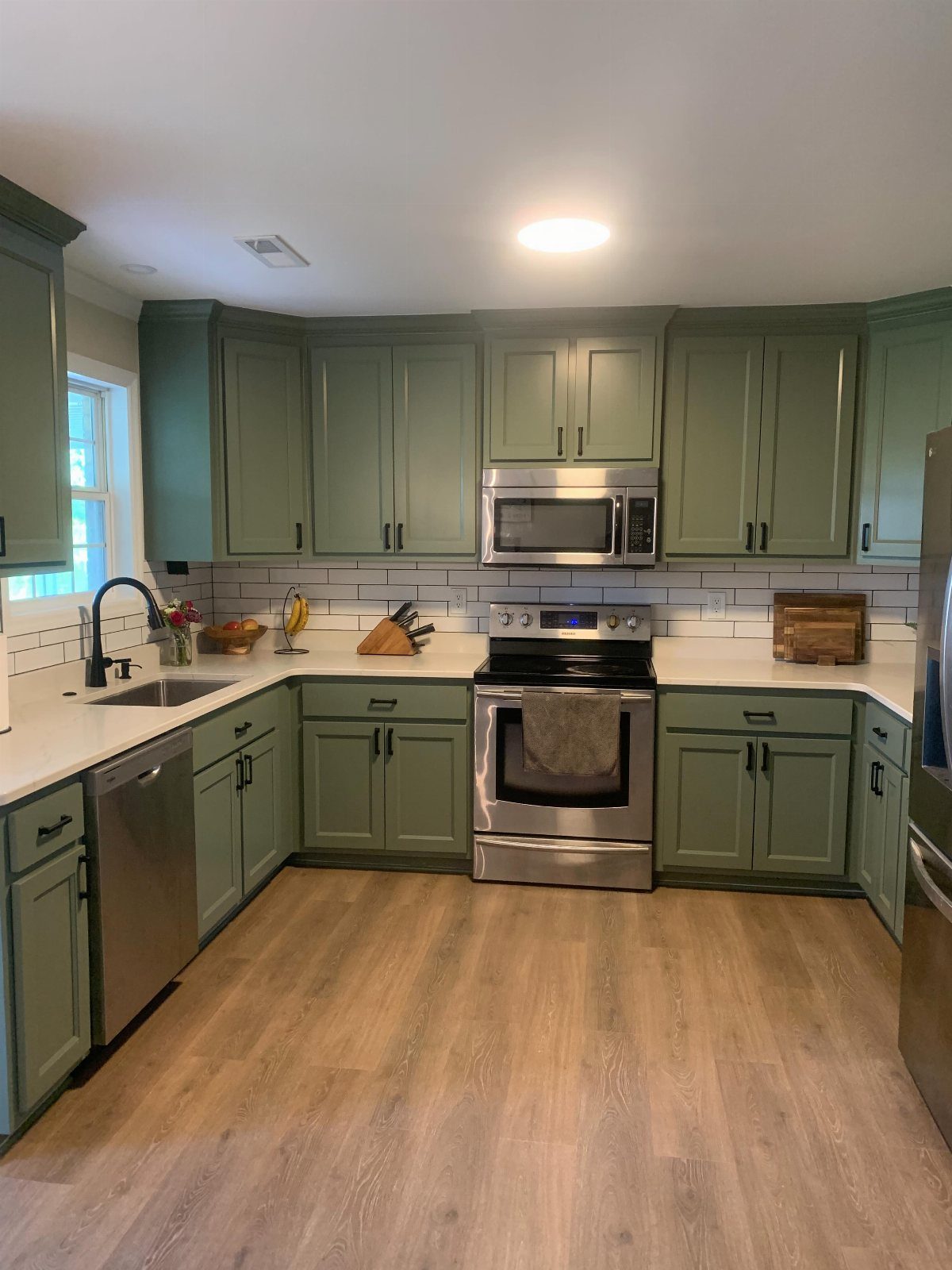
Sage green is the easy way into colored cabinets, because it behaves almost like a neutral next to white counters, white subway tile and light wood floors. Stainless appliances sit comfortably against it too.
If a full run of green feels like too much, paint only the lowers or an island and keep the uppers white.
I would hold a sample against your tile in both morning and evening light before buying a gallon, since greens shift more than most colors.
13. Use Blue Cabinets
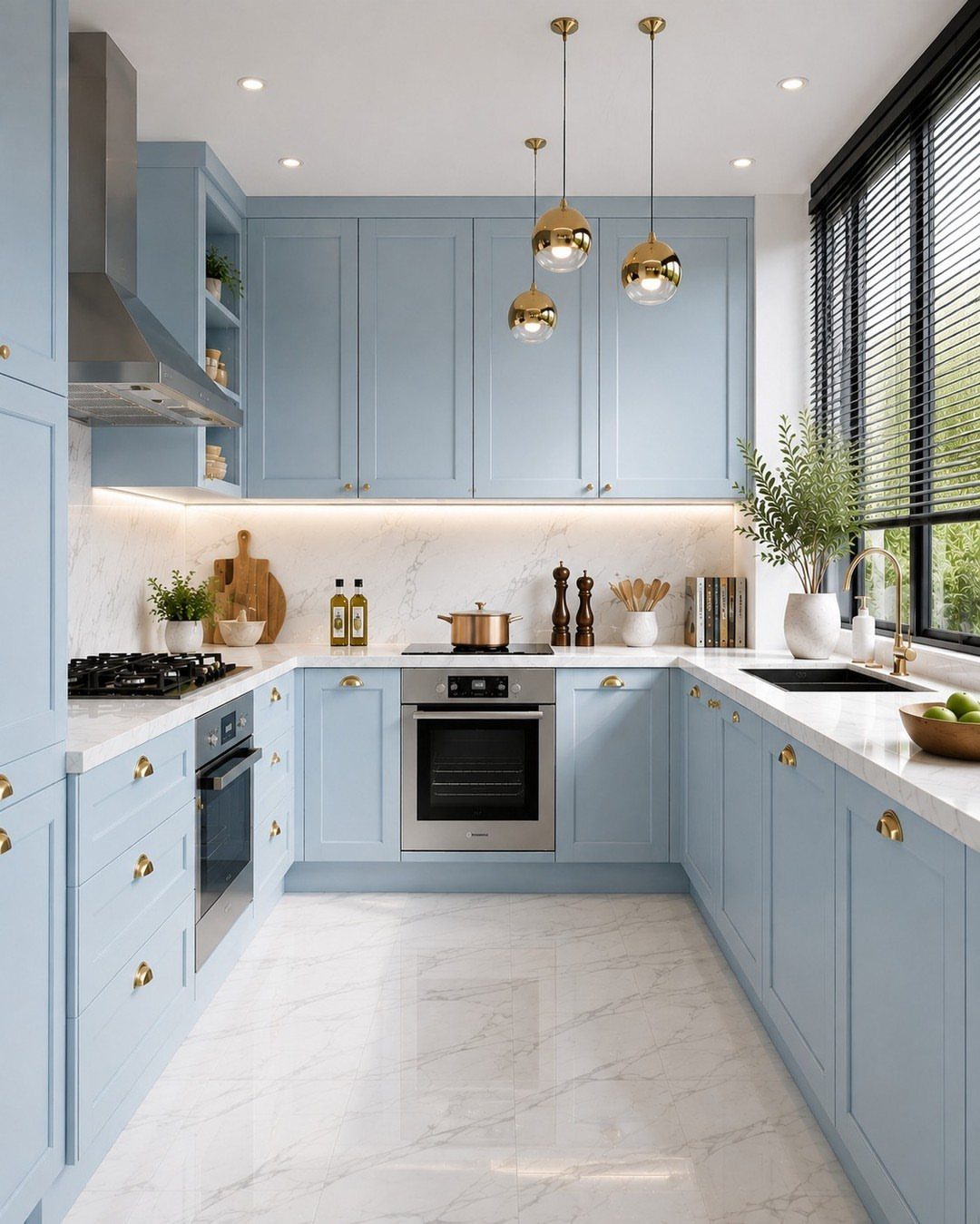
Soft blue reads calm instead of loud when the counters and floor are white marble. Gold pulls and pendants add warmth, so the color never turns icy, and shaker doors keep the shape traditional for a shade this light.
Not ready for blue everywhere?
Painting only the base cabinets or the island brings in the color, and white uppers keep the room bright. I would tape a sample next to your counter material before committing, since blue shifts with the light around it.
14. Paint Cabinet Interiors
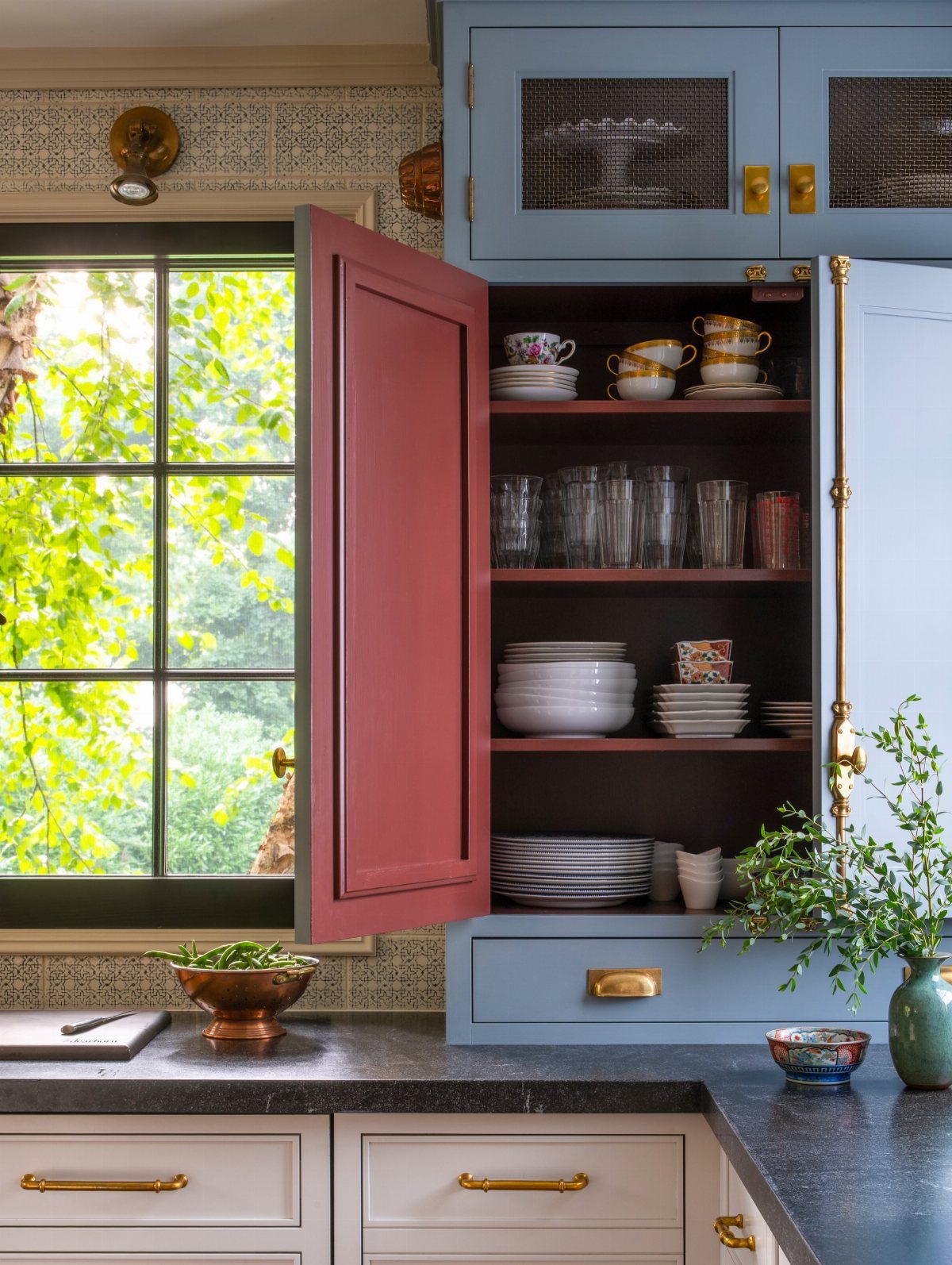
A painted interior is a small surprise you only see when the door opens. Red inside a blue cabinet makes white dishes stand out, and the surface is so small that a little paint goes a long way.
Open and glass-front cabinets show it off best. Pick one bold shade and keep the dishes simple so the cabinet does the talking.
15. Matte-finish Cabinets
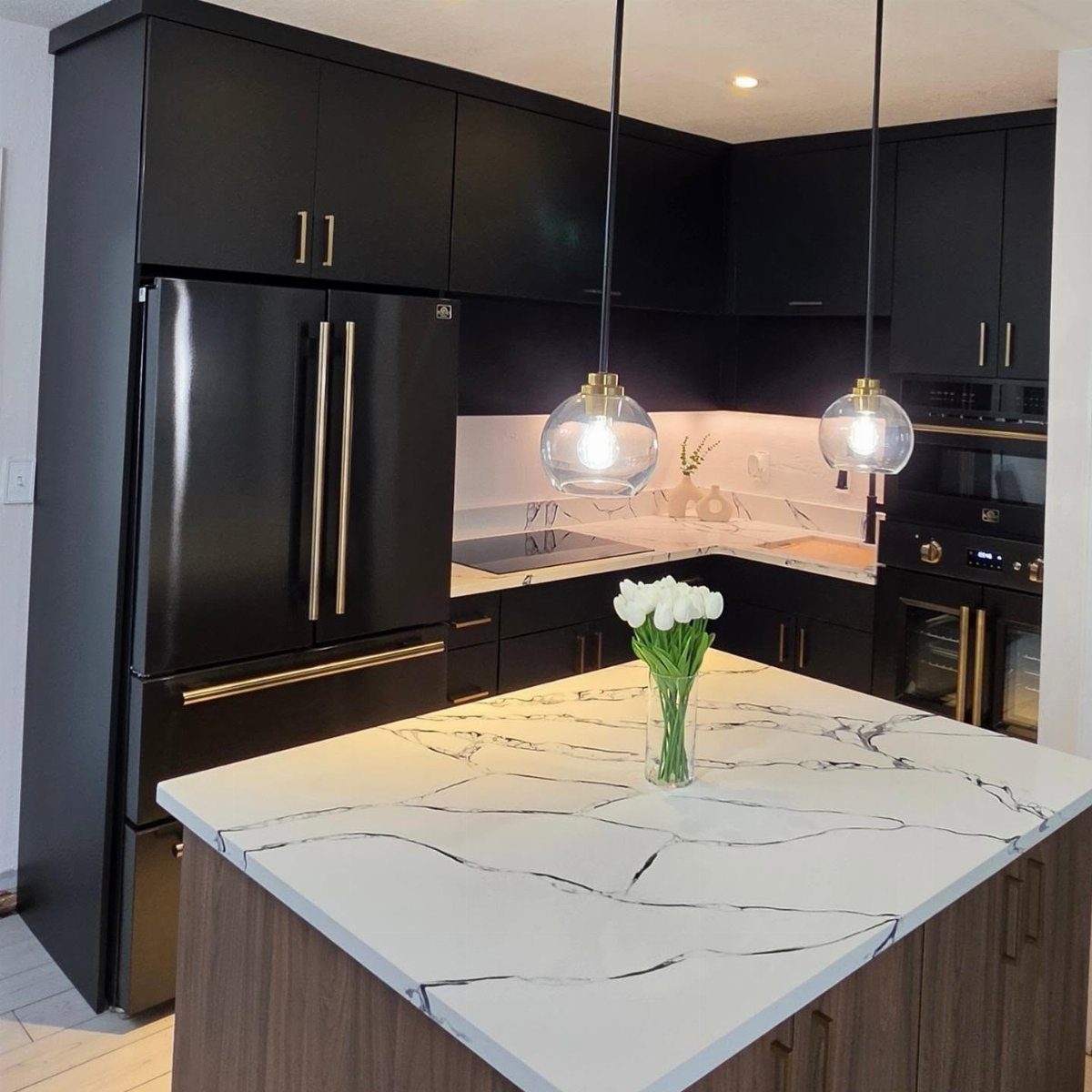
Matte black absorbs light instead of bouncing it, so the doors look flat and modern with no glare from the pendants overhead.
Matte paint soaks up light, so brass pulls and a pale stone countertop give the room some contrast and keep a dark color from feeling heavy.
For a dark color, I would choose matte over gloss, since gloss shows every reflection. Give a room like this plenty of light.
16. Add Wood Accents
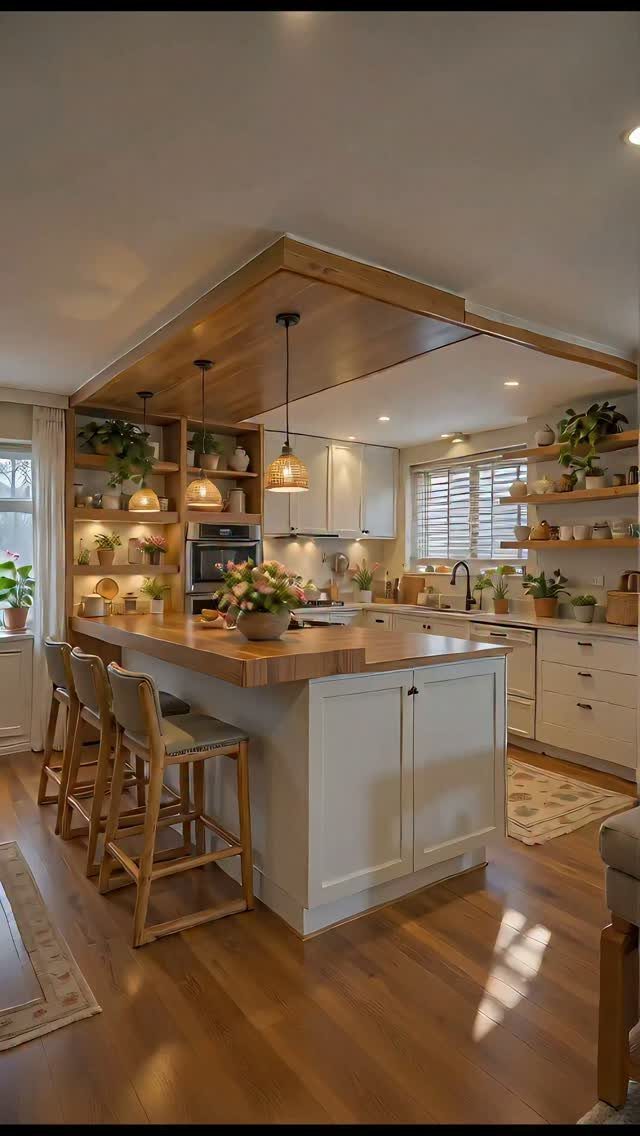
Wood warms up a white kitchen in 3 places here: the island top, the shelves and the ceiling. Repeating one tone across all three ties the room together, while mixing several woods can look scattered.
On a tight budget, start small. A wood island top or a single shelf changes the mood in a weekend, and the white cabinets can stay exactly as they are.
17. Add Stone Backsplash
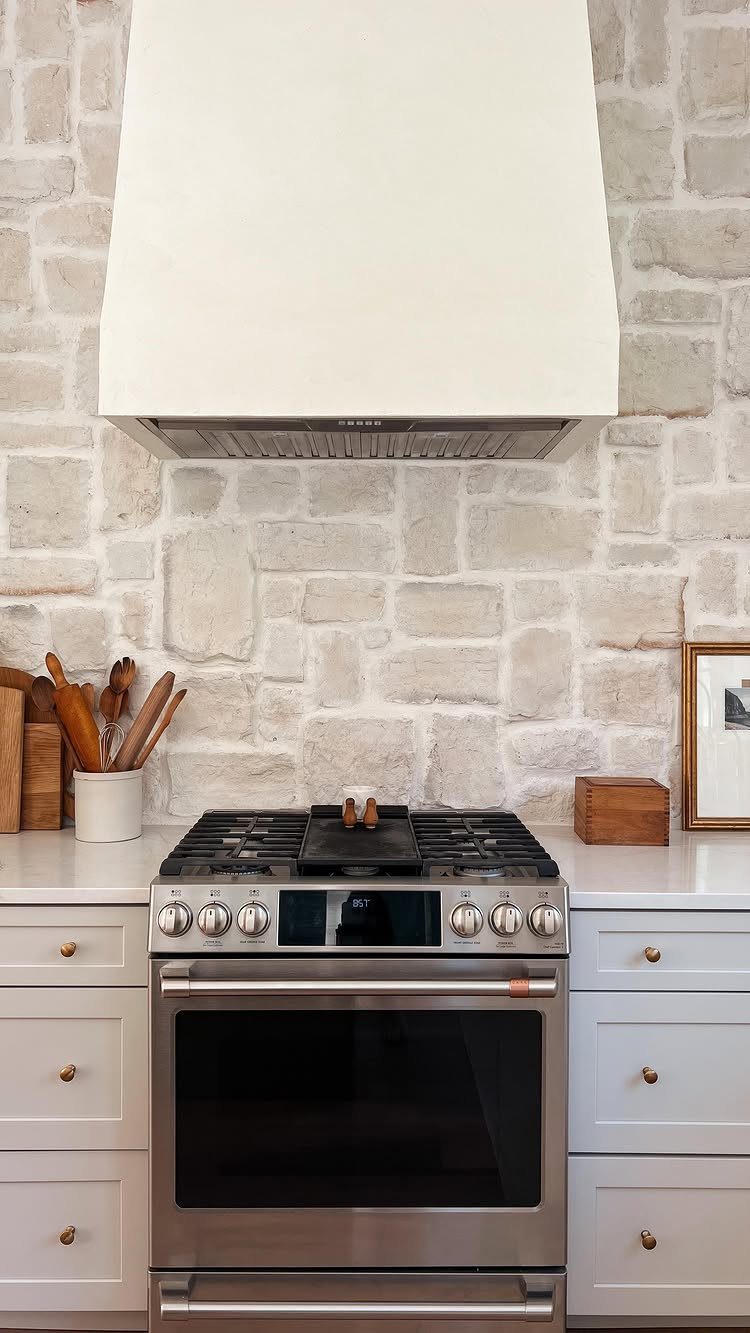
The wall behind the range takes the most splatter, which makes it a smart place to spend on stone. A light, textured tile adds depth to white cabinets and a stainless stove without adding another color.
Texture means rough faces and grout lines that hold grease, so plan to wipe it down regularly.
Many natural stones also need sealing, so ask before you buy. Limiting the stone to the range wall keeps the cost down.
18. Quartz Countertops
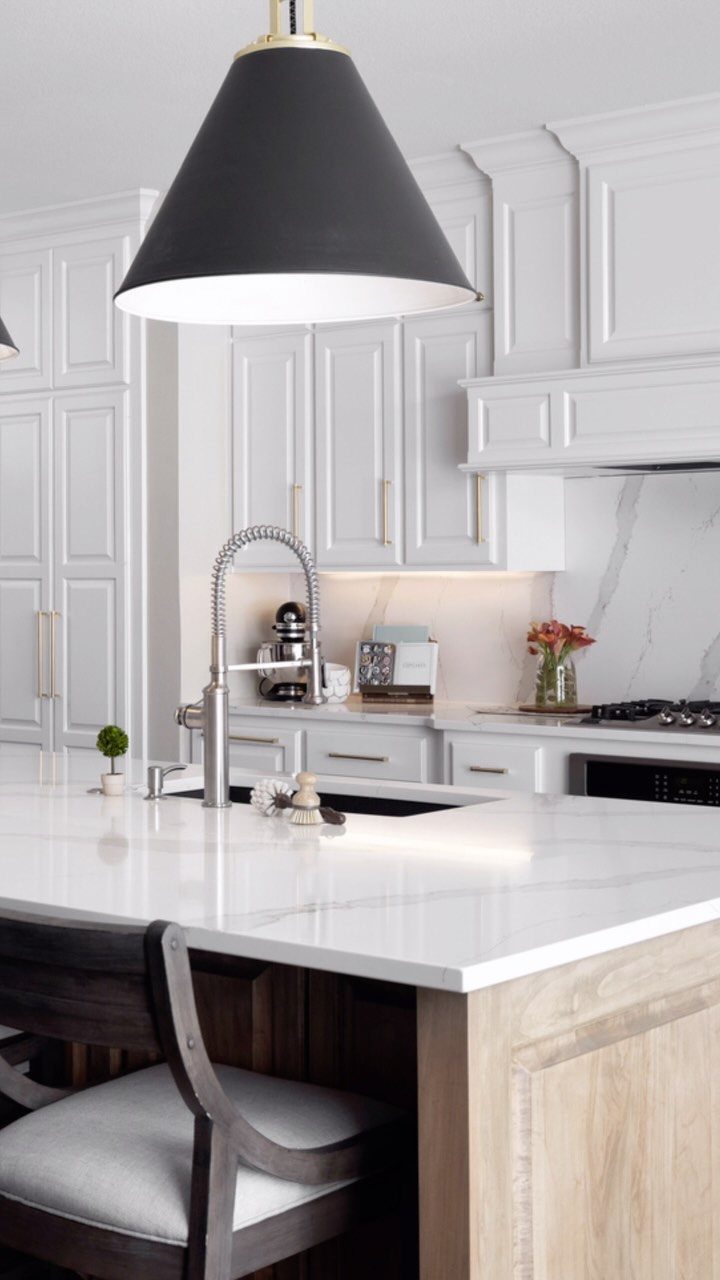
White quartz gives you the clean look of stone with little upkeep, and it sits crisply on a wood-base island beside white shaker cabinets. Spills wipe away without fuss.
Quartz is usually non-porous, so it doesn’t need sealing the way some natural stone does. A hot pan straight off the burner can still damage it, so keep a trivet nearby.
19. Add Pendant Lights
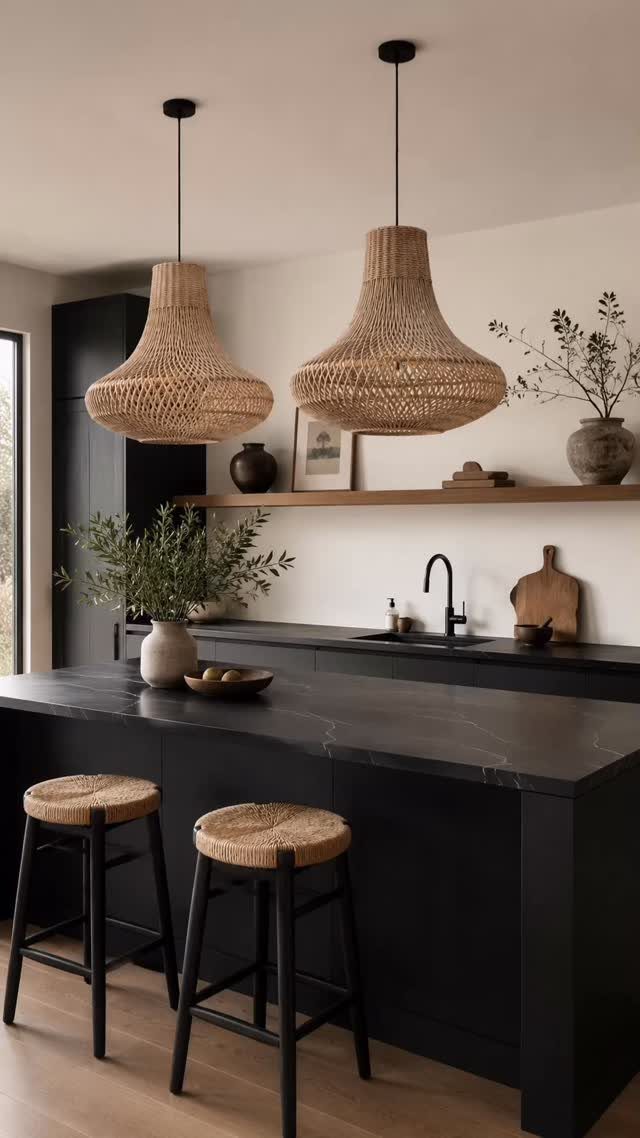
2 woven pendants over a long island read as a matched pair, and the wicker shades add texture to a room of dark cabinets and black marble.
Two matching pendants centered over a long island balance the room and give the eye one place to land.
Hang the bottoms above the counter, so nobody ducks and the stools stay under open light.
Center the pair on the island, not the room. For a dark kitchen I would choose natural fiber over metal shades.
20. Add Peel-and-stick Backsplash
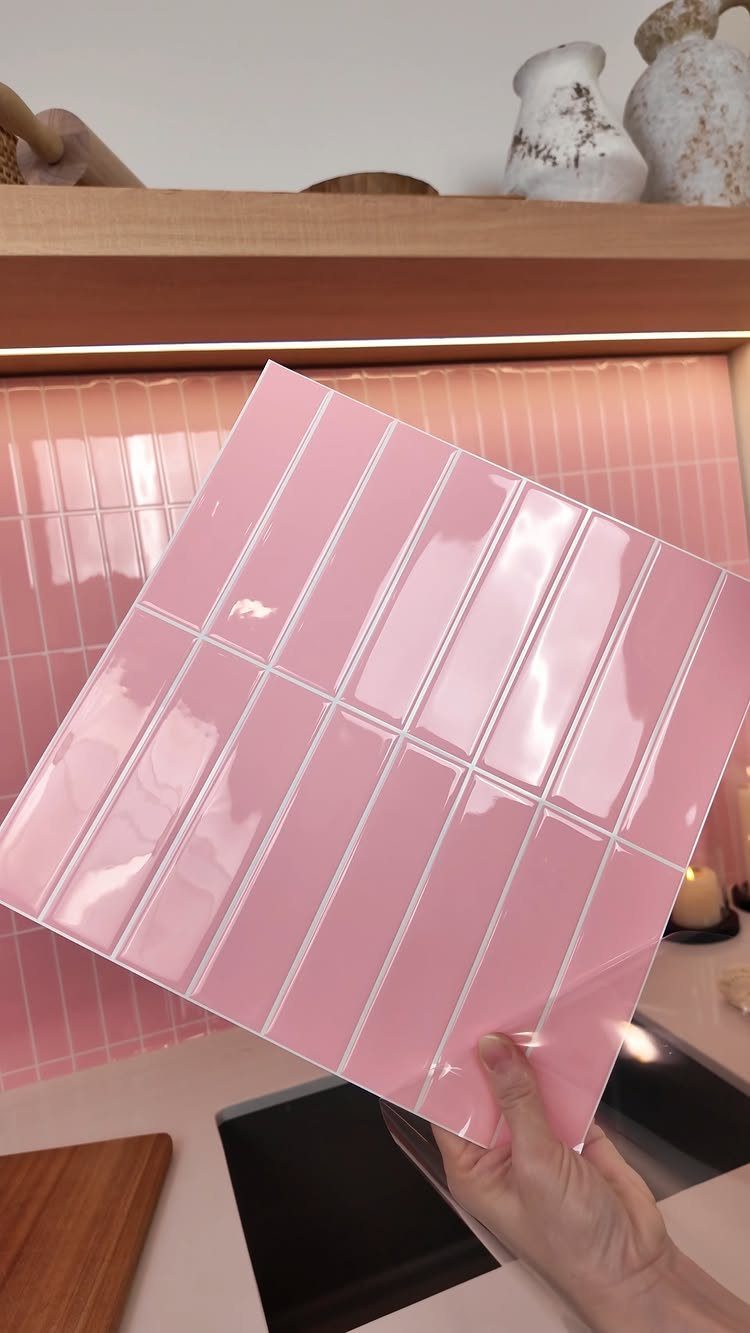
Pink peel-and-stick sheets turn the backsplash wall into a single bold color without a full tile job. Pink is loud, so I would keep the cabinets and counters quiet around it.
Order one sample sheet first and hold it against the wall before you buy enough to cover the whole space. Color reads differently under your own lights.
21. Updated Bar Stools
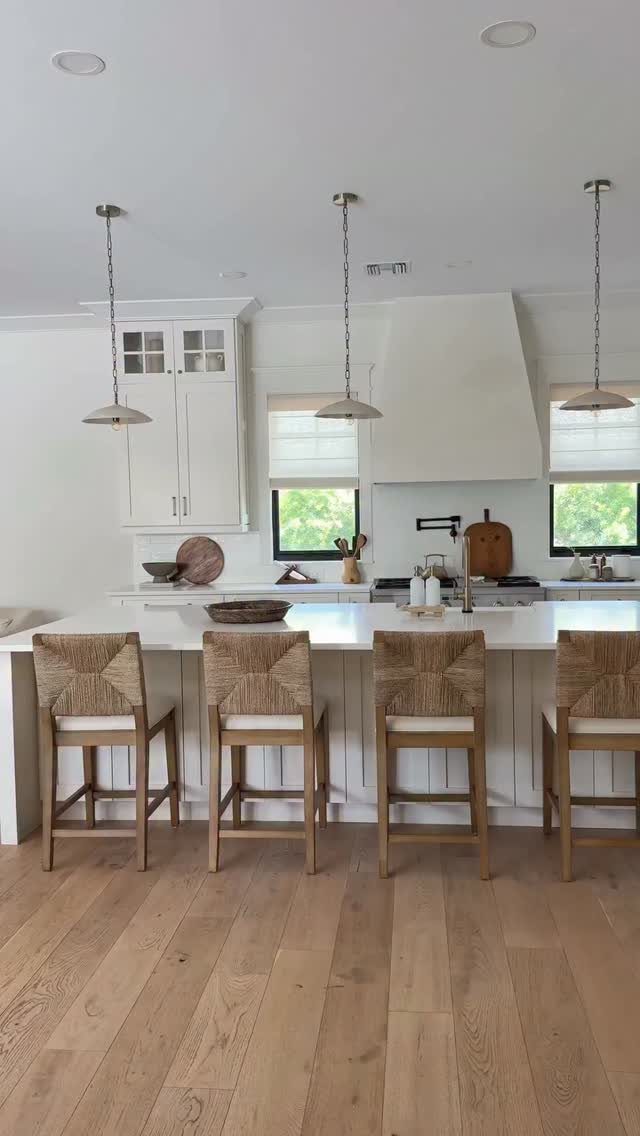
Woven-back stools in light wood give a plain white island some character, and swapping them is an easy way to change a kitchen without touching the cabinets. No paint, no tools, just new seats.
Match the wood tone to something already in the room, like the floor or a shelf. Measure your island’s counter height before ordering, since the stool seat has to match it.
22. Kitchen Greenery
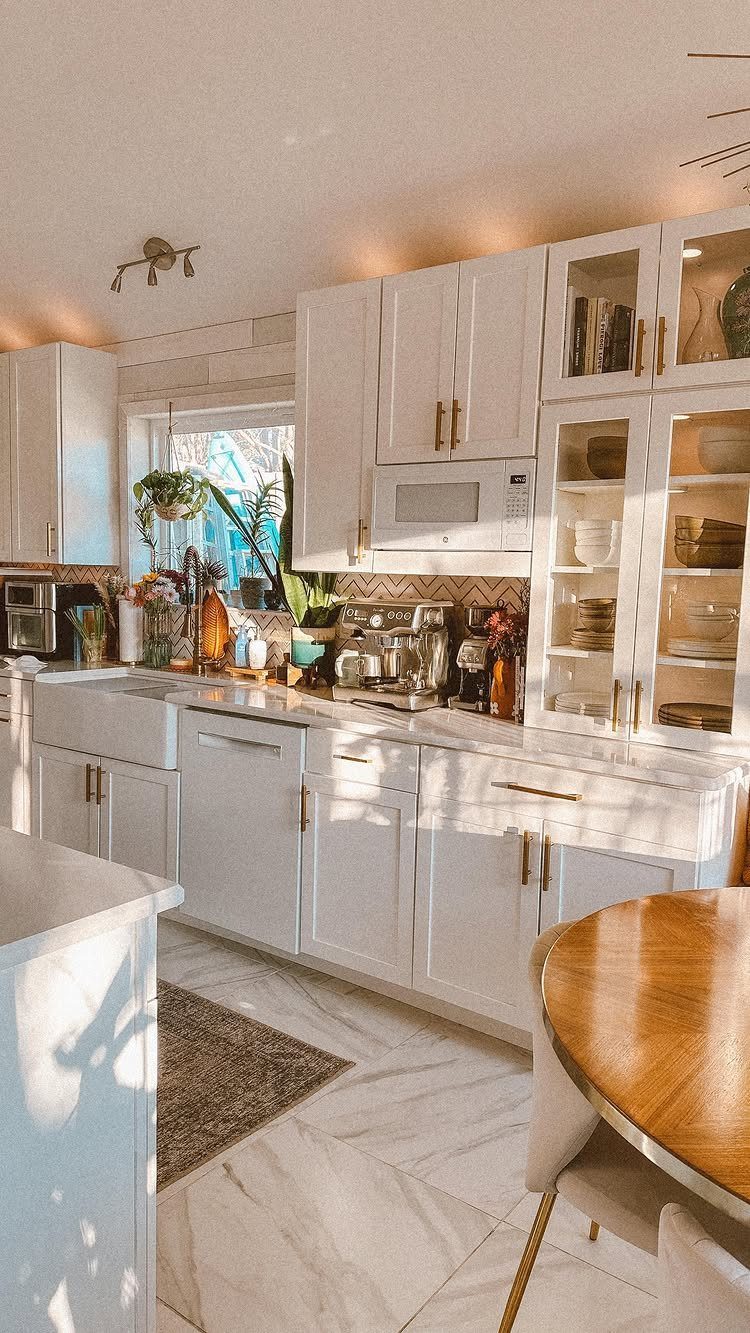
Small green plants are the cheapest way to soften a white kitchen full of gold hardware. A few pots on the counter and one hanging by the window add color without taking up work space.
Keep them to a handful so the counter stays usable. If you cook a lot, I would make a few of the pots herbs you can snip.
23. Kitchen Wall Art
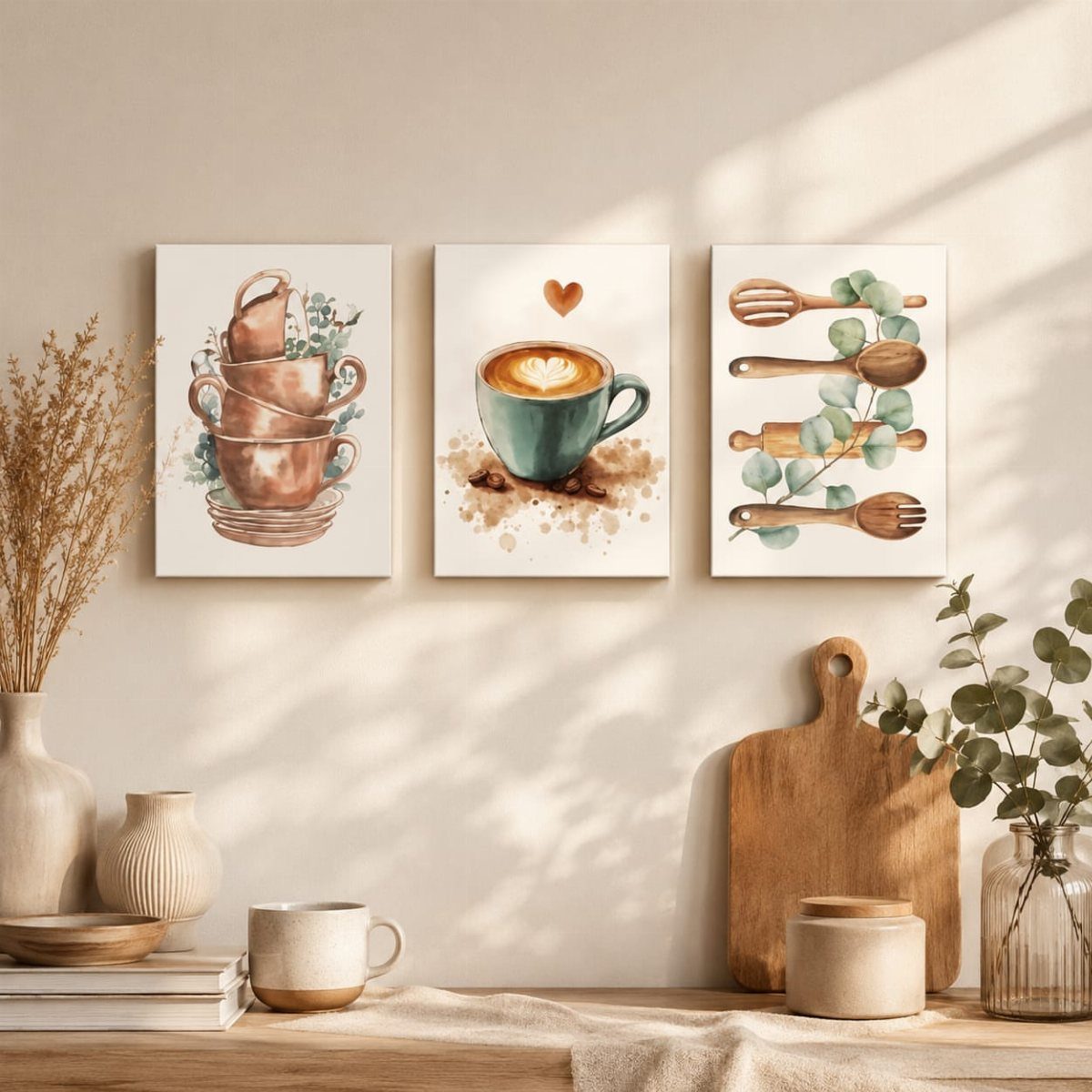
3 matching prints in a row make a small gallery that tells visitors what this corner is for. Art works best when its theme matches what happens below it, like coffee prints over a coffee station.
I like prints about something you actually use.
24. Hanging Cookware
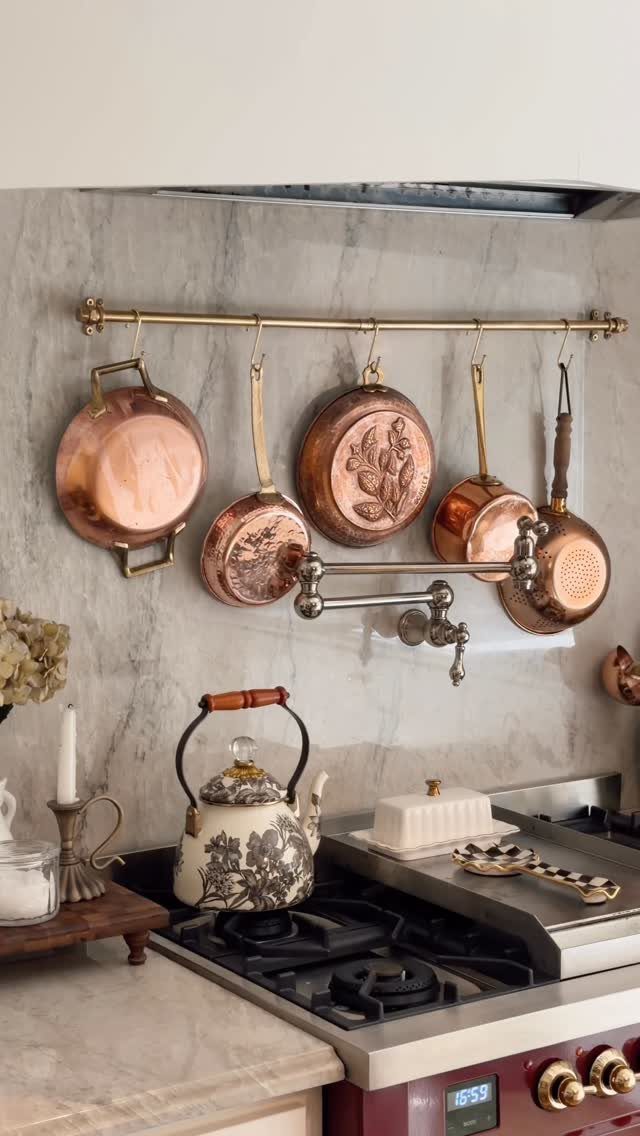
Copper pots on a brass rail turn cookware into decor, and an old set you already own costs nothing to display. Against a marble backsplash, the warm metal stands out.
Hang only the pieces you reach for daily, so the display earns its wall. Heavy pans pull hard on a rail, so screw the mounting into studs, not just drywall.
25. Color-blocked Kitchen
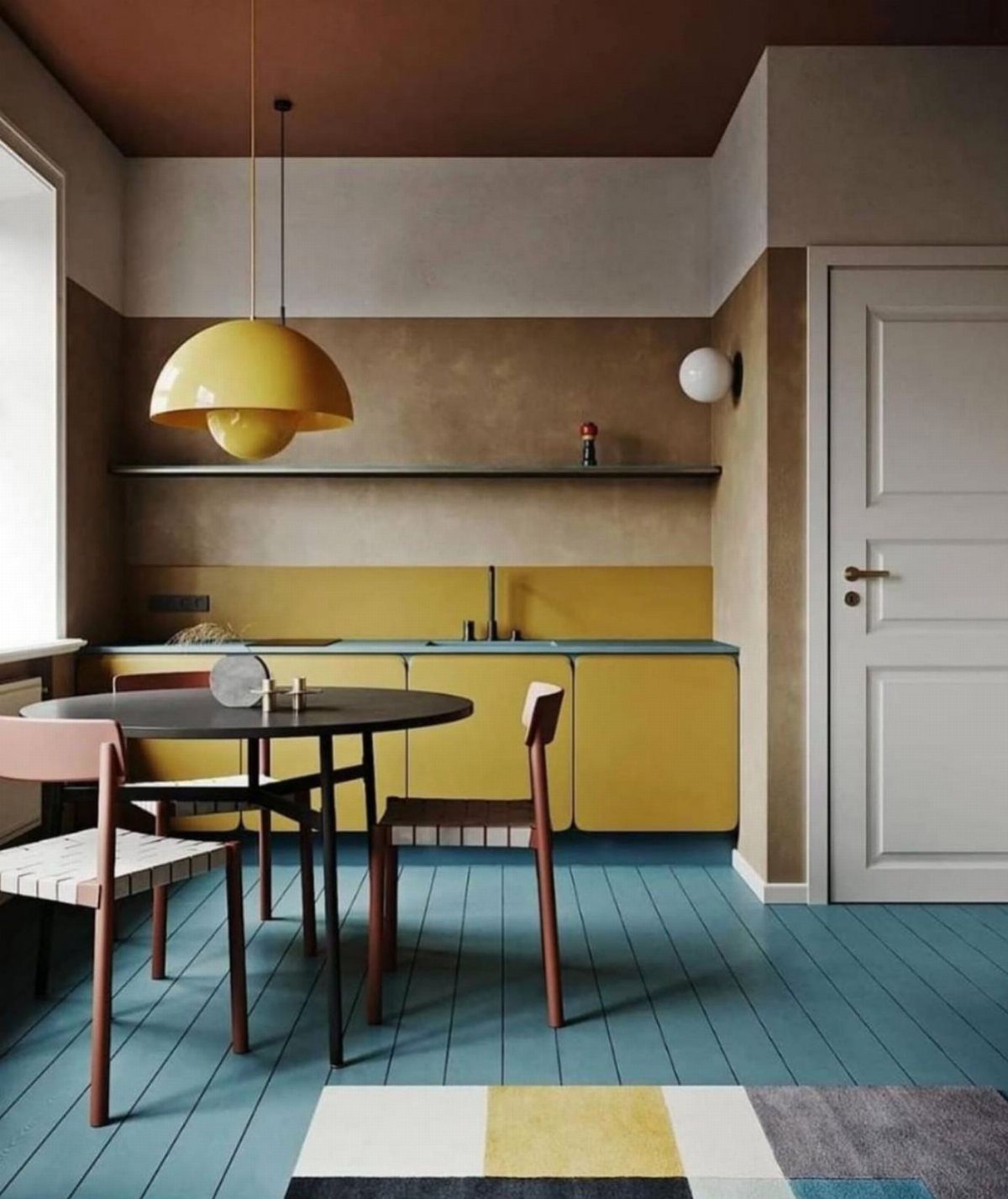
Paint the lower cabinets, the wall and even the ceiling in their own flat colors, and the crisp lines where those blocks meet do the job that trim or tile usually does.
Painting the ceiling is the boldest move, because it pulls the eye up and makes a plain room feel finished.
Pick three colors and give each one surface.
A fourth starts to look busy. I would test the ceiling shade on a large sheet first, since dark colors read heavier overhead than they do on a chip.
26. Bubblegum-pink Range
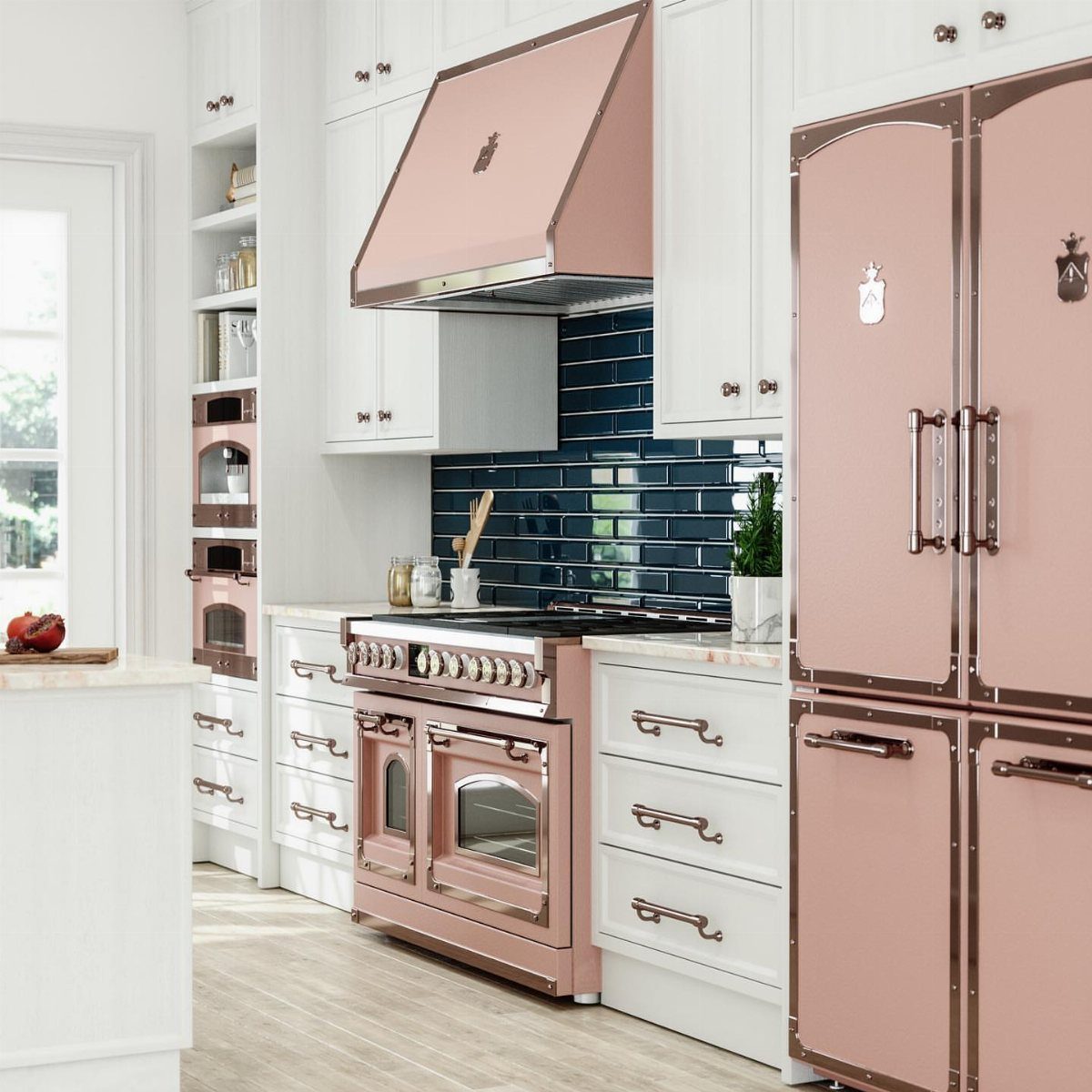
One appliance in bubblegum pink can carry a whole kitchen, and here the range, vent hood and refrigerator match so the color reads as a plan rather than an accident.
Dark blue tile behind them gives the pink something to push against, while white cabinets keep the rest of the room quiet.
Colored appliances cost more than stainless, and the color is hard to undo later, so I would commit only if you love it. If you are unsure, start with the range alone.
27. Banquette Connected to Island
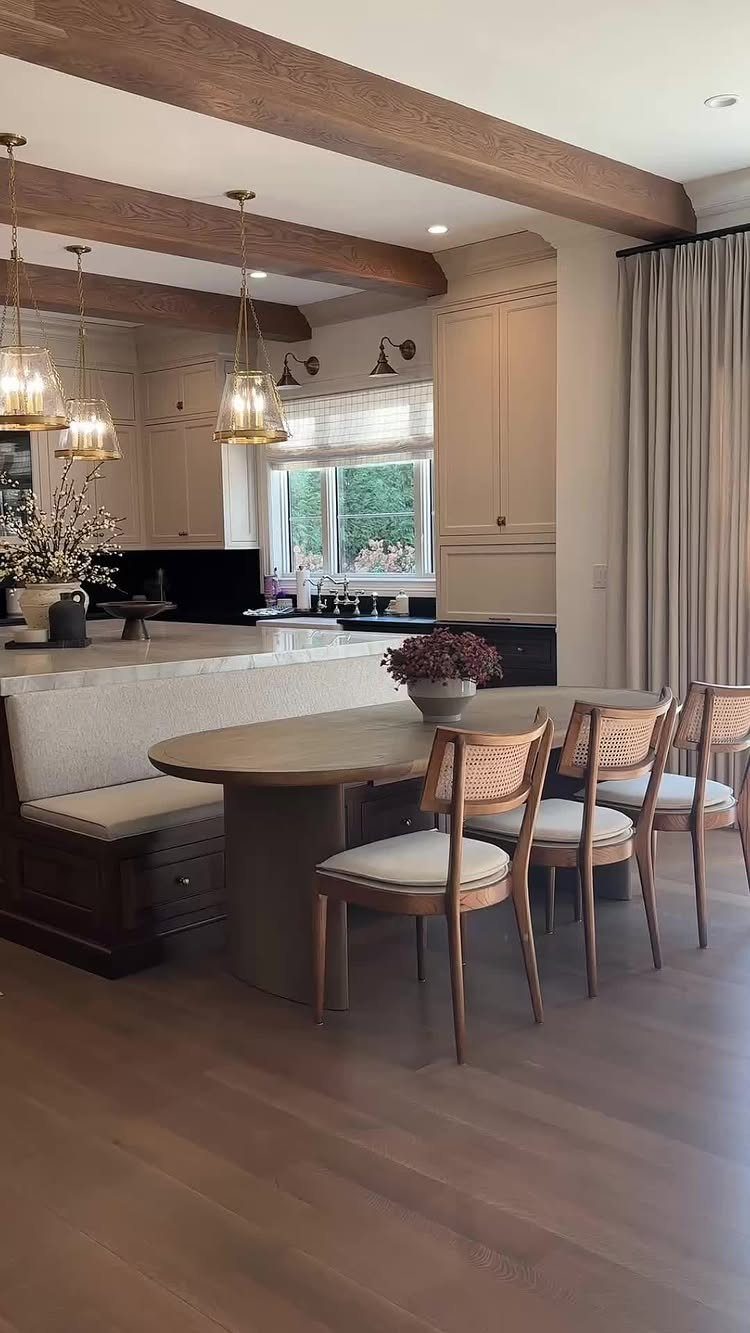
A banquette built into the end of an island saves the floor space that a separate dining set would eat, and it puts the cook within talking distance of whoever is seated.
A marble island with an oval table beside it keeps traffic moving, since an oval has no corners to catch a hip.
Measure the seat depth and the table gap before building anything. I would favor a banquette over stools if you eat meals in the kitchen, because the back support is the difference between a quick snack and a long dinner.
As if a 13-foot green quartzite island isn’t stunning enough, Budd chose to attach a custom banquette to the side of it.
28. Baker’s Table with Marble Slab
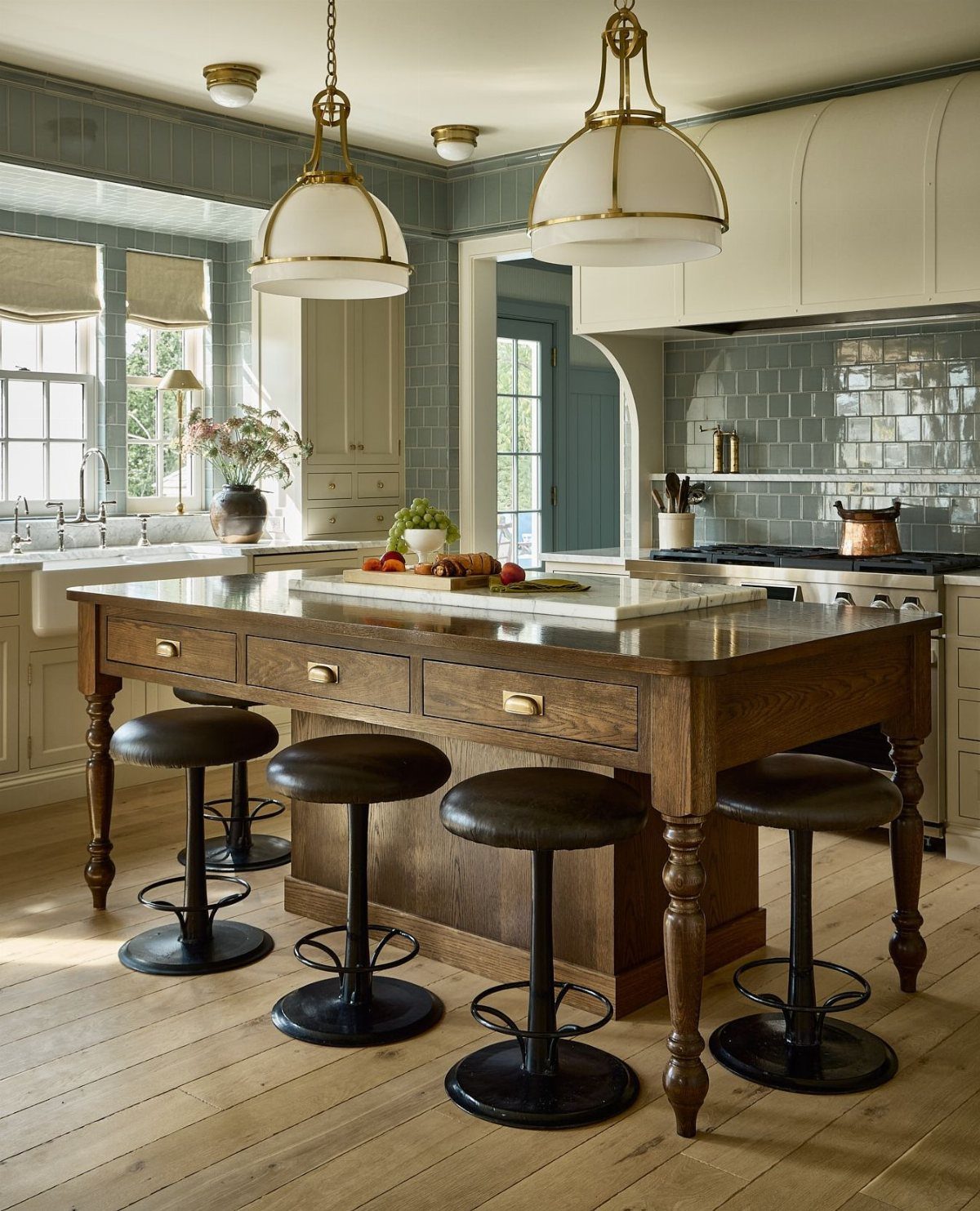
A baker’s table swaps the fixed island for a freestanding piece, with a wooden base and a white marble slab top that stays cool for rolling dough.
A table on slim, open legs keeps the floor visible, which makes a smaller kitchen feel less crowded, and stools that tuck underneath keep the walkway clear.
Choose this over a built-in island when you want to move the piece later, or when the room is too tight for cabinets on all sides. Marble can stain, so I would wipe spills right away.
Frequently Asked Questions
What are some ways to modernize my kitchen cabinets?
Switch to flat-panel (slab) doors or Shaker fronts, and add new pulls.
A slab door has no frame at all, so its flat face looks sharp and contemporary; a Shaker door keeps a simple square frame and lands tidier and more traditional.
If new doors aren’t in the budget, repainting and changing the handles gets you much of the same updated look. Dark cabinets in a matte finish look flat and current too, and the overhead lights have nothing to bounce off.
What kitchen trends will be outdated in 2026?
Stark white cabinets, white counters and nothing warm to break them up are the part of the look I’d expect people to tire of first.
Warm minimalism is stepping in: simple lines, with wood, stone and earthy neutrals taking the chill off.
If you already have white cabinets, a wood island top or a single wood shelf brings in that warmth in a weekend without repainting anything.
What is the newest trend in kitchen cabinets?
Green cabinets, natural wood grain and small pops of color lead the current trends, along with slab backsplashes.
Next to white counters, white tile and pale wood floors, sage green acts like a neutral, so it’s the gentlest way to bring color in. Cabinets with the wood grain left visible bring a warmth that paint can’t fake.
What is the least expensive way to redo kitchen cabinets?
New hardware plus paint is the cheapest route for most kitchens, usually under $600 in materials for a whole kitchen and about one weekend of work. A knob swap alone can start around $5.
You keep the existing boxes and doors, so the only things you buy are paint and pulls. Under-cabinet lighting and a peel-and-stick backsplash are other low-cost updates that pair well with it.
Can small kitchens still look modern?
Yes. In a small kitchen, pale cabinets, storage built into every spare inch and a tight layout keep the room feeling open and up to date.
Open shelves in place of a few upper doors feel lighter than a solid wall of fronts.
An island only earns its spot if you can walk around it without turning sideways, so go slim; a freestanding table on thin open legs does the same job and leaves more floor in view.