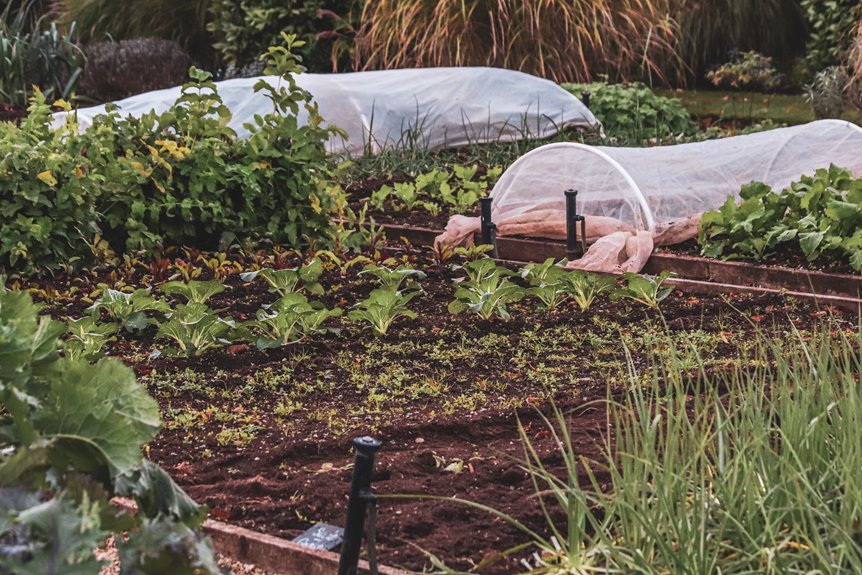
I learned the hard way that a two-foot bed next to my hedgerow became a rabbit salad bar, so I now build smarter. Start with beds at least two feet high and keep them away from dense cover where critters hide. Add fencing matched to your pests; two to three feet stops rabbits, but deer require six to eight feet with bottom barriers laid flat. Bury wire 12 to 18 inches deep to block diggers, and remember to use netting during ripening season. A quick inspection before peak pest time can prevent a two-inch gap from becoming a problem later. There are several effective strategies for keeping your harvest safe.
Start With Raised Bed Height and Placement to Deter Animals
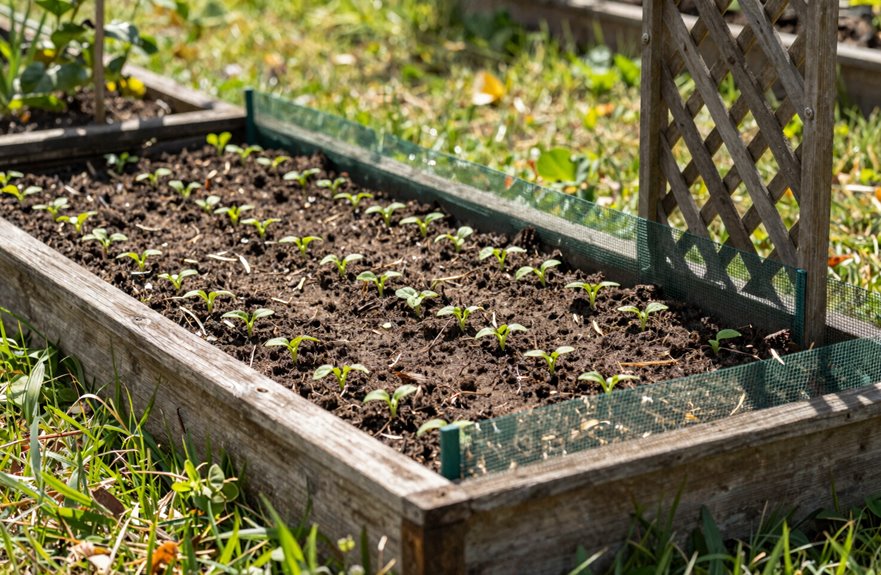
How high should you build a raised bed to keep hungry critters out? Two feet is my minimum. Rabbits can jump, but they prefer easier targets. Provide them with a challenge.
I place my raised beds away from dense shrubs where pests hide. Positioning them near cover invites raccoons and other animals. I learned that one the expensive way.
For animal deterrence, I combine height with strategic placement. Clear sightlines allow me to spot trouble early and avoid surprises.
Adding garden fencing on top of the beds creates another layer of protection. A short barrier can deter the more ambitious critters. For deer, a fence of six to eight feet around the entire area is necessary. Reflective strips also help. Multiple defenses are more effective than relying on a single method.
Match Your Fence Height and Material to Specific Pests
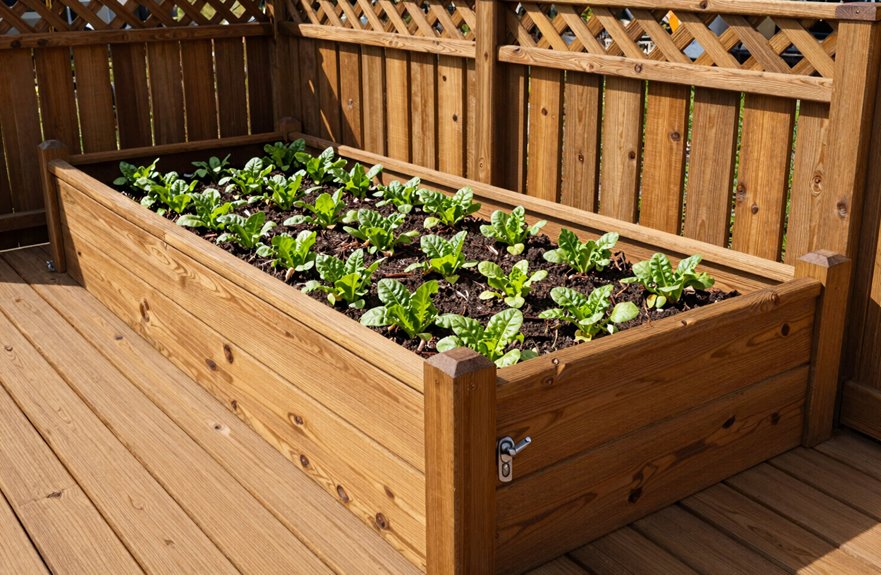
Why do I keep building fences that fail? I used to think one size fits all. It doesn’t.
For rabbits, fence height is crucial. Two to three feet stops them, but I extend it underground as well. They are diggers. I’ve added metal rabbit fencing at the bottom of taller barriers when my greens looked too tempting. It works.
Deer fencing completely changed my approach. A minimum height of six to eight feet is necessary; otherwise, I’m just decorating their buffet. I lay the bottom six inches flat on the ground to prevent them from sneaking underneath. Solid gates must stay closed; gaps ruin everything.
I’ve realized that my mistakes are common among many. We all start somewhere. Match your barrier to the specific pest, and you will be able to rest easy at night.
Block Burrowers With Underground Barriers and Bed Design
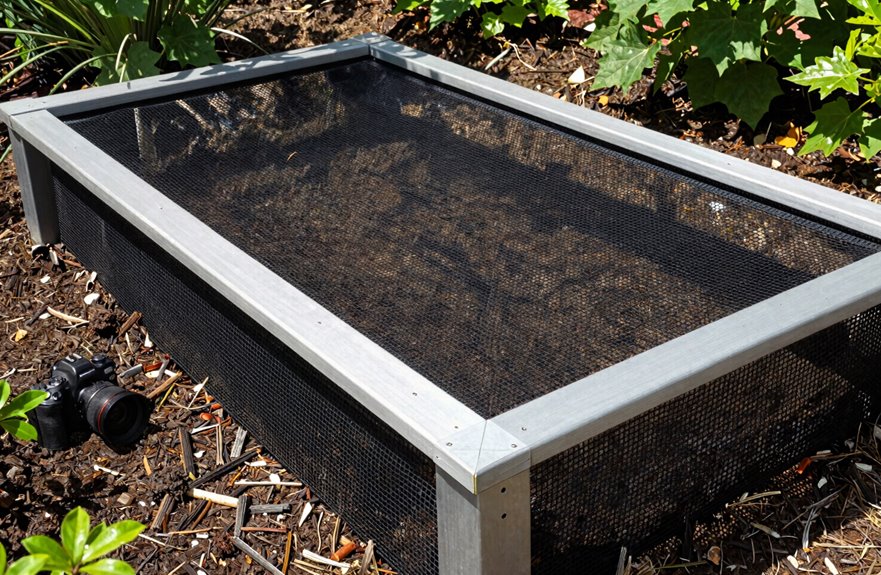
Where do those holes under my bed come from? Burrowing animals, of course. I’ve learned that my raised bed design requires underground barriers to prevent unwanted guests.
Here’s what I’ve figured out:
- Bury your defense; extend fences 12–18 inches deep so gophers hit a wall, not your carrots.
- Mesh matters; use chicken wire with 2 cm holes or smaller. I tried larger once and won’t make that mistake again.
- Lift and cap; raise beds 18+ inches and top barriers rigidly. Tunnels become dead ends.
- Check your corners; seal gaps after rain. I’ve found new holes I definitely didn’t make.
Solid bases contribute to a successful garden. We are all learning as we grow.
Add Plants and Netting for Extra Crop Protection
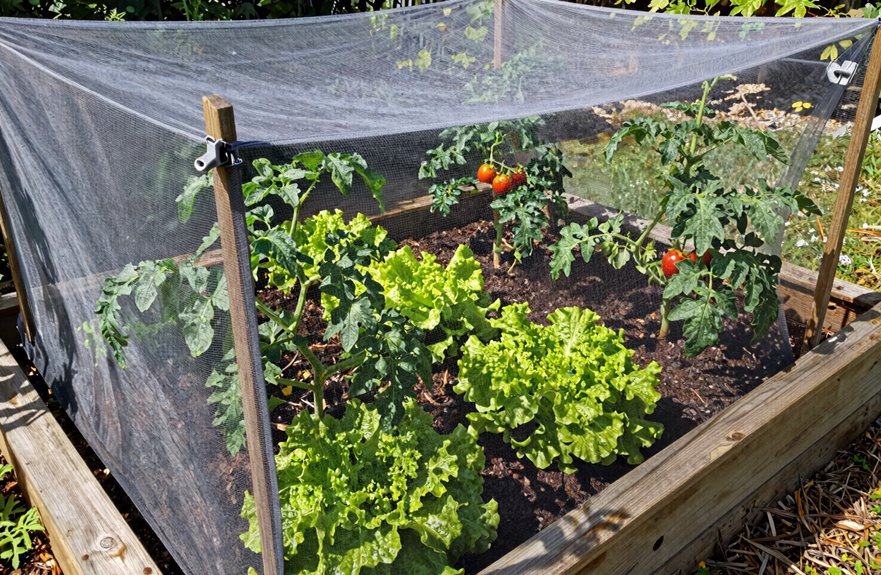
When did netting become my garden’s best friend? Probably right after the rabbits threw their “welcome to the neighborhood” party in my lettuce.
I’ve learned that wildlife protection doesn’t mean building a fortress. I drape netting over my raised beds during ripening season, and it works effectively. I elevate my beds two feet high, then add a short fence on top. Ground-dwellers can’t reach my tomatoes, but sunlight still pours through.
My trick is pairing netting with plants local wildlife finds unappealing. Marigolds near my vegetables deter deer. I cover tender new growth with light netting because young plants need the most support. I’ve learned from experience that one gap can lead to losing a squash. Check your barriers frequently.
Inspect and Repair Barriers Before Peak Pest Seasons
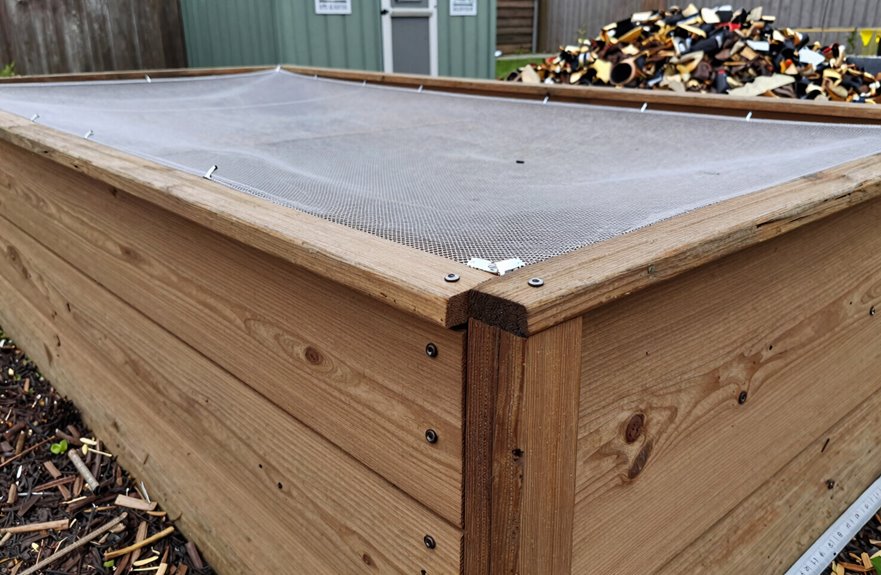
Before the spring planting rush hits, I take an afternoon to walk my garden perimeter with a critical eye. I’ve learned that a two-inch gap I ignored in March becomes a rabbit highway by May. I check my raised bed barriers for loose wires, stretched netting, and wobbly posts that pests will exploit.
A two-inch gap ignored in March becomes a rabbit highway by May.
I never skip these steps:
- I dig down. I extend fencing 12–30 inches underground because burrowers love sneaky tunnels.
- I gate-check twice. Hinges sag, and I’ve watched a squirrel squeeze through a closed gate I thought was secure.
- I replace weather-beaten mesh. Sun-rotted plastic won’t stop a determined opossum.
- I seal every corner gap. Trellises and bed edges can hide access points I prefer to avoid discovering mid-harvest.