
Whether you can fasten anything to the walls and floor decides which banquette is yours. Renters still have real choices: a cushion hung on leather straps costs only a couple of screw holes, and a freestanding cream banquette costs none.
Owners who want to go furthest can order custom millwork, like the rust-colored nook in this list, or build storage right into the bench.
1. Cozy Cushioning
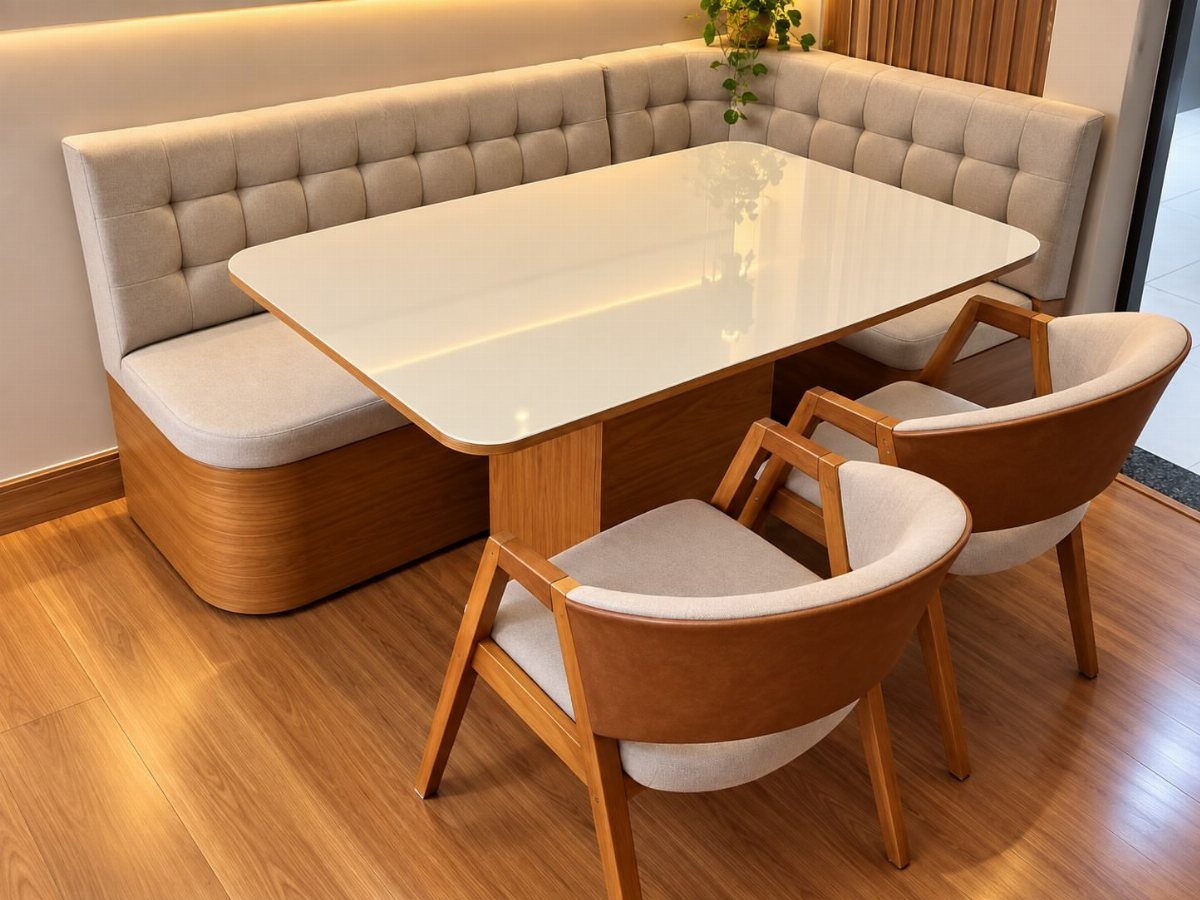
A tufted L-shaped banquette in a soft beige reads more like a sectional than a dining bench, and that is the appeal.
The deep buttoning gives the back some shape, so the piece looks finished even in a plain, minimal room.
Pair it with a simple white table and slim wooden chairs on the open side. Pale upholstery shows every spill, so I would pick a performance fabric if kids or pets eat here.
“Dining nooks create intimacy and invite conversation that suggests neighbors snuggle up closer to get everyone in.”
2. Wall-Hung Pillows with Leather-Belt Straps
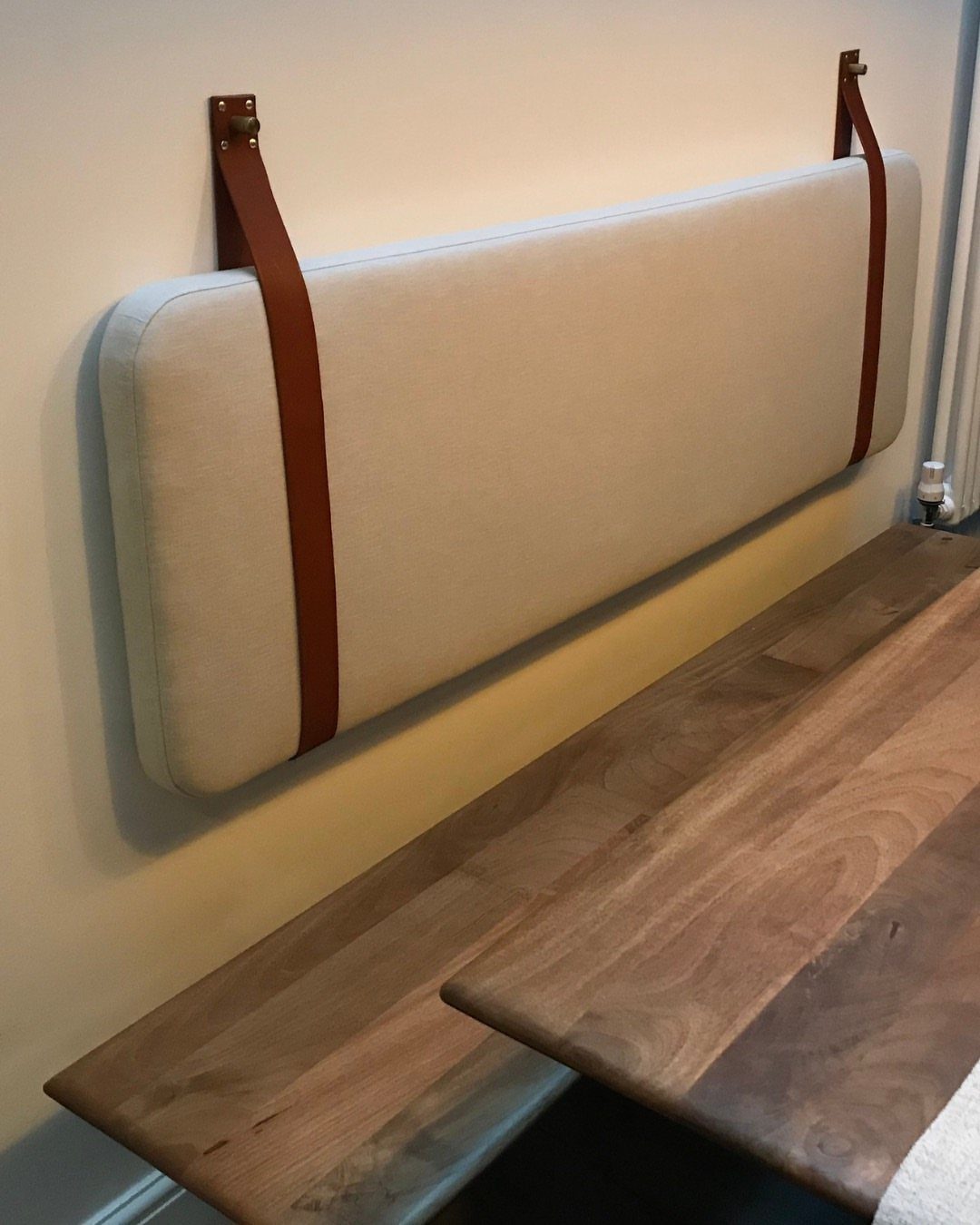
Skip the built-in back entirely: a long cushion hung on the wall with 2 leather straps gives you something to lean on without any carpentry.
Because nothing is fixed to the floor or framed in, this suits renters who can live with a couple of screw holes.
Mount the straps into studs or use proper wall anchors, since a cushion holds real weight when people lean back. Leather brown against a beige cushion also looks warmer than plain fabric ties.
3. Add Some Curves
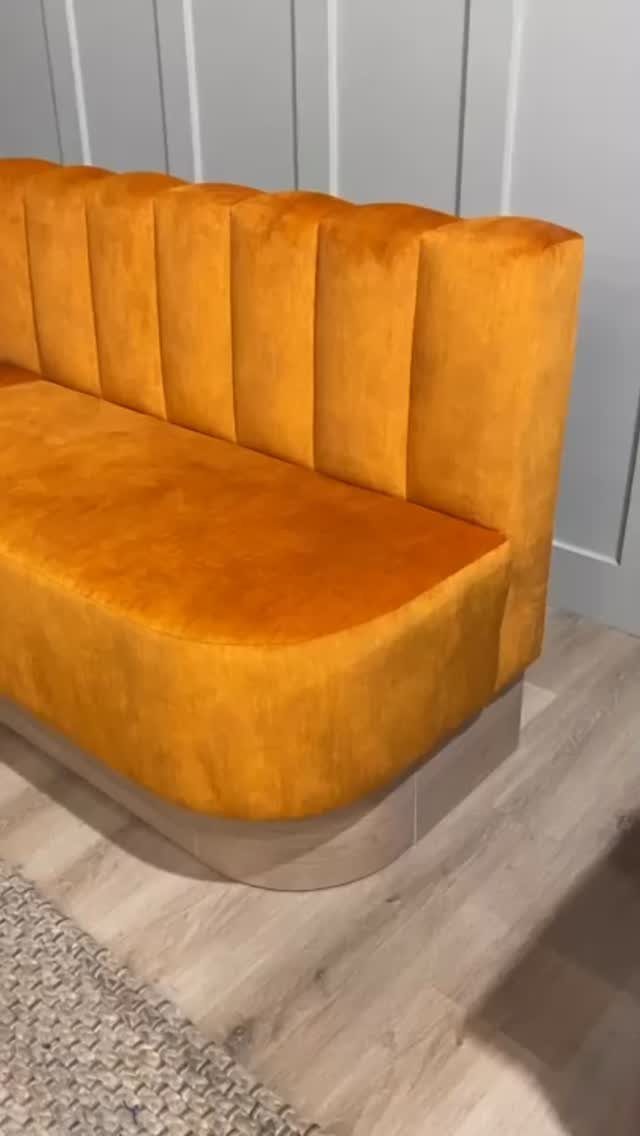
2 armchairs push a table out into the room; a curved bench lets people slide in and share the same space. A rounded back also feels softer than a straight run, which helps in a tight dining area.
Vertical channel tufting adds texture without extra pattern, and a velvet in a strong color carries the whole room against gray paneling.
The maker says the deep seat cushions are what make it comfortable, so check cushion depth before you commit.
4. Build in Storage
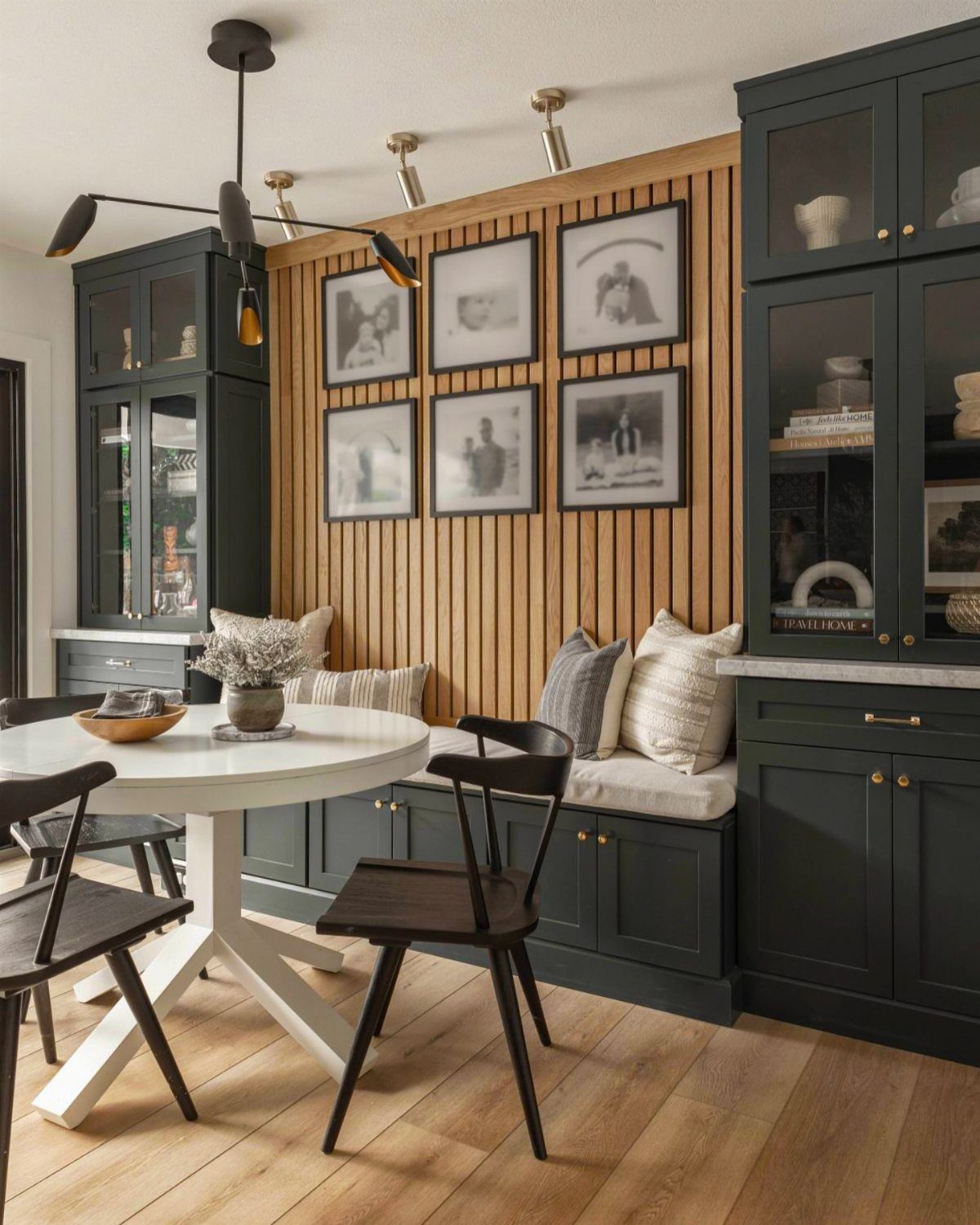
Drawers under the seat turn dead space into a spot for placemats, napkins and the serving dishes that never fit in the kitchen cabinets.
In a small home, that storage is the best argument for building the banquette rather than buying one.
Plan drawer fronts early, because the seat height and the drawer depth have to be worked out together.
5. Follow the Curves
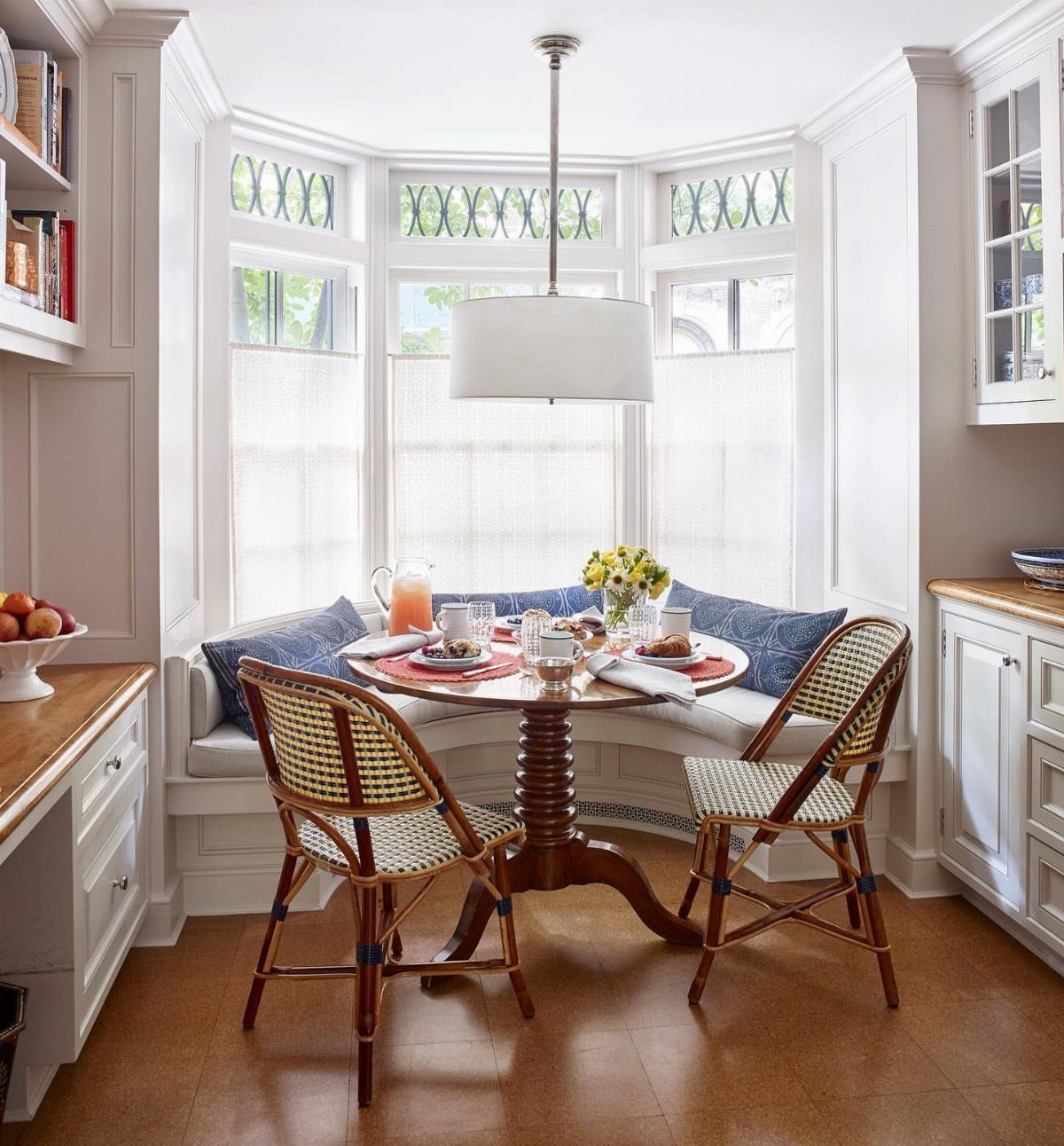
A bay window already has the angles; the banquette only needs to follow them. Built-in seating that hugs those walls wastes no floor space and leaves the center open for a round pedestal table.
Round tables work best here because nobody gets stuck on a sharp corner when sliding along the bench. Bistro chairs on the open side are light enough to move, and a drum pendant overhead keeps the eye on the table.
6. Window Seat
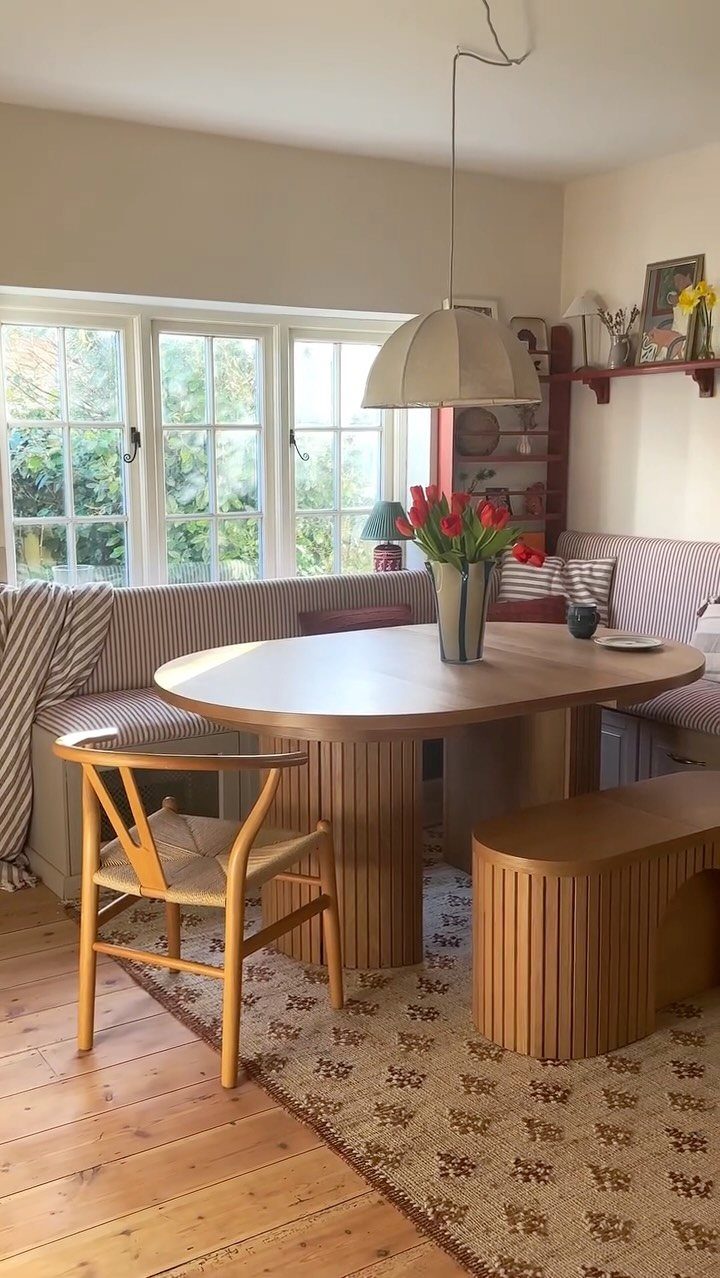
Daylight is free, and a banquette placed right under a window uses it all through breakfast. An L-shaped seat with a striped cover makes a corner feel like its own room.
A rug under the table helps mark the nook, and a loose bench or a single chair on the open side keeps seating flexible.
Stripes hide small marks better than a solid pale fabric, which I would pick for everyday use.
7. Inky Banquette and Dark Wood Stain
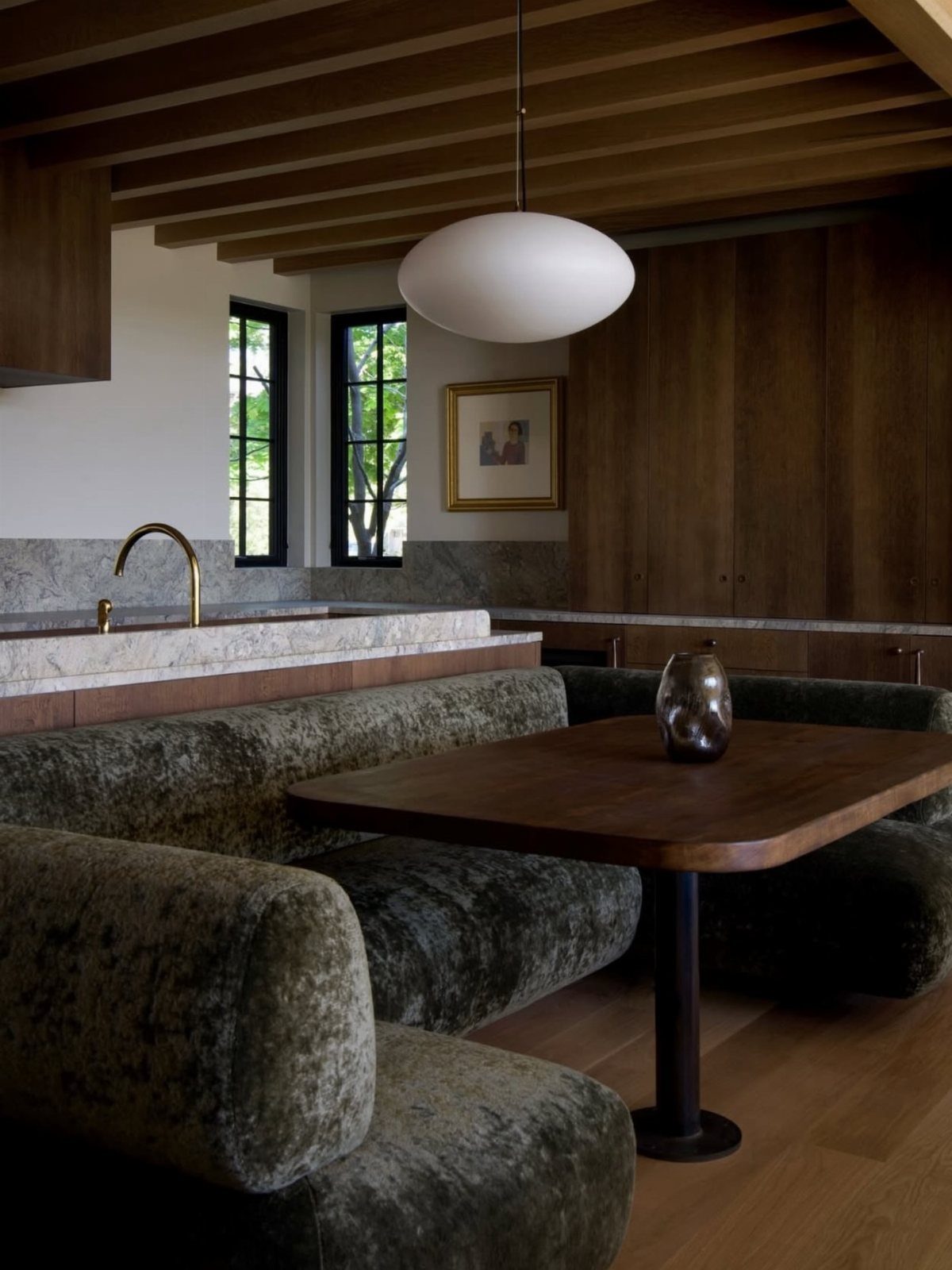
Dark green velvet, a stained wood table and a beamed ceiling are enough to make a kitchen feel like a private library.
Keep the banquette, table and paneling all in deep tones, and the white pendant becomes the one bright note.
I would match the table stain to the wood on the walls instead of mixing finishes. A curved velvet run also looks richer than a straight one in low light.
8. Small Kitchen Banquette
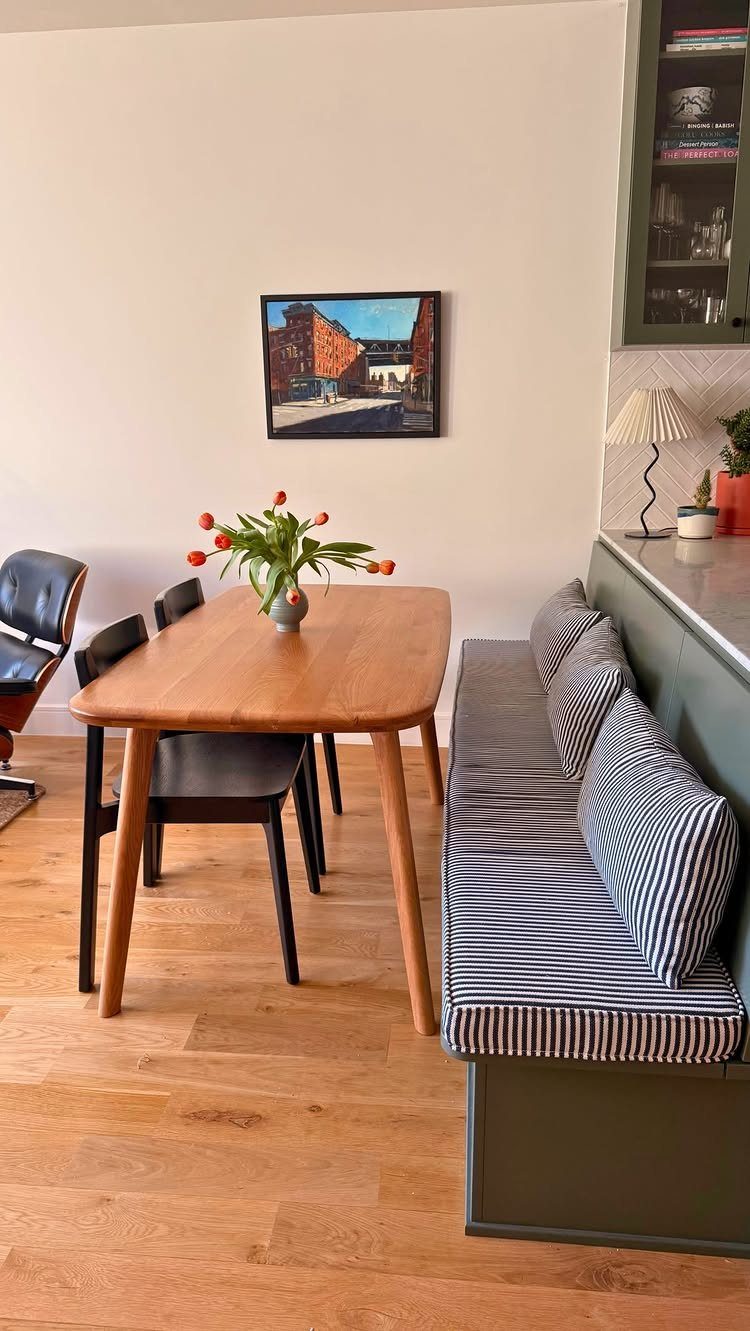
Striped cushions on a green built-in bench give a small kitchen a seat that looks planned rather than squeezed in.
Black chairs on the open side give a green banquette a dark counterweight, so a light wood table doesn’t read too sweet.
Choose a stripe in a shade close to the bench color, so the seat reads as one piece. I like the pairing of a quiet stripe with a plain wall.
9. Banquette at Matching Chair Height
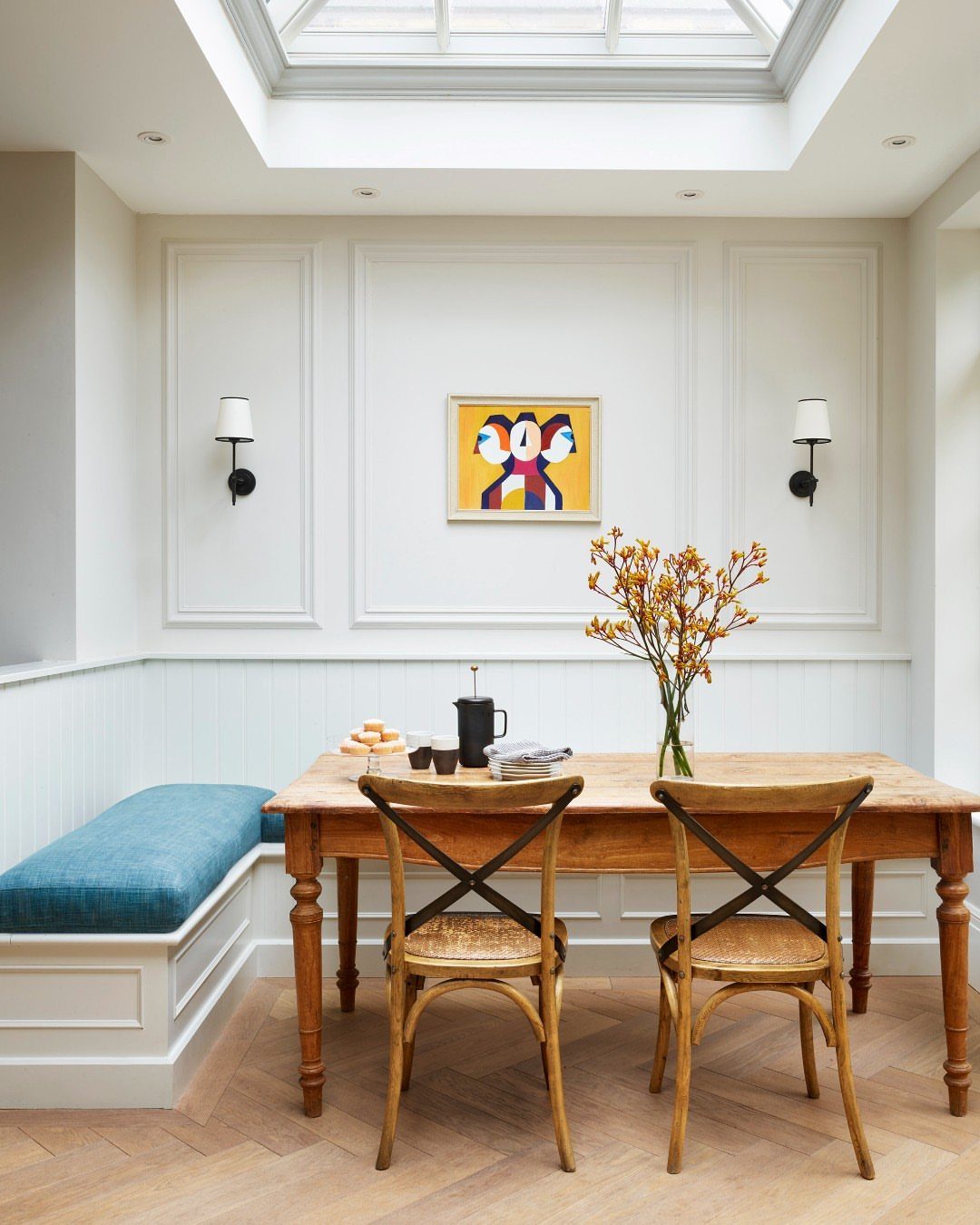
Seat height decides whether a banquette and its chairs look like one set. Build or buy the bench to match your dining chair seat height, and measure with the cushion on, not the bare frame.
I would go with a slim cushion, since a thick one pushes the bench above the chairs. Cross-back chairs and a blue seat also look good side by side once the heights agree.
10. Oversized Corner Banquette
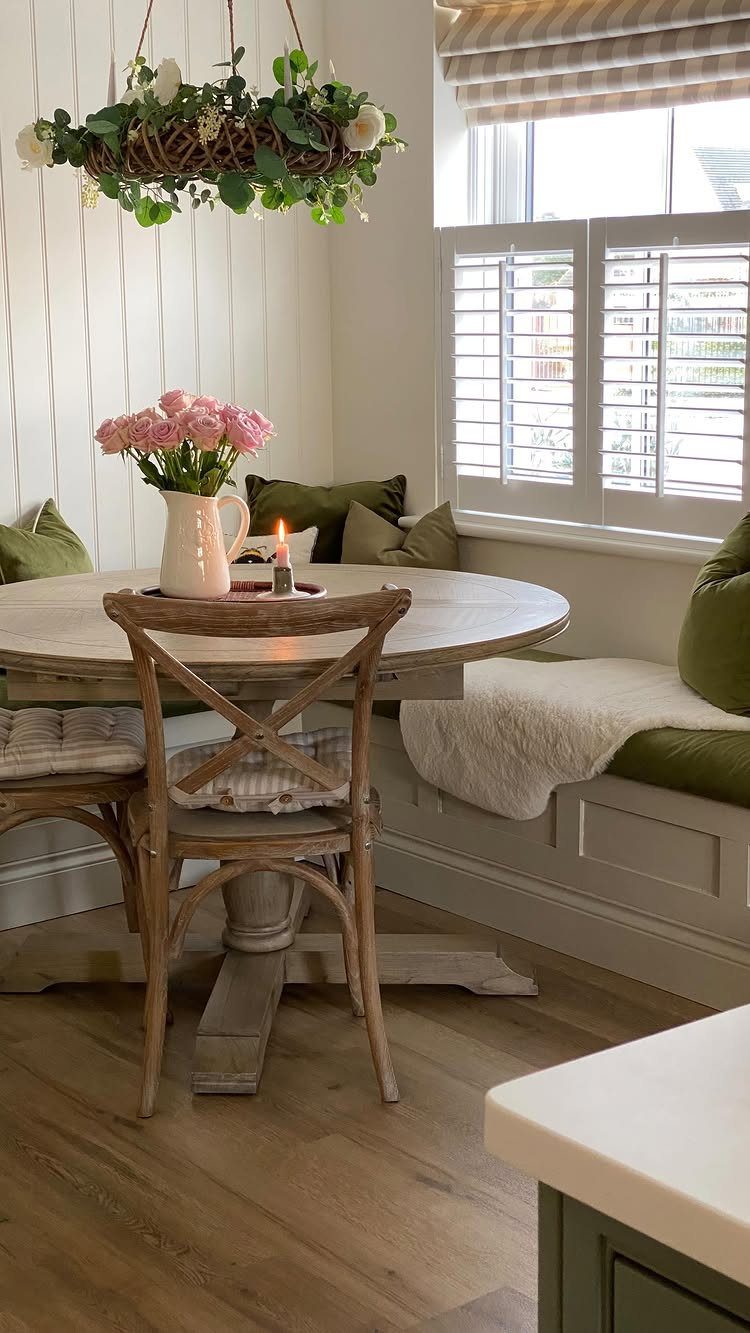
Stretch both legs of an L-shaped banquette past what the household needs, and the nook becomes the spot where guests settle in.
Everyone slides along two walls, so a round table is the better partner; no one gets stuck on a corner.
A single chair on the open side is enough.
11. Upholstered Kitchen Nook
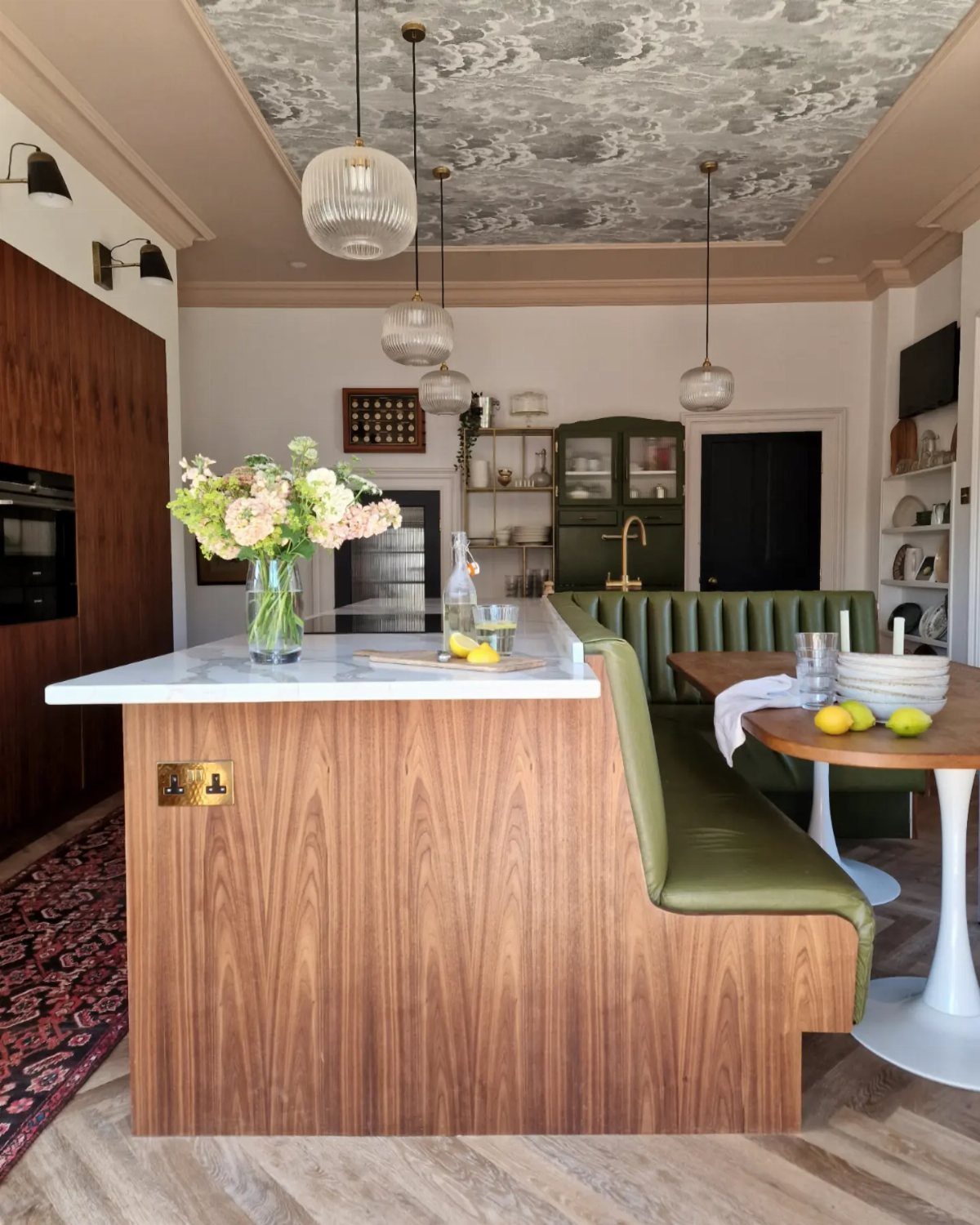
Wood paneling, a marble counter and a patterned ceiling are all hard, flat surfaces, so a green upholstered banquette attached to the island adds the one soft layer.
The seat also gives the island a second job as a place to sit down.
Tie the green to something else in the room instead of leaving it alone. I would keep the table round and wooden, which lets the cushioning stand out.
12. Rust-Colored Seating Nook with Custom Millwork
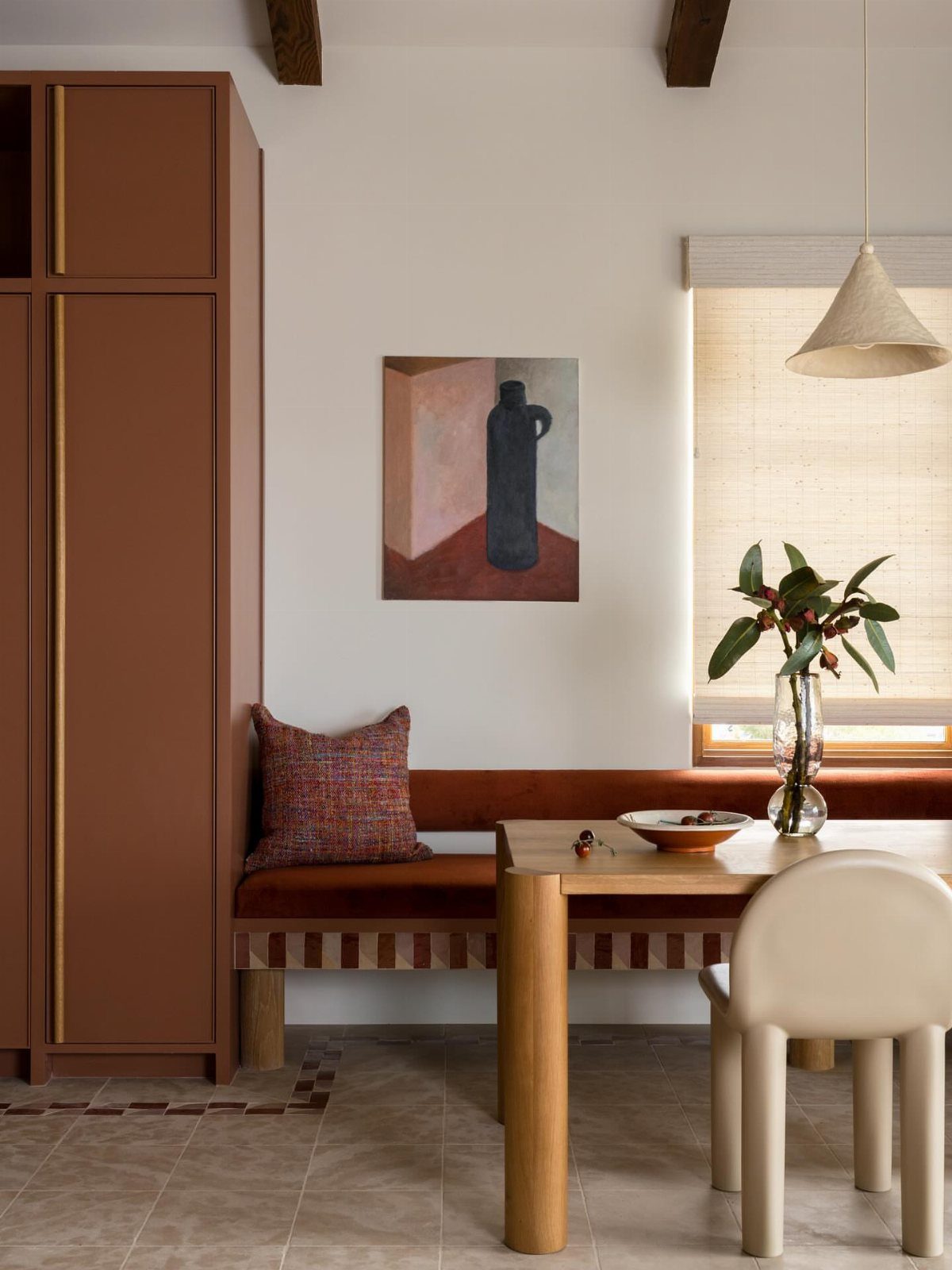
Painting the cabinetry the same rust as the seat makes a banquette read as part of the wall.
A tall matching cabinet beside the bench holds the things a family dining nook collects, and custom millwork lets you size it to the space.
Kids at the table mean spills, so a performance fabric is the safer pick for the seat. A light wood table and a beige chair give rust a pale counterweight, so the nook doesn’t close in on the room.
13. Play with Patterns
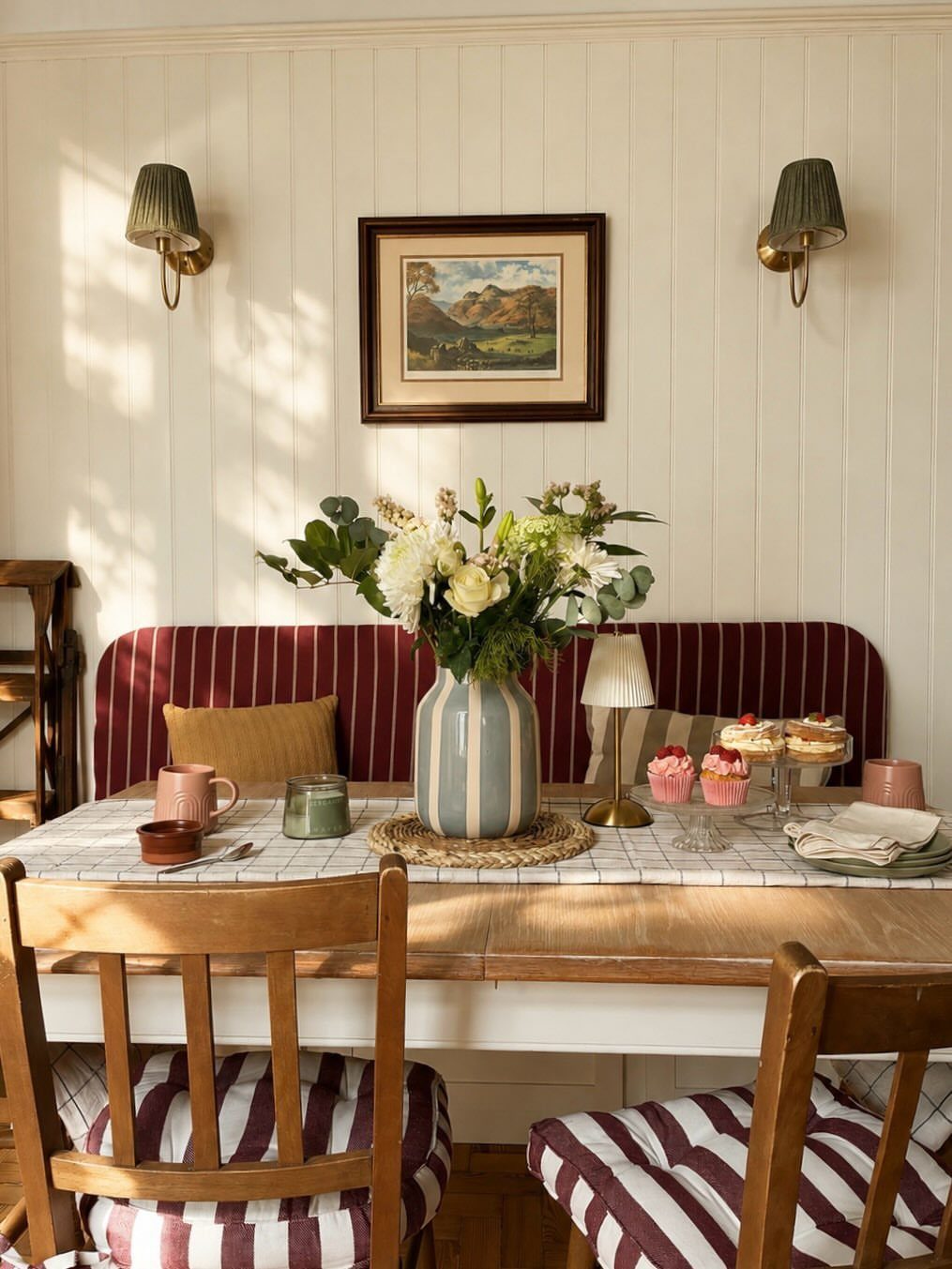
Red and white stripes on both the banquette and the chairs make the set read as one pattern, which is easier to live with than several competing ones.
Choose the upholstery from what the home already offers: a color in the art, the view out the window, the trim.
A white paneled wall gives a bold stripe room to breathe. I would keep the table plain wood and let flowers supply any extra color.
14. Midnight Blue
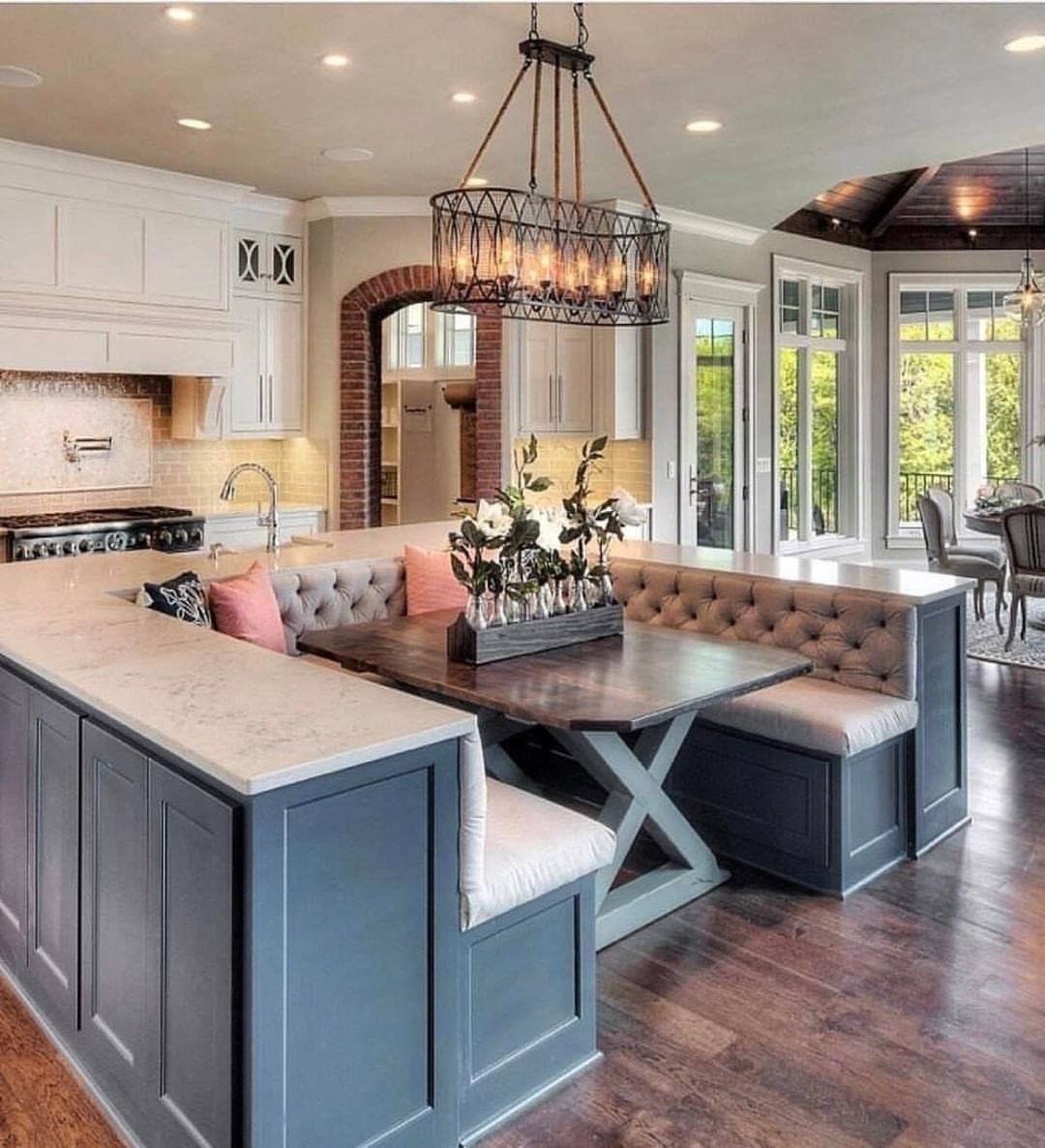
Curves soften a color as deep as midnight blue. A rounded navy banquette gives a kitchen one heavy, settled anchor, and the white countertops keep that weight from closing the room in.
Dark wood on the table can work against midnight blue, since the warm brown grain gives the cool paint something to play off.
Tufted cushions in grey add texture to a deep blue banquette without bringing in another hue. With a large chandelier overhead, I would keep everything else quiet.
15. Mustard Banquette with a Raw-Edge Table
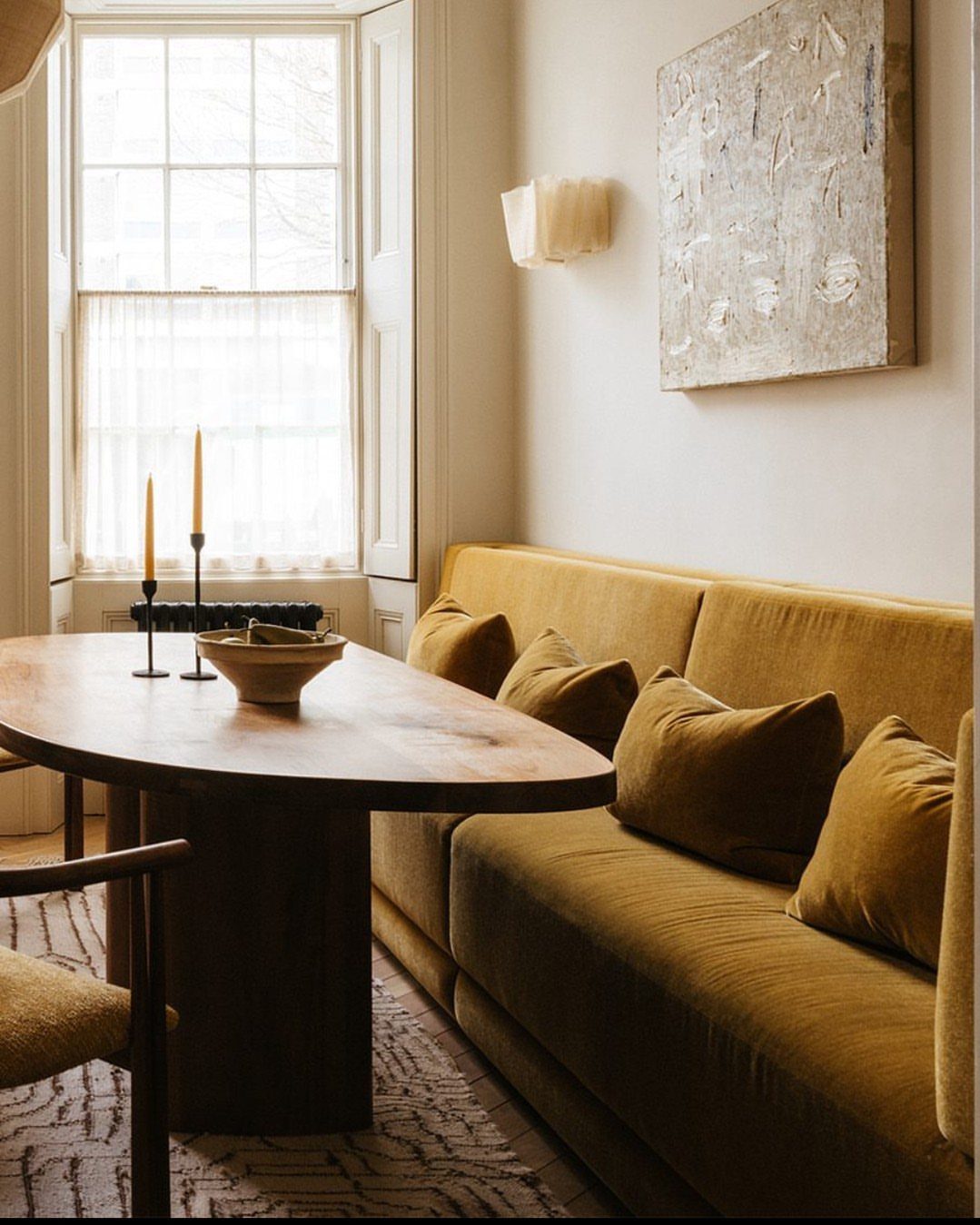
Mustard velvet wants something rough beside it, and a raw-edge table does that job. The uneven outline of the wood against the smooth, plush seat gives the nook contrast without a single extra pattern.
A dark wood tabletop keeps mustard from turning too sweet. I would stop there.
16. Take It Outdoors
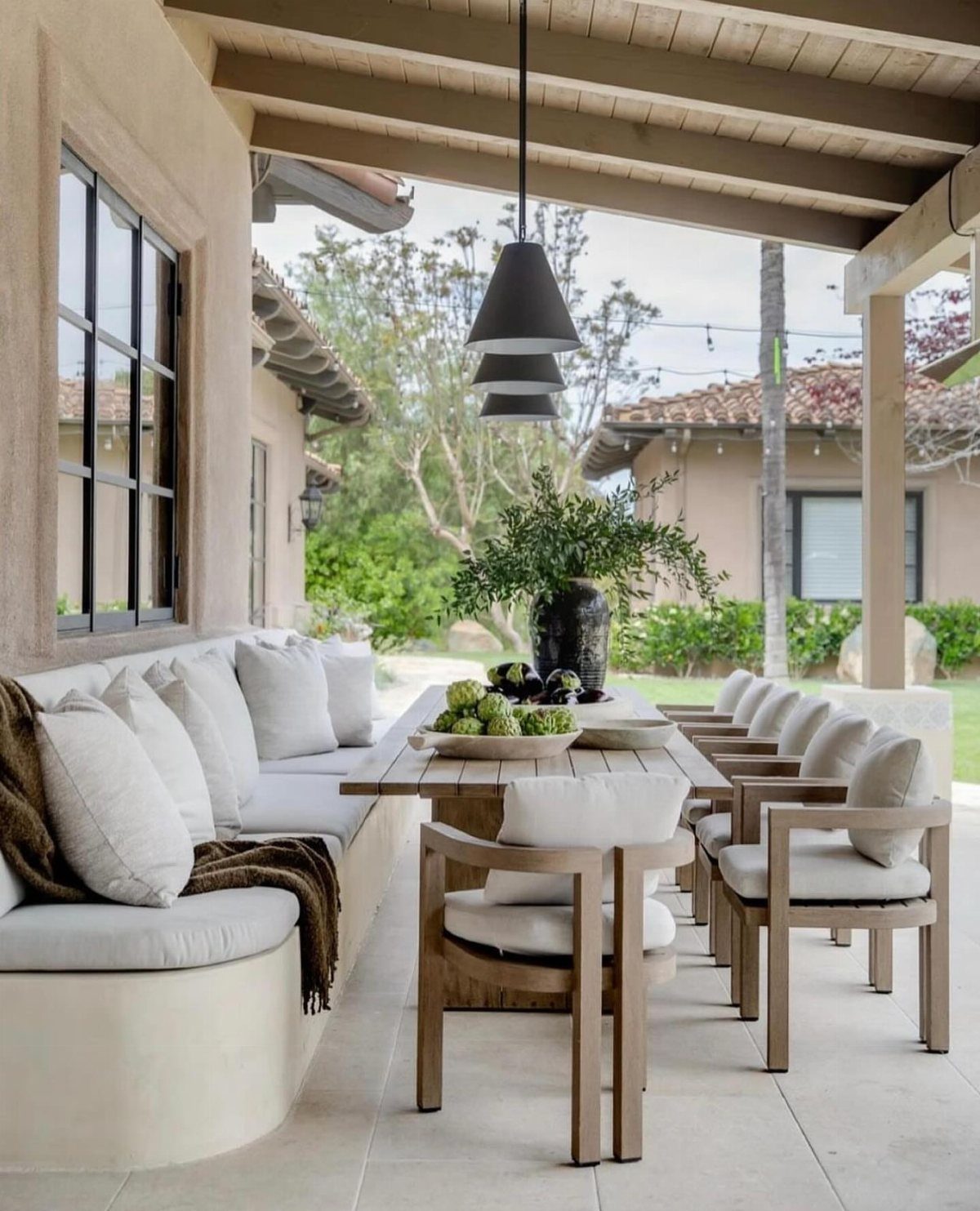
A curved, built-in bench along the edge of a covered patio uses the perimeter and leaves the middle free for a wooden table and chairs.
It reads as part of the house, not as a patio set pushed against the railing.
Because it is built in, this idea fits owners better than renters. Hang the black pendant low over the table, and I would pick white cushions only if you accept that they need regular cleaning outside.
17. Blue-and-Green Breakfast Nook
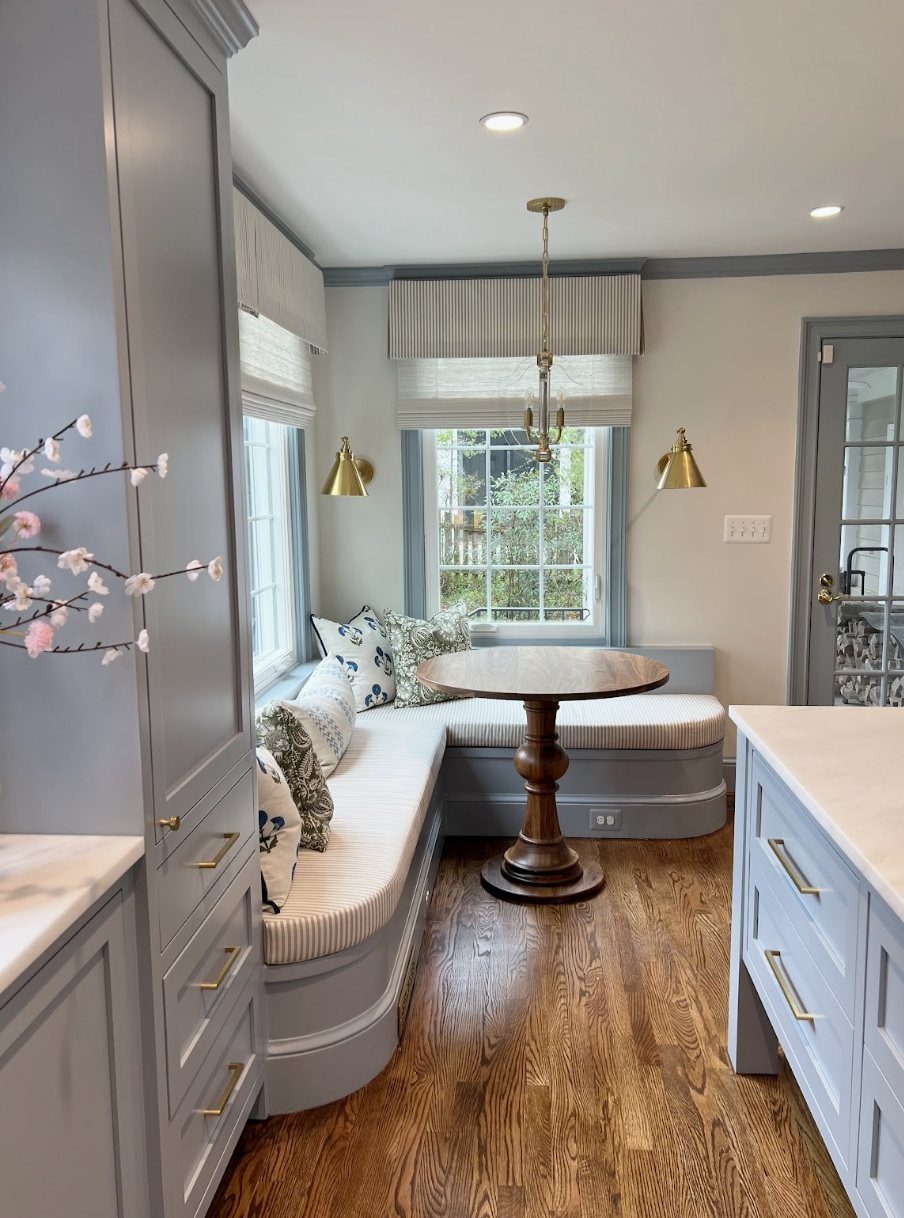
Light blue cabinetry, green patterned pillows and a striped seat cushion share a nook without clashing, because blue and green sit side by side on the color wheel. Keep the stripe quiet, with the pillows carrying the pattern.
A round wooden table suits the curved bench, so no corner interrupts the line. Gold sconces by the window add a warm metal against all that cool color, and I would copy that detail.
18. Library Banquette with a Reading Lamp
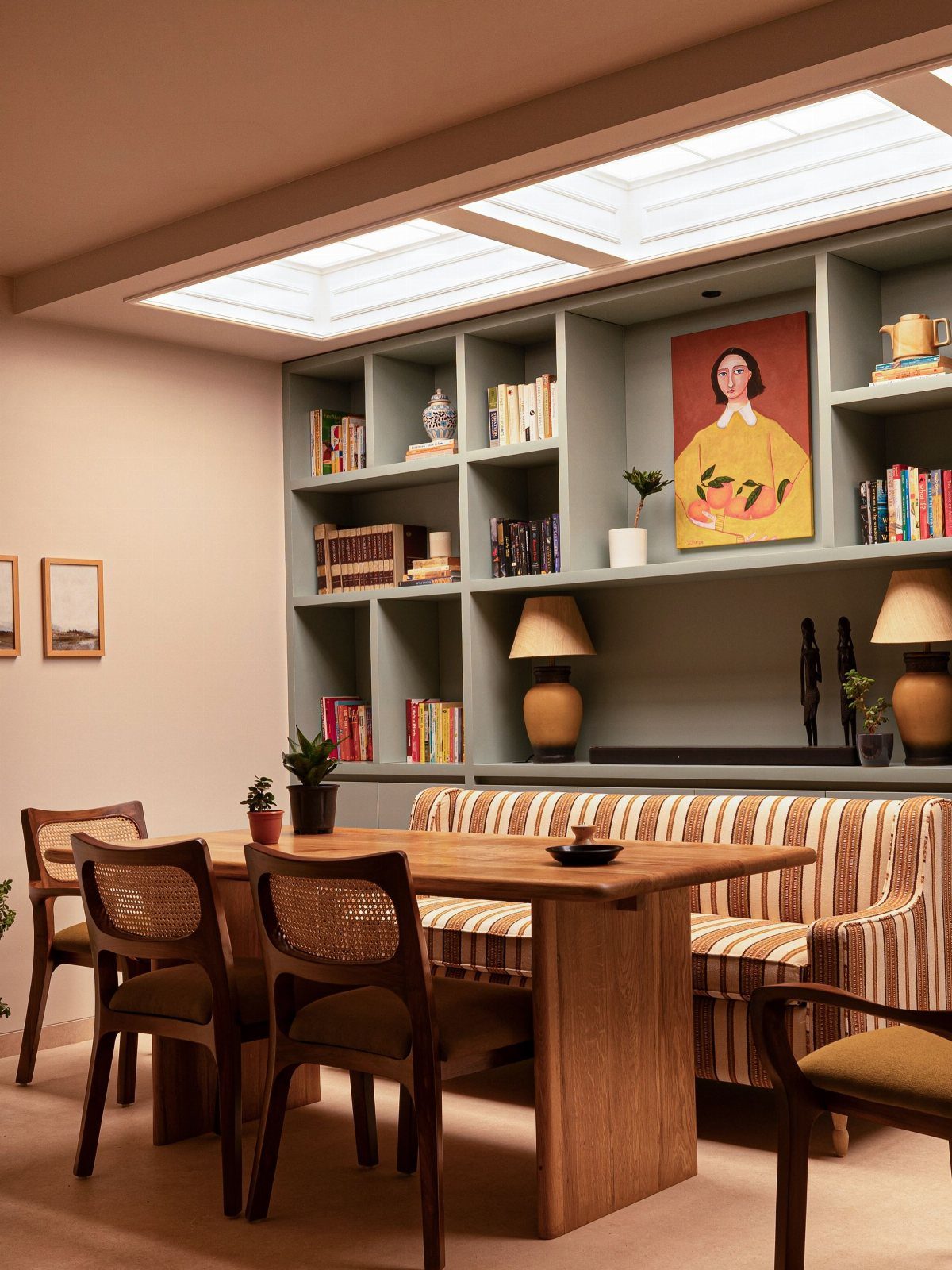
Built-in shelves behind the banquette, painted grey and filled with books and art, turn a dining nook into a reading corner.
2 lamps on the shelves give the table its own soft light after dark, so the nook works for a book as well as dinner.
Books supply the busy part, so a simple stripe on the banquette is enough.
19. Freestanding Rental-Friendly Banquette
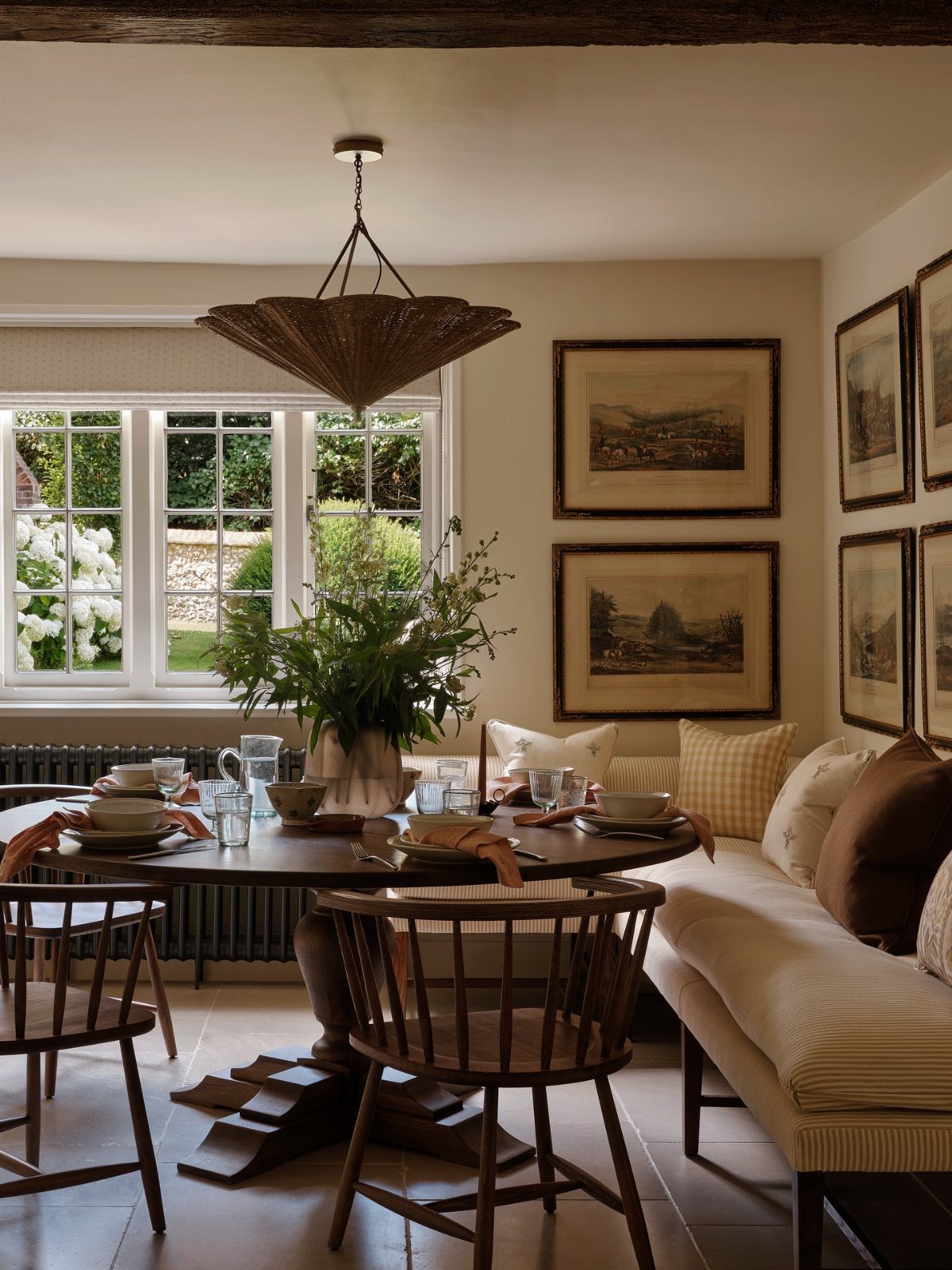
A cream banquette that stands on its own against the wall gives a rental the built-in look with no tools and no lease trouble. Nothing gets screwed in, so it moves out with you.
A dark round table shows off the pale upholstery, and I would hang the framed art above the seat to make the wall feel planned.
Cream marks easily, so a removable, washable cover should be on your checklist from the start.
20. Brown Walls Matching the Upholstery
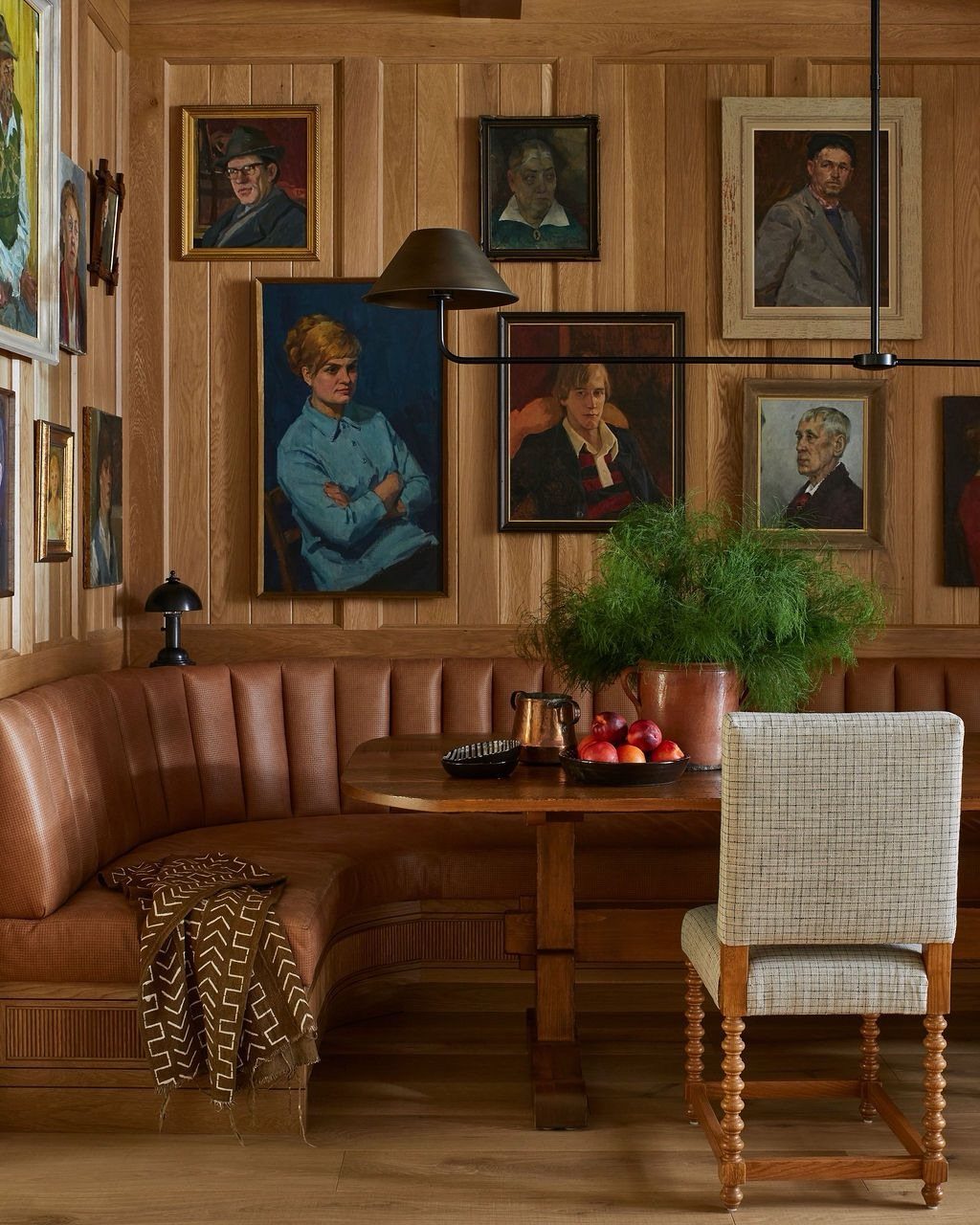
Brown leather against brown wood paneling works because the seat disappears into the wall instead of competing with it. A curved run adds some softness to all that flat timber.
Keep the table in a similar wood so the whole nook stays in one tone. Portraits in a tight cluster give the paneling something to do, and I would hang them close together rather than spread across the wall.
21. Colorful Corner Banquette with Chairs and a Table
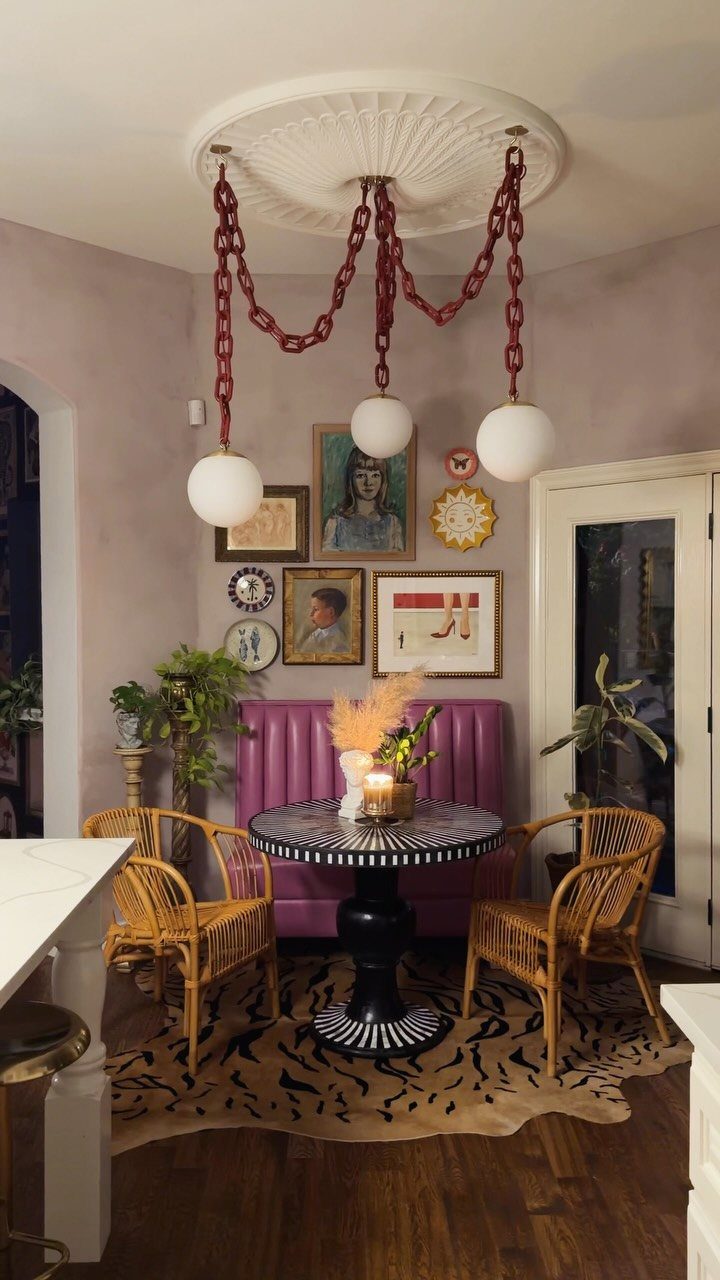
Purple is a bold pick for a banquette, and it holds up here because the rest of the nook is mostly neutral: rattan chairs, a black-and-white table, a cowhide rug. Each piece adds texture without adding another loud hue.
In a corner this colorful, one second accent such as a bold light fixture is plenty, and I would stop there. A gallery wall behind the seat fills the corner without needing a single large piece.
22. Extra-Long Bay Window Banquette
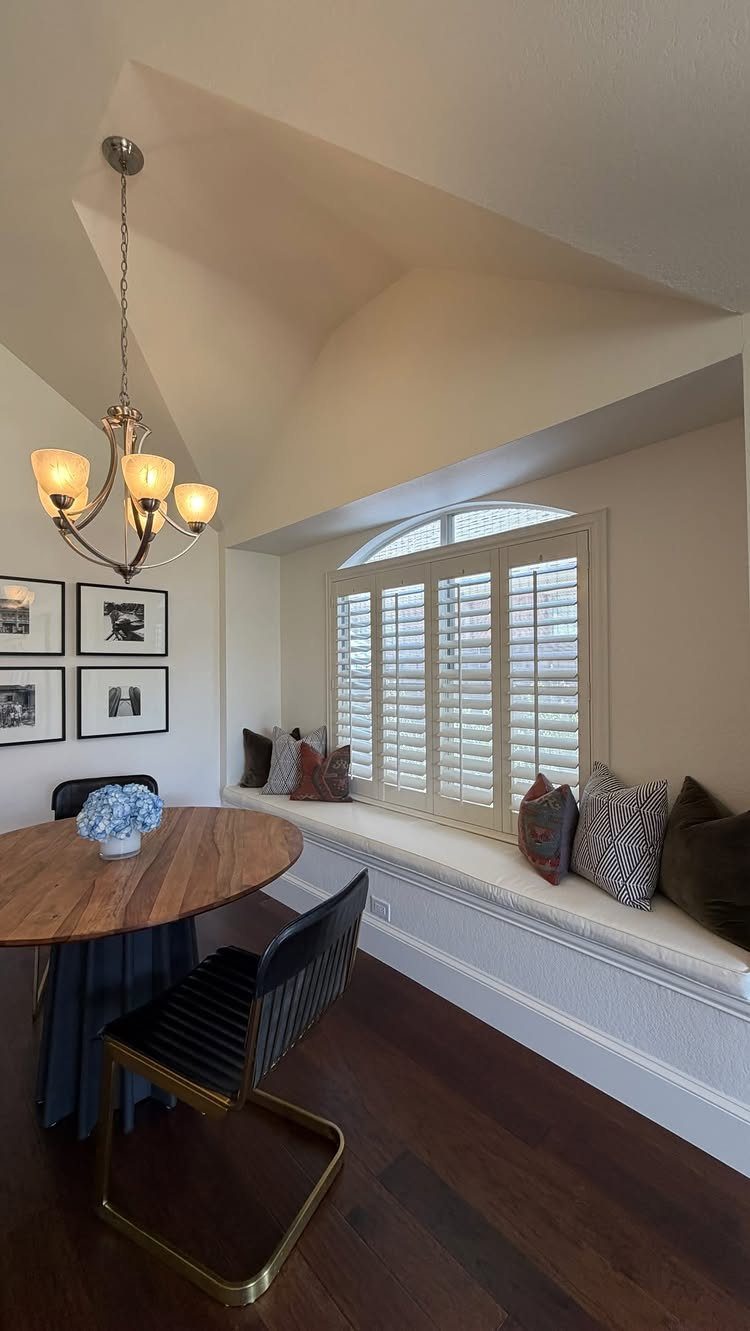
A long white window seat stretches the view along the whole wall instead of pinning it to one spot. Under a vaulted ceiling, that length keeps the nook from feeling dwarfed by the height above it.
Pillows at intervals make the run read as a lounge, not just a bench.
23. Chartreuse Velvet Banquette with Botanical Wallpaper
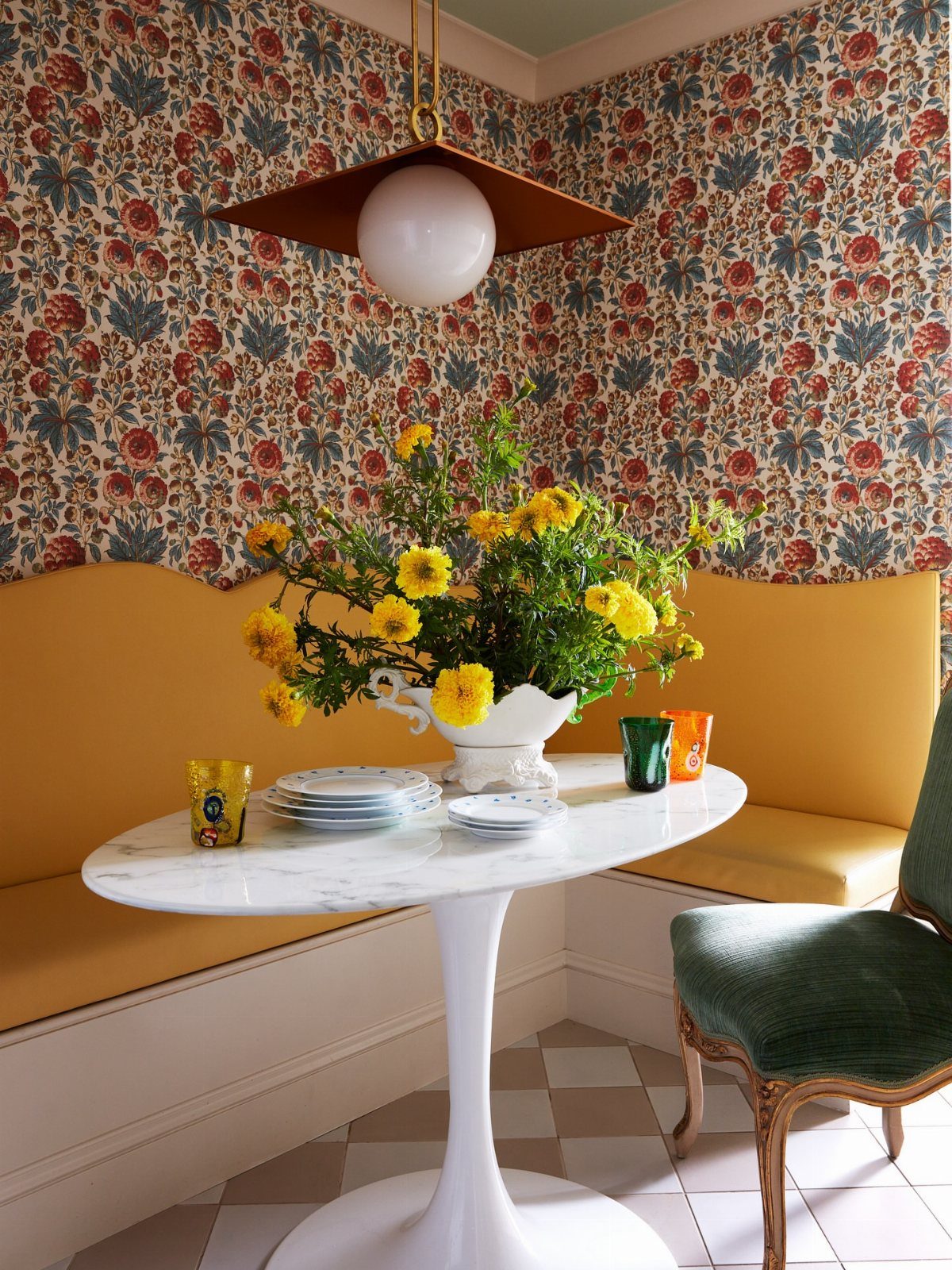
Red and blue floral wallpaper is a lot of pattern, so the seat needs to be a single flat color. Yellow velvet does that, and its sheen picks up the light against the print.
A white marble tulip table has no corners to catch on the bench, and a green velvet chair on the open side ties back to the leaves in the wallpaper.
I would put yellow flowers in a white vase on the table and add nothing else.
24. Patterned Built-In Banquette
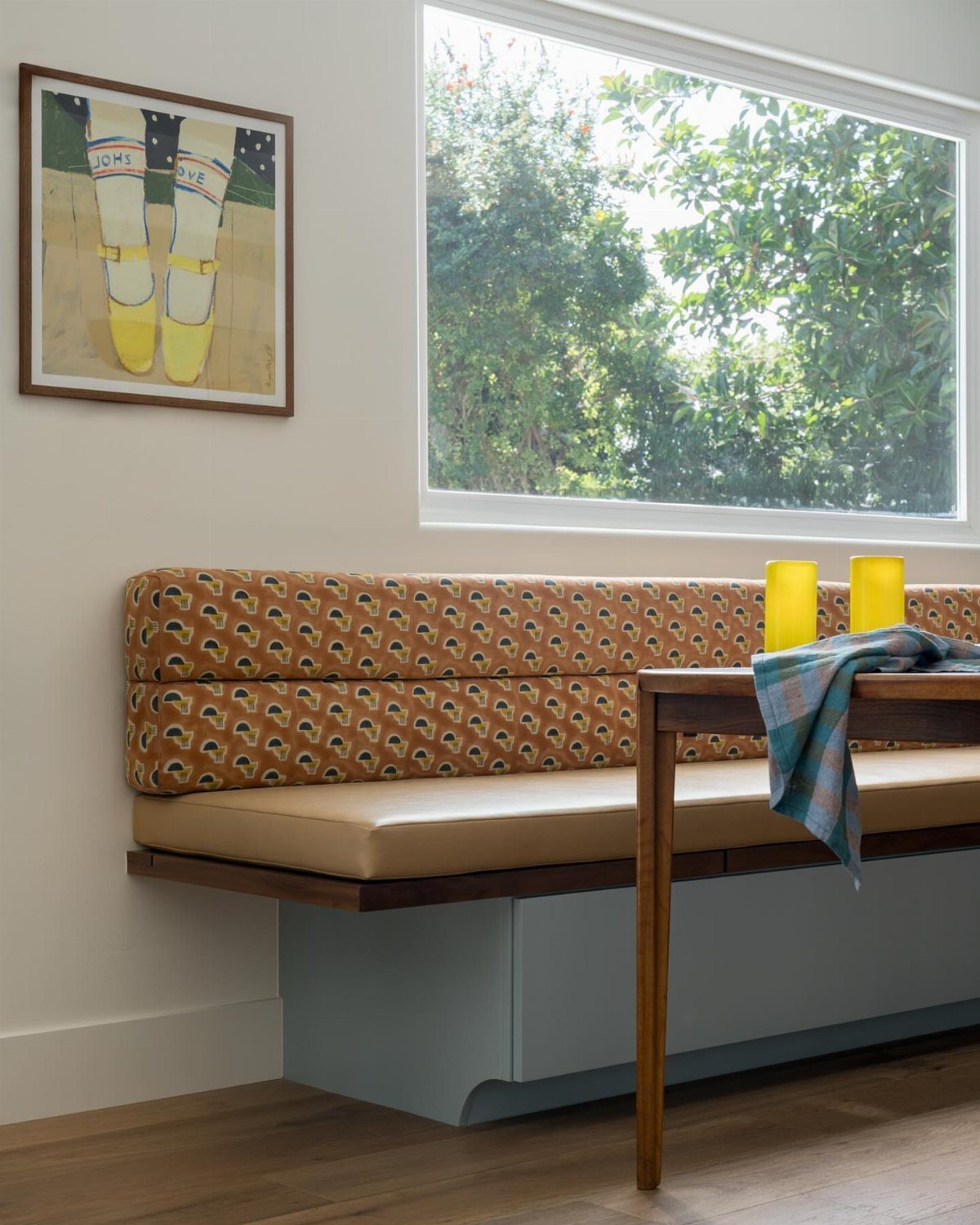
A patterned orange backrest over a tan seat puts the pattern where you see it most, while the seat stays calm. A solid base in a color like light blue adds a third shade without adding another print.
Pair it with a plain wooden table, as here, so the pattern is the only star. I would put the bench under a window; a nook with daylight can handle a bolder fabric.
25. Banquette with a Round Table
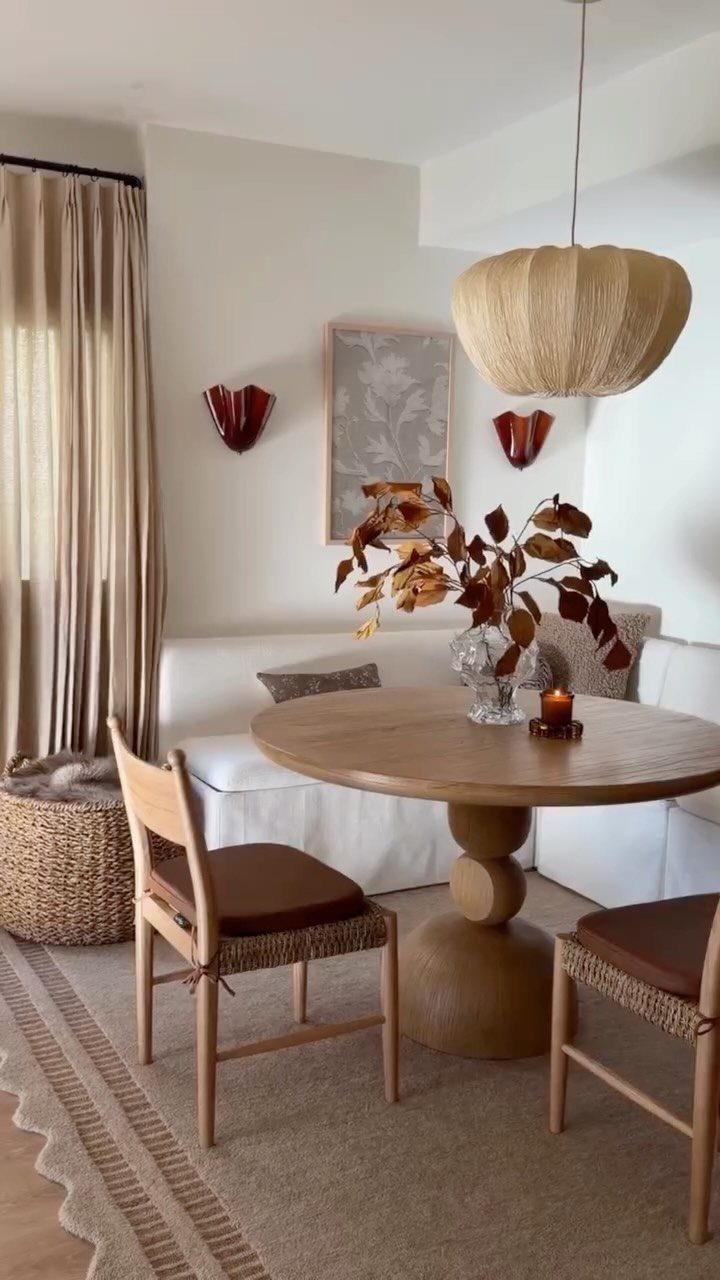
A white wrap-around banquette and a round pedestal table make a dining nook that is compact and sociable. 2 wooden chairs on the open side complete the circle, and their wood matches the table.
I would hang the large pendant low and centered over the table so the light marks out the nook. Keep the decor neutral so the wood supplies the warmth.
26. U-Shaped Dining Banquette
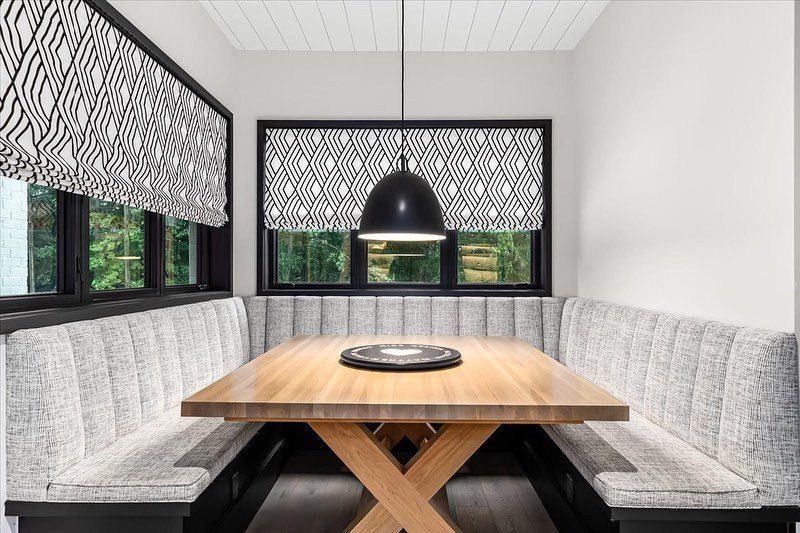
Seating on three sides leaves only one edge of the table open, and a U-shaped banquette in grey fabric is the way to get there.
A textured weave looks richer than a flat one, so that is what I would choose.
The geometric shades already bring pattern, so keep the seat plain. Echo black window frames with a black dome pendant over the table, and the room reads as one plan.
27. Light Blue Banquette with Art
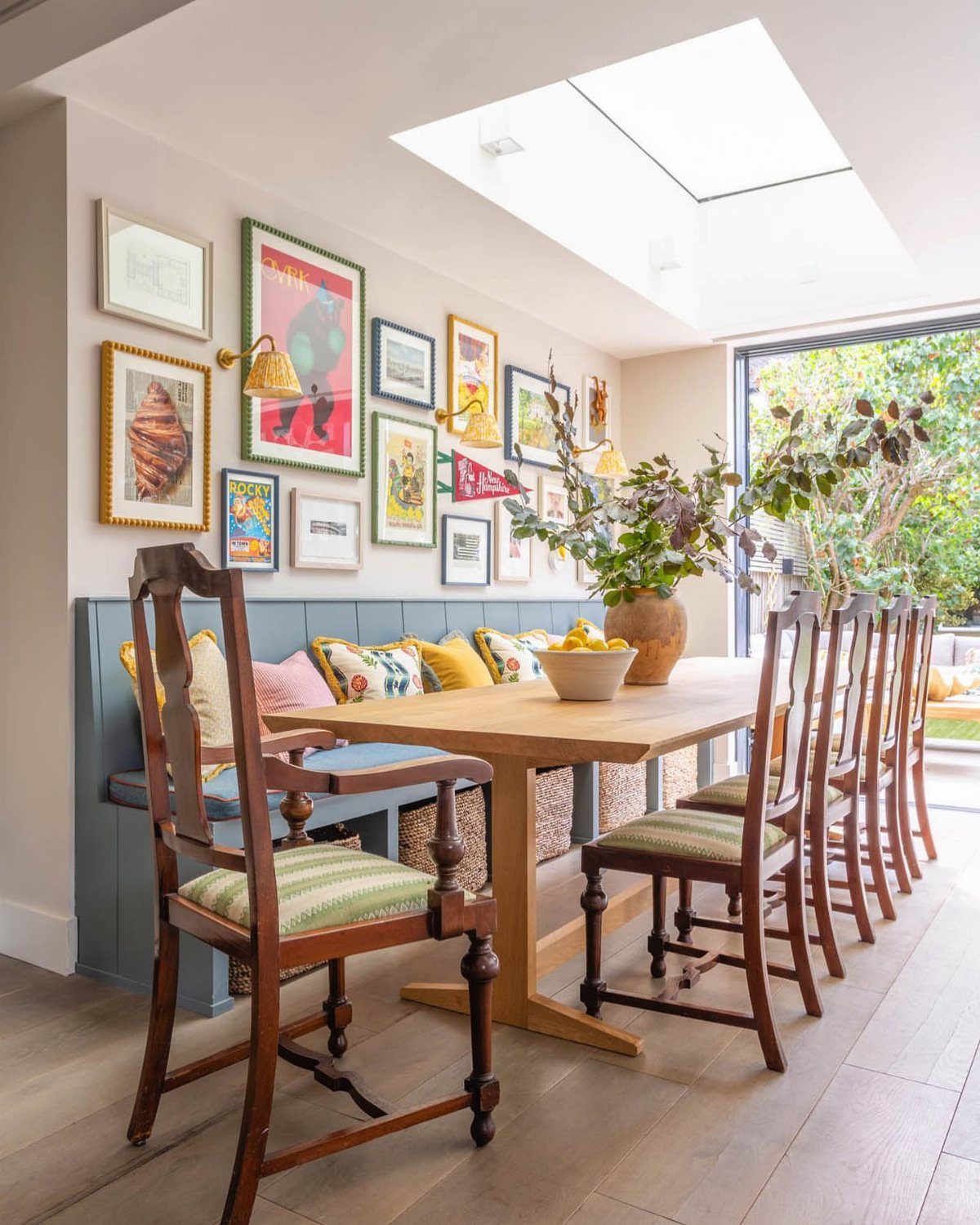
Pillows do the color work on a pale blue banquette. Pull the banquette’s shade from the colors in the frames of a gallery wall above it, and the seat and the art start to look like one plan.
Dark wood chairs give the light blue something to rest against. I would keep the table wood too; a skylight and the art can handle the rest.
28. Banquette with Checkered Cushions
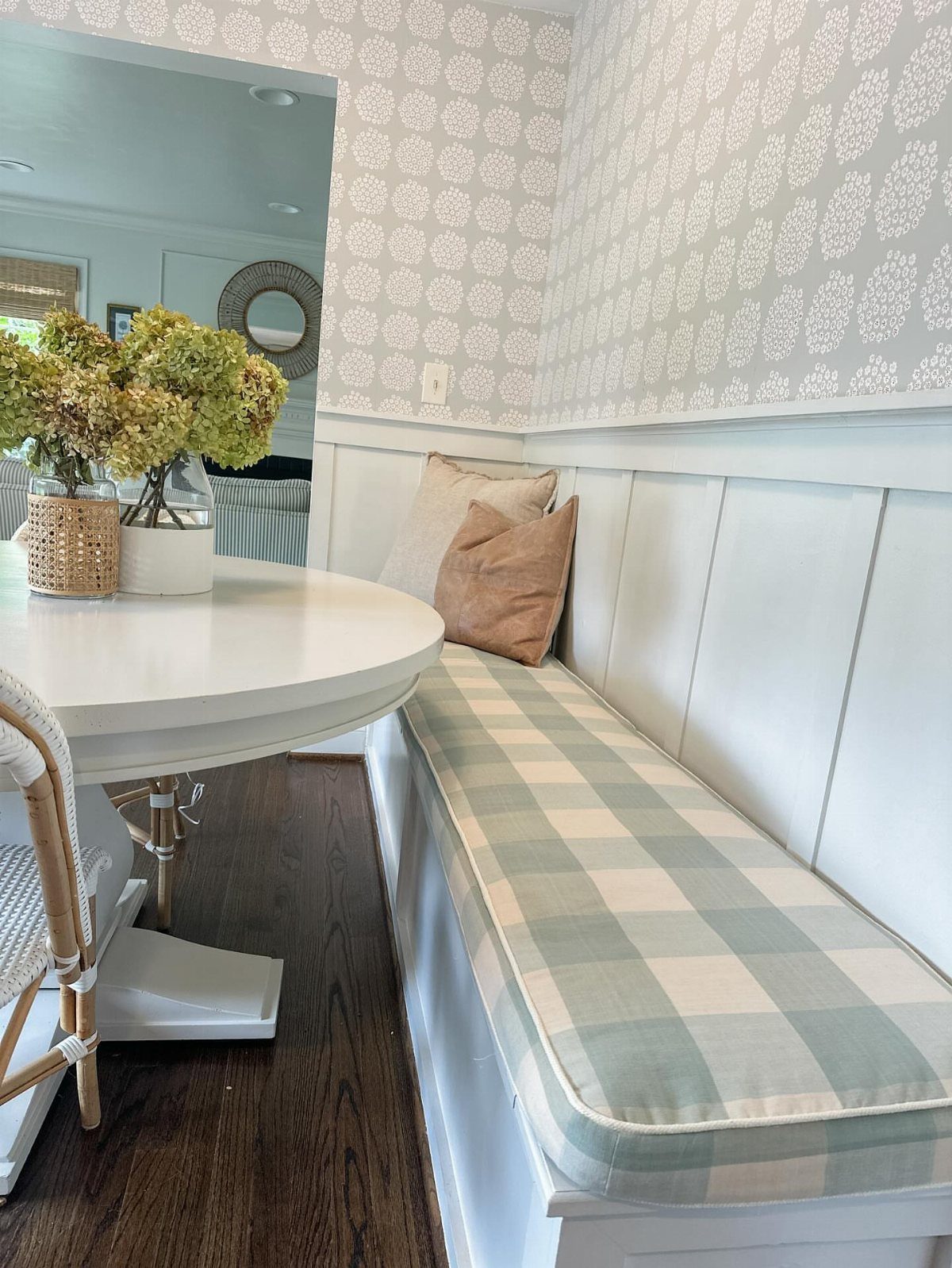
Wallpaper already supplies a pattern here, so a single green-and-white check on the white banquette is all the seat should add. Neutral throw pillows keep it calm.
A white round table with a vase of flowers stays quiet beside the check. Dark wood floors anchor all that white, which is why I would keep the banquette bright.
29. White Banquette with Pastel Wallpaper
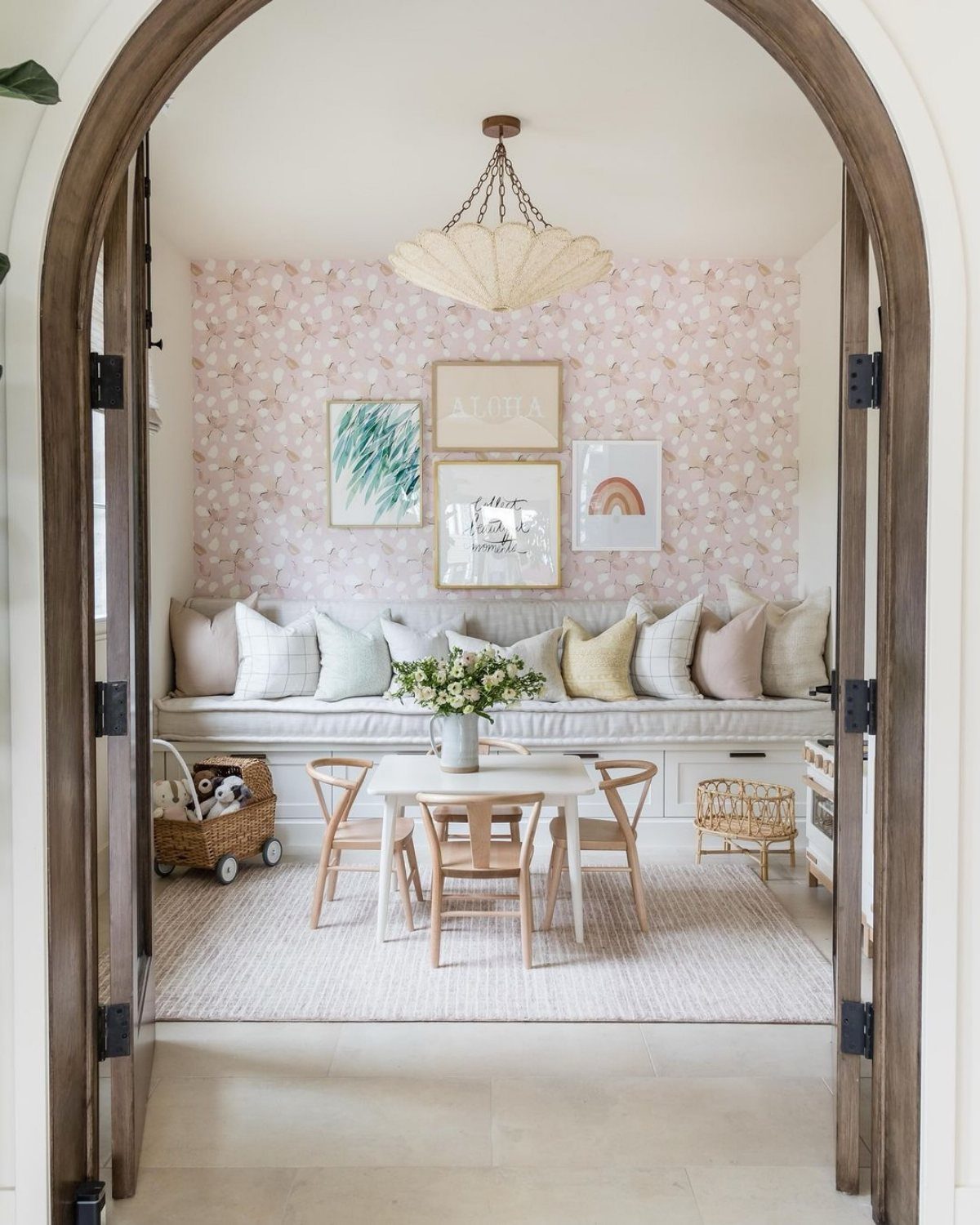
Pink floral wallpaper leads this nook, and a long white banquette lets it. Pastel pillows borrow their shades from the print, so nothing on the seat looks random.
A white table and wooden chairs keep the lower half simple. I like a single piece of wall art with a few words on it, like the "ALOHA" sign, as a small touch of personality over the pattern.
30. Modern Leather Banquette
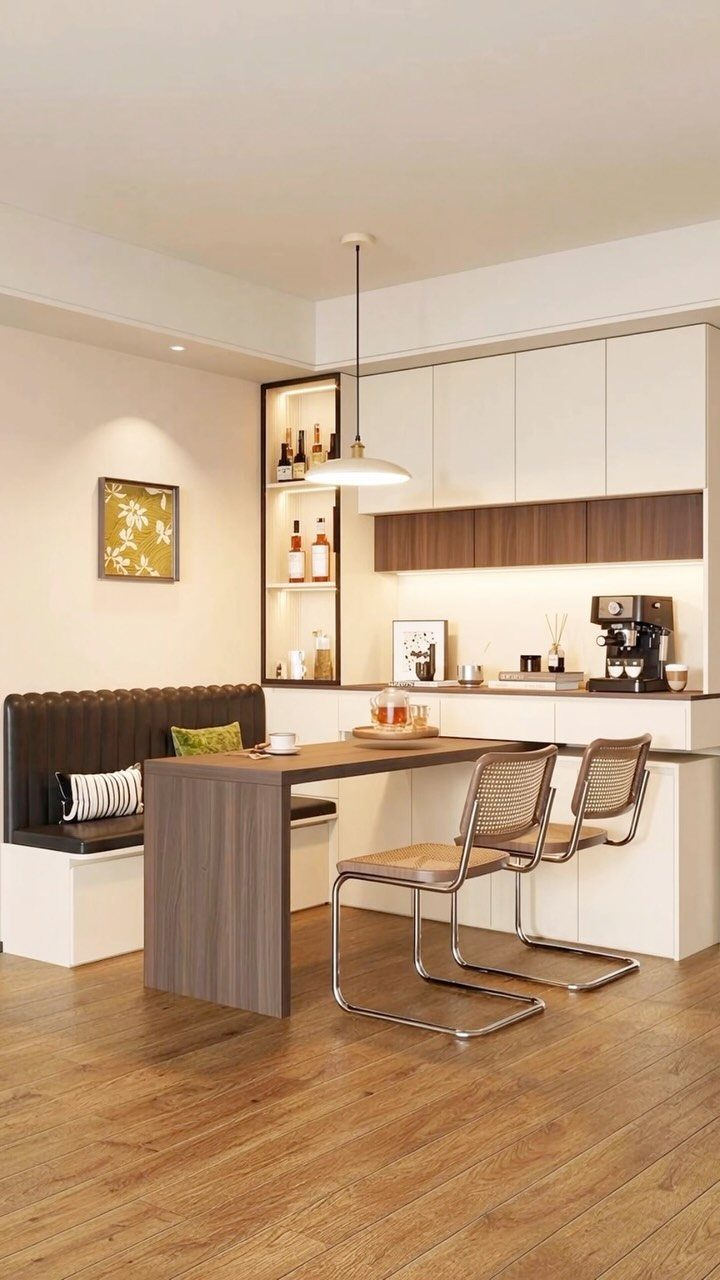
A dark brown leather banquette on a white base reads as a deliberate piece in a white kitchen. The base keeps the leather from looking heavy against the floor and cabinets.
Mesh chairs on the open side are see-through, so the leather stays the focus. I would match the table wood to the leather’s depth, as in this nook, so the set looks chosen together.
Nooks Save Space and Multitask
A table pushed against a wall or into a corner gives up the room that free-standing chairs need to pull out, a strip that often runs around 3 feet behind each seat.
Slide in along a bench instead and that floor space goes back to the room.
A small footprint doesn’t have to mean a single use.
Between meals, a nook can work as a laptop desk, a homework spot, a craft zone, a game table, a reading corner or a home bar, so decide on the second job before you pick the tabletop.
Choose a wipeable surface if paint, markers or homework will land on it, and place the nook near an outlet if a laptop will live there. A lidded basket or tray lets you clear everything in one sweep before dinner.
In a really tight space, a single-seat bench still counts as a banquette, and it fits spots a full run never will.
Frequently Asked Questions
What are some good dining room ideas with banquette seating?
A tufted L-shaped banquette in soft beige, paired with a white table and slim wooden chairs on the open side, reads like a sectional and suits a plain room.
A curved banquette with a round table is my other pick, because a round top has no corners to catch anyone sliding along the seat.
Deep green velvet against a stained wood table gives a darker room the hush of a home library. If kids or pets eat there, choose a performance fabric.
How to style a dining nook?
A round wooden table is where I’d begin; then measure the bench seat with its cushion on and bring it level with your dining chairs, which usually sit around 18 inches high.
Let one element carry the pattern: a quiet stripe on the seat against a plain wall, or bold wallpaper behind a single flat-color seat.
Under the table, a rug marks off the nook, and a pendant hung low over the center keeps every eye on the seats.
What exactly makes a banquette different from a normal bench or built-in seat?
Unlike a loose bench, a banquette is fixed seating built to pair with a table, with a padded, upholstered seat and usually a back.
It can be built into the wall or stand on its own. A freestanding one against a wall gives a rental the built-in look with no tools, and it moves out with you.
What should I plan before putting drawers under a banquette seat?
Decide what the drawers will hold first, since placemats, napkins and bulky serving dishes need different space.
Then work out seat height and drawer depth together, and plan the drawer fronts early. Also check the table legs: if they sit in front of a drawer, you may have to move the table to pull it fully open.