
Baking pan storage runs from a magazine rack on the counter to a pull-out drawer with cabinet dividers, and the right answer depends on whether you have a deep drawer, a cabinet door with room for mounted storage, or no cabinet space at all.
Standing pans on edge in a vertical cabinet organizer or a pan rack lets you pull out the one you want without lifting the rest.
Nonstick pans last longer with something soft between them, and the heavy ones belong in a low cabinet rather than one you have to reach overhead.
1. Lid Organizers
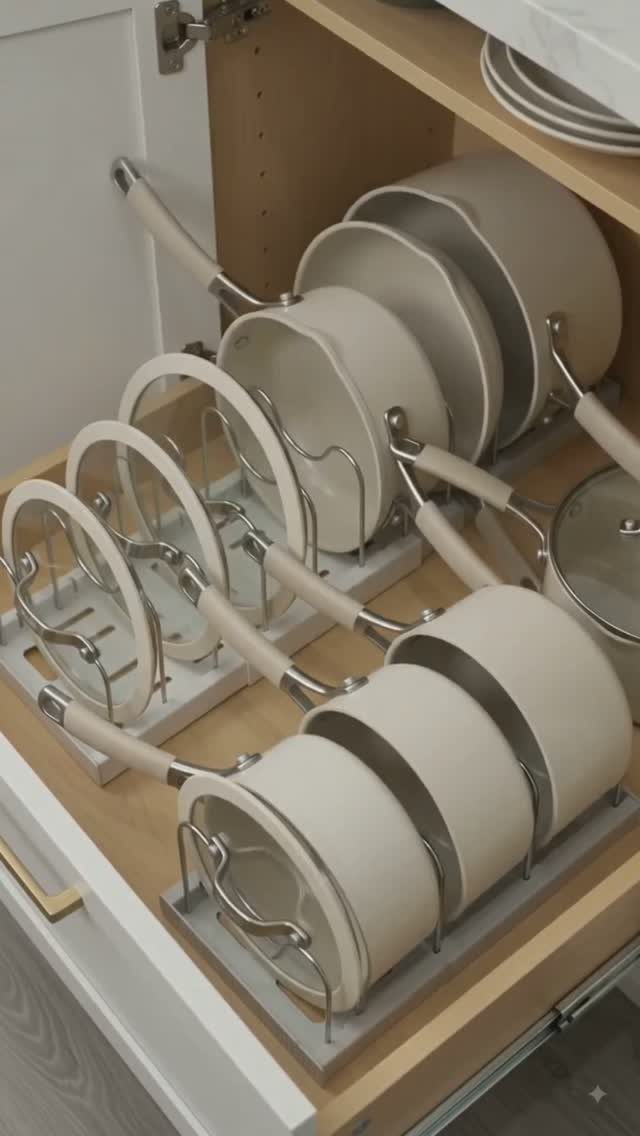
Slotted organizers give every pan or lid its own narrow space, so one comes out without dragging the rest along. Standing everything on edge also ends the stack where the one you want is always on the bottom.
I’d choose slots that match what you own: wide ones for pans, narrow ones for lids. Keeping a lid beside its pan makes the pair easy to grab together.
2. Pull-out Drawer
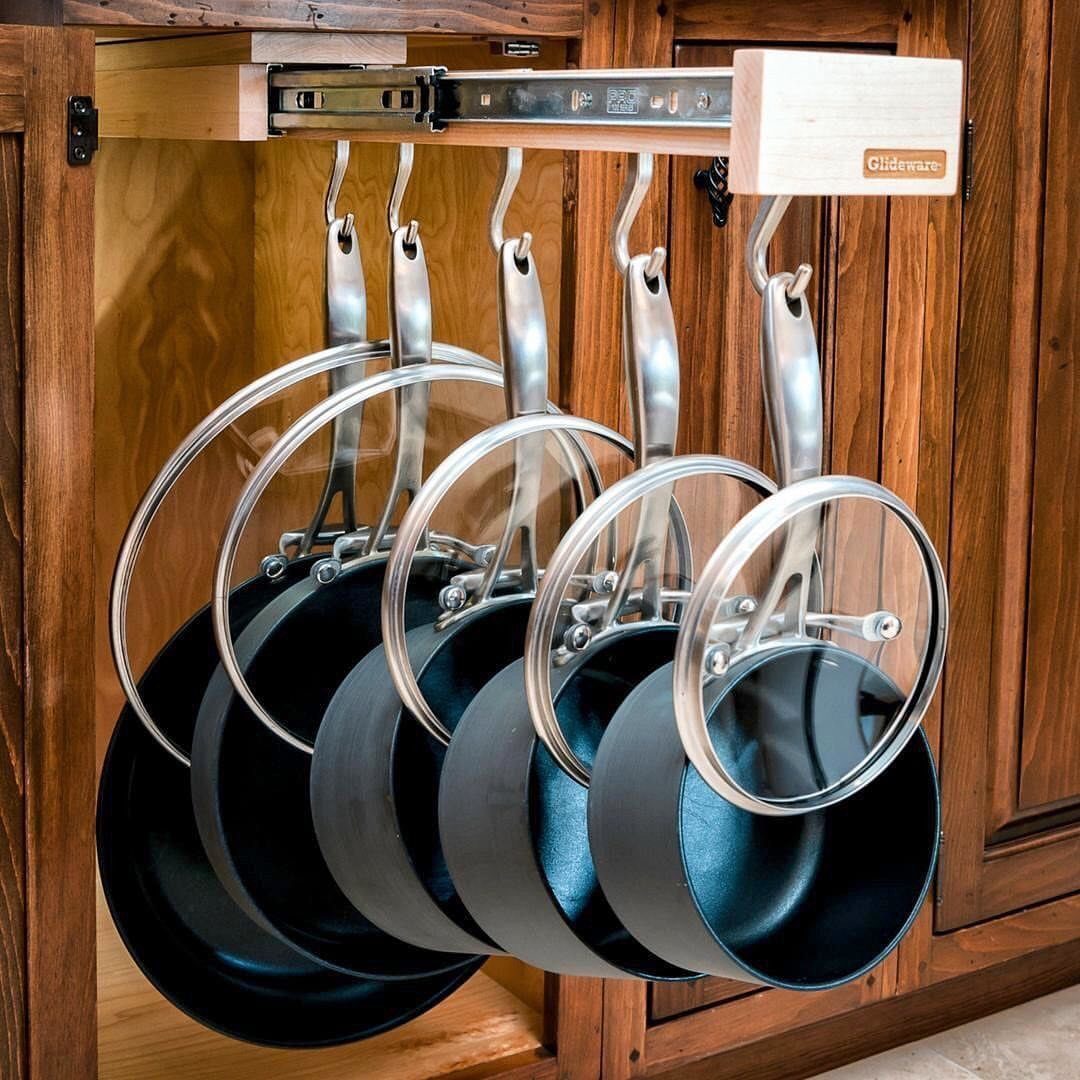
Anything at the back of a deep cabinet gets forgotten, and a sliding rack fixes that by bringing the back to you.
A wooden pull-out like this one holds frying pans on edge with their glass lids alongside, so you look down on everything at once.
Wood suits a cabinet better than bare metal, in my view, because it looks built in. If fitting runners is more than you want to take on, a freestanding sliding organizer is the simpler route.
Though lazy Susans are better known for their utility on the table, consider getting one for more flexibility and succinct storage space within corner cabinets for whirling out pots and pans.
3. Cabinet Dividers
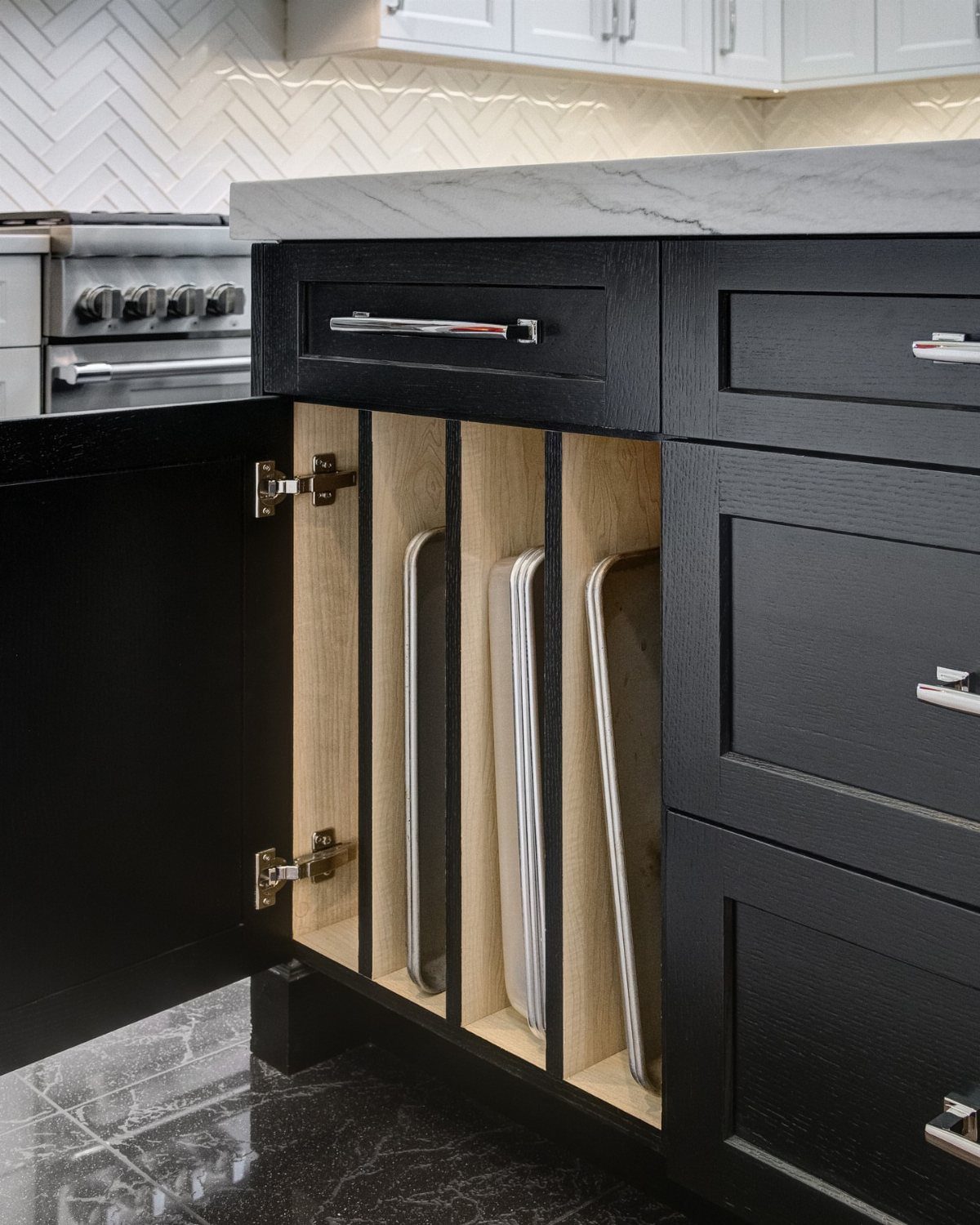
Baking sheets belong on their edges, and vertical dividers give each one its own slot. Pulling one out becomes a straight lift, with no unstacking and no clatter.
Wooden dividers in a dark cabinet look built in, as if they came with the cabinet. Space the slots for your thickest tray, and give any leftover slots to cutting boards or cooling racks.
4. Magazine Rack
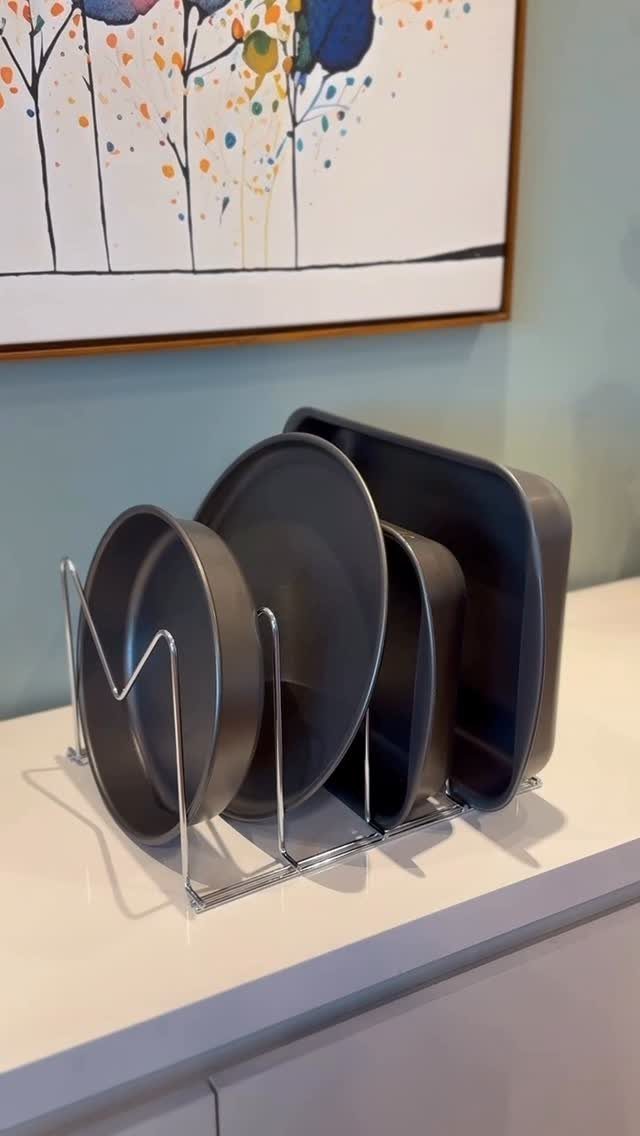
A magazine rack already holds flat things upright, which makes it the lowest-effort fix for sheet pans and cooling racks. Three grey pans stand in a silver wire one here, and there is nothing to mount or drill.
It works best on a counter or open shelf within easy reach, so I’d skip it if counter space is already tight. Check the slot width before buying, since magazine slots run narrow and a thick pan may not fit.
5. Door-mounted Storage
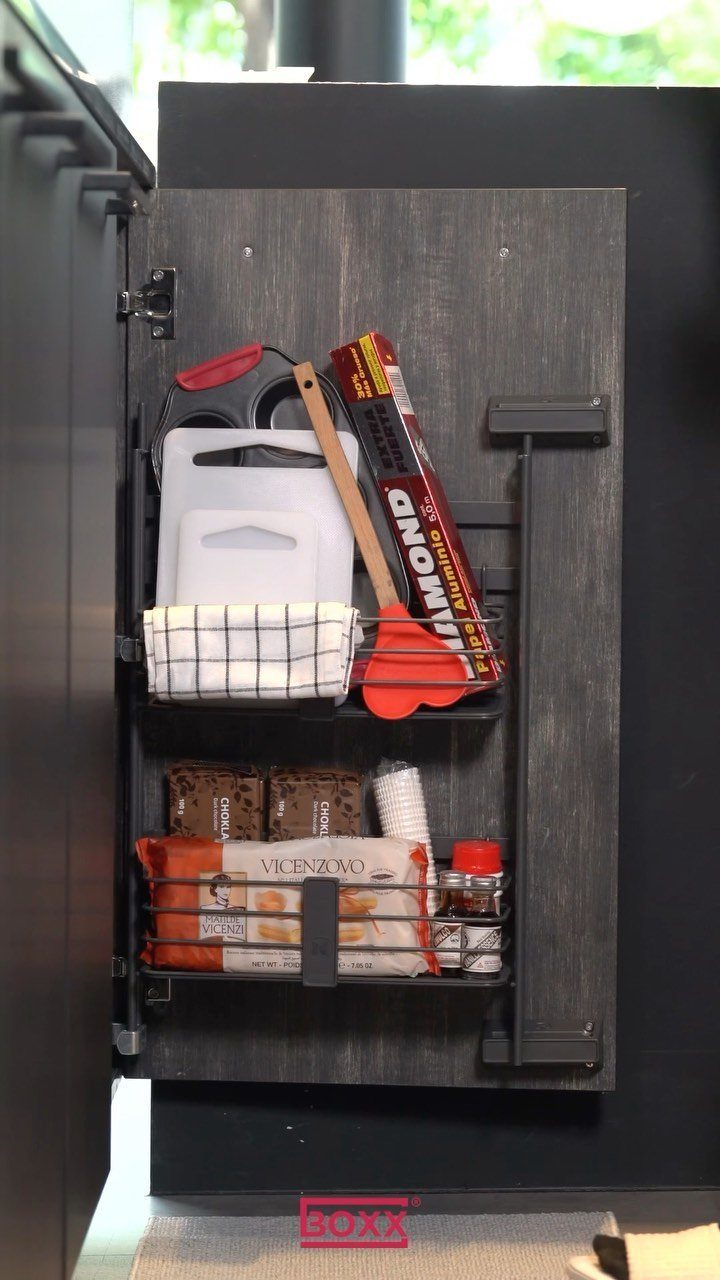
Most cabinet doors hide a flat, unused surface on the inside. Two black wire racks hold baking pans and a spatula here, and hooks or small baskets would do the same job for lighter tools.
Close the door with the rack held in place first, because pans that stick out even 1/2 inch will keep it from shutting. Whatever hangs there has to clear the shelves inside the cabinet, so measure that gap first.
6. Deep Drawer
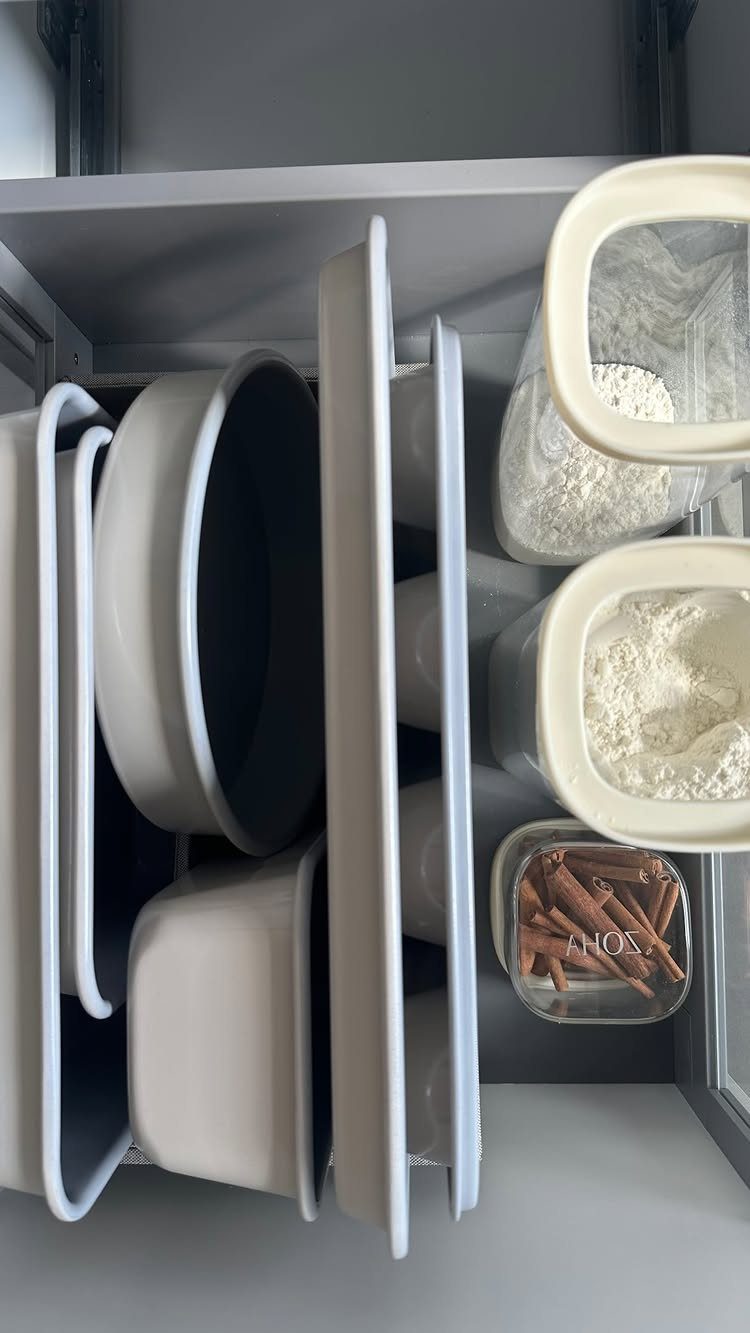
From above, a deep drawer shows everything at once, which a cabinet shelf never does.
I like giving the drawer one job: baking.
Pans, bowls and dry goods together mean a single pull gets you started. Put the heaviest pans on the bottom so the top ones lift off easily.
7. Adjustable Cookware Racks
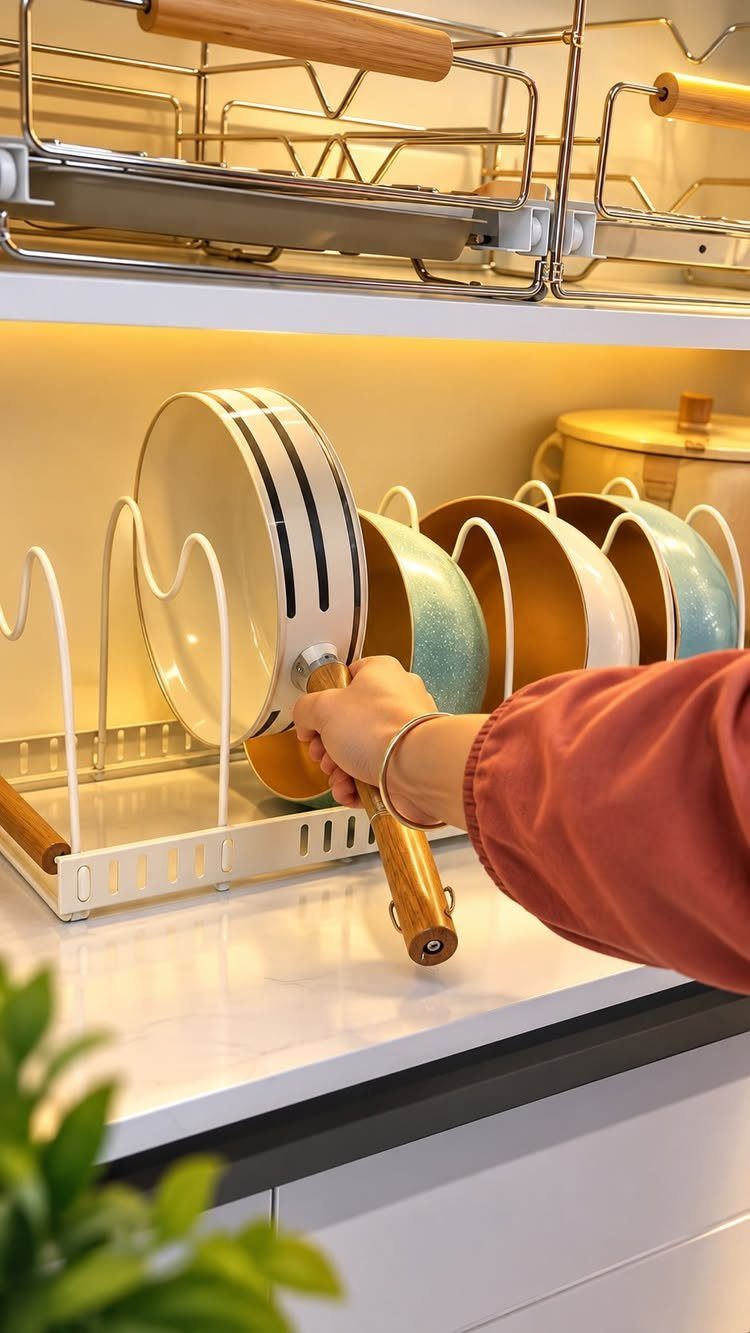
Dividers that slide along a metal frame let the rack match whatever you own, so a skinny cake pan and a wide skillet each get a gap cut to size.
Adjust the spacing before you load it, and leave a finger’s width beside each pan so it lifts out without scraping its neighbor.
A rack like this sits on a countertop or inside a cabinet. Wire frames with movable dividers suit a mixed collection better than fixed slots, which only fit the pans they were made for.
8. Pan Rack
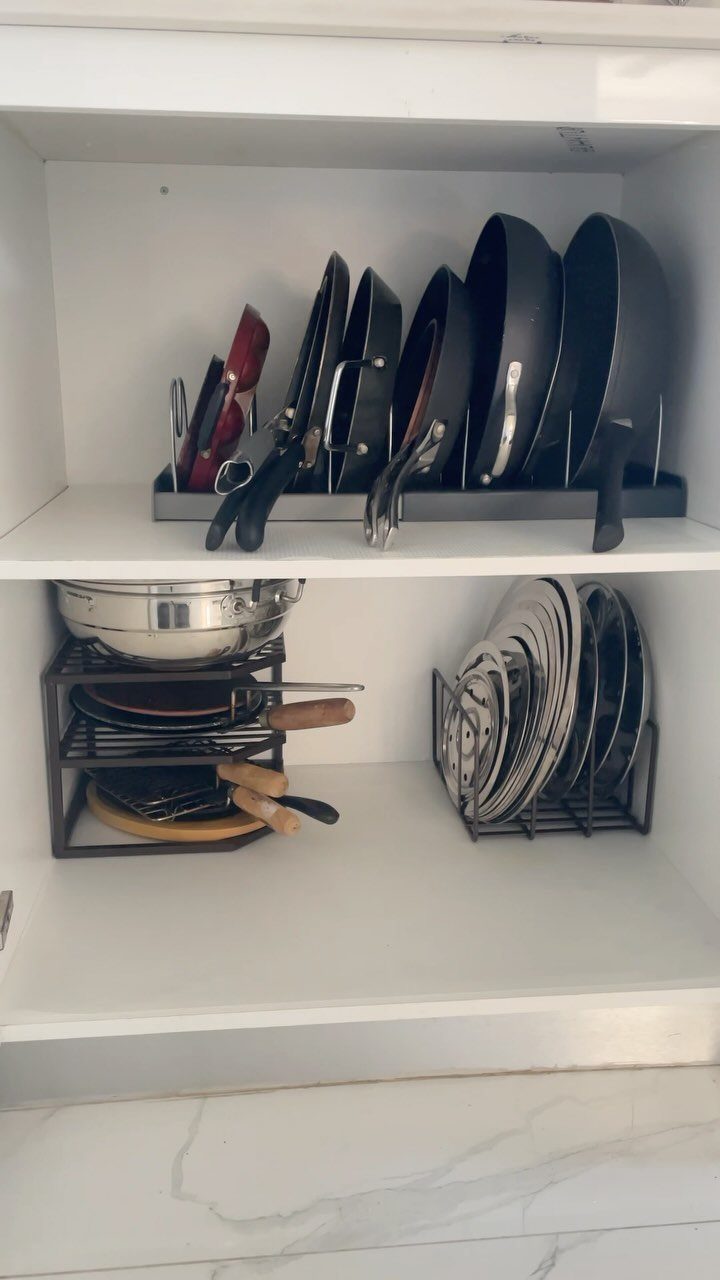
Two racks share one cabinet here, and the split is smart: a vertical one for frying pans, a tiered one for pots, pans and lids.
Tiers use the empty height above a short stack, and that air is usually the biggest waste in a cabinet.
Measure shelf-to-shelf height before buying, then add the rack’s own height to your tallest pot. I’d put the heaviest pot on the lowest tier so the rack doesn’t tip when you pull from the top.
9. Plate Rack Storage
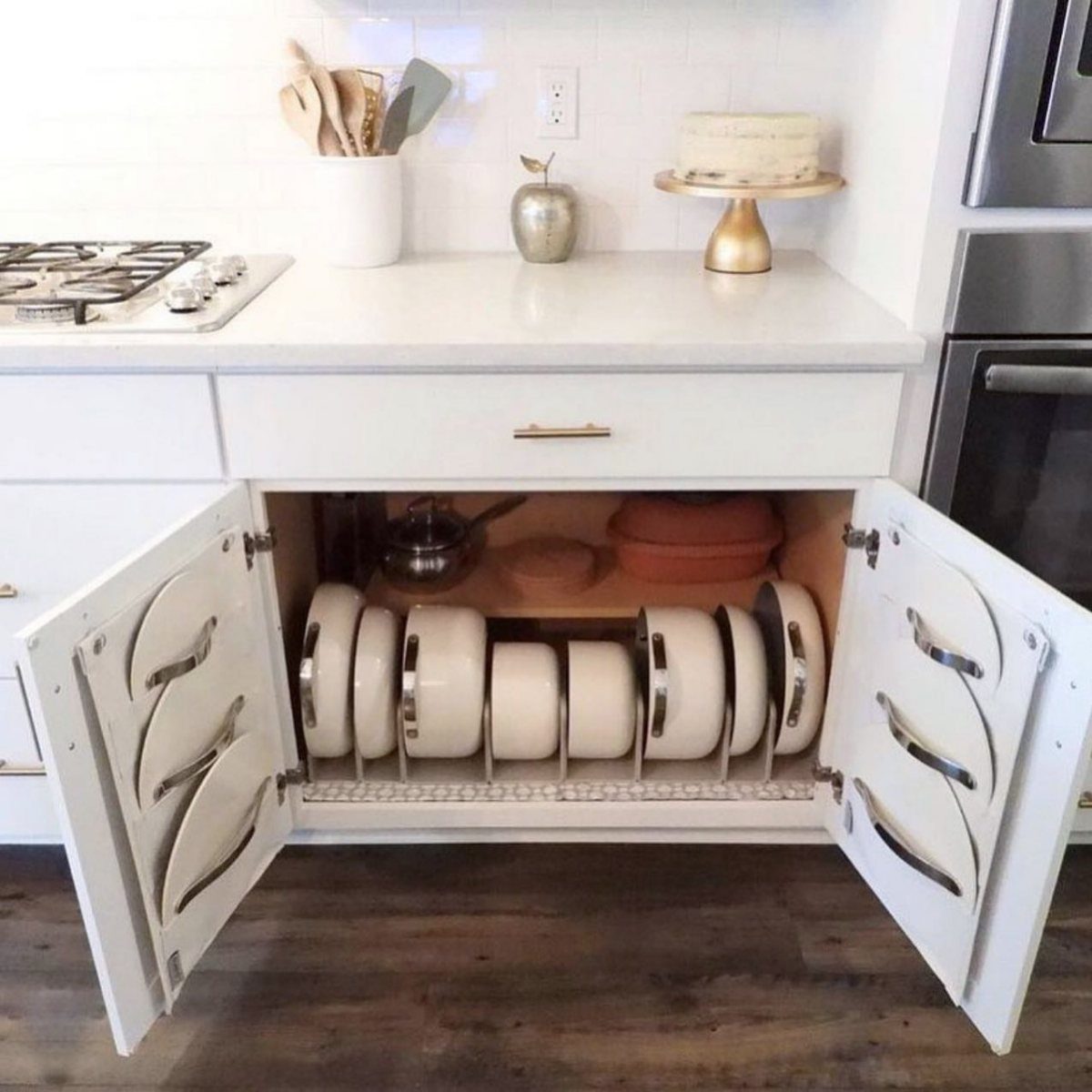
A plate rack was made for dishes, but its upright slots hold baking pans just as well. Tucked under a counter, it keeps flat pans and lids on edge where you can grab one without lifting the rest.
Check the slot spacing against your thickest pan to make sure it fits.
Plate slots run narrow, so a deep cake pan may not fit while sheet pans and lids will. It’s an inexpensive fix that needs no tools, and I like that it works in a cabinet you already have.
10. Vertical Cabinet Organizer
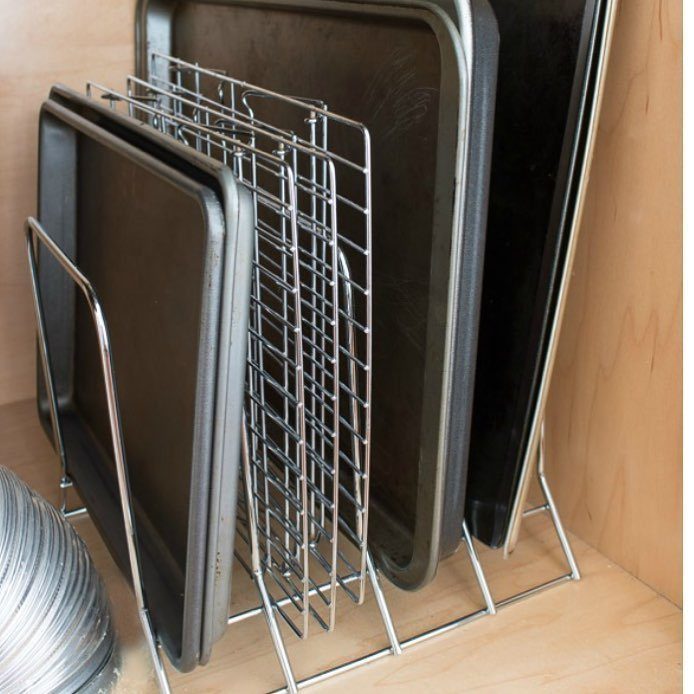
A wire organizer standing inside a cabinet keeps sheet pans and a cooling rack upright, each in its own slot. Wire leaves gaps, so air moves around a pan that went in slightly damp.
I’d store the cooling rack at the end, where it won’t snag the pans beside it.
Protect Pans from Scratches
Space between pans prevents the scratches that ruin nonstick coatings and dull glass surfaces. An organizer with individual slots does that work for you, but stacked pans need something softer in between.
A folded kitchen towel or cloth pot holder fits between two sheet pans and stays put when you lift the top one.
An apron works the same way if you have extras. Paper towels between glass dishes may help, though they shift more easily than fabric.
Nonstick pans and glass bakeware scratch most easily, so I’d give those the slots or the most padding. Metal sheet pans are tougher, but deep scratches still catch on spatulas and make cleanup harder.
Choose Safe Cabinet Locations
Measure the cabinet opening and the interior height first, since a rack that stands even 1 inch too tall won’t fit and a pull-out needs clearance to slide.
Base cabinets offer more depth and height than wall cabinets, which makes them the better choice for sheet pans and stacked cookware.
Heavy items belong in base cabinets for a second reason: lifting a cast-iron skillet or a full stack from overhead is how handles slip and pans fall.
Wall cabinets work for lightweight aluminum pans or lids stored on edge in a slim rack, but anything heavy or breakable goes lower.
Organize Before Storing
Group the items you use together in the same cabinet, so grabbing a baking pan also puts you within reach of parchment paper, mixing bowls and measuring cups.
Keeping the baking zone in one place cuts the back-and-forth when a recipe is already running.
Pull out every pan you own before you organize, and set aside the ones with warped bottoms, peeling nonstick, or rust.
Duplicates can go too unless you bake multiple sheet pans at once. Clearing out the damaged and the unused frees enough space that the keepers fit without stacking.
Give the pans you reach for most often the easiest spot, whether that’s the front slot or the top tier.