The ideas here run from a weekend of paint on the walls or island to flat-panel doors, a herringbone backsplash that takes extra cuts and patience, or a plaster range hood, so pick by how much you want to repaint.
If your cabinets are in decent shape, color on the lowers, walls or island is the low-risk route; if they’re worn, new Shaker or flat-panel doors make more sense, because white shows every chip and uneven coat.
The undertone of the white itself, from Benjamin Moore Chantilly Lace on the cool side to creamier shades, matters as much as any of it.
1. Hardware-Free White Cabinets
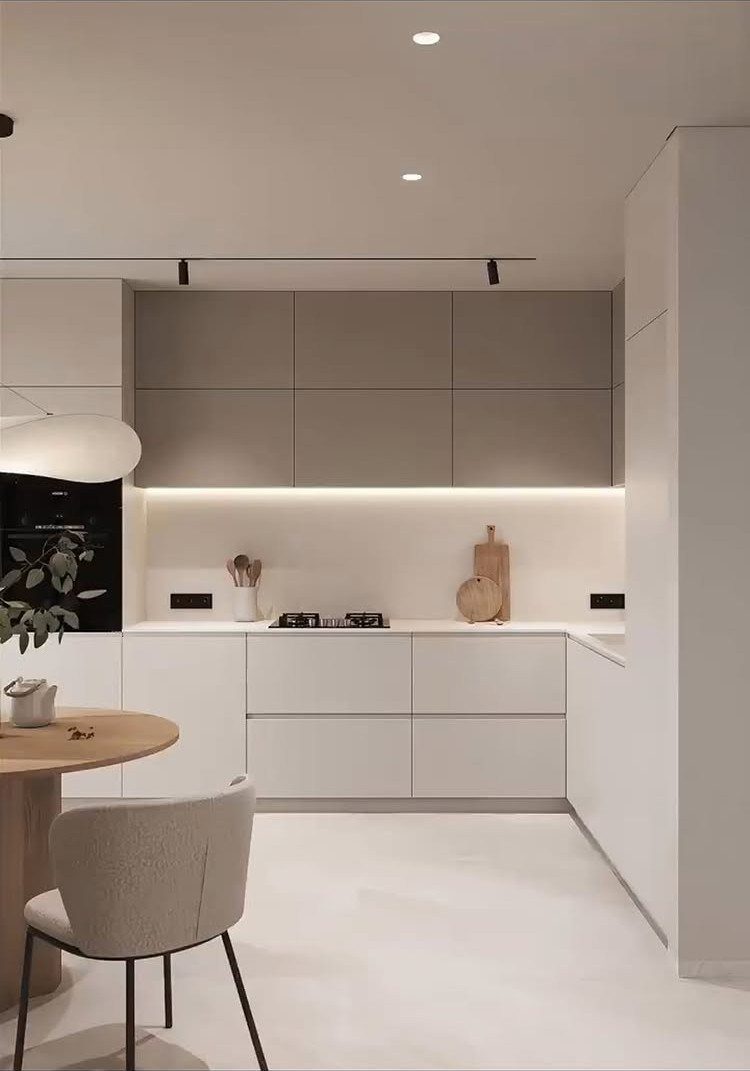
Flat doors with no pulls make a white kitchen read as one clean surface, and that calm is the whole appeal here.
The under-cabinet lighting does a lot of work in this one, because it gives the plain fronts some depth at night.
I’d pick this for anyone who wants a quiet kitchen and doesn’t mind that every door needs a firm press to open.
2. Warm White Cabinets
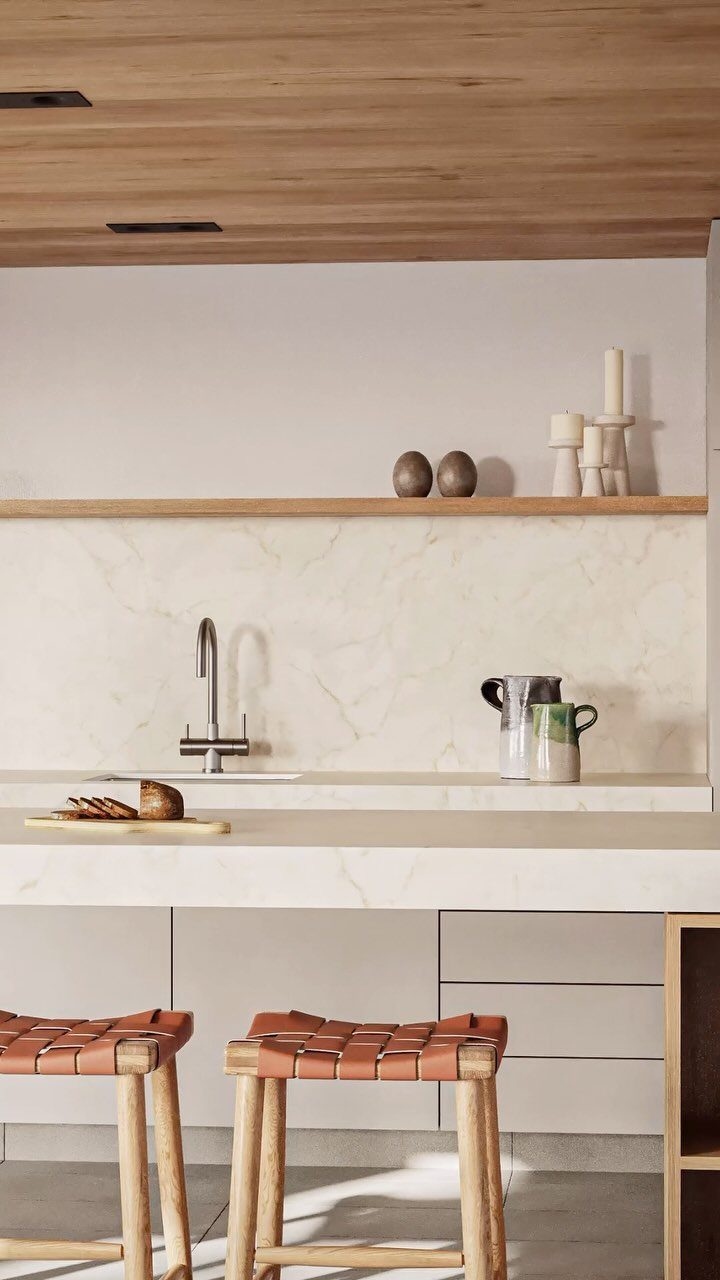
Test the paint against what stays in the room. The white marble backsplash looks crisper than the cabinets, and that contrast is what keeps the cream from looking dingy.
Hold your sample chips against the counter and backsplash in both morning and evening light before you commit.
3. White Cabinets with Light-Blue Walls
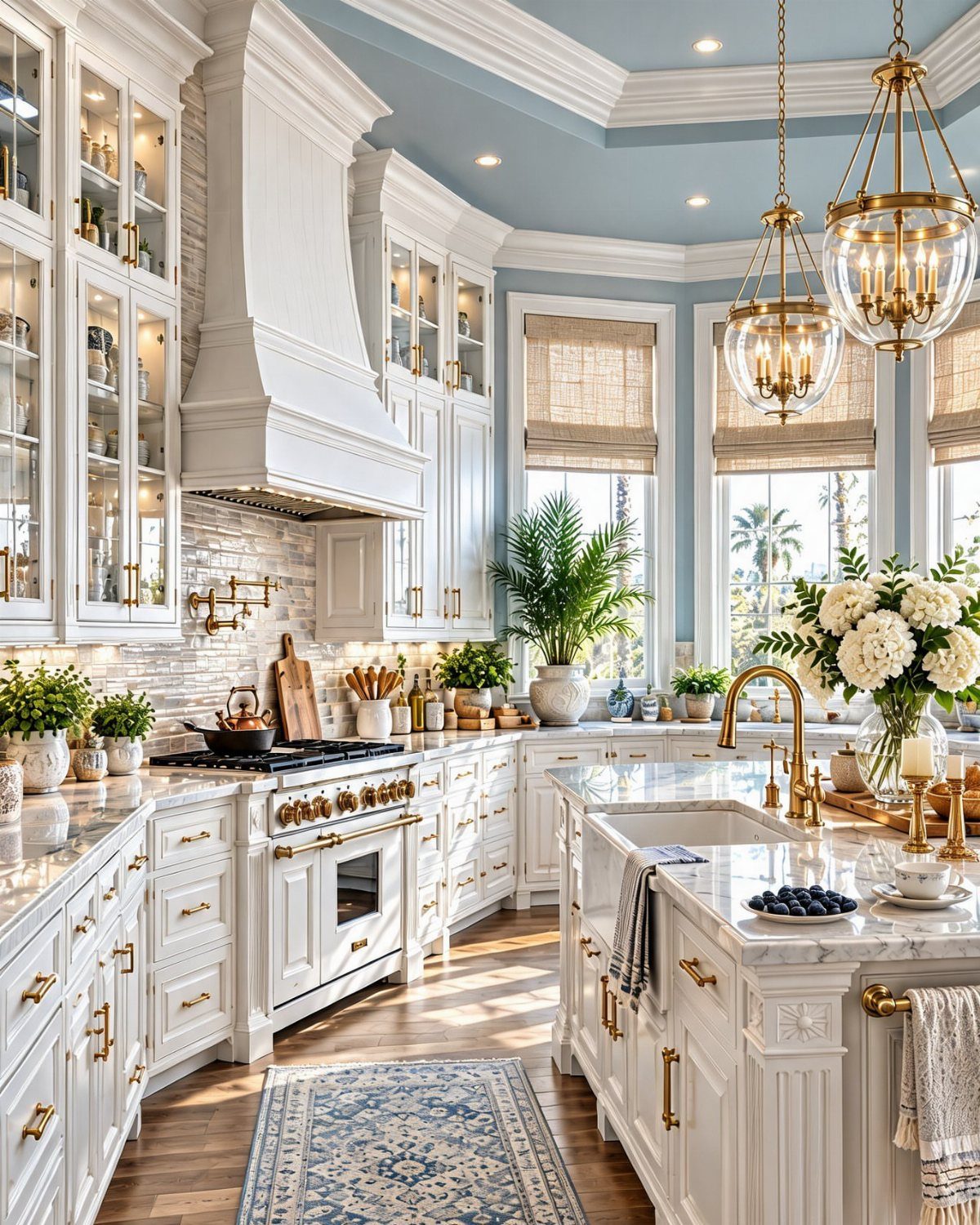
Paint the walls light blue and the white cabinets stop being the star; they become the calm backdrop that lets the color talk.
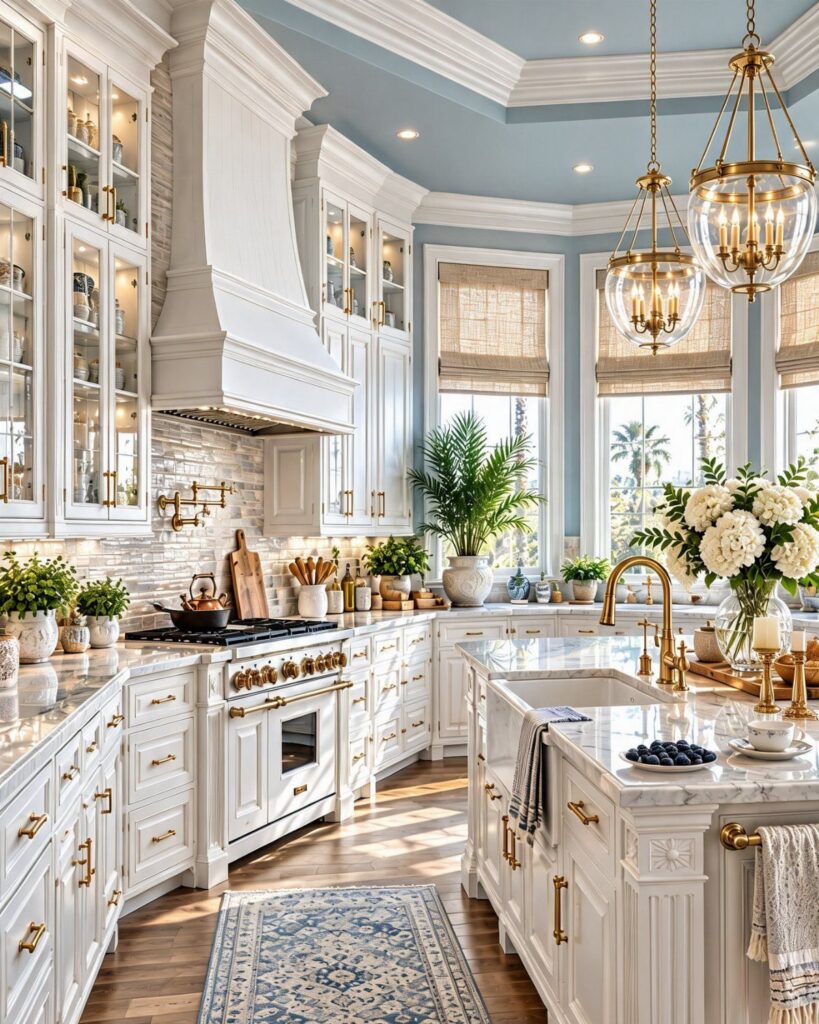
Gold hardware and 2 large gold pendants tie light-blue walls to marble countertops, and I’d keep the metal to those few spots so it reads as an accent. One strong color plus one accent metal is plenty.
Walls are far cheaper to repaint than cabinets, so this is a low-risk way to try color in a kitchen.
4. White Cabinets with a Wood Island
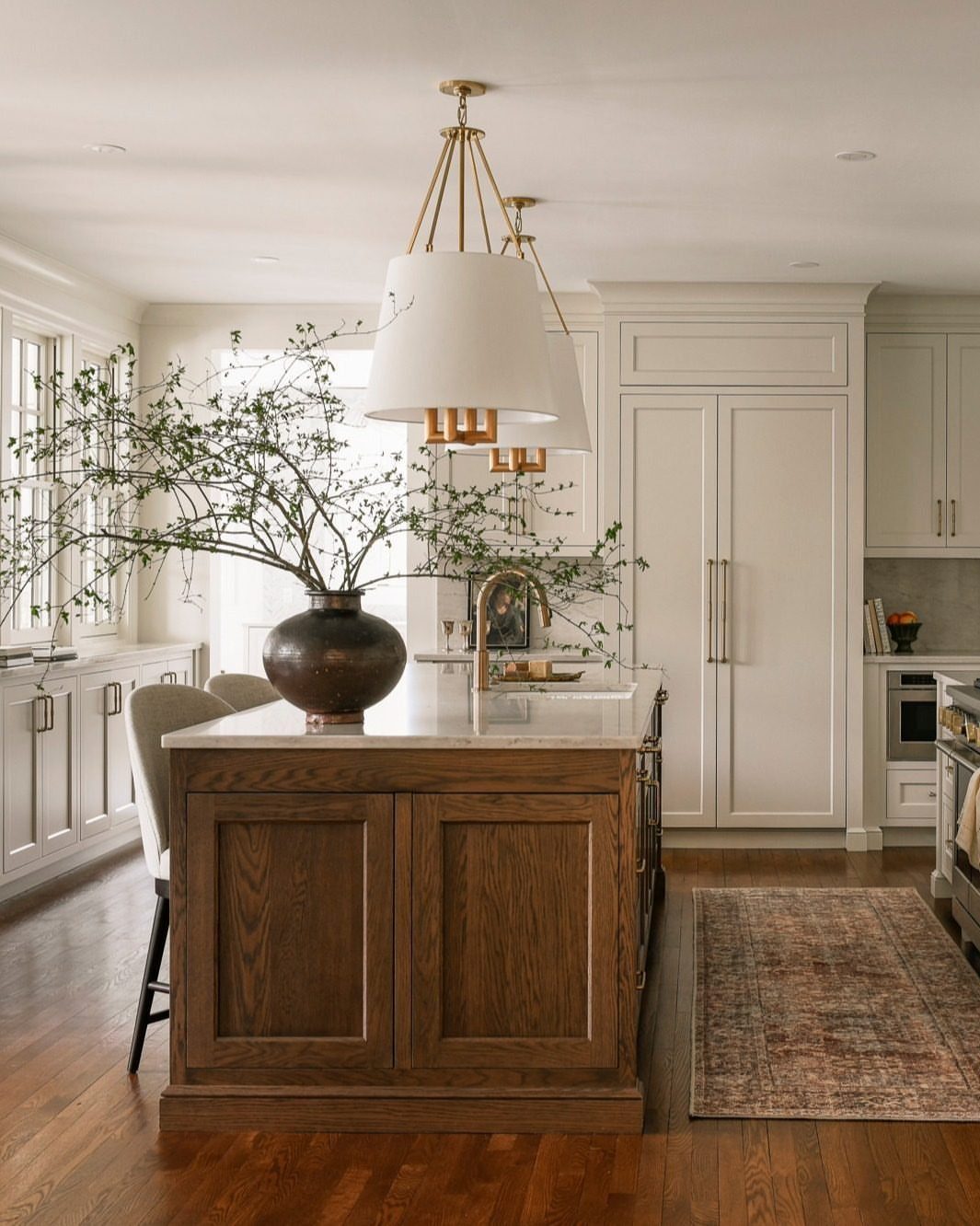
A wood island against white perimeter cabinets makes the center of the room feel like a piece of furniture rather than another box of cabinets.
Keep the wood to that one spot. The white countertop on the island lets the grain stand out, and the 2 white pendants overhead keep the whole scene light.
A dark vase of branches on top is an easy way to repeat the wood tone for almost nothing.
5. White Uppers, Navy Lowers
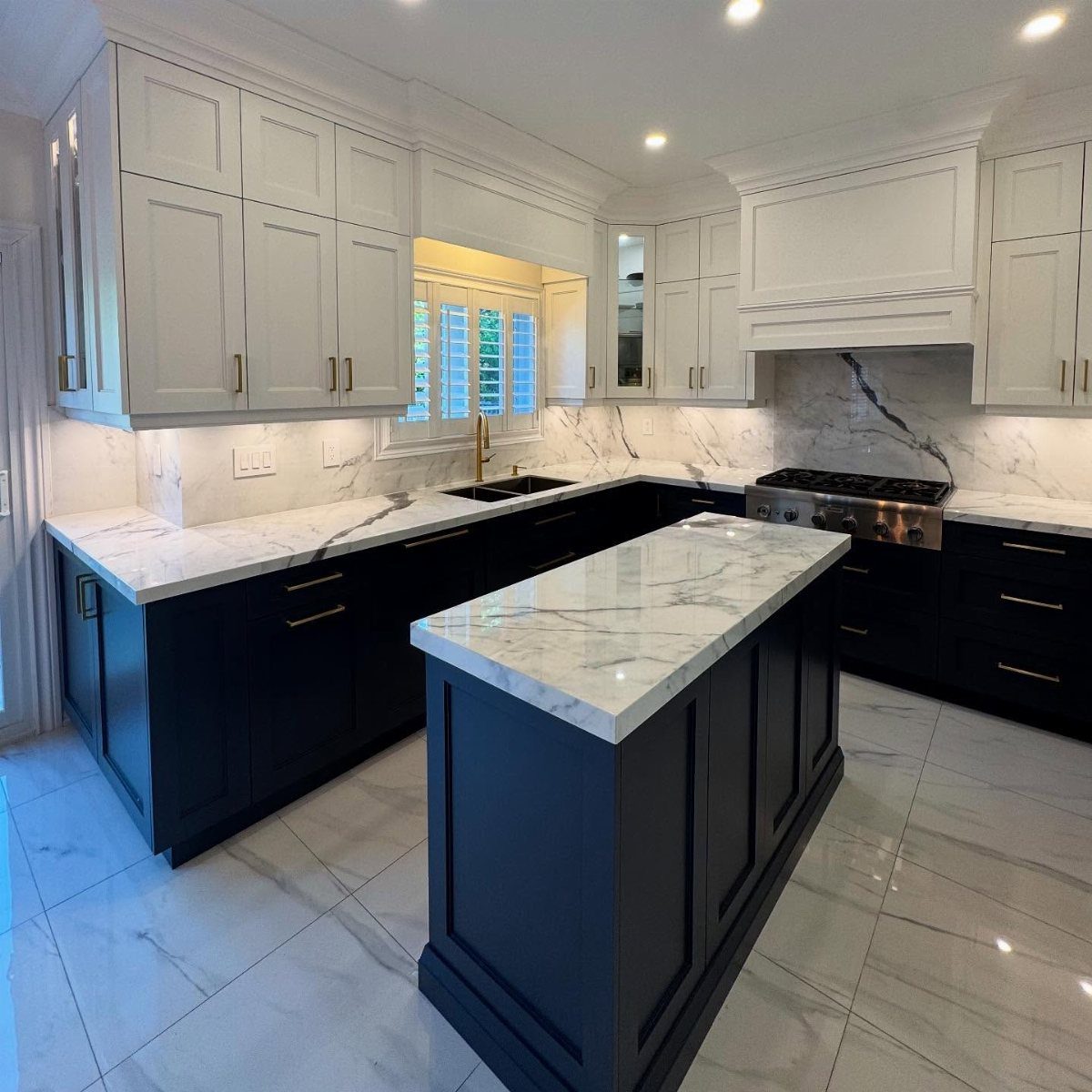
Navy on the lowers keeps the dark color near the floor, where it anchors the room, while the white uppers keep the walls bright.
Carrying the navy onto the island, as this kitchen does, ties the 2 zones together. White marble countertops then separate the dark and light halves cleanly.
If your cabinets are worth painting, try the lowers first. That’s where the color makes the most difference, and the uppers can stay white.
6. Contemporary White Kitchen
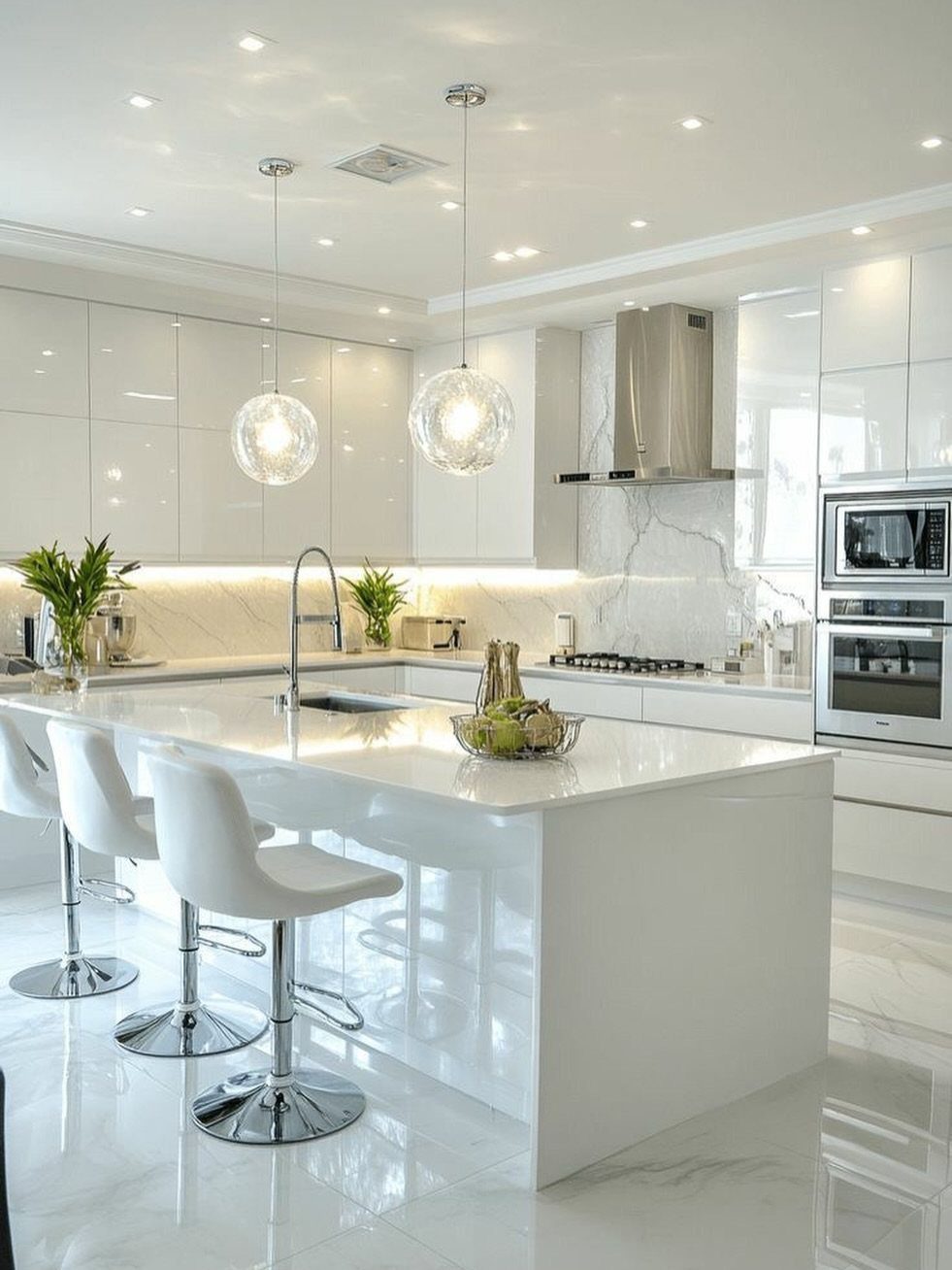
Glossy white fronts, a waterfall island and spherical glass pendants: a contemporary kitchen comes from clean lines and a short list of materials, not from adding more.
Here that list is white, marble, stainless steel and glass, and nothing competes with it. 3 white barstools at the island keep the seating from adding clutter.
I’d copy the restraint before anything else. 2 pendants over the island do more than a row of fixtures would.
7. Flat-Panel White Cabinets
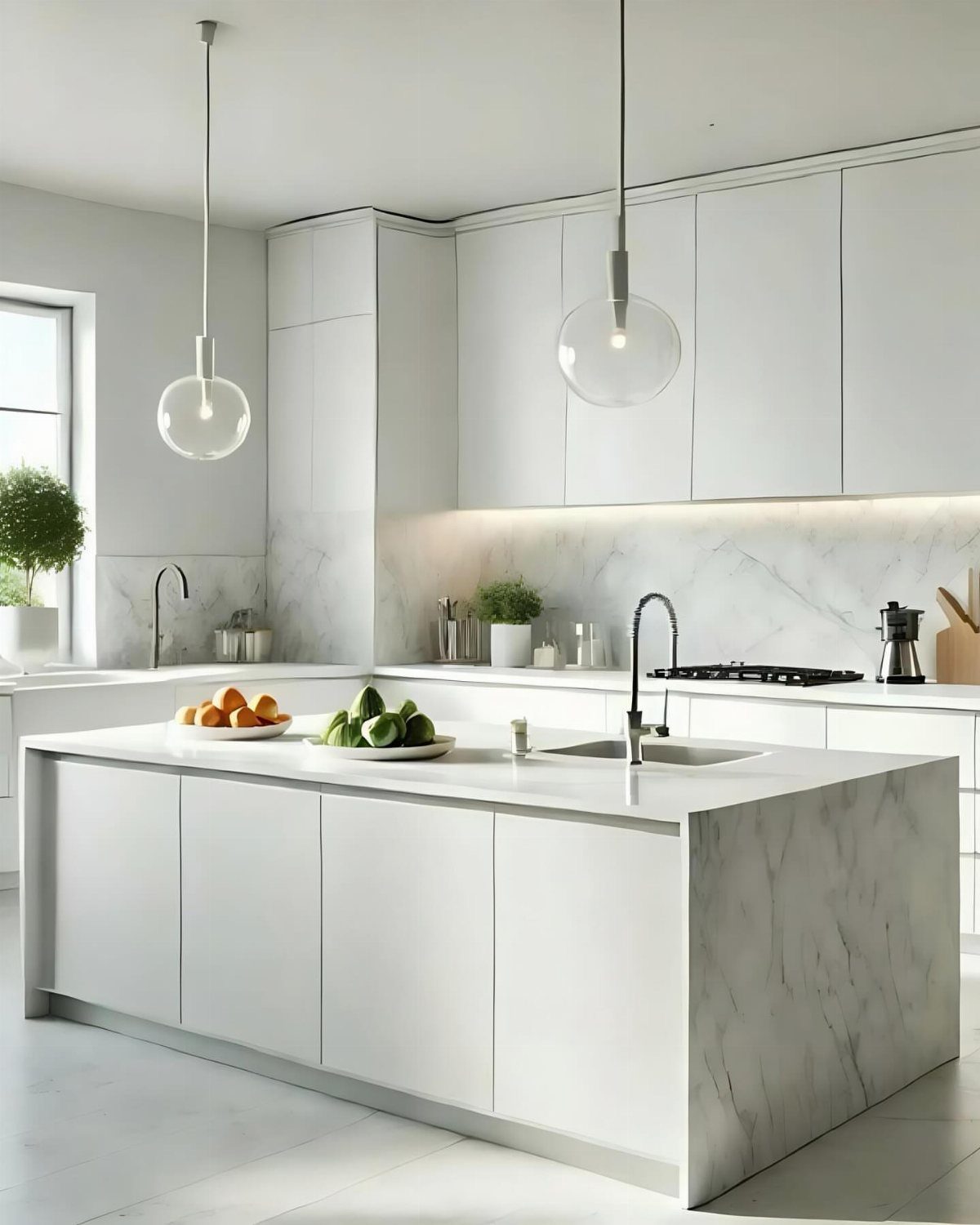
Slab doors have no frame, no groove and no profile, so the only thing left to look at is the white itself.
In a kitchen with a marble island and marble backsplash, that plainness lets the stone’s veining do the talking.
Because there’s nothing to break up the surface, fingerprints, uneven paint and crooked door gaps all show.
I’d pick this style for new or refaced cabinets rather than paint over old ones, since a sprayed or factory finish stays flat where a brushed one rarely does.
2 globe pendants over the island fit the look: simple shapes, nothing fussy.
8. White Cabinets with a Colorful Island
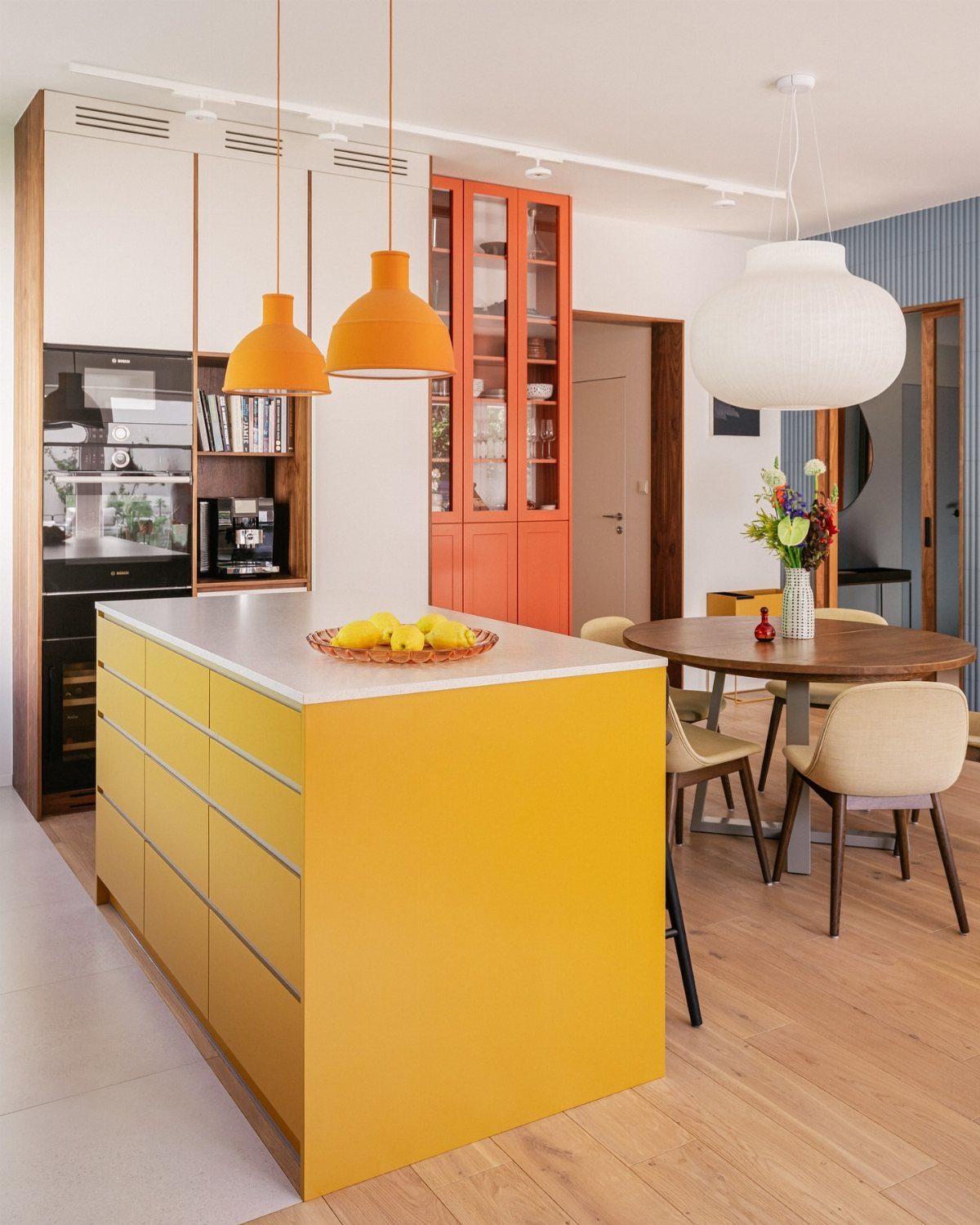
An island in a saturated yellow turns a white kitchen into a room with a focal point, and it’s a bolder move than a painted wall.
White perimeter cabinets and a white countertop on the island keep the color from taking over.
I like that the orange pendants and the orange cabinet accents repeat the warmth, so the yellow looks planned rather than dropped in. Pick 2 colors from the same warm family and let white handle everything else.
Paint is the cheap way to test it: an island is one piece, so a repaint costs a weekend, not a remodel.
9. All-White Kitchen
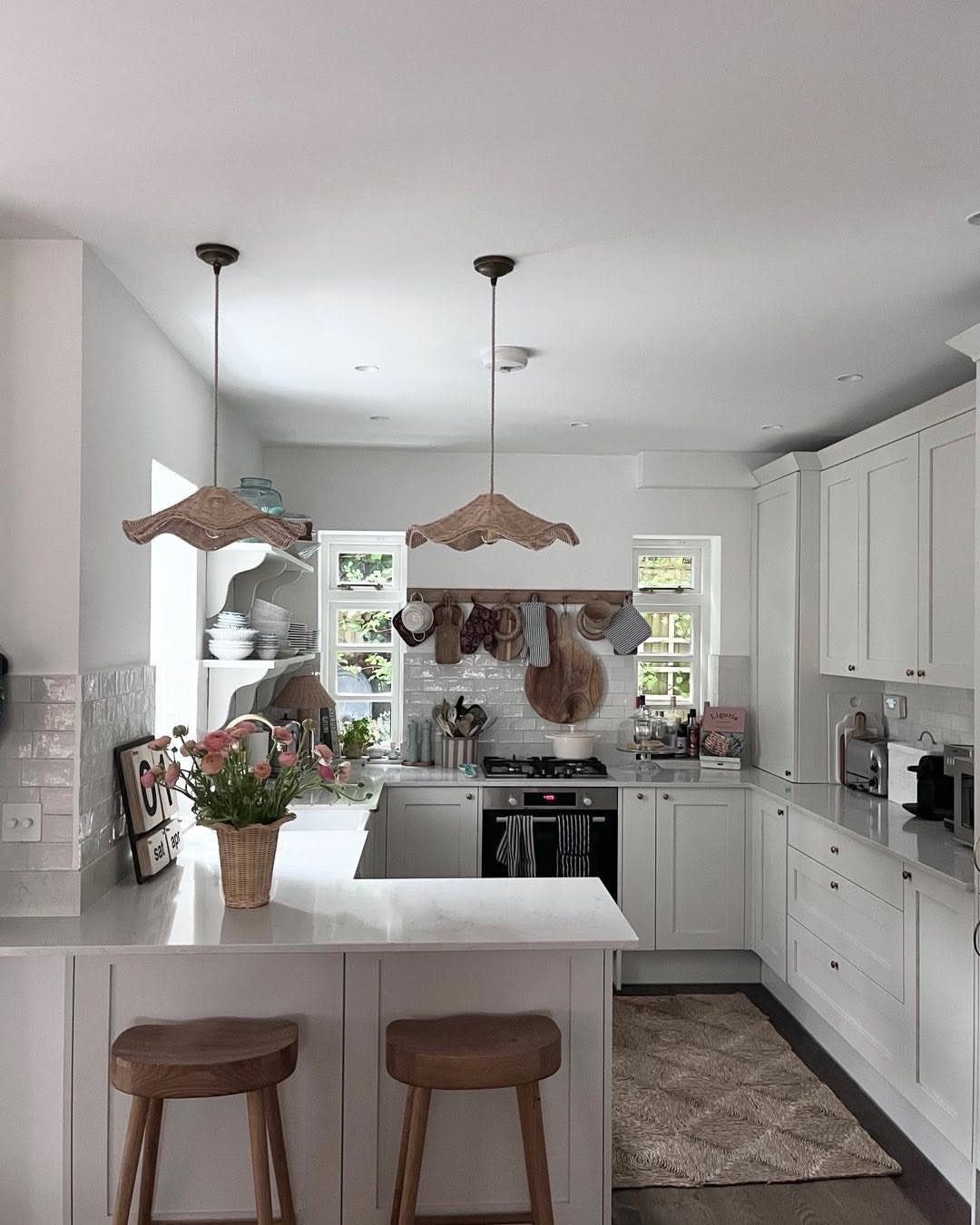
White cabinets, white counters and white walls leave no edge for the eye to stop on, which makes a room feel larger and brighter than its square footage. That helps small or low-light kitchens most.
Without contrast, texture does the work. Woven pendants, wooden stools and a small bouquet of flowers keep this one from feeling clinical, and I’d budget for a few such pieces before buying anything else.
Expect to wipe things down often, since splashes and smudges show on every surface. Matching the whites matters too: hold samples together before you buy, because mixed undertones read as a mistake.
10. White Shaker Cabinets
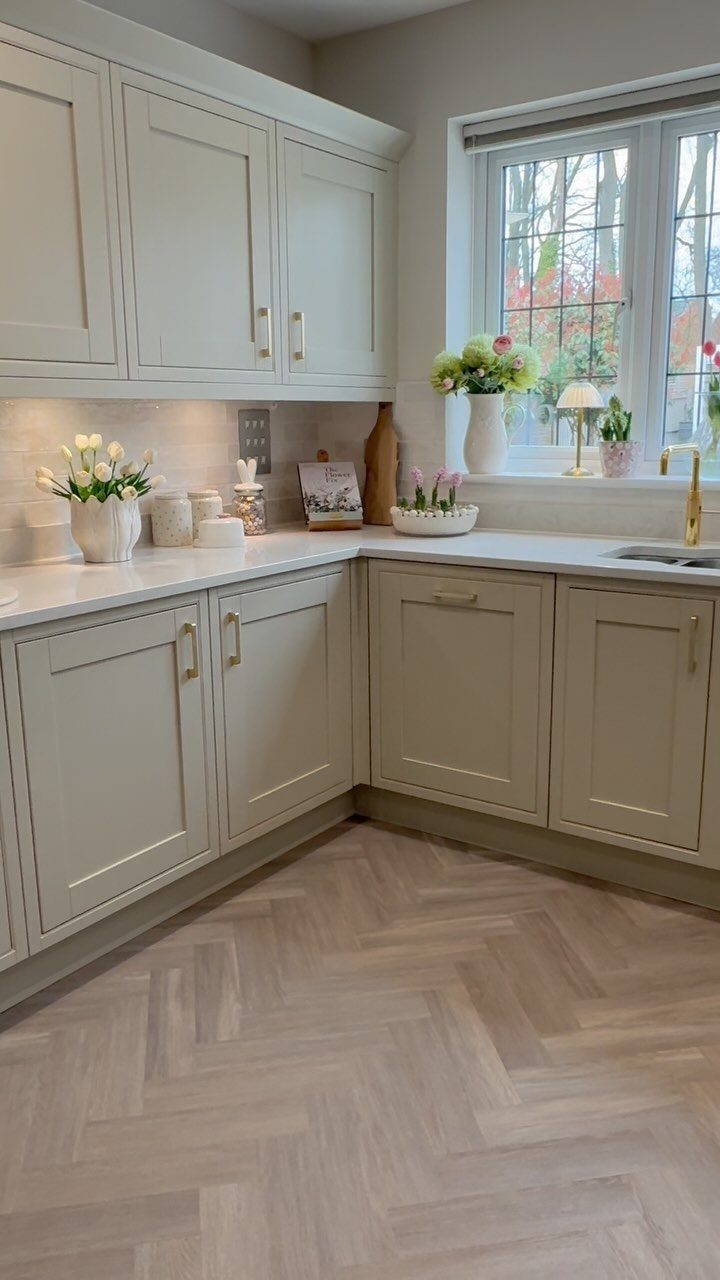
A Shaker door is a flat center panel inside a square frame, and that shallow recess catches light and shadow so white paint never looks flat.
It’s the style I’d suggest to anyone unsure what they want, because it fits traditional and modern kitchens alike.
Swapping in gold pulls and knobs warms up white Shaker cabinets without touching the cabinets themselves, and a light wood floor in a herringbone pattern backs that up.
Hardware is also the cheapest part to swap later if your taste shifts.
Shaker fronts are widely sold, so you can often reface existing boxes with new doors.
11. White Cabinets with a Herringbone Backsplash
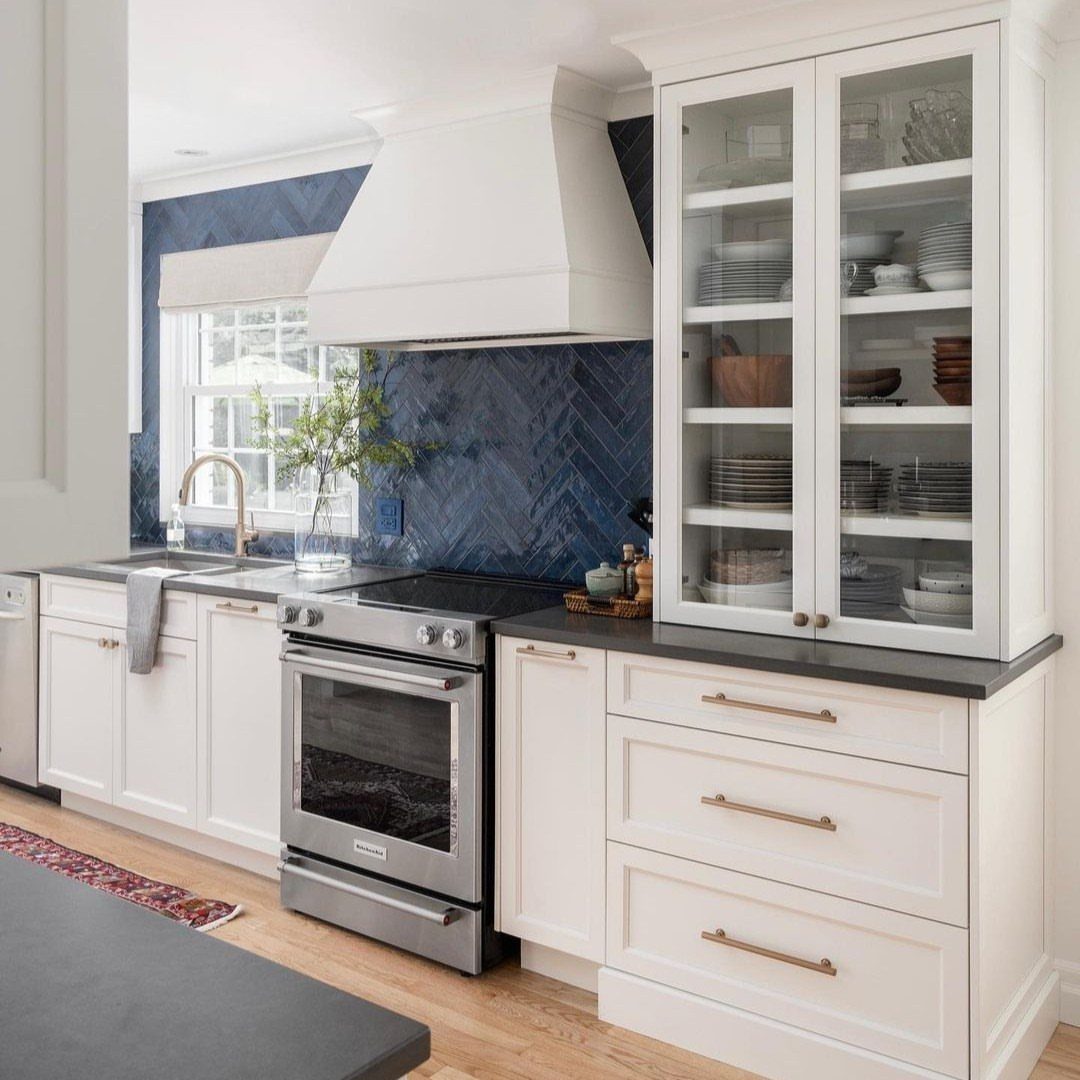
Keep the cabinets plain and put the pattern on the wall: a deep blue herringbone tile behind the range gives a white kitchen its one dramatic spot. The zigzag layout adds movement that a straight stack of tile can’t.
Keep the cabinets white and the countertops dark, and a blue backsplash becomes the one color the eye lands on. I’d keep every other surface quiet so the tile stays the single loud element.
Herringbone takes more cuts and more patience to lay than a standard grid, so allow extra time or hire a tiler.
12. White Cabinets with Gray
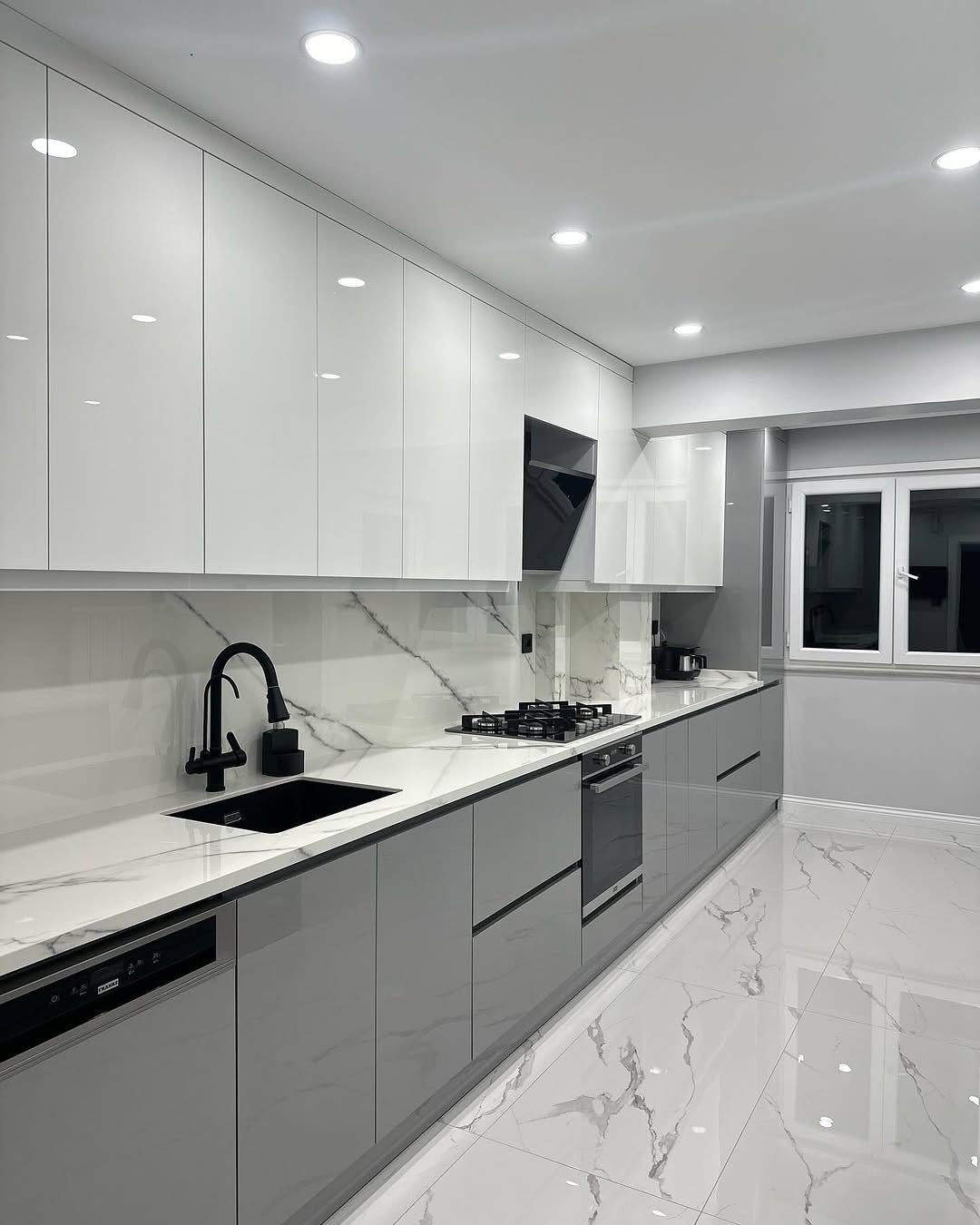
Swap black lowers for gray ones and the contrast with white uppers softens. Glossy white above, gray below and marble on the counters and floor give the room a layered look without any hard line.
Gray works best when it sits close to the marble’s own tones, so take a sample chip to the stone before ordering. A black faucet adds one sharp point that keeps the palette from going flat.
Putting the darker color on the lowers, as here, keeps the uppers light and the room open. I’d choose this over black if your kitchen gets little daylight.
13. White Cabinets with a Plaster Range Hood
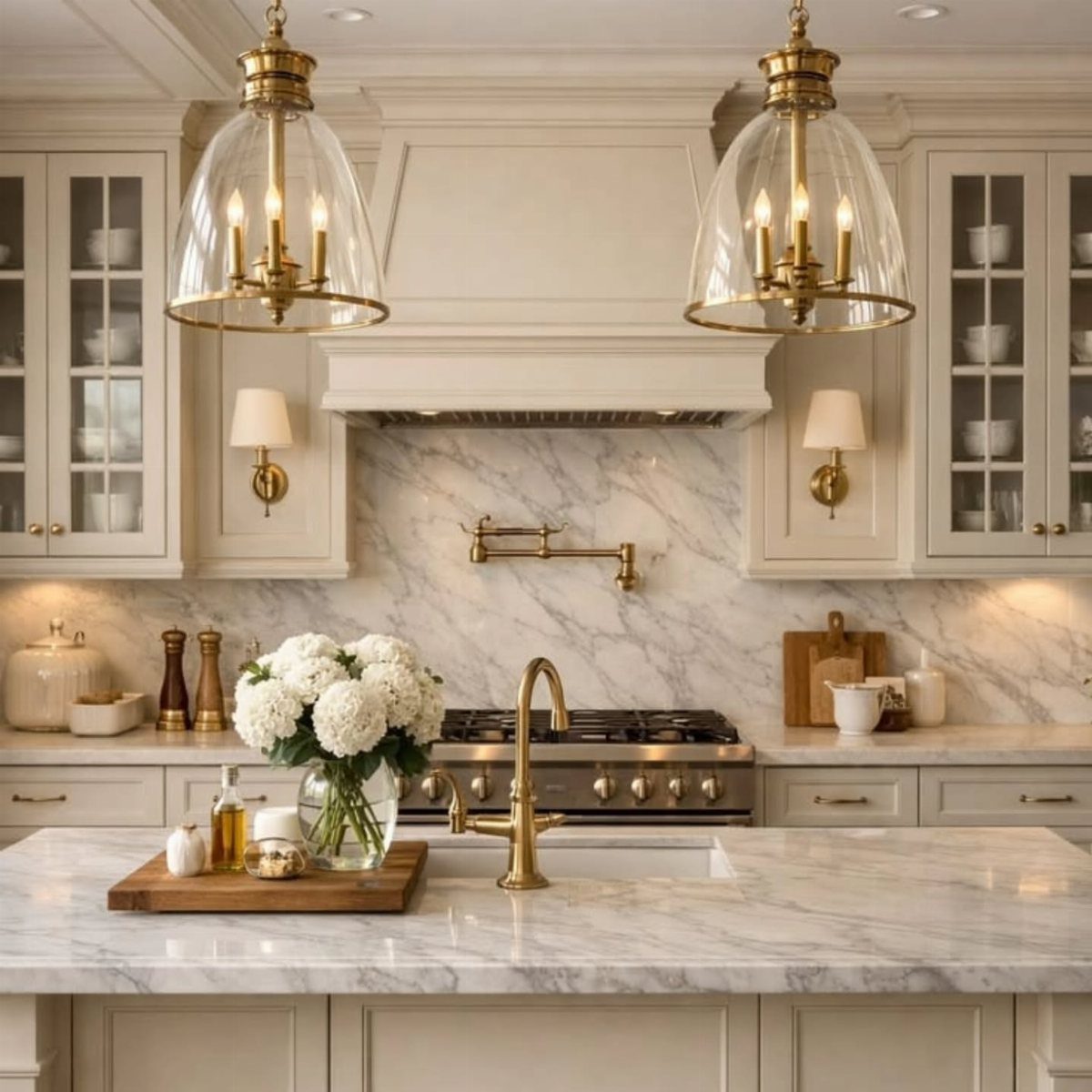
A plaster hood turns the vent into the one architectural piece in a white kitchen. Because its finish differs from the cabinet paint, the hood reads as built into the room rather than ordered with the cabinets.
Gold pendants and a gold fixture would repeat the warmth in a plaster finish, and I’d stop the metal there. White hydrangeas on the island add softness without a second color.
If the cabinets stay plain, the hood can be as large as the wall allows. Pick a finish that sits a shade apart from the cabinet white, and check it against the marble before you commit.
14. White Cabinet Remodel
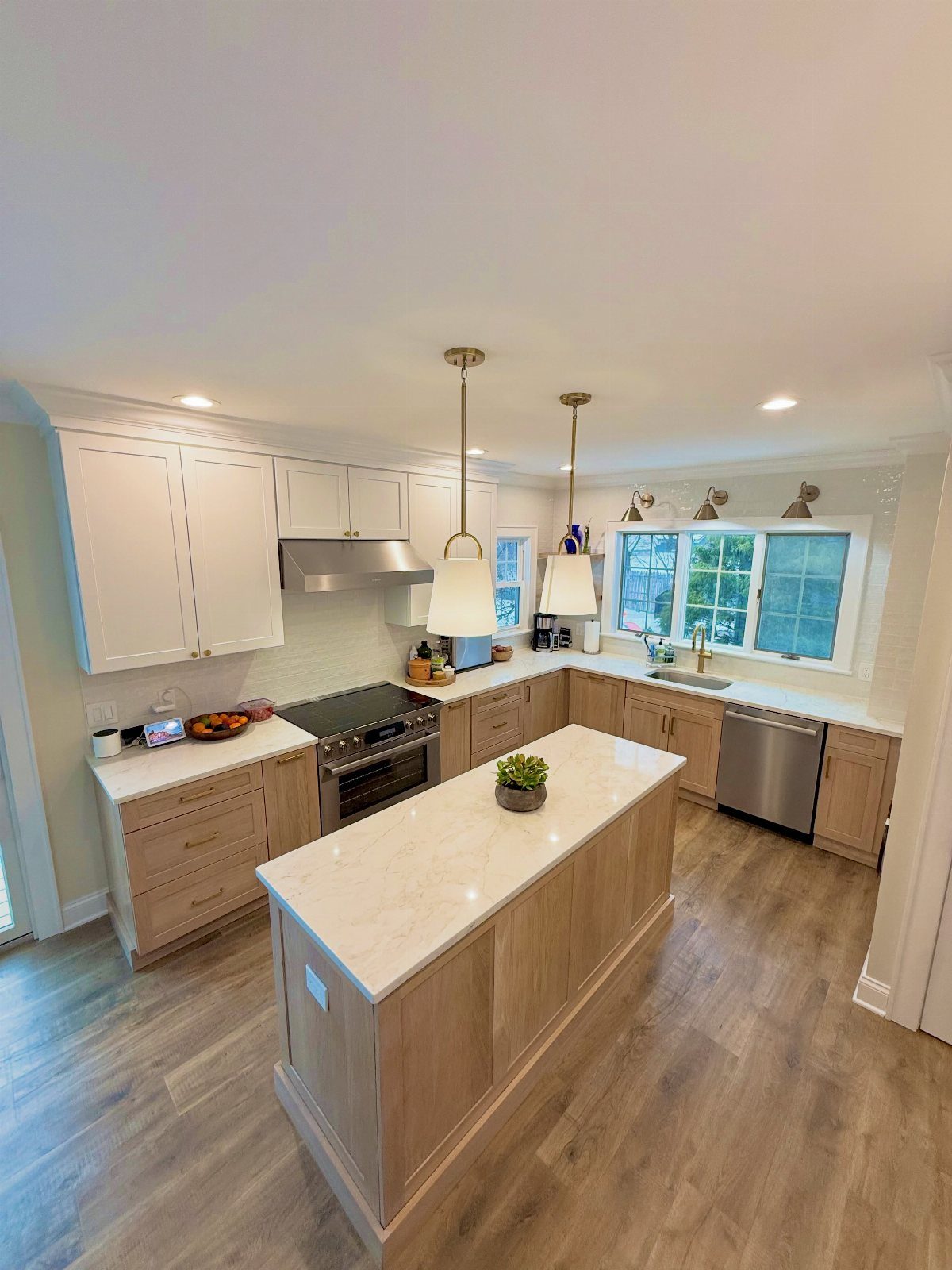
Light wood on the lowers and island, white on the uppers: that pairing can lift a dark kitchen without painting every surface the same color.
The wood keeps the room from feeling stark, and the white uppers push light up the walls.
A white countertop on the island keeps the surfaces bright, and pendant lighting over it adds a second layer of light after dark. Stainless appliances fit right in with this mix.
Change the cabinets, counters and lighting together so they agree. Updating only one of them tends to leave the room looking half finished.
Benefits and Trade-Offs
White cabinets reflect natural and artificial light, so even a dim kitchen looks brighter and that light carries into nearby rooms like the dining area. They also make a flexible backdrop for whatever you add later.
The costs are real. White cabinets don’t get dirtier than dark ones, but the contrast makes every splash and fingerprint easier to spot.
Chips, dings and worn edges stand out more too, so cheap white cabinets look old fast, and I’d put money into construction quality first.
Direct sun and cooking grease can turn white yellow or beige over time. With white walls, counters and floors and no warm accents, the room can feel clinical, and a shade that’s too cool or too bright makes that worse.
Choosing a White Shade
Undertone decides how a white behaves.
Cool whites carry blue, gray or green and read crisp and modern, like Benjamin Moore Chantilly Lace or Sherwin-Williams Extra White. Warm whites lean yellow, beige or pink and feel softer.
Match the undertone to your light. A blue-leaning white looks crisp beside warm oak floors or butcher block, yet it goes stark and chilly in a dim kitchen or under daylight-type bulbs.
Showroom lighting shifts how a white looks, so judge samples at home.
Brush a sample onto a spare cabinet door or a big sheet of poster board, then carry it from the window wall to the spot under your lights and into the darkest corner, checking it at different times of day.
Hold it against steel appliances, mirrors, molding and hardware, and look again at morning, midday and evening.
The key is paying attention to how your white interacts with surrounding materials like countertops and flooring. A shade that appears crisp next to marble can suddenly skew gray or sterile, especially against warm oak cabinets or brass hardware.
White Cabinet Maintenance
A soft cloth and a bowl of warm water with a few drops of dish soap handle the weekly wipe-down; do it more often if small kids, a dog that nudges the lower doors or nightly frying are part of your kitchen.
Yellowing usually starts where cooking grease settles, around the range and under the hood, so those doors get the most frequent cleaning. Skip ammonia, bleach and abrasive scrubbers, which damage the finish and speed discoloration.
Wipe up tomato sauce, red wine, coffee and turmeric quickly, since overnight they can leave shadow stains.
In a south-facing kitchen, blinds or window film cut UV during peak afternoon hours.
Frequently Asked Questions
What color white for kitchen cabinets?
Choose by undertone and by the light in your room.
Benjamin Moore Chantilly Lace and Sherwin-Williams Extra White sit on the cool side, with a blue, gray or green undertone that reads sharp and modern; whites pulled toward yellow, beige or pink look gentler.
Next to warm oak floors or a butcher block counter, a bluish white works nicely, but in a dim room it can turn cold, so tape up a sample and check it at morning, noon and evening.
What makes a kitchen look cheap?
Weak cabinet construction gives it away first. Chips, dings and worn edges show up fast on white, so low-quality white cabinets look old early.
Cheap-looking kitchens give themselves away through blotchy paint, doors that hang crooked and white tones that clash, and all of that shows even on plain slab fronts; put money into solid construction first, and lay your white samples next to each other before buying.
How can I make my white kitchen feel warm and inviting?
Add wood and warm metal in a few spots and choose a warm white.
A wood island against white perimeter cabinets, or light wood on the lowers, takes the stark edge off, and gold pulls and knobs warm up white Shaker doors without touching the cabinets themselves.
A kitchen that is white from wall to wall needs some texture to feel lived in: woven pendants, wood stools and a small vase of flowers all help.
What are some popular backsplash options for a modern white kitchen?
White subway tile, full marble slabs, geometric tiles, herringbone and painted brick are the common picks.
Deep blue tile set in a herringbone pattern behind the range gives a white kitchen one bold moment, though it means more cuts than a straight grid, so budget extra time or pay a tiler.
With white cabinets and quiet counters and walls, the tile gets to be the only loud thing in the room.