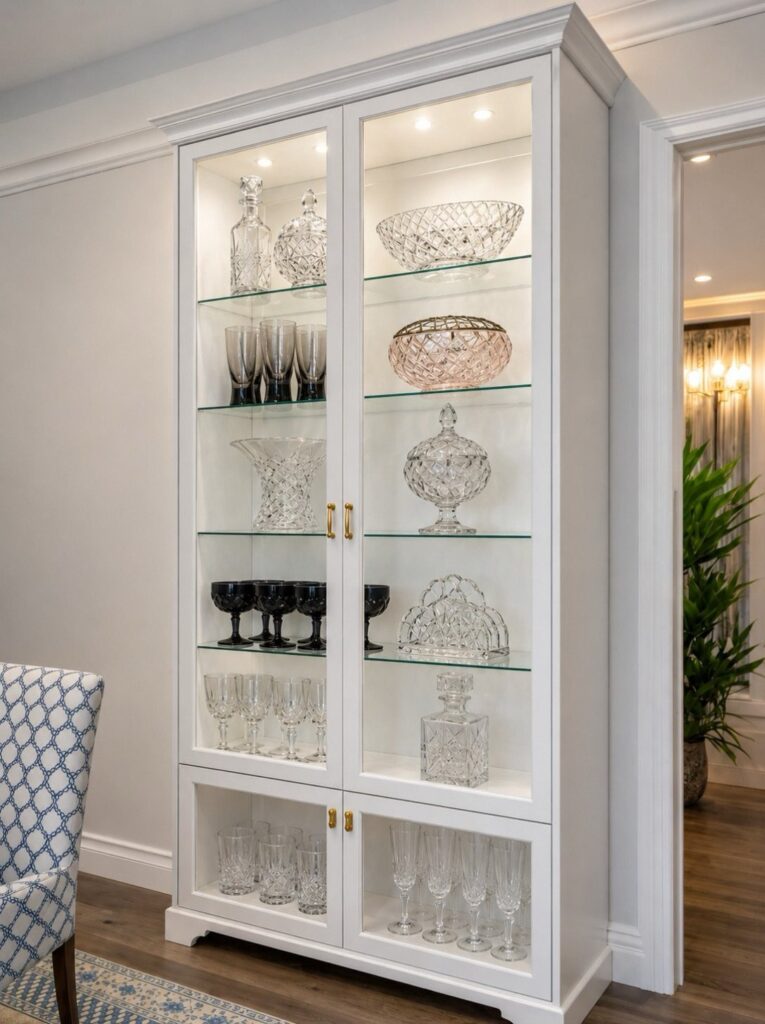
The ideas below run from hutch shelves left with plenty of empty space to a black lattice hutch, and how much room your dining area has settles which direction fits. Tape the footprint on the floor before choosing a color.
1. Glass-front China Cabinet
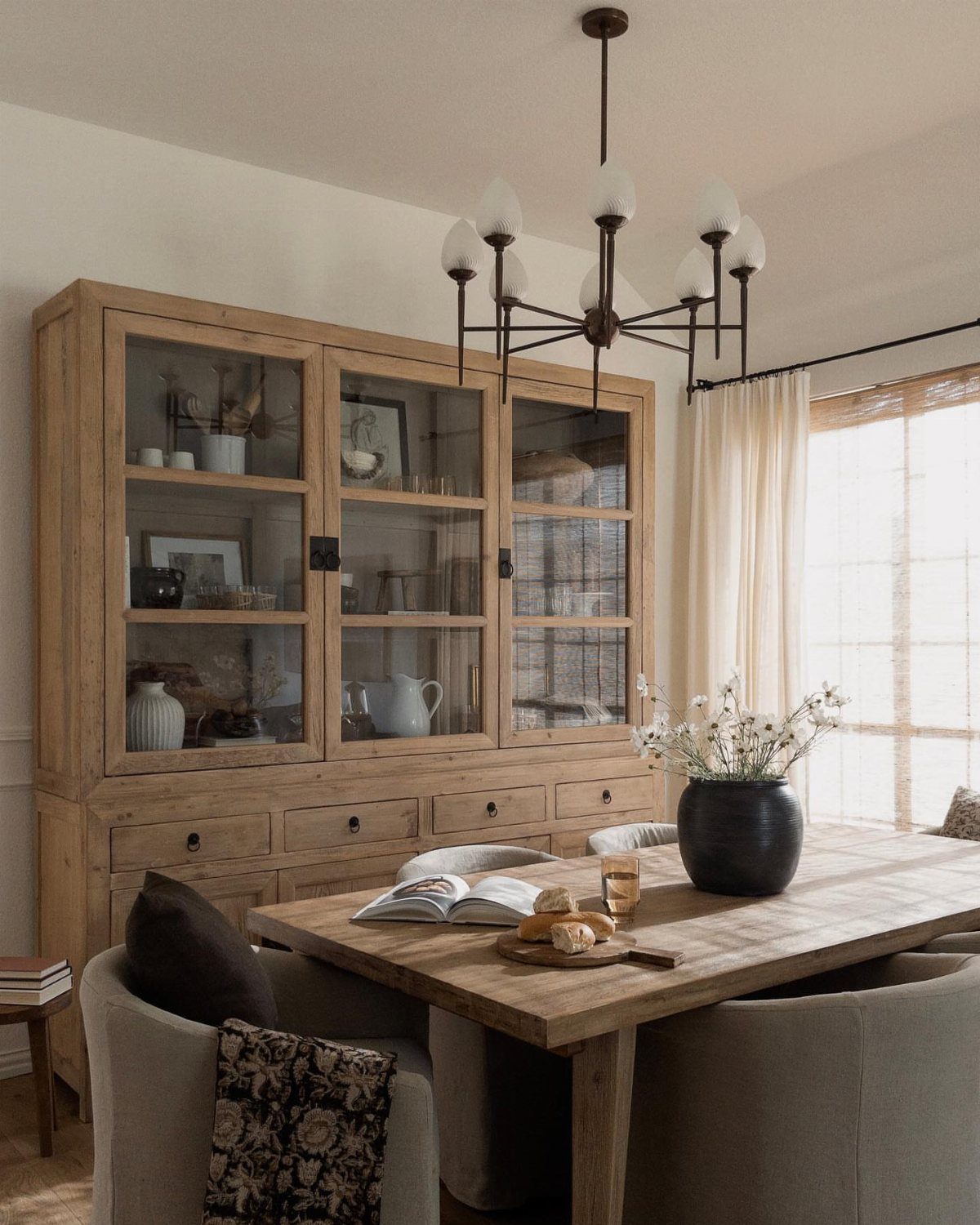
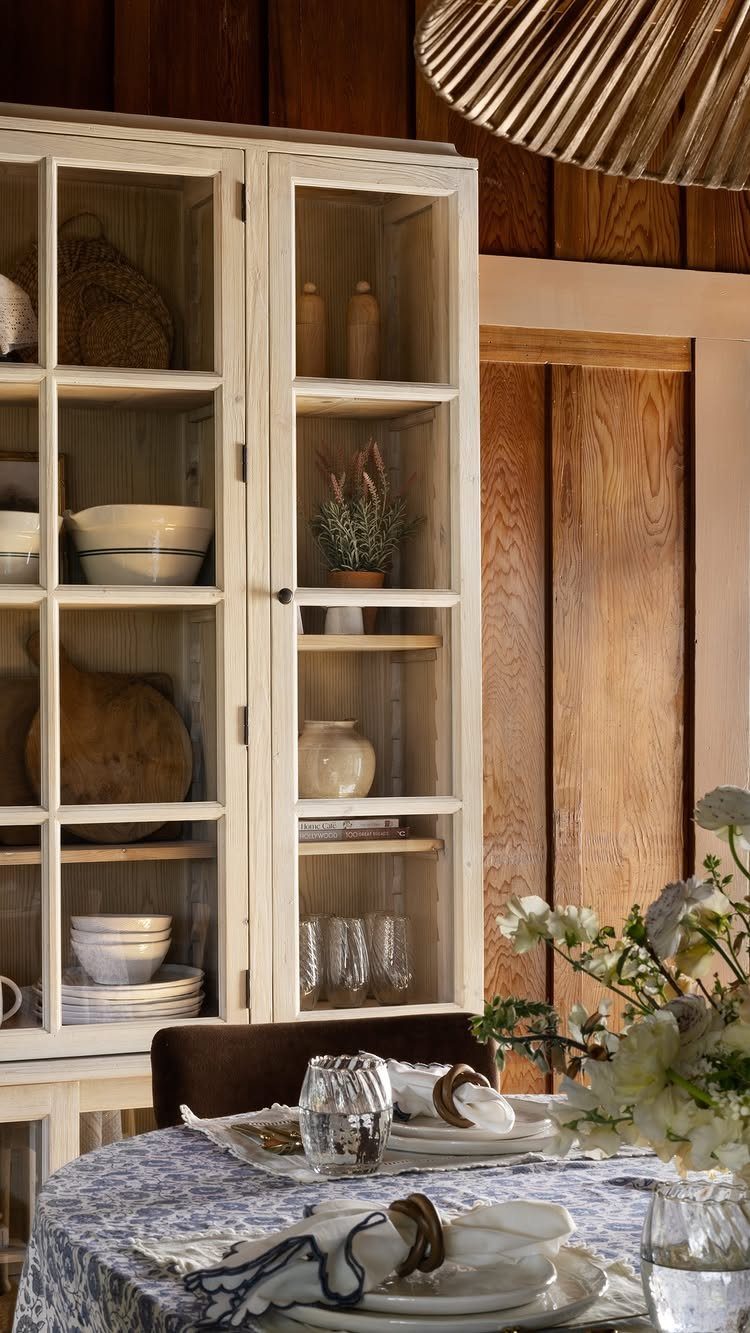
Glass doors do half the styling for you, which is why plain white pottery looks so good in a light wood cabinet like this one.
Keep the palette to a single color and the shelves read as calm instead of cluttered.
Put the tallest pieces at the back and stand plates on edge so their faces show. I’d keep a bare inch or two between stacks so each one reads as its own group.
2. Farmhouse Crockery and Wood
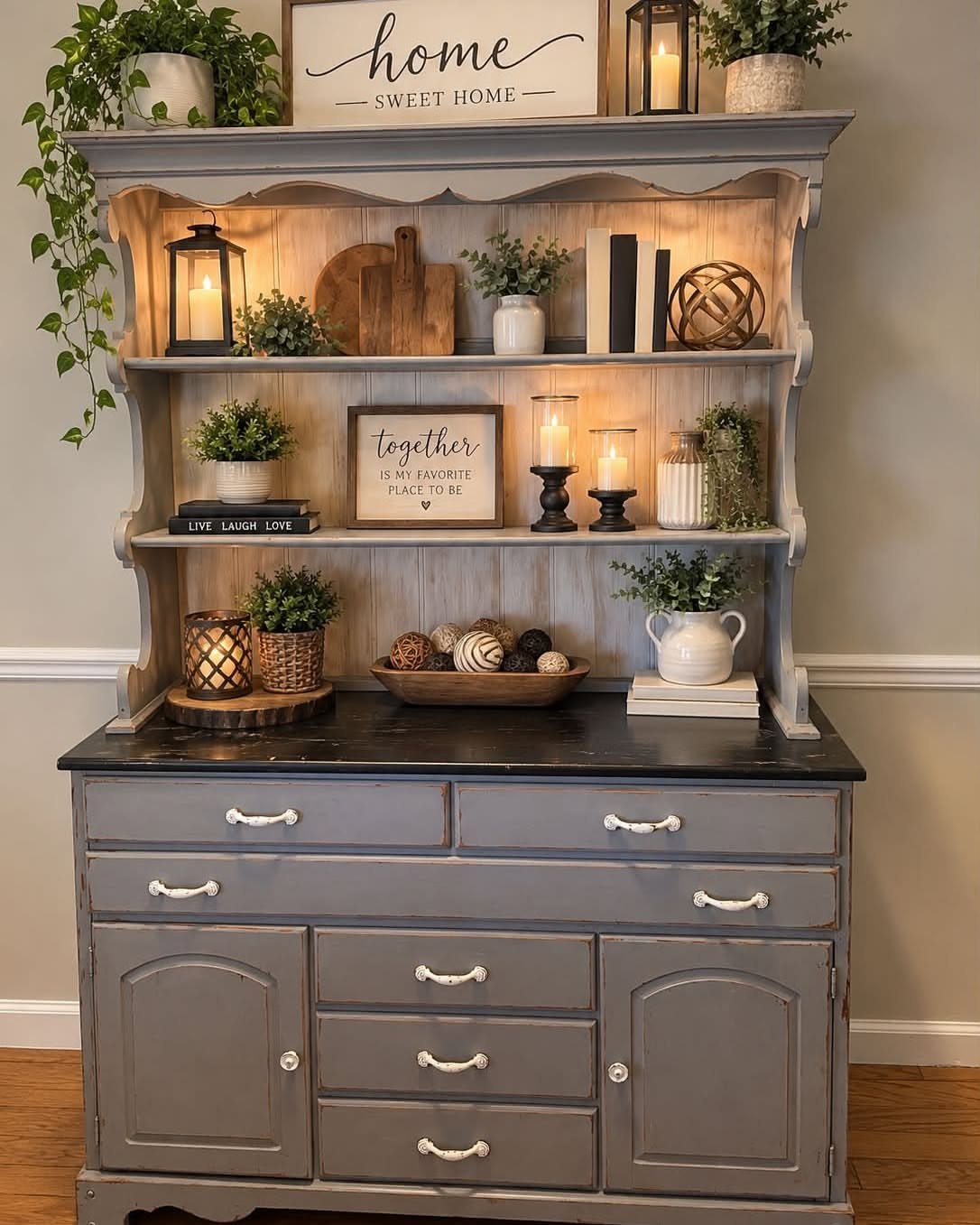
Stoneware pots and raw wood boards belong together because both look better a little worn. On a grey hutch, they give the shelves warmth that paint alone can’t.
Layer the boards behind or under the pots so the heights step down, and tuck greenery between them to soften the edges. Lanterns add height at the sides.
Signs are where I’d edit. One sign reads as a choice, while three start to compete with the stoneware.
3. Gold and Glass Barware
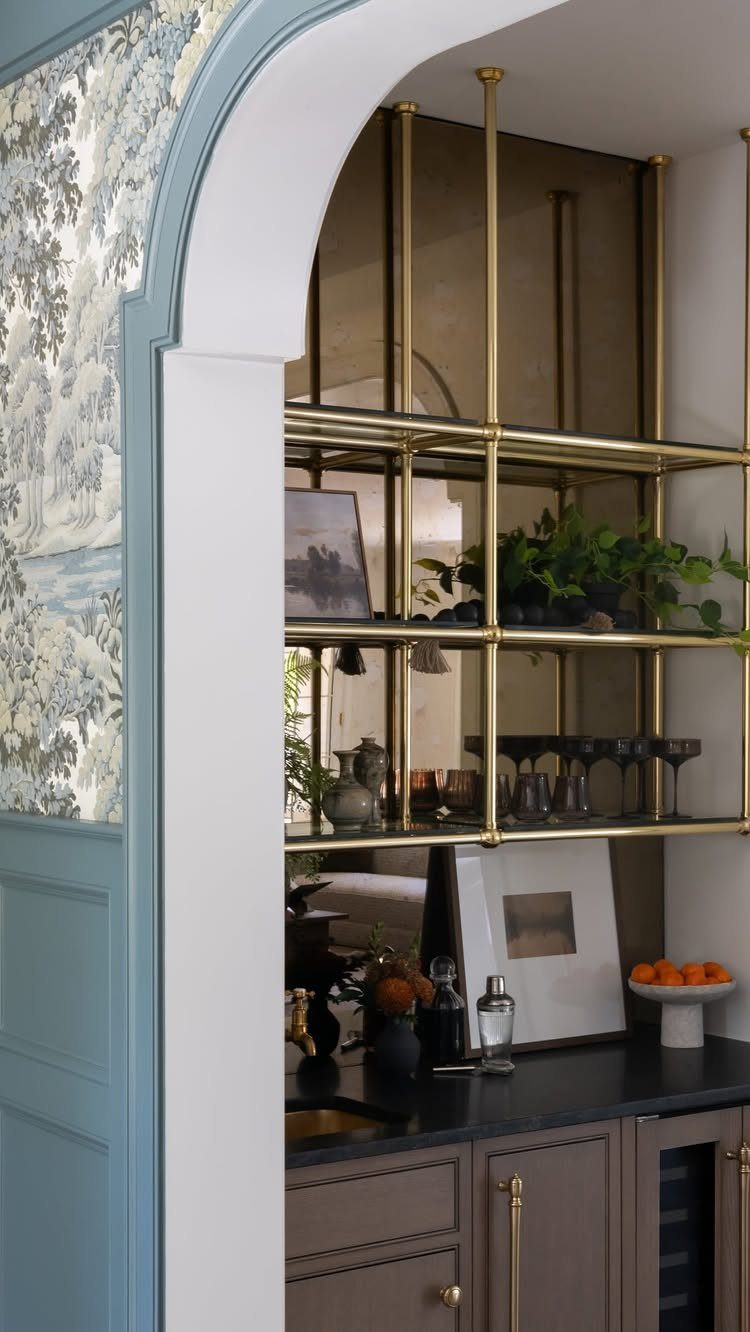
A mirrored back panel makes a shallow hutch look deeper, and it doubles every glass you put in front of it. Gold-framed shelving adds the warm metallic note that makes the setup feel like a bar and not just storage.
Keep the glass shelves for stemware and a few bottles, and add a plant or a small piece of art so the display isn’t all drinkware. The dark countertop works as your pouring surface, so leave it mostly clear.
4. Floral Arrangement Focal Point
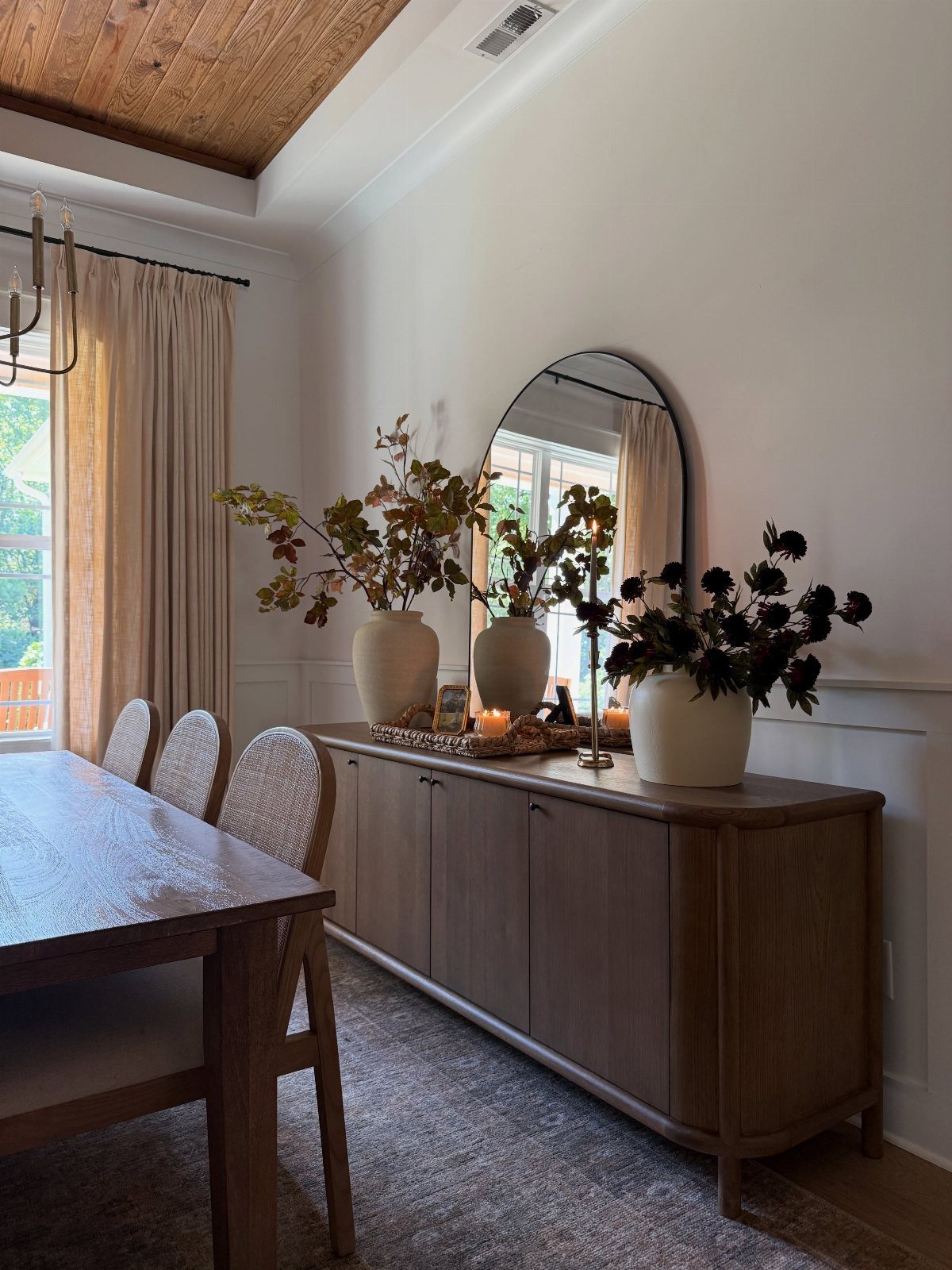
Three vases of different heights will hold a hutch top better than one big arrangement. Group them off-center, add a pair of candles, and let a mirror above double the flowers.
White vases keep the focus on the blooms, and they work with a wooden finish in any season. Swapping the stems is the cheap, quick part: pick up whatever is in season and the whole dining room changes with it.
5. Japandi Neutral Display
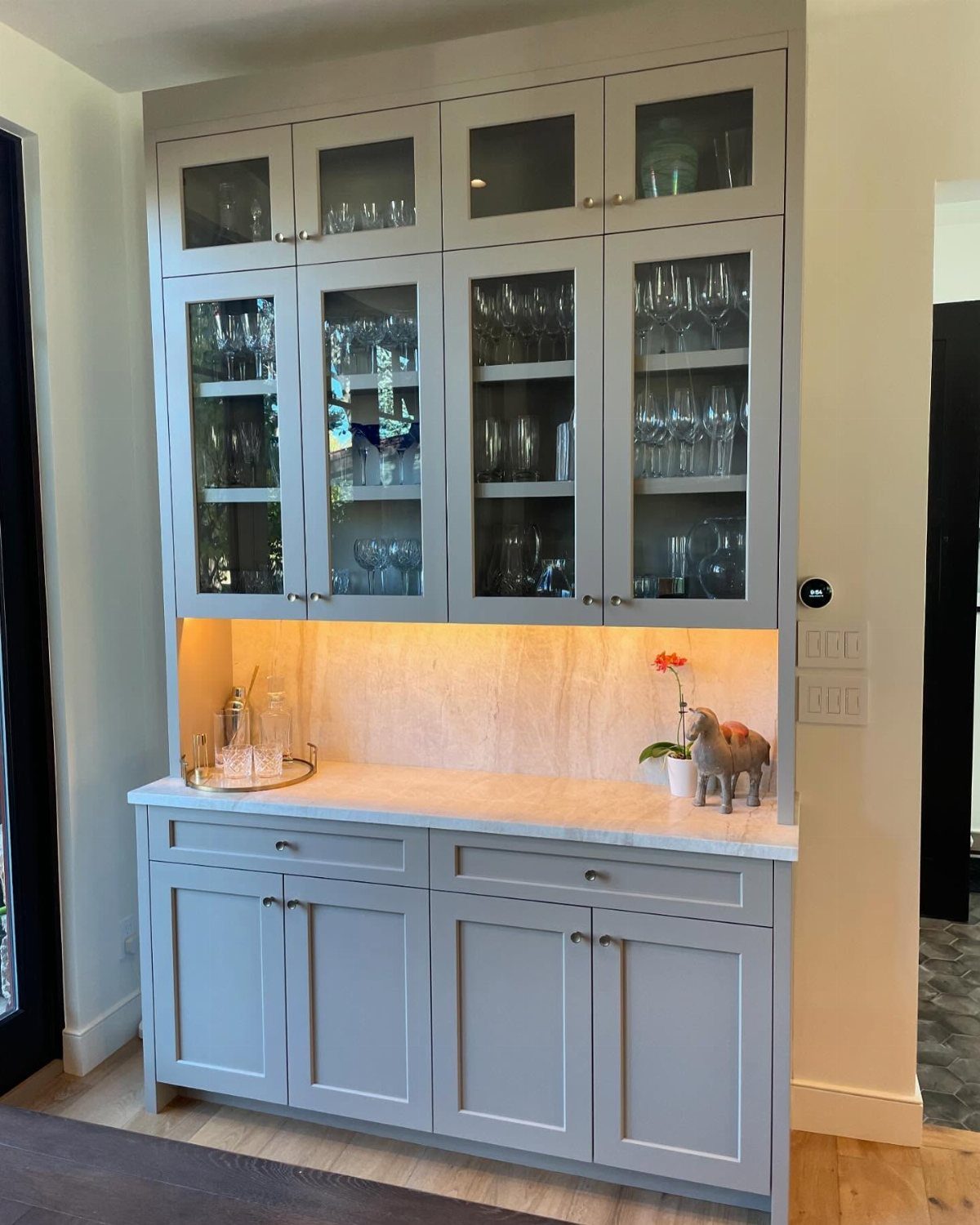
Soft grey paint, marble and warm light carry this look more than any single object does. The under-cabinet lighting matters more than it seems: it warms the cool stone and makes glassware glow after dinner.
Stick to a few pieces.
Clear glassware, one small plant and a single sculptural object, such as an animal figurine, are enough. Choose natural materials like wood, stone and matte ceramic, and skip anything shiny or loud.
6. Coordinated Dinnerware in Mixed Textures
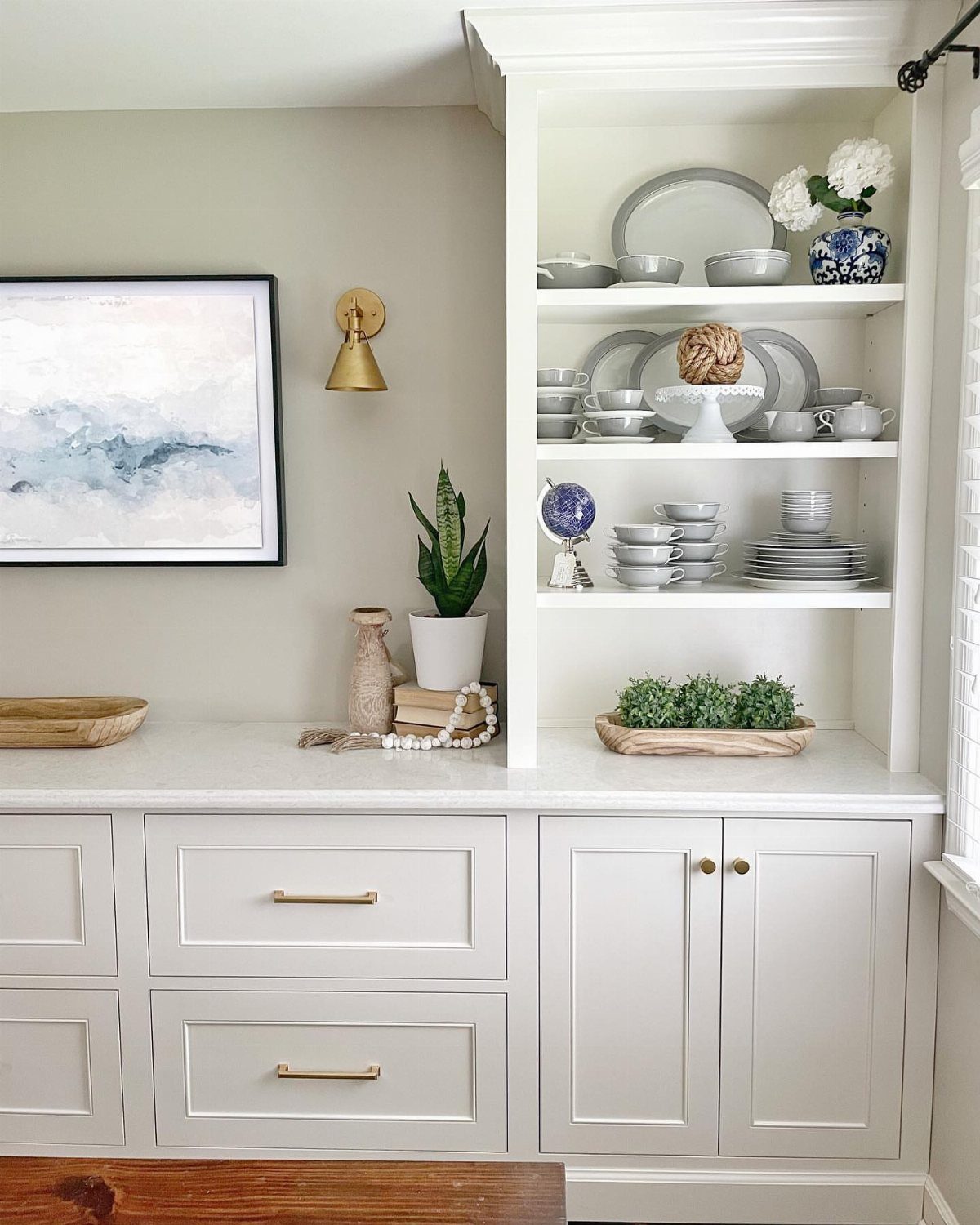
If every plate is the same white, the shelves go flat fast.
Stay inside a white and grey palette, then vary the finish: matte against glossy, smooth against textured. The mix looks deliberate because the colors never fight.
Stack each type in its own group instead of scattering singles, and leave room beside them for a small plant. A framed painting and a wall lamp next to the hutch pull the display into the rest of the room.
7. Empty Space on Hutch Shelves
A bare stretch of shelf looks like a mistake until you see it next to a crowded one.
Edit down to the pieces you’d miss if they were gone.
Pull the rest off, then cluster what’s left toward one side of a shelf and leave the other side open. Pale, quiet pieces suit this approach best, since nothing is competing for attention.
8. Hide Practical Items
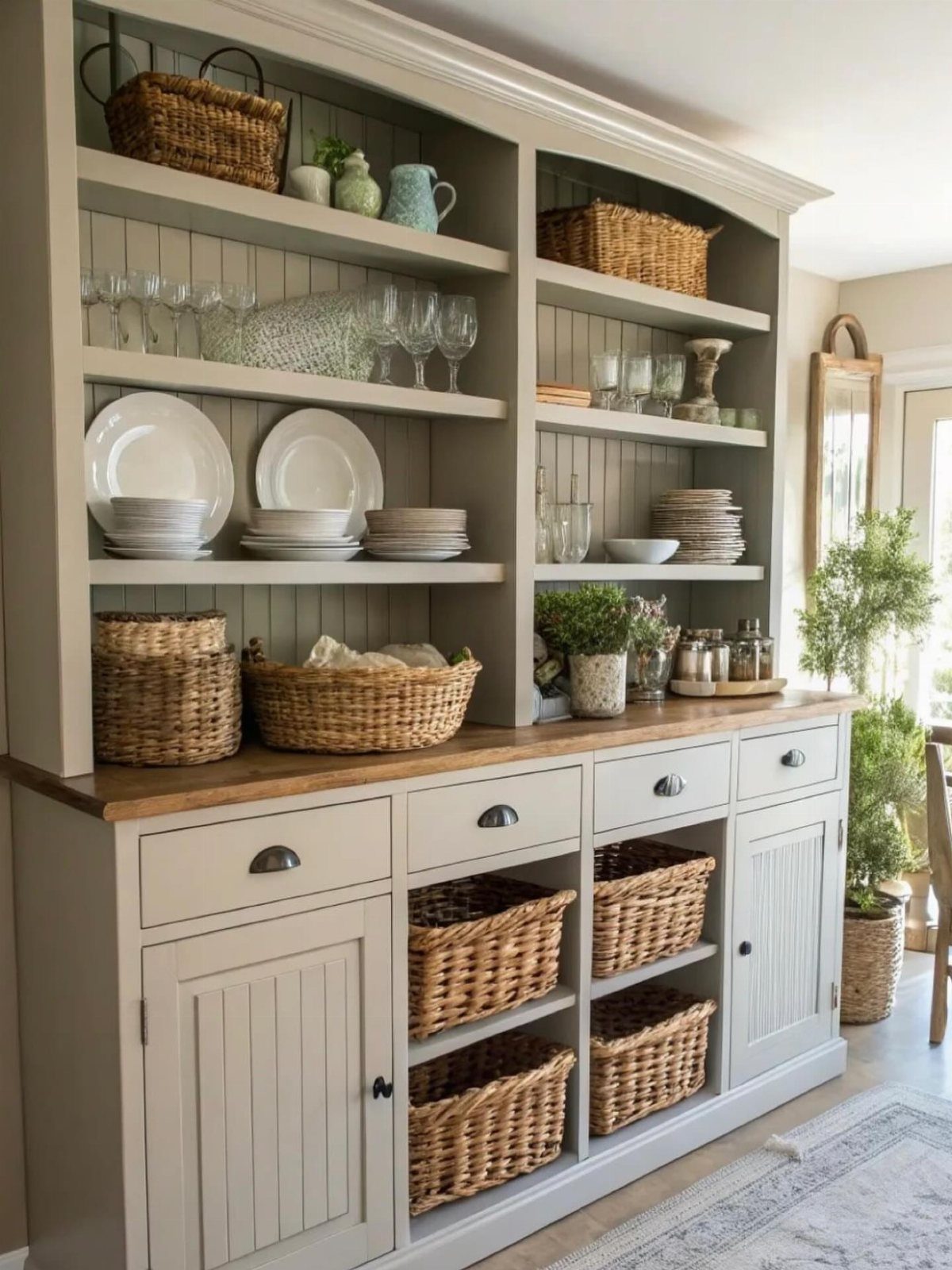
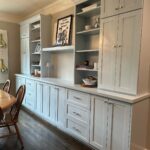
In this grey built-in, woven baskets sit inside the cabinets and keep loose items in one place.
Anything bulky, mismatched or just plain ugly belongs behind the doors.
Baskets help twice: they group small things, and they slide out so you aren’t digging around at the back. I’d keep only the dishes you like looking at on the open shelves.
9. Vintage Dish Display
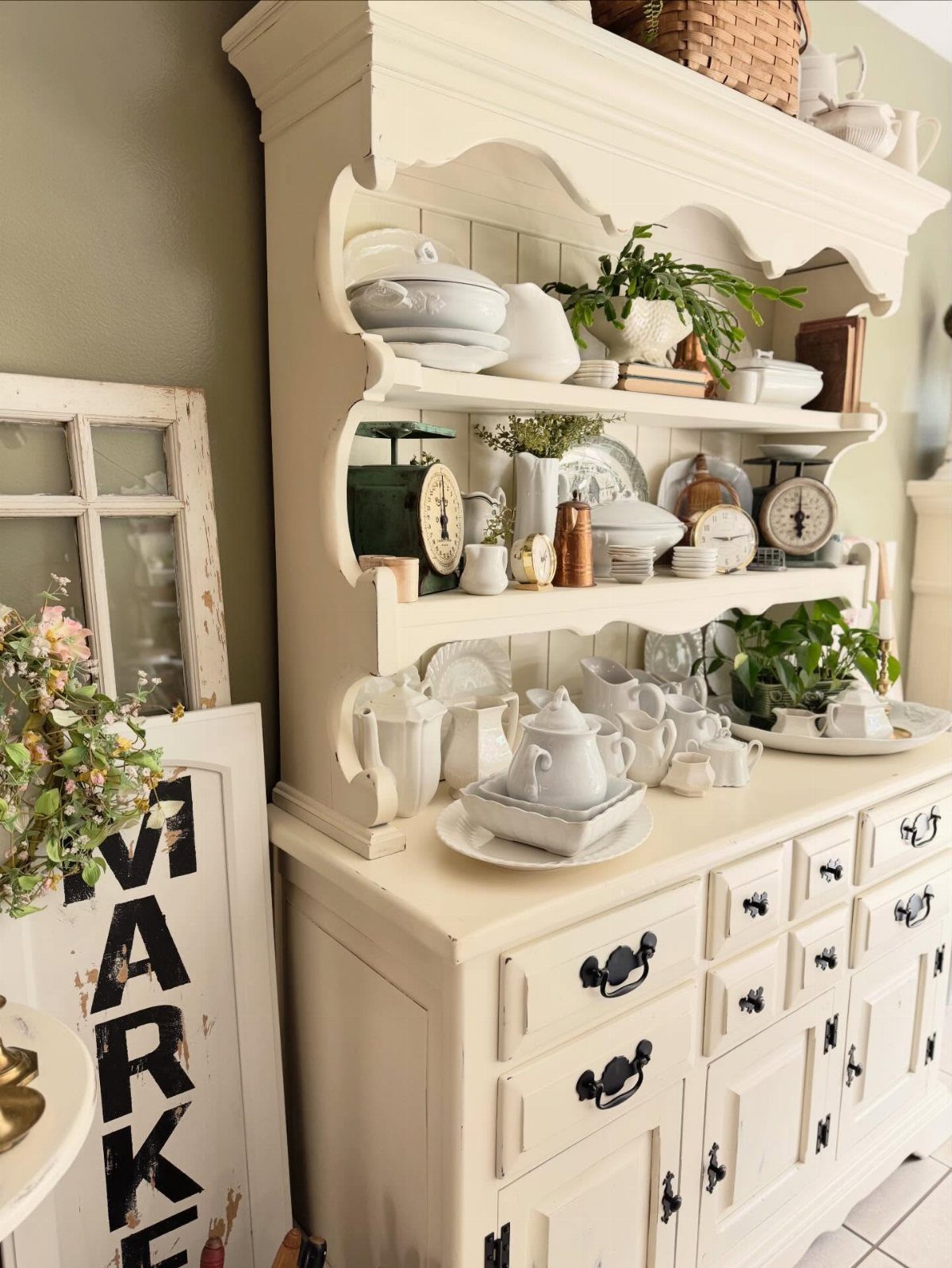
Pitchers, bowls and tea sets look collected rather than matched when they share one color. Cream paint on an older hutch softens white ceramic, so the shapes do the talking.
Mix tall pitchers with low bowls so the eye moves around the shelves. A small plant adds a living note, and a vintage scale brings in an old-shop feel without adding more dishes.
Stop there. The hutch looks best when a little of the cream shows between the pieces.
10. Blue and White Pottery
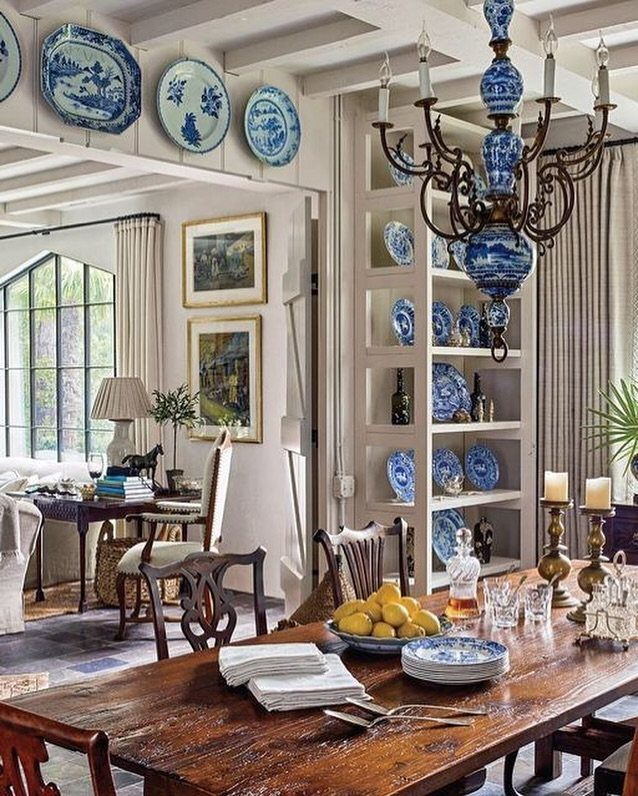
Blue and white is the pairing I’d trust to fill a whole hutch, because a white background lets every blue piece read clearly. Mix patterns freely as long as the blue stays in the same family.
Carry the color past the hutch, too. Framed art in matching blues on the surrounding walls ties the display to the rest of the dining room, so it looks planned instead of parked in one corner.
11. Sage Green Hutch
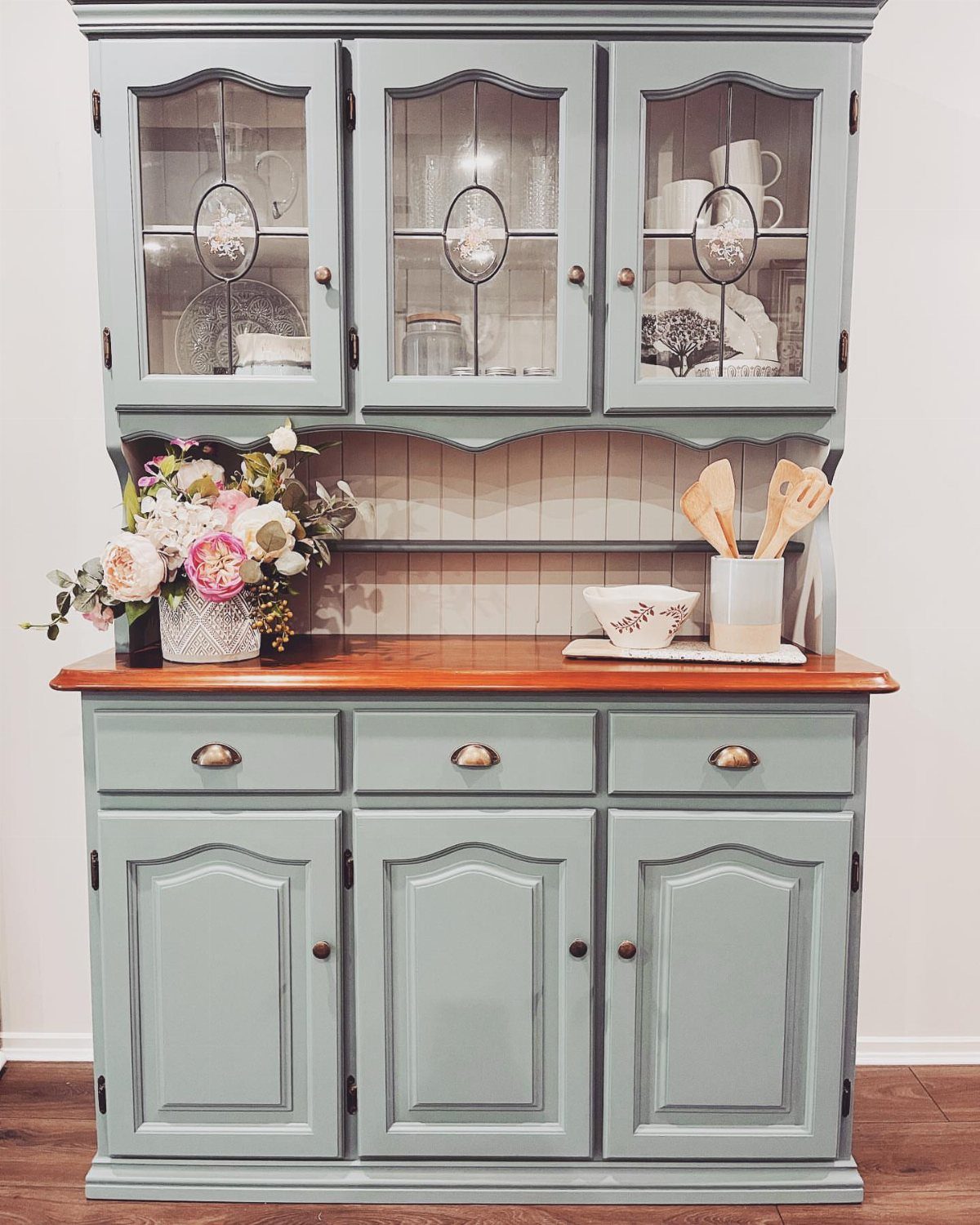
Sage green acts like a neutral on a hutch: it’s soft enough for white dishes to stand out behind the glass, and it keeps the cabinet from fading into a light wall.
A natural wood top warms the green and gives you a place for one simple arrangement of flowers.
I’d leave the rest of that counter clear. Painted base, wood top and white plates is already 3 finishes, which is plenty.
12. Black Lattice Hutch
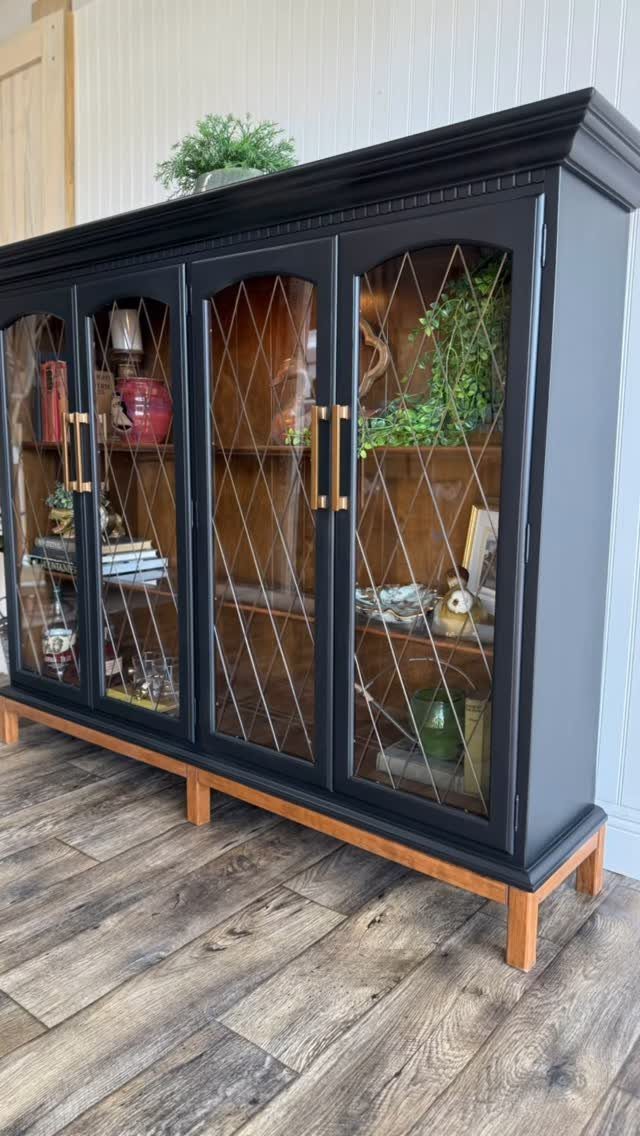
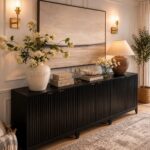
Black draws the eye first, so this hutch works best against a light wall where its outline stays crisp.
Diamond-pattern glass breaks up the view into the cabinet, which suits a mix of books, plants and small decor better than a rigid row of matching dishes.
Gold hardware warms the black, and the wood base anchors the piece without adding visual weight. Use the extra drama sparingly elsewhere in the room, since this hutch is the statement.
Match Hutch Size to Room
Measure before you fall for a piece. A large 4-door hutch can run 70 inches wide and 81 inches tall, which is a lot of wall and a lot of height for a small dining room.
Mark the footprint on the floor with painter’s tape, then pull out the chairs and walk around. Consider clearance behind chairs and paths to doorways before you commit to a hutch footprint.
Check doorways too. A hutch that crowds an entry or keeps you from reaching the table will annoy you every day, however good it looks.
In a small home, I’d choose a compact hutch or a corner piece. It holds the dishes without taking over the dining area.
Balance Display and Storage
Decide what goes where by how often you reach for it. Seasonal dinnerware belongs in closed cabinets, and everyday plates and glasses go on open shelves where they’re easy to grab.
A hutch that combines display shelves with storage cabinets handles that split in one piece. Choose the cabinet-to-shelf ratio based on how much you own, not on how much space the piece offers.
Resist filling every inch just because it’s there.
Packed shelves and stuffed cabinets turn into clutter, and that makes the whole dining area feel crowded. Leave some room in each cabinet so a new set of dishes has a place to land.
There is no need to hedge the truth here, just as when decluttering a hutch, you need to think realistically about how it is serving you and the space in the present. This way you can quickly identify the edits needed.
Choose Durable Materials
Look past the finish and check the materials, the hardware and how the piece is built. Solid wood and mortise-and-tenon joints, where a tab on one board fits into a slot in another, are the signs of construction that lasts.
A real wood hutch can stay in use long enough to be handed down. It also comes in oak, maple, cherry, hickory and elm, and some makers offer stain and hardware options so you can match your table.
In a showroom or at a secondhand sale, open every door and drawer, then push on the sides. A wobble or a sticking hinge tells you more than the price tag.
Frequently Asked Questions
What is a hutch style cabinet?
A hutch is a dining room piece that puts open or glass-front display shelves and closed storage cabinets in a single unit, usually set against a wall near the table.
The shelves hold the dishes you like looking at, and the cabinets swallow everything else.
How to stage a dining room?
Start with the biggest piece and get its scale right: mark the footprint with painter’s tape, then check that chairs can pull out and doorways stay clear.
On the hutch, hold the shelves to one tight palette, vary the finishes, and leave a little bare shelf.
Hang a framed painting above, add a wall lamp beside it and set a small plant close by, and the hutch stops looking like a stray piece of furniture.
Where else could you keep a hutch?
A hutch also works in a living room, an entryway or a bedroom. Wherever it goes, measure first and make sure it won’t crowd a doorway or a walking path.
How does a dining room hutch affect room flow?
Set too big or too near a doorway, a hutch cuts off the walkway to the table and turns every meal into a squeeze.
A 4-door hutch can measure 70 inches across and 81 inches high, far too much for a small room; in a typical house, I’d cap the height at 78 inches.
What are the best installation and placement tips for a hutch?
Put the hutch near the table without blocking busy walkways, and check door swings, outlets and lighting before settling on a spot.
Tall hutches can tip, so strap them to a wall stud, and stick felt pads under the feet to keep the floor from scratching.
How should I balance storage and display in a hutch?
Match the storage to your habits: tableware used a few times a year belongs behind closed doors, while the plates and glasses you grab daily sit on the open shelves.
How many closed cabinets versus open shelves to choose should follow what you actually own, not the size of the piece. Filling every shelf to the edge reads as clutter and makes the whole dining area feel tight.
Can multipurpose hutches improve small dining rooms?
Yes. A hutch fitted with a wine rack or a fold-out buffet top can double as a bar or a spare prep counter, which frees up floor in an apartment or open-plan room.
How to personalize your dining room hutch?
Fill the shelves with your own dishware, decor and seasonal pieces, and swap them as the year changes.
Fresh stems in white vases are the cheapest refresh. Lighting inside the cabinet adds character, since under-cabinet light warms stone and makes glassware glow, and new knobs or gold hardware change the look of the piece itself.
How to future-proof your hutch against trend cycles?
Choose a timeless design in a flexible finish, such as classic white, walnut or a mid-century style.
Adjustable shelving or interchangeable doors let the hutch adapt as your needs change. Keep the trendy part in the dishes, flowers and decor, which are easy to swap, and not in the furniture.
Should my dining room hutch coordinate with my table?
Coordinate loosely, not exactly. Colors and proportions that harmonize without matching give a balanced feel and keep the hutch from overwhelming the room.
Real wood hutches often come with a choice of stains and hardware, so a close match to your table’s tone is possible.