Your starting point is whether you can paint the cabinets or need to work with what’s there.
Renters can bring in the color with potted plants on open shelving or a few retro details, while owners have mint or sage cabinets, emerald tile, dark green shakers with brass pulls, or a full two-tone repaint.
Sage and mint are the easiest first moves if you’re ready to paint, while emerald and dark green ask for more commitment.
1. Mint Green
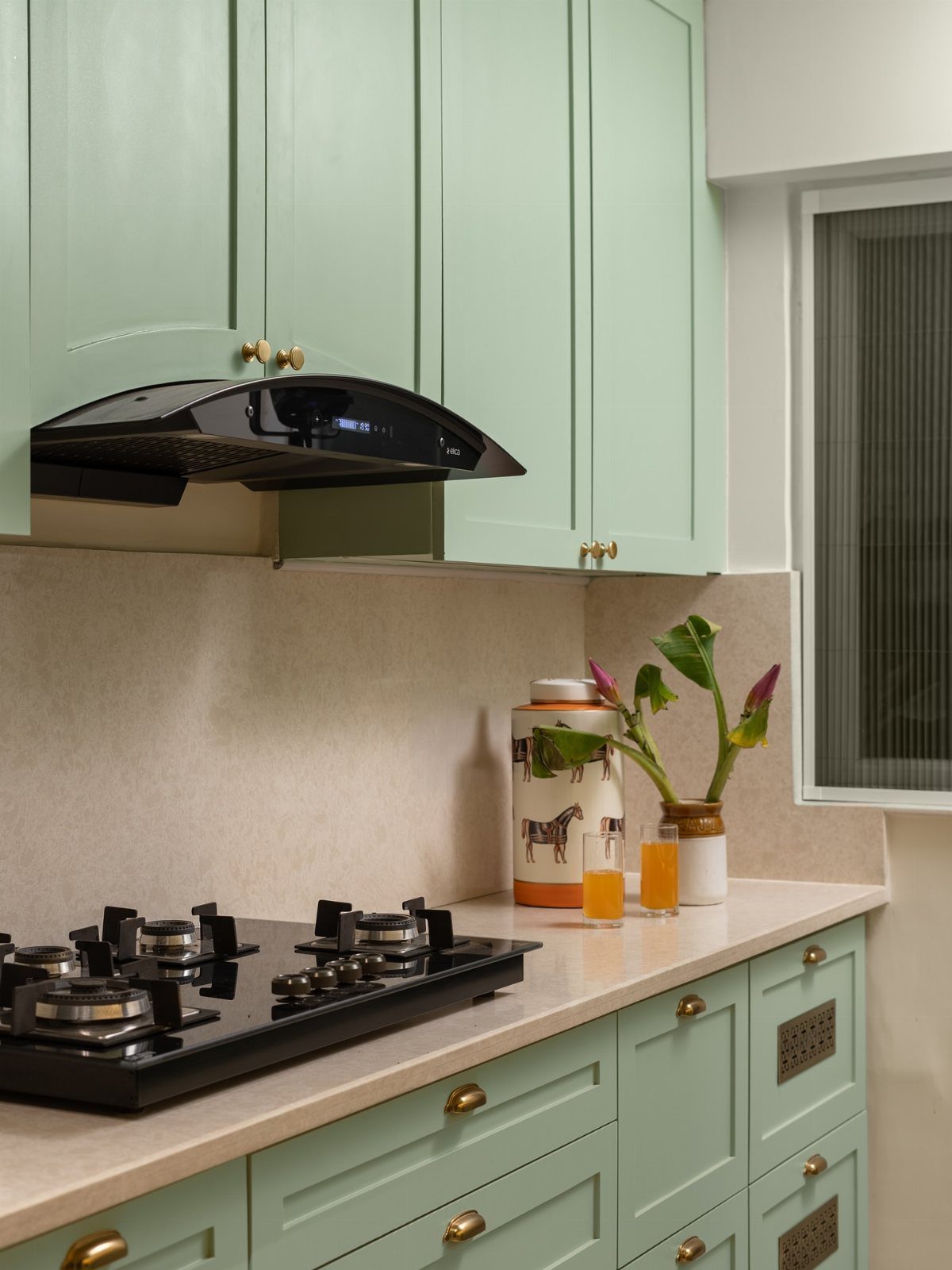
Mint green with gold knobs gives a compact kitchen a soft, retro look without much effort. Because the shade is light, I would let a few cabinets carry it rather than the whole room.
Mint reads best next to something dark or neutral, so a black stovetop or a beige countertop gives it something to rest against.
2. Soft Green and Stark White Kitchen
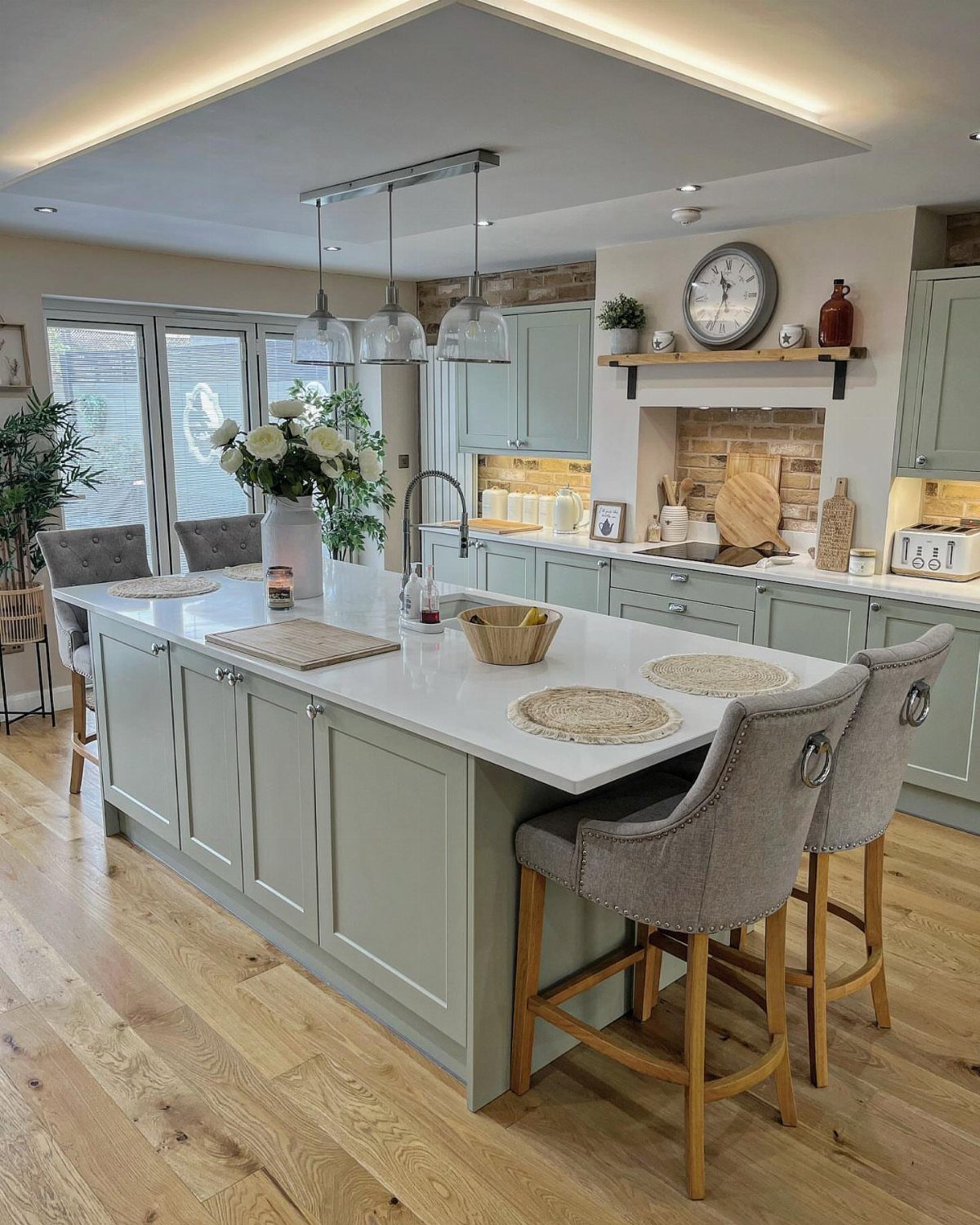
White on the island and green on the surrounding cabinets makes a kitchen read crisp and light. I like that the island carries the white, so the green gets room to be a color instead of one more pale surface.
Light wood floors and grey stools take the edge off the contrast between green and stark white. The brick backsplash adds texture, which keeps a green-and-white scheme from looking flat.
3. Sage Green
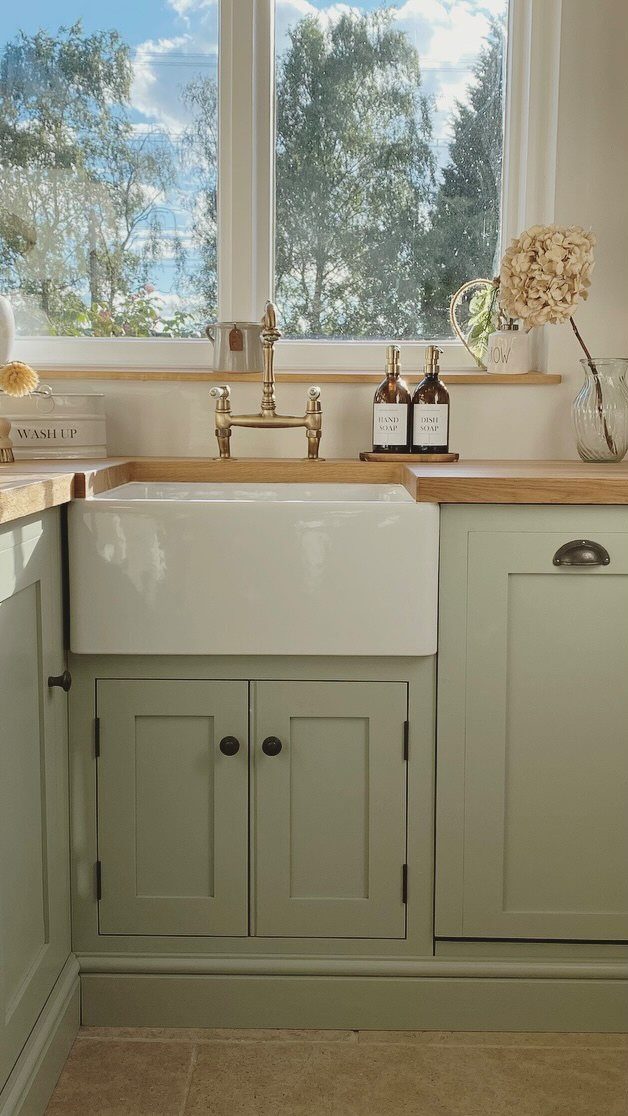
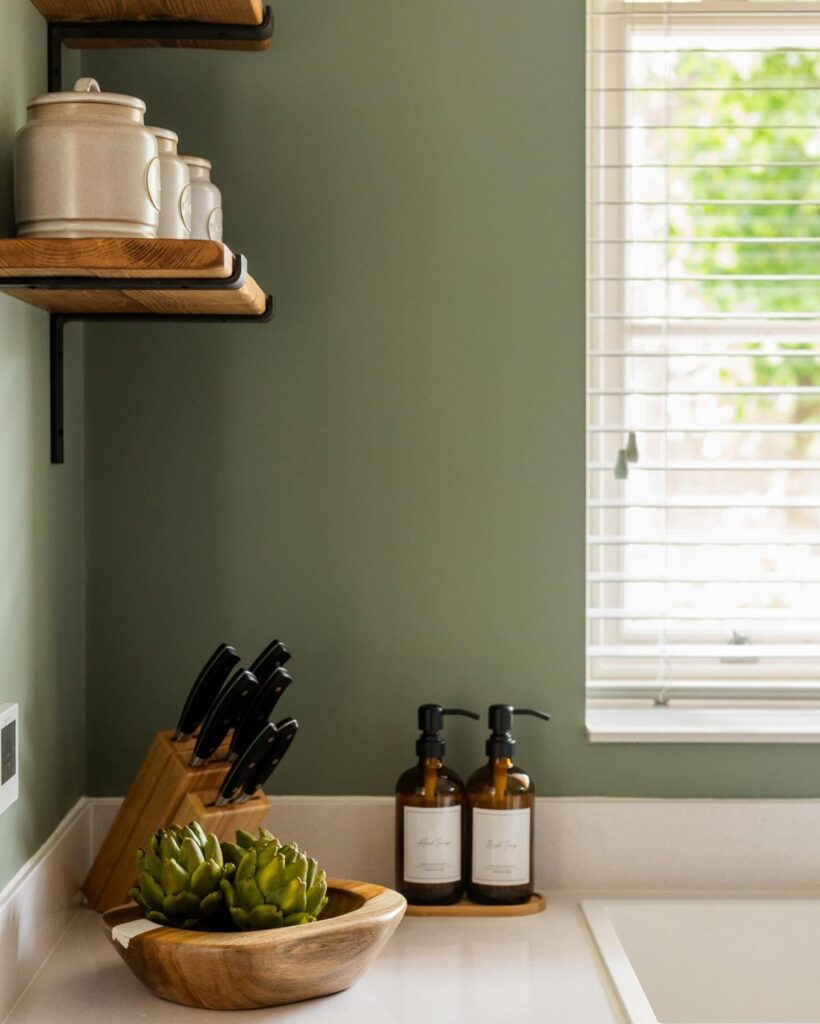
Sage is the green I reach for when I want a kitchen to feel calm instead of loud.
If you are unsure about green, start here. It is a quiet way into the color.
4. Emerald Green
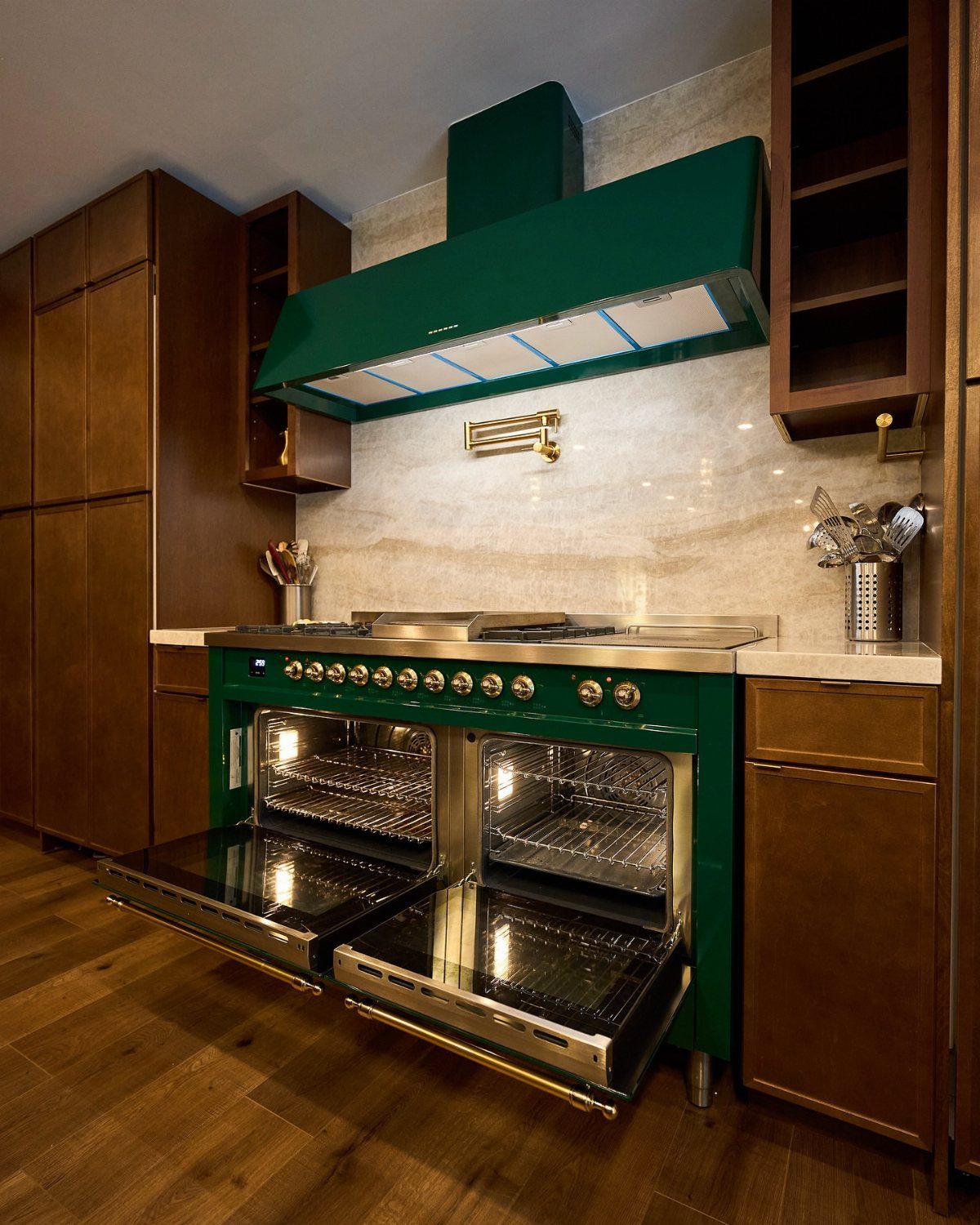
A range and hood in emerald put the drama in one pair of appliances, which is a bolder move than painting every cabinet. Dark wood cabinetry and a marble backsplash give that deep color a rich frame to sit in.
I would choose this if you want a kitchen with one clear focal point, and keep everything around the range quiet.
5. Green Cabinetry
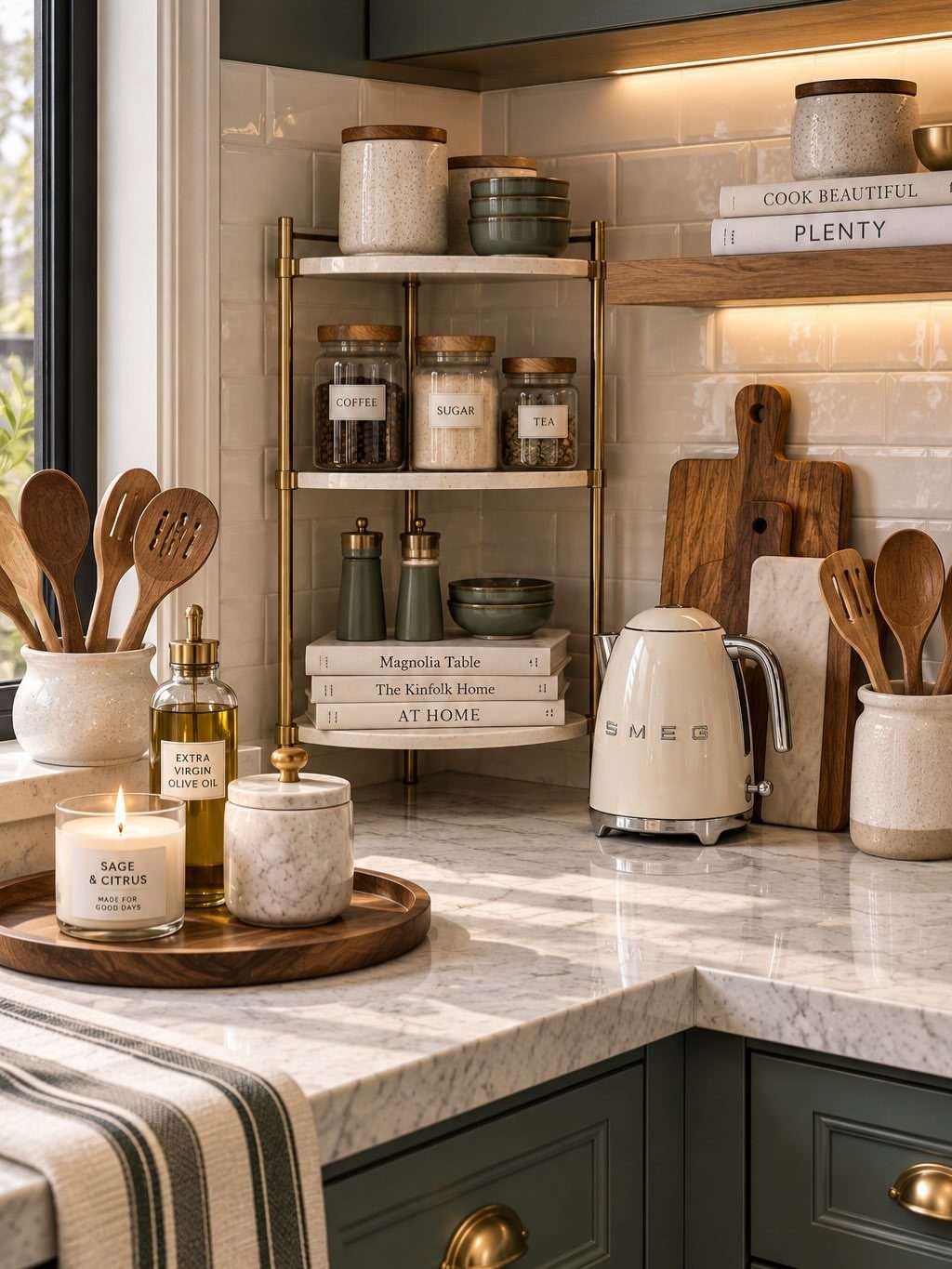
Putting green on the cabinets themselves makes it the first thing anyone sees in the room. Dark green looks especially good with white marble tops, and I like how that pairing keeps the counter bright.
Small green bowls on the counter repeat the cabinet color. Brass or gold, whether open shelving or cabinet pulls, adds the warmth that green cabinets can lack on their own.
6. Two-tone Cabinets
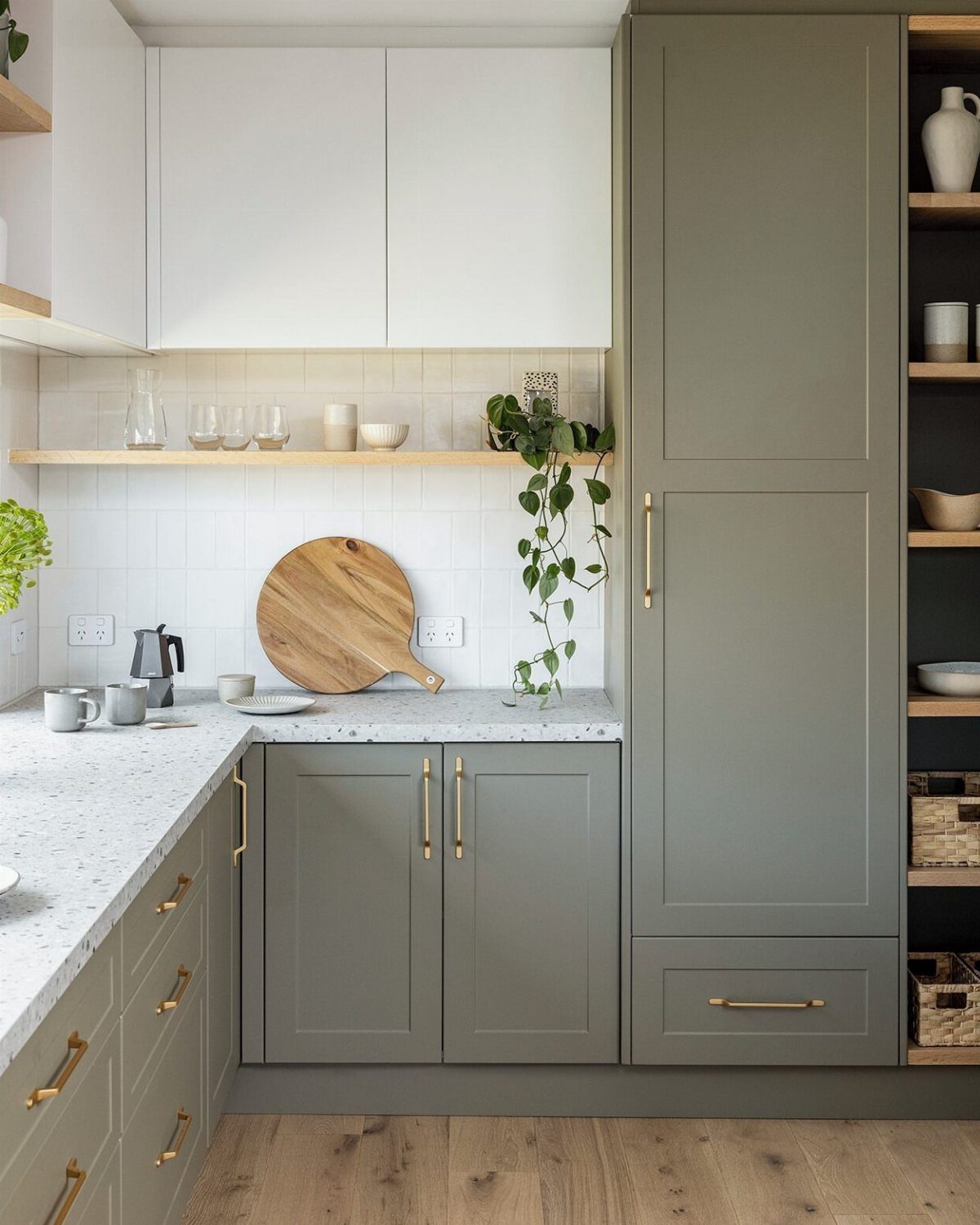
Splitting the cabinets between green and cream gives you the color without committing every door to it. If a fully green kitchen feels like too much, this is the version I would choose.
A white tile backsplash keeps two-tone cabinets from feeling heavy, and a speckled countertop adds pattern without adding another color. One small plant picks the green up again.
7. Green Kitchen with Beige and Light Brown
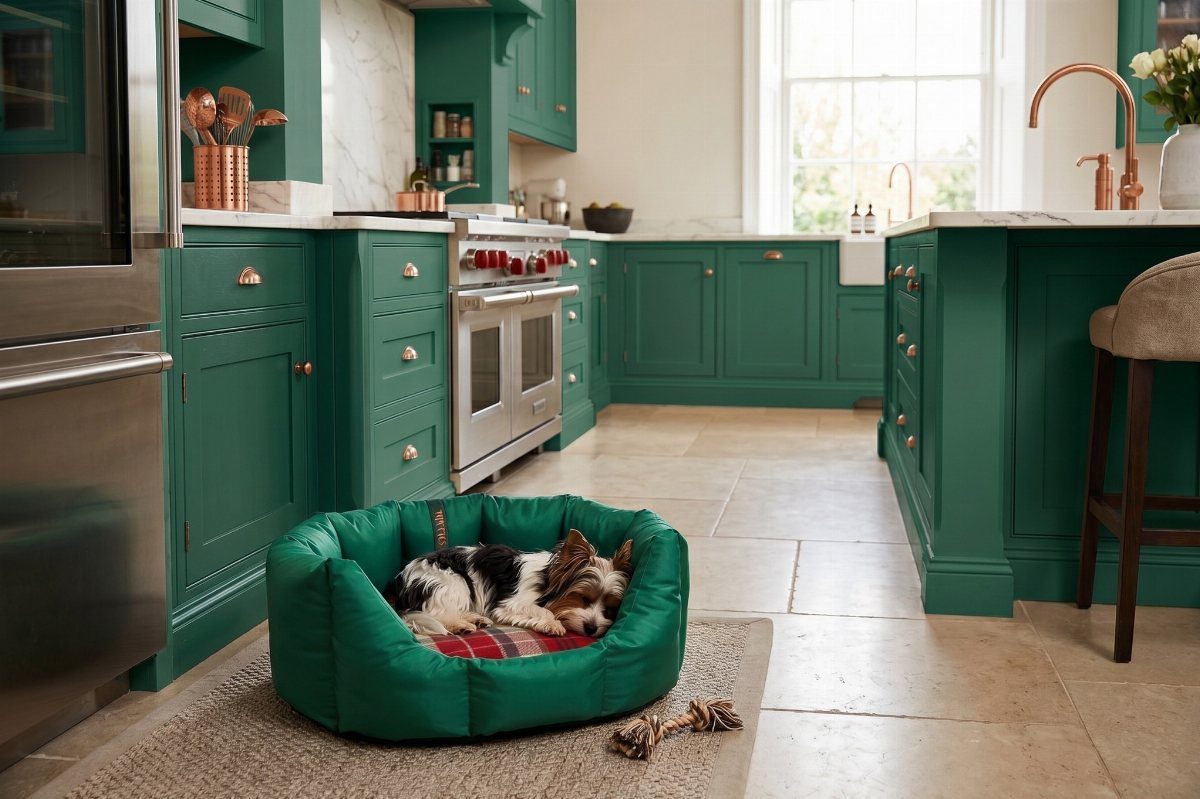
Beige tile floors and a tan rug give green cabinets a warm base, so the color reads cozy instead of cold. Copper fixtures add a bit of metal that suits both the green and the neutrals.
I would let the cabinets be the only strong color and keep everything else in the beige and light brown range.
8. Plants on Rustic Open Shelving
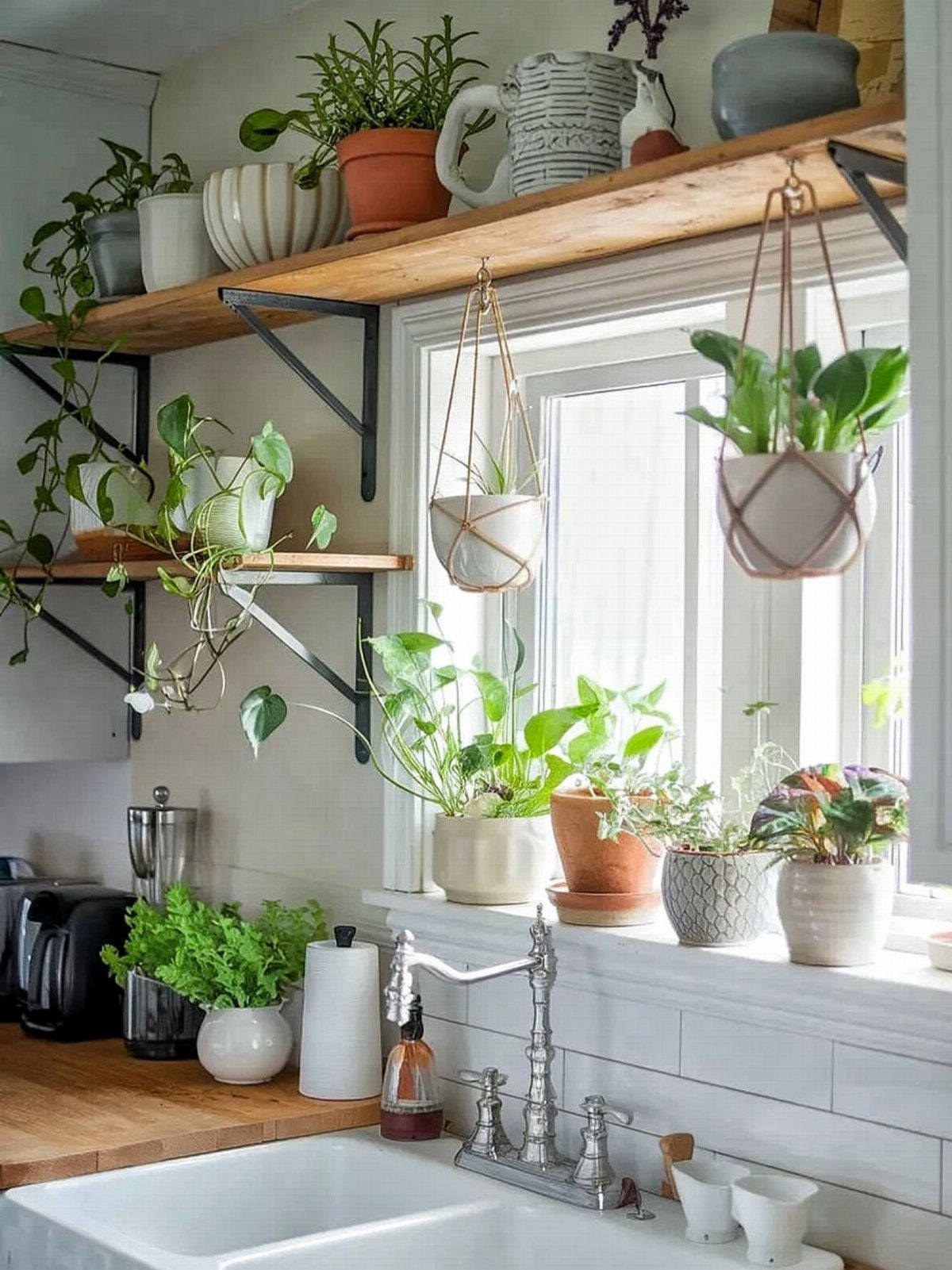
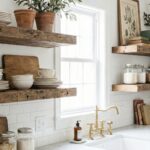
Potted plants on rustic wooden shelves make a sink window the greenest spot in the kitchen without a drop of paint. White tile behind them keeps every leaf easy to see, and a wood counter echoes the shelf boards.
Hanging planters in front of the glass free up shelf space, so I would hang a few and save the shelves for pots. Mixing trailing and upright plants fills the height of the window.
9. Retro Kitchen Details
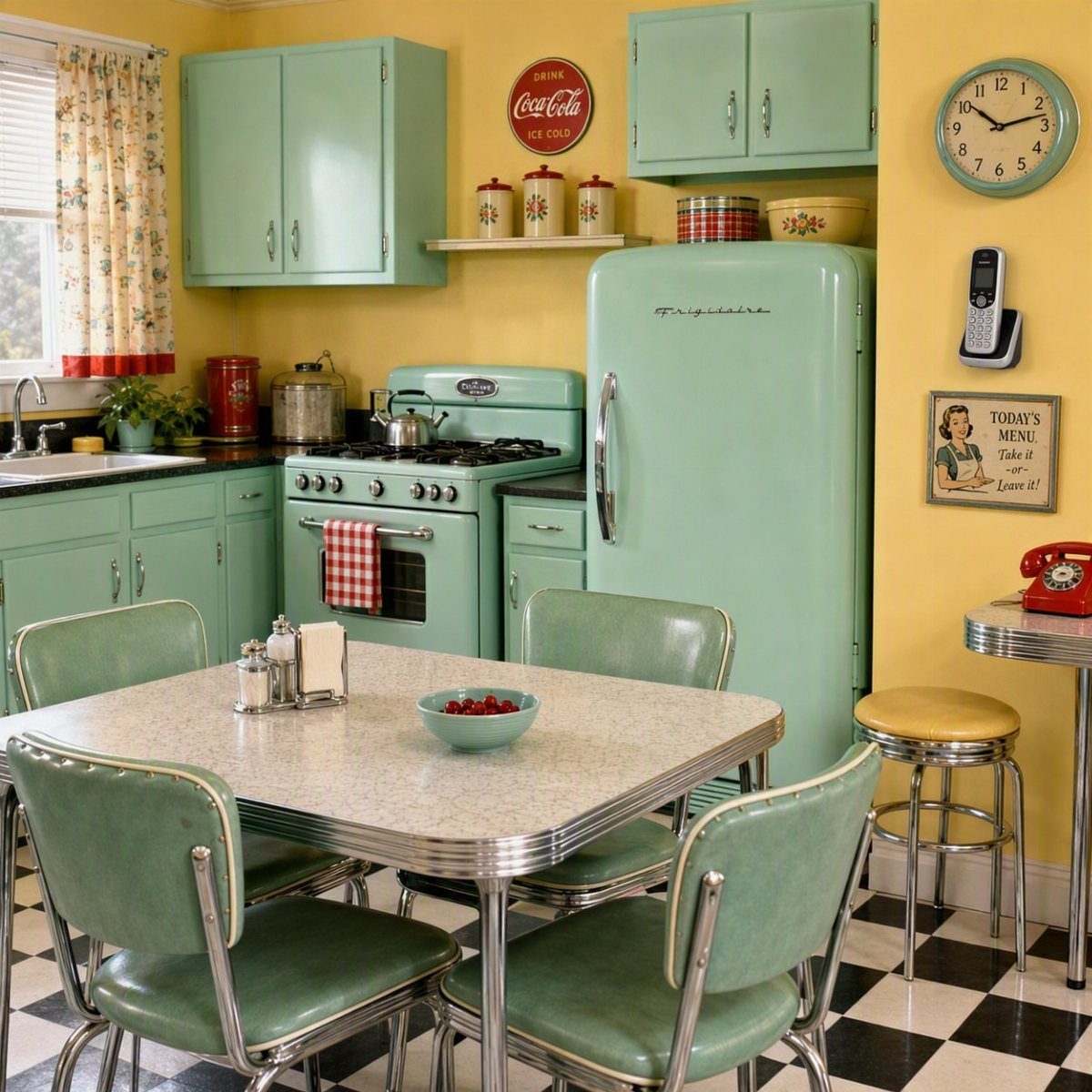
Pick one decade and stay in it: a diner-style table, a vintage refrigerator and a Coca-Cola sign push a cream-and-green kitchen into 1950s Americana. Checkered floors finish the look.
I would stop at one or two signs. A small dining set and a "Today’s Menu" sign keep it playful, and any more starts to feel like a theme restaurant.
10. Cream Square Tiles
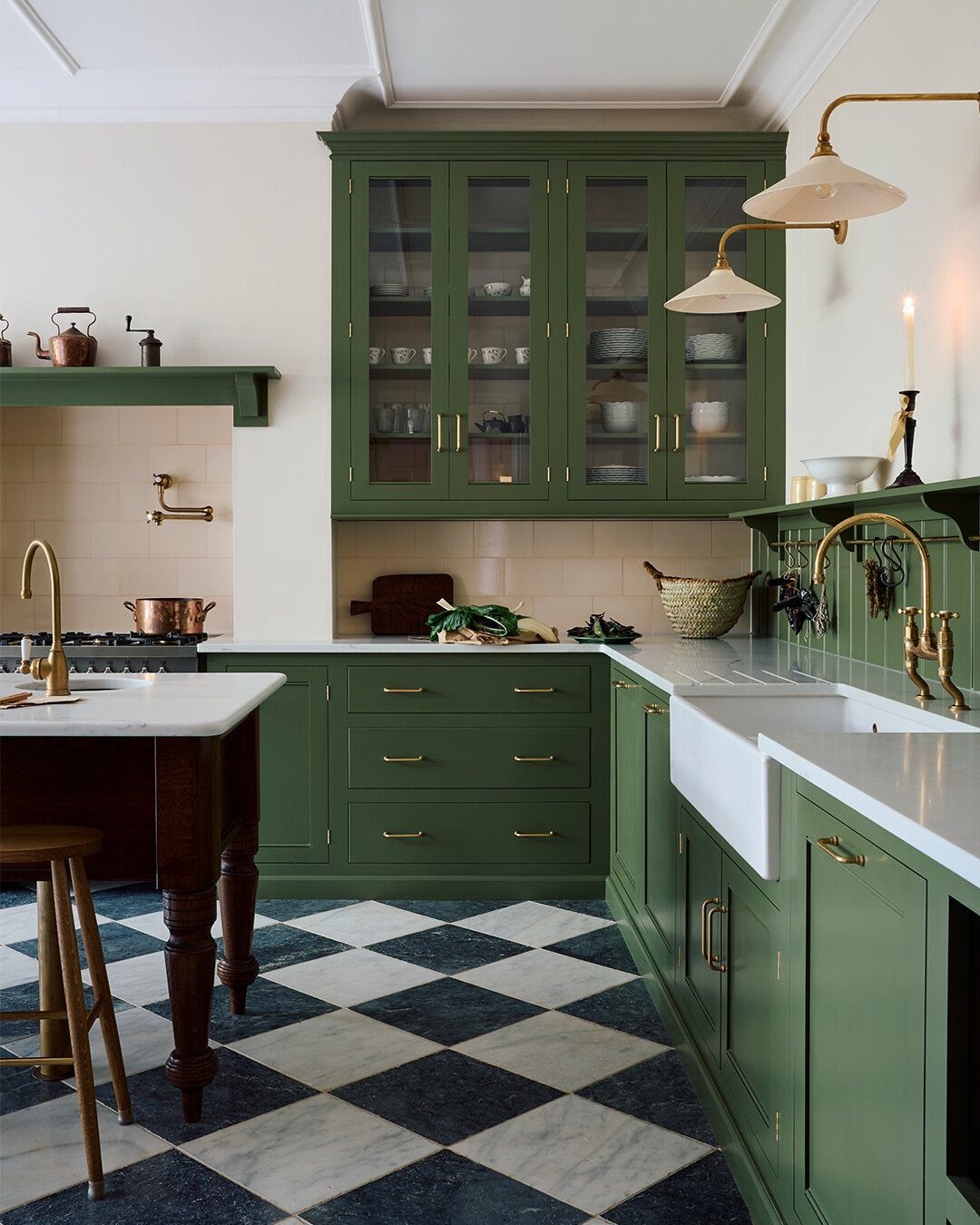
Square tiles in cream make about the calmest backdrop a green kitchen can have. The grid is plain, so a black and white checkered floor and a dark wood island can carry the pattern and the contrast.
Because cream stays neutral, you can repaint the sage cabinets down the road and leave the wall alone. That flexibility is why I would pick it over a bold backsplash.
11. Warm Teak Countertops
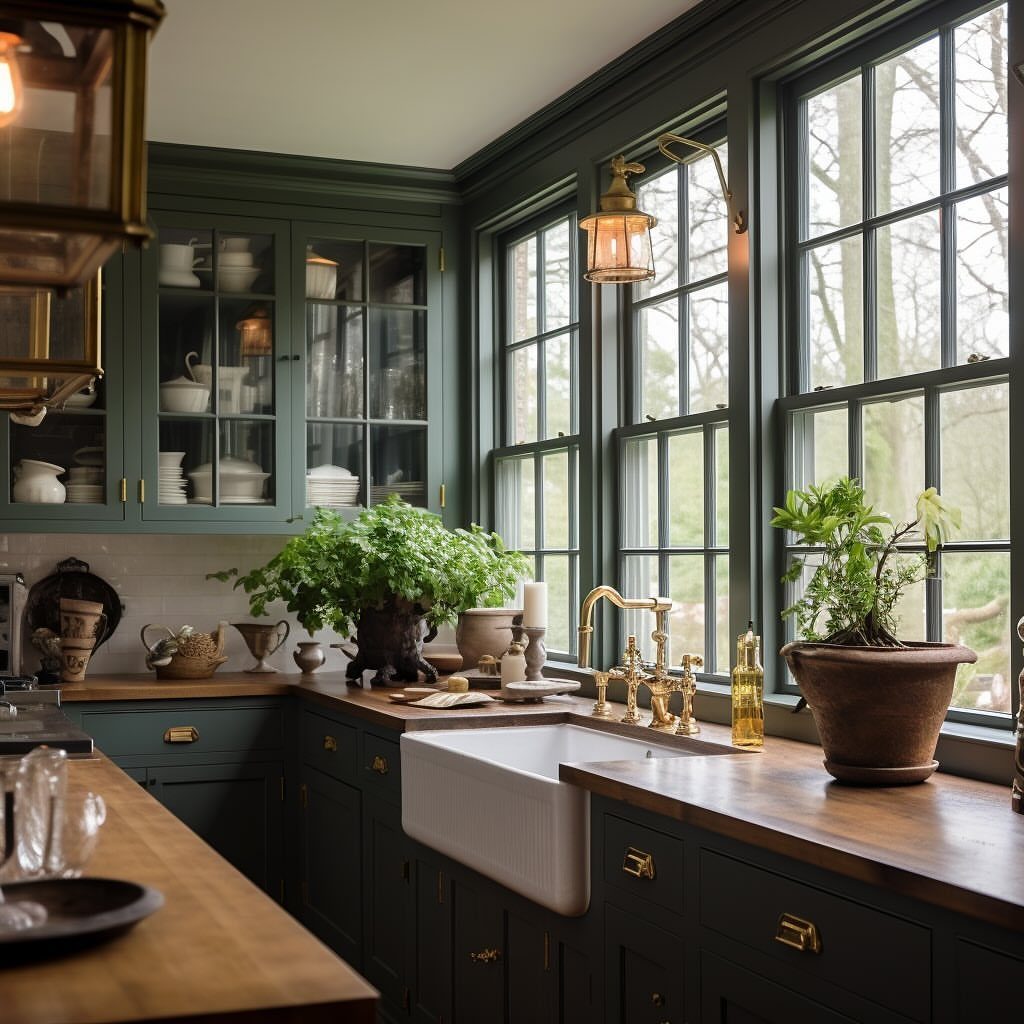
Warm teak-toned wood against dark green cabinets feels traditional and rich, and a white farmhouse sink keeps the pairing from going heavy.
Solid wood asks for more upkeep than stone or laminate, so plan on sealing it, especially around the sink. I would take that trade for the warmth.
12. Dark Green Shaker Cabinets
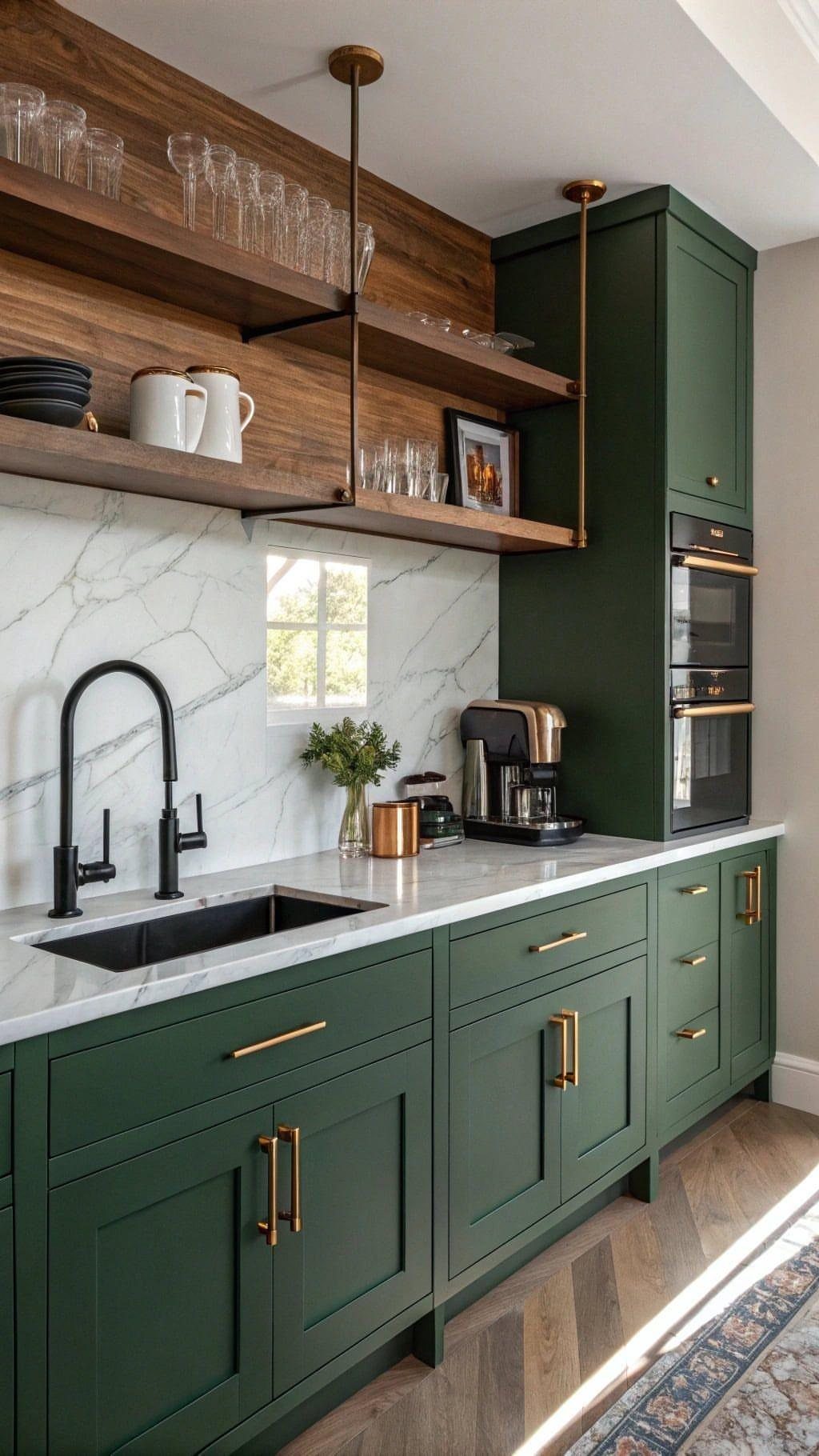
Gold handles and gold shelf supports tie dark green shaker cabinets to the white marble around them. The flat-paneled doors keep the look clean, so the metal does the decorating.
I would keep the gold to hardware and brackets only. Marble on both the counters and the backsplash gives the dark green a bright edge to sit against.
13. Sage Green Farmhouse Kitchen
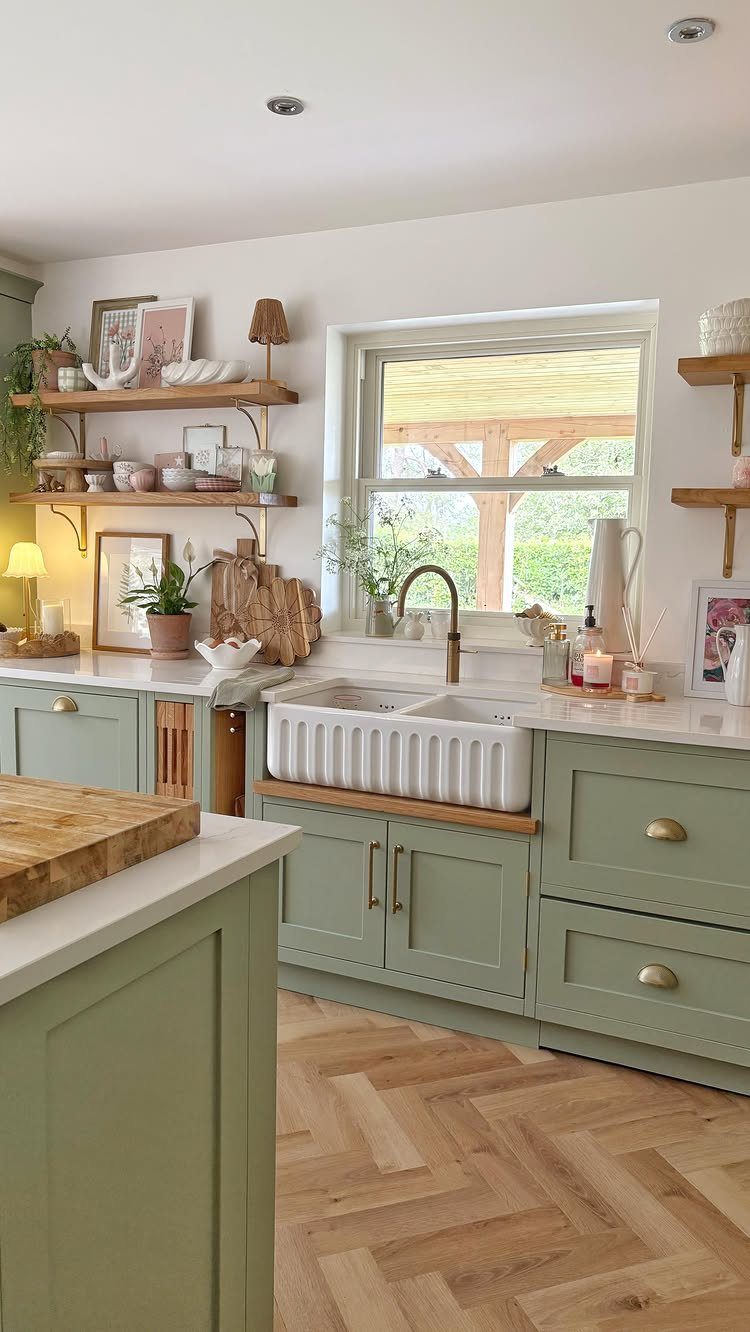
Sage green shaker cabinets with a white farmhouse sink and light wood herringbone floors make a country kitchen feel warm without going overly traditional. The herringbone pattern adds detail underfoot, so I would keep the cabinet doors simple.
Open shelving above the sink lets you bring in cream pottery or small plants. Light wood picks up the yellow undertones in sage, which keeps the whole room feeling soft.
14. Sage Green and Marble
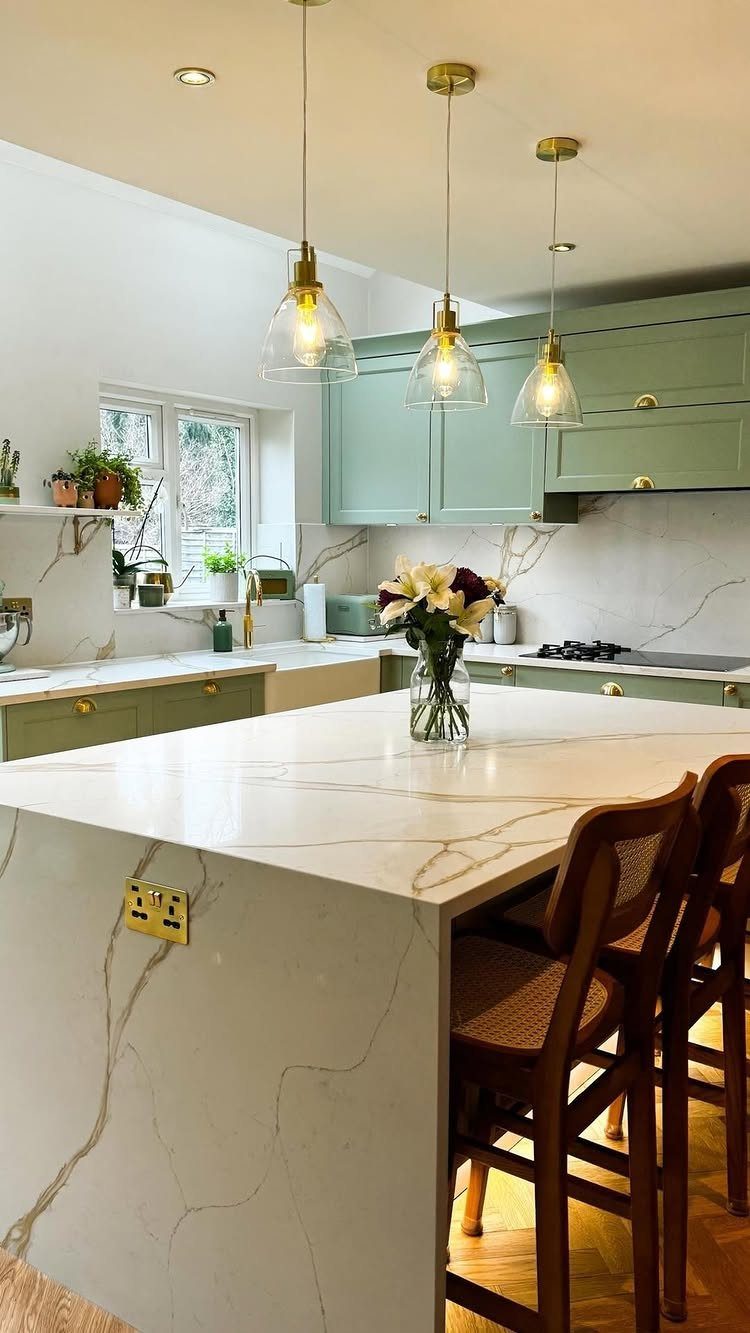
A large marble island paired with sage green cabinets gives you counter space that stays bright. Gold pendant lights and the marble together keep the green from feeling flat.
Wood stools add warmth next to all that stone. I like the contrast between the cool marble and the soft green, and the gold ties them together without adding another color.
15. Green Lower Cabinets
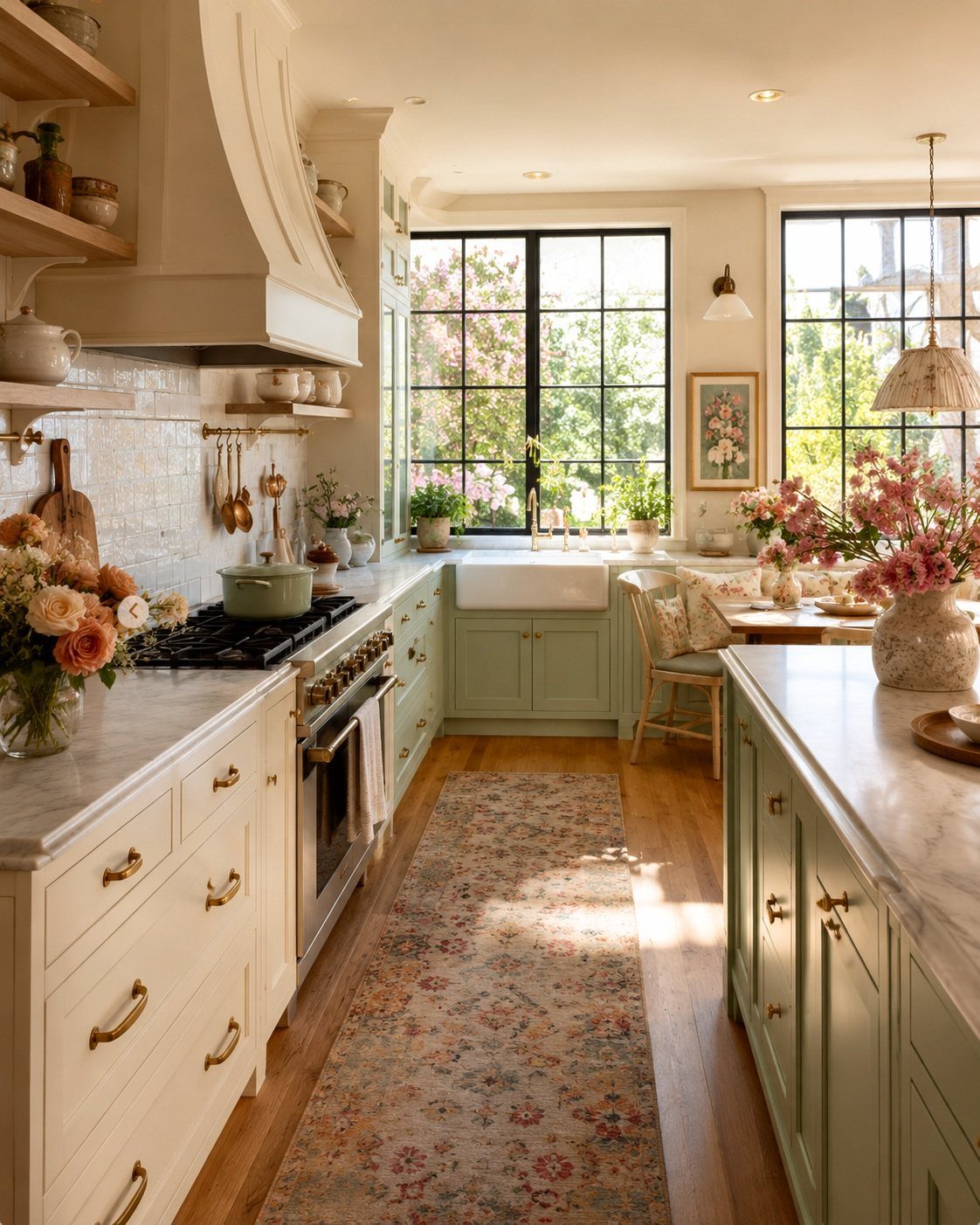
Green on the lower cabinets only keeps the upper half of the room light, which suits a kitchen with smaller windows. White uppers and marble counters give the green something bright to sit against.
A floral runner brings pattern in without competing with the cabinets. Black-framed windows add a clean edge, and wood floors warm up the white and green.
16. Green Herringbone Backsplash
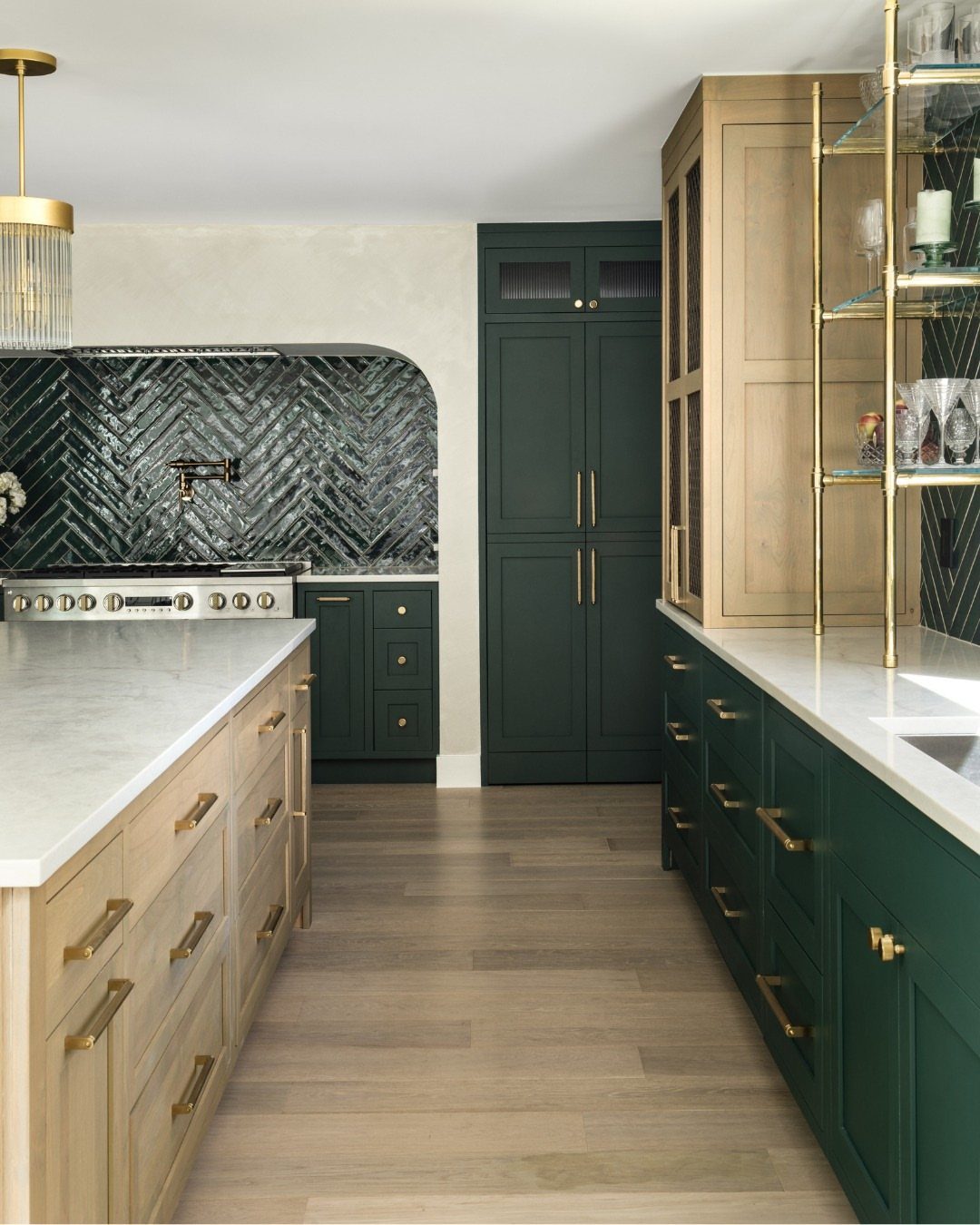
Green herringbone tiles behind the range make the backsplash a feature instead of filler. Pairing dark green tile with light wood cabinets keeps the contrast interesting, and gold hardware pulls both colors together.
I would limit the herringbone to one wall. A full room of diagonal tile reads busy, but behind the stove it frames the cooktop and gives the eye something to land on.
17. Green Cabinets with Wood
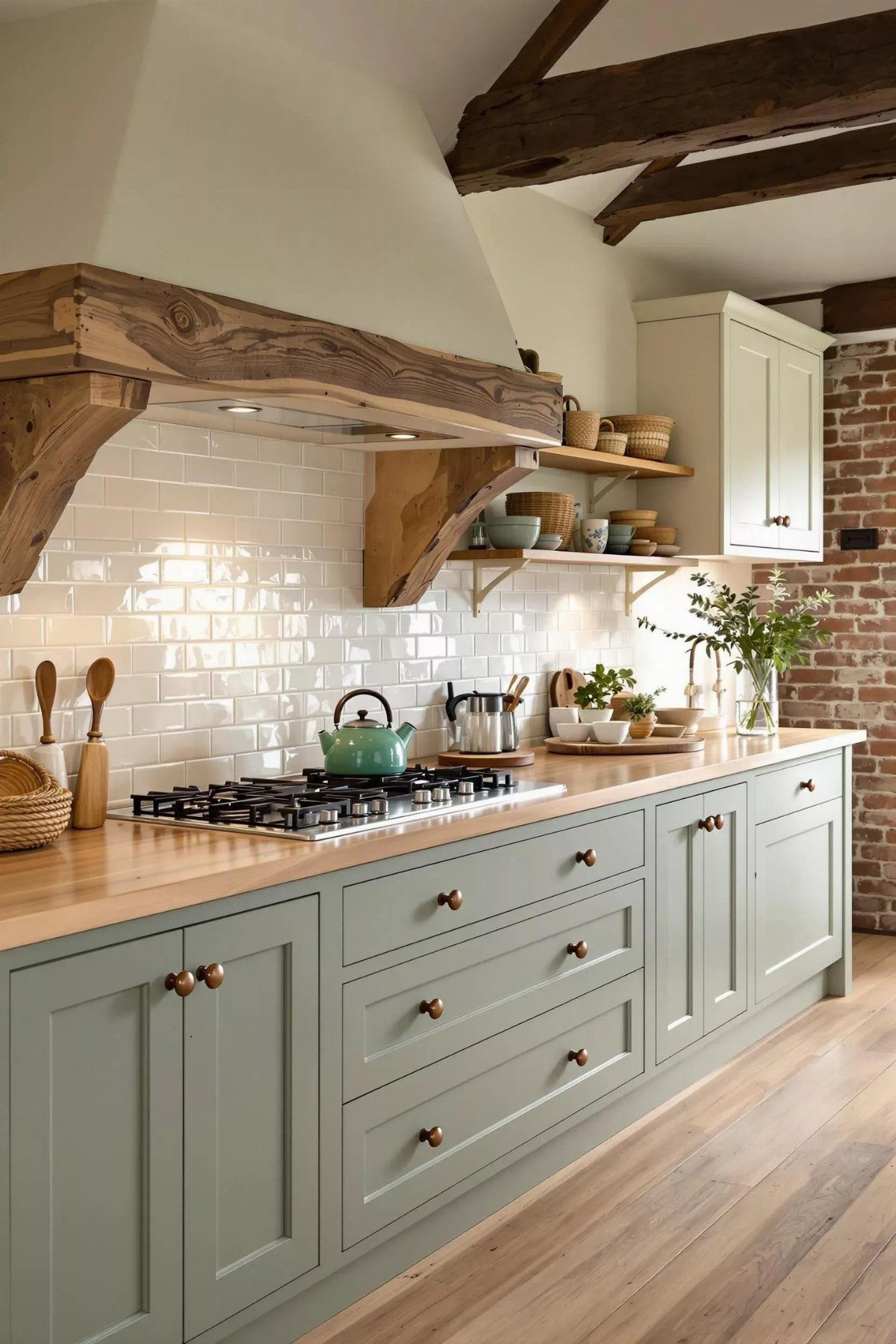
Wood countertops and a thick beam above the range soften sage green cabinets and make the kitchen feel more country than modern. White subway tile keeps the backsplash from competing with the wood, and exposed beams finish the rustic look.
Wood counters need sealing near water, so plan on maintaining them. The warmth they add next to green cabinets is worth it if you want a kitchen that feels handmade.
18. Green Kitchen Details
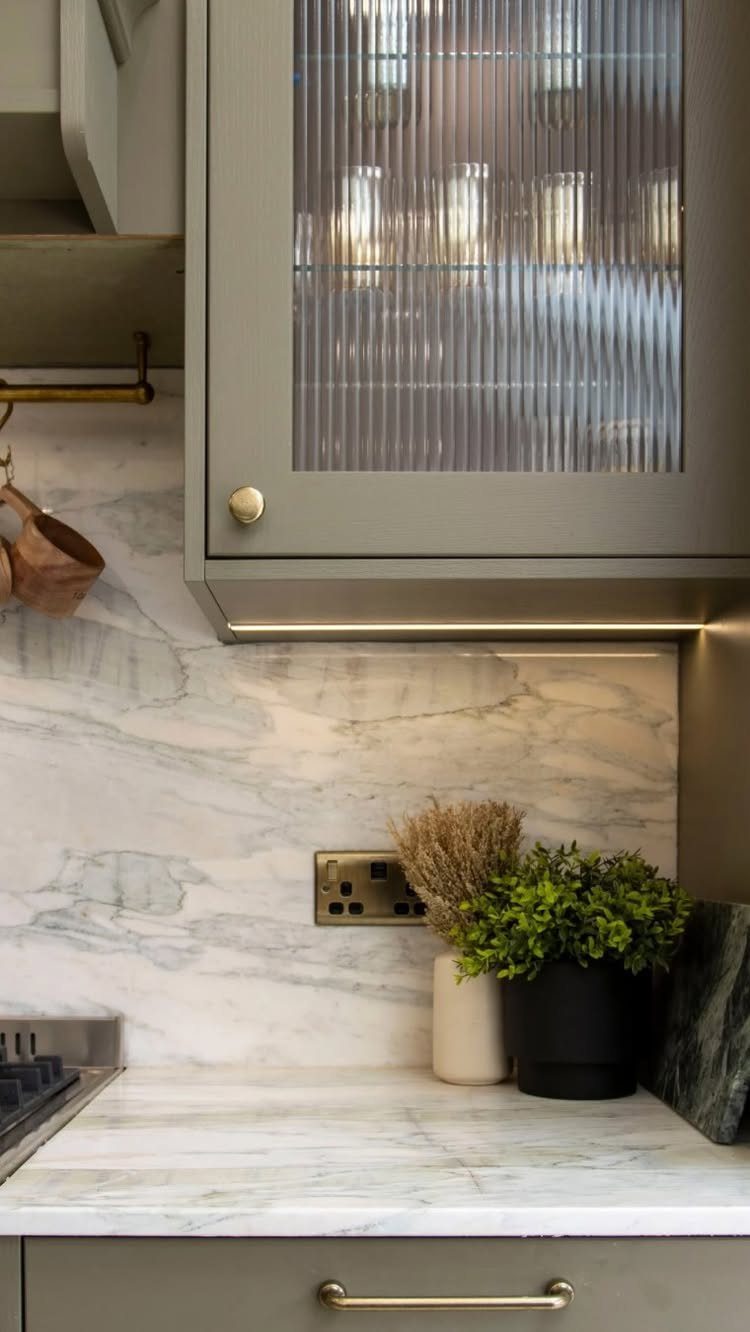
Fluted glass on a cabinet door adds texture where you look first, so the green reads richer than flat paint on a plain panel.
A gold knob and a small plant next to marble repeat the warm and cool pairing that makes green kitchens work.
Gold electrical outlets match the hardware, which is a detail most people skip. I would add it if you are changing the outlets anyway.
19. Green Cabinets with Festive Decor
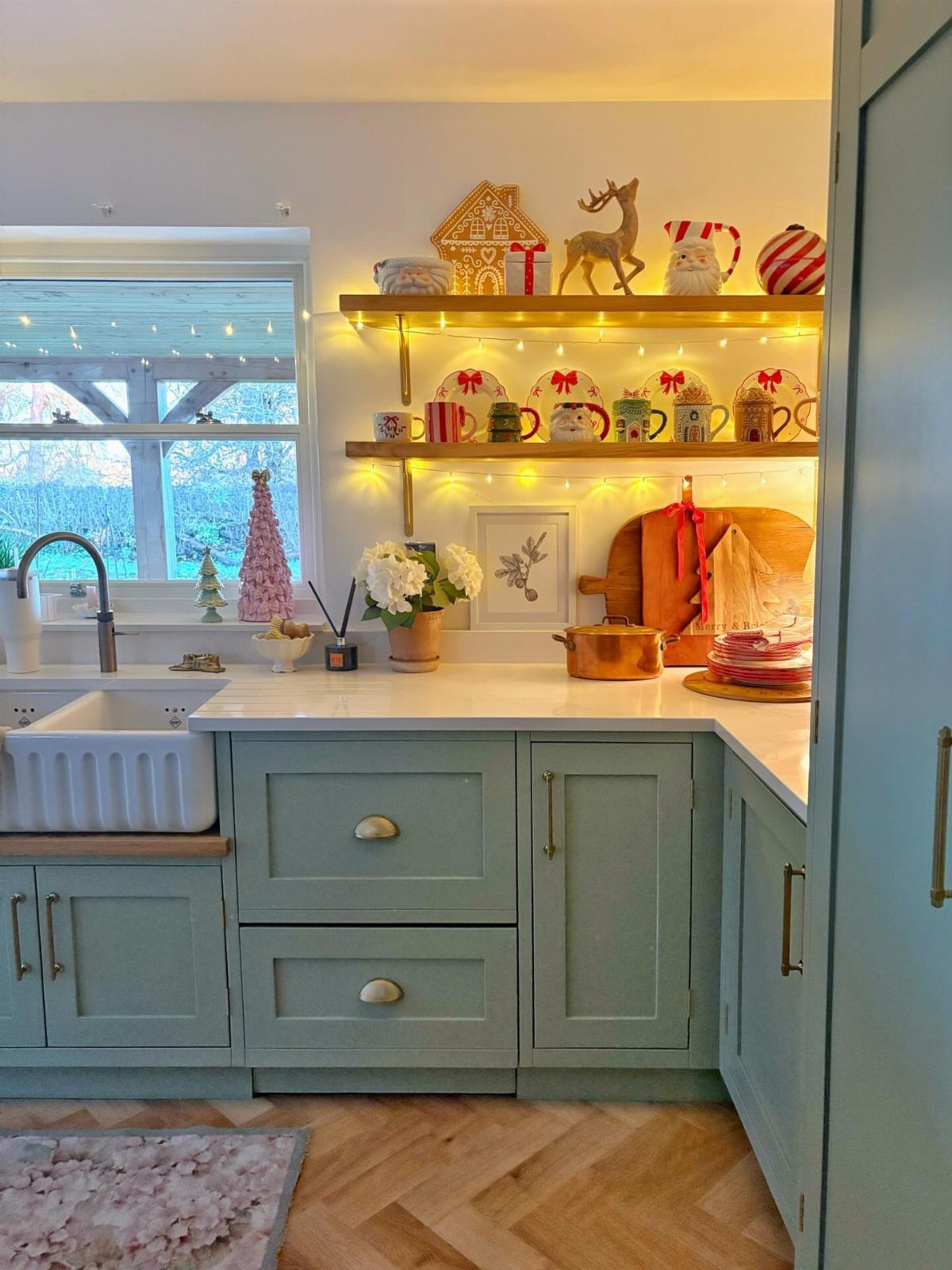
Sage green cabinets and a white farmhouse sink make a calm base for holiday decorating, since the green already reads like evergreen. Ornaments and fairy lights on the open wooden shelves bring in the festive part without touching the cabinets.
Warm fairy lights glow best against the wood, so I would string them along the shelf edges. Everything comes down in January, and the kitchen is left as it was.
20. Green Cabinets with Plants
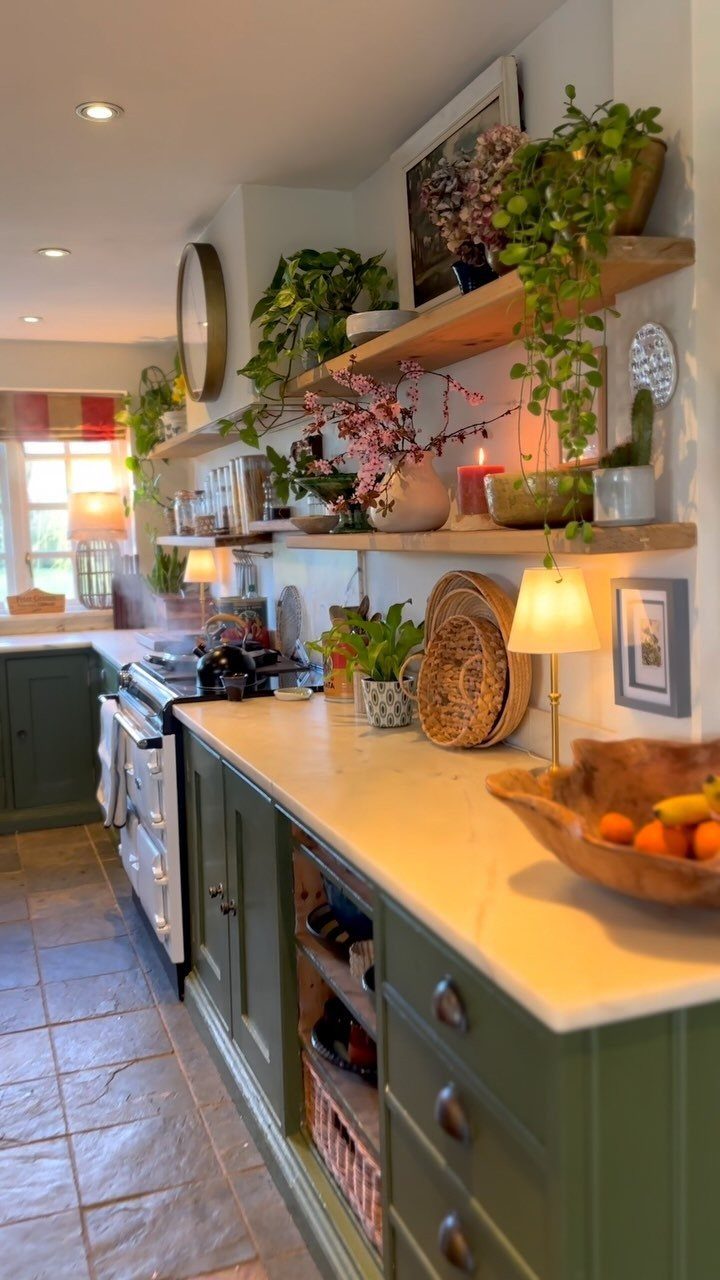
Trailing plants on open wooden shelves repeat the cabinet color in a softer, living form. White countertops keep the sage green looking fresh, and the wood shelves give the pots a warm place to sit.
I would set the vines at the shelf edges so they spill down over the cabinets. A candle and a few decor pieces between the pots break up the leaves, so the shelf looks arranged instead of crowded.
21. Mint Green Appliances
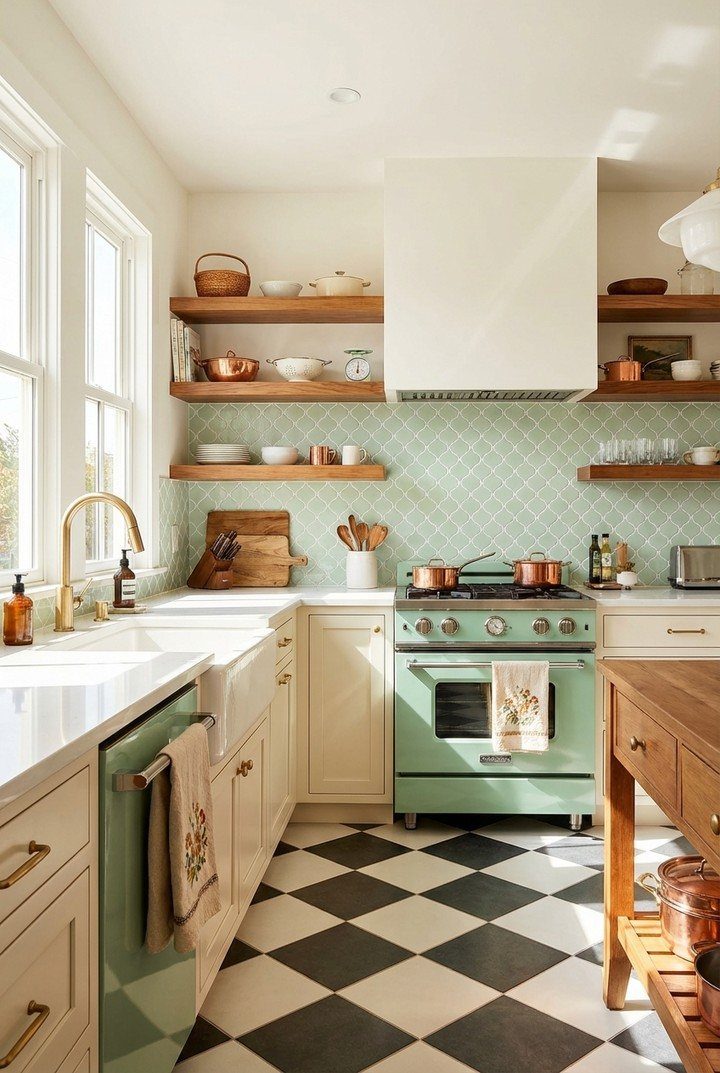
A mint green stove and dishwasher put the color in the appliances, so the cream cabinets can stay quiet.
Pale green backsplash tiles pick up the same shade, and the black and white checkered floor gives the mint a crisp edge.
If you are shopping for this look, match the tile to the appliance as closely as you can. 2 mints that nearly match tend to look like a mistake, while the same shade looks planned.
Planning and Design Services
A kitchen planning tool is the cheapest first step if you are replacing the whole kitchen.
It lets you see the layout in your own dimensions and get a price before you talk to anyone, so a color you love doesn’t turn into a budget you can’t meet.
Once you have a rough layout and number, book a showroom appointment with a designer.
Bring your measurements, a few photos of the room and a firm spending limit. Seeing door samples in person matters, because greens shift a lot between a screen and your actual light.
If you want a designer to develop the green scheme with you, contact the team early, before cabinets are ordered. Changes are easy on paper and expensive once doors are built.
Not replacing anything?
Green accents add color without overwhelming the room. Cabinetry or interior paint is the bolder commitment, and if you rent, check with your landlord before you touch either.