The effort ranges from a few sage accessories that move with you when your lease ends to a full repaint of every cabinet in the room.
How much of the cabinetry you can repaint decides where to start: renters can stay with accessories, while owners can paint just the island, go two-tone, or paint all the cabinets.
Sage also shifts with your light, leaning blue and cool or olive-yellow and warm, so choose the undertone for your room, not for the photo.
1. Farmhouse Sage Kitchen
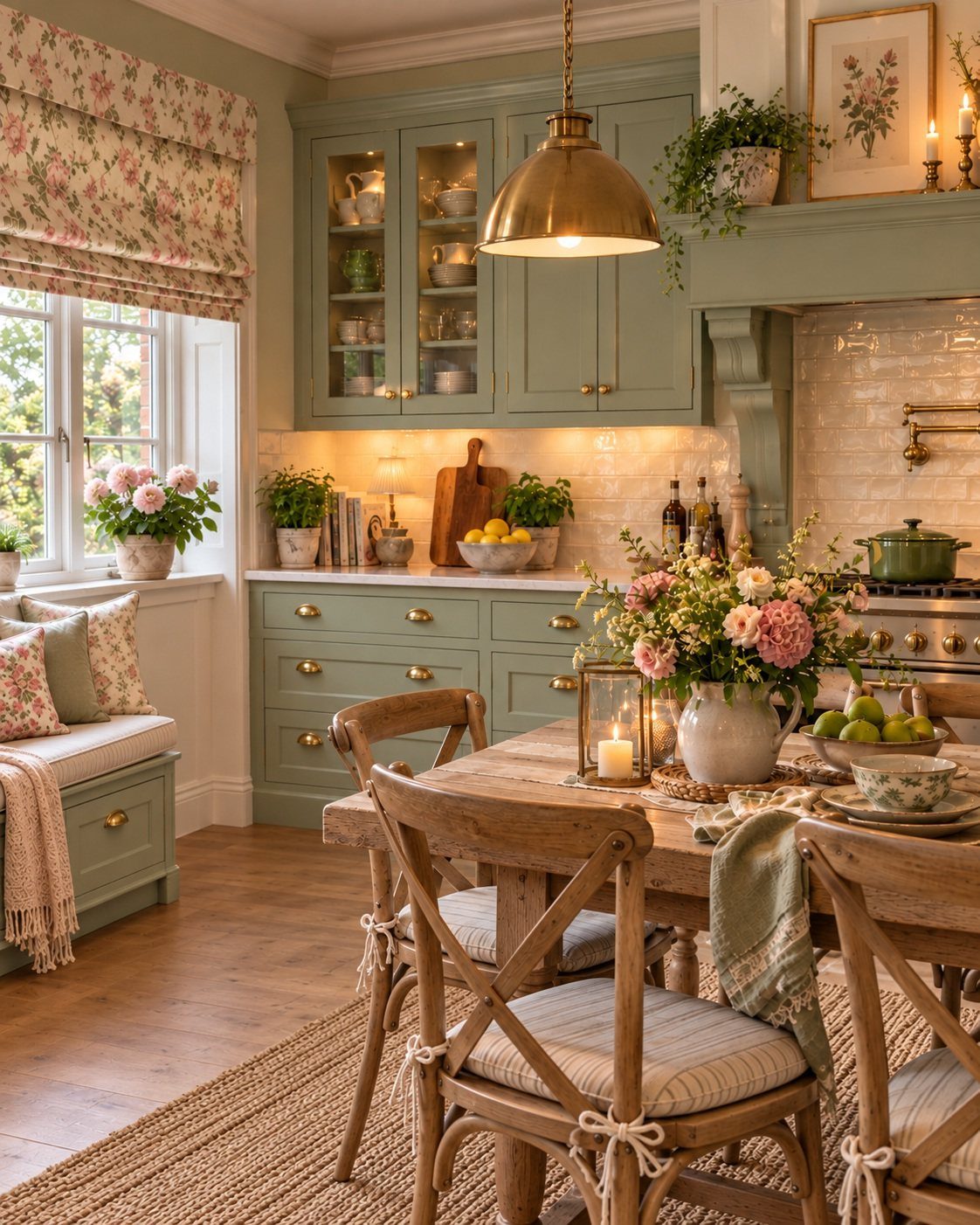
Sage suits a farmhouse kitchen because it reads as a soft, painted-barn green rather than a color statement.
Floral curtains, a wooden table and a window seat all sit comfortably against it, so you can build the cozy side with fabric and furniture instead of renovating.
Keep the patterns in one color family so the cabinets stay the calm part of the room. A brass pendant over the table adds warmth without competing.
2. Sage and Marble
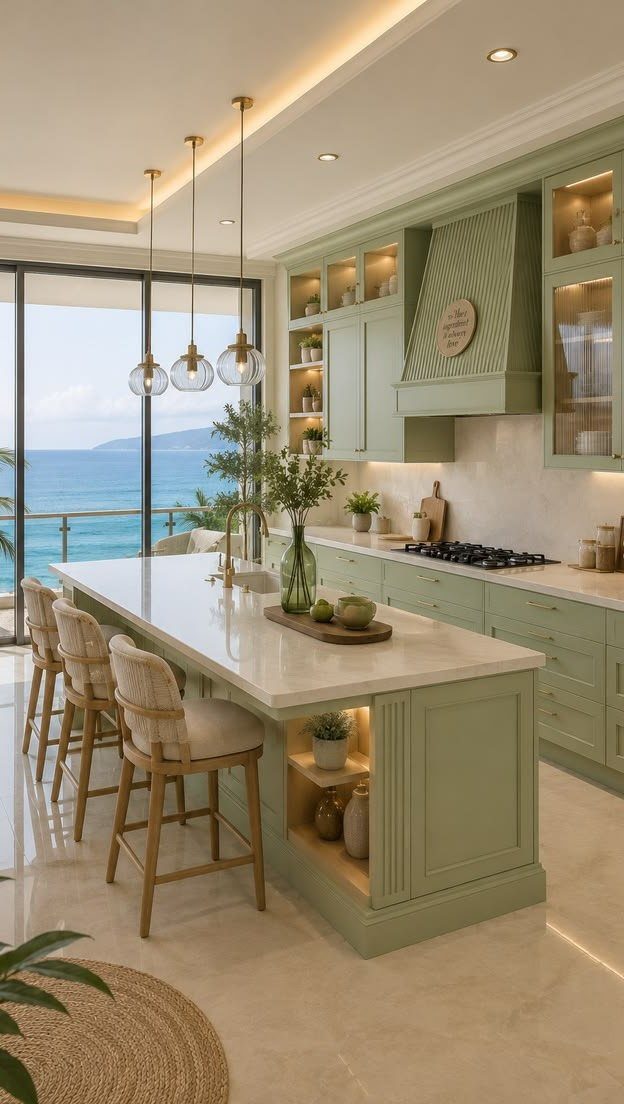
Marble is the countertop I’d pick first for sage cabinets, since its gray veining picks up the green’s soft undertone and keeps the white from feeling stark.
Carrying the same stone up the wall as a backsplash makes the run look continuous and cuts down on grout lines to clean.
Real marble is a splurge for most budgets. A marble-look laminate or quartz slab gets close for far less, and a single marble backsplash is a cheaper way in than full counters.
3. Natural Wood Accents
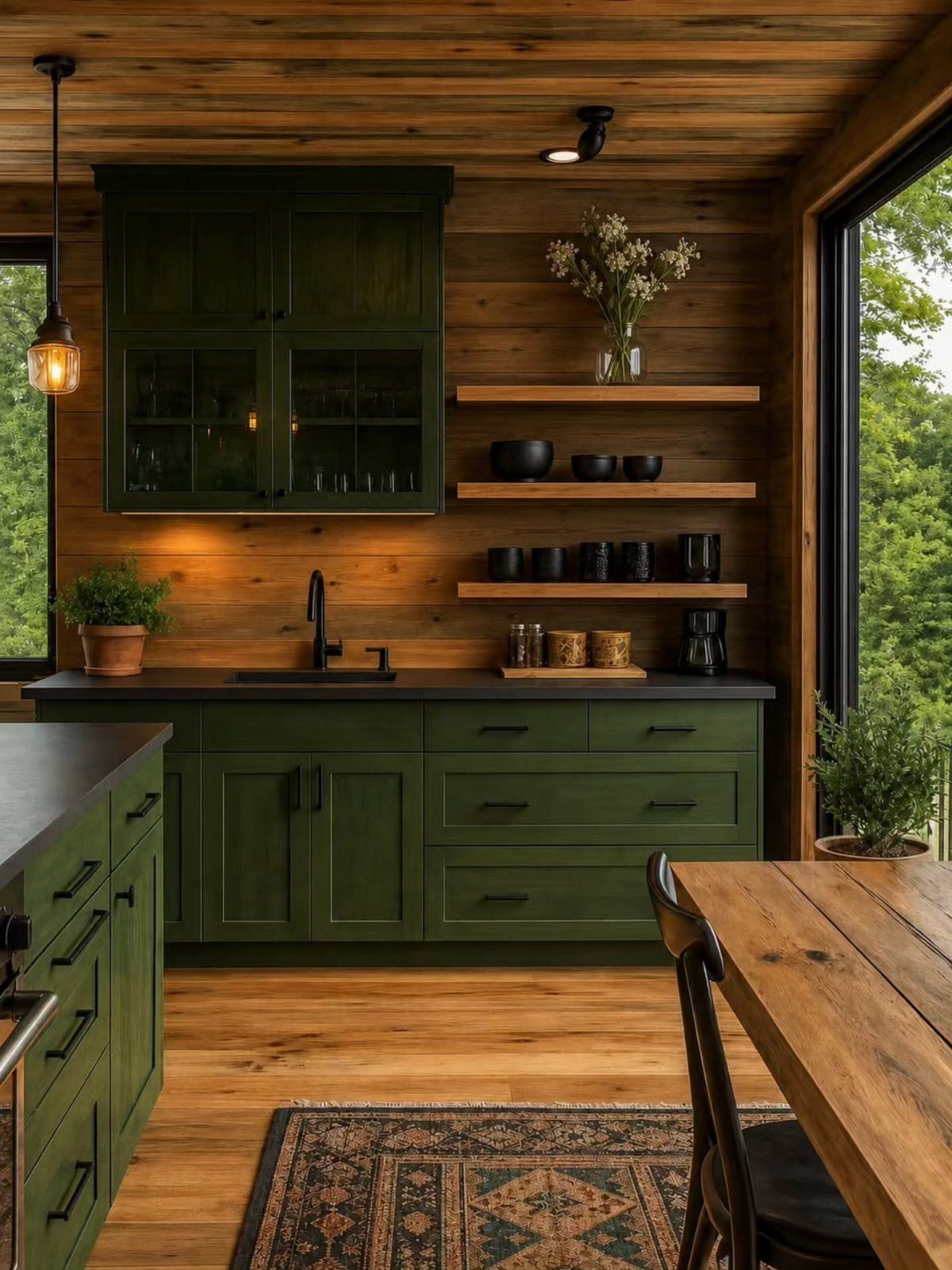
Wood planks on the walls and ceiling make sage feel like a cabin rather than a showroom. Black counters keep that much timber from going too sweet, and floating shelves in the same wood tie the cabinets to the room.
For a lighter version, skip the ceiling and use plank paneling on one wall only, or just add a wood shelf or two. A patterned rug underfoot finishes the look without extra work.
4. Brass Hardware
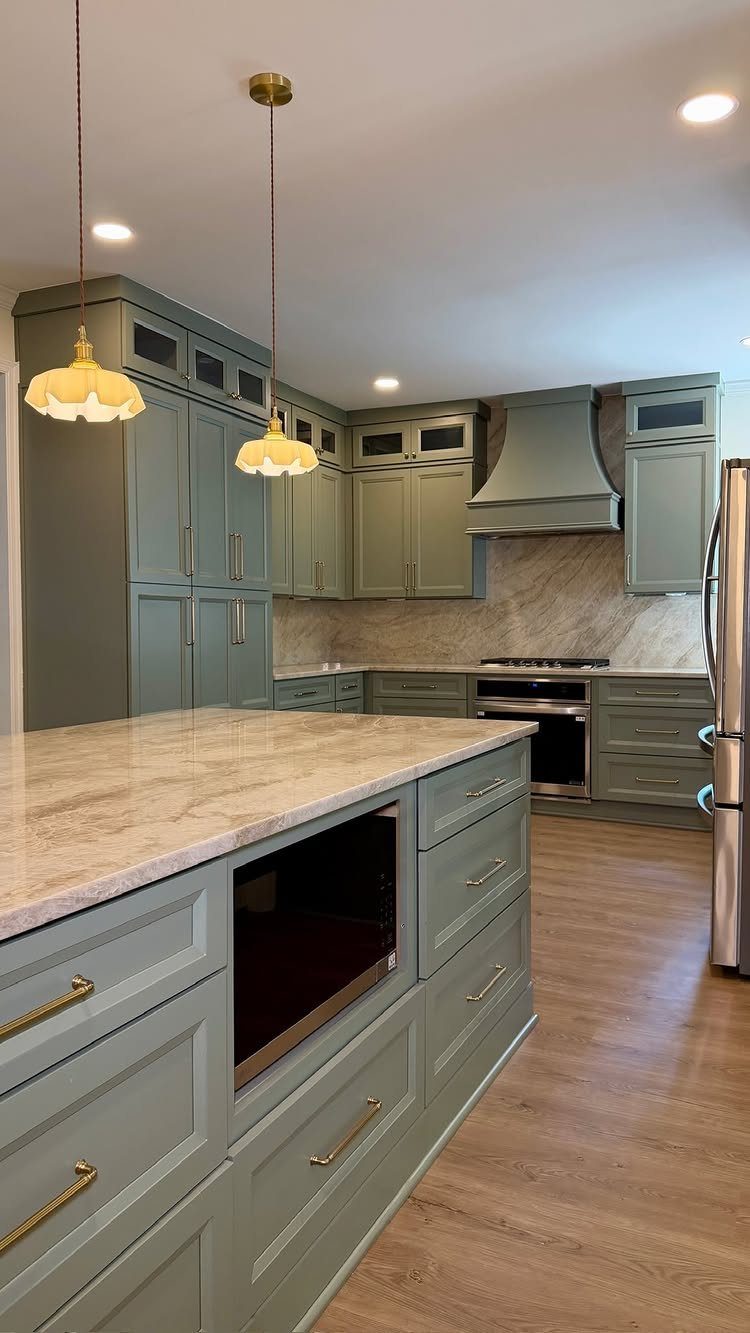
Hardware is the cheapest swap in this whole list, and brass is where I’d start on sage. The warm metal makes the green look richer, and matching brass pendants over the island repeat it overhead so the finish feels planned.
Replacing pulls takes an afternoon and a screwdriver. Measure the center-to-center spacing of your existing holes first so the new handles fit without drilling.
5. White and Sage
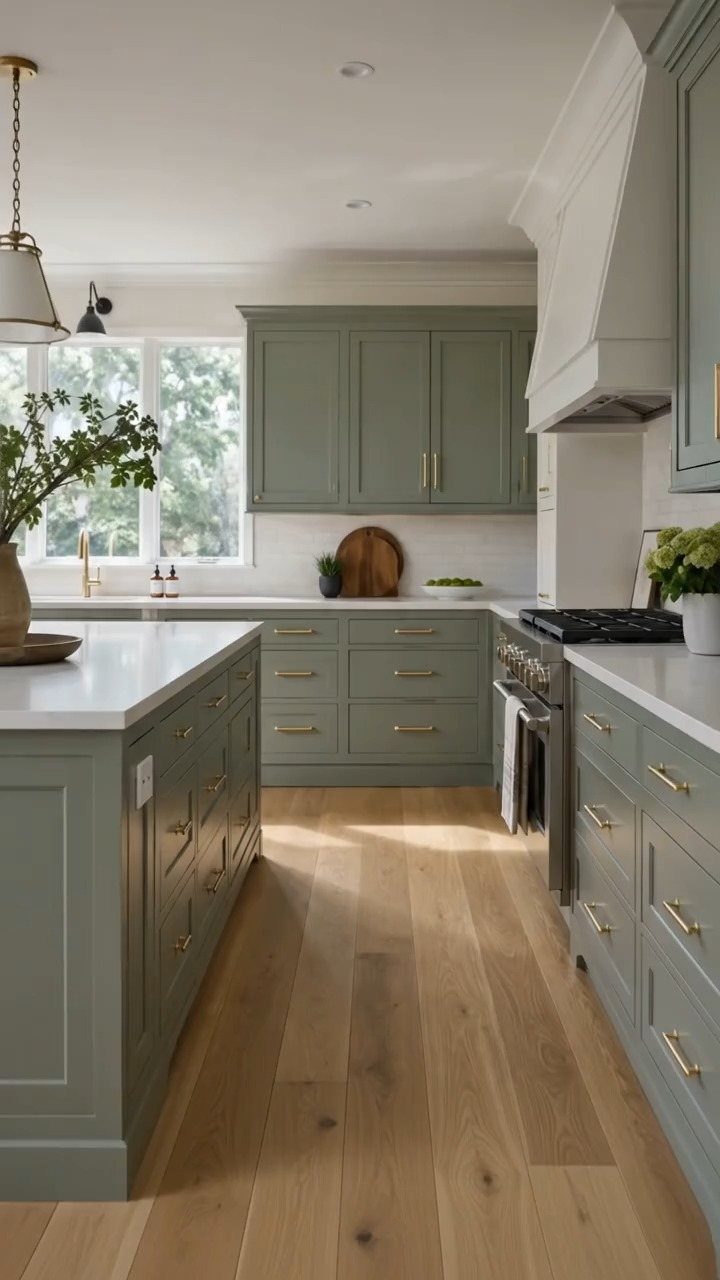
White countertops, a white range hood and pale wood floors let sage do the work while the room stays bright. Of all the pairings, this is the safest for a small or dim kitchen.
If pure white feels cold, use a warm cream for the counters or hood instead. Light wood floors keep the whole palette airy, so avoid a dark floor if brightness is your goal.
6. Two-tone Cabinets
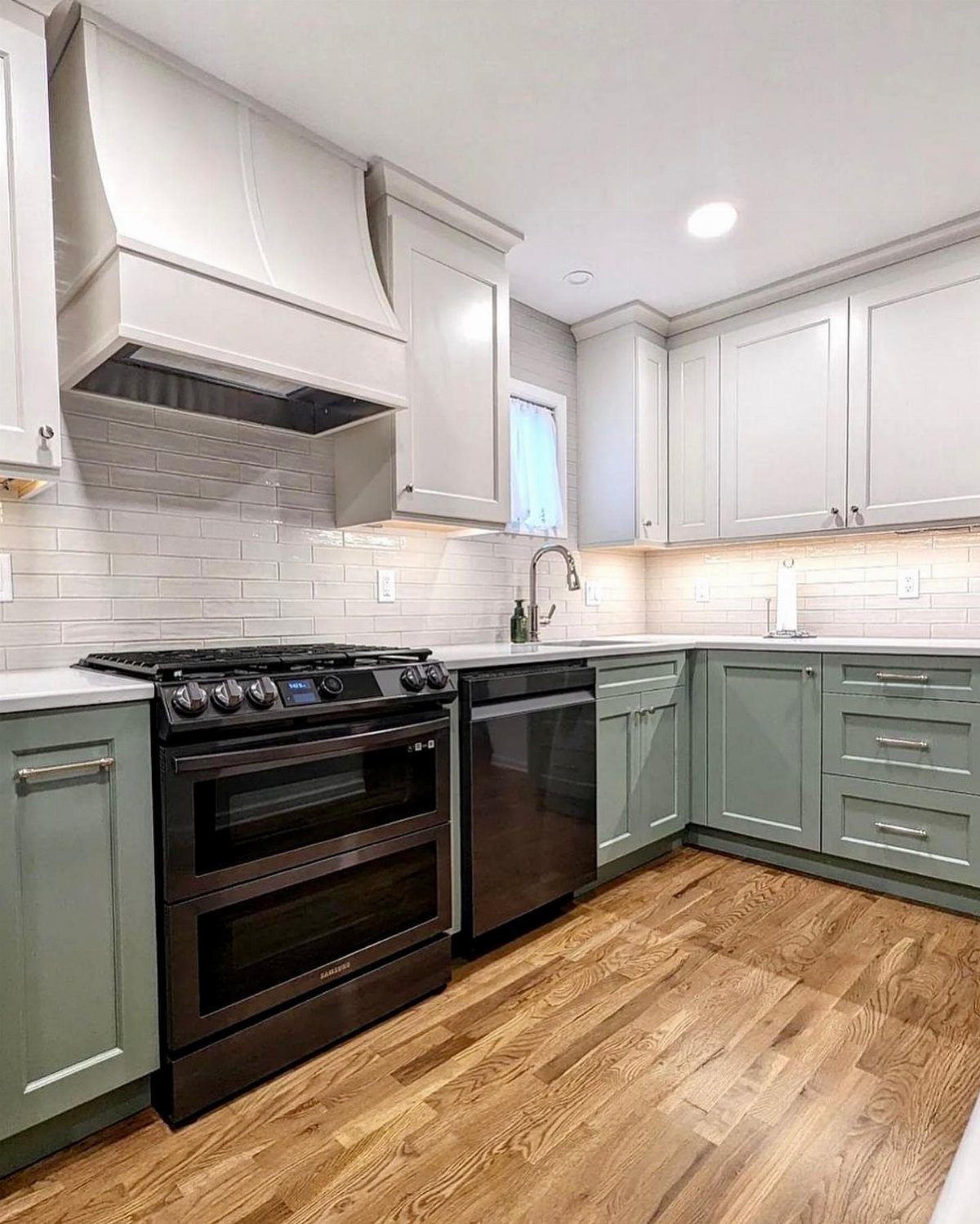
Painting only the lower cabinets sage and leaving the uppers white gives you color at the level where it grounds the room, while the wall side stays open.
White subway tile running between the upper and lower cabinets gives the eye a clean line where the 2 colors meet.
It’s also the lower-commitment way to try sage: you paint roughly half the cabinetry, and if you tire of it, the change is easy to redo.
7. Sage Shaker Cabinets
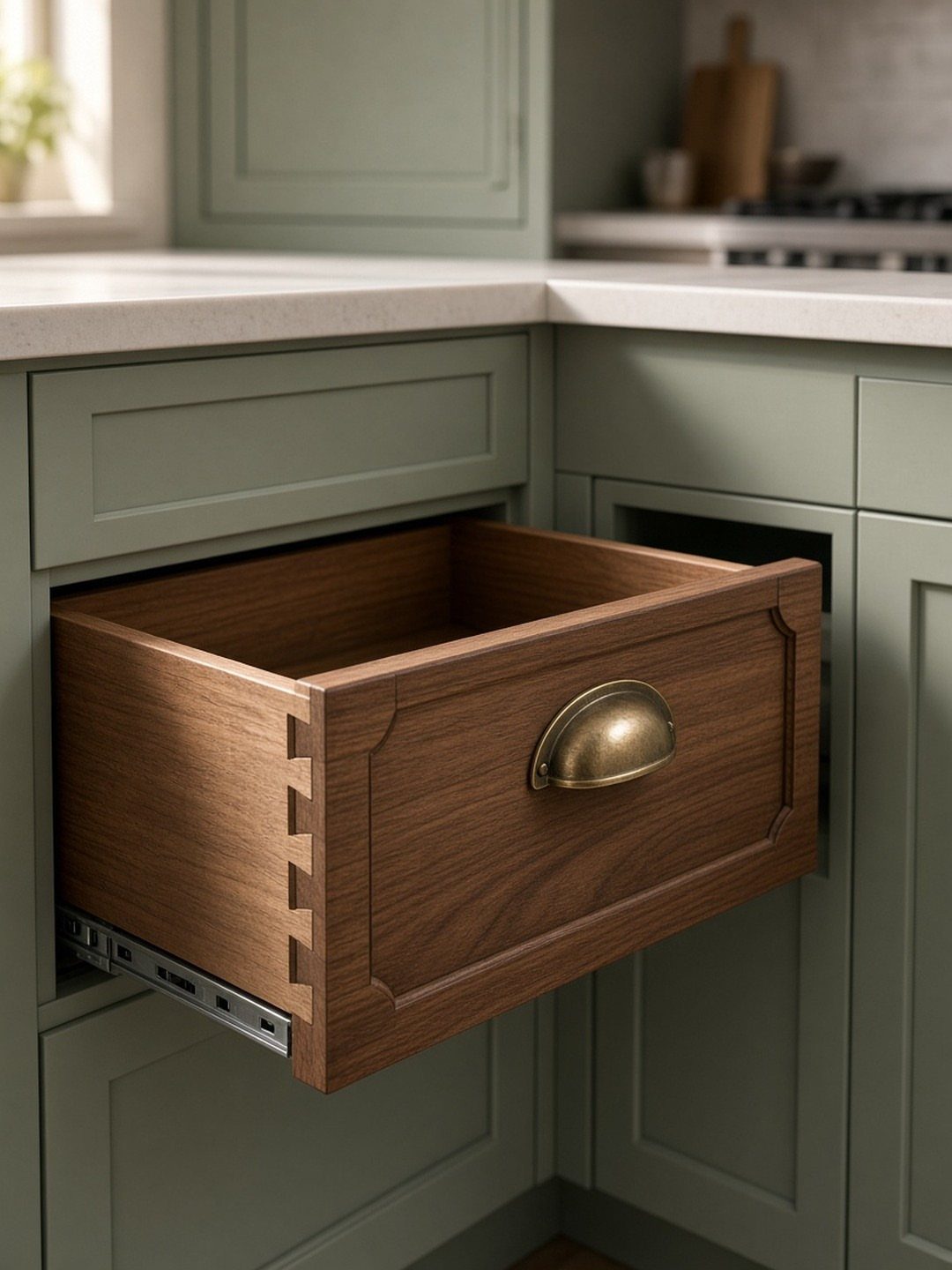
Shaker doors have a flat center panel inside a plain square frame, and that simplicity is why sage paint sits so well on them. With no carved detail breaking up the surface, the color gets room to show.
A white countertop keeps the green fresh, and brass pulls against a dark wood drawer add depth.
Pick a single hardware finish, say brushed brass or matte black, and run it across every door and drawer so the sage has nothing competing with it.
8. Modern Sage Kitchen
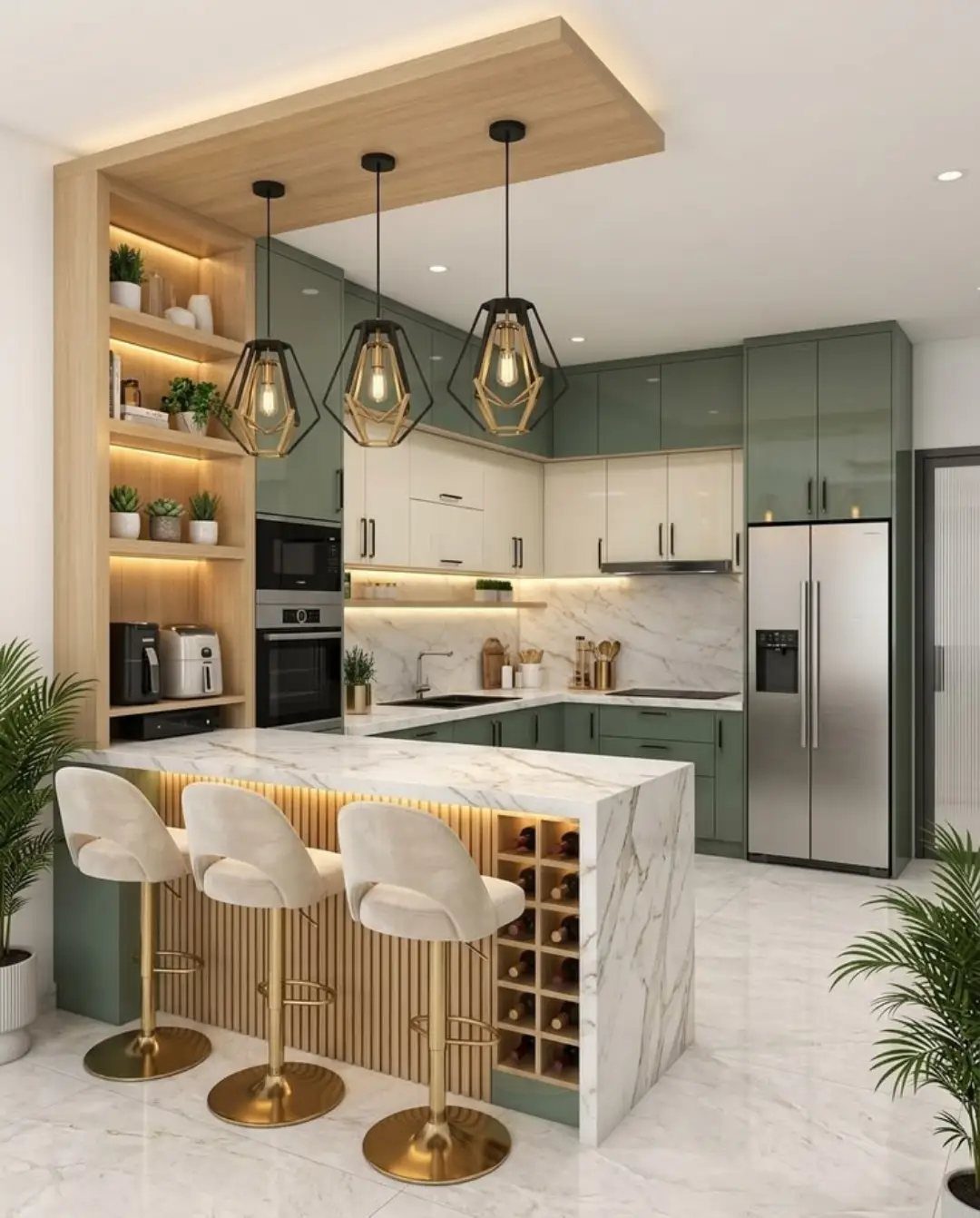
Restraint is what makes sage read as modern. Keep door styles plain, keep the finishes few, and let one or two shapes carry the interest, like geometric pendants over an island.
Splitting the cabinetry between sage and white stops the color from swallowing the room.
Repeating a single metal on stool bases and fixtures looks planned, and a built-in wine rack keeps bottles inside the cabinet line instead of crowding the counter.
9. Sage and Gold
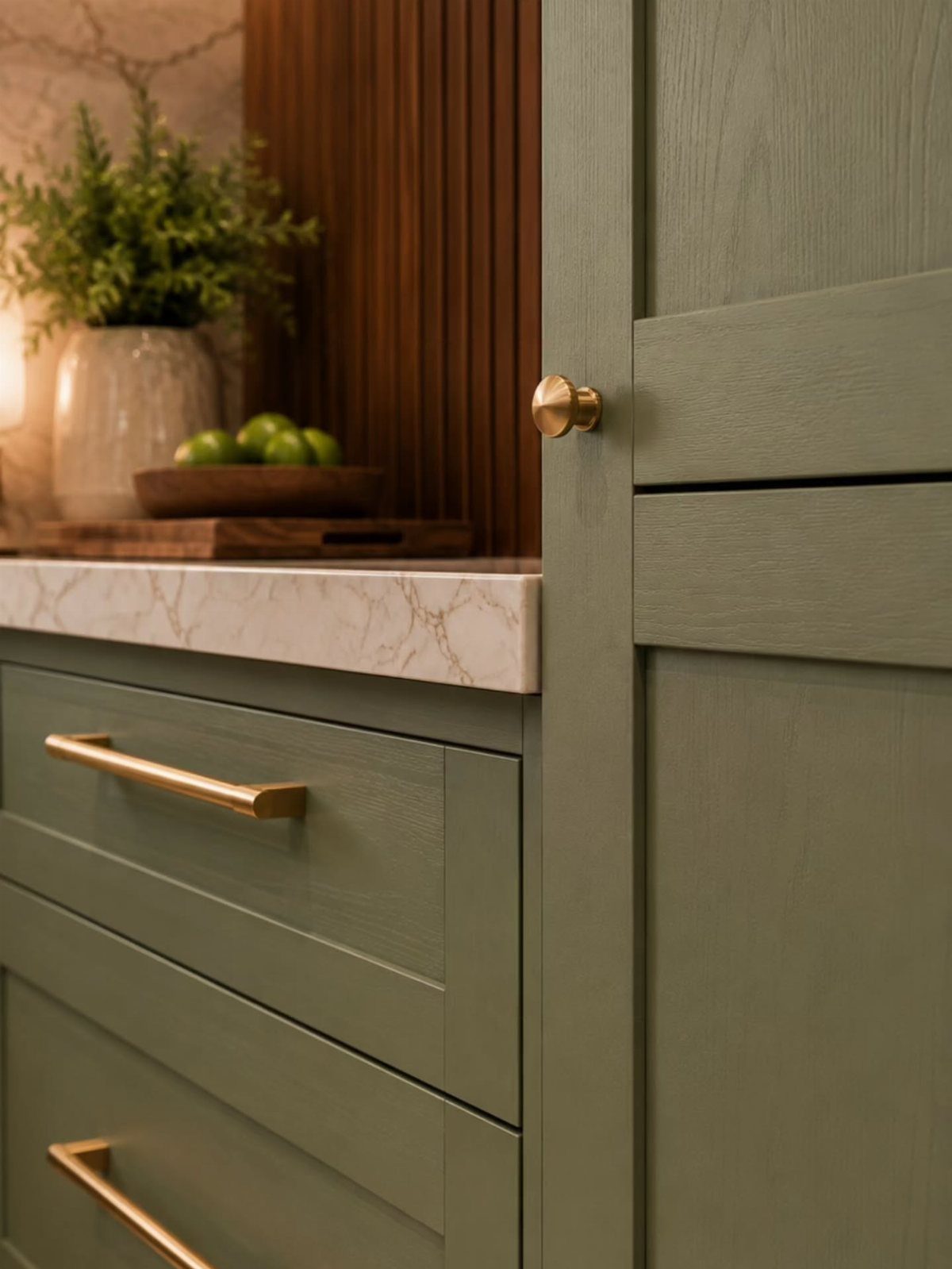
Pick one gold tone and repeat it on every pull, knob and fixture. Mixed golds look like a mistake; a matched set looks chosen.
Sage cabinets under a white marble top need very little else, but a wood slat wall behind them adds warmth if you have a spare stretch of wall.
Hardware is also the easiest part of this look to change later, so you can try it before committing to anything bigger.
10. Sage with Cream
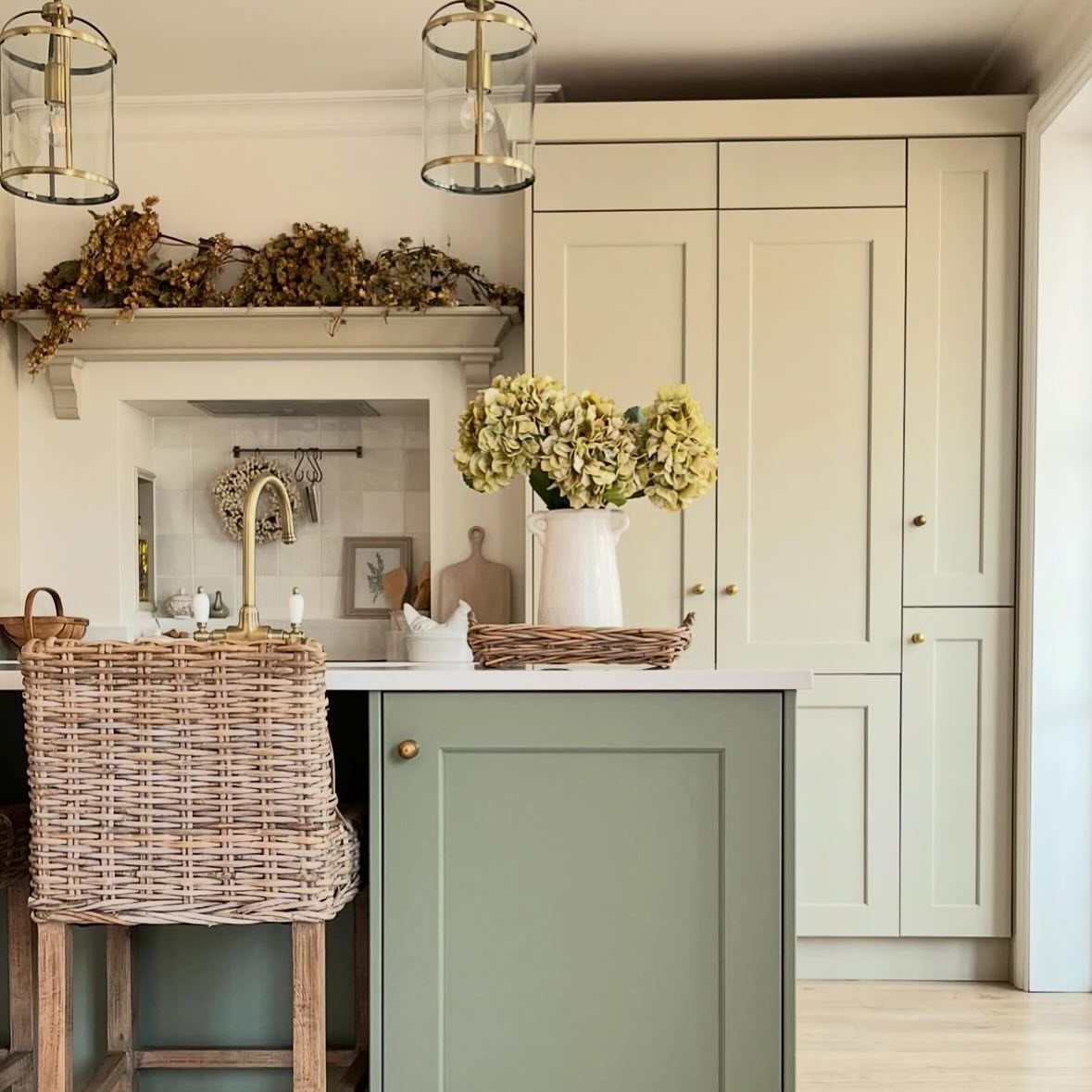
Cream next to sage reads softer than white would, with no hard edge between the 2 colors. Both sit in a warm, muted range, so neither competes.
Choose a cream with an undertone close to your countertop so the two don’t look mismatched.
After that, texture does the rest: a wicker stool, fresh flowers and a gold faucet warm the room without a single extra coat of paint.
11. Sage with Copper
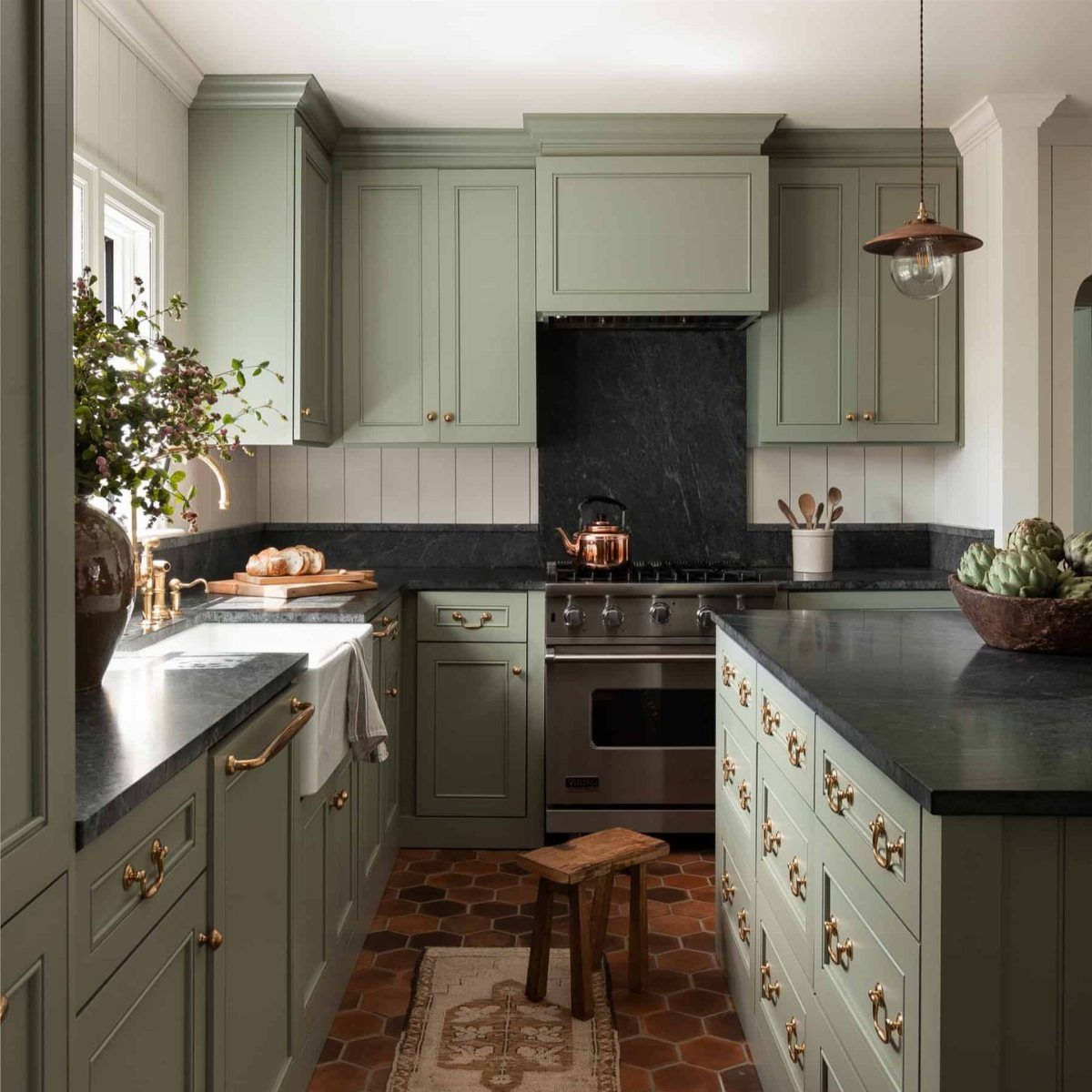
A copper kettle on the stove is the easy first piece, and it needs no installation. A copper pendant is the bigger step and sets the tone overhead.
Terracotta floors and dark counters suit the metal, since all three lean warm and earthy. For a country look, I’d stop at 2 or 3 copper pieces so the kitchen reads as collected rather than themed.
12. Sage Green Island
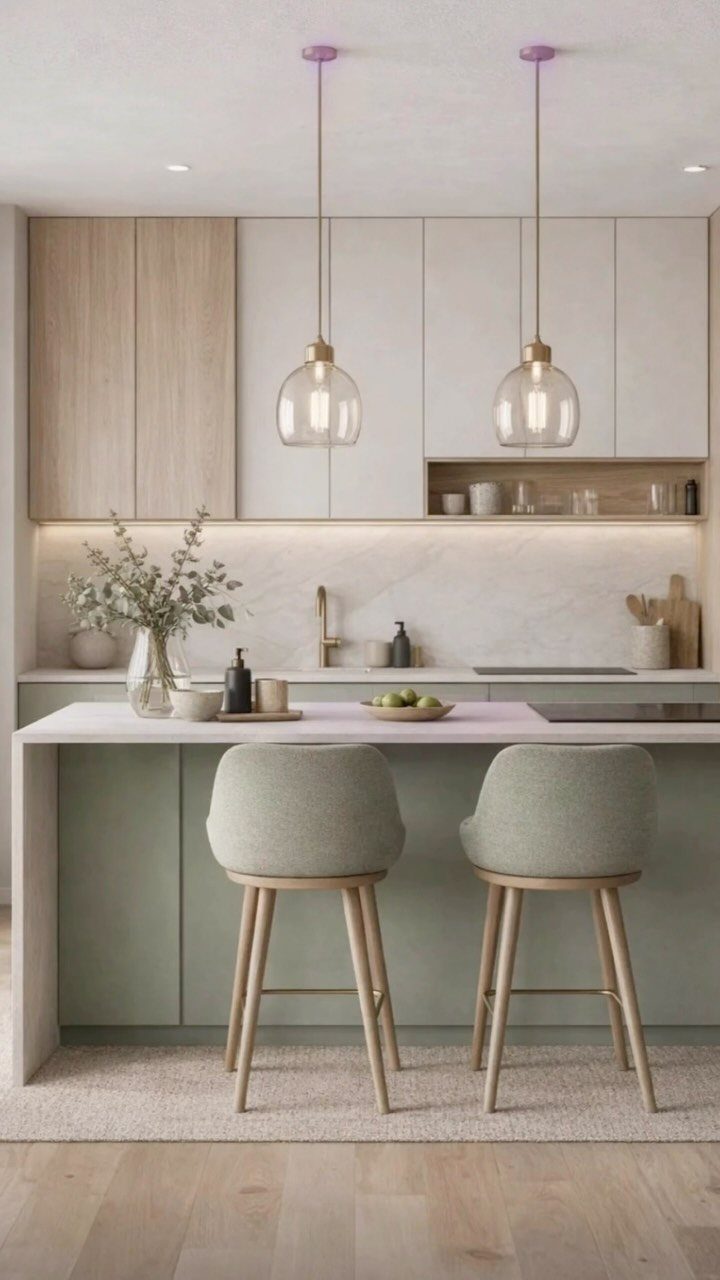
When repainting every cabinet feels like too much, put the sage on the island alone. One block of color against light wood cabinets and white counters stands out without taking over the room.
Stools in a matching green tie the pieces together, while plain wood stools are the quieter choice. Glass pendants keep sight lines open, so the island stays the focus.
13. Sage Backsplash
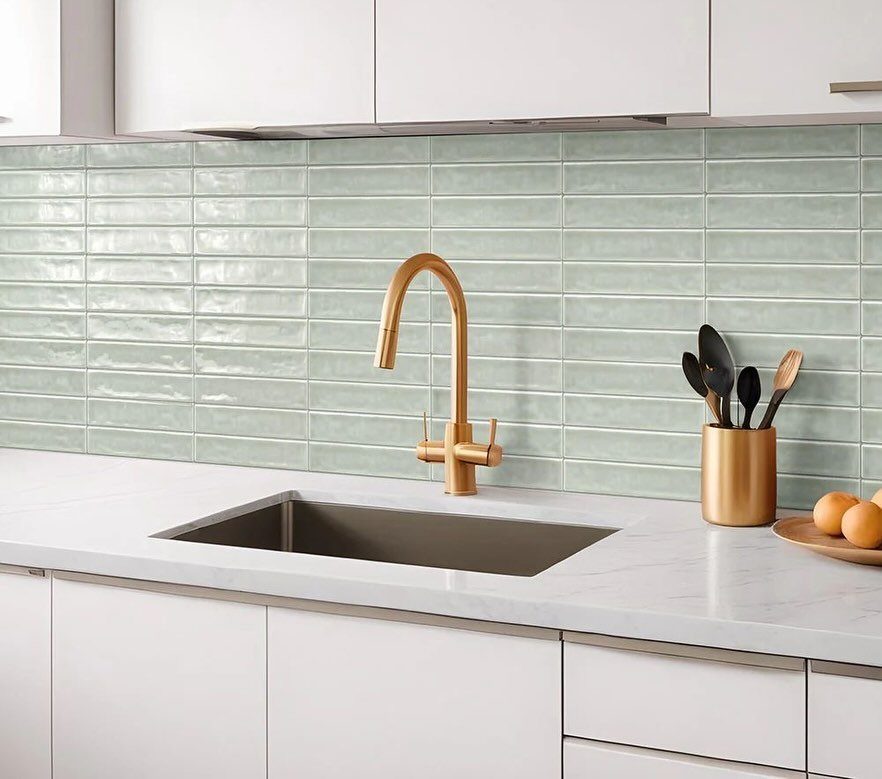
A strip of sage tile is the smallest way to bring the color in, and it leaves white cabinets and a white countertop untouched. If painting every cabinet feels like a gamble, start here.
Let the tile be the only green, then repeat one metal nearby.
A gold faucet with a single gold accessory on the counter does it. Tape one sample tile behind the sink and look at it in morning and evening light before spending a dime on the full order.
14. Sage and Gray
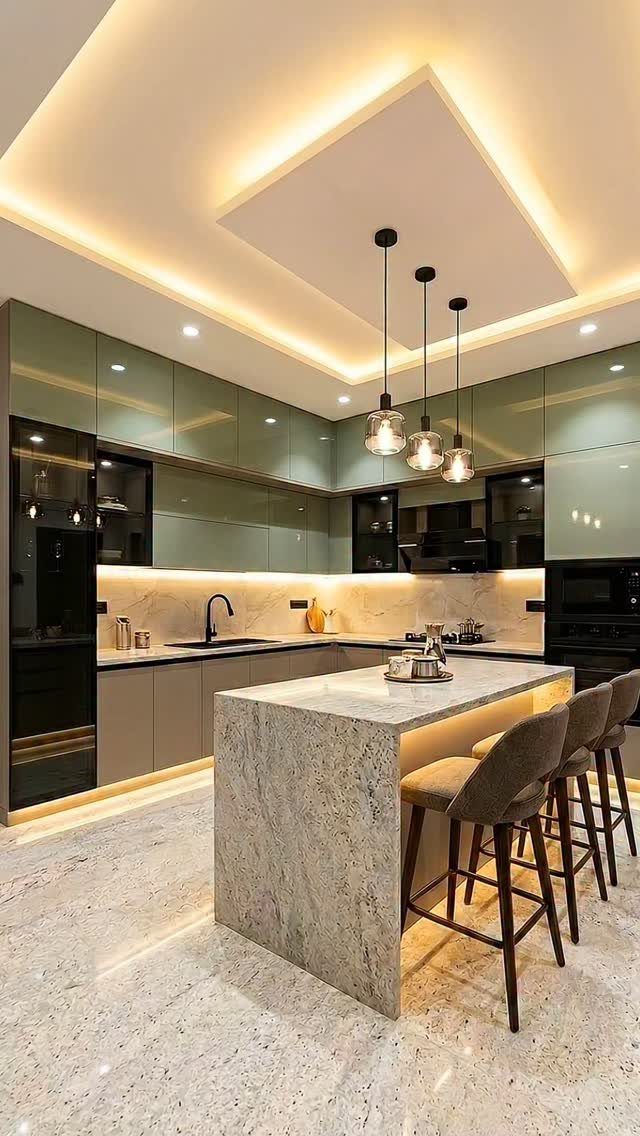
Sage on the uppers and gray on the lowers puts the heavier color near the floor, so the wall side stays light. I’d pick a warm gray, so the pair reads soft instead of corporate.
Stools in the same gray as the base cabinets tie the island in, and a marble top bridges both colors.
I’d use warm bulbs in the ceiling, since they keep a green-and-gray room from feeling chilly. Hold a paint sample of each color side by side first.
15. Sage Accessories
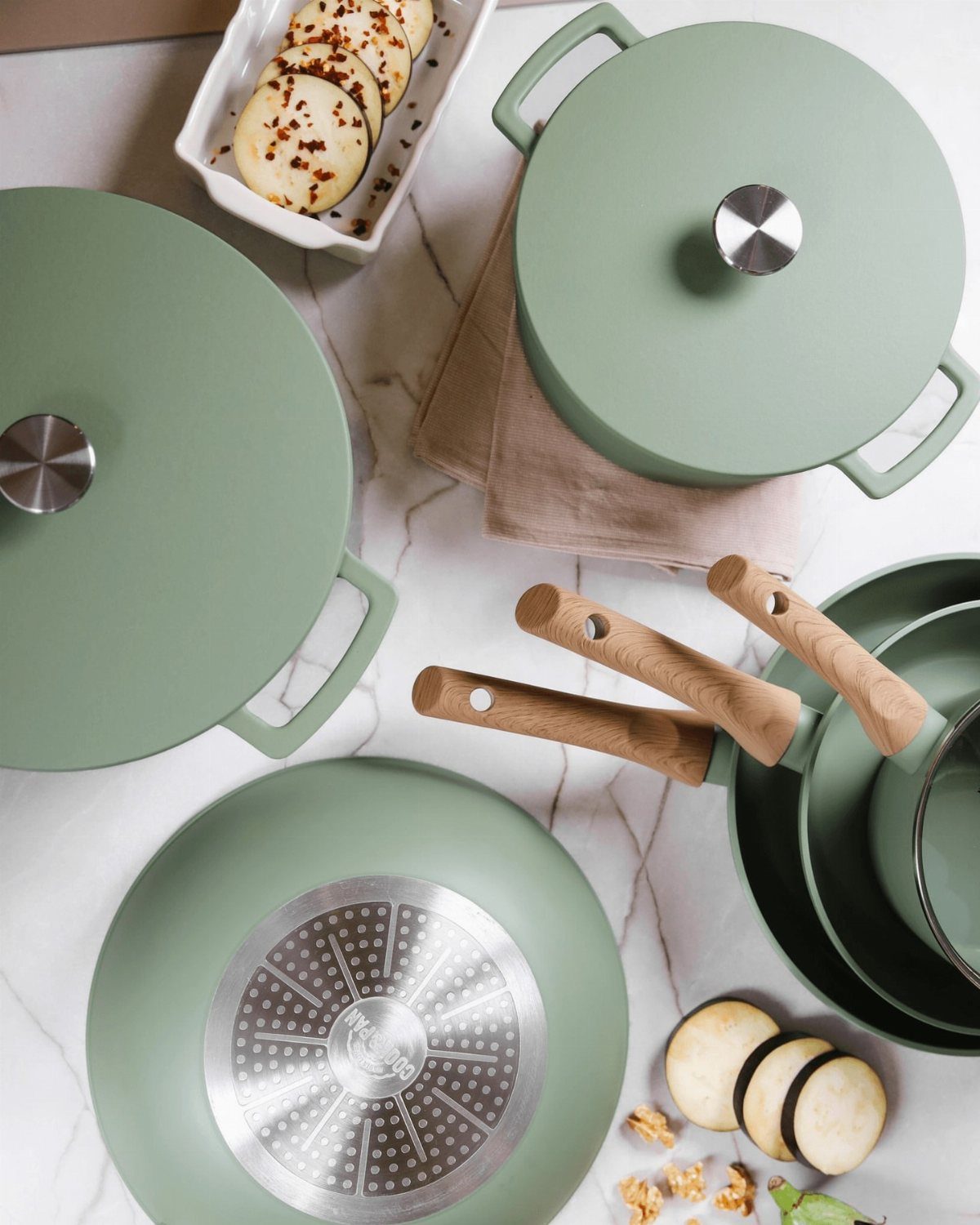
Cookware is a low-risk way to try sage: nothing to install, nothing to repaint, and it works for renters. Sage cookware with wooden handles looks warm against a marble or white counter, and it adds the color without any paint.
Buy one piece first and hold it against your cabinets or walls to check the shade.
A wood cutting board nearby repeats the handles. If the green wins you over, towels or canisters can follow, and they’re easy to swap out.
16. Open Shelving
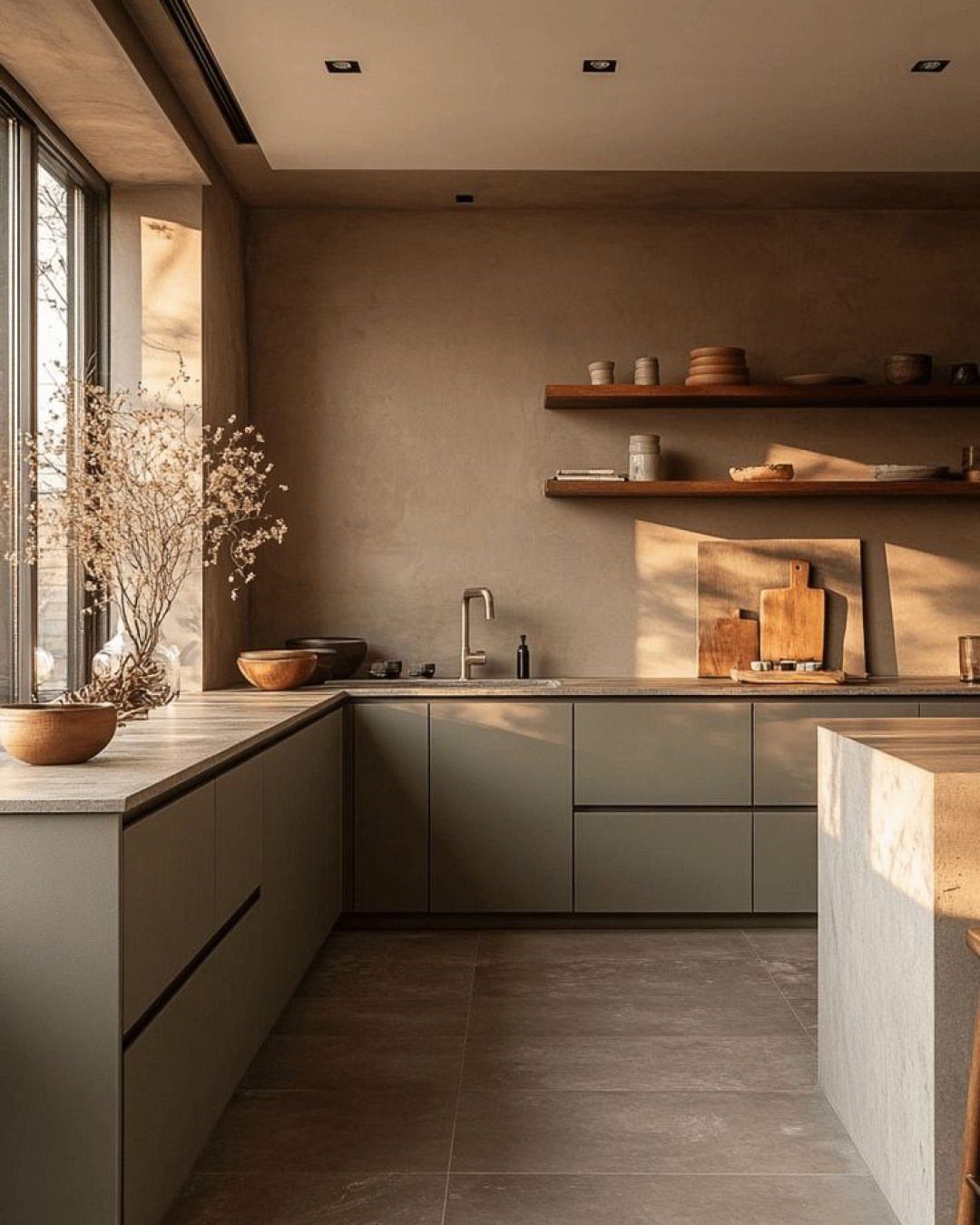
Swapping a couple of upper cabinets for wood shelves opens the wall and gives sage lower cabinets some breathing room. 2 shelves are plenty; more starts to look like a store display.
Everything on them is on view, so I’d keep to a small group of ceramics in a tight color range, like the cream and white pieces here.
Fix the brackets into studs, not just drywall. You lose closed storage, so keep a cabinet for the clutter.
17. Sage Green Tile
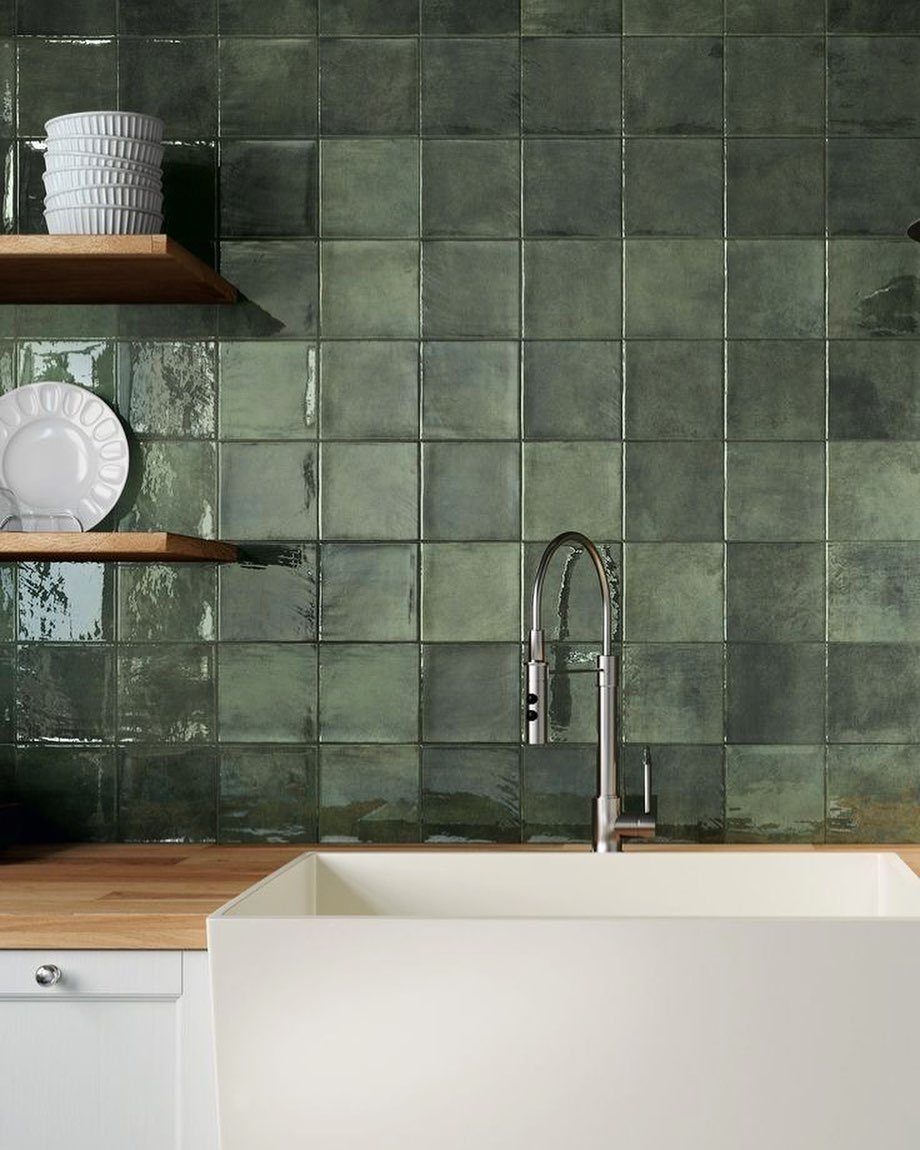
Square tile carried up the wall, rather than stopped at a short backsplash, makes the green a feature you see from across the room. A white farmhouse sink and white dishes on wood shelves keep it crisp.
Grout color changes the feel. Matching it to the tile calms the wall; white grout draws the grid.
I’d go with matching grout for a quieter kitchen. Set a few loose tiles out on the counter and live with them for a day or two before settling on a shade.
18. Sage and Stainless Steel
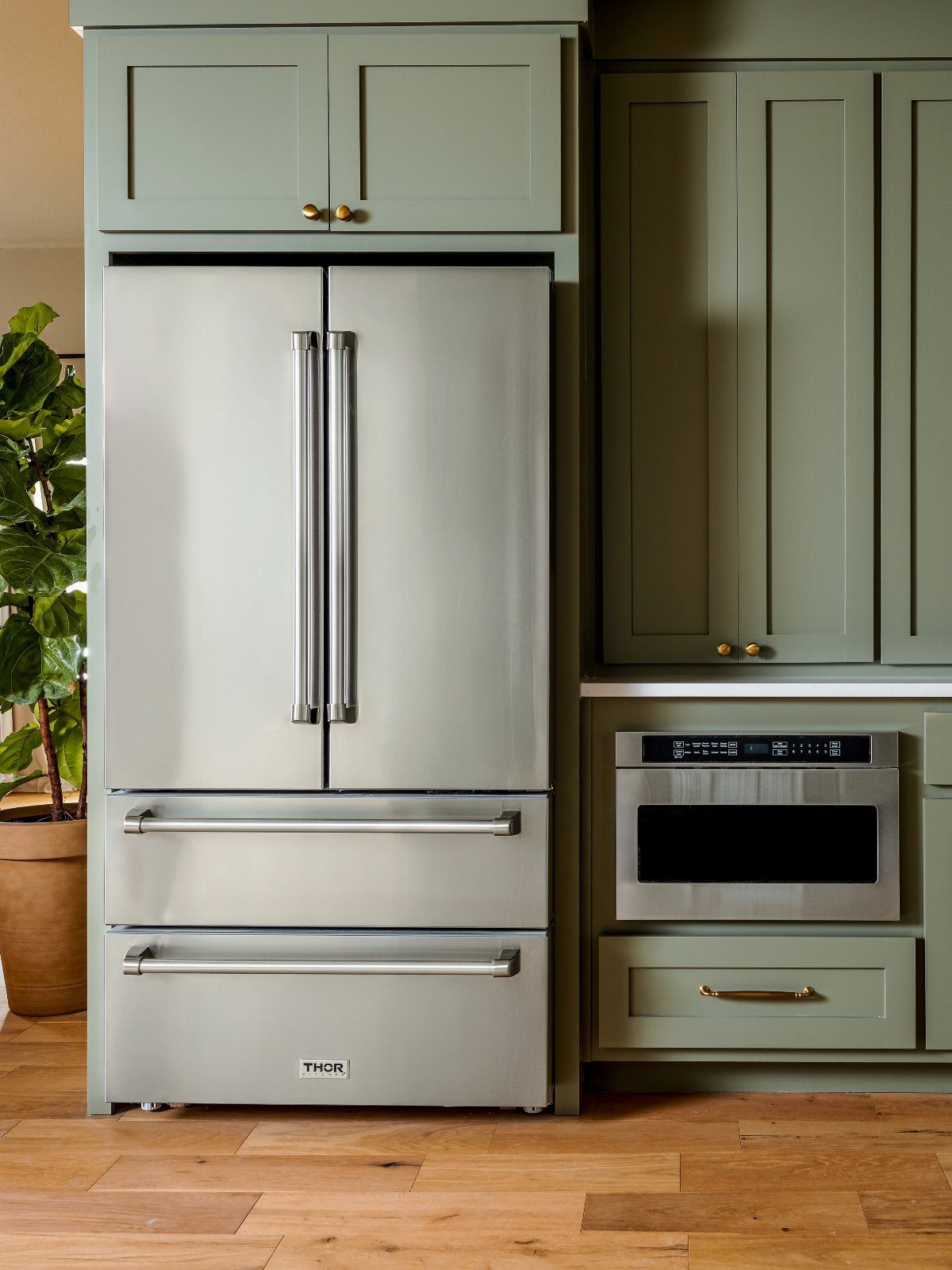
Stainless appliances are cool and neutral, so sage cabinets soften them without any fuss. A stainless refrigerator and built-in microwave sitting inside a run of green cabinetry look like part of the plan.
Light wood floors add the warmth steel lacks.
If you’re replacing hardware, brushed steel or nickel pulls echo the appliances, and one finish across every door keeps the green calm. Nothing needs to match exactly; the appliances can stay as they are.
19. Paint All Your Cabinets Sage Green
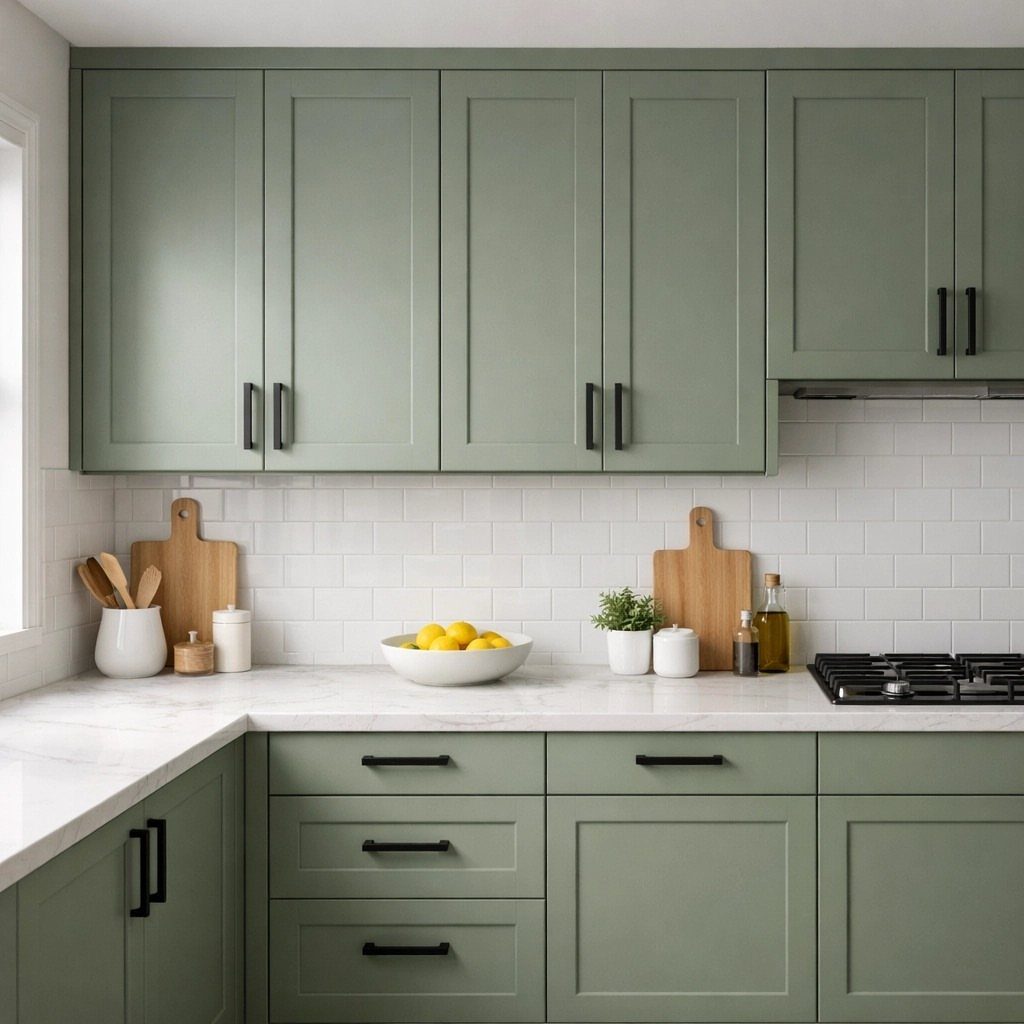
Painting both the uppers and lowers gives sage its full effect, and the black hardware keeps all that green from feeling flat.
This is the biggest commitment on the list, so I’d brush a sample board and tape it to a door for a few days first. Black pulls are the easiest part to change later if the look feels too heavy.
20. Black Accents
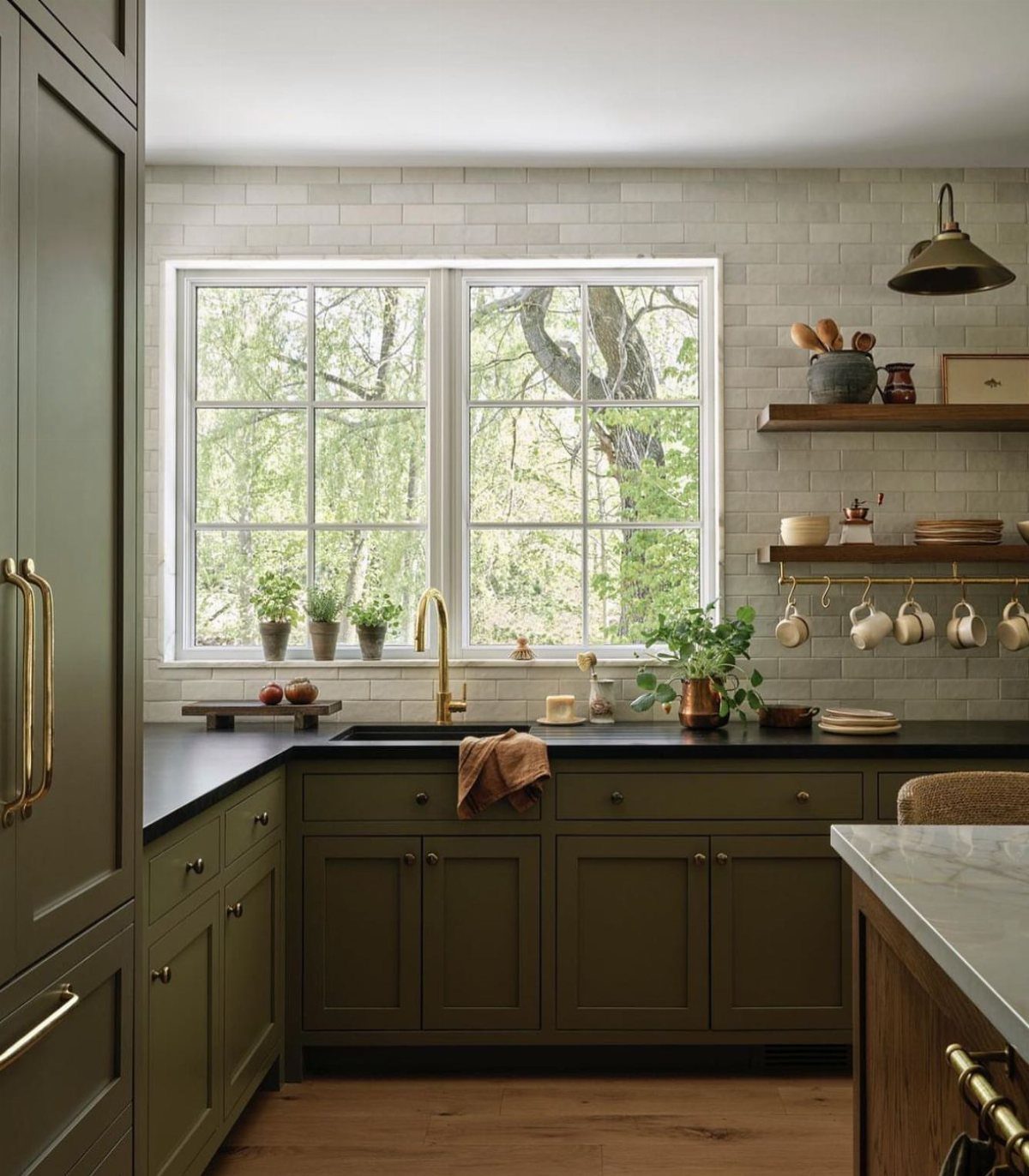
Black counters give soft sage something to push against, and the contrast makes the green look cleaner. Run a white tiled backsplash between the dark counter and the sage cabinets so the two don’t merge.
Gold hardware warms the black, and a brass lamp overhead repeats it.
Open wood shelves keep the wall side light. Keep the dark to the counters and let everything else in the room stay pale.
21. Small Sage Kitchen
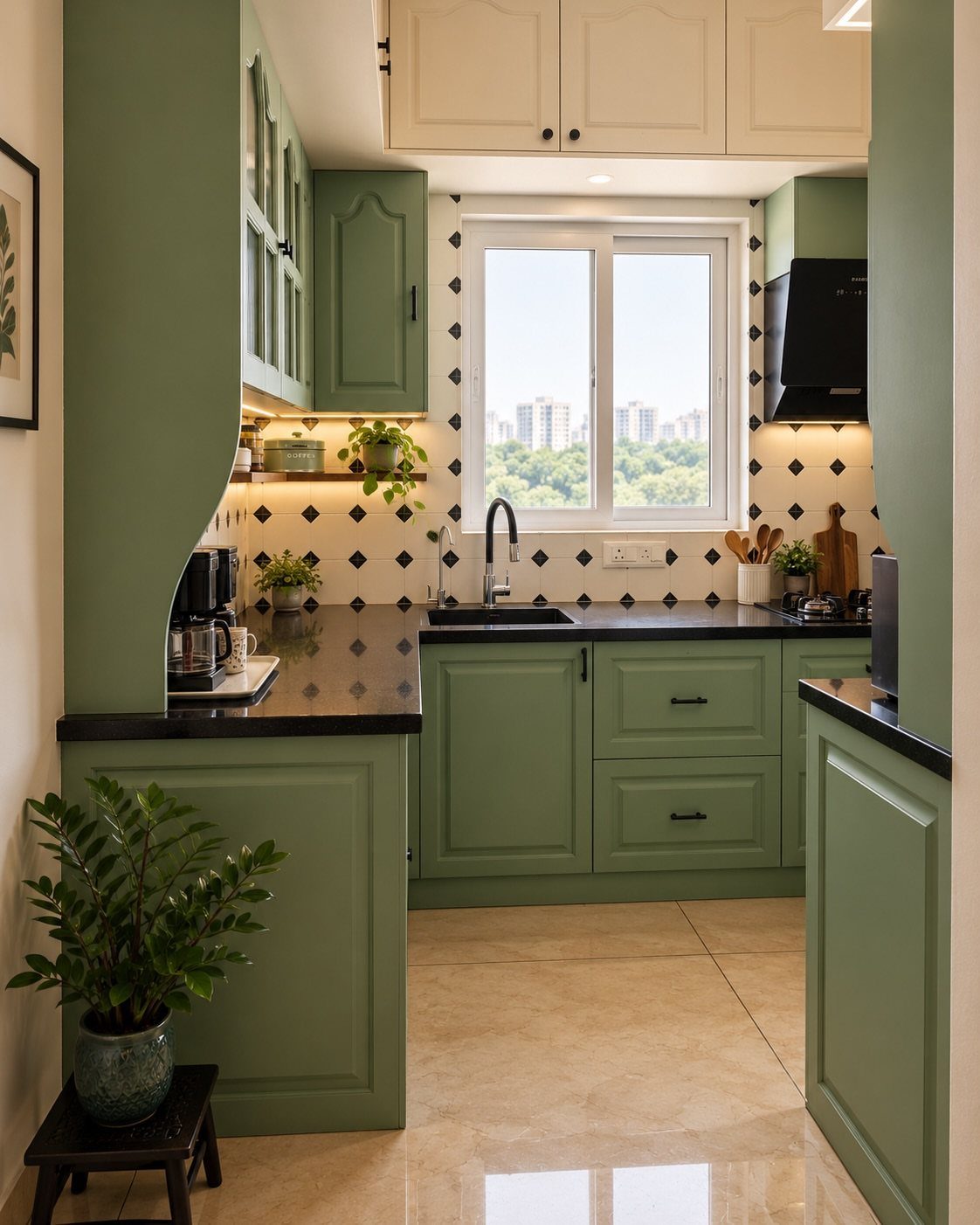
Sage on the lower cabinets and cream on the uppers keeps a compact room open, because the lighter color sits at eye level. Black counters anchor the green, and a white diamond tile backsplash adds pattern without crowding the wall.
I’d leave the window bare so daylight does the work. A potted plant on a small stool brings in a second green with no extra cost, and it can move if you need the floor space.
22. Traditional Sage Kitchen
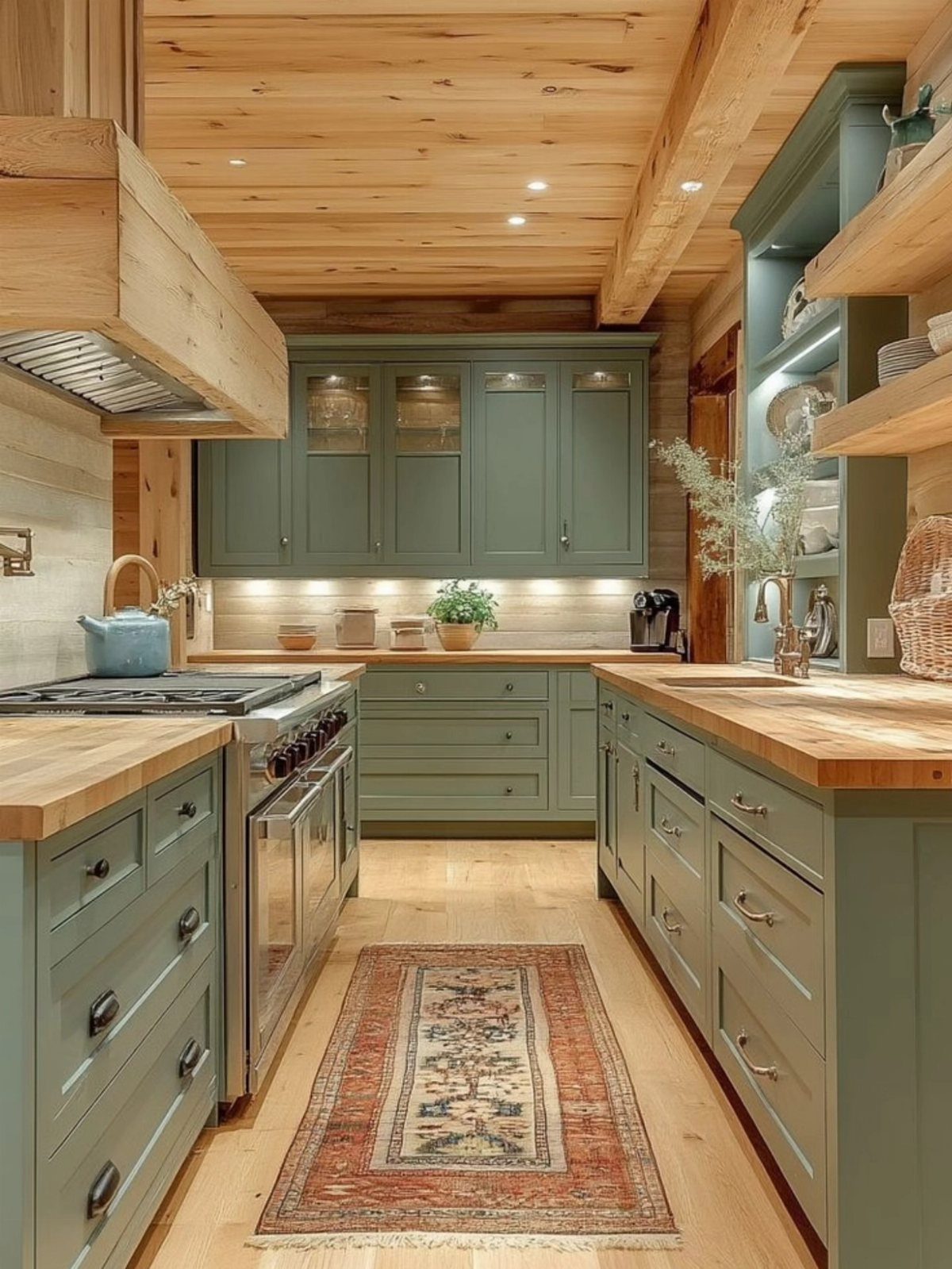
Wood planks overhead and on the walls give sage a classic, lived-in setting. Shaker doors and light wood counters stay in the same warm range, so nothing in the room fights the green.
A patterned runner on a light wood floor softens the long run of cabinets and hides crumbs better than a solid color.
A plank ceiling is a big commitment, but light wood counters and a runner still get you most of the traditional feel.
23. Sage and Oak
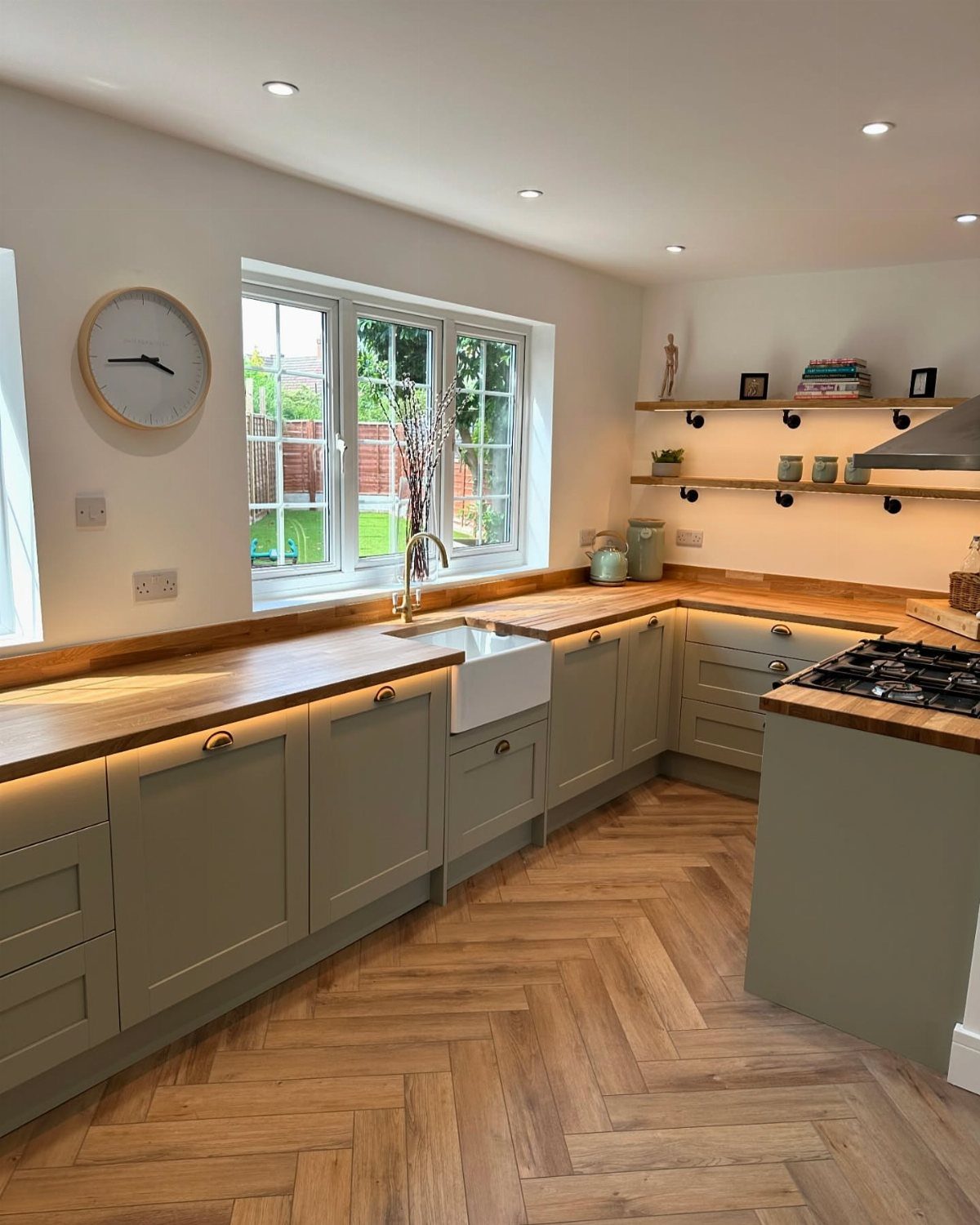
Oak counters make sage cabinets feel warm and grounded, and herringbone oak floors carry the same tone down to the ground. Sage with oak is a calm pairing because both colors come from nature.
Keeping the wood in one shade is what makes it work, so match the counter and any shelves to the floor as closely as you can. A window over the sink with a garden outside completes the picture.
24. Sage and Black Counters
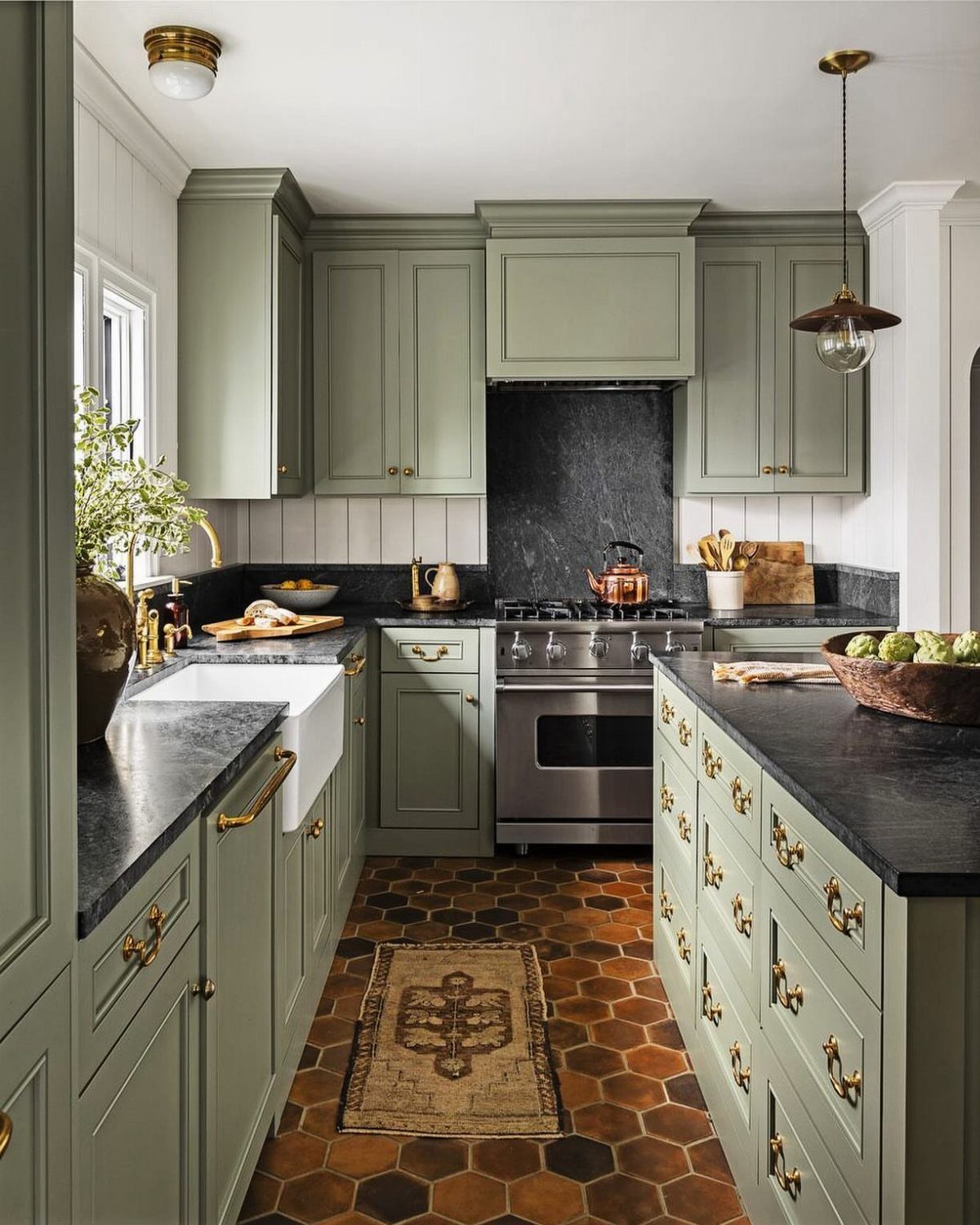
Black stone counters turn sage into a deeper, moodier green, and a white farmhouse sink breaks up the dark with one bright shape. Hexagonal terracotta floor tiles bring in warmth underneath, so the room doesn’t tip cold.
I like this combination because each material has its own texture and none of them compete. Choose one stone with a honed finish if you want less glare, and bring a cabinet sample along when you pick it.
25. Light Sage Kitchen
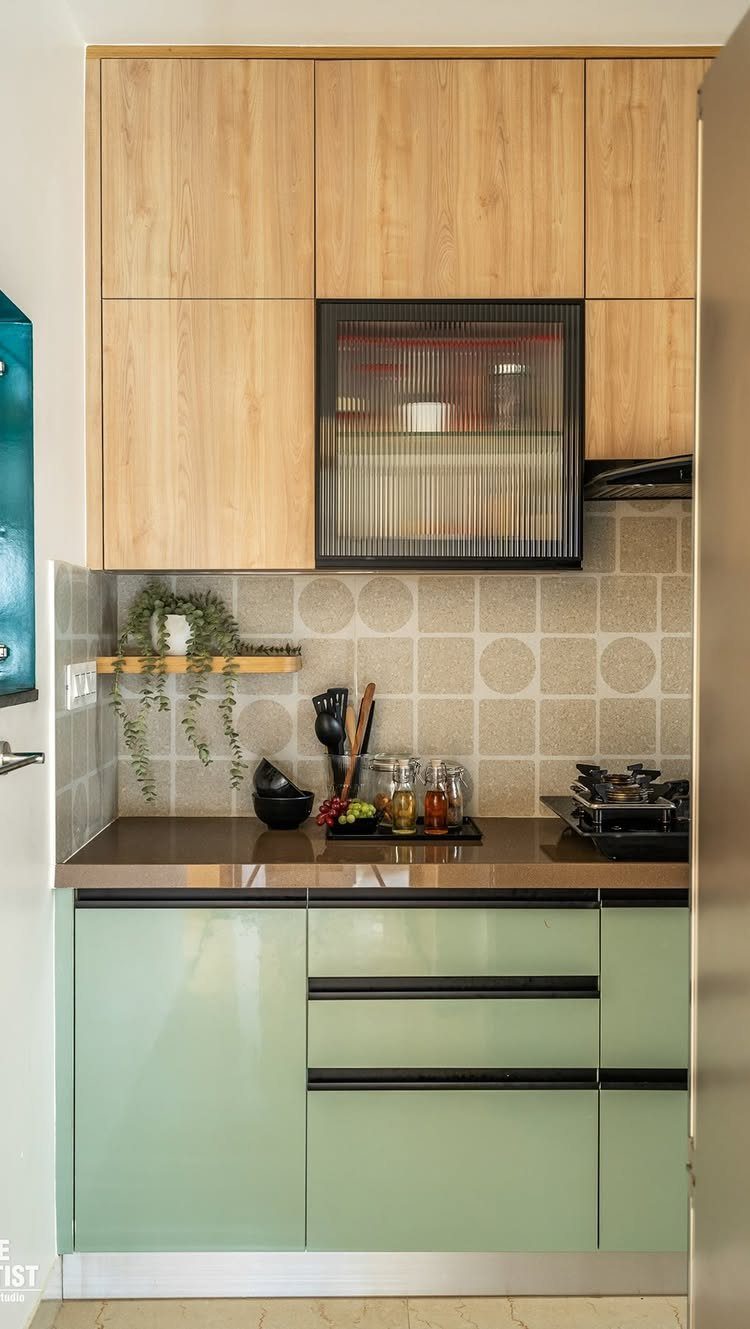
A pale, muted sage reads as a soft neutral with a hint of green, which makes it an easy first step for a small kitchen.
Used on the lower cabinets under light wood uppers, it keeps the room airy and still gives the base some color.
Black handles stop the pale green from fading into the wood. Paint a sample board and check it in morning and evening light, since a light sage can look nearly gray on a cloudy day.
26. Deep Sage Kitchen
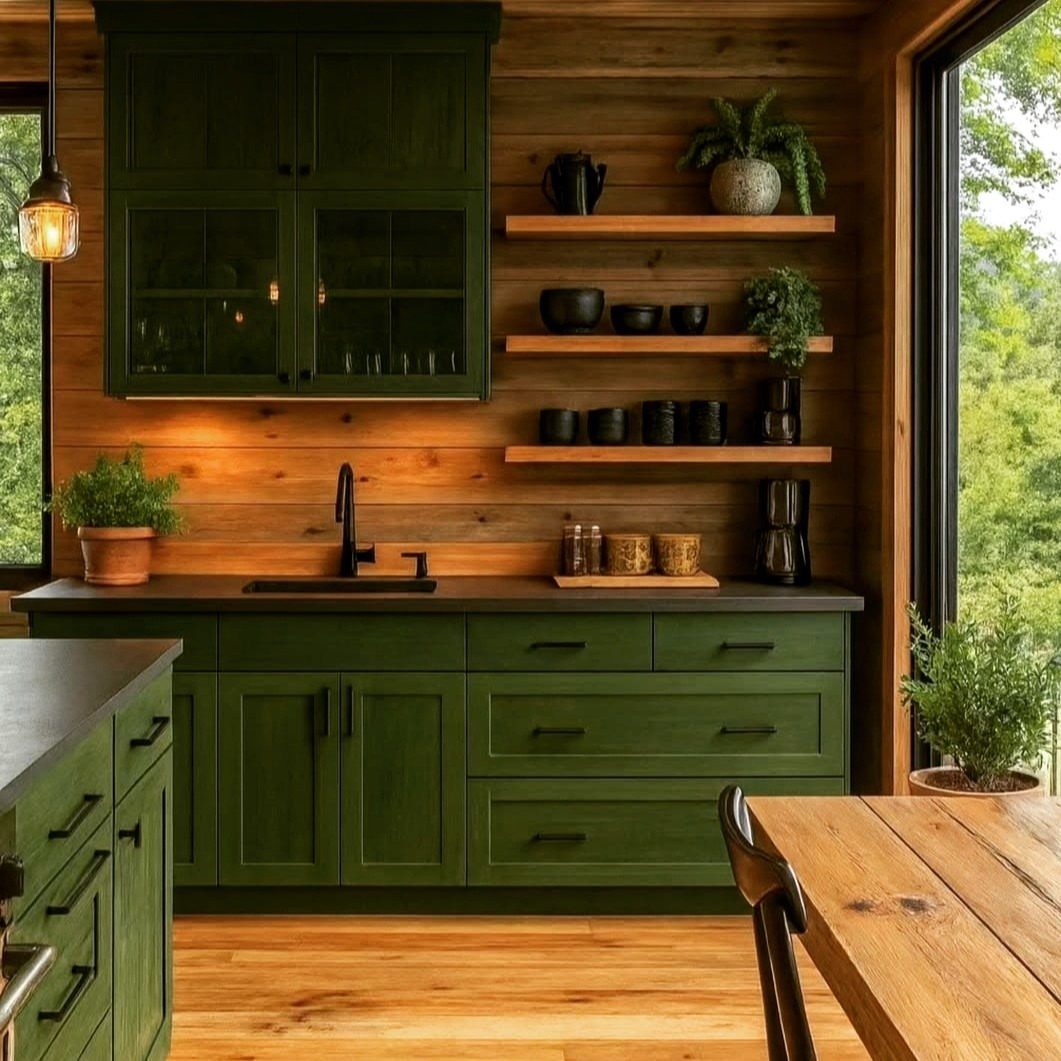
Deep sage turns the room dramatic: cabinets in a darker, richer green, black counters and wood walls all pull toward a cozy, enclosed feel. I’d choose this if you like a kitchen that feels like a retreat.
Wood paneling and a wooden dining table keep the dark green from turning heavy. Open shelves with black pottery repeat the counter color, so the dark tones read as a set.
Choose the Sage Undertone
Sage is a family of greens, not one shade. Soft, gray, dusty versions sit quietly, richer greens carry more color, and some lean blue while others lean olive-yellow.
Undertone decides how the cabinets sit next to everything else. A blue-leaning sage runs cool, an olive-yellow one runs warm, and I’d settle which direction you want before you look at a single chip.
Then check your light: how much daylight the room gets and what the bulbs give off at night.
The same sage can read gray in one kitchen and green in another, so pick the undertone that suits the light you have, not the one in a photo.
Sage Color Longevity
Sage works as an earthy neutral, which is why it ages better than most colors. Houzz’s trends data puts green second only to blue, with 17% of renovated kitchens going green.
Because cabinets are the costly part, the useful move is choosing a sage that can swing either direction later.
Cream, oatmeal and wood pull it warm. Pair sage with crisp white or a pale blue and the room tips cooler and more current.
Swap in black hardware or fixtures and those same cabinets read sharper, with a modern, high-contrast edge. You can change that direction with paint and décor, and the cabinets stay put.
With more than 17 years of hands-on experience publishing and curating home and design content, Stefan leads Homedit’s editorial direction and personally evaluates the projects, layouts, and design ideas featured on the site.
— Homedit
Test Paint in Your Kitchen
Look at the sample where the cabinets will actually hang, not on a store shelf or a phone screen. Lighting, viewing angle and location can each make one shade look warmer, cooler, grayer, bluer or more saturated.
Peel-and-stick samples, like the ones Samplize sells, are easy to move around. Put one by the window, one near the stove and one in the darkest corner, then look at them from the spot where you stand most.
If the cabinet color still won’t settle, paint the walls sage first. It works with white or wood cabinets and is easy to change later.
Frequently Asked Questions
What color goes with sage green in a kitchen?
Cream and white are the easiest partners, and natural wood and brass or gold hardware add warmth.
A black countertop or black pulls sharpen sage into something bolder, with plenty of contrast. Sage swings warm or cool depending on what sits beside it, so pick one direction and let it lead.
Is sage green a good color for a kitchen?
Yes. Because sage reads as an earthy neutral, it stays good-looking longer than most cabinet colors and fits farmhouse, modern and traditional kitchens.
Test a sample in your own light first, because the same sage can read gray in one kitchen and green in another.
Is sage green out of style in 2026?
No. Green ranks right behind blue in Houzz trends data, with 17% of renovated kitchens going green, and sage’s muted tone sits nearer to a neutral than to a bold color.
Cabinets are the costly part, so it helps that sage can tip warm with cream and wood or cooler with white and pale blue later on.
What color does not go with sage green?
Few colors flatly clash with sage, so the mistakes tend to be in the details.
Several different gold tones side by side look like an error, a cream that doesn’t match the countertop’s undertone looks off, and a dark floor works against a bright kitchen.
Stick to one metal, one cream undertone and a lighter floor, and the space looks planned.
What is the best countertop for a sage green kitchen?
White marble is my first pick: the gray veining echoes the soft undertone in the green, and the white never turns stark.
Marble-look laminate or quartz gets you most of that look at a lower price. Oak counters bring warmth, while black stone pulls sage toward a deeper, moodier green.
What accessories work with a sage green kitchen?
Sage cookware with wooden handles is the easiest place to start, since nothing needs painting or installing and renters can take it along.
A wood cutting board, a copper kettle, fresh flowers, a potted plant and a wicker stool all sit well against the green. Test one piece against a cabinet door before you buy towels or canisters to match.
What tiles complement a sage green kitchen?
White or cream subway tile is the classic choice, giving a clean line where the cabinet colors meet.
Terracotta floor tiles add warmth underneath, soft gray or limestone-look tile gives a quieter feel, and warm-toned zellige brings handmade texture. Grout matched to sage tile quiets the wall, while white grout outlines every tile in a grid.
Can sage green work in a small kitchen?
Yes. In a small kitchen, sage below and cream above lets the lighter color sit at eye level, so the walls seem to stand back.
White or cream counters and pale wood floors help, and a bare window lets daylight do the work. A pale, muted sage is an easy first step if you’re unsure.
Can you have a cream kitchen with sage green walls?
Yes.
Warm cream cabinets against sage walls give a soft, layered look, and painting walls is a much easier change than repainting cabinetry. Pick a cream whose undertone sits near your countertop’s, so the 2 read as a match.
What styles can welcome sage green?
Farmhouse is the most natural fit: a wooden table, floral curtains and a brass pendant sit comfortably against it.
Plain doors, few finishes and one or two geometric shapes make it read modern. Shaker doors, wood planks and light wood counters give it a traditional or cabin feel.
How can I add sage green to my kitchen?
Start as small as you like: sage cookware, a strip of sage tile as a backsplash, or sage paint on the island alone.
Painting just the lower cabinets is the middle step, and painting every cabinet is the biggest commitment. Painting the walls sage is another easy route that works with white or wood cabinets.
Does sage green go with blue in a kitchen?
Yes. Muted, gray-toned blues sit most comfortably beside sage, and deeper navy gives a stronger contrast.