
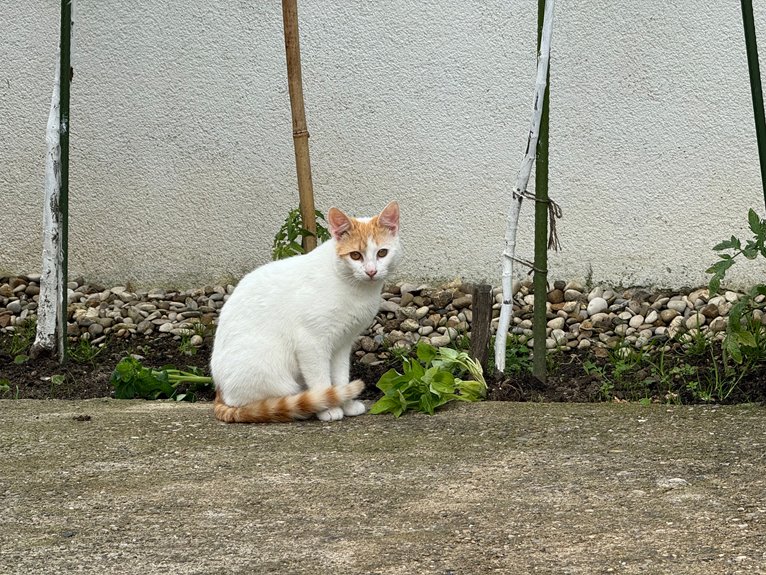
I’ve tried everything from citrus peels to stern lectures, and keeping cats out of raised beds requires more than one trick. My two-foot loose-top fence finally worked after I paired it with flat chicken wire and recognized that my first three attempts were essentially cat invitations. You’ll want motion-activated sprinklers as backup, pine cones or coarse mulch to make the soil uninviting, and cat-repelling herbs like rosemary at the edges. I even set up a decoy toilet 15 feet away with sand and catnip to redirect neighbor cats. When one method fails, layer another because cats are patient, and you will need to be more persistent than they are to succeed in this garden challenge.
Stop Cats Digging in Your Raised Beds: Start With a Loose-Top Fence
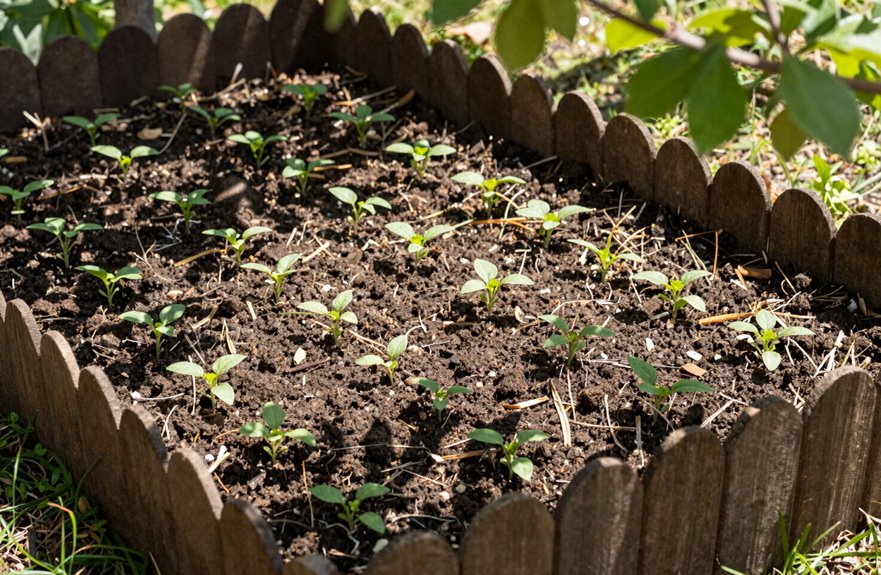
How do you stop a cat from treating your raised bed like a personal litter box? A loose-top fence works well. I install two-foot-high plastic garden fencing around my raised beds, leaving the top loose so cats can’t climb over. No fancy hardware is needed; just pipe hangers inside the planter edge, bamboo woven through fence holes, and ends pushed into the soil. While it may not be the most attractive option, it is affordable and effective across multiple beds. I have re-installed mine twice when sagging threatened my access. Fellow gardeners recommend pairing this cat deterrent with coarse mulch for extra protection. This method has proven useful in my gardening routine.
No Permanent Fence? Lay Chicken Wire Flat Over Seed Beds
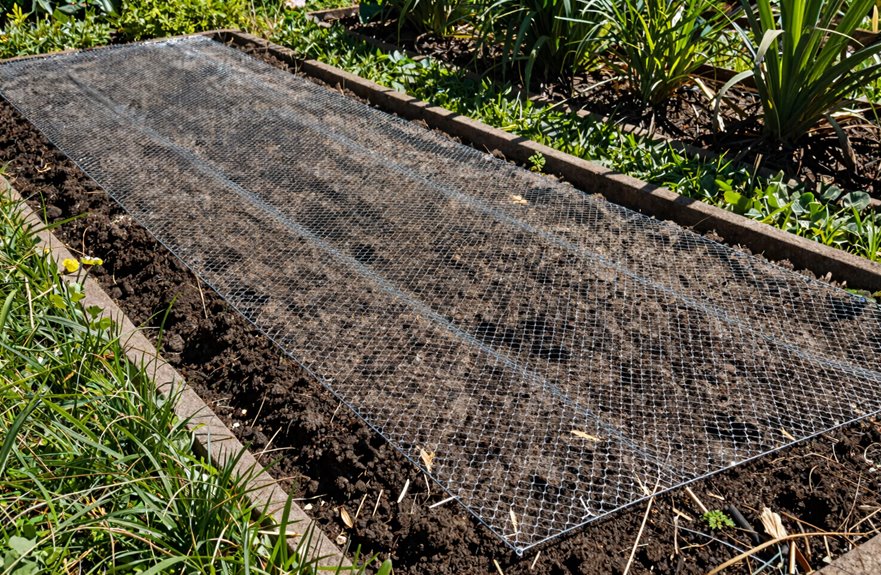
What do you do when you need cat protection without building a permanent fence? I found a solid workaround for my raised gardens.
I lay chicken wire flat directly over my seed beds. Plants push right through the mesh while cats encounter a barrier they can’t dig through. I secure the edges with stakes to prevent clever paws from lifting corners. For extra stability, I weave bamboo through the holes and push the ends into the soil; this keeps everything taut and safe to walk on.
I learned the hard way that loose wire can snag your shoes. Now I keep the surface flat and walkable. Once my seedlings establish, I add straw mulch on top. It looks tidy and works well.
This cat deterrent integrates seamlessly into my gardening routine without unsightly barriers. It is simple and effective, making it a solution I wish I had tried sooner.
Add Motion-Activated Sprinklers as Backup Cat Protection
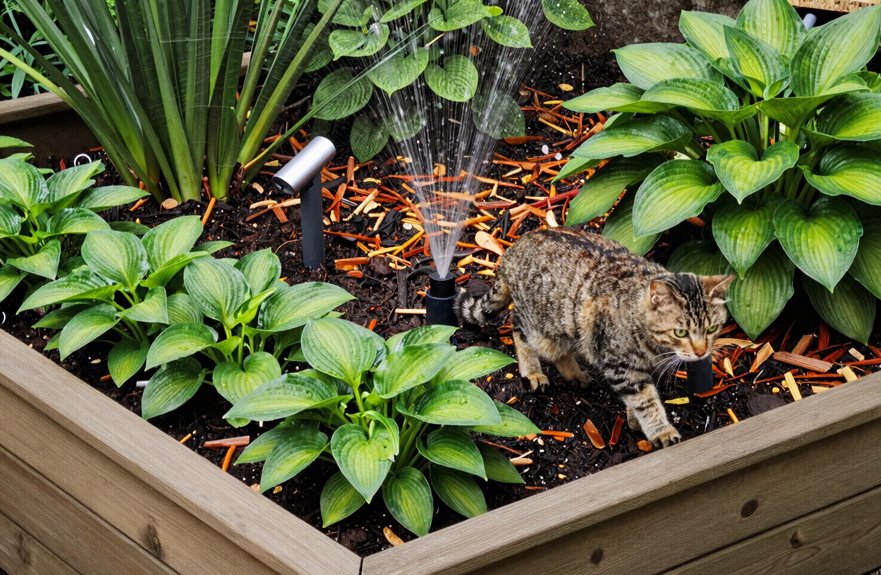
Positioning motion-activated sprinklers at the corners of your raised beds—about 3 to 4 feet back—allows one unit to cover multiple access points, saving money and water. Angle the sensors away from garden paths to avoid unexpected showers while weeding. I also set mine on a timer to prevent operation during midday heat, which helps control my water bill while still deterring cats that roam at dawn.
Sprinkler Placement Strategy
Why let cats treat your garden like their personal lounge when a sudden splash can send them packing? Motion-activated sprinklers serve as an effective deterrent when placed strategically around your garden beds.
Position them where cats typically enter, usually within 3 feet of bed corners or along the fence lines they frequent. I learned this after accidentally soaking myself while targeting my tomatoes. Solar-powered models eliminate the need for extension cords, though you will still require a water hookup.
These sprinklers provide immediate, visible results that most cats won’t challenge again. For particularly stubborn visitors, consider adding physical barriers for additional deterrence. You may occasionally trigger your own soaking, but watching a startled cat leap away can be entertaining.
Water Conservation Tips
While I appreciate the idea of keeping cats out, I also dislike watching my water bill rise higher than my tomato plants. I use motion-activated sprinklers as backup cat deterrents, not as my primary defense. I position them at the corners of my raised beds to cover entry points where cats sneak in. I learned the hard way not to point one toward my path; nothing wakes you up like a surprise shower at 6 AM. To conserve water, I run them on a separate timer, limiting activations to dawn and dusk when cats are most active. Pair these sprinklers with netting or wire, and you can save water while keeping paws out of your soil.
Redirect Neighbor Cats With a Decoy Toilet in a Quiet Corner
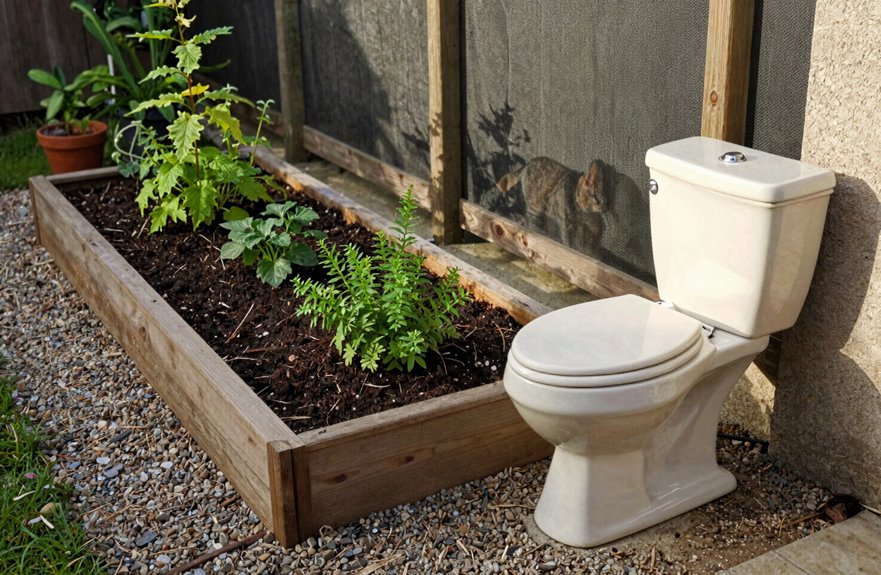
I learned that cats don’t care about my lettuce; they just want a bathroom with a view. I set up a decoy toilet in a quiet corner about 15 feet from my beds, filling a shallow storage bin with two inches of sand-style litter and sprinkling fresh catnip around the edges. It’s not attractive, but it works better than my previous strategy of yelling out the window at 6 a.m.
Choose Out-Of-Way Location
Because my neighbor’s cat treats my raised beds like his personal sandbox, I learned that fighting nature rarely works; redirecting it does. I set up a decoy toilet in an out-of-way location behind my shed, about 15 feet from the garden. Protecting raised beds starts with smart placement. I learned that lesson after finding “surprises” in my lettuce three mornings in a row.
| Out-of-Way Strategy | Why It Works |
|---|---|
| Tuck behind structures | Hides the spot from garden view |
| Use scent deterrents | Citrus peels and catnip attract to right spot |
| Distance from vegetables | 15+ feet prevents bed discovery |
| Partial shade | Cats prefer cooler digging zones |
| Easy access path | Encourages regular return visits |
This decoy toilet keeps everybody happy, especially my tomatoes.
Use Sand-Style Litter
Location matters, but bait seals the deal. Filling your decoy toilet with sand-style litter makes it attractive to neighborhood cats. They can’t resist that familiar crunch beneath their paws.
I use about two inches of unscented, clumping sand-style litter in a shallow plastic storage bin. Nothing fancy, just enough to feel like home. Place this decoy toilet at least fifteen feet from your raised garden beds for maximum deterrence. I learned the hard way that three feet isn’t nearly enough distance.
Keep it tucked behind a shrub or fence line, somewhere you won’t mind seeing it. I refresh mine weekly because nobody wants a stinky backyard. If cats start ignoring your setup, relocate the whole operation. Consistency is essential in this effort.
Add Catnip Attractant
Why settle for a plain decoy when you can enhance its appeal? I sprinkle catnip around my decoy toilet to make it irresistible. It works effectively.
I tuck the toilet in a quiet corner, about 20 feet from my raised beds. The catnip draws neighborhood cats like a magnet. They prefer to lounge there rather than dig through my vegetables.
I refresh the litter weekly and add fresh catnip monthly. I learned that neglecting maintenance sends them straight back to my beds.
I pair this with other deterrents. Textured mulch near the raised beds creates a layered defense. Consistency is key. Your garden stays clean, and the cats stay happy.
Surround Beds With Cat-Repelling Herbs Like Rosemary and Lavender
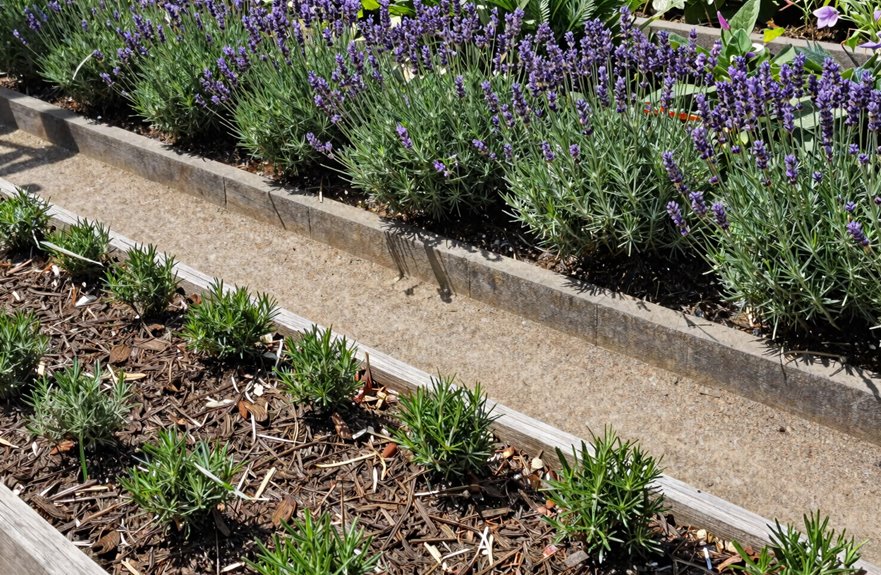
Where should you plant your first line of defense against curious paws? The ideal spot is right at the edge of your raised beds or in containers placed nearby. Rosemary and lavender are effective choices; their strong scents confuse cats without causing them harm.
I learned this after my citrus peel experiment failed. The peels dried out in just two days. Using herbs has proven to be a more effective solution.
Plant them in a bordered herb border, keeping that aromatic foliage low where cats dig. I combine mine with other deterrents for added effectiveness. Layering strategies often yield better results than relying on one method alone.
Regular pruning is essential. I have neglected this before, and the scent can diminish quickly. Fresh growth contributes to stronger protection, benefiting both your garden and your overall experience.
Make Soil Uninviting With Pine Cones or Coarse Mulch
A layer of pine cones or coarse mulch across your soil works wonders. Cats dislike uneven surfaces under their paws. That prickly texture is an instant deterrent against digging.
I scatter pine cones about two inches deep between my vegetables. For larger raised beds, I mix in coarse mulch; bark chips work well. It’s inexpensive, too. I collect cones from my neighbor’s yard, as her spruce tree drops hundreds.
This deterrent layer isn’t effective on its own. I use it after removing chicken wire to maintain a scratchy barrier. You’ll need to refresh it periodically, as rain can shift things and mulch breaks down. When I’ve gotten lazy, I’ve found cat prints, indicating a lapse in upkeep.
Combining this method with netting provides solid protection. Your plants remain safe, and you’ll be part of a group of gardeners who have successfully deterred local felines.
Troubleshoot: What to Do When One Deterrent Isn’t Enough
Sometimes one trick just doesn’t cut it, and I learned that the hard way last spring. My cat-free raised beds became a litter box overnight. I had relied on citrus peels alone, which proved ineffective.
One citrus trick failed me—my raised beds became a litter box overnight.
Now I layer multiple deterrents. I place chicken wire over soil blocks to prevent digging. Straw mulch underneath adds an extra barrier. Motion-activated sprinklers help with persistent visitors, though I’ve overwatered my tomatoes twice. It’s important to pair these with backup barriers.
Two-foot plastic fencing with loose tops effectively stops climbers for several seasons. When deterrents fail—and they will—I reweave bamboo or add fresh wire rather than starting over.
Relying solely on coffee grounds won’t suffice. Durable barriers combined with regular maintenance ensure a successful gardening experience.