I learned the hard way that timing beats perfection when planting arborvitae. Early spring works best, while fall offers warm soil and cool air; just plant six weeks before frost hits. I’ve lost several plants by ignoring that window. Use 2–3 inches of mulch, keeping it two inches from the trunk, and opt for drip irrigation instead of sprinklers. Water weekly until the ground freezes, then monthly during dry winters. Ensure the root flare is above soil level to avoid issues in spring. These seven tips have helped maintain my hedges, and they can support the health of yours as well.
Spring vs. Fall: Best Season to Plant Arborvitae
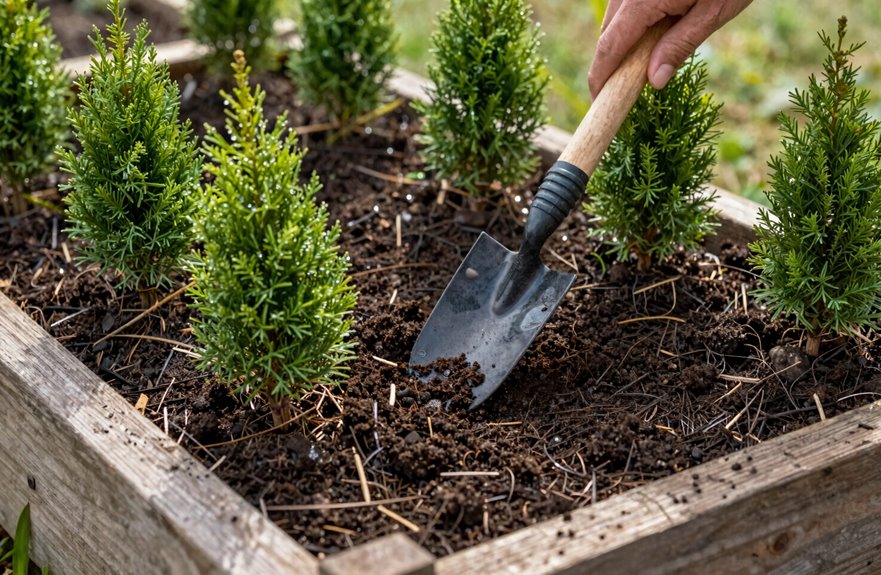
When should you plant arborvitae? Timing is crucial.
Early spring is generally the best option. I’ve also planted in May, but you will need to provide more irrigation when summer heat arrives. September is another possibility, especially if autumn rains are favorable.
Early spring is ideal for planting arborvitae, though May works with extra summer irrigation, and September succeeds when autumn rains cooperate.
Fall planting offers several advantages. Cooler air reduces transplant shock while warm soil encourages root growth. Your arborvitae will be better established by spring, giving it a head start.
Spring planting requires consistent moisture during the first growing season. I have found it helpful to apply mulch and water deeply on a weekly basis when rainfall is insufficient. Fall planting often requires less attention since autumn rains support root establishment before winter dormancy.
Both seasons can work well if you are dedicated to proper care.
Soil Temperature Thresholds for Arborvitae Root Growth
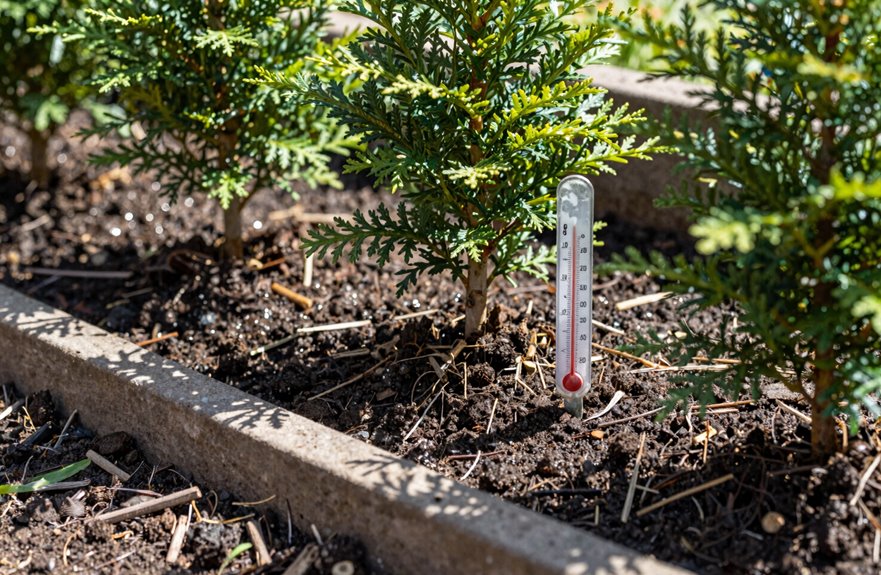
Why does soil temperature matter? Roots prioritize warmth over any schedule.
Root growth slows dramatically when soil temperatures drop below 40°F. This is your critical threshold. Spring planting works best when soils consistently reach 40–45°F, signaling roots to wake up and grow. For fall planting, the soil remains warm enough for root growth even as the air cools, allowing your arborvitae to establish before winter.
I once planted too late in spring and watched my tree struggle all summer. The warmth simply wasn’t sufficient. Moderate soil temperatures, whether in early spring or fall, reduce transplant shock and promote deeper, stronger root systems. Rely on the thermometer rather than the calendar.
The 6-Week Rule for Root Establishment Before Frost
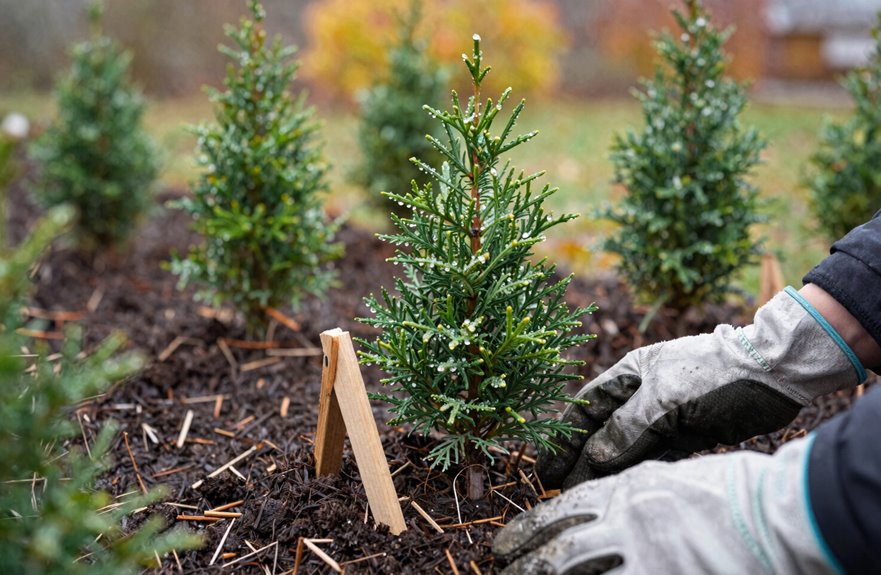
I’ve learned the hard way that rushing arborvitae into the ground too late in fall leads to problems. You need that critical six-week window for roots to anchor and absorb nutrients before hard frost hits; consider this a necessary timeframe. If you bypass this timing, you’ll likely be replanting in spring, which I’ve experienced more times than I can count.
Critical Timing Window
How do you know you’ve missed the boat? When your Arborvitae planting timing leaves roots shivering in frozen ground. I’ve learned this the hard way.
The first frost window waits for no one. I give my plants six weeks minimum for root establishment; that’s my non-negotiable rule. Early spring planting allows for optimal soil warming. Late fall planting is also viable, but I monitor the calendar closely.
Here’s what I’ve figured out about nailing this window:
- Soil stays warmer than air, so roots keep working even when I’m wearing a jacket.
- May planting requires vigilance with watering, as roots need moisture before summer hits.
- September rainfall in my region often provides natural assistance.
- I wait out dry spells; preventing transplant shock takes precedence over my impatience every time.
Root Growth Priority
Because I once planted arborvitae in late October and watched them struggle all winter, I now focus on root growth as a priority. I learned that planting time is crucial.
That six-week window isn’t arbitrary; it’s when soil remains warm enough for roots to anchor before frost arrives. I always soak the root ball thoroughly first, which significantly reduces transplant shock.
Soil preparation is critical. I dig wide, not deep, keeping the root flare at ground level. I avoid burying stems as I used to. Loose, well-drained backfill allows roots to breathe and expand quickly.
Moisture management can be tricky. Deep, consistent watering is more effective than daily sprinkles. Soggy soil can rot roots, while dry soil can stall them. I’ve lost plants both ways. Get this balance right, and your arborvitae will survive winter.
Frost Protection Buffer
While I used to think any fall planting would work out fine, I learned through experience that timing really matters with arborvitae. That six-week frost protection buffer is an essential safeguard against winter challenges.
Here’s what I’ve figured out through some regrettable losses:
- Set the root flare slightly above soil level so new roots can spread before hard frost hits.
- Lay down 2–3 inches of mulch to insulate those shallow roots when temperatures drop.
- Keep soil moisture steady but taper irrigation gradually as roots establish.
- Skip heavy pruning during this window; your tree is busy enough without extra stress.
I now check soil temperature with the same frequency as I check my phone. Allow your arborvitae the necessary establishment time, and you can minimize winter-related issues.
Why Arborvitae Need Rainfall Timing More Than Other Evergreens
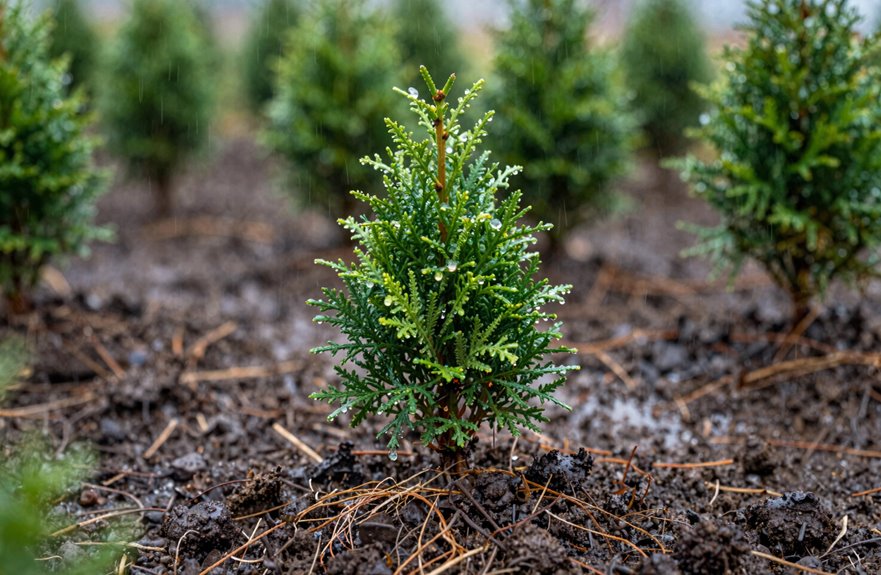
Why do arborvitae require careful rainfall timing while pines and spruces seem less affected? I’ve learned through experience that these shallow-rooted plants need more attention during establishment.
Fall planting benefits both the gardener and the plant. The cooler air reduces transplant shock, while warm soil encourages root growth. Natural rainfall is particularly beneficial. I once neglected this with a Green Giant and observed its struggle throughout winter.
Autumn showers soak deeply without the need for constant watering. This helps the roots establish themselves before frost arrives. However, well-drained soil is crucial, as I have faced issues with both overwatering and underwatering.
Water deeply until freeze-up, as it promotes healthy spring growth.
Too Late to Plant? Your Late-Season Options
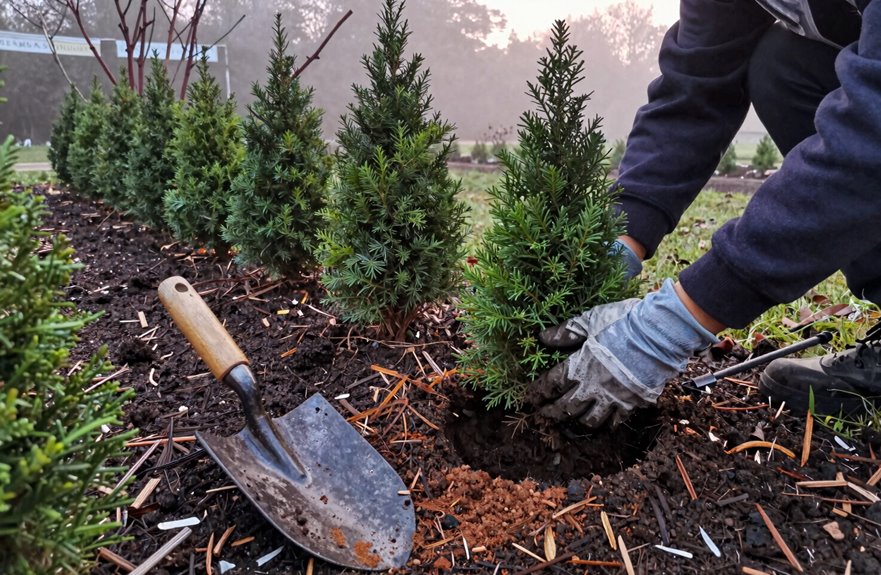
I used to panic when September hit, thinking I had missed my window entirely. You haven’t; late fall timing actually works in your favor, as warm soil and cool air encourage root growth while the top remains dormant. Just get that mulch down two inches thick and plant the root flare slightly above ground, or you may find yourself addressing my old mistake come spring.
Late Fall Timing
How late is too late when you’re eyeing those arborvitae at the garden center in November? Late fall planting isn’t the disaster you might fear.
The soil stays warm as the air cools. This condition actually reduces transplant shock. Your trees benefit from a head start on root establishment while summer’s heat fades.
Here’s my survival checklist:
- Let autumn rains handle moisture so you’re not tied to your hose.
- Pile on 3–4 inches of mulch, but don’t smother the trunk as I once did.
- Keep that root flare slightly above grade; sinking it invites trouble.
- Water weekly until freeze-up, or wait for spring.
Dry soil? Patience is better than risking a dead arborvitae.
Winter Preparation Steps
Although the calendar indicates you’re cutting it close, “too late” isn’t always a hard deadline. I’ve rushed plantings before, and that’s a mistake you want to avoid.
Your arborvitae planting timing still works if you focus on winter preparation. Plant the root flare slightly above ground; I learned this after losing one to waterlogging. Backfill with 70% native soil and 30% amendment.
Deep watering is crucial now. Soak the plants thoroughly before the freeze hits, then water weekly until the ground freezes. Neglecting this can lead to brown needles in the spring.
Mulch management is straightforward: apply 3–4 inches around the base, leaving 2 inches clear of the trunk. Avoid volcano mulching, as it can lead to problems.
These steps enhance frost tolerance, benefiting your trees. We’re in this together.
Arborvitae Aftercare: Watering and Mulching by Season
Once you’ve got those arborvitae in the ground, your role isn’t finished. Proper aftercare involves adjusting your watering and mulching practices each season. New plantings need deep watering every 1–2 days when it’s warm or dry. Established trees require weekly watering. I learned that drip irrigation is more effective than sprinklers; wet foliage can lead to fungus, which is best avoided.
Here’s what actually works:
- Use soaker hoses or drip irrigation; skip overhead watering entirely.
- Apply 3–4 inches of organic mulch around the base, keeping it 2 inches from the trunk.
- Water deeply before winter freeze-up to prevent browning.
- Maintain monthly watering during dry winter spells.
Mulching regulates soil temperature and retains moisture. Your arborvitae will benefit from these practices.
Winter Protection for Newly Planted Arborvitae
I’ve learned the hard way that watering and mulching aren’t enough when winter hits. Fall planting gives your Arborvitae a head start, but you need to complete the process before frost arrives.
Here’s what works:
| Task | Timing |
|---|---|
| Deep watering | Weekly until freeze |
| Mulch around the base | 2–3 inches, after planting |
| Check root flare above soil | Before first frost |
| Final deep watering | 24–48 hours before hard freeze |
I always pick a well-drained sunny site. Skipping this step invites trouble. The mulch around the base helps maintain steady soil temperatures during harsh conditions. Your fall planting investment requires proper winter protection; taking shortcuts can jeopardize growth in spring.