
Sliding panels replace swinging doors on cabinets, closets, pantries and room dividers, so nothing arcs into your floor space.
Cost is what splits the types: a 2-panel bypass system from Raydoor runs about $4,100, while the Loll Slider cabinet, 36" H x 40" W x 15" D, holds 4 compartments and stays outside year-round.
Sliding-Door Storage Cabinets
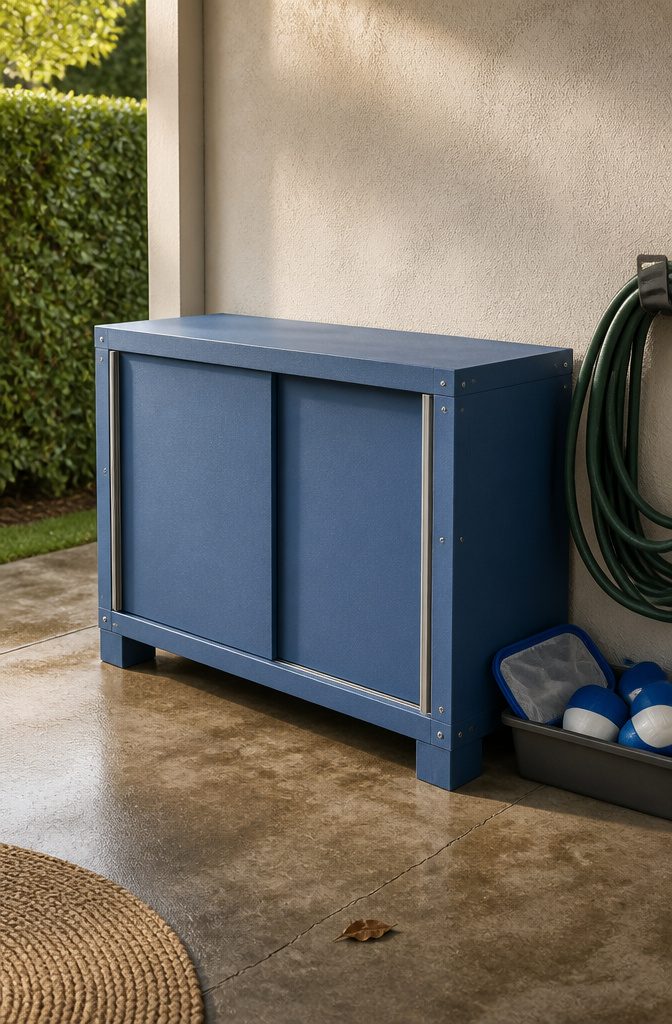
The Loll Slider Storage Cabinet measures 36" H, 40" W and 15" D, and its sliding doors hide four compartments for tools, towels and pool equipment.
It works on a patio, in a garage or in a mudroom. The finish is what sets it apart outdoors:
The all-weather design never needs painting and can be left outside year-round.
Skipping the paint job is half the appeal.
The body is recycled and recyclable HDPE with at least 25% recycled content, plus aluminum inserts and stainless-steel fasteners. It’s made in the U.S.A., with a 1-year warranty and 30-day returns.
Sauder lists a HomePlus wardrobe cabinet with sliding doors at $384.99, within a $59–$1,190 range across 316 products. That listing gives no detailed description, so I can’t vouch for the build.
Sliding Closet Doors
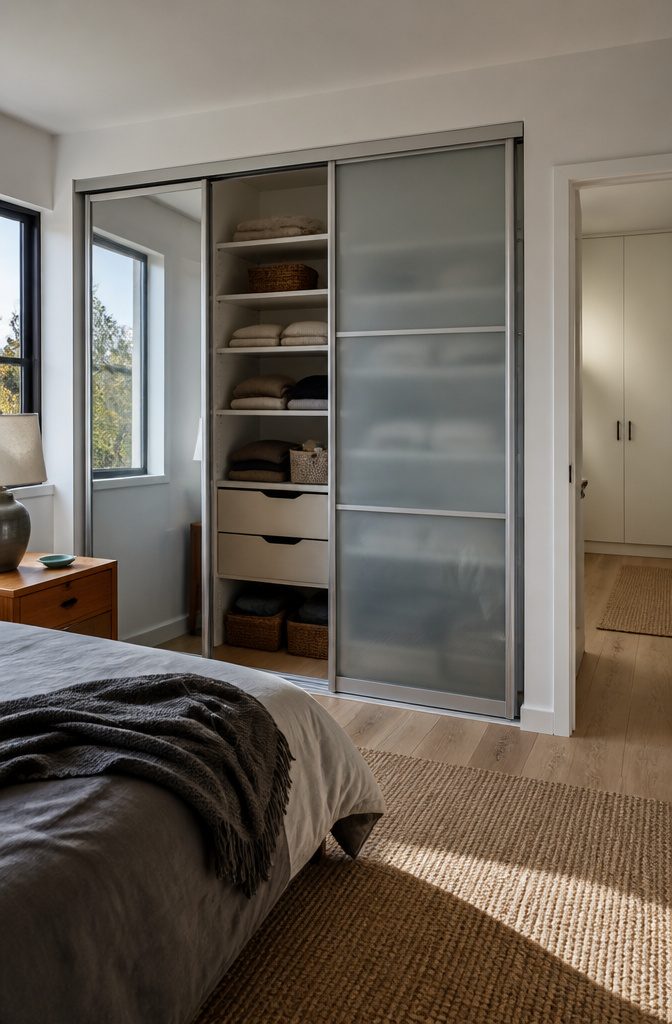
Sliding doors suit closets because nothing swings into the room, and the panels can stack to the right, the left or even the center, so you decide which part of the closet stays open.
Put the stack on the side opposite where you reach most often.
Aluminum frames hold their shape over time, and both the frame finish and the glass opacity are configurable. Frosted glass hides a crowded shelf, while clear glass shows it off.
Sellers claim glass closet doors can change a room in a matter of hours. I’d read that as installation time once your custom order arrives, not order-to-finish.
Bypass systems are also made for closets, and they’re a simple, cost-effective alternative. Hinged pivot doors, in single, double or French setups, are a different option because they swing open and need floor space in front.
Sliding Bypass Doors
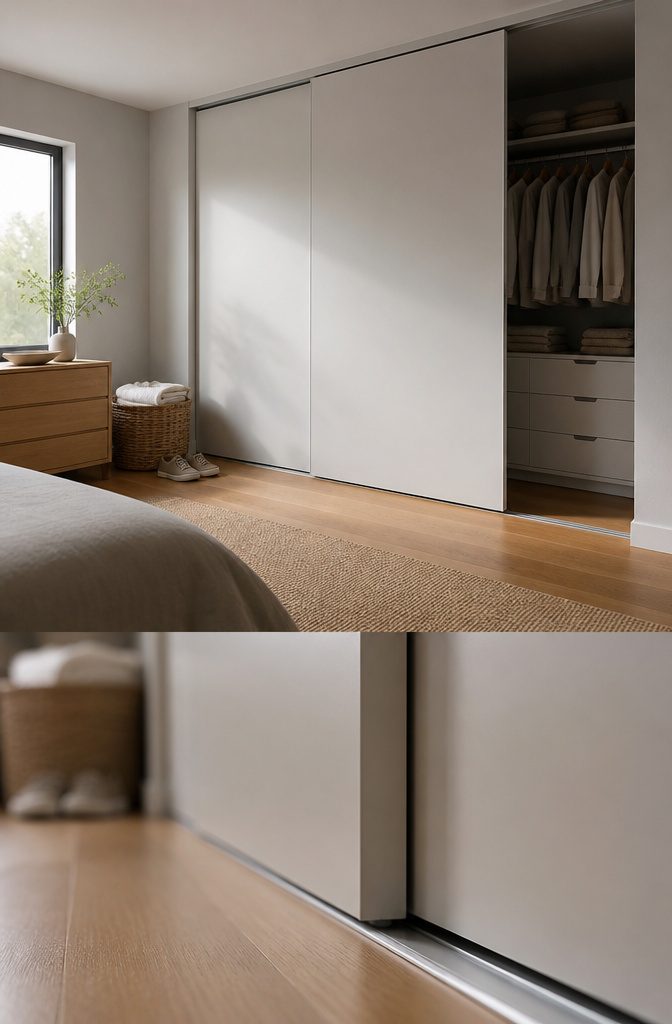
Bypass doors are panels that slide past one another on parallel tracks, so one panel always covers part of the opening while the other gives you access.
They suit closets, glass-front pantries, and any storage you want closed off without a door swinging into the room.
Raydoor, which has spent over twenty years refining sliding walls, prices a single door panel at about $2,500.
A two-panel bypassing system runs about $4,100, roughly $700 per linear foot. Those numbers come from that one company, so treat them as a ballpark and get a local quote before budgeting.
The money goes toward premium-finish panels and hardware with concealed guides. Raydoor also offers one- and two-panel symmetrical pocket-door options, which slide away into the wall instead of staying in view.
Sliding Room Dividers and Walls
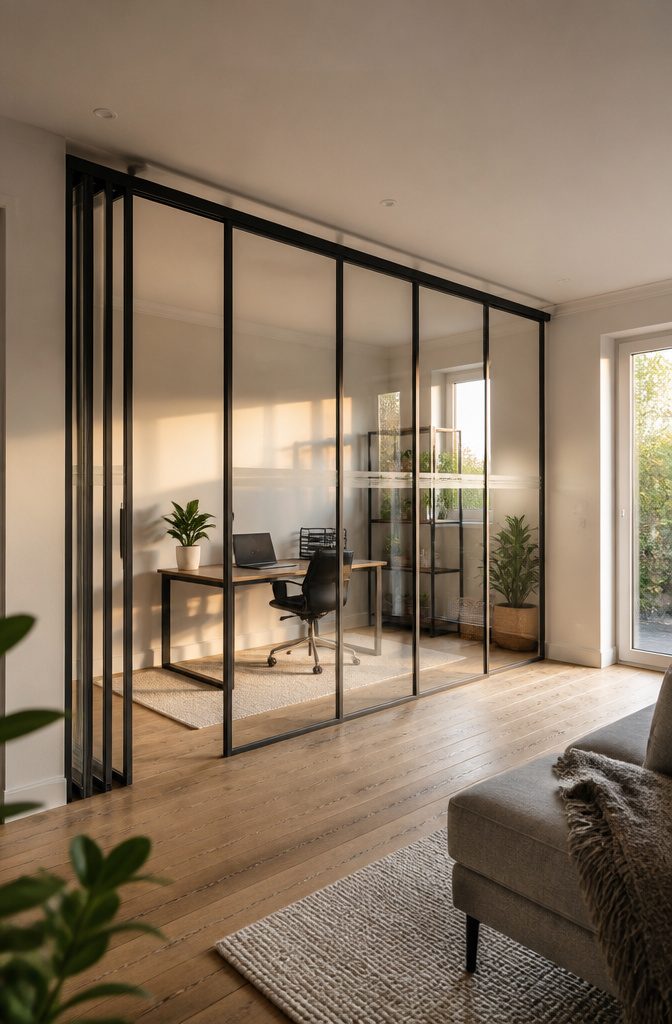
A sliding wall hangs from overhead hardware, so the floor stays clear. Raydoor’s patented hardware needs no floor track and works with one hand, which counts in a rental where drilling a groove into the floor isn’t an option.
The company has refined these walls for over twenty years, and the range includes sliding walls, wing walls, pocket walls and stacking walls.
Pocket panels tuck away into the wall, while stacking panels park in a bundle to one side. I’d choose pocket where the wall can take it and stacking where it can’t.
Fixed glass panels and glass dividers split a room while keeping daylight, which makes them my pick for a home office carved from a living room.
Frames, inserts, patterns and acoustics are all customizable, and the same systems work in guest rooms, home offices and conference rooms.
Storage and Space Use
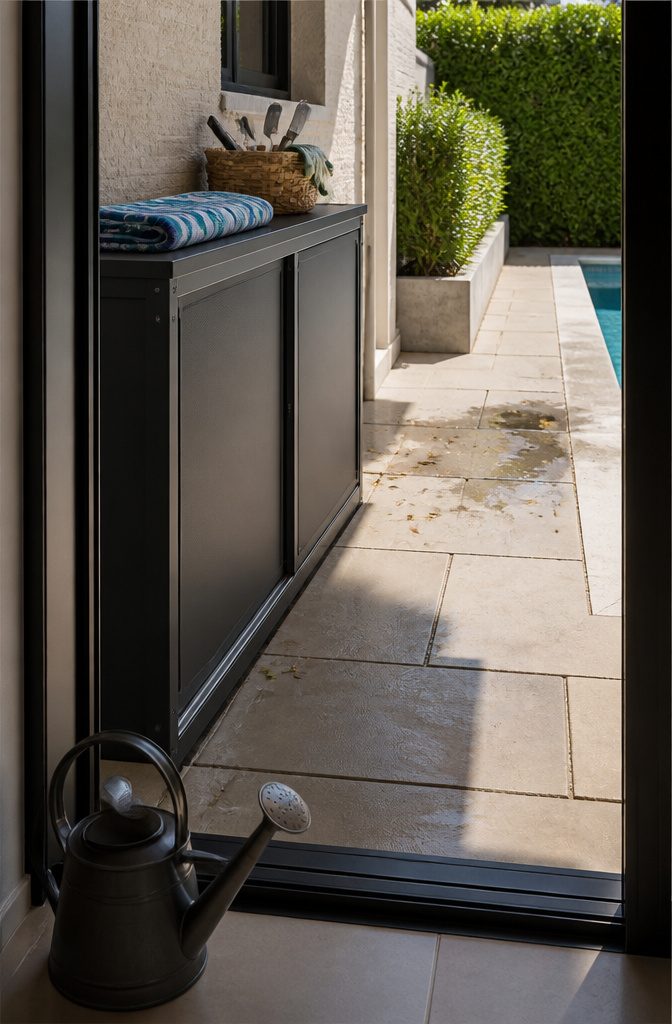
Sliding doors make storage usable in two ways: they hide what’s inside, or they save the floor space a hinged door needs to swing.
The Loll cabinet is the hiding kind. Its sliding doors close over 4 compartments, so garden and grill tools, beach towels and pool gear stay out of sight, and no door swings into the walkway beside a patio or pool.
Closet and pantry systems do the second job. Bypass panels close off a closet or pantry without a door arc, and closet doors can stack right, left or center so you can reach everything inside.
Glass panels, with the opacity you choose, let you decide how much of the shelves shows. In a tight room or a rental hallway, I’d pick sliding over hinged for exactly that reason.
Matching Type to Use
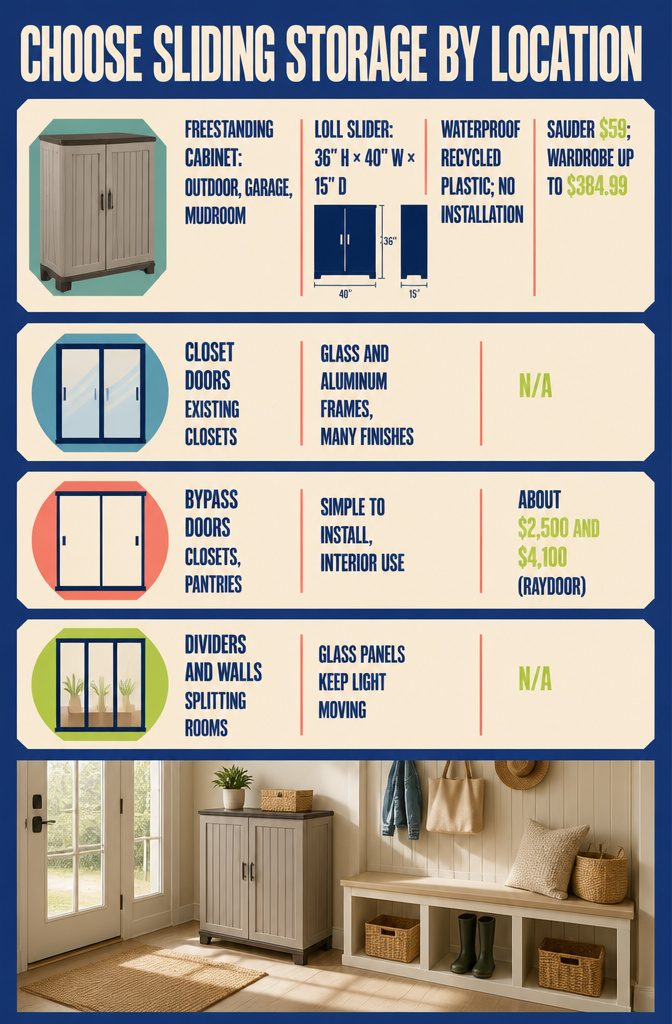
Match the type to the spot first, because prices and designs scatter widely and no single option wins everywhere.
| Option | Best for | Notes | Price signal |
|---|---|---|---|
| Freestanding cabinet | Outdoor, garage, mudroom | Loll Slider is 36" H x 40" W x 15" D, waterproof recycled plastic | $59 (Sauder) to $384.99 (wardrobe) |
| Closet doors | Existing closets | Glass and aluminum frames, many finishes | n/a |
| Bypass doors | Closets, pantries | Simple to install, interior use | About $2,500 and $4,100 (Raydoor) |
| Dividers and walls | Splitting rooms | Glass panels keep light moving | n/a |
For a patio, garage or mudroom, buy a freestanding cabinet. It needs no install, and the Loll can stay outside year-round.
For a closet or pantry you already have, bypass doors are the cheaper, simpler fix. Save dividers for rooms that need a real split.
Frequently Asked Questions
What is a sliding door?
A sliding door moves sideways on a track or from overhead hardware instead of swinging open on hinges.
That means no floor space is needed in front of it. In storage, the same idea shows up on cabinets, closets, pantries and room dividers.
What are the different types of sliding doors for storage and interior spaces?
The main types are bypass doors, pocket doors, stacking panels and single barn-style sliders. Bypass panels pass each other on parallel tracks, pocket panels slide away into the wall, and stacking panels park in a bundle to one side.
Overhead-hung sliding walls with no floor track divide rooms, and freestanding sliding-door cabinets cover outdoor and garage storage.
Are sliding doors expensive?
It depends on the type. Raydoor prices a single panel at about $2,500 and a two-panel bypass system at about $4,100, or roughly $700 per linear foot.
A freestanding option costs far less: Sauder lists a sliding-door wardrobe cabinet at $384.99, and the Loll cabinet needs no installation. Those are product prices from individual sellers, so get a local quote that includes labor before you budget.
What can I use instead of a sliding door?
Hinged pivot doors are the closest swap, and they come in single, double or French setups.
Bi-fold doors are another choice for narrow closets, since they fold toward the edge of the frame and open nearly the full width. Both need more room than a slider, because hinged doors swing into the space in front.