
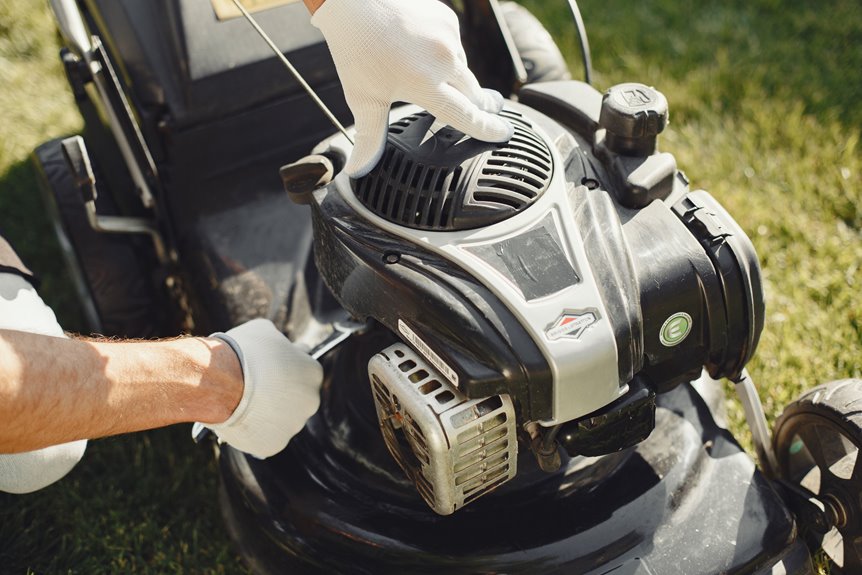
Gas mowers provide more raw power for thick grass and can run until the tank is empty, while electric models offer 30 to 90 minutes per charge.
Gas engines produce noise levels of 90 dB or louder, making it clear to neighbors that you’re mowing, whereas electric mowers operate at 65 to 75 dB.
For yards under half an acre, electric mowers perform adequately; for larger areas, gas mowers are generally more effective.
Electric mowers have lower maintenance costs over time, although the need for extra batteries can increase expenses.
Factors such as yard size and noise tolerance are important considerations when choosing between the two options.
How Power and Performance Actually Compare
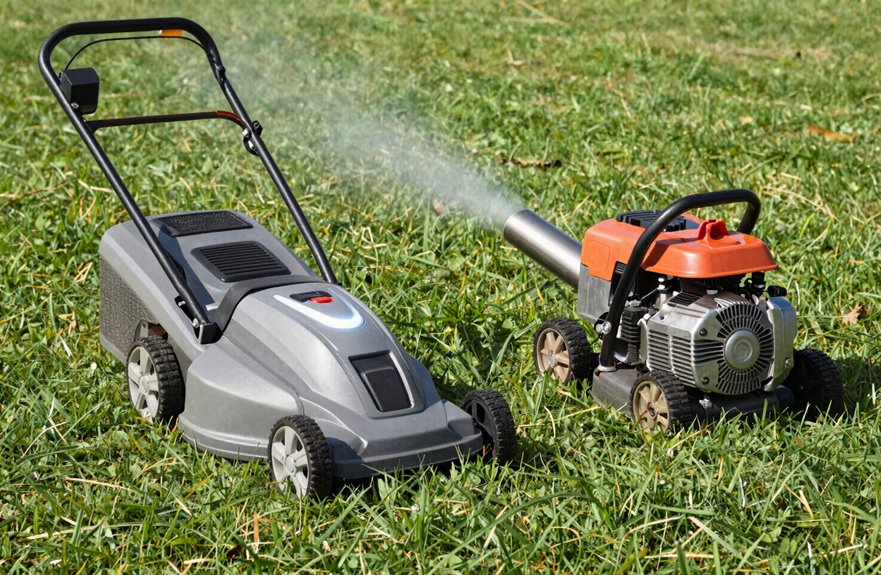
How do you choose between raw muscle and modern convenience? I’ve stared at this power comparison, wondering if I’m sacrificing too much.
Gas-powered mowers deliver steady, strong output for thick, overgrown grass. Their runtime is limited only by your fuel supply. Electric mowers run 30 to 90 minutes per charge, though extra batteries can help. I have forgotten to charge mine twice, which was inconvenient.
High-voltage electric models now rival gas performance with less noise, producing 65 to 75 dB compared to gas engines, which exceed 90 dB. Your neighbors will definitely notice.
Gas engines still excel in terms of raw, extended power. Electric mowers offer quieter operation and lower maintenance. Both options effectively complete the task at hand.
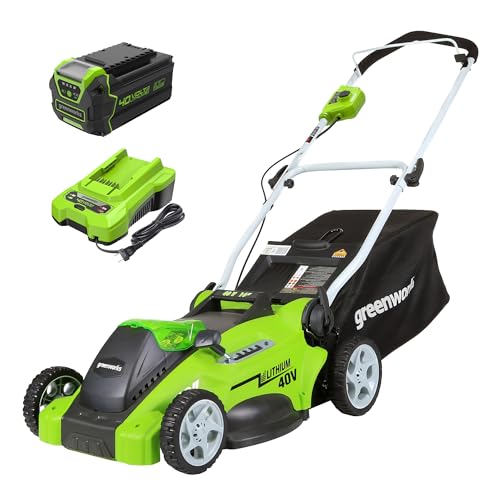
[16" LAWN MOWER] - This 40V lawn mower cuts up to 1/3 acre with fully charged 4.0Ah battery (varies based on grass condition and operator technique)

POWERFUL PERFORMANCE: Tackle your yard with 3,300 RPM of power and a 14-inch cutting width

Multi-Function Convenience: Easily switch between mowing, trimming, and edging for three-in-one versatility with your string trimmer
How Much Power Your Yard Size Needs
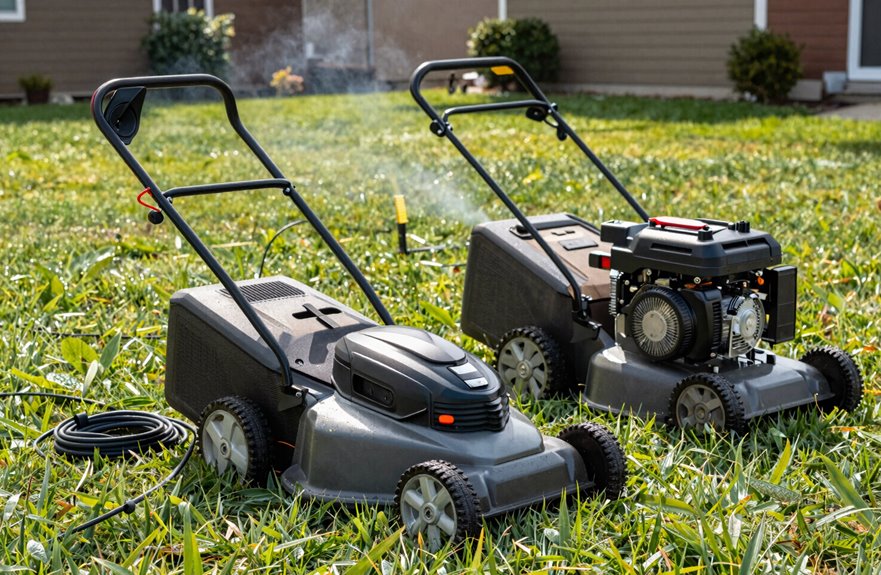
Where does your yard fall on the power-to-acreage scale? I learned this the hard way when my first electric mower died halfway through what I thought was a small lawn, which turned out to be 0.6 acres.
Here’s the breakdown. If your yard is under half an acre, an electric mower works well. I’ve seen neighbors easily manage their compact yards with battery-powered units. However, once you cross the 0.5-acre mark, gas-powered mowers become necessary. These machines can handle thick grass and longer mowing sessions without issue.
Your yard size influences your choice of equipment. I once tried to manage three-quarters of an acre with a corded mower, which was impractical. By matching your mower’s power to your property size, you can complete your tasks efficiently before sunset.

GAS-LIKE POWER WITHOUT THE HASSLE – 50% more torque than 40V mowers & 3200 RPM blade speed (matches 150cc gas mowers)—zero fumes, noise, or maintenance!**

AERODECK TECHNOLOGY: Vented design boosts air volume in the cutting deck to prevent clogs and clumping, enhance cut quality, and optimize efficiency for less repetitive mowing. This tech also maximizes bag collection.

【Smart lift-sensor for compact yards】: Perfectly designed as a small lawn mower for small spaces, it features an advanced ground-detecting safety lock. When maneuvering this mini lawn mower around tight corners, flower beds, or obstacles, the motor instantly shuts off if the unit is lifted or the rear wheels lose contact with the ground. This auto power-off mechanism prevents accidental starts, ensuring maximum operator safety in confined areas.
When Runtime Limits Actually Stop You
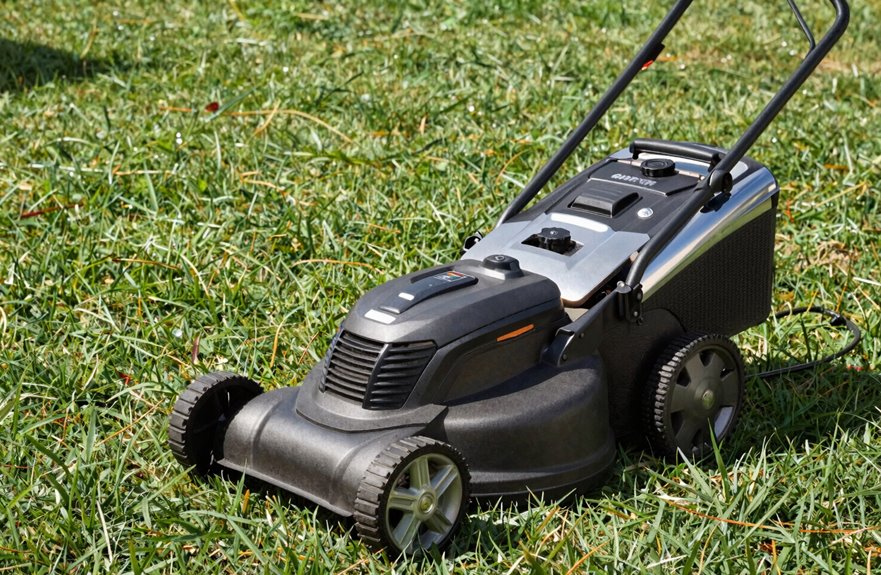
Power is only half the battle. Runtime is just as important as muscle. Most electric mowers provide 30–90 minutes of battery life per charge. This is sufficient for my modest yard, but I have seen friends with larger lawns struggle when their mowers run out of power mid-mow.
Gas mowers continue running until they run dry, allowing for extended sessions without the need to find spare batteries. I have stood there with grass half-cut, realizing my electric mower couldn’t finish the job. While extra batteries can help, they come at an additional cost and can clutter my garage.
Robotic mowers depend on charging schedules and are not just affected by grass height. For thick, expansive lawns, electric mowers require frequent battery swaps or pauses, which reduces mowing efficiency. I opted for electric because my yard is small enough that runtime is not an issue.

High-Performance Motor: Experience impressive cutting efficiency with a robust 360-watt motor designed to deliver strong, consistent power. Whether tackling thick patches or routine trims, this mower ensures your lawn stays neat and professionally maintained.

[Cutting Grass Strong]:The Walk-behind battery mowers can mow up to 1,300 sq. ft. of medium-sized lawn on a full charge, and this electric lawn mower has a 13 In cutting width,with 3400RPM high performance speed, you can cut your lawn with ease. Warning: Use only the original U20 charger. Improper charging may result in fire hazard.

【18-INCH CUTTING WIDTH & HIGH EFFICIENCY】With 19-inch high impact rust resistant deck, electric Lawn Mower with 12AMP powerful motor provides a speed of 3600RPM
How Loud Gas Mowers Really Get
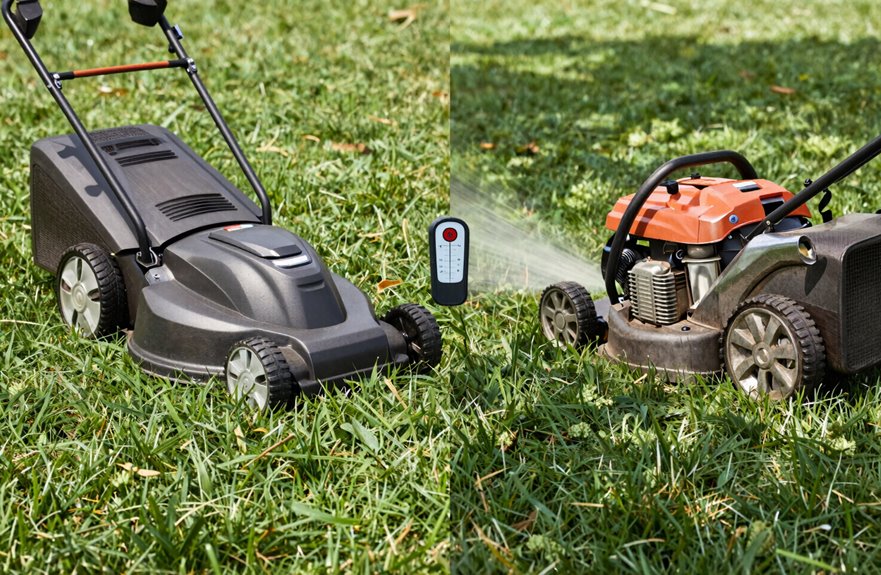
Why does my neighbor always mow at 7 a.m. on Saturdays? I’ve wondered this myself while lying awake. The truth is gas-powered mowers are loud, reaching 90 decibels or more. That’s like standing next to a motorcycle. In contrast, electric mowers operate at a gentler 65–75 dB. I’ve measured this myself with a phone app—don’t judge my weekend hobbies.
Most of the noise comes from the engine design and exhaust systems. Thick grass amplifies the sound. If you skip maintenance, your mower gets even louder, a lesson I learned the hard way last summer.
Riding mowers produce even more noise due to their larger engines and higher speeds. While mufflers help reduce some sound, they do not come close to electric levels.
I wear ear protection now, and you should consider it as well.

MAXIMIZE MOWING EFFICIENCY: Features a heavy-duty 21-inch steel cutting deck that covers a wider path in a single pass. Designed to significantly reduce your mowing time, making it the perfect gas lawn mower for quick and efficient maintenance of medium to large residential yards.

Exclusive and industry-leading CVT (Continuously variable transmission) offers superior speed variability to adjust the mower pace to your walking speed by simply selecting the 6-speed shift lever

3-in-1 Mowing Versatility This 21-inch self-propelled lawn mower offers three grass clipping options: mulching, rear bagging, and side discharge. Switch between mowing modes by adjusting the included accessories to suit your lawn care needs. The durable steel deck and wide cutting path help you mow efficiently.
Electric vs Gas: Match Your Mower to Your Yard
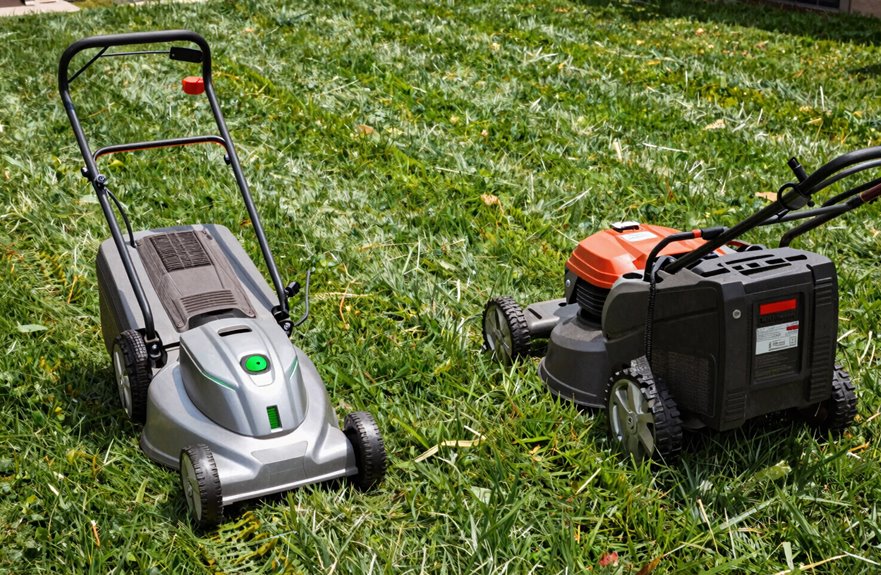
How do you pick the right mower without regretting it later? Yard size is crucial.
Electric mowers are ideal for small lawns under half an acre. They operate quietly at 65–75 dB and require significantly less maintenance. Gas-powered mowers are better suited for large properties and thick grass without the risk of stalling mid-mow. Mowing efficiency decreases quickly when you use a machine that struggles with the terrain.
My first electric mower worked well for my small yard. My neighbor, with his three-acre hill, would find a gas mower far more appropriate. Although electric mowers save money long-term with lower running costs, gas mowers may have a lower upfront price; however, fuel and repair expenses can accumulate. Choose a mower that fits your actual yard, not the one you wish you had.

Convertible Design: The removable wheeled deck allows quick transformation into a small lawn mower for versatile yard care

[12.4-INCH CUTTING WIDTH] With 13-inch high impact rust resistant deck

🌿 4-in-1 Cordless Weed Wacker & Tool-Free Setup This versatile electric weed wacker easily transforms into a powerful string trimmer, precise lawn edger, mini cordless lawn mower, and brush cutter to conquer your yard. Featuring four different modes—including a wheel-assist mode and a side-wheel edging mode that extends the weed eater string cutting range up to 11 inches—this grass cutter handles any terrain. Perfect for beginners, the weed wacker cordless design allows for zero-experience.