Dining room storage here runs from a single sideboard with rattan doors or fluted fronts to cabinets that fill a wall from floor to ceiling, with a built-in wine cooler and 2 floating shelves in between.
Wall length decides which one is yours: a short wall takes a sideboard, while a full wall can hold built-ins with closed storage below and open shelves above.
Glass doors add one more condition, because everything behind them stays on view.
1. Wood Sideboards
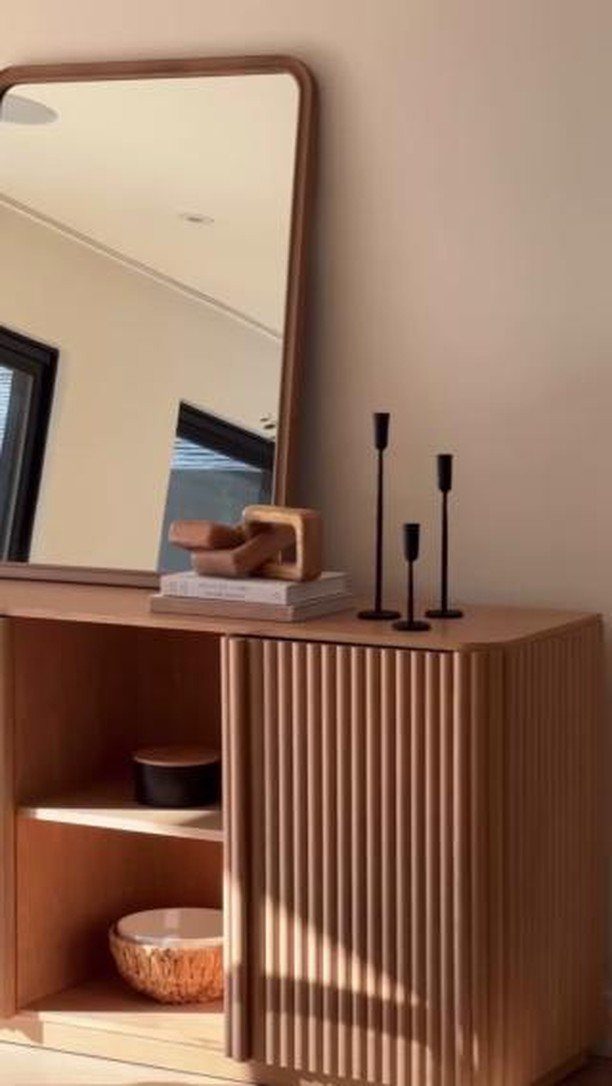
A fluted door on light wood gives a plain wall texture without adding a pattern.
A mirror hung above the sideboard in the same wood keeps the whole corner in one tone, and black candle holders give all that pale grain something to push against.
Books and one sculpture read cleaner than a full row.
2. Glass-door Cabinets
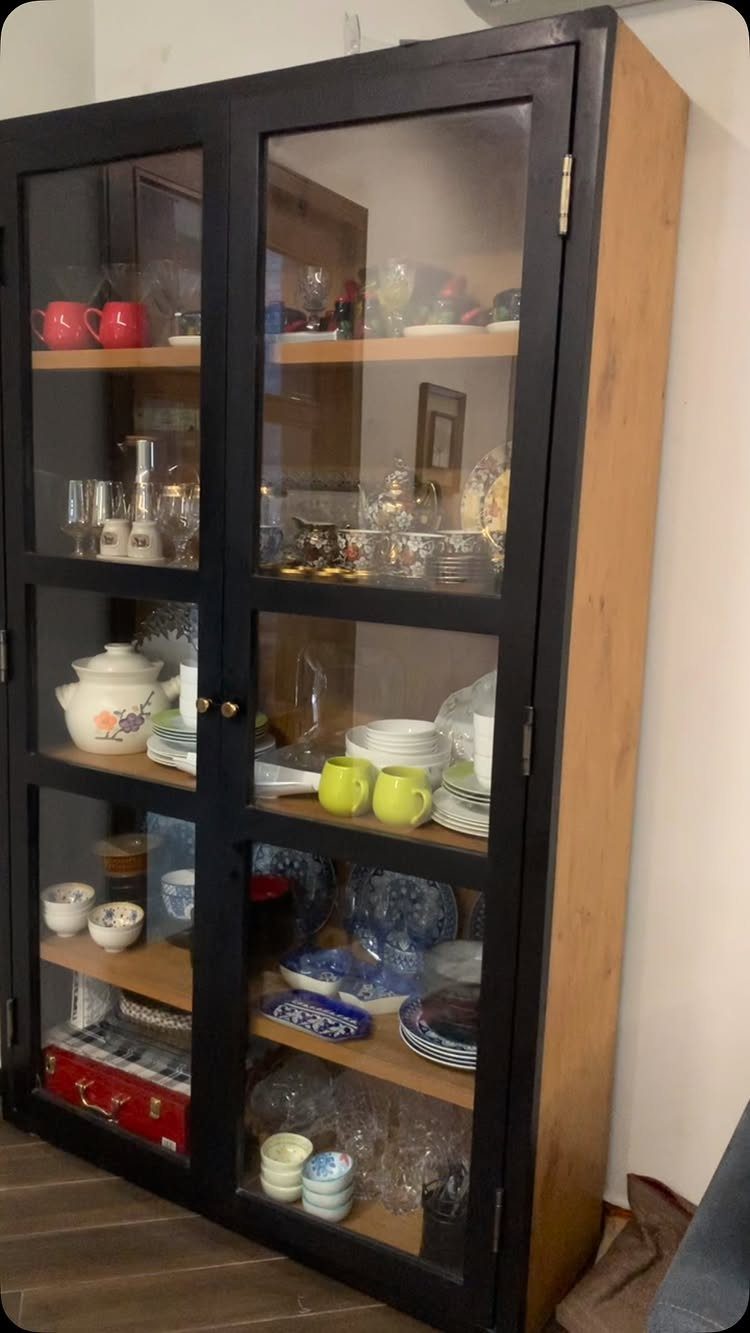
Everything behind glass is on display, so the cabinet only works if you like what’s inside it. Black frames outline each shelf like a grid, and I think that suits colorful dishes and glassware best.
Group like with like: mugs together, glasses together, plates stacked by size. Anything stuffed in sideways will show.
Where you place your buffet or sideboard depends on what role it will be playing. The dining room may be the best location if you need it to store plates or wine.
3. Sideboard with Mirror and Accessories
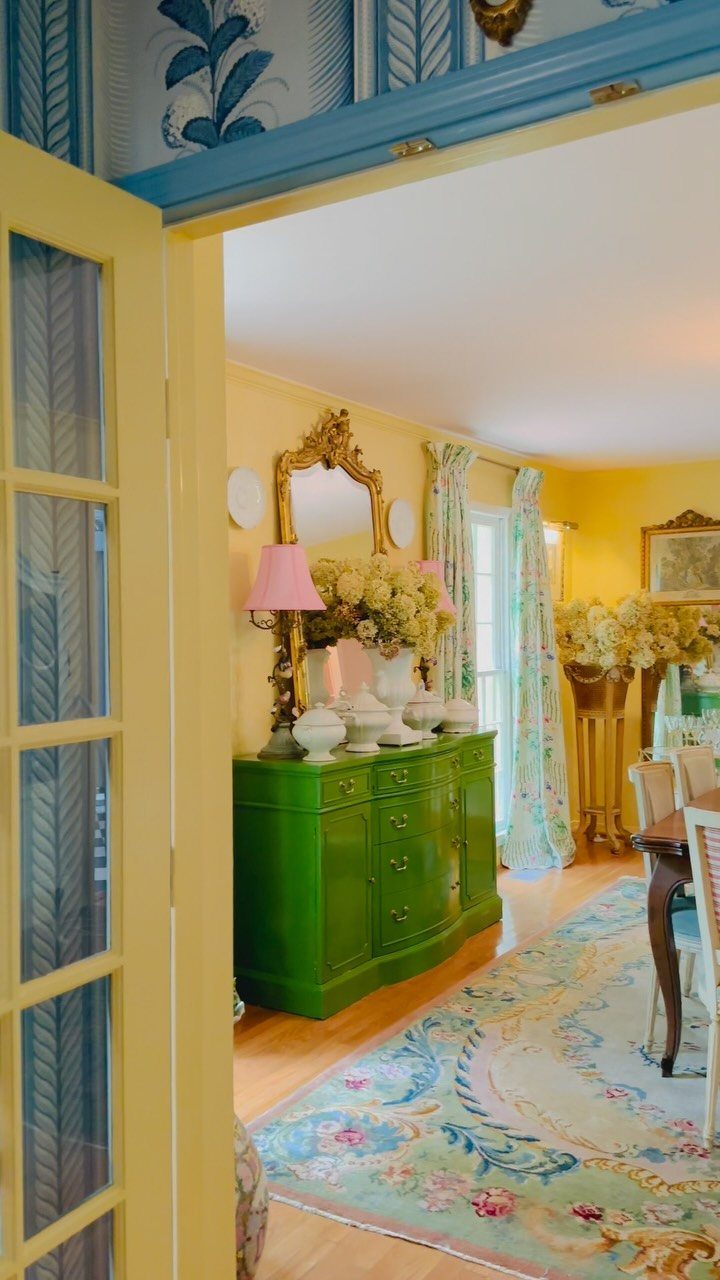
Bold color holds up when the styling repeats it. A green sideboard under a gold mirror can take two lamps, one at each end, with flowers and white vases filling the middle.
Pairing the lamps keeps a strong shade from looking chaotic. If the walls and rug already carry a lot of color, I would trim the vases to two or three.
4. Modern Sideboards
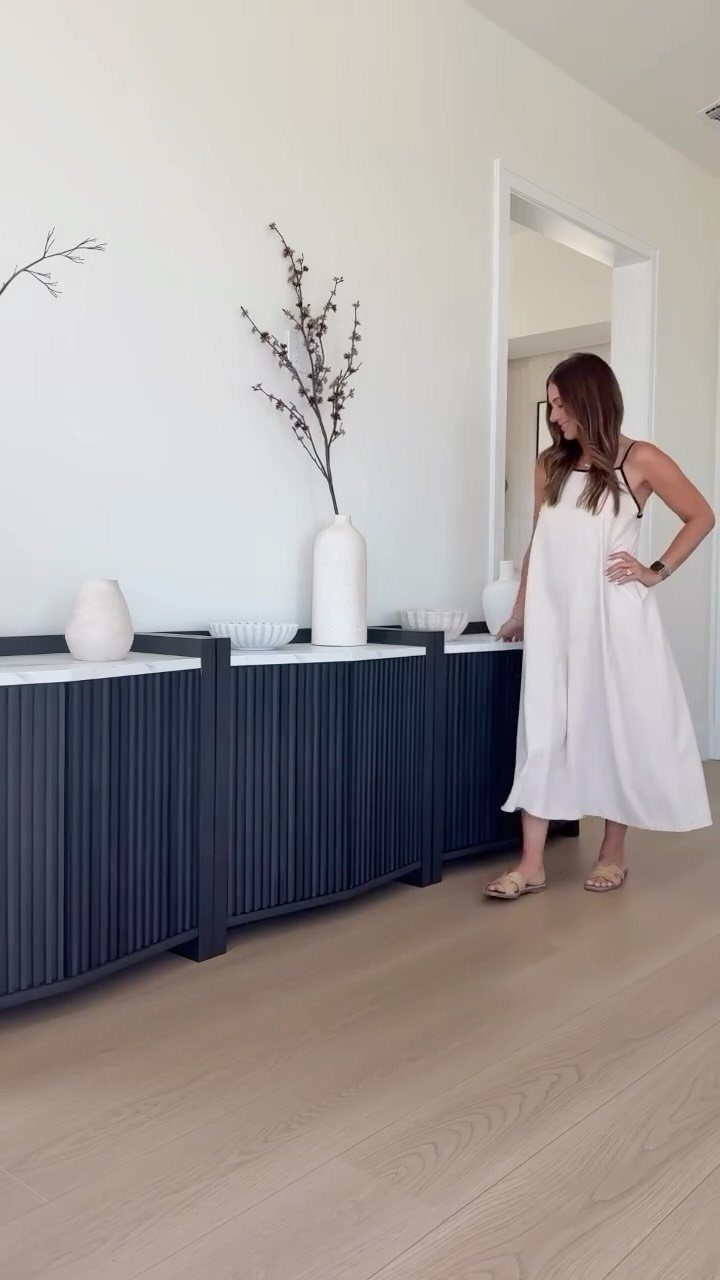
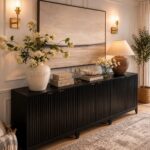
Fluting is the detail that stops a dark, long sideboard from looking like a flat slab. The white marble top then gives a clean edge of contrast against the dark front.
Leave most of the top bare. In a minimalist room, one or two objects look deliberate, while a crowded surface fights the cabinet’s straight lines.
5. Dining-room Cabinets
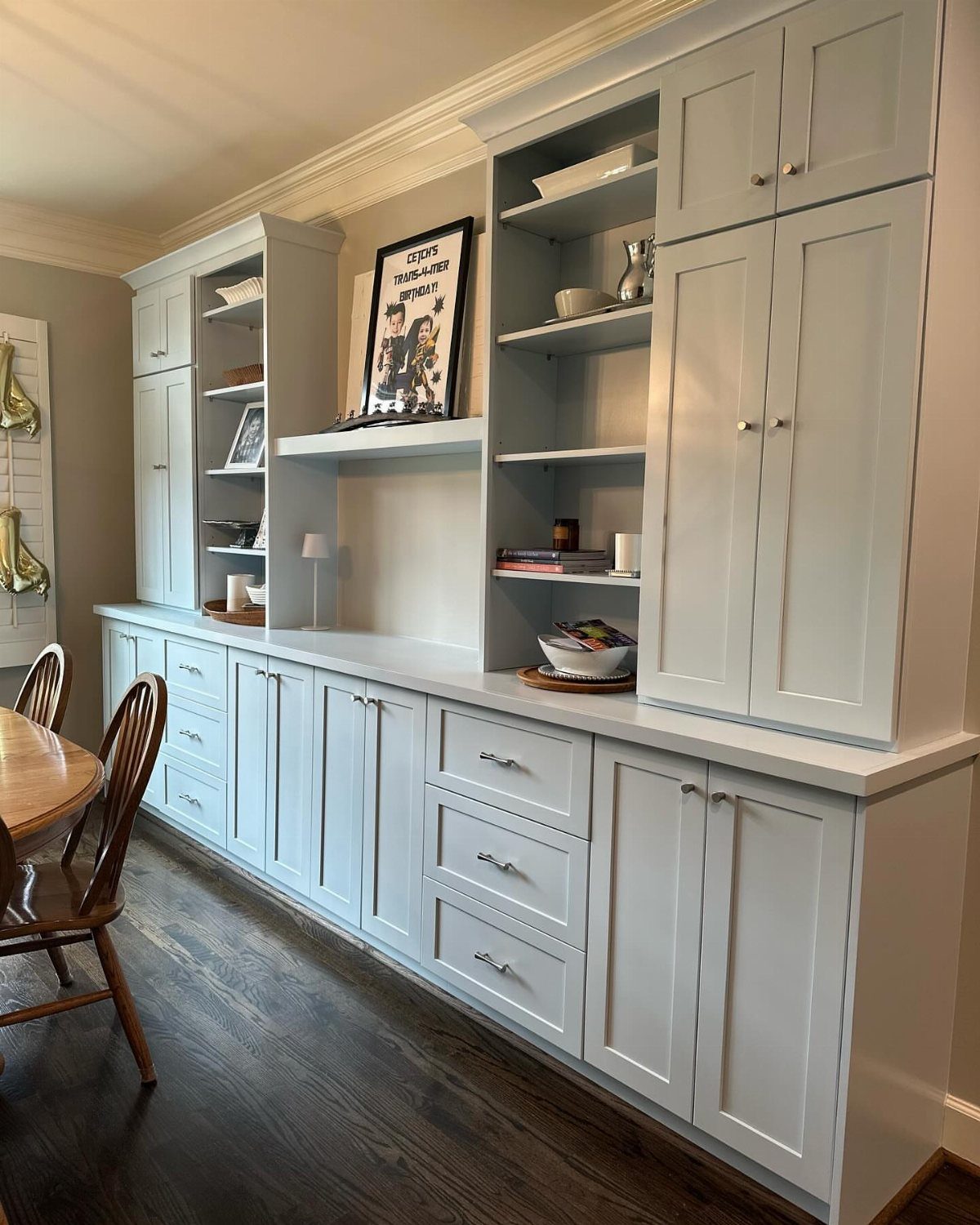
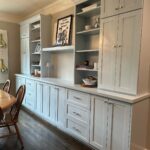
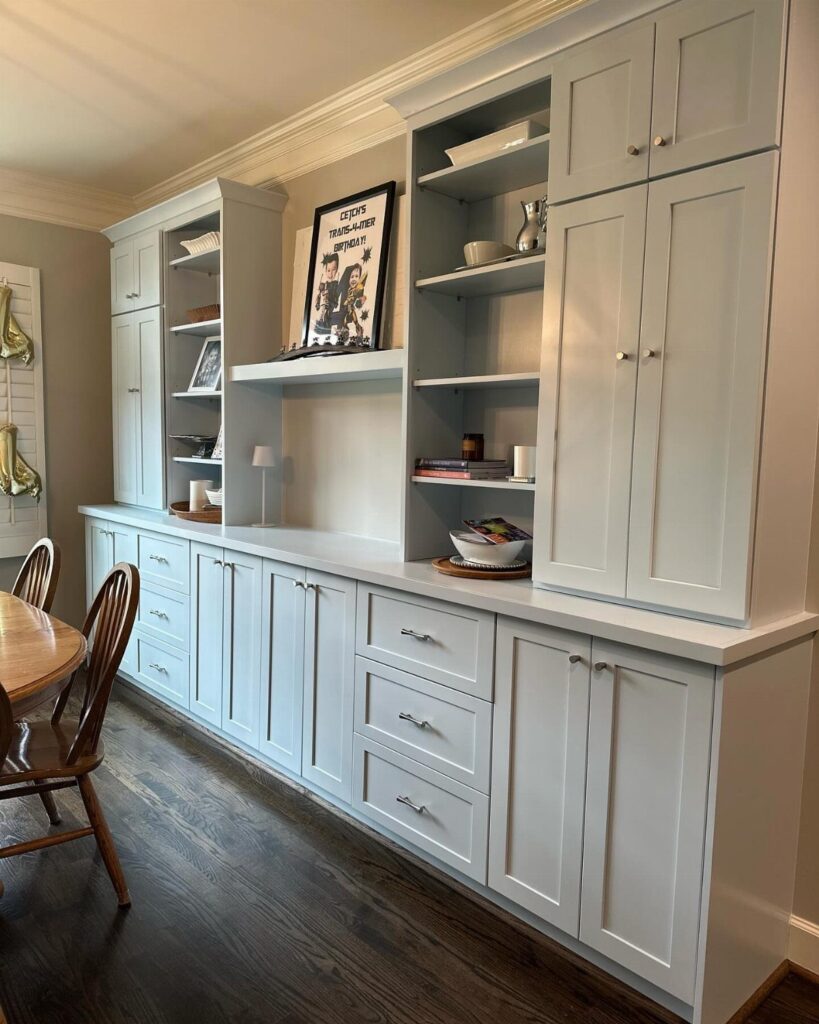
Built-ins that run the full length of a wall give a dining room closed and open storage in one unit. Drawers and cupboards hide the everyday items, and the upper open shelves hold the few things worth seeing.
White lets a big unit sit light next to dark wood floors and a wooden table. I would use the open shelves for art, a framed poster included, rather than filling them with dishes.
6. Wood and Glass
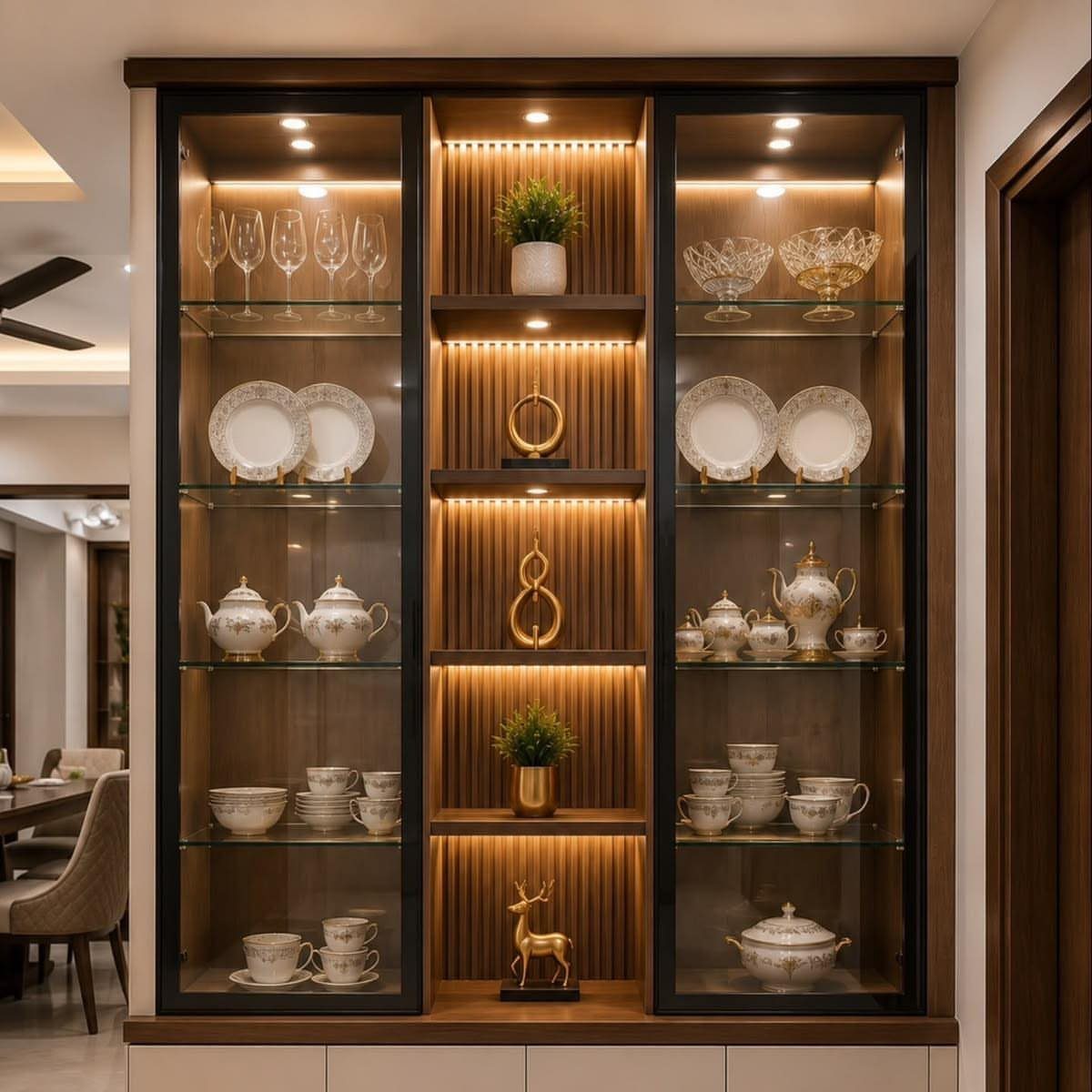
Wood framing around glass doors gives a cabinet 2 materials at once: warmth from the wood, a lighter feel from the glass.
Built into the wall, with open wooden shelving in the center, it gives you a place for display plus a place for closed storage.
Lighting is what I would add first. It makes glassware, plates and teapots look chosen rather than just stored.
7. Built-in Cabinets
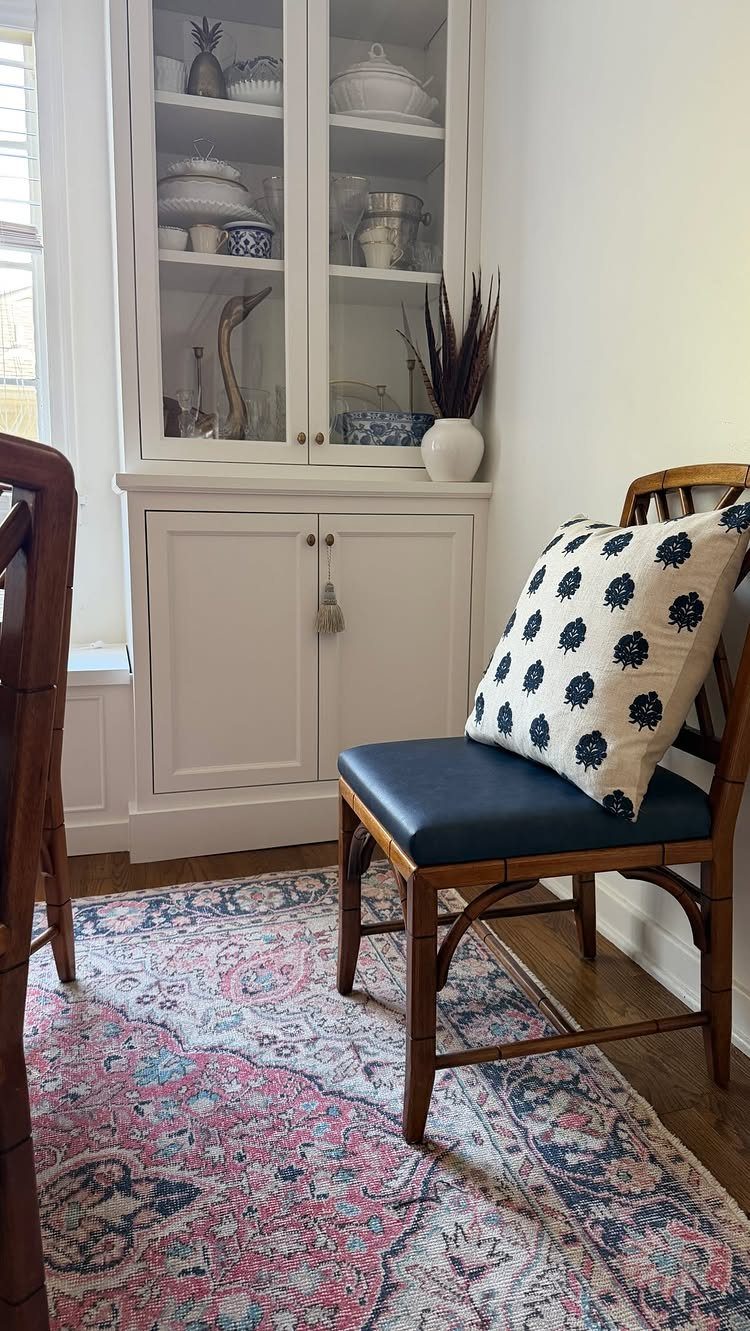
White paint makes a built-in read as part of the room rather than a big piece of furniture parked against it.
A busy rug like the one here pairs well with plain cabinet fronts, so I would keep the hardware simple and let the rug do the talking.
8. Dining Hutch Cabinet Wall
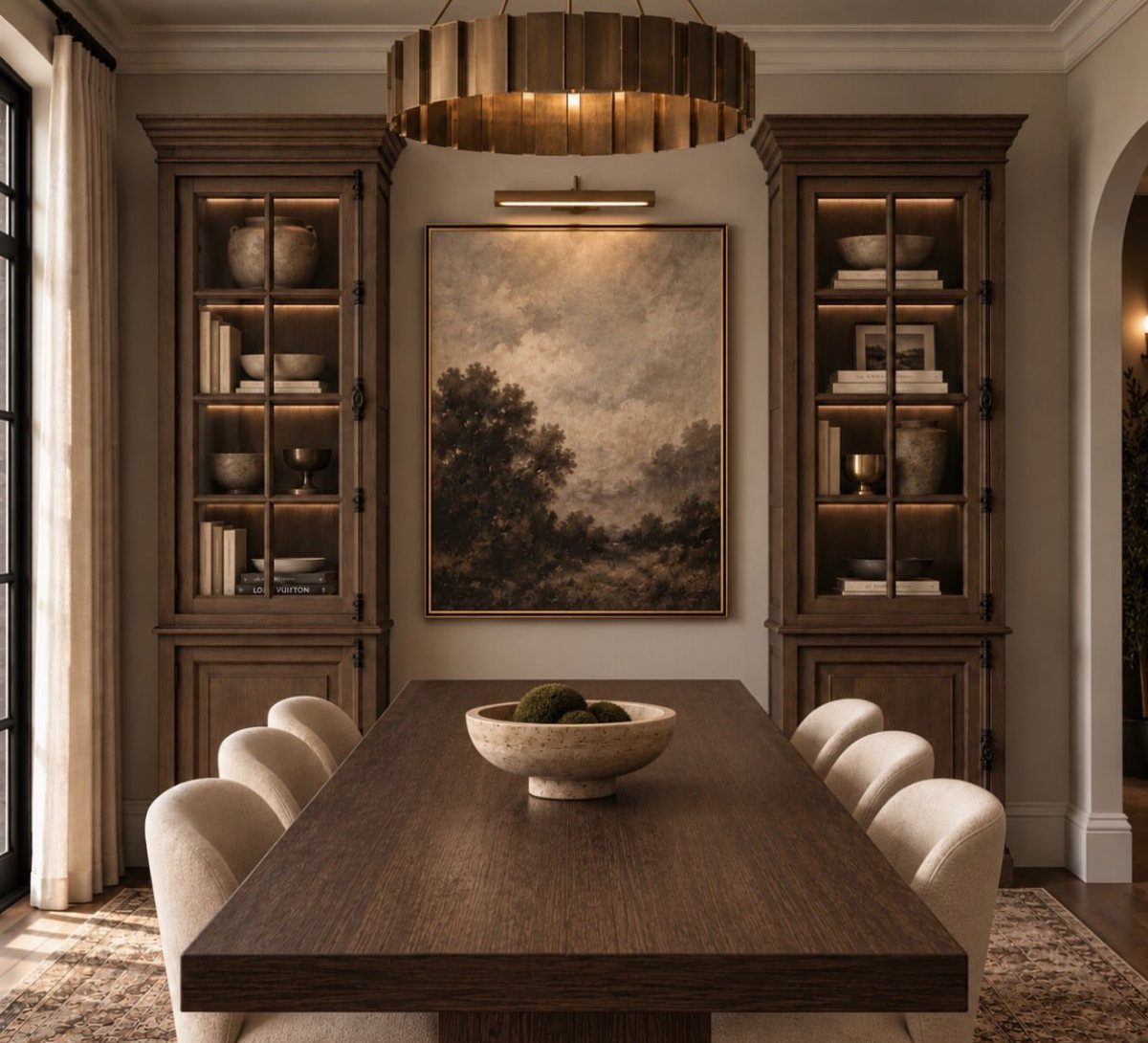
2 matching hutches with a painting hung between them make a dining wall feel planned. The symmetry is what does it: tall glass-door cabinets on both sides frame the art like a window.
I like wood hutches against a dark table because the tones stay related.
Keep the shelves edited, since glass doors show everything. A single stack of plates per shelf looks better than a crowd of small items.
9. Floor-to-ceiling Dining-room Cabinets
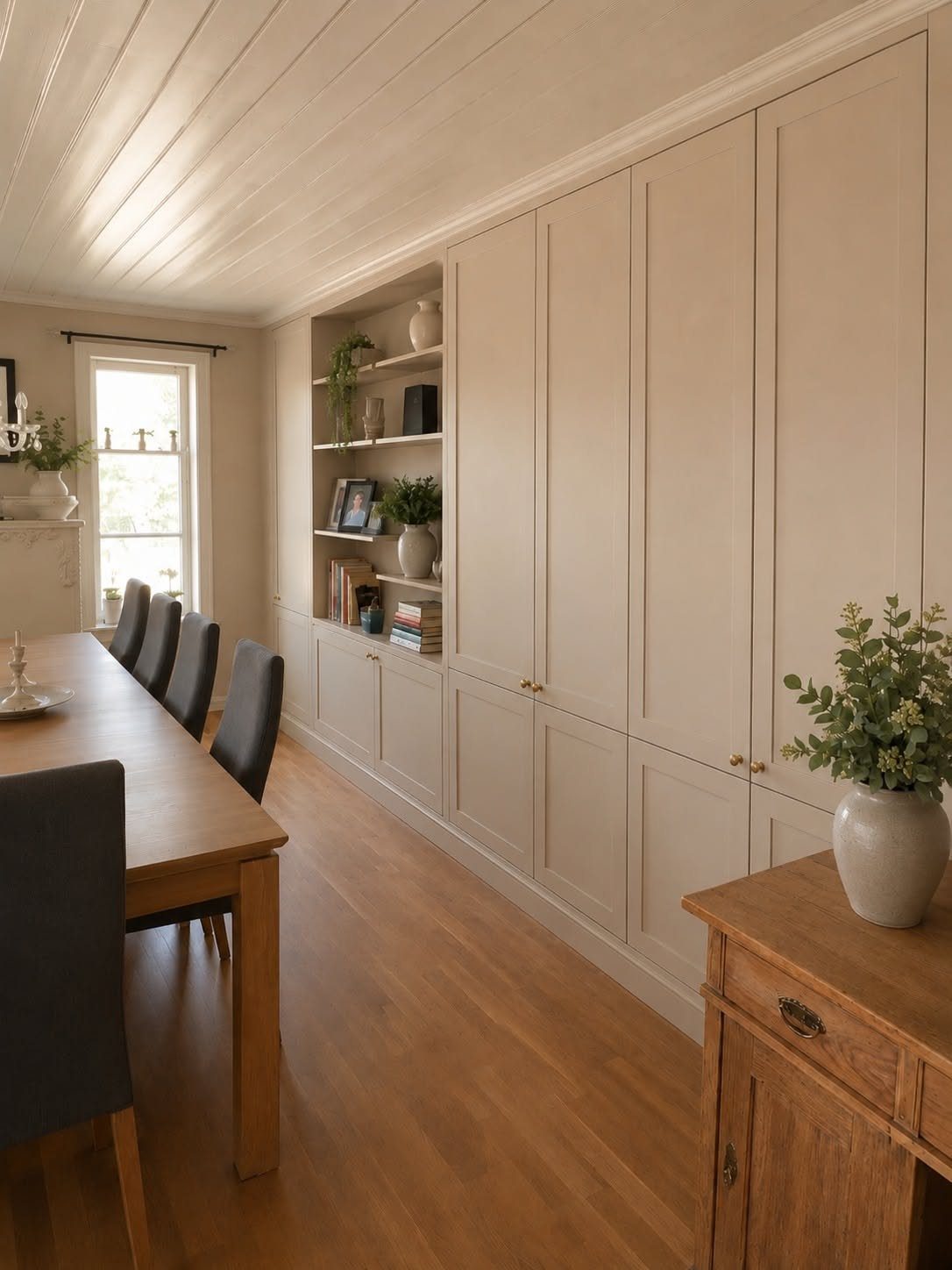
Running cabinets all the way to the ceiling uses wall space that a regular sideboard leaves empty.
Open shelves in the middle of the run, cupboards below, and upper doors for things you rarely reach for: that split gives you display and hidden storage in one unit.
A cream finish helps a tall unit stay light in a smaller dining room. If you want a softer look, a plant on a nearby dresser, as here, takes the edge off all those straight lines.
10. Rattan-door Sideboard
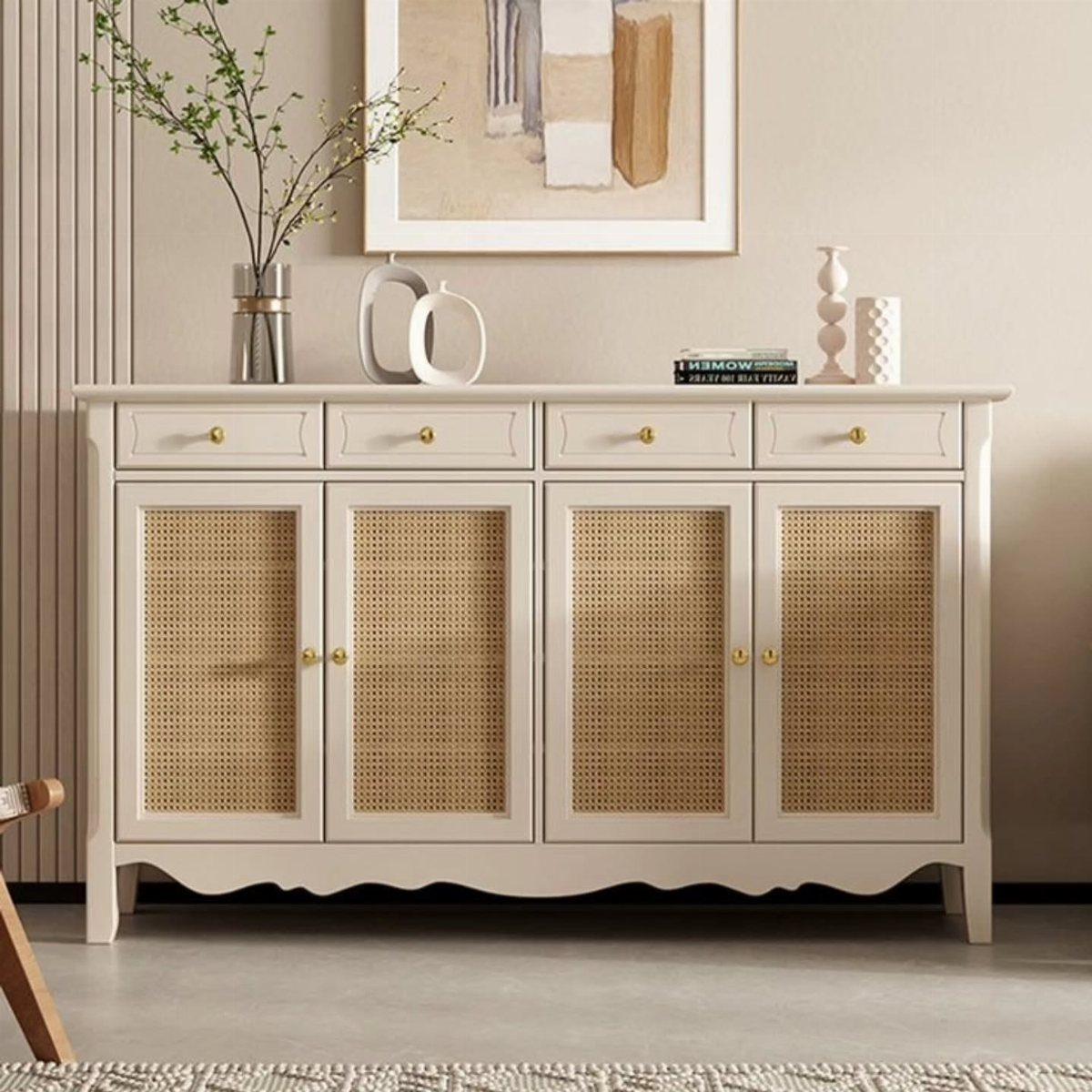
Woven rattan doors bring in texture, and on a cream sideboard they do it without adding color. The drawers across the top handle small flatware and linens, while the cabinets below take larger serving pieces.
Rattan lets the front look lighter than solid wood panels would. I would style the top sparingly, with one vase and a piece of art, so the weave stays the focus of the piece.
11. Traditional Sideboard
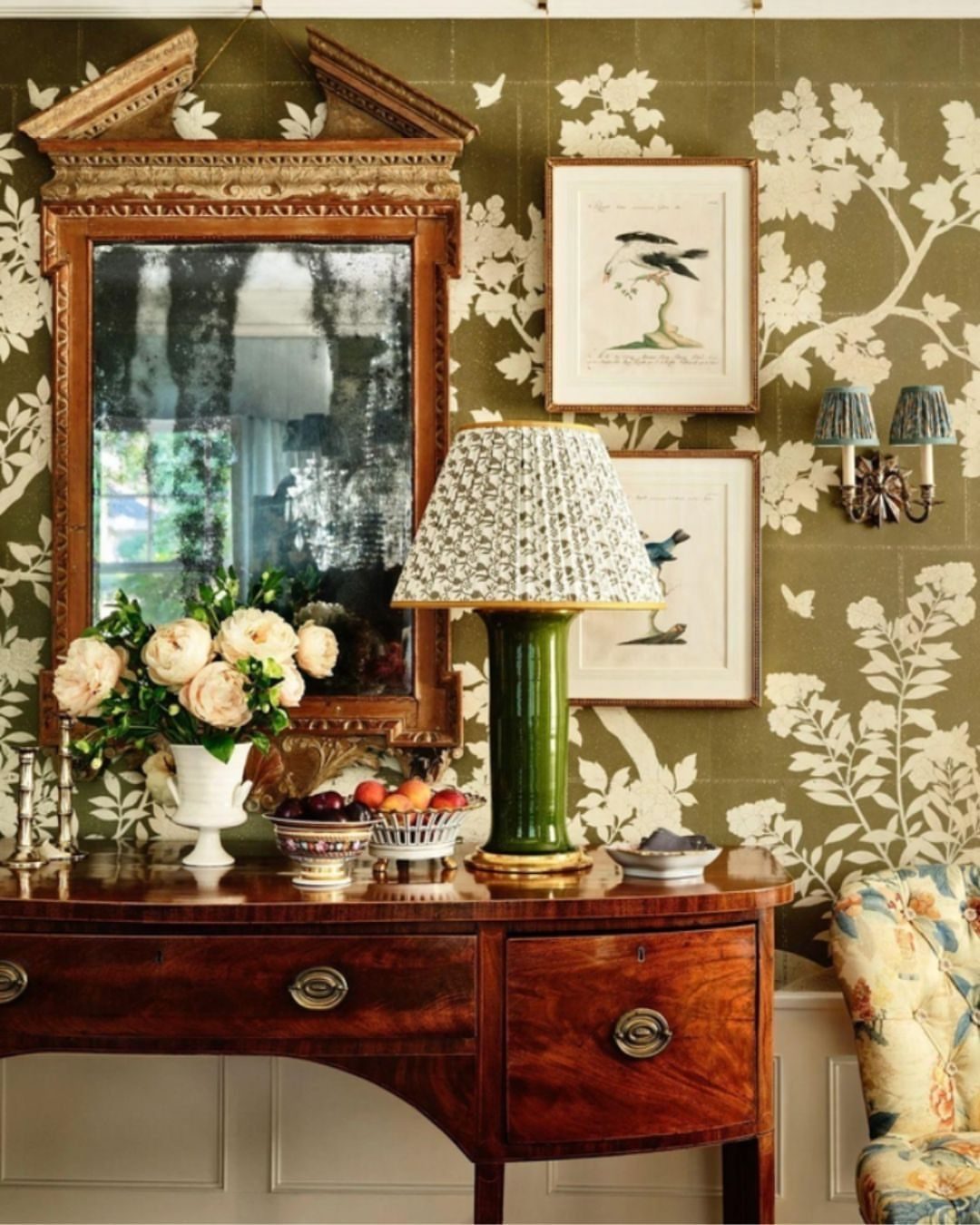
Dark wood with ornate detailing is the classic sideboard look, and it holds its own against bold wallpaper. Olive floral paper behind it works because the green lamp picks up the same shade.
A mirror above doubles the lamp’s glow, and fruit on the top adds color without extra clutter. I would stick with one lamp and one bowl rather than a full row of accessories, so the carved details still show.
12. Wine-storage Sideboard
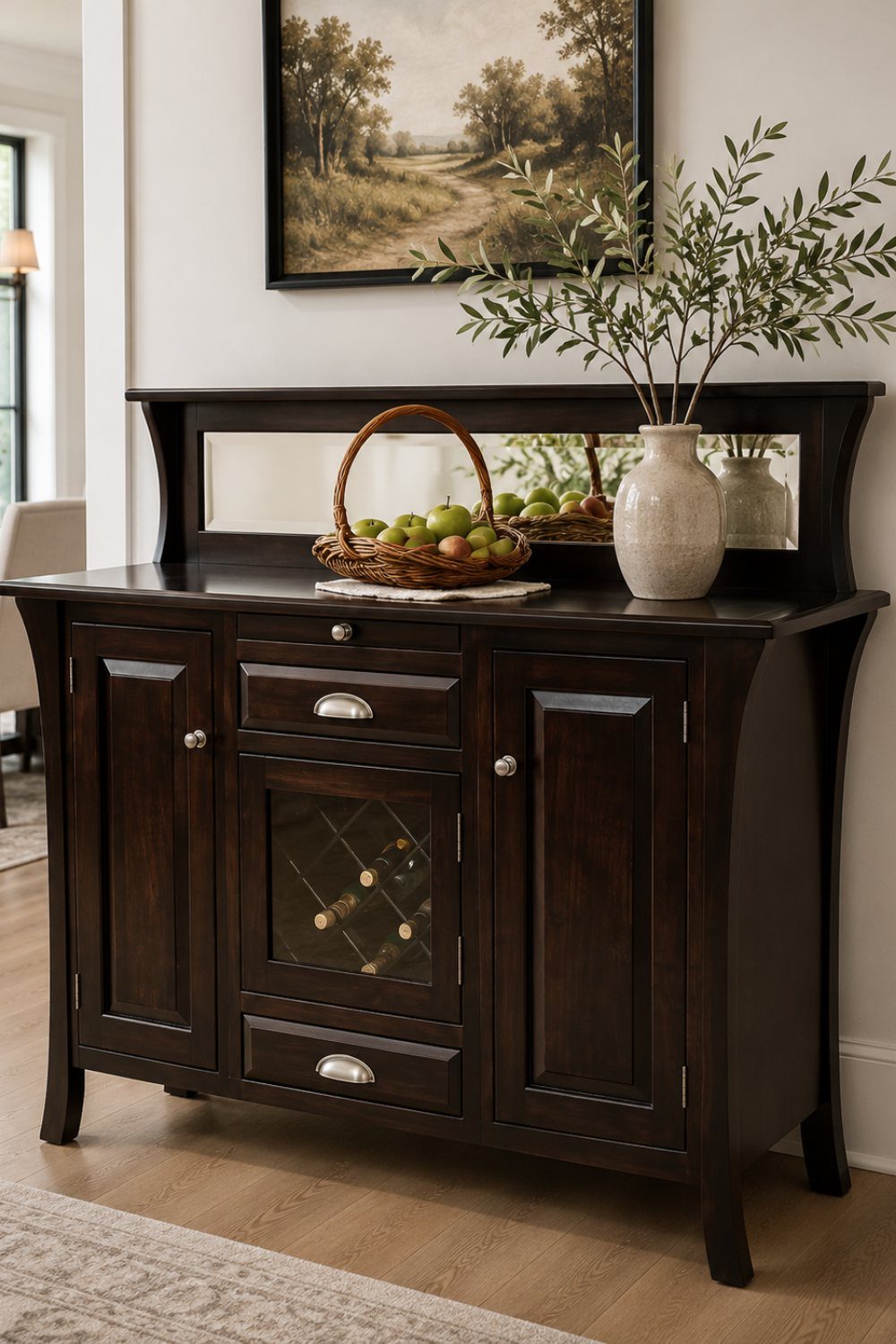
A glass-fronted wine rack set into the center of a sideboard lets the bottles act as décor. Drawers or cupboards on either side can hold glasses, corkscrews and linens, so everything for serving lives in one spot.
A mirrored back panel makes the rack look deeper and catches light. I would keep the top simple, like the fruit basket and vase here, so the bottles stay the main event.
13. Modular Sideboard
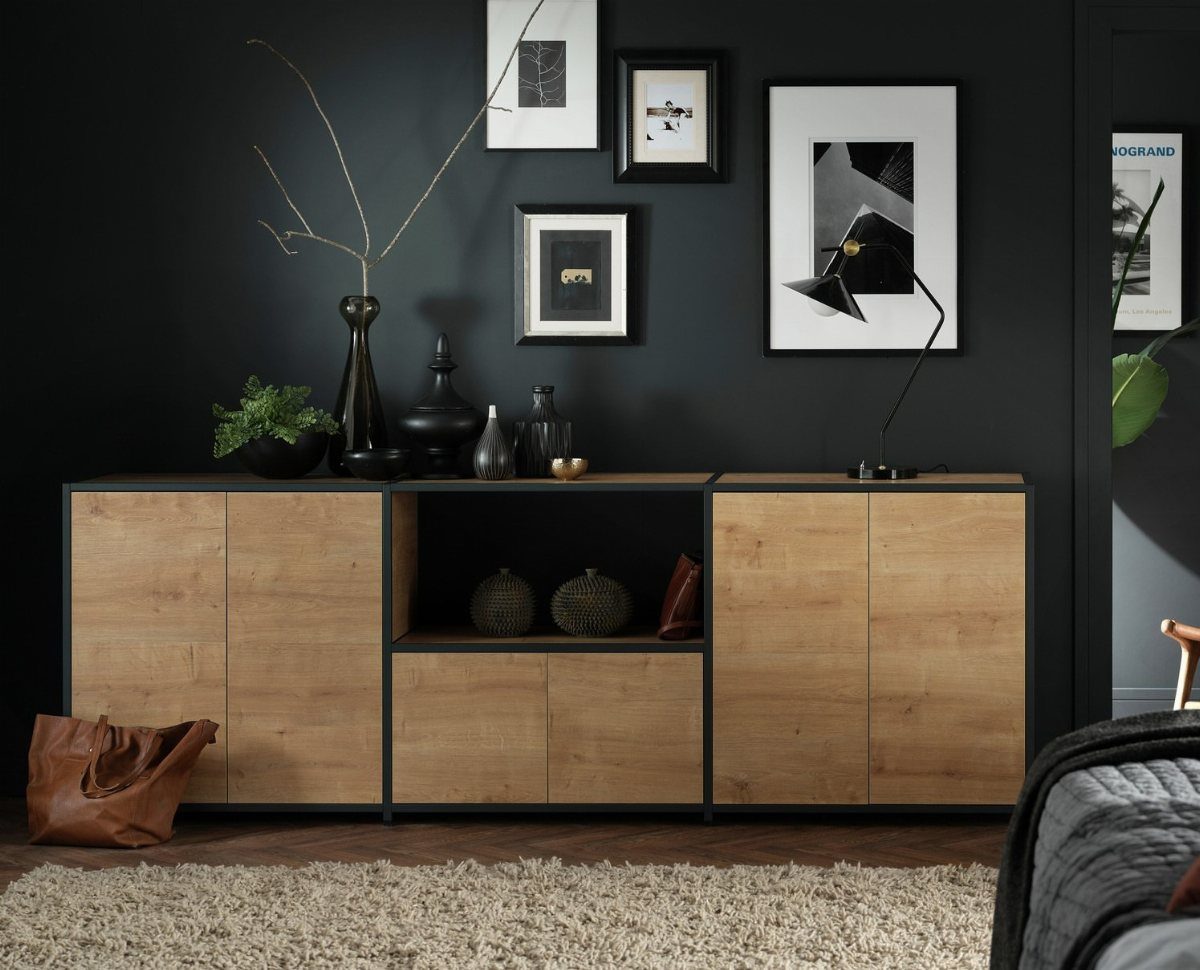
Separate units that work alone or pushed together mean the sideboard can change as the room does. Black frames tie each box to the dark wall, while the light wood keeps the whole run from sinking into it.
Start with one unit if the budget is tight and add a second later. Vases and framed art along the top work best when the heights vary, so the line doesn’t look like a single flat shelf.
14. Sideboard with Wine Cooler
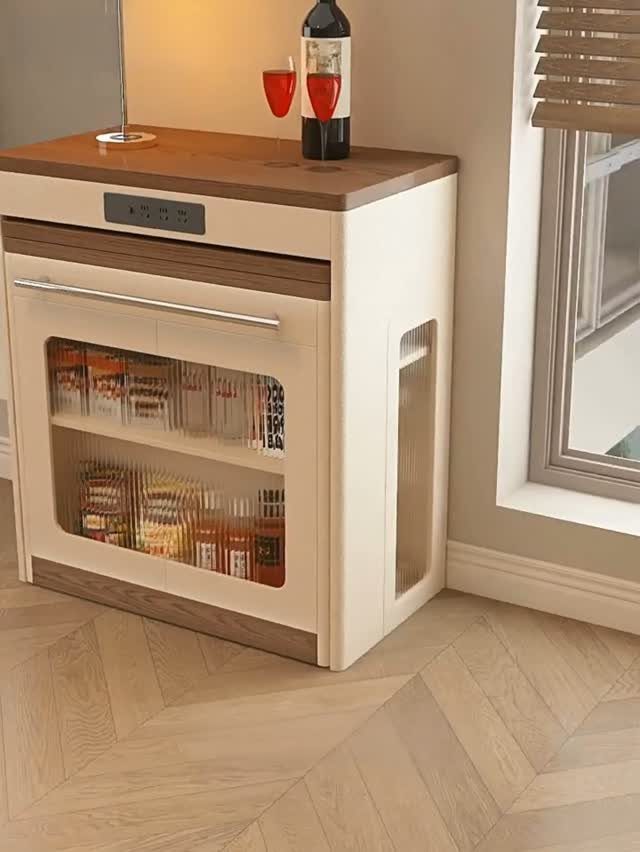
A built-in wine cooler turns a dining sideboard into a serving station: the bottle chills a few inches from the table, and nobody walks to the kitchen mid-meal.
White cabinetry with wood-toned details keeps the cooler from looking like an appliance dropped into furniture.
Set a bottle and 2 glasses on top, as here, and the unit announces its job.
Keep everything else off the top so the cooler stays the one thing the eye lands on. Expect it to cost more than a plain sideboard, since you are paying for the refrigeration too.
15. Sideboard with Open Shelving
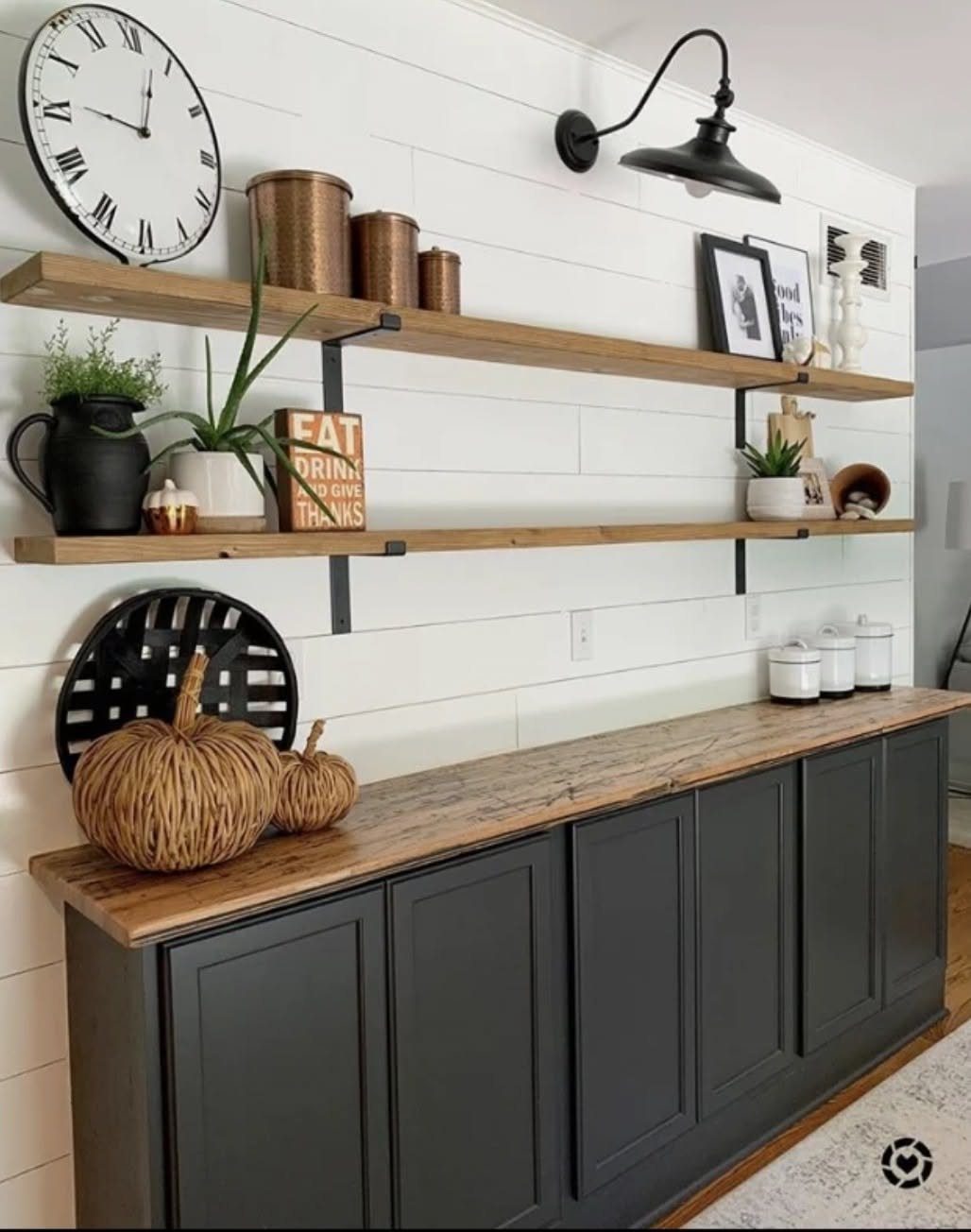
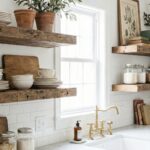
Mounting 2 floating shelves above a sideboard adds display space without the bulk of a second cabinet. Matching wood on the top and the shelves ties them together, so a dark base reads lighter against white shiplap.
Put the pieces you use rarely on the shelves and keep the everyday items behind the sideboard doors.
A sign like the one here gives the wall a focal point, but I would stop at one so the shelves don’t read as clutter.
16. Sideboard with Marble Top
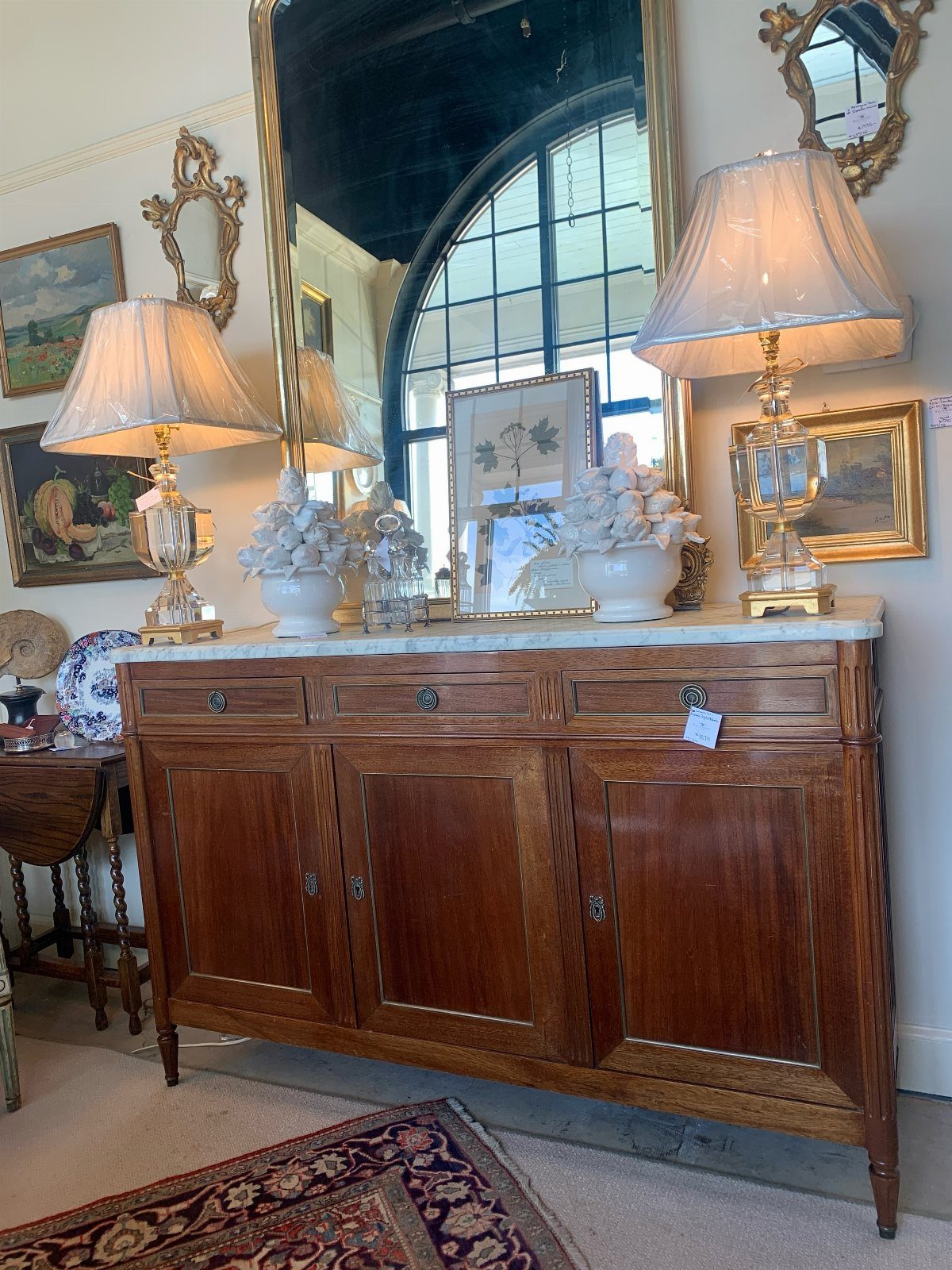
A marble top on a wooden sideboard gives you two materials in one piece: warm grain below, cool stone above. Stand it in front of a large mirror, as here, and lamps on the surface get their glow doubled.
Pairing lamps with a few ornaments is plenty. Marble is a lighter, cleaner surface than wood, so I would keep the objects grouped in small clusters and let some of the white show.
17. White Dining Cabinet
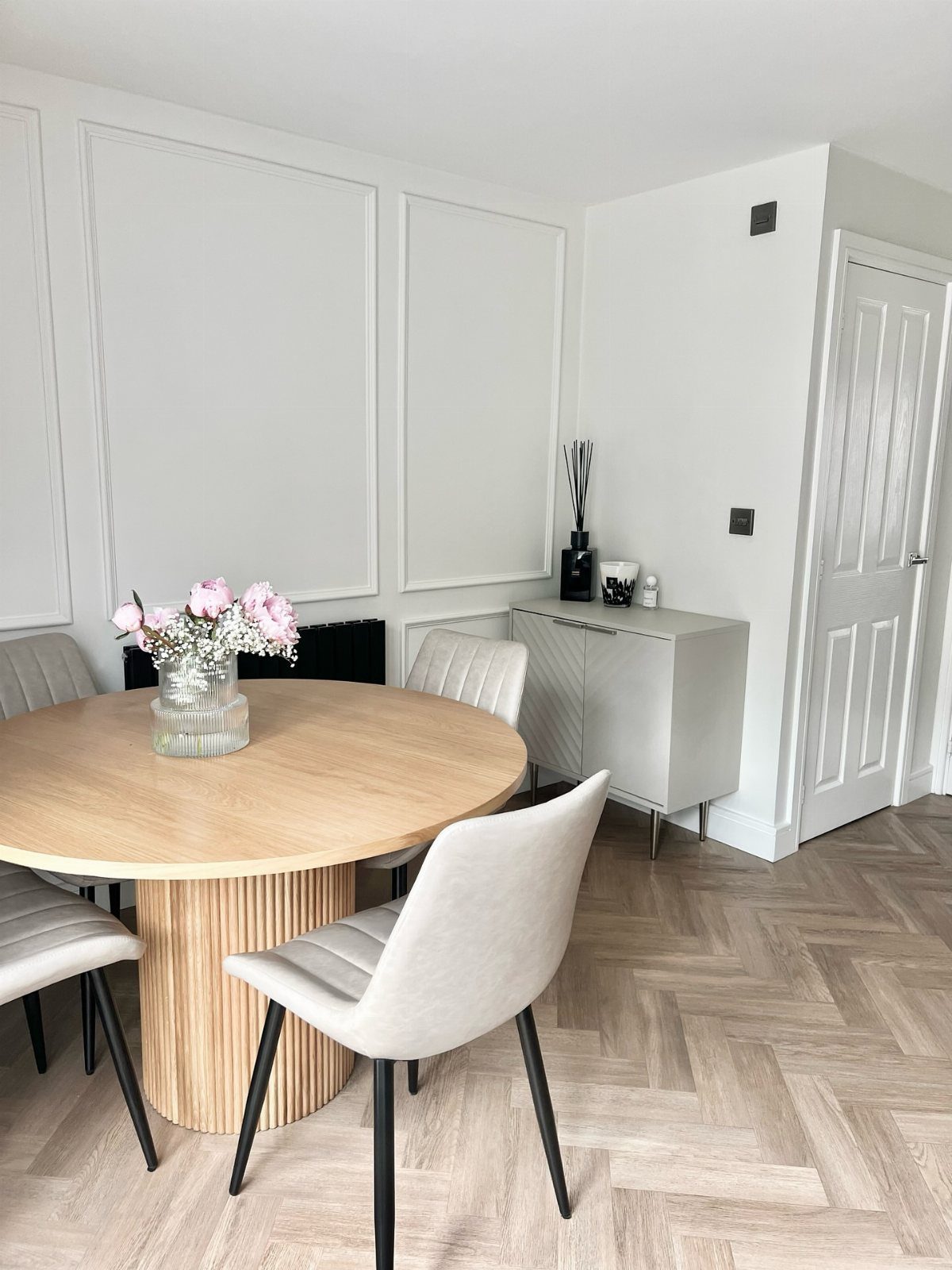
White cabinetry is the easiest way to add dining-room storage without making a small room feel crowded.
Against a white paneled wall, the cabinet nearly disappears, which suits a round wooden table and grey chairs that already have enough going on.
Keep the top almost empty and let one thing carry the color, like the pink flowers here. A plain white front doesn’t need hardware or décor competing with it.
18. Dining-room Home Bar
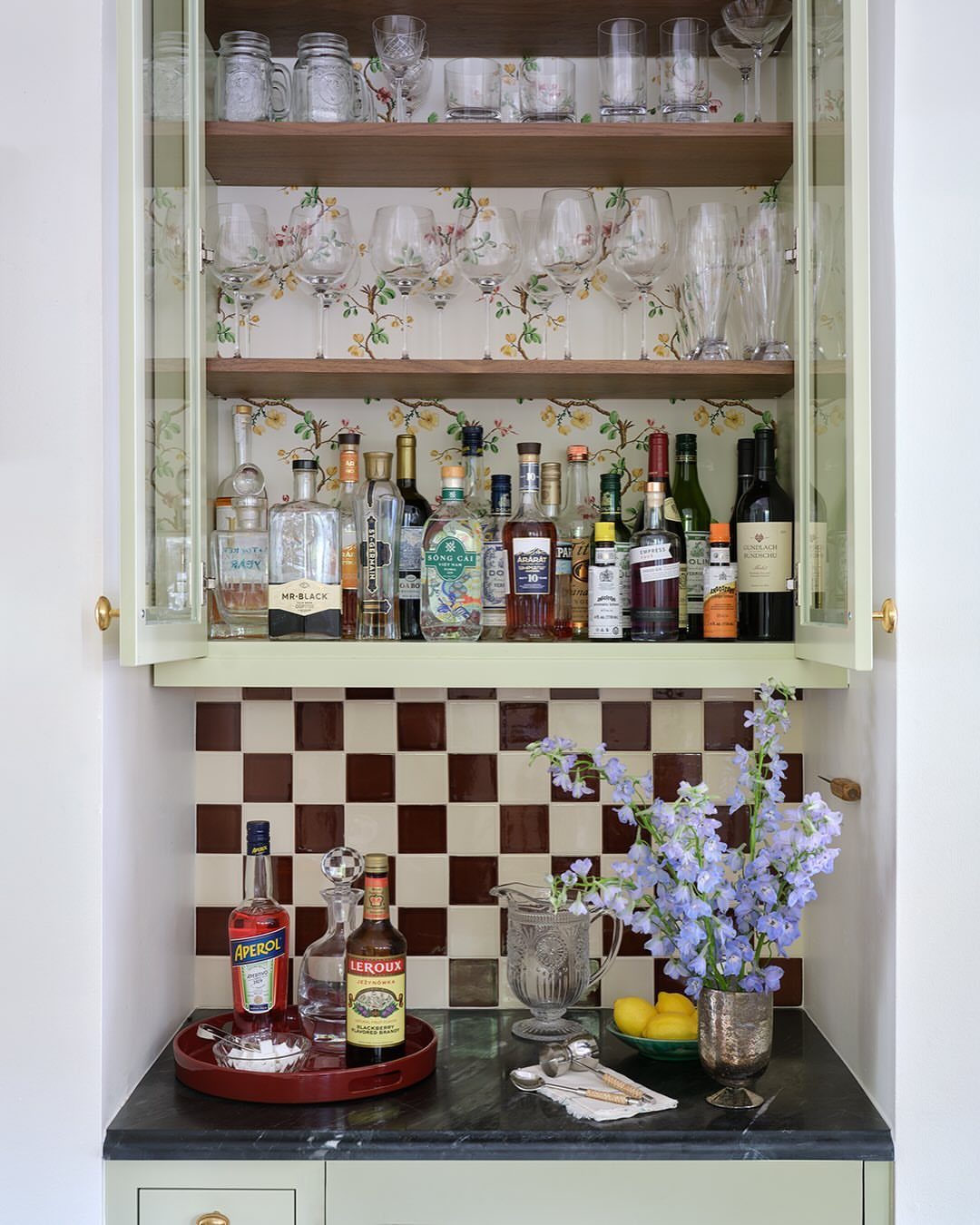
Glass-front doors turn bottles and glassware into part of the decor, and a clear countertop below leaves room to mix drinks. Floral wallpaper lining the inside makes the shelves look designed rather than stocked.
Keep a tray on the counter, like the red one here, so bottles and mixers stay corralled. I would line the glass shelves up by height, tall bottles in back, since every label is visible.
Frequently Asked Questions
What is the side cabinet in a dining room called?
Most often it’s called a sideboard: a low cabinet along a dining room wall, usually with drawers on top for flatware and linens and cupboards below for larger serving pieces.
A tall glass-door version is a hutch. One built into the wall is simply a built-in cabinet.
What can I use instead of a sideboard?
Full-wall built-in cabinets are the strongest swap, because they give you closed and open storage in one unit.
Closed drawers and cabinet doors swallow the daily clutter, and a couple of open shelves give the nicer pieces a place to sit in view.
A pair of glass-front hutches on either side of a large painting gives a similar look, with more symmetry. On a tight budget, a modular unit lets you buy one box now and add another later.
How do I pick the right size for a buffet or server table?
Match it to the rest of your dining room in both style and size, so measure your dining table and chairs before you shop.
Most buffets and server tables run 34–36 inches tall, against about 30 inches for a dining table, so measure the height along with the length before you buy. Leave enough room around it for people to walk past.