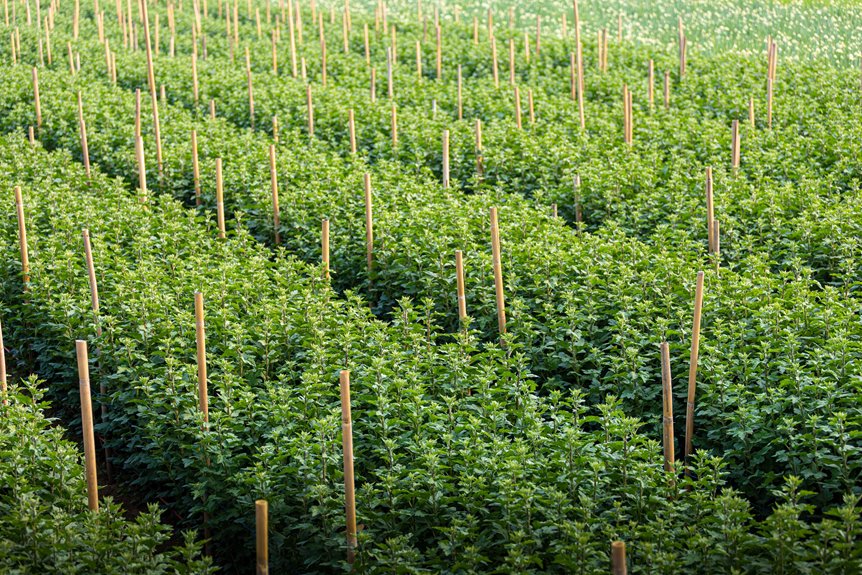
I put my stakes in at planting time, having learned that lesson the hard way after wrestling a root-bound tomato.
Place stakes 2–3 inches from the stem, pushed six inches deep for solid anchoring.
Use soft twine in a loose figure-eight loop, keeping ties 2–3 inches above the soil with some wiggle room for wind.
Match your support to the plant: bamboo for single stems, rings for bushy ones, cages for sprawlers.
Check weekly as the plants grow, and you will see why timing is crucial.
Place Stakes at Planting Time to Protect Roots
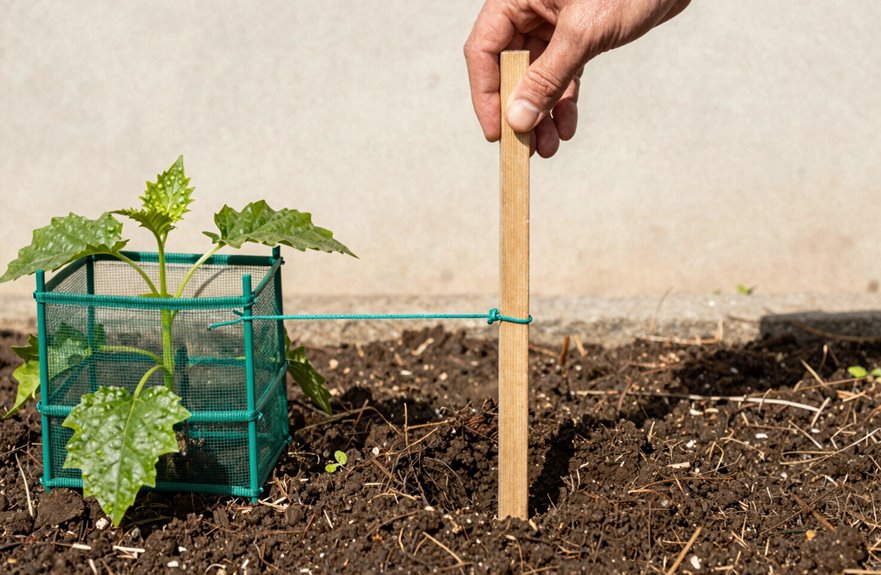
Because I’ve learned the hard way, I always put my stakes in the ground right when I’m planting; no exceptions. I’ve tried the lazy route, shoving them in later, and you can easily stab roots you can’t see. That’s why planting time is crucial for root protection.
I position my stakes two to three inches from the stem. They are close enough to provide support but far enough to avoid damage. I then push them down six inches deep at a minimum. Anything less wobbles when the wind hits.
Early staking is practical gardening. It provides immediate support before roots establish, leading to fewer issues later on. When I’m tying, I use a loose figure-eight loop. Tight ties can strangle stems, which can kill plants. Avoiding this mistake is essential.
Choose Between Canes, Rings, and Cages for Your Plant
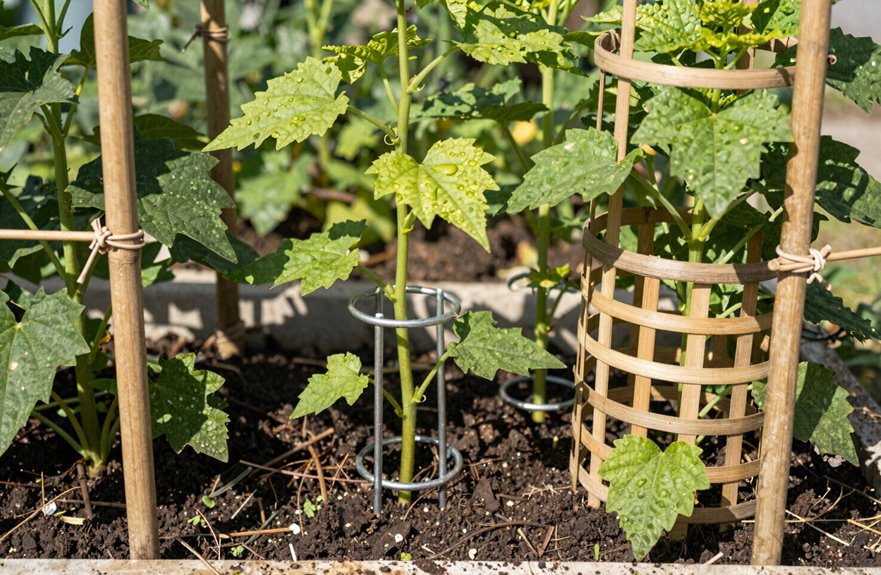
Choosing the right support for your plants doesn’t have to be complicated. It largely depends on what you’re growing and how much maintenance you want later.
Bamboo canes are ideal for single-stem plants like dahlias. They are inexpensive and sturdy, allowing you to push them deep enough to stay secure. Rings provide 360-degree support for bushy plants like peonies, preventing them from flopping after rain. Cages are best for tomatoes or dense patches where stems tend to sprawl.
Match your stake height to about two-thirds of the mature plant’s growth. If they are too short, you may need to add extensions mid-season. Space your support points along the stem to avoid choking the plant. Start with one cane or ring and add more as your plants grow.
Position Stakes 2–3 Inches From the Stem
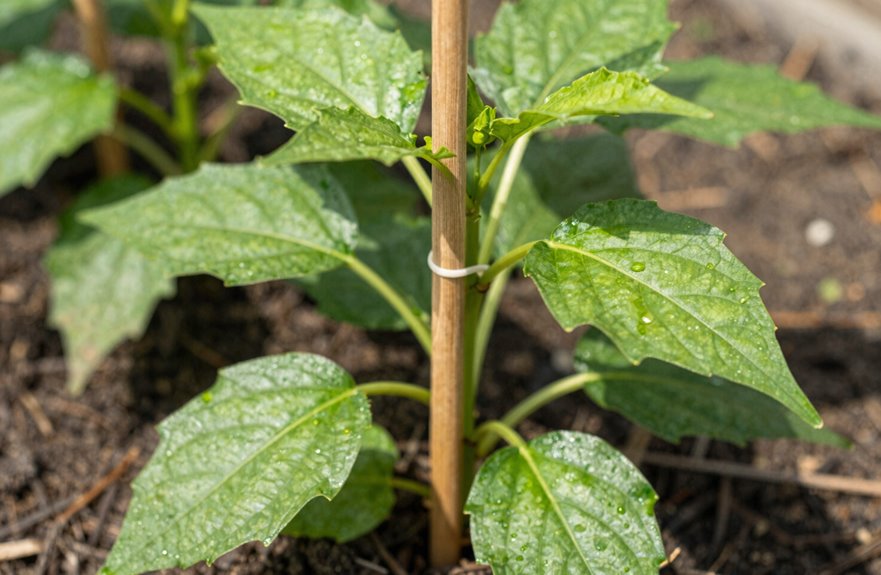
Where should you put that stake? Stake placement is crucial for plant support. If it’s too close, you risk girdling the plant; if it’s too far, the support won’t be effective.
Here’s what works:
- Keep it 2–3 inches from the stem to avoid girdling your plant.
- Position it for immediate support as your plant straightens up.
- Allow room for tying growth without constant adjustments.
- Prevent rubbing that can damage tender new stems.
- Make future access easier as the plant height increases.
I’ve damaged roots before, and that can hinder growth. This distance allows enough space for securing ties without causing friction. As your plant grows, you can adapt the support accordingly.
Tie Stems With the Figure-Eight Method
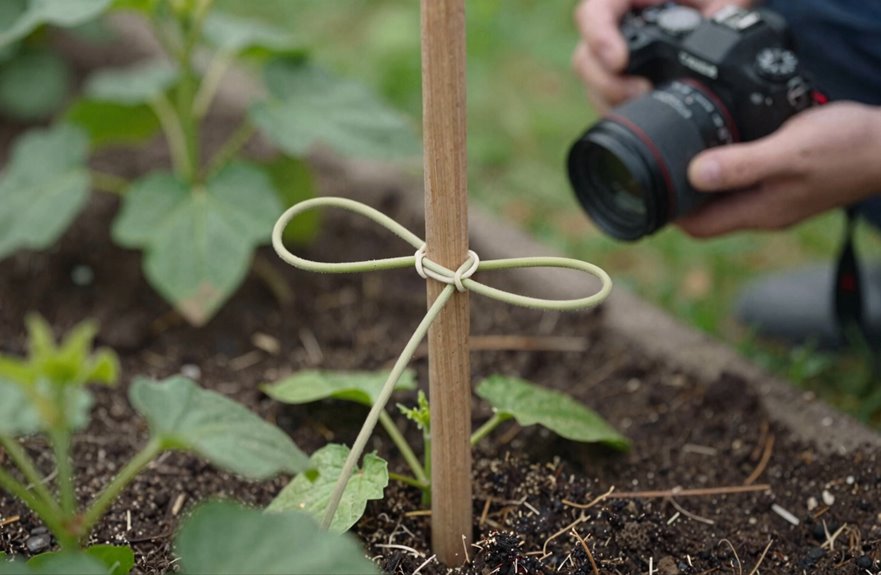
How do you keep a plant upright without strangling it? I’ve learned that tight ties can be harmful. That’s why I use the figure-eight method.
To tie stems properly, I take soft garden twine—never wire—and wrap it in a figure-eight around the stake and stem. This creates a small buffer. I position my support about two to three inches above the soil and one to two inches below the stem’s top. This placement prevents girdling.
I always leave six to eight inches of slack. This may seem loose, but stems need wiggle room for wind. I use breathable fabric, not plastic that can cut into the plant. Some people prefer slit ties, which can also be effective. The goal is to provide gentle support that allows for natural plant growth.
Check and Adjust Ties as Plants Grow
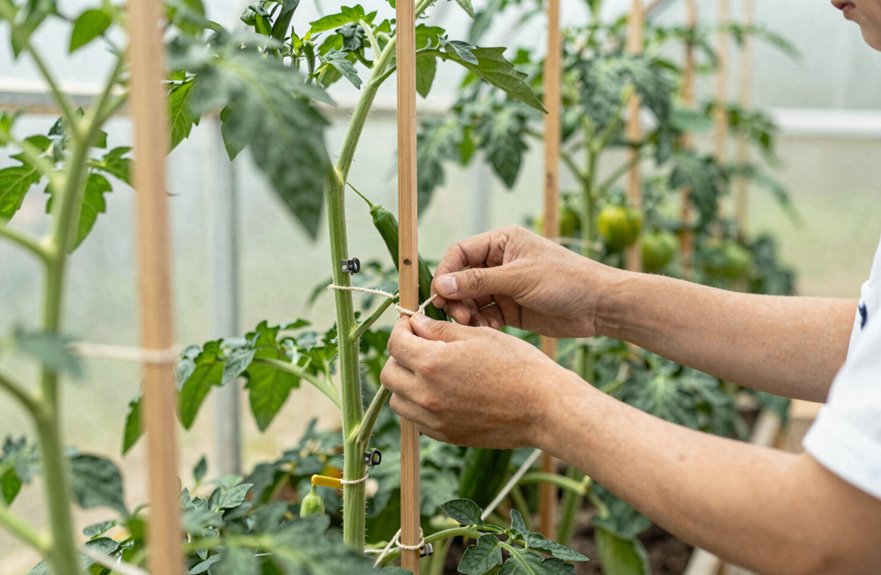
Once you’ve got your ties in place, the real work begins. I check my plants weekly because growth happens fast; sometimes, it seems like changes occur overnight when I forget to look.
Here’s what I’ve learned:
- Inspect ties regularly to maintain a snug-but-not-tight balance; I’ve girdled stems by being negligent.
- Re-tie when your plant reaches new heights on the trellis or stake to ensure support remains secure.
- Space ties 6–8 inches apart; crowding can cause bark damage that can be avoided.
- Swap flexible ties for sturdier ones or adjust with figure-eight loops as stems thicken.
- Leave ties slightly loose after growth spurts so wind doesn’t snap what you’ve nurtured.
Your plants deserve support to thrive in their environment.