If linens and candles need somewhere to live, a console with drawers wins; if the top is for serving or display, a slim console, or one with a lower shelf for baskets, works better.
The ideas run from a slim serving console and a wooden table with lamps and candles to a long dining sideboard, then on to a Christmas garland display, so the same table can look different by season.
1. Slim Serving Console
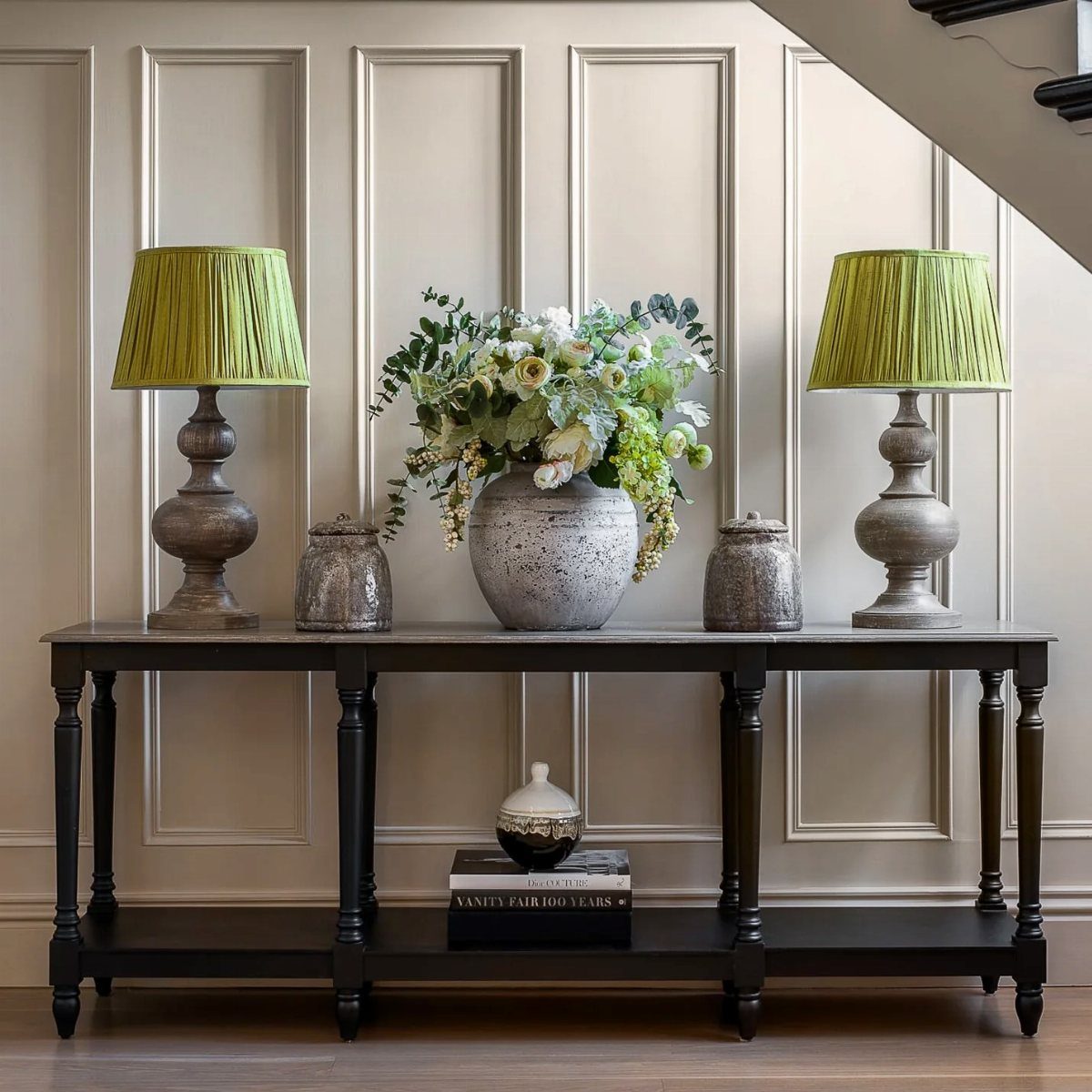
A long, shallow console gives a dining room serving space without the bulk of a full buffet.
Dark wood against paneling reads as one calm band, so the room feels tidy even with a lamp pair, a vase and a short stack of books on top.
I’d keep the styling to those 3 kinds of things. At dinner, the books and vase can slide to one end and the other end stays free for platters.
2. Wooden Console Table
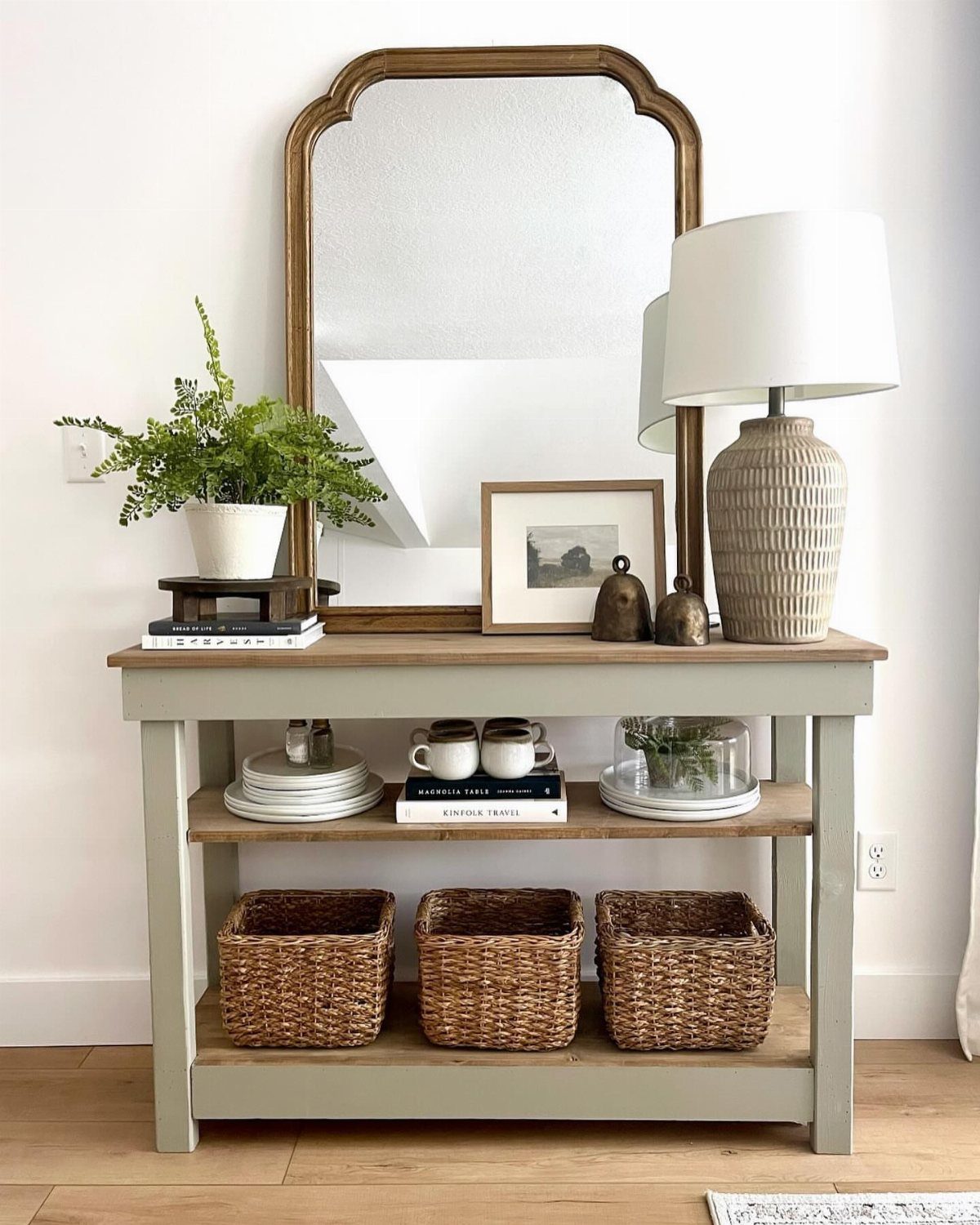
Wood is the warmest foundation a dining room console can have, and a soft painted finish like this light green keeps it from weighing down a white wall.
A mirror above and a plant on top add height, while the lower shelf takes baskets and a few books.
I’d pick wood over glass or metal here. It forgives scuffs, and it pairs with almost any lamp or vase you add later.
3. Console with Drawers
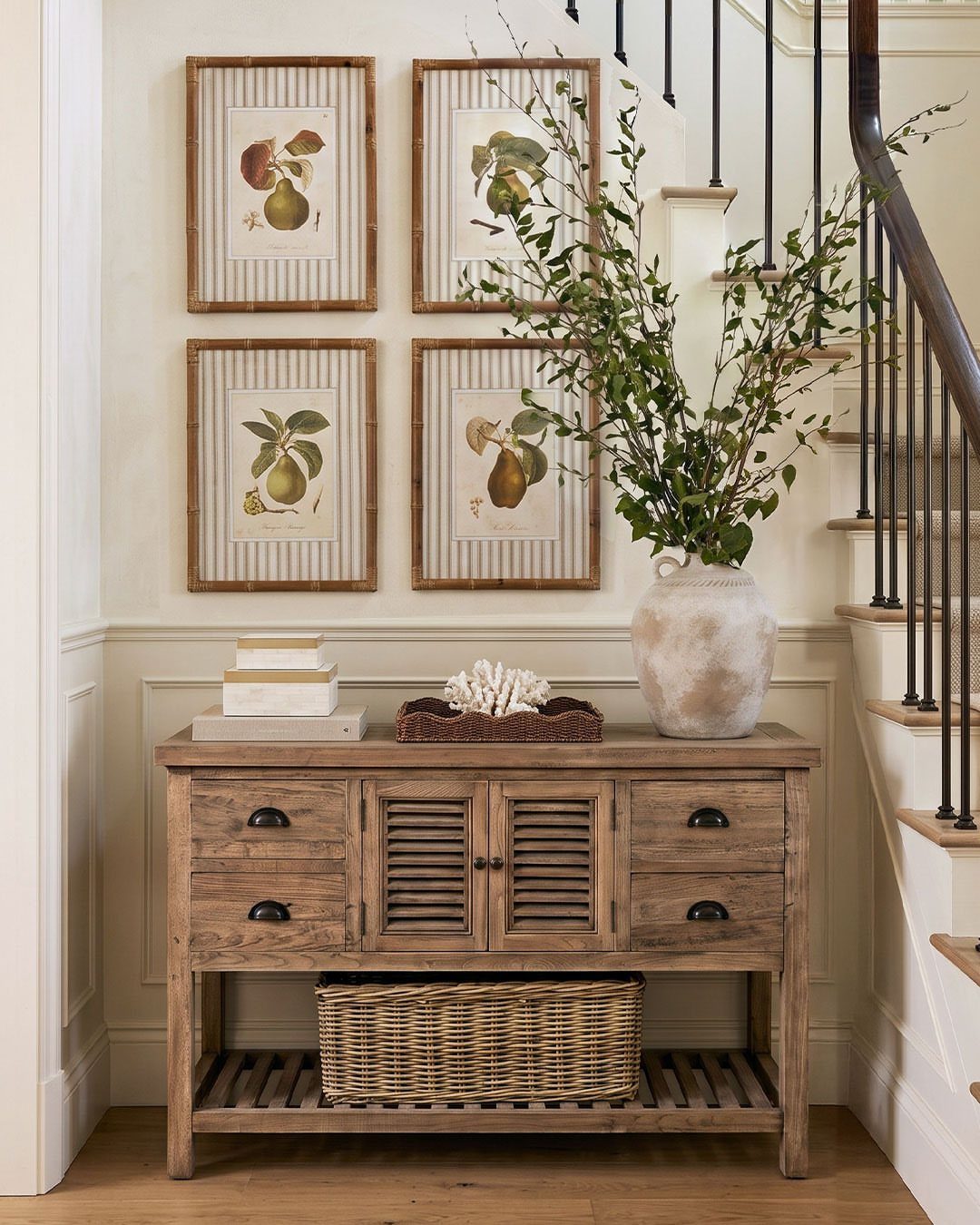
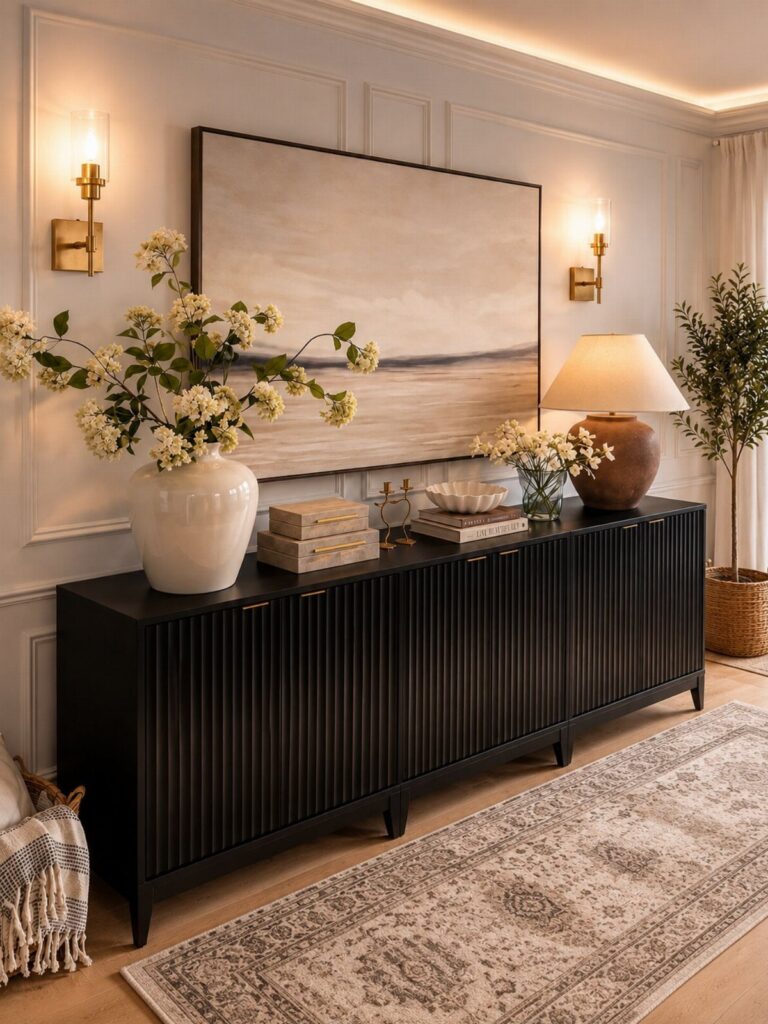
Drawers and cabinet doors turn a console into real storage, which matters in a dining room where placemats, napkins and candles need a home.
Louvered doors like these hide the bulk, and the top stays clear for a vase and a few books.
A wicker basket on the floor beside it takes the overflow.
4. Console with Lower Shelf
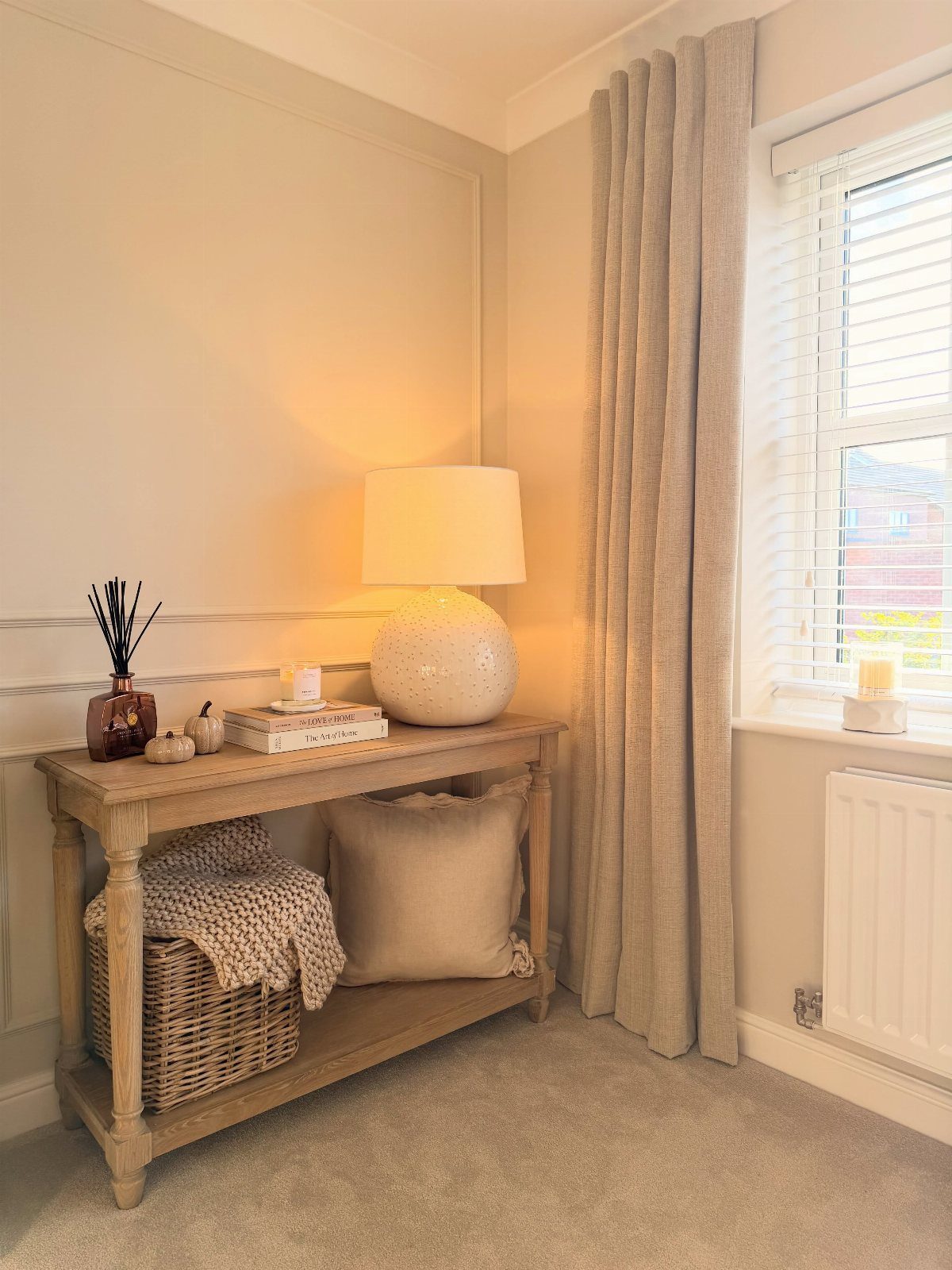
Between the tabletop and the floor, a lower shelf adds a second layer for display or storage. A basket and a pillow fill it here, and I like how the pillow softens an otherwise hard-edged piece of furniture.
Put the lamp, books and a small decor piece on top, and keep the shelf for things you want to reach quickly. Choose a basket that fits the shelf’s full depth so nothing hangs over the edge.
5. Mirror and Artwork Backdrop
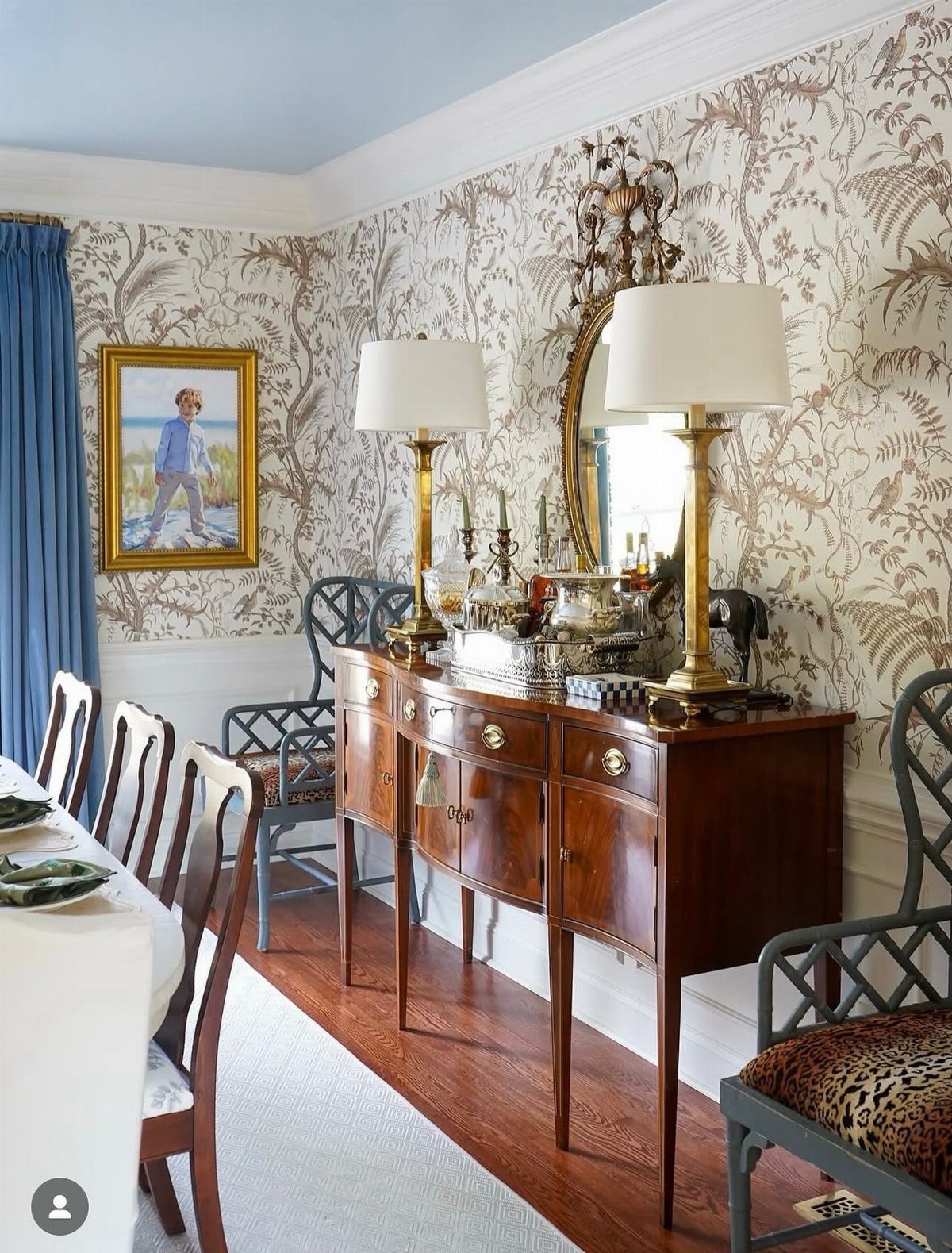
Busy floral wallpaper calls for one strong anchor above the console, not several small ones. A gold-framed mirror does that job, and a painting beside it adds a focal point exactly where you stand to look.
As a rule of thumb, a mirror or artwork about two-thirds the width of the console looks balanced. Repeating the frame’s gold in the lamps ties the tabletop to the wall, and the mirror bounces lamplight back into the room.
6. Greenery and Vases
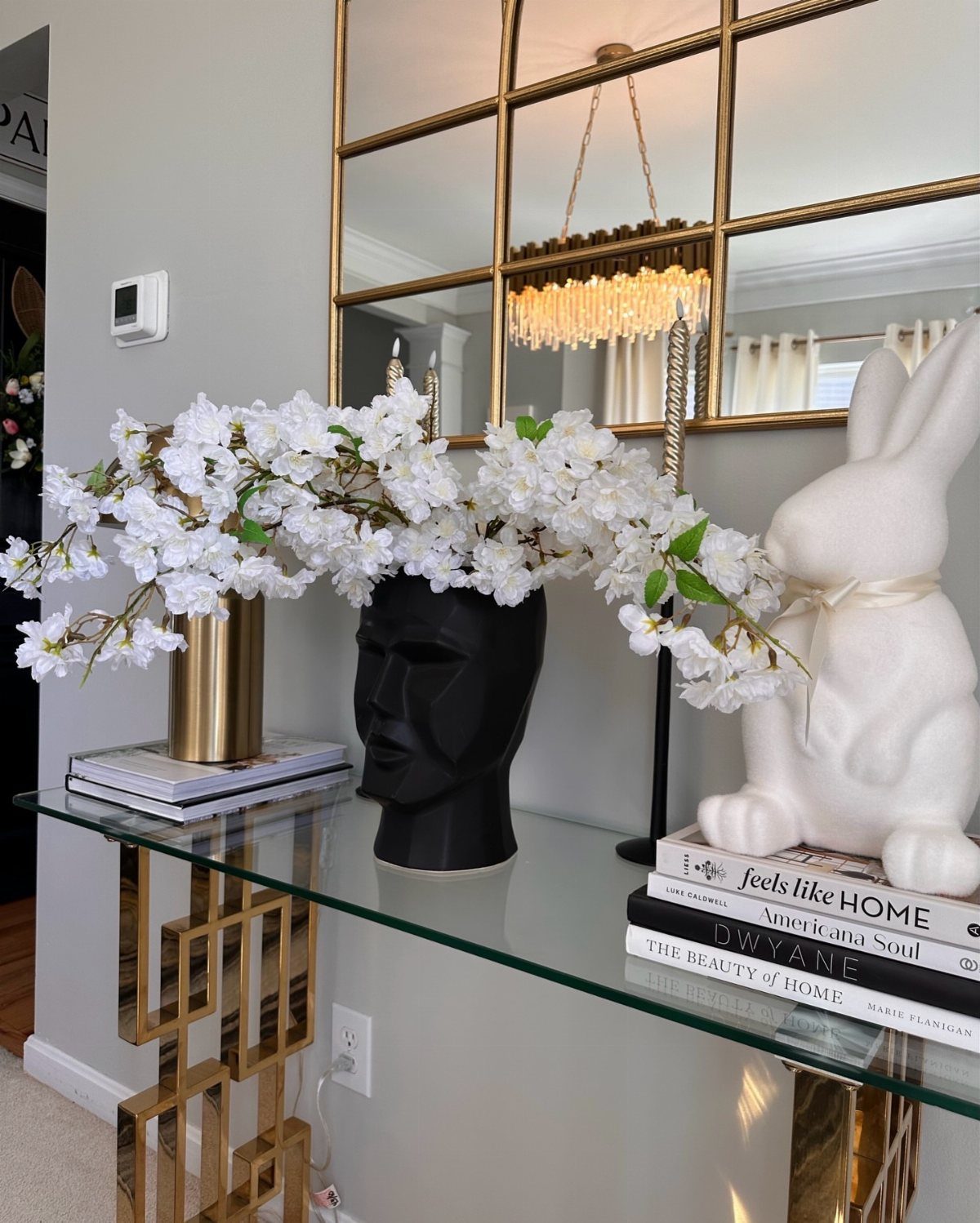
White blooms in a black vase give a console its sharpest contrast, and a glass tabletop keeps the whole arrangement light. One bold vase, a small sculpture and a few books are enough; more would crowd the surface.
I’d treat the flowers as the main event and let everything else stay quiet. If you want a greener look, swap the blossoms for leafy branches in the same vase.
7. Lamps and Candles
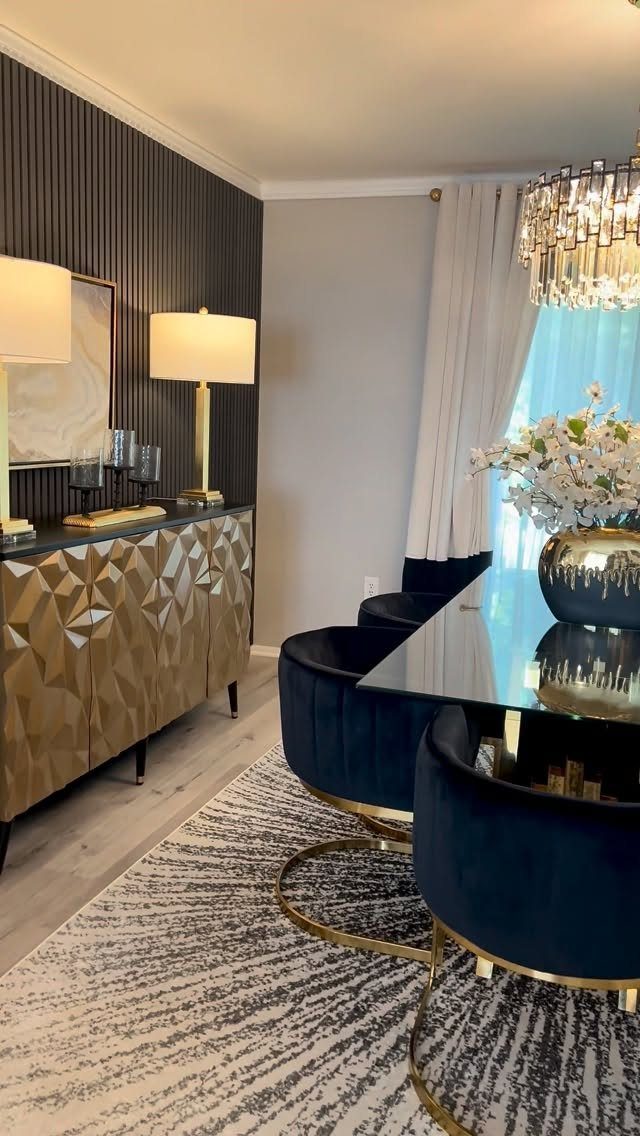
A pair of matching lamps flanking a candle gives a console table symmetry without fussiness. The lamps bring height, and the candles add a glow you can light when you want it.
I’d pick lamps with shades that direct light downward so the tabletop stays usable for serving. The candles can be tall tapers or short votives; either works as long as they sit between the lamps, not beside them.
8. Neutral-Toned Styling
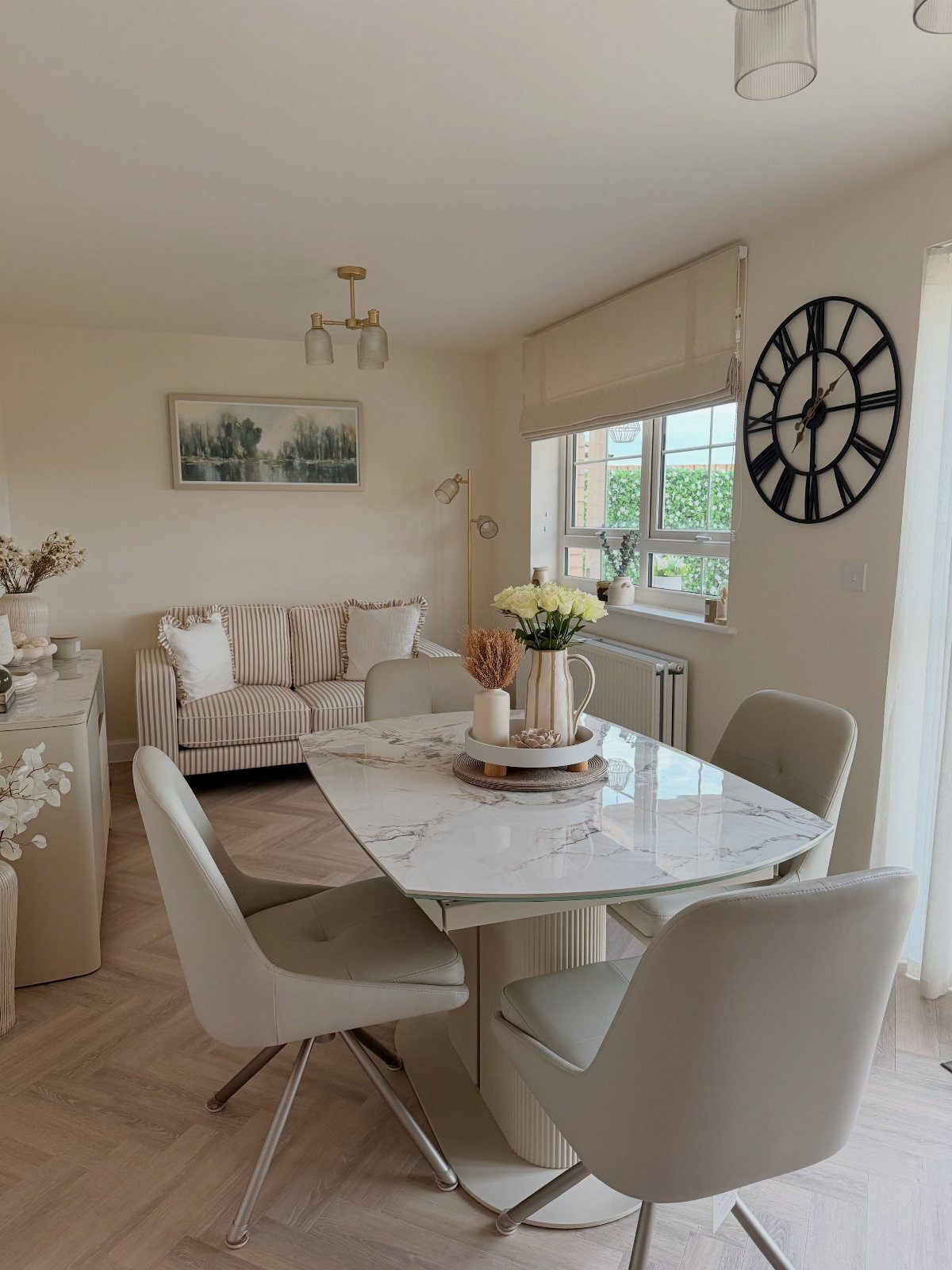
Light wood, cream and beige build a console display that never fights with the dining table or the chairs.
A vase, a small stack of books and one piece of greenery are enough; the calm comes from keeping every surface pale and textured.
I’d add linen, woven baskets or matte ceramic where I could. Gloss and metal pull the eye too hard in a room this soft.
9. Baskets Underneath
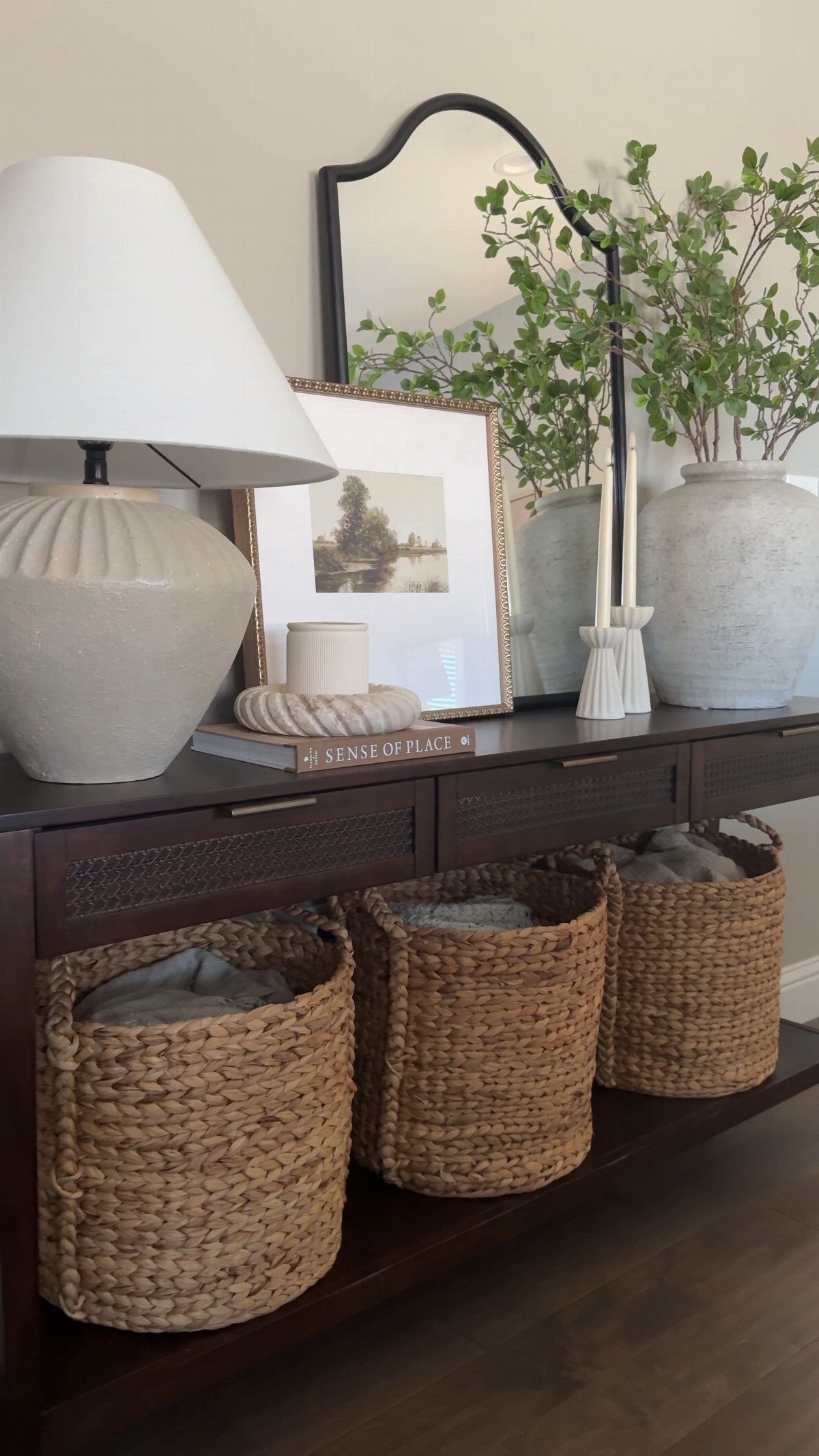
3 woven baskets slide under a console and turn dead air into storage.
Match the basket width to the space so they sit flush with the console’s edge. If the console has no lower shelf, baskets sit directly on the floor.
10. Barware on a Tray
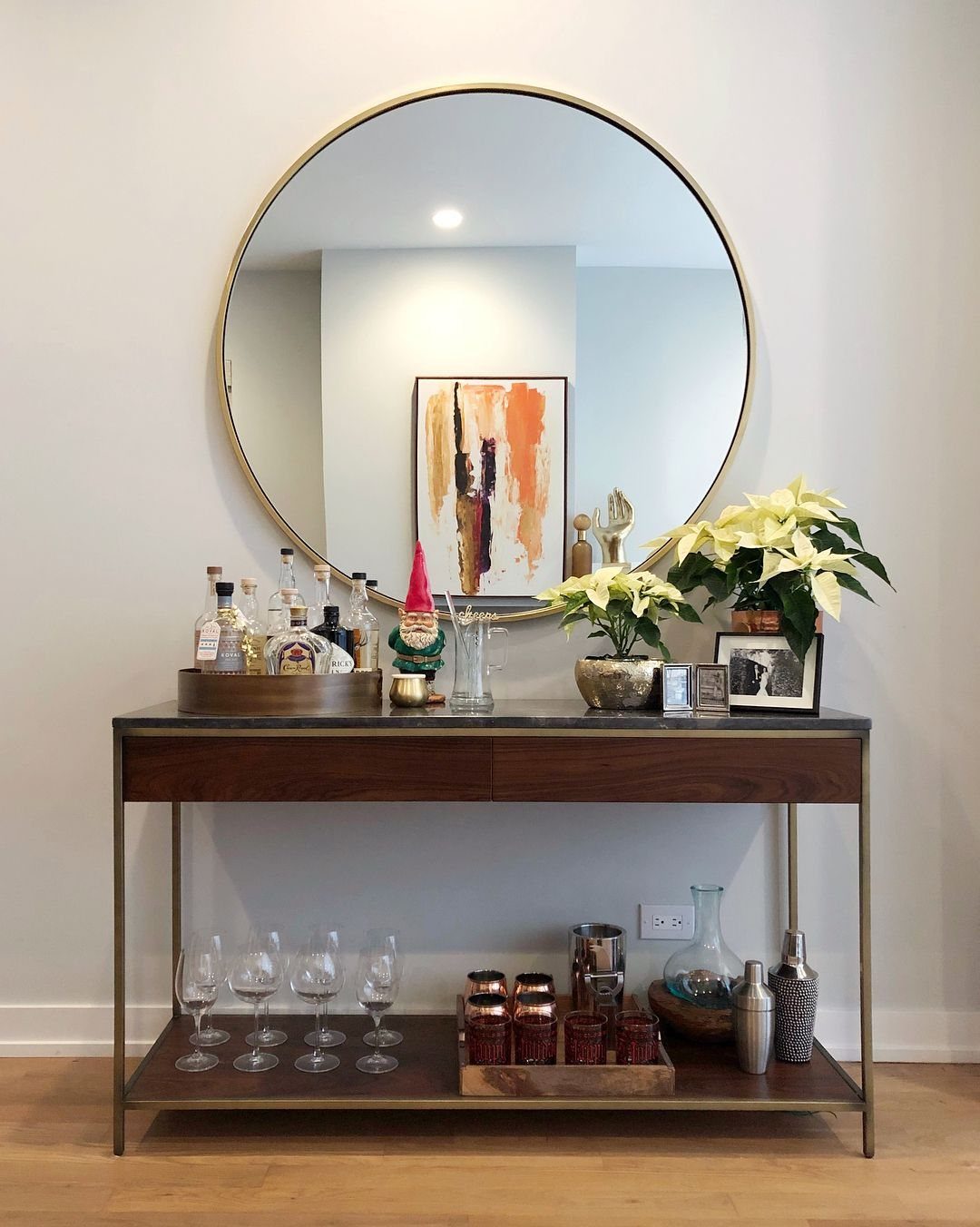
A tray corrals bottles and glassware into one neat zone, so the console becomes a pour-and-serve spot without looking like a liquor store.
The tray’s rim keeps bottles from sliding, and you can lift the whole thing to wipe the table.
I’d limit it to a few bottles, a few glasses and one cocktail tool. More than that and the tray feels crowded.
11. Layered Decorative Objects
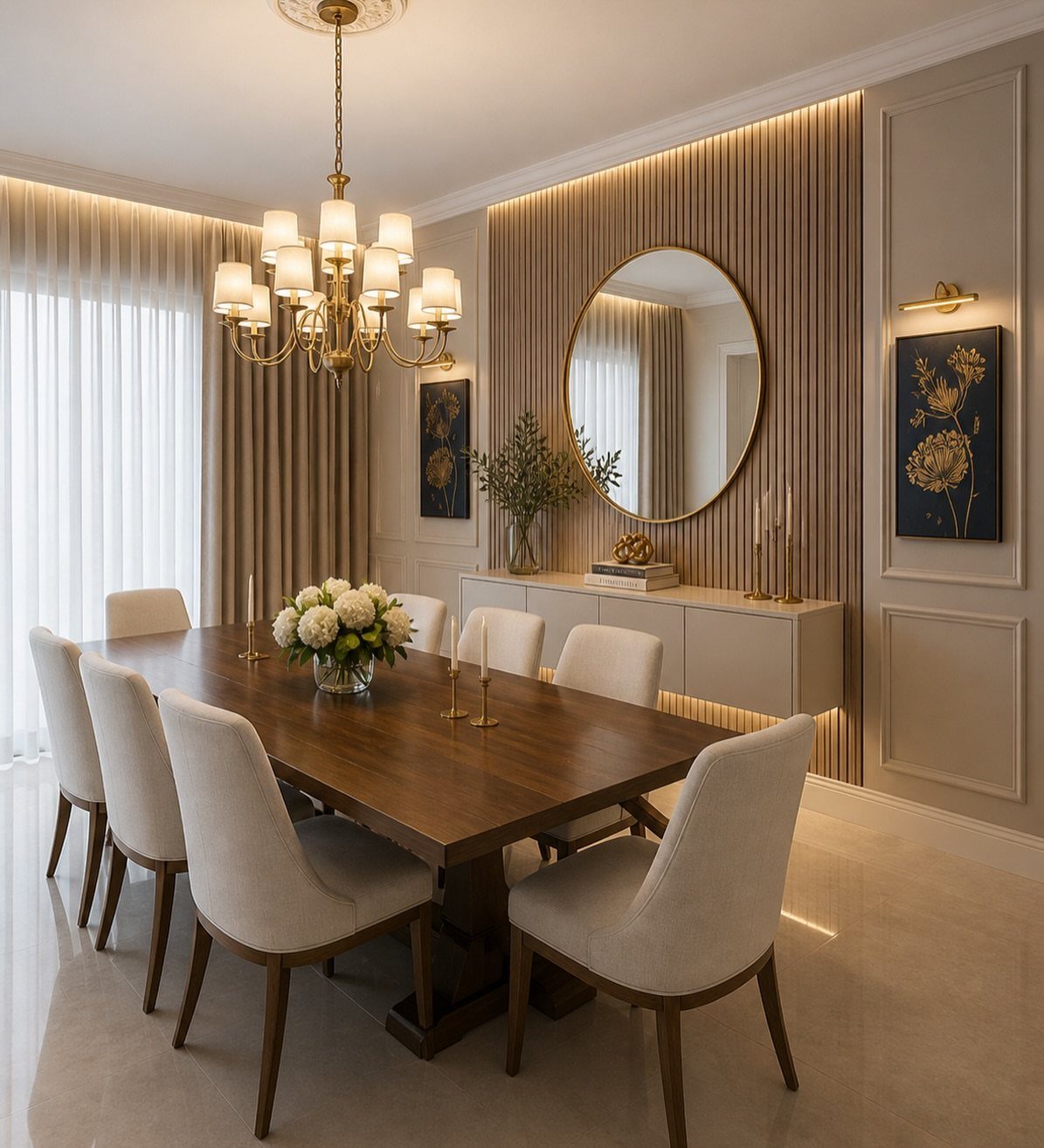
A floating console gains presence when you layer different heights and textures across the top. A vase, a small sculpture, a stack of books and a candle give the eye several stops, and each one has a different shape.
Keep the gaps between objects visible. If they touch, the whole arrangement reads as clutter instead of composition.
12. Textured Sideboard
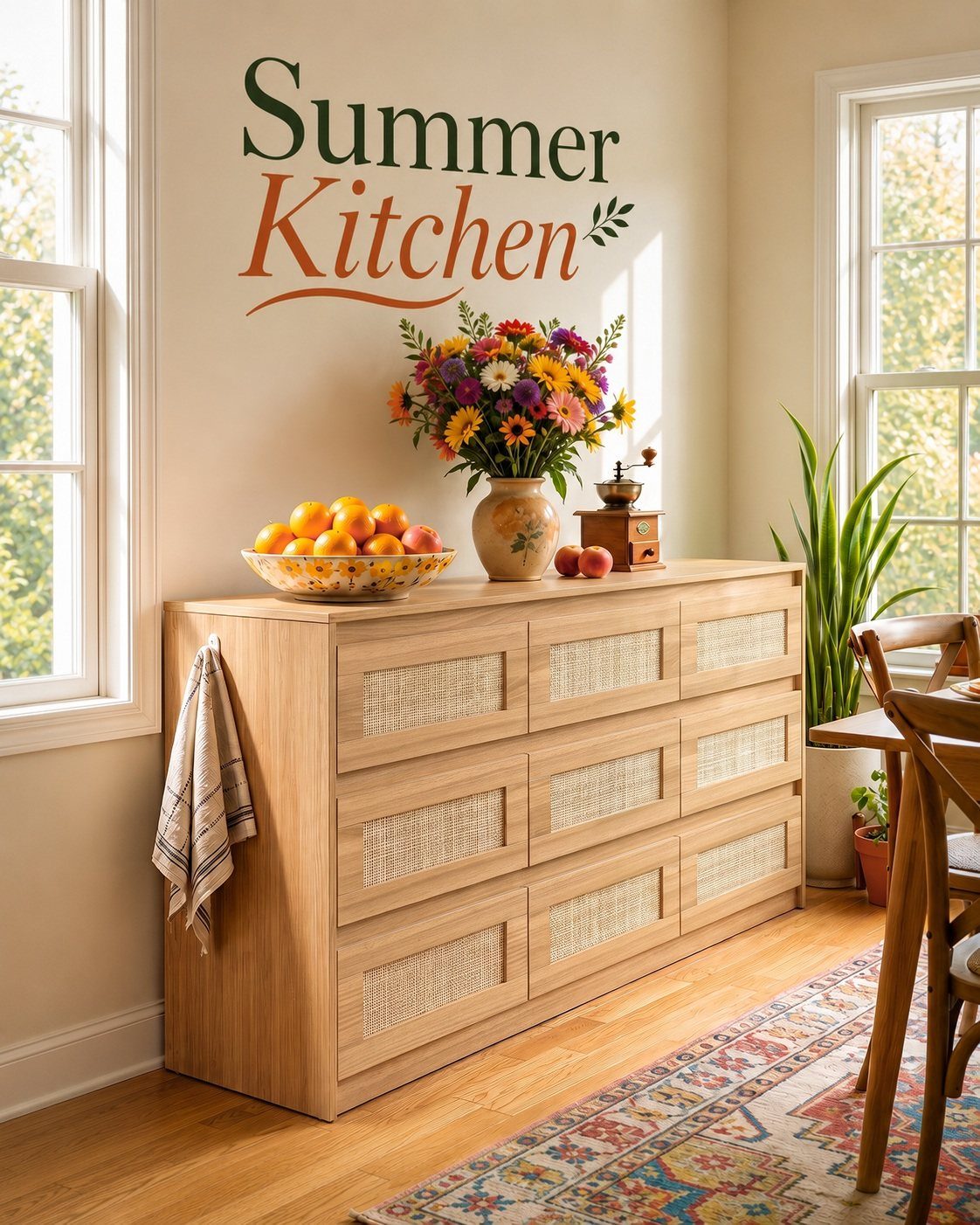
Woven cane or carved drawer fronts give a sideboard enough visual interest that the top can stay simple. A bowl of fruit, a vase of flowers and one other small object are all it takes; the texture does the rest.
I’d choose a sideboard with this kind of detail over a plain painted one. It forgives a quiet room, and it gives you something to look at even when the table is empty.
13. Long Dining Sideboard
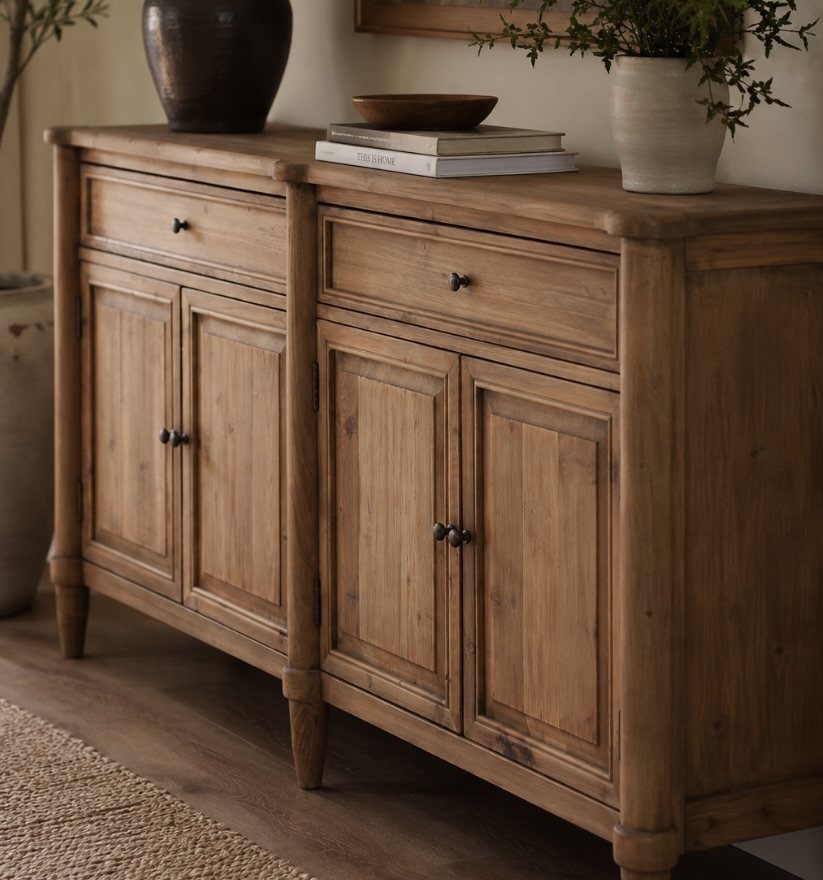
Aged pine gives a long sideboard the worn-in warmth of a piece that has been in the family for decades, and the drawers and cabinet doors hold linens and serving pieces so the top can stay light.
A bowl, a vase and a short stack of books are enough.
I’d set it on a woven rug like this one, so the wood has a softer neighbor. Pick pine with visible grain over a heavily painted finish; the grain is what makes the style feel California.
14. Christmas Garland Display
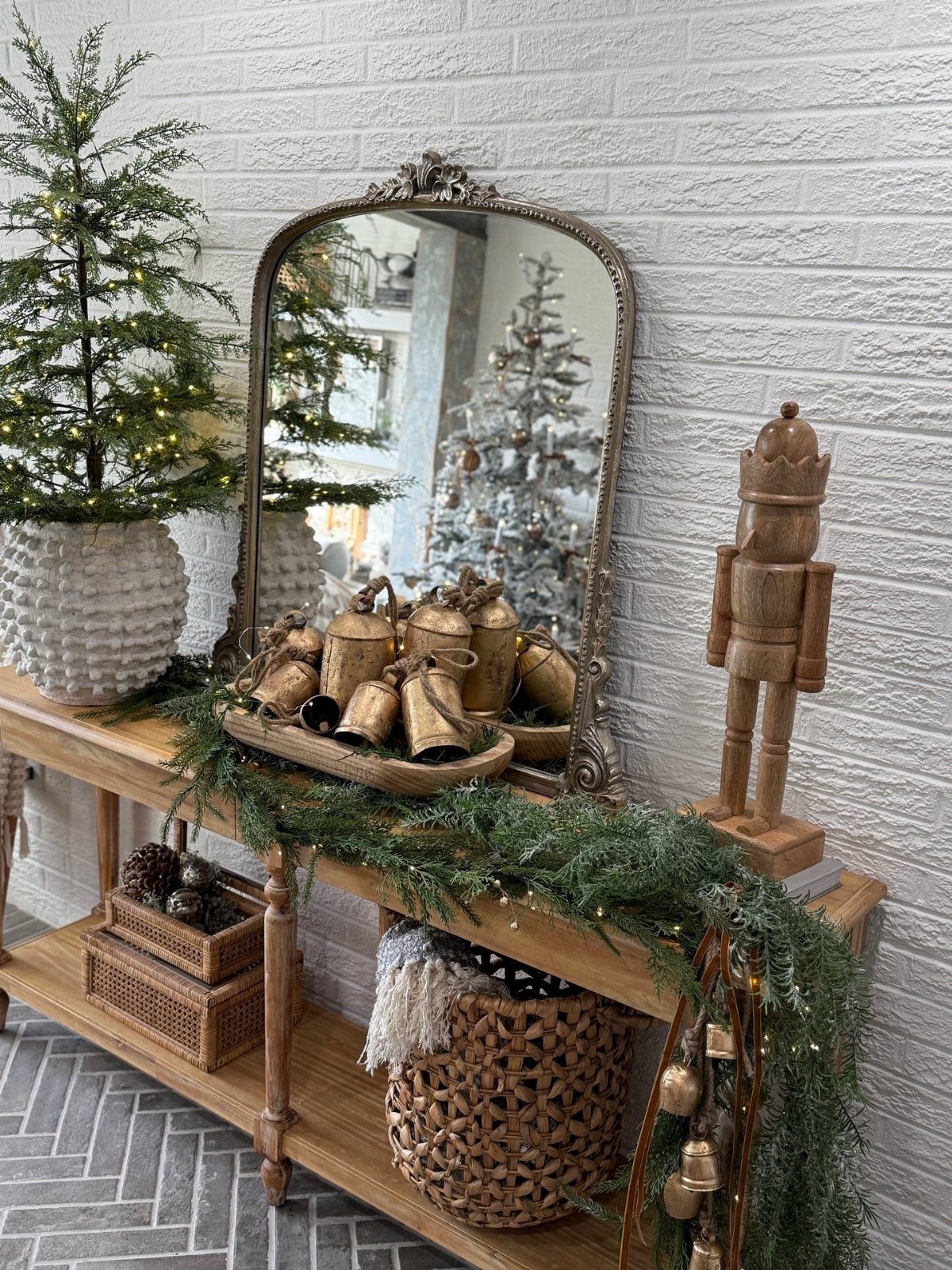
Evergreen garland draped along the front edge of a console turns an ordinary tabletop into a holiday scene in one pass. Gold bells and a nutcracker add the seasonal accents, and baskets underneath keep the lower half tidy.
I’d let the garland hang slightly past one end for a relaxed line, then group the small pieces on the opposite side. Against white brick, the green and gold read clearly without extra color.
15. Holiday Candle Display
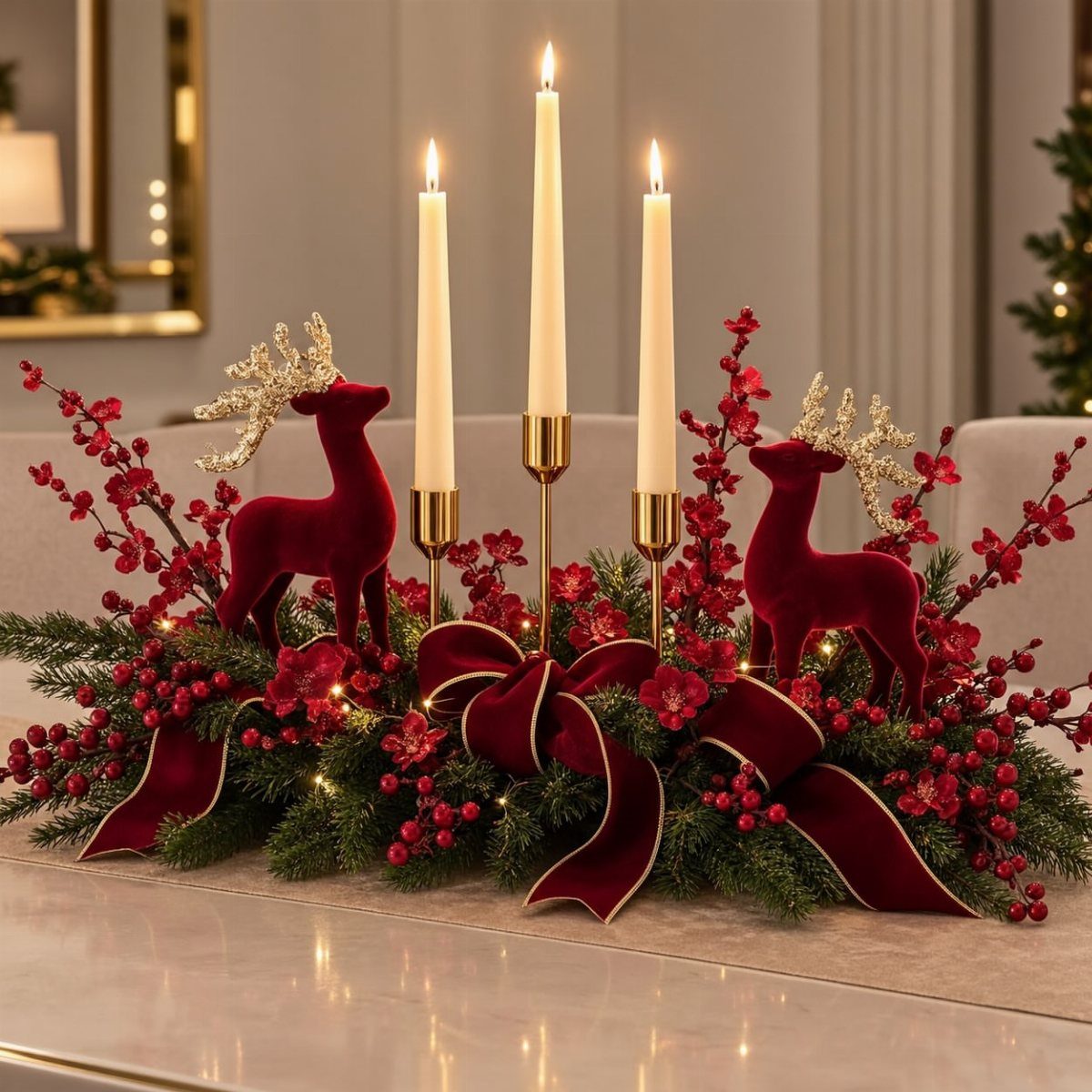
3 white tapers in gold holders give a holiday console its glow, and the height of the candles lets the red velvet reindeer and berries stay low around them. A red bow ties the greenery to the candles.
I’d keep the tapers in a tight cluster rather than spaced out, so they read as one centerpiece. Light them only while you’re in the room, and tuck the greenery below the flame line.
16. Festive Mini Trees
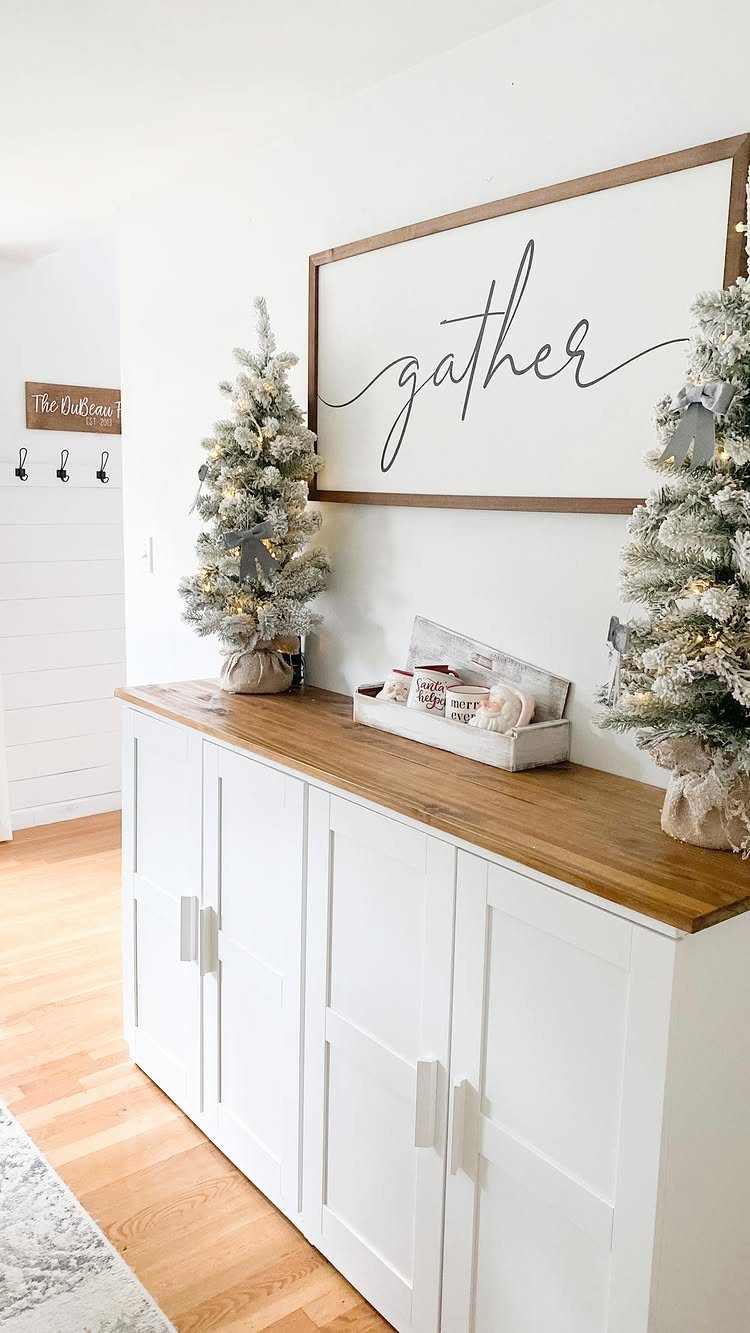
Two frosted mini trees on a white console are the easiest holiday swap there is: no lights, no tangle, just a matched pair. A "gather" sign set between them fills the gap and speaks to the dining room’s purpose.
Keep the trees the same height and place them with equal space on each side of the sign. On a white wall, the pale flocking looks soft, and the wood top adds warmth beneath it.
17. Holiday Figurines and Ornaments
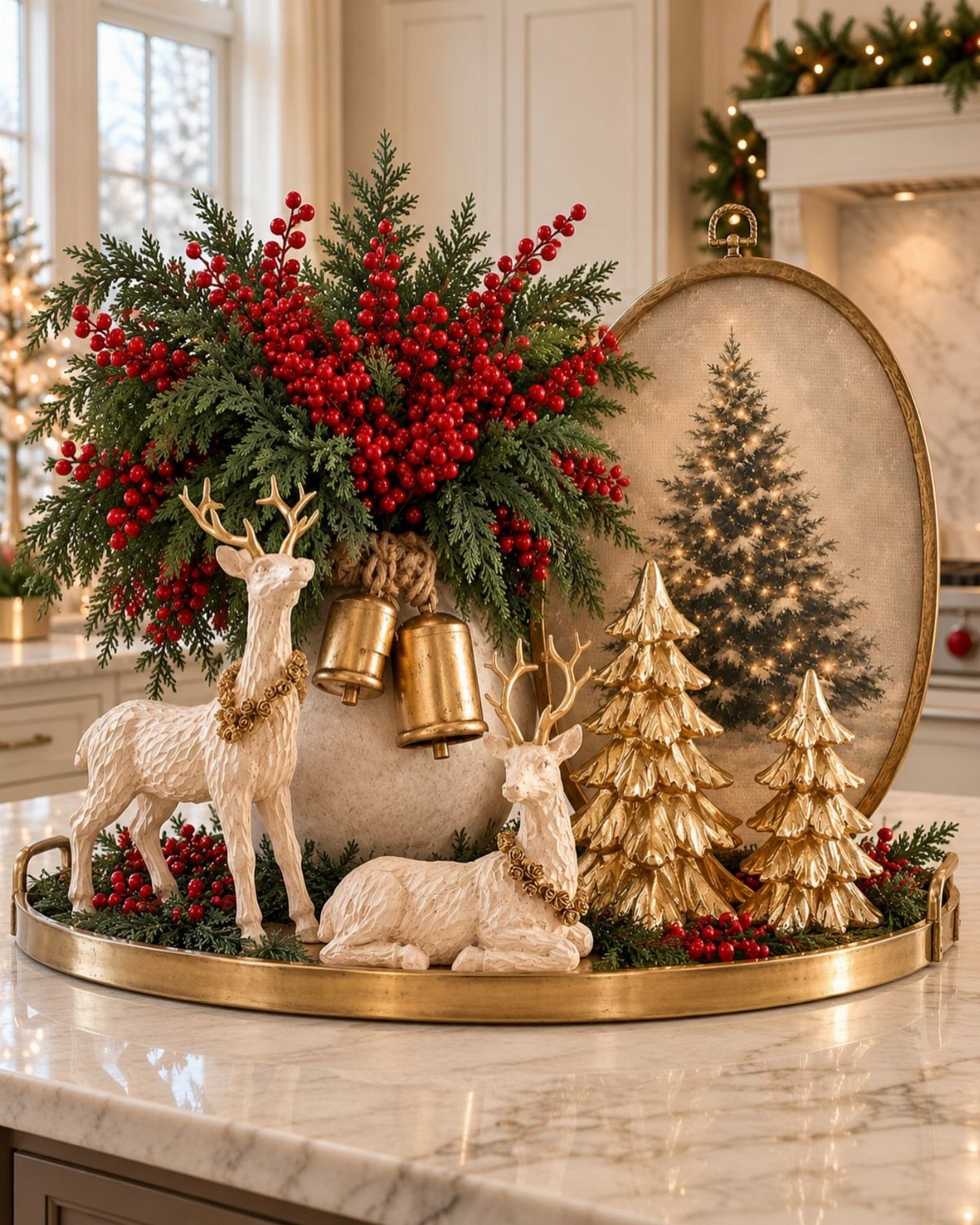
Limit the figurines and ornaments to 3 colors, such as white, gold and red, and a mixed set of pieces reads as planned instead of cluttered.
Gathering the pieces on a gold tray lets you move the whole display in one lift when the table needs clearing.
Vary the heights: tall trees at the back, deer in front, berries off to one side. I’d leave a little marble showing between groups so each figure has room to read.
18. Small Dining Shelf Decor
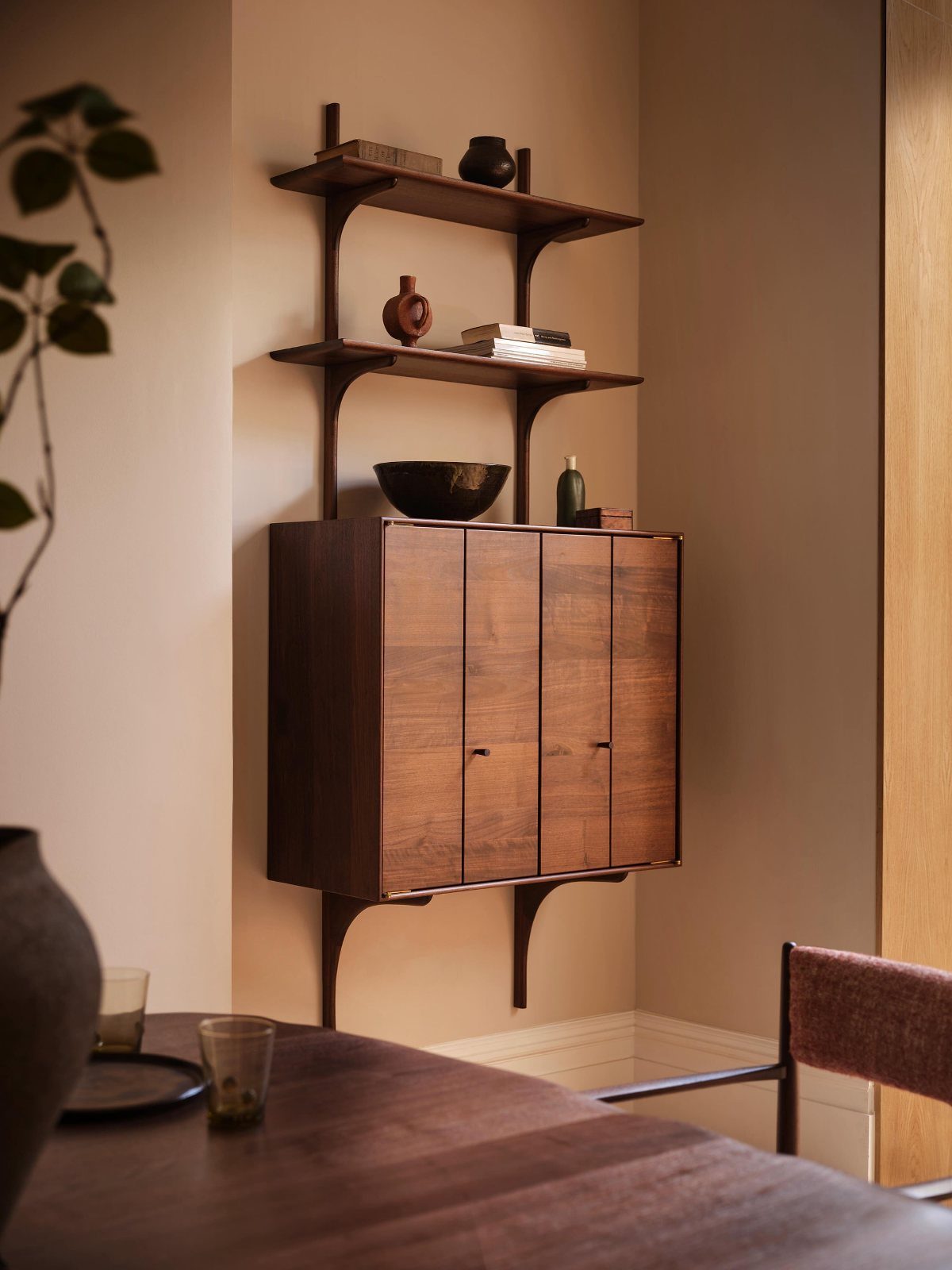
A wall-mounted cabinet with open shelves above the dining table puts display where the eye already lands, and the closed cabinet hides what you’d rather not show. Bowls, minimalist vases and books are enough on the open shelves.
I’d leave at least one shelf nearly empty. With a dark wood unit, the bare space keeps the look lighter, and the stack of books can double as a riser for a vase.
Polished, Uncluttered Styling
Choose one larger piece first and let everything else answer to it. A framed print, a wide bowl or a tall lamp can be the anchor; set it down before you touch anything else.
Add smaller pieces one at a time, and stop while the anchor still stands out. If a new object competes with it for attention, take that object off.
Proportion does the quiet work. A dozen small items scattered along a long top read as clutter, while 3 or 4 pieces sized to the console read as a plan.
Restraint is easy to test with your phone.
Take a photo from across the room, and anything you can’t make out at that distance is probably extra. I’d remove it and live with the bare spot for a few days before deciding whether it needs filling.