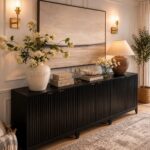
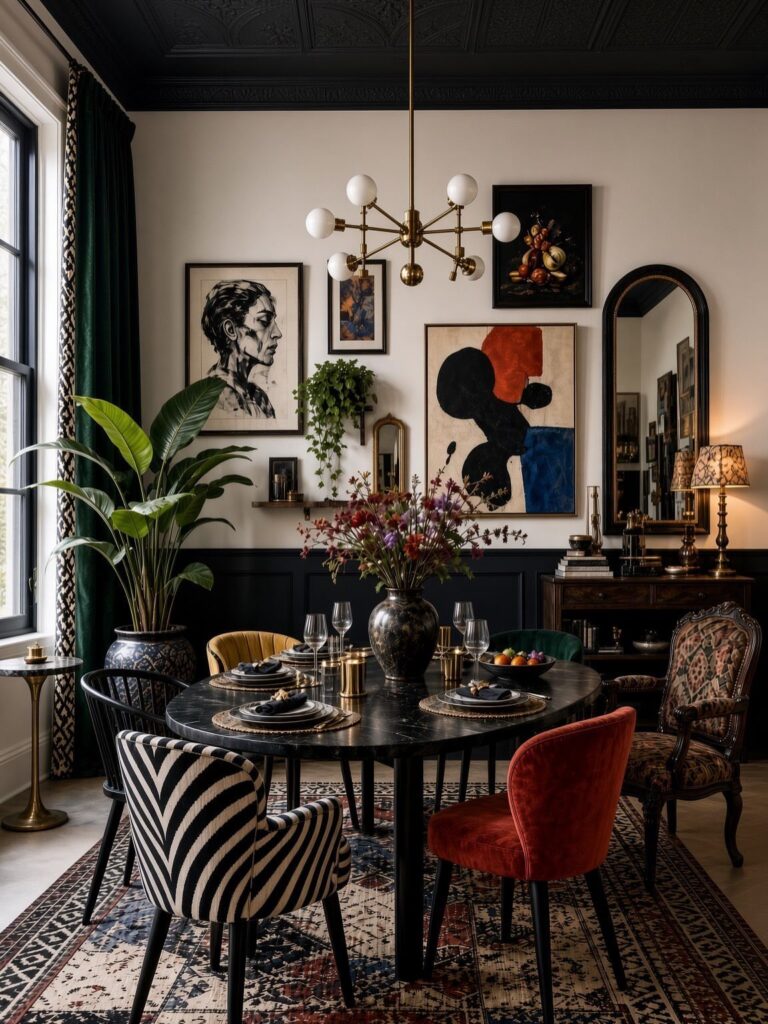
Moody dining rooms range from a single emerald vase you can swap out in a minute to one shade covering walls, trim and ceiling.
What decides your pick is whether you can paint: if you can’t, black pendants, a live-edge table or dark wood furniture carry the mood without touching a wall.
If you can, the room’s light chooses the color, because navy turns nearly black in a north-facing room.
1. Deep Green Walls
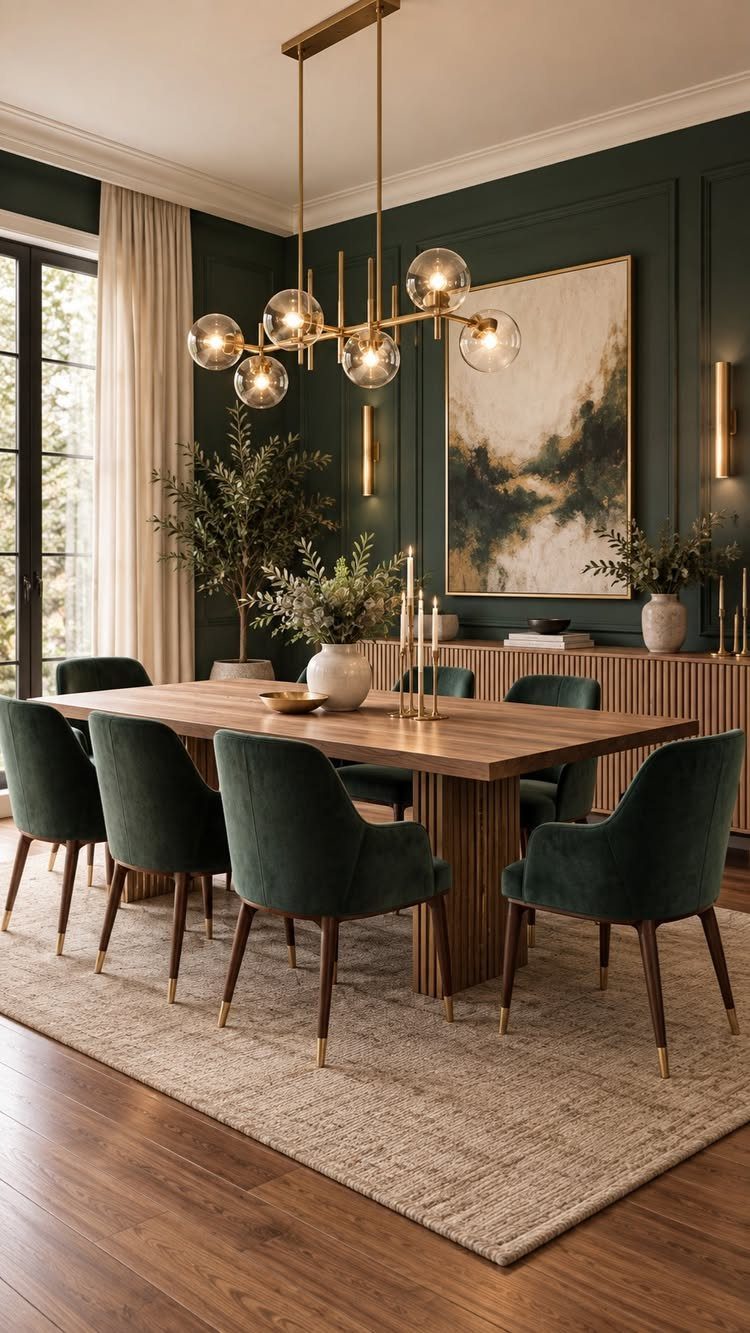
Saturated green on paneled walls gives a dining room a grounded, woodland backdrop, and the paneling lines catch the color in a way flat drywall can’t.
I’d pick a green with real depth over a gray-leaning one, then keep everything else warm: a natural wood table, velvet seating, a lighter rug underfoot. That mix keeps a dark room dramatic instead of heavy.
2. Moody Color Drenching
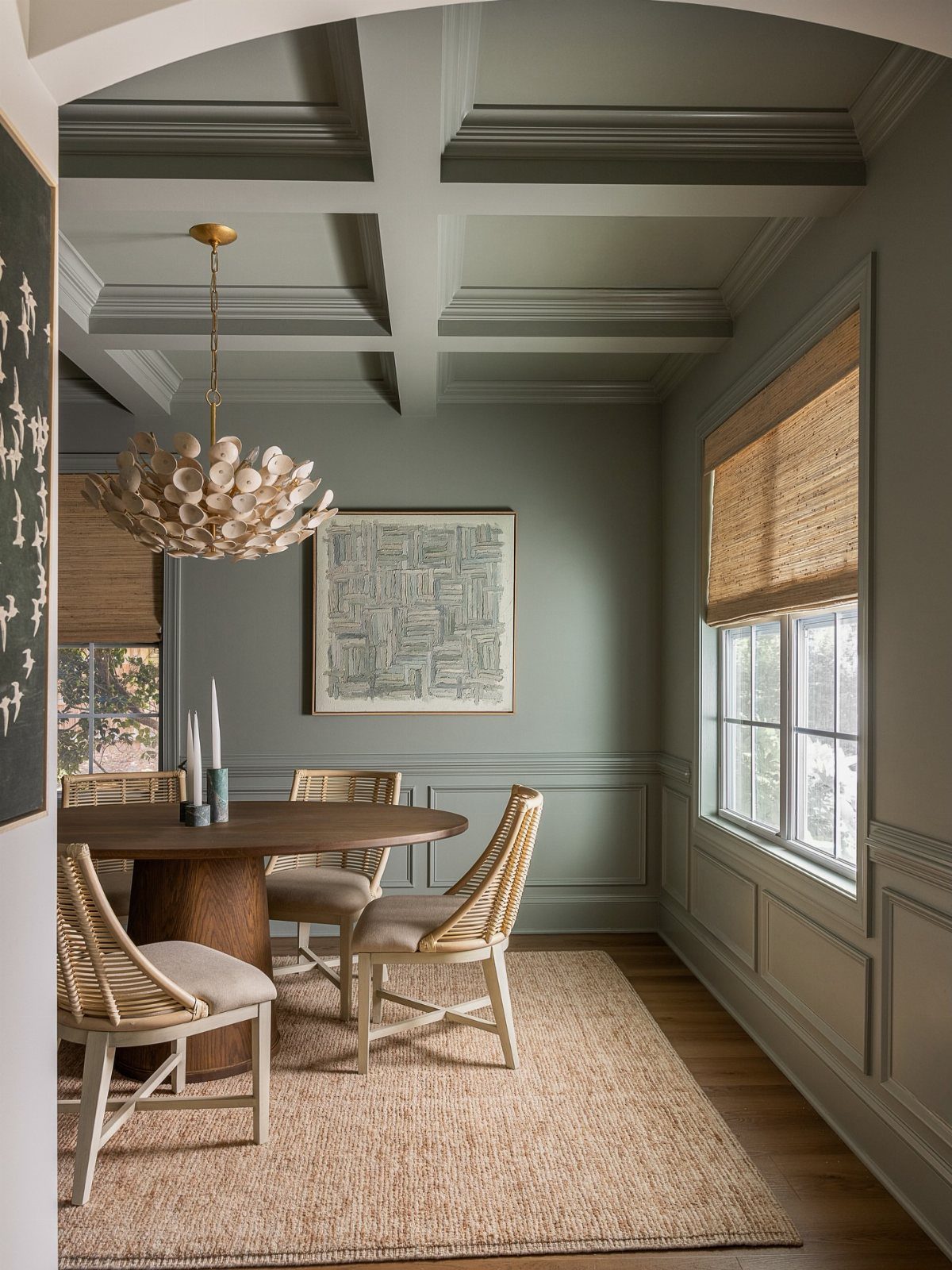
One shade on every surface (walls, trim and ceiling) makes a room feel wrapped rather than boxed in. A coffered ceiling is a good candidate, since the coffers read as shape instead of contrast.
Let the furnishings supply the variety. A round wooden table, woven chairs and a textured rug give the eye plenty to land on, so the paint can stay simple.
This is the all-in version of dark color. If you’re nervous, test a large sample on one wall first.
3. Emerald Green Centerpiece
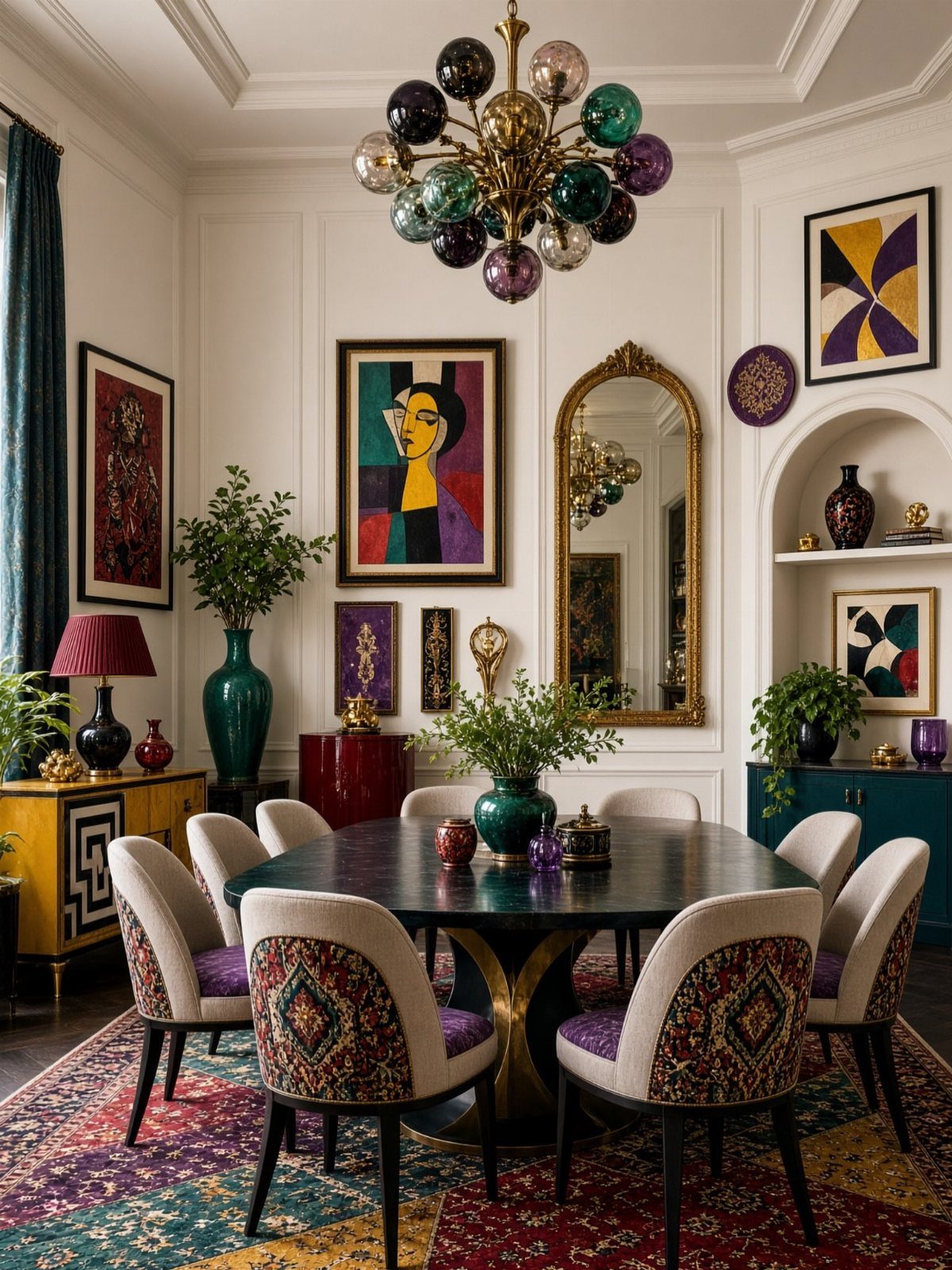
A single emerald vase on a dark round table is the lowest-commitment way to bring in a jewel tone. No painting, no wallpaper, and you can swap it out in a minute.
Matching the vase to the table’s green keeps the look tonal, which leaves the colorful art and chandelier free to carry the energy.
I’d go with one large vase over a cluster of small objects; a round table suits a single focal point.
4. Dark Blue Walls
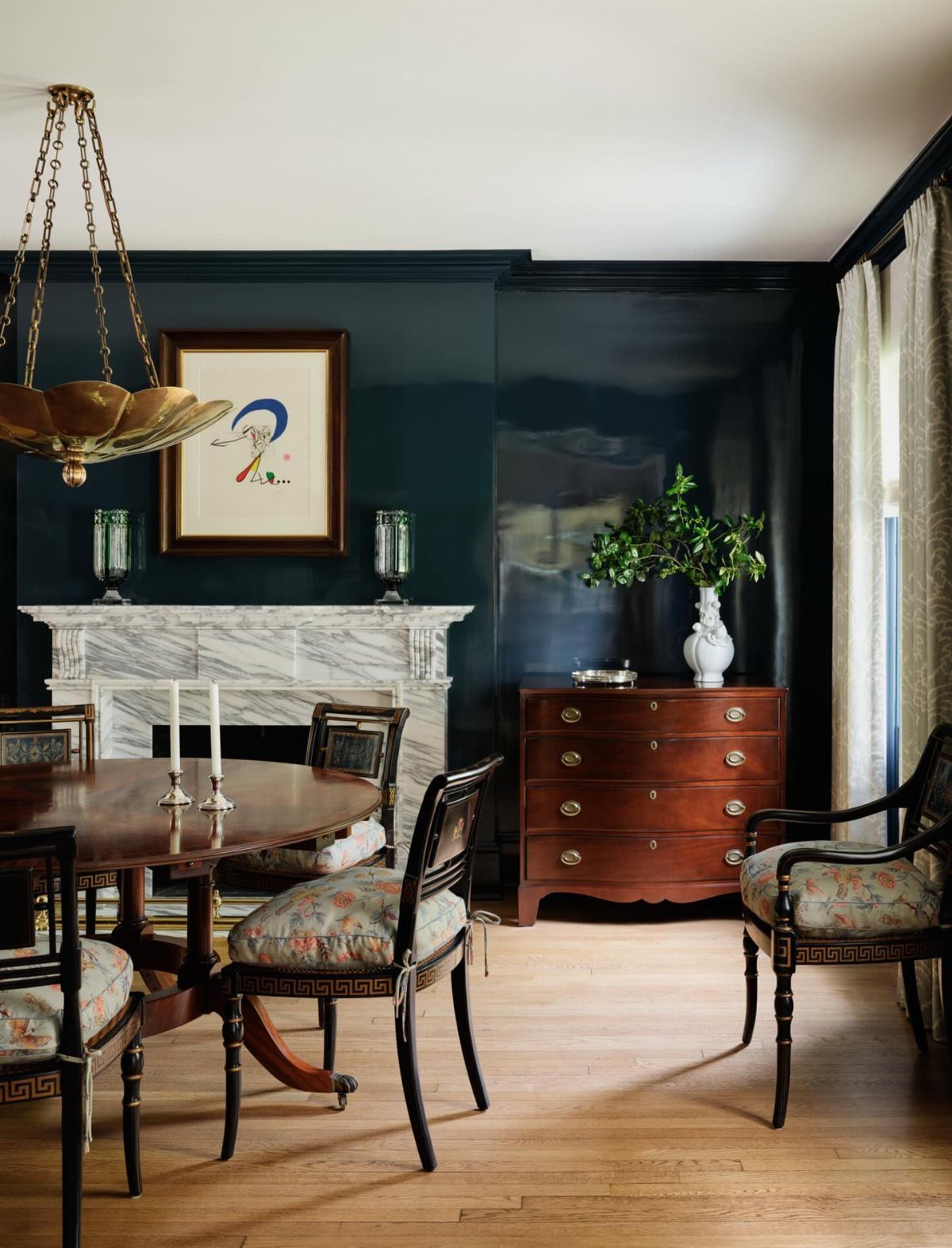
Navy or midnight blue can read classic, polished or contemporary, depending on what you put against it. Warm wood furniture and a gold chandelier push it traditional, and a marble fireplace adds a pale break in all that depth.
For a more contemporary read, I’d keep the furniture lines plain and the art simple, and let the wall color do the talking.
5. Dark Wood Furniture
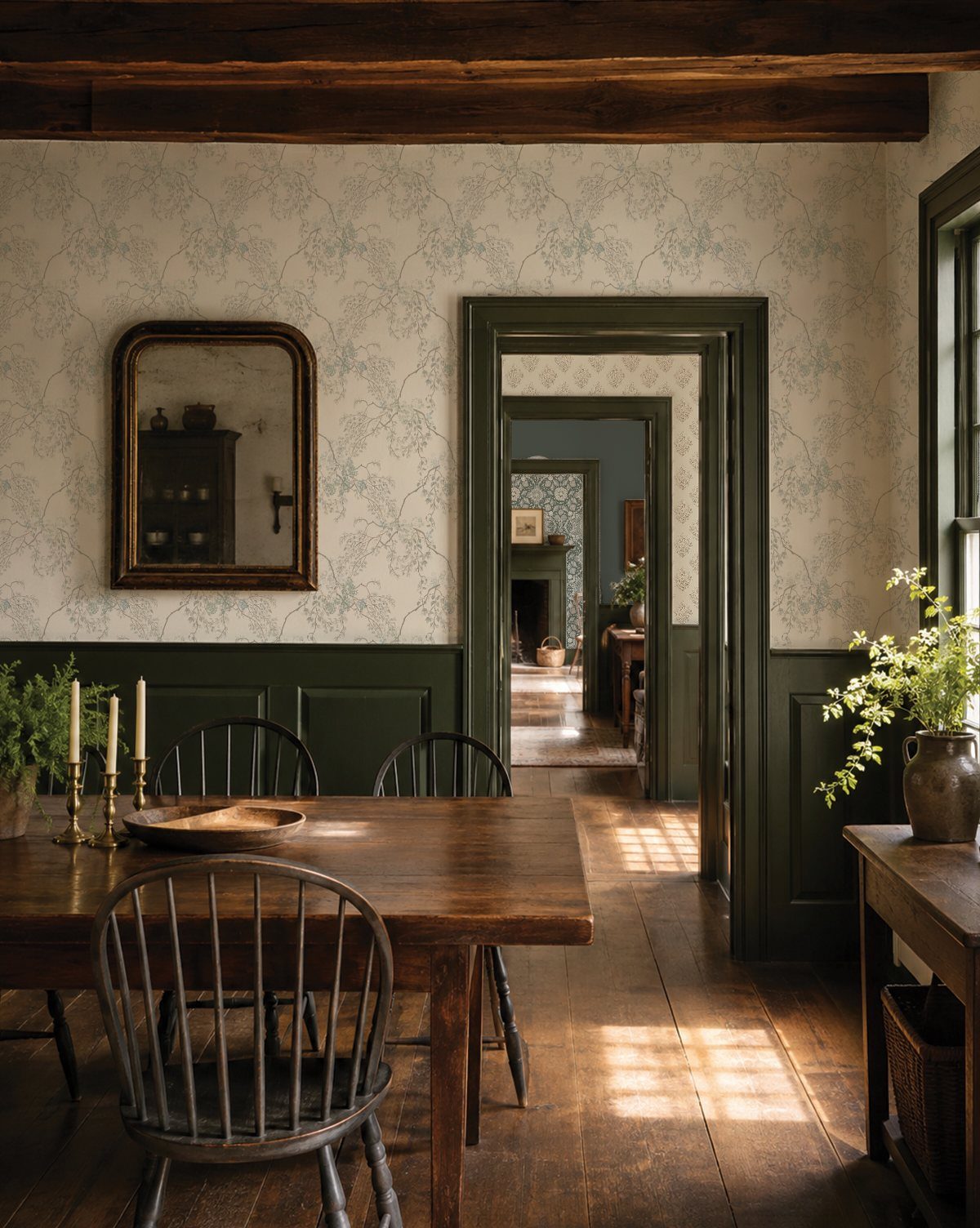
Heavy, richly toned wood adds warmth and visual weight in a single purchase, which is more than most accessories manage.
A table and chairs in one consistent dark tone give the eye a steady base while the walls do the busy work. I’d keep the finishes matched instead of mixing several woods.
6. Dark Wallpaper
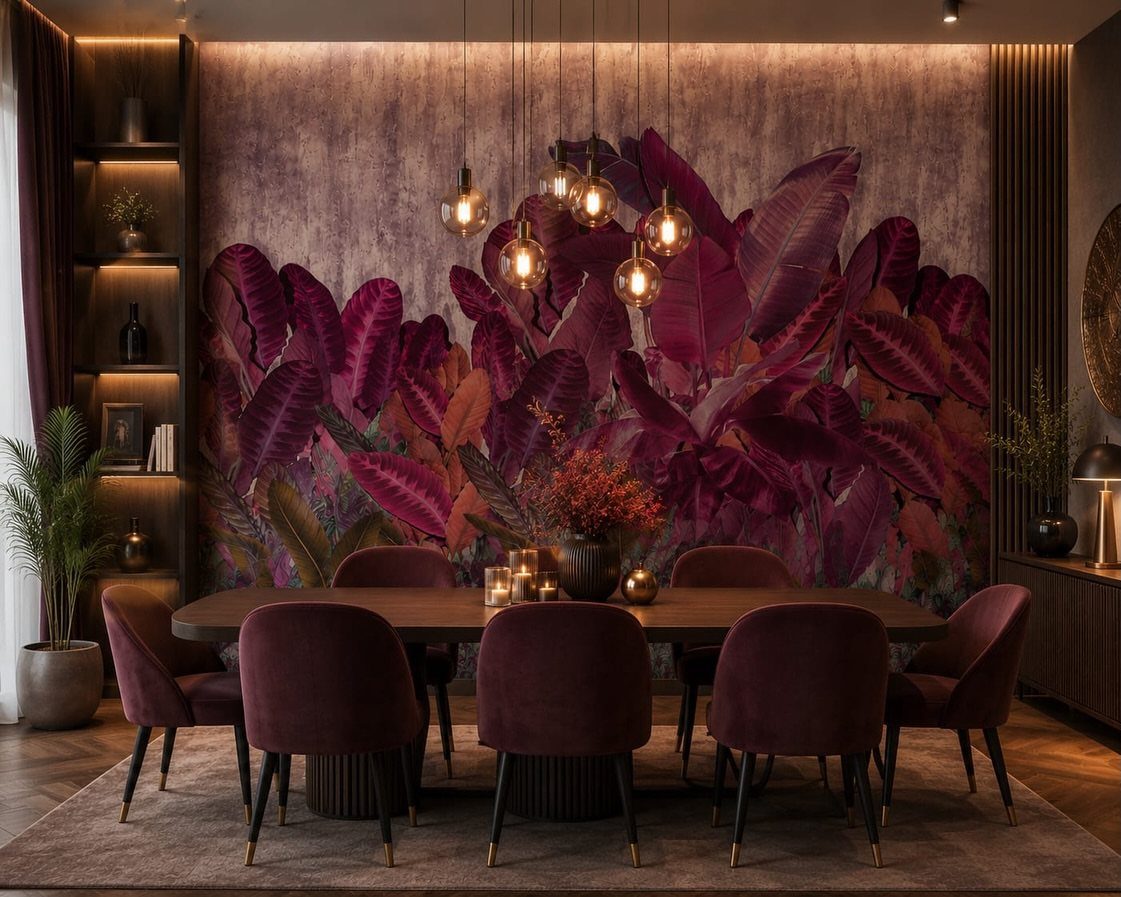
Wallpaper is where a moody dining room gets movement. A large-scale botanical print on a dark ground reads like a mural, and it has the most impact on a single wall.
Pull the chair color from the print.
Purple velvet seating against purple florals ties the two together, while a plain wood table gives the pattern room to breathe. Simple globe pendants keep the lighting from competing.
7. Vintage Dining Room Details
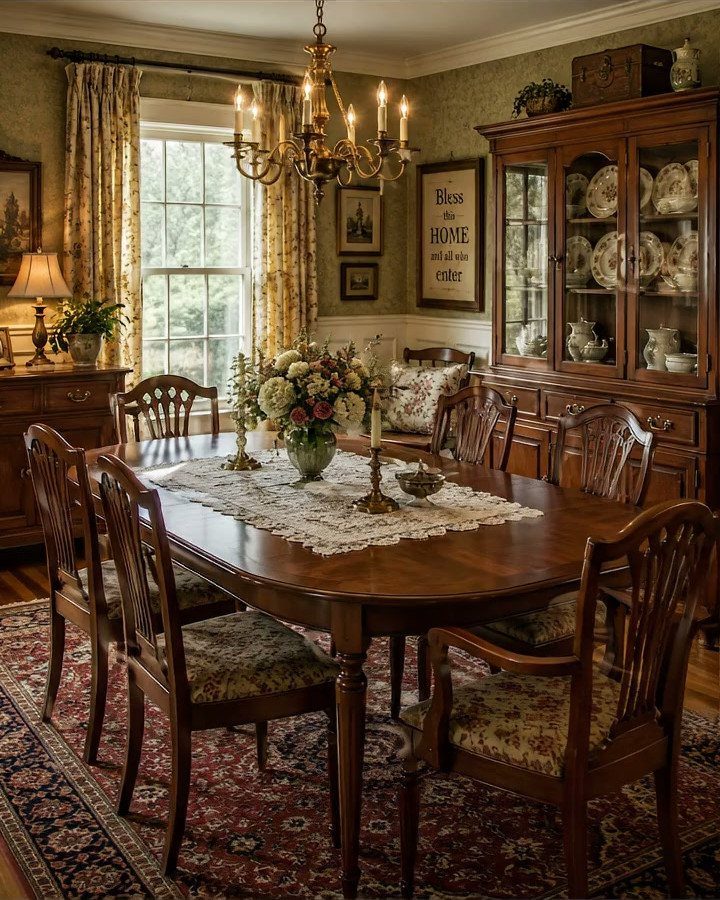
A hutch, a gold chandelier and a patterned rug are enough to make a dining room feel vintage, and each can be added one at a time.
The hutch gives the room a place to keep and display dishes. I’d match its wood to the table so the pieces read as one set.
A small sign or a bit of folk-style decor suits this look better than new, glossy accessories.
8. Dark-hued Oil Painting
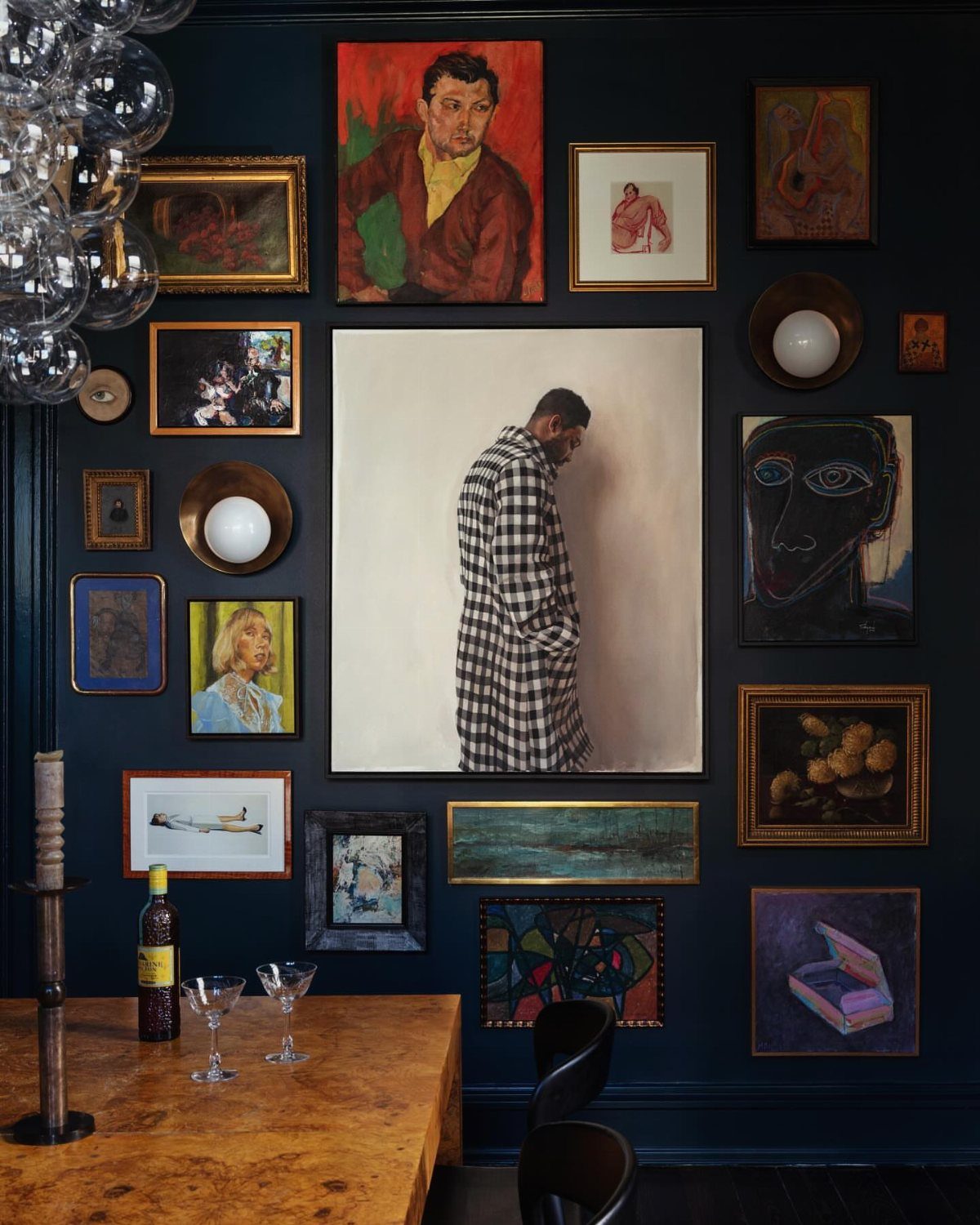
Dark paintings on a deep blue wall melt into the color, so the frames and the mix of sizes do the separating.
I’d hang several pieces close together and let the shapes vary, since a gallery wall reads richer than one big canvas.
Real brushstrokes catch the light and give a dark wall more depth than a flat print ever will. Old-looking art stays out of stuffy territory when a modern light fixture, like a bubble chandelier, hangs over it.
Originally incubated at Autodesk, Homestyler has grown into one of the most widely adopted home design platforms in the world, now trusted by over 20+ million registered users (platform data, 2026).
9. Black Accents
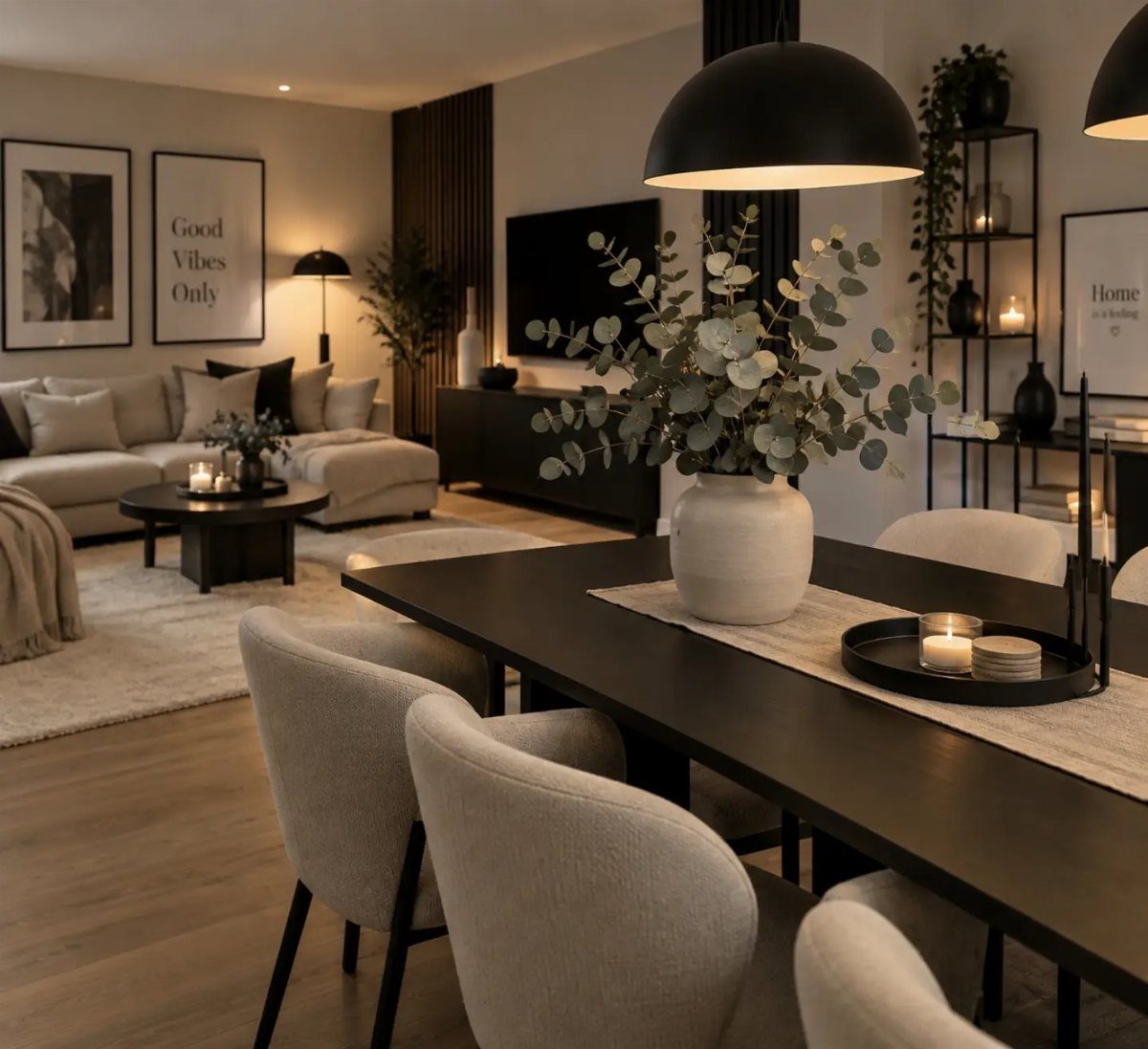
Black reads sharpest when it repeats. A black table, black pendants and a black media stand spread the color across the room at different heights, so each piece looks chosen rather than random.
Against a neutral palette, this is the easiest way to get a moody dining room if painting a wall dark feels like too much.
Black works best as an accent, since too much of it flattens the contrast the pieces were meant to add.
10. Natural Wood Table
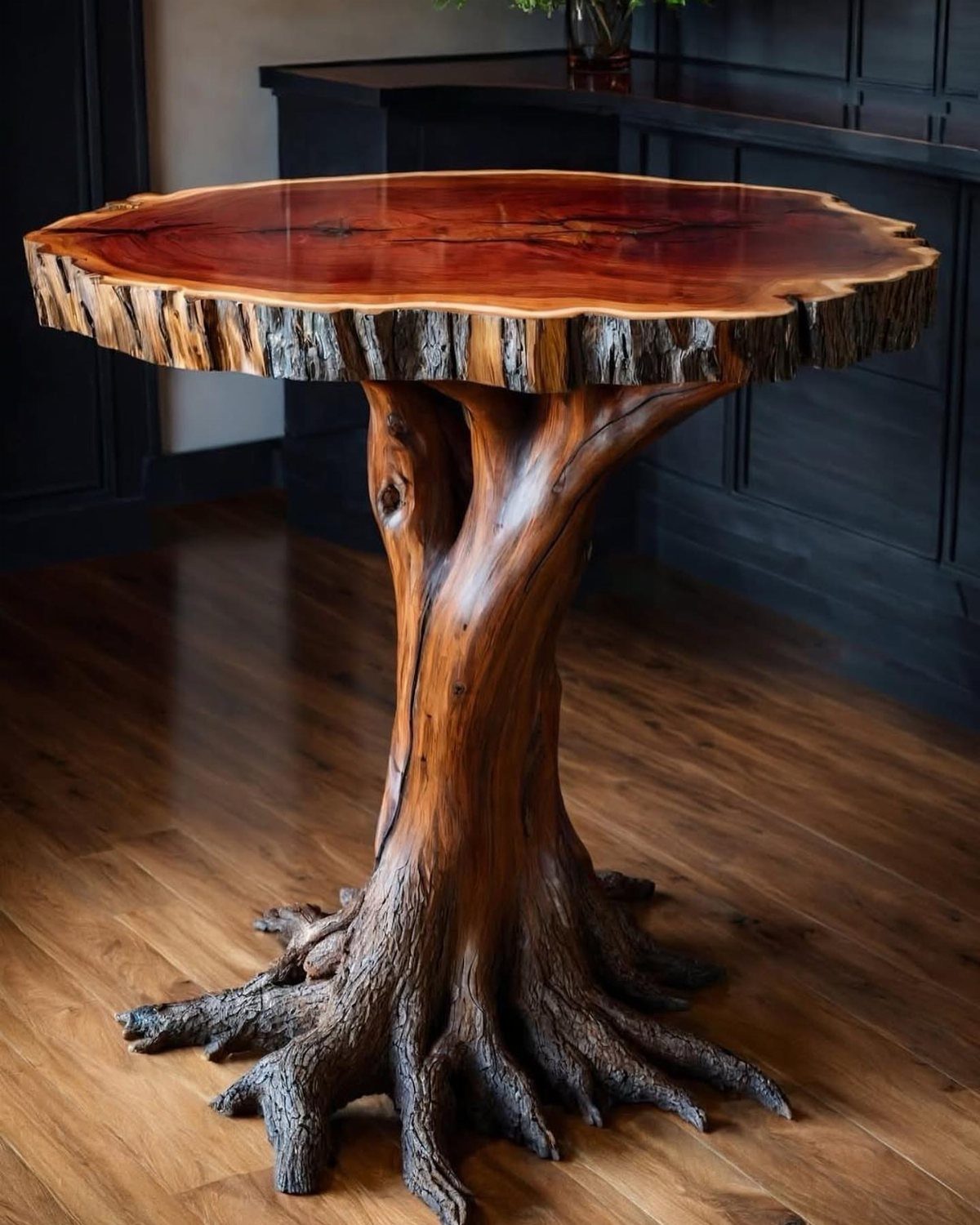
A live-edge top gives a dark room something the walls can’t: an uneven, natural line. With the cabinetry and walls already deep in tone, the table becomes the one piece with visible grain and character.
A trunk-style base makes the table a statement on its own, so I’d keep the chairs plain and let the wood be the focus. Expect to spend more than you would on a standard table.
11. Dark Wood Ceiling
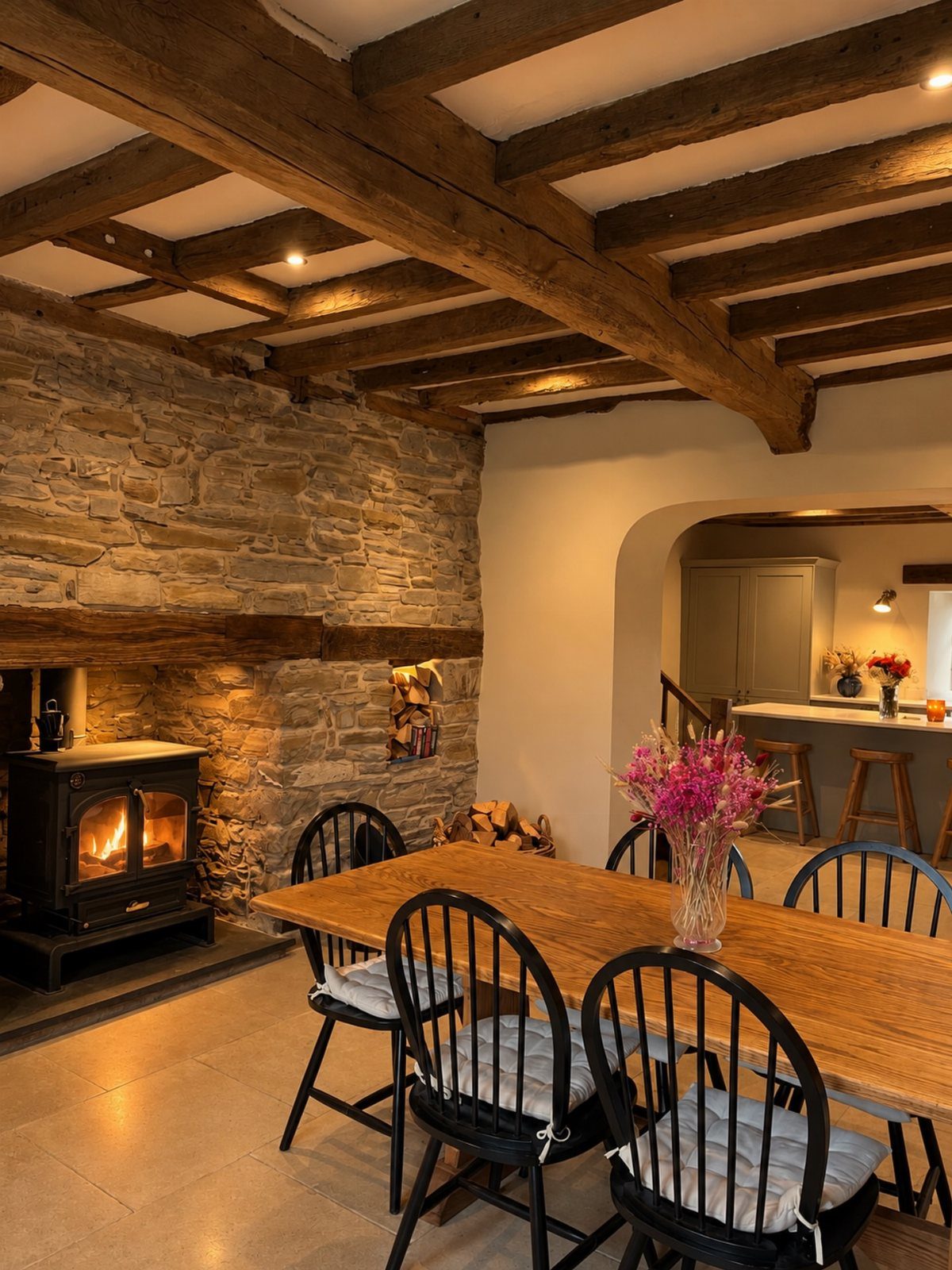
Dark timber overhead adds architecture before a single piece of furniture arrives. Exposed beams pull the eye up and give the room a heavy, sheltered feel.
Wood, stone and black make up the whole palette in a dark-ceilinged room, and I’d copy that restraint. Black chairs echo the beams without adding another finish, and a plain wooden table lets the ceiling do the talking.
12. Dark Red-brown Walls
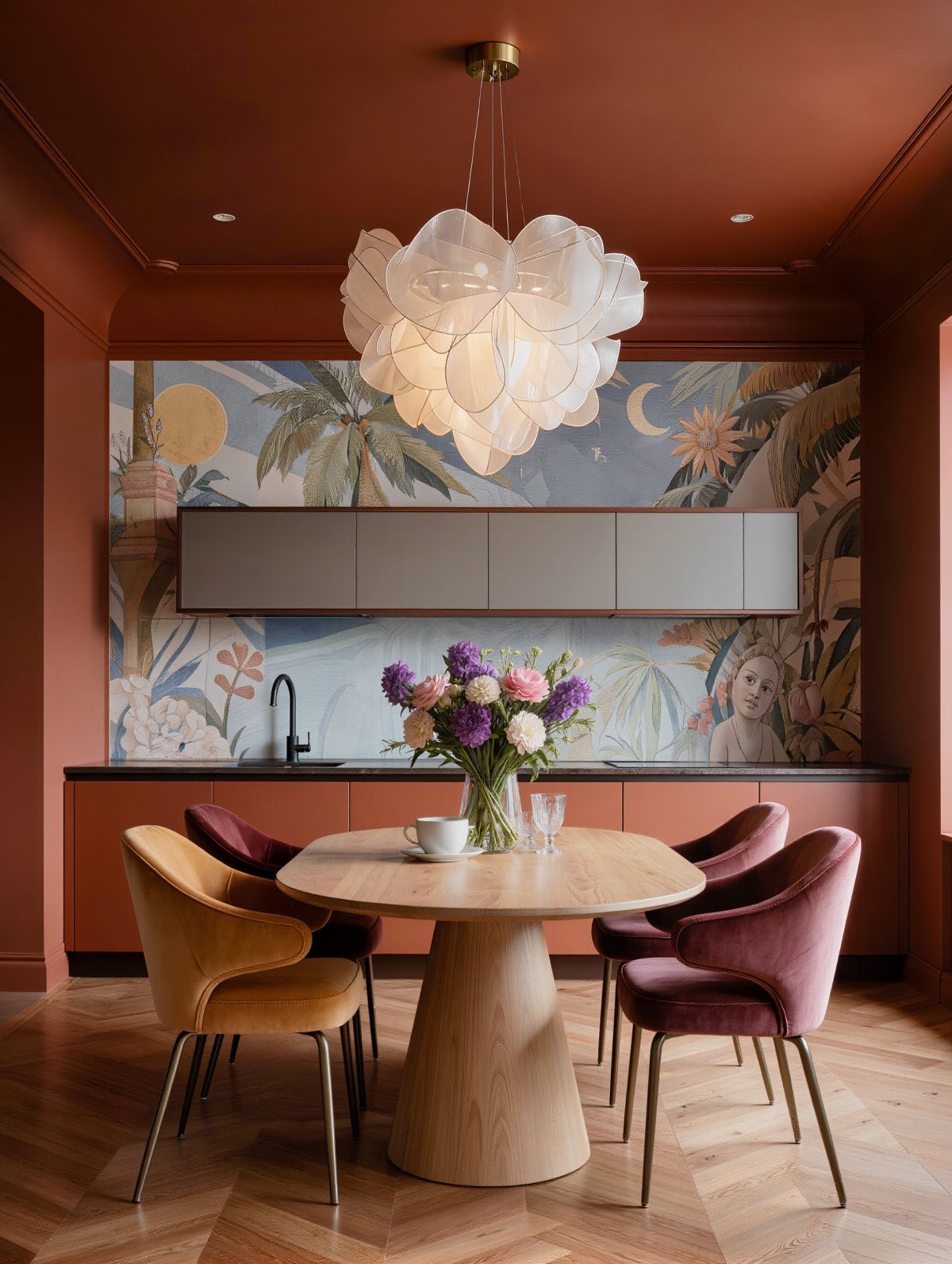
Pick a red-brown with real saturation instead of a muddy, flat brown; the redness is what makes the room feel warm and a little formal.
A round wooden table suits the color, and colorful velvet chairs add life without fighting the walls.
A white sculptural light fixture gives the eye a pale spot to rest on. I like that contrast more than another dark piece would give.
13. Dark Accent Wall
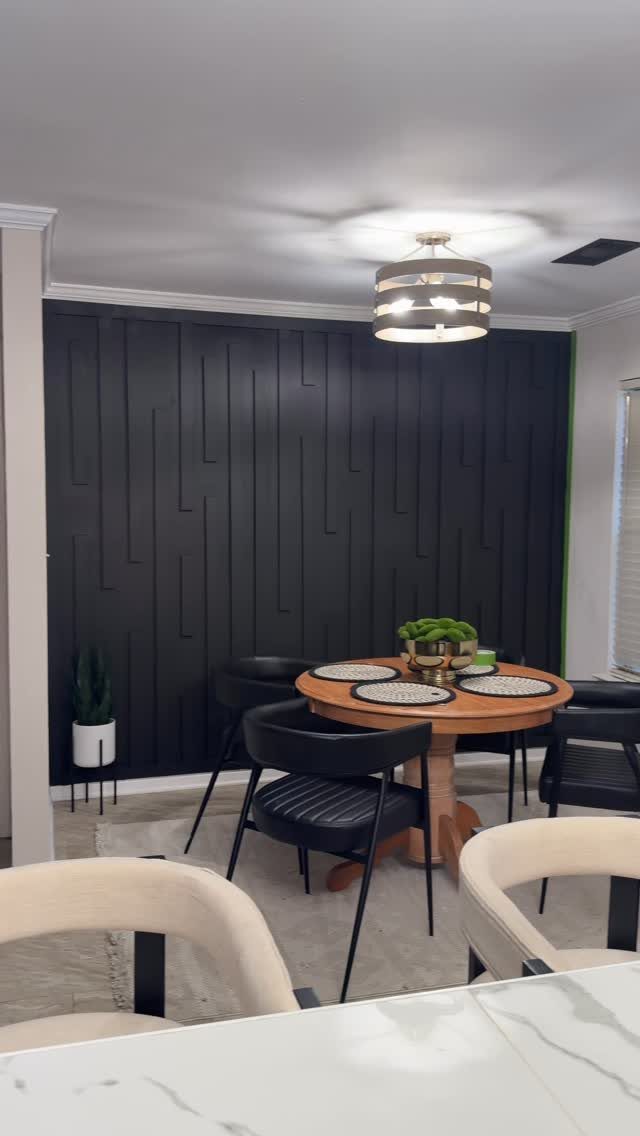
Black paneling on a single wall gives a dining room a dark anchor without darkening every surface. Panel lines add shadow and texture, so even a flat matte black looks layered.
Pick the wall the table faces, or the one you see first from the doorway. Black chairs on a wooden table pick up the wall’s color, and the other walls can stay light so the room doesn’t close in.
A small plant against the black is a nice touch, since green stands out sharply on it.
14. Black Ceiling
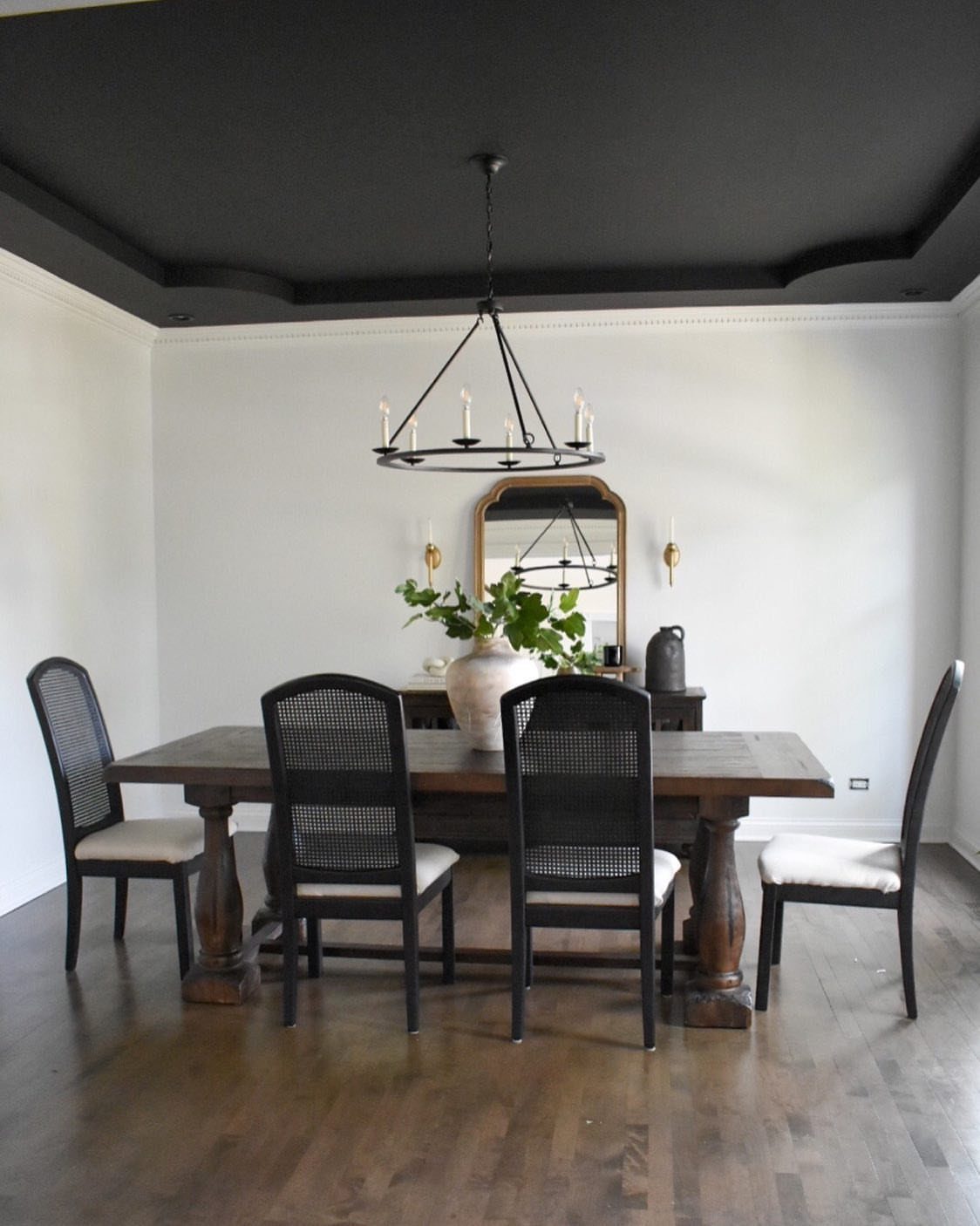
Painting the ceiling matte black pulls the dark palette overhead and makes a room with white walls feel cozy and finished. Keep the walls white, and a black ceiling reads as a dramatic lid instead of a cave.
Black cane-back chairs pick up the ceiling’s color at eye level, while a dark wood table adds warmth so the space doesn’t turn cold.
I’d hang a chandelier here, because metal and glass catch light against black in a way a flush fixture can’t.
15. Charcoal Walls
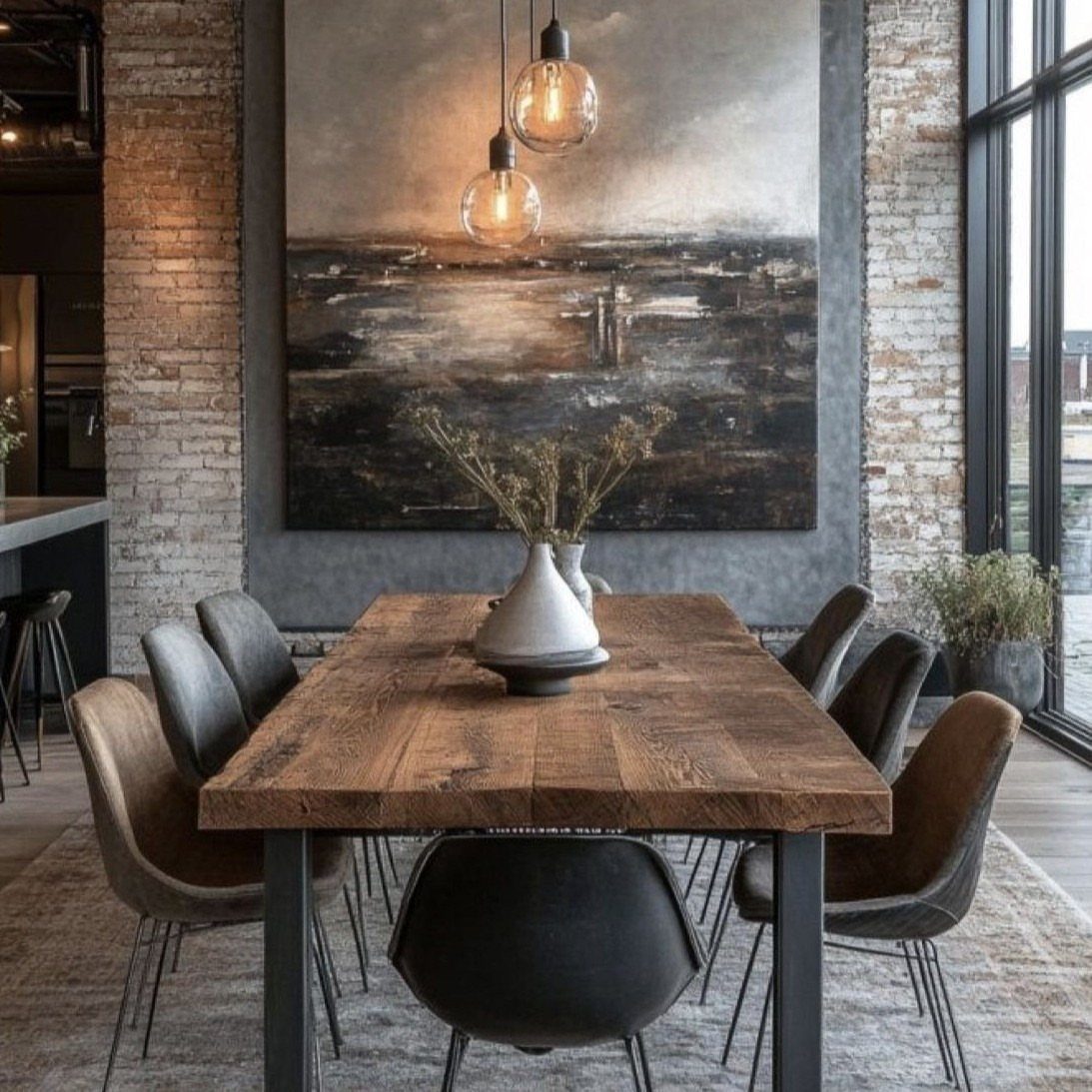
Charcoal gray is the mood for anyone who wants dark walls that look polished and modern instead of fully black. It sits softer than black but still gives a room plenty of depth.
A rustic wooden table is a smart match, because the grain adds warmth the gray lacks.
Gray chairs keep the palette calm, which leaves a large abstract painting free to be the one loud thing on the wall. Bare hanging bulbs suit the look and keep the lighting simple.
Test Paint with Changing Light
Navy looks rich in a sunny room and turns nearly black in a dim or north-facing one, so the same can of paint won’t match from one house to the next.
Put samples on the wall first, and save the gallon purchase for after.
Paint a large swatch directly on the wall and check it in the morning, at midday and at night with the lamps on.
Swap a warm bulb for a cool one and the same swatch swings from red-brown to blue-gray. Run the check with the bulbs you actually plan to use.
Then hold the swatch next to your furniture, flooring and decor. A color at odds with your floor’s undertone will nag at you every dinner, and a sample board is cheap next to repainting a whole room.
Choose the Desired Atmosphere
Settle on the mood you want first, since depth alone won’t tell you which color to choose.
Navy and charcoal lean formal and dramatic. Deep green and brown lean grounded and welcoming.
If your dinners are long, relaxed and loud, I’d go with green or brown. If you want the table to feel like an occasion, navy or charcoal does that better.
Dark walls also change how a room behaves at night. Candlelight glows softer, wood tones look richer and conversation feels more intimate, which is a good reason to choose dark in a room built for lingering.
Frequently Asked Questions
Can a moody dining room feel overly dark?
Yes, usually when the lighting was an afterthought. Layered light sources and reflective surfaces keep a dark room balanced, and a chandelier with metal and glass gives the deep color something to bounce off.
Warm wood and a lighter rug underfoot also keep the space from reading as heavy.
Are moody colors suitable for small spaces?
Yes, as long as you add some relief. Mirrors and lighter accents keep a small dark room from feeling boxed in, and generous lighting matters because deep colors can make tight rooms feel more confined.
Painting only one wall dark and leaving the others light is another way to stop a small room from closing in.