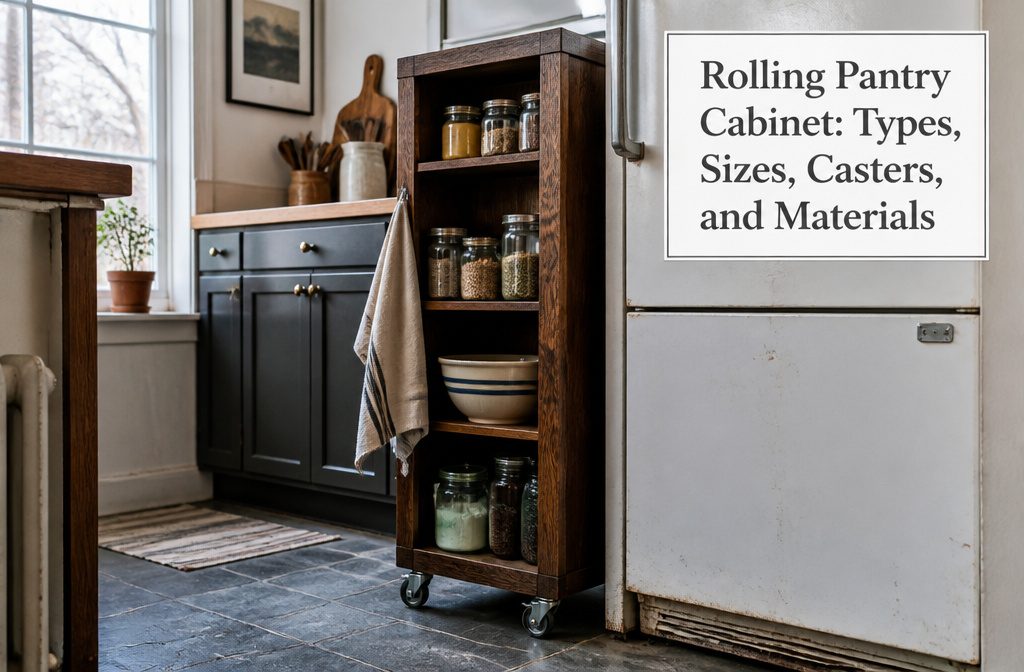
A rolling pantry cabinet is a freestanding storage unit on casters that you roll out to reach shelves and park in a narrow gap, like the one beside a fridge.
Weight and fit decide the pick: the Yamazaki holds only 26.4 pounds, while the Amazon Basics shelves are rated up to 1,500.
Cabinets, Open Shelves, and Carts
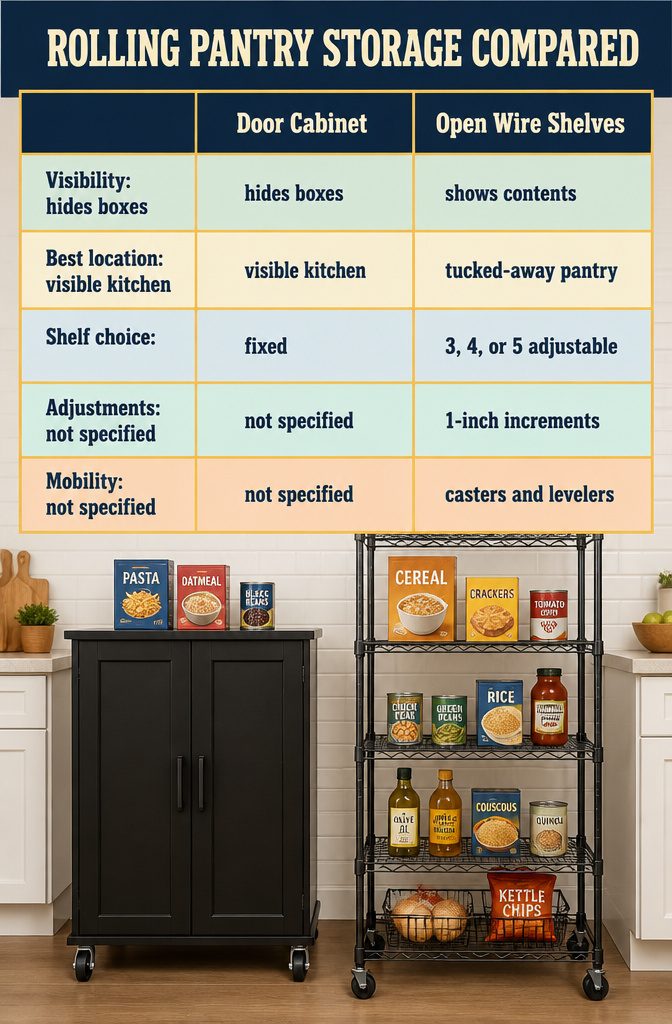
A cabinet with doors, like the Seville Classics UltraHD, wins in a kitchen where the unit sits in plain view, because mismatched boxes and bags vanish behind the panels.
Open wire shelving suits an out-of-sight corner or a pantry you restock often.
The Amazon Basics steel shelves come with 3, 4, or 5 shelves, each adjustable in 1-inch increments, so tall bottles and short cans can share one unit. Casters and leveling foot caps are both included, and the finish is black or chrome.
Mesh baskets, such as the CAXXA three-tier organizer, work best for loose produce and snacks.
If counter space is the real shortage, the Winsome Rachael wood cart has a drop-leaf top that opens into a prep surface. The Homestyles Dolly Madison adds drawers for small tools.
Fit for Tight Spaces
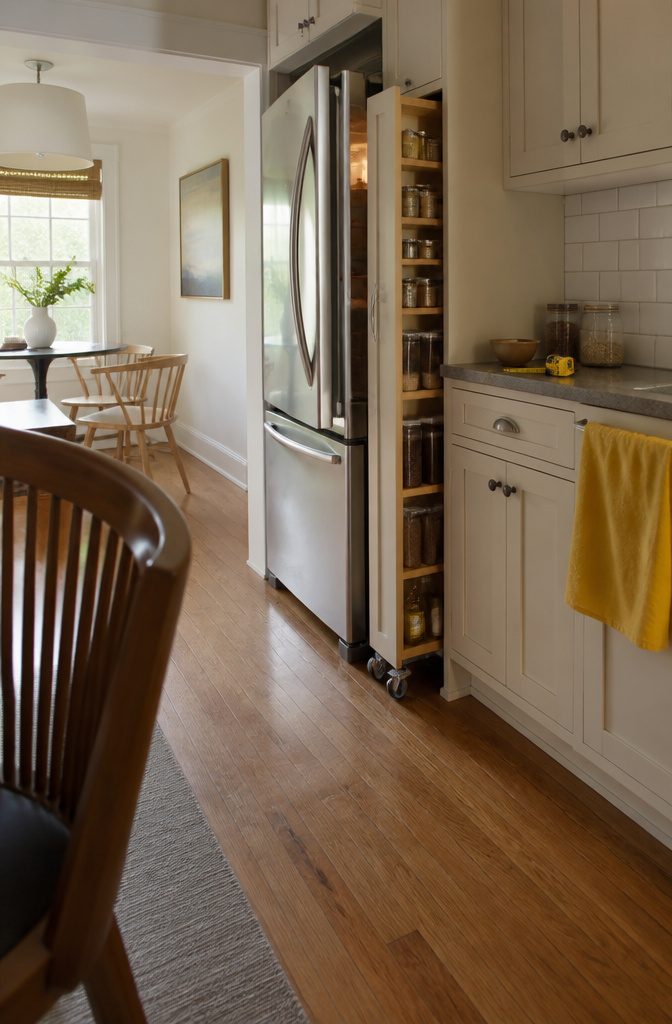
The Spacekeeper slim cart is only 5 inches thick, so it slips into the gap beside a fridge or wall that most people write off as dead space.
Its 4 casters swivel 360 degrees and lock with brakes, which matters when the cart has to roll out to reach anything. The Yamazaki Home Tower measures 18.7 × 5.1 × 31.7 inches, so it suits a spot beside a counter better than a tall, narrow slot.
The Winsome cart fits a gap that changes: it starts at 25.25 inches wide and expands to 45 inches when you need the room. The 36 × 18 × 72 inch Seville cabinet is a different animal.
It wants a full wall section, and I’d only pick it if you have one. A custom build beside the refrigerator wins for an odd, tall gap, since you cut it to fit.
Measure the gap and the door swing first. A fridge door that clips the cabinet’s edge ends the whole plan.
Casters and Stability
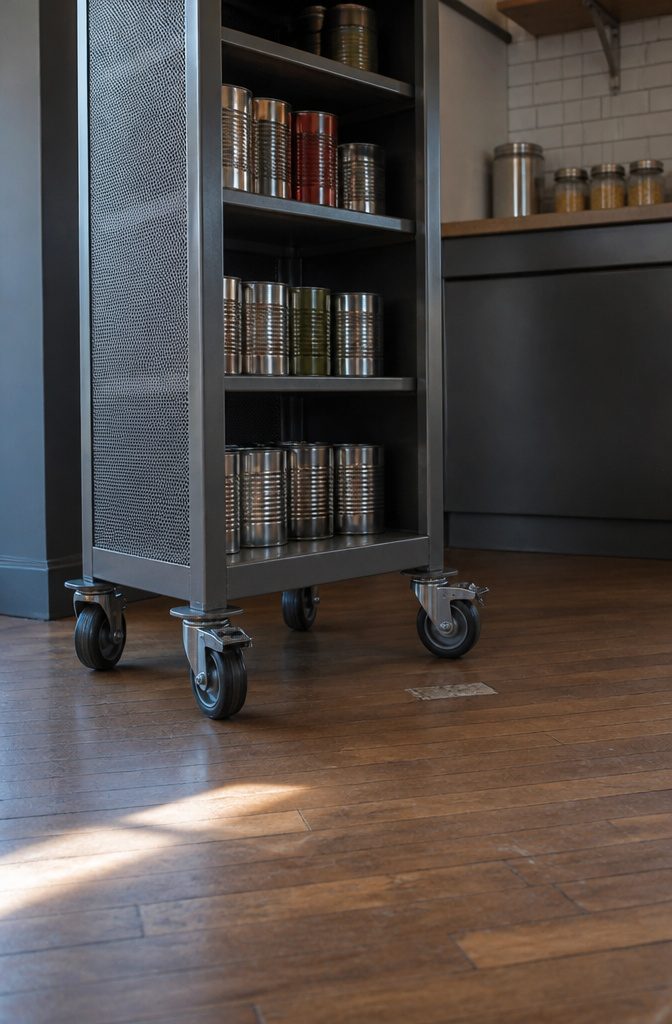
Wheels decide whether a rolling pantry gets used or gets parked. The Seville steel cabinet has 4 casters and only 2 of them lock, which is enough.
Roll it into place, step on the locks, and it holds still while you pull a can off a shelf. A wobbly cart does the opposite: you end up steadying it with one hand every time you reach in.
The DIY version built from 2x8s goes the other way, with casters that do not swivel.
It rolls out and back in one straight line, which is all a pantry beside a fridge needs. Mounting the casters as far apart as the base allows lets it stand on its own.
For a narrow, single-track pantry, fixed casters beat swivel ones. Hard wheels can scratch hardwood, so test any set on a hidden patch of floor first.
Wood, Steel, or Plastic
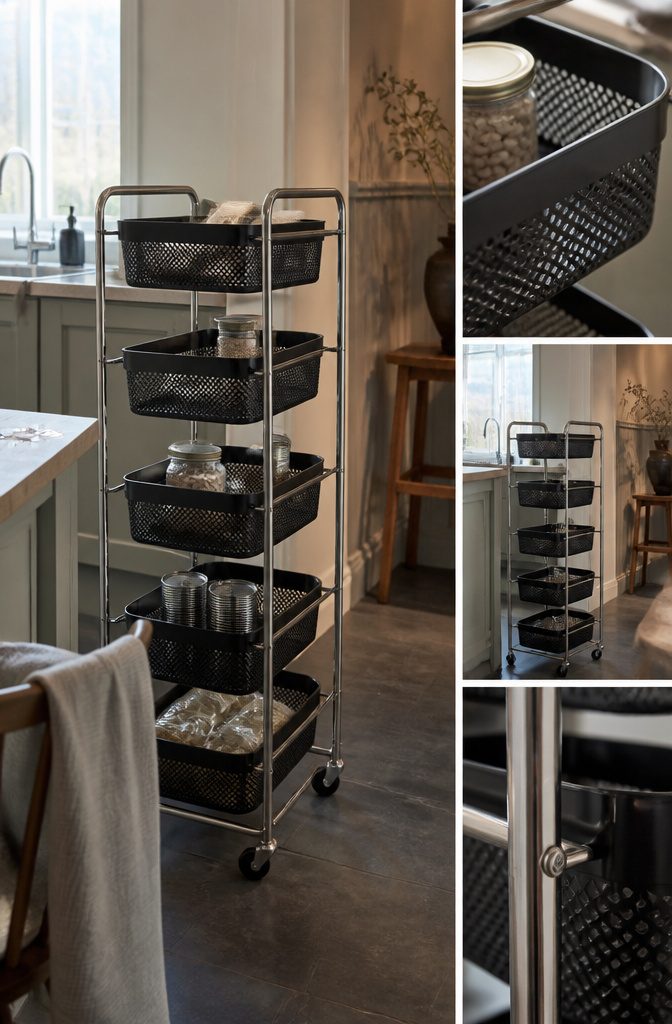
Steel frames carry this category, but the plastic attached to them decides how long a cart lasts.
Seville and Amazon Basics both use steel, and the Amazon Basics posts wear plastic sleeves, which is the first spot a damp kitchen and heavy cans will wear.
The Spacekeeper pairs a stainless-steel frame with plastic shelves, so the frame will likely outlast what rides on it. Aojia’s baskets are 4-mm ABS, thick enough to resist deforming, and the mesh holes vent and drain.
Winsome’s solid beechwood and Yamazaki’s steel-and-wood mix look warmer, though I’d keep either away from the sink side.
For a working kitchen, stainless steel with thick ABS baskets holds up best. The DIY build is the exception: 2×8 lumber gives a 7-inch depth, shelves sit about every foot, and a bead board back is cheap to replace.
Weight Limits and Shelves
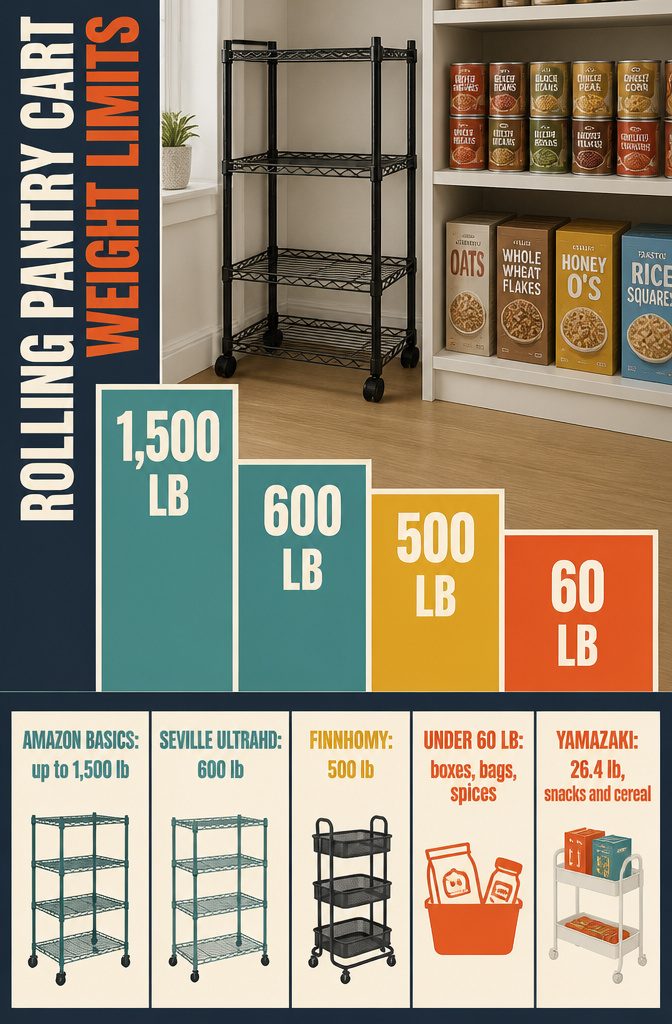
Canned goods set the bar, and only three picks clear it with room to spare: the Amazon Basics shelves, the Seville Classics UltraHD and the Finnhomy. Everything below them suits lighter loads.
| Cart | Stated capacity | Shelves | Fit for |
|---|---|---|---|
| Amazon Basics | 750, 1,400 or 1,500 lb | Adjust in 1-inch steps | Cans, bulk |
| Seville UltraHD | 600 lb | 4, adjustable | Cans |
| Finnhomy | 500 lb | 3 adjustable baskets | Cans |
| CAXXA | 120 lb | 3 tiers | Mixed light |
| Ameriwood Marshall | 60 lb | 3 shelves | Light items |
| Winsome | 50 lb | n/a | Light items |
| Yamazaki | 26.4 lb | n/a | Light items |
Under 60 pounds, stick to boxes, bags and spices. Cans add weight fast, and the Yamazaki at 26.4 pounds is really a snack-and-cereal cart.
Assembly Effort
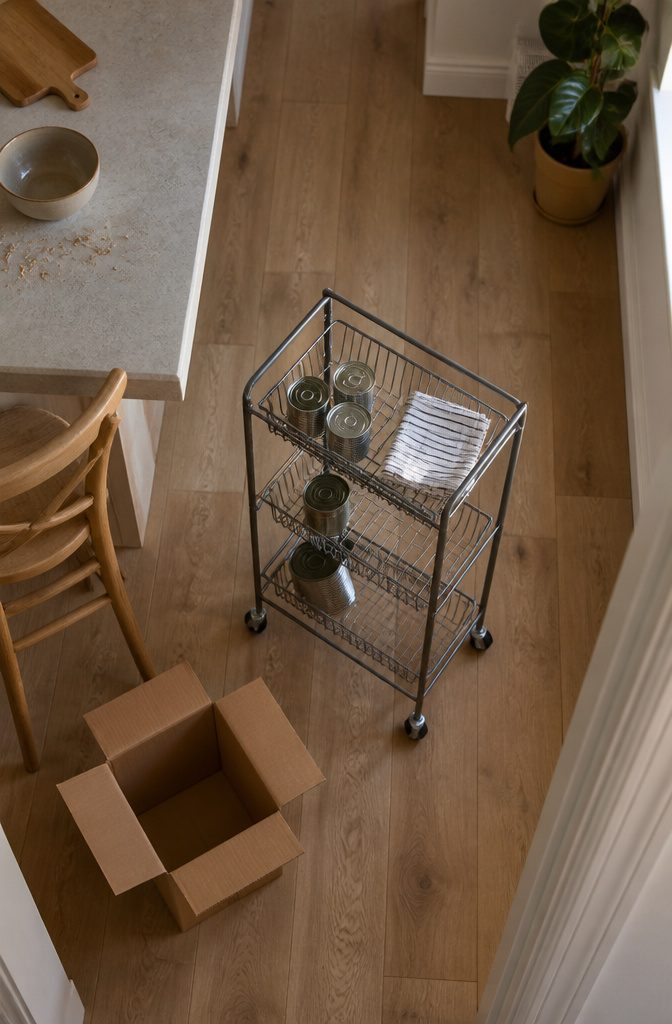
The CAXXA cart is the quickest setup: 10 minutes and no tools for 3 metal baskets on a steel frame. A slim wood-top cart is nearly as easy.
It arrives assembled, and only the 4 wheels need attaching. For a renter who wants a working pantry tonight, either one is the right call.
Several products in the roundup are flagged as hard to assemble. I’d skip those unless the design is exactly what you want, because a frustrating build rarely ends in a cart that rolls straight.
At the far end sits the DIY pantry, a full custom build.
It takes the most effort, but it is the only route that sizes the unit to your exact gap. A boxed cart gets you storage fast; a custom build gets you a fit.
If your space is a standard gap, buy. If it’s odd, build.
A DIY Pantry Beside the Fridge
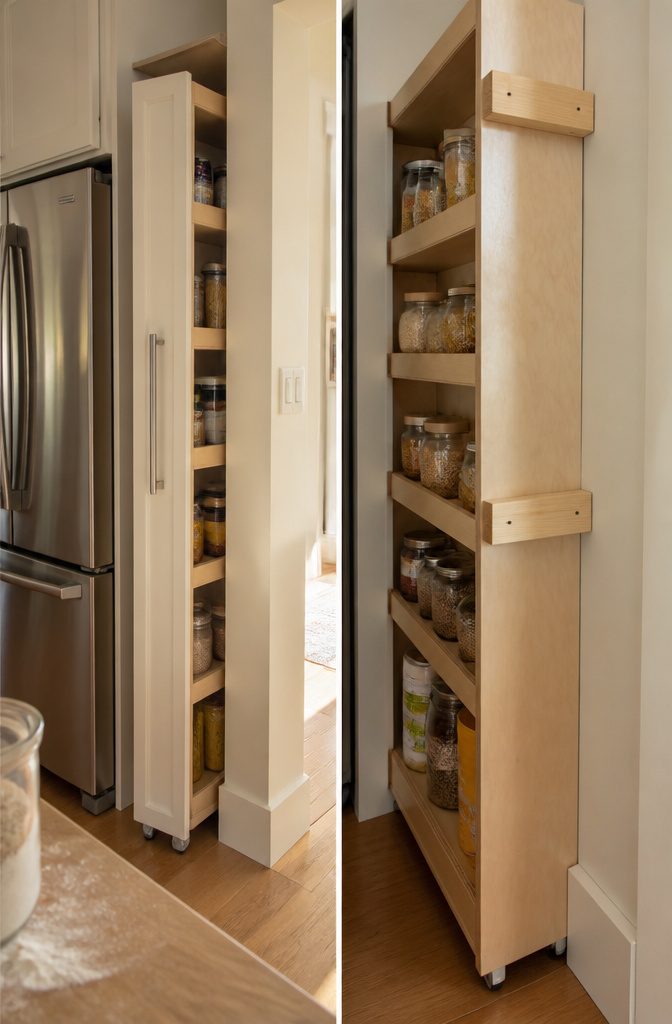
A narrow gap beside the fridge is enough for a rolling pantry if you build it shallow. 2×8 boards give a 7-inch depth, and shelves about every foot hold cans, pasta and baking goods without anything getting lost in back.
Two 2×4s screwed to the wall carry the unit and hold it out far enough to clear light switches.
Count the caster height in your overall height, and keep the depth short of the rear wall so the cabinet never scrapes when it rolls.
I’d pick non-swiveling casters, spaced as wide apart as the base allows, so the pantry stands steady when parked.
A 1×4 trim on each shelf makes a lip that keeps items from sliding off, and a 1×8 overhang meets the cabinet above and the brace when it’s rolled back.
The front gets 2 coats of paint, 2 coats of poly, and a chrome handle.
Pantry Cabinet Sizes and Cost
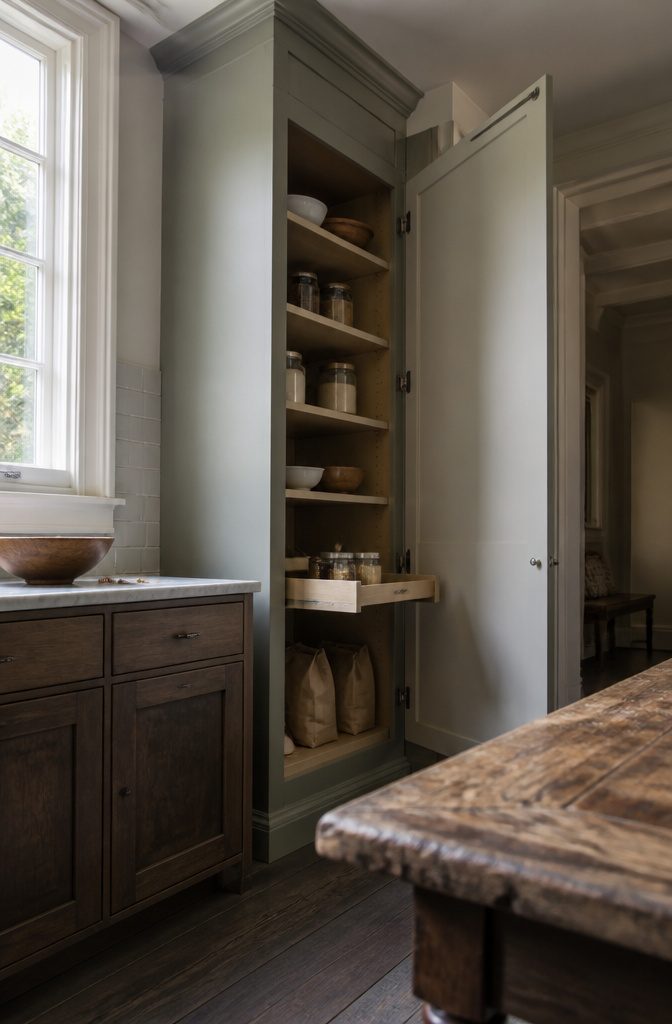
Fixed, built-in pantry cabinets set the benchmark below, and none of these figures describe a rolling unit.
- Width: 15–36 inches is the common range.
- Height: 84–96 inches.
- Depth: 12 or 14 inches, with extra depth available as a custom upgrade.
- Interiors: adjustable shelves and roll-out trays are the usual add-ons.
- Cost: common sizes run around $1,000, and door style, organizers, finishes, size and labor all push that number up or down.
- Tall pantry cabinets are the largest cabinets sold, so they rank among the most expensive in a kitchen.
I treat these numbers as a ceiling when shopping for a rolling cabinet. A mobile unit that stands taller or sits deeper than a 14-inch built-in will likely crowd the gap you’re trying to fill.
Frequently Asked Questions
What is a pantry cabinet?
A pantry cabinet is a tall kitchen cabinet for dry goods, small countertop appliances, and other kitchen items, usually with adjustable shelves or roll-out trays.
A rolling version sits on casters, so it can slide out of a narrow gap, such as the one beside a fridge, when you need to reach the back.
How big should a pantry cabinet be?
Built-in pantry cabinets commonly run 15–36 inches wide and 84–96 inches tall, with a depth of 12 or 14 inches.
Those figures describe fixed cabinets, not rolling ones, but they work as a ceiling: a mobile unit taller or deeper than that will likely crowd the gap. Measure the space and the fridge door swing before you buy.
How much does a pantry cabinet cost?
Built-in pantry cabinets in common sizes cost around $1,000.
Door style, organizers, finishes, size, and labor all move the price, and tall pantry cabinets are among the most expensive in a kitchen because they are the largest cabinets sold. That price is for fixed units, not rolling carts.
How do I make my own rolling pantry cabinet?
Build it shallow from 2×8 boards, which give a 7-inch depth, and set shelves about every foot. Use non-swiveling casters spaced as wide apart as the base allows, so the unit rolls in a straight line and stands steady when parked.
Add the caster height to your overall height, and a 1×4 trim on each shelf makes a lip that stops items from sliding off.
What material is best for a rolling pantry cabinet?
For a working kitchen, stainless steel with thick ABS baskets holds up best.
The plastic parts attached to a steel frame, like post sleeves, tend to wear first in a damp kitchen with heavy cans. Wood looks warmer, but keep it away from the sink side.